“Edison is the go-to for a new investor to get full understanding of the investment case and business. Edison’s distribution reaches investors that we want to connect with directly.”
Until recently, the Gulf Cooperation Council (GCC) capital markets story was largely one of potential. The region has oil revenues, sovereign wealth and ambition, but the infrastructure to translate those into globally competitive public markets was still taking shape. That story has now substantially changed.
The Saudi Exchange, formerly known as the Tadawul, is the largest stock exchange in the region, with a market capitalisation of $2.35tn, making it among the 10 largest exchanges in the world. The Dubai Financial Market (DFM) and Abu Dhabi Securities Exchange (ADX) have grown rapidly in recent years, with the ADX valued at $762bn as at H126. Both exchanges have attracted a strong pipeline of listings from across the region.
The structural reforms underpinning this growth have been deliberate and far-reaching. Saudi Arabia’s Vision 2030 programme, with its focus on economic diversification and private sector expansion, has driven a series of capital market reforms, including the removal of restrictions on foreign corporate ownership of listed Saudi companies and, in February 2026, the removal of the requirement for overseas investors to qualify under the Qualified Foreign Investor framework before accessing the main market. Saudi equities are now accessible to any institutional investor, subject only to company-level ownership limits.
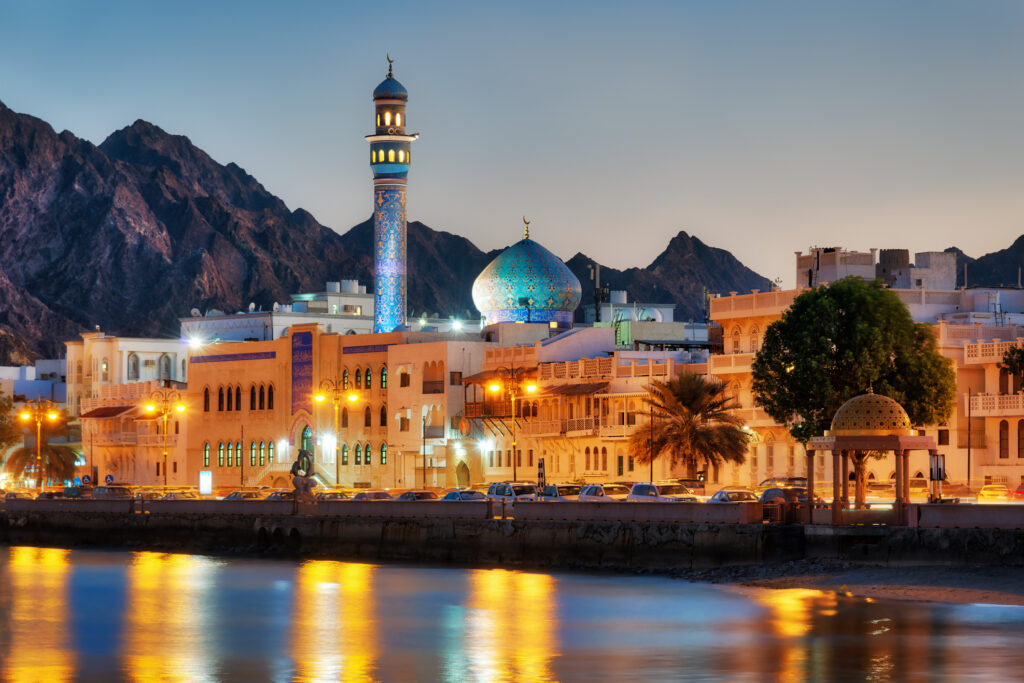
International index providers have taken note. Saudi Arabia has been a c 4% weight in the MSCI Emerging Markets Index since its phased inclusion in 2019, and the United Arab Emirates (UAE), Qatar and Kuwait are all established constituents of the index. Passive flows alone have brought billions in new capital to the region. Beyond the region’s largest markets, Oman’s Muscat Stock Exchange was added to the Watch List for possible reclassification from Frontier to Secondary Emerging Market status following the September 2026 annual country classification review, a recognition that the structural and infrastructure reforms of recent years have brought Oman to the threshold of a step-change in international institutional attention.
Exhibit 1: Gulf capital markets at a glance
Sources: Saudi Exchange Annual Statistical Report; Arabian Gulf Business Insight; Fitch Ratings
Access is open, but investability is the next frontier
Despite regulatory reforms, index inclusions and removal of formal access barriers, foreign investors still own less than 5% of Saudi equities – a figure that is flattened downward by the size of Aramco relative to Saudi Arabia’s total market capitalisation. Even adjusting for this, foreign ownership is still low on a free-float basis relative to comparable emerging markets. Although this number has grown since capital markets reforms have come into effect, in a market of $2.35tn, the gap between theoretical access and actual allocation remains significant.
The explanation is not primarily regulatory: most international fund managers can now buy Saudi or UAE equities as easily as they can buy Korean or Brazilian stocks. Instead, the barrier is informational and relational. For a UK or European portfolio manager allocating to emerging markets, the question is not whether they can invest in the region; it is whether they understand the companies well enough to make that decision with confidence.
That confidence gap is, at its core, an investor relations (IR) problem, and one that most listed companies in the region have not yet fully addressed. Annual reports are often translated directly from Arabic or structured for a domestic audience, rather than an international one. Earnings calls are infrequent or inaccessible to international investors in different time zones. Third-party equity research, a standard feature of developed market investing that gives international fund managers an independent view of a company’s strategy and financials, remains thin. And digital discoverability – the ability of a company’s investment case to surface when investors use AI tools to research a sector or market – is even thinner.
Oman illustrates this dynamic clearly. Over the past three years, the Oman Investment Authority has overseen a pipeline of significant IPOs – OQ Gas Networks (OQGN), OQ Exploration and Production (OQEP), OQ Base Industries (OQBI) and Asyad Shipping among them – that have materially deepened the Muscat Stock Exchange and raised its profile with international investors. The addition of the Muscat Stock Exchange to the Watch List for possible reclassification from Frontier to Secondary Emerging Market status, announced in October 2026, represents a further step in that journey, and one that, if confirmed, would bring meaningful passive flows and a significant expansion of the international investor base following the market. Yet of all the GCC markets, Oman is where third-party independent research remains thinnest, and where the gap between market ambition and investor awareness is therefore most acute. Encouragingly, that gap is increasingly recognised at exchange level as a structural issue, not simply a feature of market maturity.
None of this is a criticism of the companies themselves; many are relatively new to international investor engagement. The infrastructure – banks, research firms, IR consultants – that has developed over decades in London or New York is still maturing in Riyadh and Dubai. But that gap represents both an explanation for the current problem and an opportunity for the companies that move earliest to address it.
The debt dimension
The GCC equity story is fairly well known, but the debt capital markets (DCM) story is less so. Arguably, however, it is more immediately significant for companies looking to access international capital at scale.
The GCC bond and sukuk market hit $1.2tn in H126, driven above all by Saudi sovereign and quasi-sovereign issuance, alongside the UAE and, to a lesser extent, Qatar, but increasingly also by corporate borrowers in real estate, financial services and infrastructure. International demand for GCC fixed income has grown sharply, with the region’s investment-grade sovereign and quasi-sovereign issuers now firmly embedded in global bond indices.
Corporate issuers in the region have benefited from this flow, but the pattern is familiar: DCM activity is concentrated among the largest and most internationally recognised names. Mid-sized companies, including many that are publicly listed and would be eligible to issue into international bond markets, have not yet built the bondholder relationships that make repeat issuance straightforward and cost-effective.
The trend is changing, but slowly. As with equities, the constraint is the informational and relational infrastructure that makes investors confident enough to commit capital, rather than access. Bondholders, like equity investors, want to understand a company’s strategy, its management quality and its financial discipline. They want to be able to find independent information about the company between deal windows, not just during a roadshow. And they want to know that the company regards them as a strategic audience, not just a source of funding to be engaged episodically.
What this means for IR teams
The Gulf’s capital markets have, in a relatively short period, crossed the threshold from emerging to arrived. The structural work – the regulatory reforms, index inclusions and expansion of market infrastructure – is substantially done. What comes next is the harder and slower work of building the investor relationships and informational ecosystems that turn open access into active allocation.
For companies listed or planning to list in the region that means thinking seriously about international investor engagement as a strategic priority, not a compliance exercise. It means making the investment case accessible to investors who cannot read Arabic-language filings, who may be in different time zones and who will use digital and AI tools to research the market before picking up the phone. It means building third-party research coverage that is available to any investor, anywhere, without a subscription or a relationship with a specific bank.
And for companies issuing debt, it means treating bondholder engagement with the same rigour that the best equity IR programmes bring to shareholder communications – maintaining ongoing relationships between issuances, not just during deal windows.
The public markets of the Gulf have done the hard structural work. The next phase of growth, and the international capital allocation that comes with it, will be won by the companies that do the IR work to go with it.
Minding the gap – re-analysing the discount from PEA to BFS
Edison has once again analysed pre-production junior miners to determine what their valuations tell the industry about investors’ appetites for exploration assets.