“Edison is the go-to for a new investor to get full understanding of the investment case and business. Edison’s distribution reaches investors that we want to connect with directly.”
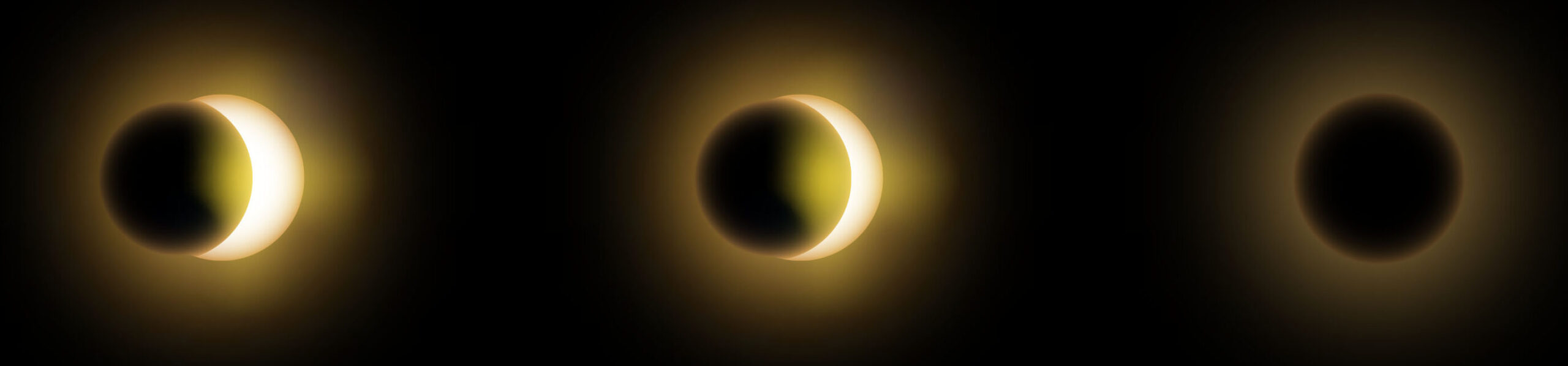
When Britain last saw an eclipse on this scale (obscuring c 90–96% of the sun across much of the UK), it was 1999 and solar contributed almost nothing to Britain’s electricity supply. The event was astronomical rather than operational. As of July 2026, solar supplied 14.4% of Britain’s electricity, so, during a solar eclipse, the moon now crosses a material slice of the generating fleet, and it does so far more abruptly than any sunset.
The National Energy System Operator (NESO) responded on Tuesday evening with an electricity margin notice, its fourth of the year, asking generators to make spare capacity available. NESO has been explicit that this is precautionary and signals no risk to supply, but the timing is unhelpful: Britain is in its fifth heatwave of the summer with temperature soaring into the mid to high 30C.
How much generation is genuinely at risk in Britain and across Europe?
NESO’s central estimate is a loss of c 700MW in Great Britain, rising to c 1.3GW on historical modelling, while the Guardian reports a range of 300–1,100MW. The spread is wide partly because much of Britain’s solar power sits on rooftops and behind commercial meters, invisible to the operator, where fading light registers as a sudden jump in demand rather than a fall in supply. Much of Europe stands in the same shadow at the same moment. ENTSO-E expects continental output to fall by up to 9.7GW between 19:15 and 21:30CEST, with Spain (which is in the path of total eclipse) absorbing up to 5GW, or c 13% of peak demand on a typical August Wednesday.
Exhibit 1: As of July 2026, solar supplied 14.4% of Britain’s electricity
Source: iStock.com/Morrison1977
Why does a heatwave make an entirely predictable event harder to manage?
Heat increases demand through the evening as cooling loads persist, with air conditioning, fans and refrigeration cycling harder to hold temperature against warmer ambient temperatures, so the light fades into a load that is already elevated rather than one tailing off. The same weather has curtailed hydroelectric output through UK drought-related water shortages, thinning a source normally among the quickest to respond. In addition, the Telegraph reports three of the UK’s 10 nuclear reactors are offline. That leaves gas to absorb a swing measured in minutes rather than hours. Interconnectors help less than usual, because the shadow affects Spain, France and Germany during the same evening window, so imports are constrained exactly when they would be most useful.
What is the eclipse costing, and who ultimately pays for it?
Filling the gap means paying generators through the balancing mechanism, with costs recovered from households through energy bills. The market has already repriced the evening: LCP Delta data reported by the Guardian shows power for Wednesday delivery reaching £211.40/MWh at 7pm, the highest since 30 June, itself the peak of the previous heatwave. What is being bought is less the direct energy than the ability to deliver energy at short notice. Cutting demand is cheaper, and Octopus Energy is offering eligible customers an hour of free electricity on 16 August for using less during the darkest two hours.
What should investors take from an event scheduled decades in advance?
Flexibility and diversification earn their return in narrow windows rather than in average output, and the eclipse puts a public price on that. Peaking gas, batteries, interconnectors and demand-side response are paid to be available for precisely this kind of hour, which is why an astronomical certainty shows up in the day-ahead price. Duration is the harder question, because a two-hour evening event sits at the edge of what much of Britain’s battery fleet can cover unaided, which is why gas is doing the work tonight. As solar’s share of energy generation rises, the premium attaches to assets that can respond within minutes and keep going for hours.
If you are planning on viewing the eclipse, please do so safely by using either indirect viewing methods or appropriate eye protection (ISO 12312-2 standard); never look at the sun directly.