Last close As at 05/08/2026
AUD0.79
▲ 0.04 (4.67%)
Market capitalisation
AUD213m
Research: Metals & Mining
Barton has continued to aggressively pursue its ambition to produce 125–150koz gold pa at Tunkillia via open pit production, completing a 5,064m reverse circulation drilling campaign targeting block model extensions, updating JORC mineral resources to 1.6Moz gold and 3.1Moz silver and identifying material available energy savings. At Tarcoola, it has discovered the new Tolmer gold system, added further pit floor gold mineralisation at the Perseverance mine, and made a surprise high-grade silver discovery alongside Tolmer’s gold – the best interval of 6m at 4,747g/t (152.6opt) Ag being exceptionally high by anyone’s standards. These will all contribute to an optimised scoping study at Tunkillia in Q2 CY25 and (from Tarcoola) feedstock for ’Stage 1’ operations, leveraging its fully licensed Central Gawler mill to 20–30koz pa as early as mid-CY26. Topping it off, Barton announced a A$3.1m net profit for the half year to 31 December, an unusual and impressive feat for a junior.
| Year end | Revenue (AUDm) | PBT (AUDm) | EPS (AUD) | DPS (AUD) | P/E (x) | Yield (%) |
|---|---|---|---|---|---|---|
| 6/23 | 2.8 | (5.7) | (0.03) | 0.00 | N/A | N/A |
| 6/24 | 0.8 | (9.4) | (0.05) | 0.00 | N/A | N/A |
| 6/25e | 8.2 | (1.4) | (0.01) | 0.00 | N/A | N/A |
| 6/26e | 0.0 | (9.2) | (0.03) | 0.00 | N/A | N/A |
In H125 (H2 CY24), Barton received a final payment of A$775,000 relating to its A$5m June gold sale and confirmed receipt of A$380,000 in grant funding from the South Australian government, along with a cash tax refund of c A$2.4m from the Australian federal government. As such, Barton started CY25 with A$9.2m in cash and, we estimate, will finish FY25 with c A$4.5m level of net cash on its balance sheet.
As per our initiation report, we value Barton’s mill at A$0.46/share on an ‘as new’ replacement cost basis and at A$0.23/share on an ‘as is’ indemnity value basis. Hence, this asset alone effectively covers Barton’s share price of A$0.335. At updated forex rates (A$1.6019/US$ cf A$1.5000/US$ previously), we estimate that Tunkillia’s (published) pre-tax NPV7.5 of A$512m translates into a post-tax NPV7.5 of c A$417.5m, or A$1.91/share, as a project on an unrisked basis (compared with A$322.6m, or A$1.48/share previously). Adjusting for stage of development (ie scoping study or preliminary economic assessment, PEA), sovereign risk and the overall risk of commerciality of the project (in the form of its internal rate of return, IRR), we calculate a value for Tunkillia in the range A$0.54–0.65/share based on EV/NPV multiples. Similarly, at the current (real) price of gold of US$3,000/oz, we estimate that the project could support a fund-raising of A$54.2m at the current share price (such that the net debt:equity ratio peaks at 2:1) and still return dividends to shareholders with an NPV10 of A$1.44/share. However, if Barton is able to extend the lives of its operations indefinitely via exploration success, we calculate that a valuation above A$6.00/share is possible (see Exhibit 15).
Since our initiation note on 2 September 2024, Barton has made a number of announcements, including:
At Tunkillia:
At Tarcoola:
The company has now completed its A$5m sale of gold from its mill clean-out in June, including an augmented final payment of US$495,000 (A$775,000) after confirmation assays showed a higher gold content than was originally, provisionally estimated. It has also confirmed that it has received a A$380,000 grant funding disbursement for research and development (R&D) work programmes recently undertaken at Tarcoola from the South Australian government under its Accelerated Discovery Initiative (ADI) for an approved programme of works, including ground penetrating radar (GPR), seismic surveys and validation drilling of theorised models (especially concerning the identification of the new Tolmer gold system). It then announced a A$2.4m cash disbursement from the Australian federal government pursuant to its own R&D tax programmes.
The significance of these developments is as follows:
Barton’s Tunkillia initial scoping study results (announced on 16 July 2024) are summarised below, all of which are based on A$3,500/oz gold (cf circa A$5,000/oz at the time of writing):
Barton’s management has been careful to emphasise that these results are ‘initial’ in nature and it is now in the process of optimising them. In the first instance, this has involved the completion of a 5,064m RC drilling campaign to target extensions to the block model to support resource and pit design growth. In the second, in its initial scoping study, Barton conservatively assumed an ore hardness 25–50% harder than it has, to date, proved to be and further assumed only single-stage crushing, rather than the more cost-efficient three-stage crushing approach. Consequently, power consumption was over-estimated and the mill size. Adjusting for these factors (see ‘Comminution’ below) has the potential to reallocate capex to more efficient uses and reduce processing opex (in the form of energy costs), thereby extending mine life, augmenting production and financial returns and improving the operation’s ‘Starter’ pit.
Even so, current drilling has covered only c 10% of the shear margins contained within Barton’s licences with more than 20km of strike remaining to be tested along the same trend. Regional exploration is therefore targeting potential repeats of the >1Moz Au mineralisation over 20–25km of untested shear zone on strike from the existing resources in Area 223. In the future, it will test whether the six domains of mineralisation so far identified extend further at depth. It will also consider testing for iron oxide, copper and gold (IOCG) type mineralisation further to the east of its exploration licences on the other side of the prominent shear hosting Tunkillia’s gold deposits.
Since 2019, Barton has used new technology to remodel the geology under the existing Perseverance pit and across the c 15km of ground hosting the high-grade historical Tarcoola goldfield. In conjunction with a drilling plan both along strike and through the pit floor, this has allowed it to identify additional shallow mineralisation in the Perseverance pit, at ‘Perseverance West’ (a new extension to the south/south-west of the open pit), as well as to posit the existence of deeper mineralisation in the ‘Perseverance Deeps’ zone below the main open pit.
Following the delineation of a shallow new JORC mineral resource estimate of c 20koz at c 2g/t Au in the Perseverance Mine’s open pit floor in July, Barton completed another 10 holes (882m) of follow-up drilling in July. In October, it announced that this follow-up drilling had confirmed new adjacent zones of shallow pit floor gold mineralisation, with high-grade assays including 4m at 10.38g/t Au, 7m at 9.63g/t Au and 6m at 6.17g/t Au. These are expected to support the definition of additional JORC mineral resources, as a consequence of which management plans to review potential extensions to the pit as it positions itself for ‘Stage 1’ production from CY26.
Regionally, Barton has spent three years mapping approximately 10–15km of structures below historical, high-grade workings and developing a new three-dimensional architectural model for the area – the first time that all of the known gold occurrences in the area have been put into a consistent structural framework. To date, it has identified four areas with known, significant footprints, albeit under cover. Its next step is to identify the controls on mineralisation, to target untested areas under cover and to confirm new zones of mineralisation with a view to eventual high-grade development. Within this context, Barton announced a discovery success at Tolmer (see Exhibits 5 and 7) earlier this year, confirming a new gold mineralised system of quartz veining within a broader zone of alteration. Among several others, individual intersections of 9m at 3.92g/t Au, 4m at 24.6g/t Au, 14m at 1.41g/t Au and 5m at 3.15g/t Au were recorded, while other high-grade results were reported at neighbouring targets including School, Old Flame and Warburton.
Adding to the picture, follow-up drilling at Tolmer has now confirmed both (a) high-grade silver mineralisation coincident with high-grade gold, with grades of up to 312g/t Ag associated with gold grades up to 83.6g/t Au and (b) a separate new zone of ‘silver dominant’ mineralisation with grades up to 17,600g/t (565.9opt) Ag contained within an intersection of 6m at 4,747g/t (152.6opt) Ag. This is an unusually high grade for Australia, which is not traditionally known for high-grade silver assets. Additional gold and silver assays for 2,230m of deeper, follow-up RC drilling are pending and it will be interesting if the high-grade silver in fact extends into the fresh rock below.
As the new Tolmer discovery also contains silver, it would very likely be well suited to use as a high-grade blending material at either the Central Gawler mill and/or for a future Tunkillia operation, which has an average annual silver:gold production ratio of c 2.4:1 (311koz pa Ag cf 130koz pa Au).
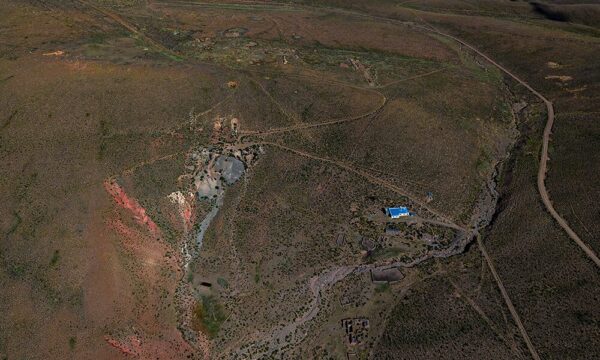
Towards achieving its goal of identifying feedstock for its Central Gawler mill prior to initiating low-cost, low-risk Stage 1 production, Barton will, in addition to the materials in Tarcoola’s open pit Perseverance Mine, evaluate potential remnant materials on historical open pits, stockpiles and underground workings at the Challenger project site.
A successful placing to notable specialist institutional investors in March/April
saw Collins Street Asset Management emerge with a 6.9% stake in Barton Gold, which
it subsequently grew to c 9% via further on-market purchases. In Q4 CY24, it purchased
a further c 8m shares in a block trade to a) remove a market overhang of stock and
b) take its stake to 12.87%. With further on-market purchases, Collins Street Asset
Management has recently moved to 14.07% ownership.
Collins Street is a well-known, contrarian value investor in Australia. Having pre-empted
last year’s uranium boom by positioning several years prior, it is now building a
position in the gold sector via its new gold fund, pursuing unloved, high-quality
stocks as cornerstone assets. Apart from the buying pressure that it exerts in the
marketplace, its position in Barton could also be interpreted as an implicit endorsement
of the latter’s management team, as well as a recognition of its value as an investment.
More explicitly, Collins Street’s latest substantial shareholder notice (19 March
2025) stated: ‘Barton Gold is one of the high-quality, well-run gold companies in
which we are delighted to have increased our stake.’
Barton had net cash of A$10.2m on its balance sheet at end June 2024. In Q125, it burnt through A$1.4m to leave it with cash of A$8.8m at end September, but then turned an impressive A$3.1m profit in the half-year to 31 December 2024, starting the 2025 calendar year with A$9.2m.
To date, in Q225, as stated above, it has received an augmented final payment of US$495,000 (A$775,000) relating to the sale of gold from its mill cleanout in June and has confirmed that it has received a A$380,000 grant funding disbursement for R&D work programmes recently undertaken at Tarcoola from the South Australian government, under its ADI. It has also submitted its FY24 tax filing, including a claim for a c A$2.4m tax refund on its A$9.4m loss during the year (at a corporate tax rate of 25% payable by Australian base rate entities (those with turnover less than A$50m and 80% or less of their assessable income is base rate entity passive income). Having received that refund shortly after the new year, Barton started 2025 with A$9.2m net cash and will probably finish Q325 with c A$6–7m in net cash on its balance sheet after its extensive technical works, demonstrating its continuing programme of asset monetisation as a valuable means of funding to protect shareholders from unnecessary and superfluous equity dilution. In its sights now for potential monetisation are:
In the meantime, at prevailing quarterly net burn rates, its cash position should be sufficient to fund Barton through one to two years of operations before any additional fund-raising is required. Alternatively, it could be used to substantially fund the refurbishment of the Central Gawler mill.
Barton’s ambition is to achieve production of 125–150koz pa via bulk, lower-grade production from Tunkillia blended with complementary high-grade ore from Tarcoola. Subject to the usual caveats regarding timelines, Barton’s ambition for achieving its targets remains as follows:
Barton’s scoping study calculated a pre-tax IRR on the Tunkillia project of 40% and a pre-tax NPV7.5% of A$512m. Originally, we estimated that the equivalent post-tax NPV7.5% was A$322.6m, which would equate to A$1.47 per share. However, at an updated forex rate of A$1.6019/US$, this valuation rises to A$417.5m, or A$1.91 per share.
Risk associated with Tunkillia may be assumed to comprise sovereign risk, execution risk, geological risk, metallurgical risk, engineering risk, management risk (possibly also including funding risk) and an overall risk of ‘commerciality’. Three of these risks – sovereign risk, execution risk (in the form of ‘stage of development’ risk, ie scoping study or PEA) and overall ‘commerciality risk’ – may immediately be adjusted for.
In our report Gold stars and black holes, published in January 2019, we calculated that companies with completed scoping studies commanded valuations between -4.8% and 50.7% of attributable project NPV, with an average of 11.7% (see Exhibit 166 on page 82 of the report).
According to the Fraser Institute, South Australia ranks in the top quartile of jurisdictions most attractive to mining investment, on a par with Finland and Idaho and above British Columbia and the Northwest Territories:
The mean Fraser Institute investment attractiveness score for all jurisdictions is 56.56, which is between the scores for Serbia and California. If this is deemed to attract an average valuation of 11.7% of attributable NPV, and the top and bottom halves of the sample are presumed to attract valuations with respect to the average and pro rata to their scores, then a company with an average project in South Australia may be expected to attract a valuation of 33.9% of attributable project NPV. For Barton, this would imply an updated valuation of A$0.65/share for Tunkillia alone, excluding any contribution from its other assets (eg Tarcoola – see ‘Valuation modifying factors’, below).
In Gold stars and black holes, we calculated a statistically significant relationship between the valuation of a company and its IRR, which is demonstrated in the graph below.
On the basis of the Tunkillia project’s scoping study pre-tax IRR of 40%, therefore, Barton could be expected to command an updated valuation equivalent to 28.2% of its NPV, or A$0.54/share.
Alternatively, if a multiple regression analysis between IRR and Fraser Institute Investment Attractiveness scores and a company’s enterprise value/NPV ratio is performed and the resulting equation applied to Tunkillia, a 33.2% enterprise value/NPV ratio is predicted. This implies an updated valuation of A$0.63/share.
Edison’s long-term, real gold price forecast currently remains at US$1,794/oz – largely based on the assumption that, at some point, positive real interest rates must return to western economies in general and the US economy in particular. Over the period in which we would expect Tunkillia to be in production (FY29–35), we estimate the gold price will average US$1,780/oz in real US dollar terms, in which case – at the costs indicated in its scoping study – the project is somewhat marginal in terms of returns to shareholders. However, at the current price of gold (US$3,000/oz at the time of writing), we estimate that it could support a fund-raising of A$54.2m in FY26 (cf A$102.9m previously on account of interim asset monetisation as well as forex changes) at the current share price (such that the net debt:equity ratio peaks at 2:1 in FY29 when all capex has been expended) and return dividends to shareholders with an NPV10 of A$1.44/share (cf A$0.51/share previously) in 1 July 2024 money terms.
From this level of A$1.44/share on 1 July 2024, we would expect the valuation of Barton to increase and to peak at A$2.55/share (also on 1 July 2024 in money terms) on the cusp of the company’s first potential dividend to shareholders in FY31.
Exhibit 11 below summarises our valuation of Tunkillia on the basis of the five scenarios set out above:
While each of these valuation methods has merits, we believe that the most appropriate of the five considered above is the discounted dividend valuation (applying a 10% discount rate) as this puts a present value on estimated potential future dividends derived from the project, as opposed to a calculated or observed EV/NPV ratio.
Rather than being an end in itself, the scoping study at Tunkillia is an exercise that allows Barton to conservatively state a baseline valuation, as well as providing it with a basis for subsequent optimisation exercises. At this stage, the scoping study places Tunkillia approximately at the top of the bottom tercile in terms of costs, which is an attractive result given the number of conservative assumptions adopted. It has also allowed management to identify capital and operational requirements with respect to the specific geometry of the project. Within this context, three areas of potential optimisation are especially prominent: namely, comminution (ie crushing and grinding), exploration grade and life of operations.
The Tunkillia scoping study assumed a bond ball mill work index of 25.5kWh/t and a bond rod mill work index of 26.7kWh/t. This was derived from the hardest rock encountered by Barton at the project, sourced from a mafic dyke, but representing only 1–2% of the ore likely to require crushing in the mine plan. Energy accounts for c 50% of Tunkillia’s assumed costs. If the bond mill indices are c 20kWh/t, rather than c 25kWh/t, it would allow for a c 20% reduction in energy costs and a c 10% reduction in opex costs overall, worth c A$2.50/t or c A$100/oz Au produced. In addition, the scoping study assumed single-stage crushing to 150mm. However, reduced grinding energy holds out the possibility for three-stage crushing, thereby reducing residence times in the carbon-in-leach circuit and/or requiring fewer consumables, fewer grinding media and/or less high-specification media (eg chrome alloy, rather than steel). As a result, in the follow-up optimisation studies, either equipment sizes could be reduced or throughputs could be increased. As an example, Barton’s scoping study assumed A$15m in annual expenditure on mill linings and balls. However, a follow-up optimisation study is likely to consider both softer ore and longer-lasting grinding media, where the relationship between the input assumption and the potential cost saving is non-linear. Similarly, within the context of capital expenditure, Barton has assumed an initial A$40m for mill drums and a 14MW motor, neither of which would be required if the work indices are 20% lower than originally assumed in the scoping study.
In addition to its financial and economic results, Tunkillia’s scoping study demonstrated the operation’s significant gearing to grade, most obviously demonstrated in the operating cash margins earned at each of the four pits:
The same data may be expressed graphically, as follows:
This is where Barton’s other assets may prove significant multipliers of value. Although small in terms of ounces, Tarcoola boasts a low-grade oxide stockpile with a grade of 1.20g/t, a low-grade sulphide stockpile with a grade of 1.40g/t and the Perseverance pit with a grade of 1.99g/t – all of which are significantly to the right-hand side of Exhibit 13. In addition, Barton is targeting an additional c 40–50koz gold in higher-grade zones to be fed into the mill in the first two years of operation and potentially as much as 100koz to be fed into the mill over the operation’s full seven-year processing life. Early examples of this include potentially extending the Starter pit and deepening and smoothing the eventual Main pit floor (as described previously). However, whether early or late in the life of the operation, we estimate that future exploration success and/or future optimisation studies have the potential to add materially to Tunkillia’s NPV7.5%.
In addition to grade, our valuation is also sensitive to the extent to which Barton is able to extend its life of operations from those set out in its initial Tunkillia scoping study. According to our analysis, the company will raise equity in FY26, will begin development in FY27 (until FY29) and will begin commercial production from Tunkillia in FY29. In our base case discounted dividend scenario (ie raising A$54.2m in new equity in FY26), we estimate that it would pay off outstanding net debt in early FY31 and that it would then generate an average of A$246.9m pa for the remaining four years of its life, which it would pay out as dividends at a rate of c A$0.65/share. If it is able to extend this performance into the future, our valuation of the company varies as shown in Exhibit 14, below.
Moreover, while an extension of Barton’s operations’ lives ad infinitum would increase our valuation of the company today by A$2.09/share, from A$1.44/share to A$3.53/share, this valuation would continue to rise with time to settle at A$6.16/share from FY34 (cf A$2.55/share in FY31 in the base case discounted dividend valuation – see Exhibit 10), as depicted in Exhibit 15 below:
Accepting the ad infinitum valuation shown in Exhibit 15, we calculate that Barton’s P/E ratio in the years FY29–34 (ie those for which we have full financial forecasts, based on the initial Tunkillia scoping study) would range from 8.4x in FY30 to 15.7x in FY29. This compares with Capricorn Metals’ current, consensus forecast P/E range of 22.2–9.9x for FY25–27 (ie the same order of magnitude – source: LSEG Data & Analytics).
General disclaimer and copyright
This report has been commissioned by Barton Gold and prepared and issued by Edison, in consideration of a fee payable by Barton Gold. Edison Investment Research standard fees are £60,000 pa for the production and broad dissemination of a detailed note (Outlook) following by regular (typically quarterly) update notes. Fees are paid upfront in cash without recourse. Edison may seek additional fees for the provision of roadshows and related IR services for the client but does not get remunerated for any investment banking services. We never take payment in stock, options or warrants for any of our services.
Accuracy of content: All information used in the publication of this report has been compiled from publicly available sources that are believed to be reliable, however we do not guarantee the accuracy or completeness of this report and have not sought for this information to be independently verified. Opinions contained in this report represent those of the research department of Edison at the time of publication. Forward-looking information or statements in this report contain information that is based on assumptions, forecasts of future results, estimates of amounts not yet determinable, and therefore involve known and unknown risks, uncertainties and other factors which may cause the actual results, performance or achievements of their subject matter to be materially different from current expectations.
Exclusion of Liability: To the fullest extent allowed by law, Edison shall not be liable for any direct, indirect or consequential losses, loss of profits, damages, costs or expenses incurred or suffered by you arising out or in connection with the access to, use of or reliance on any information contained on this note.
No personalised advice: The information that we provide should not be construed in any manner whatsoever as, personalised advice. Also, the information provided by us should not be construed by any subscriber or prospective subscriber as Edison’s solicitation to effect, or attempt to effect, any transaction in a security. The securities described in the report may not be eligible for sale in all jurisdictions or to certain categories of investors.
Investment in securities mentioned: Edison has a restrictive policy relating to personal dealing and conflicts of interest. Edison Group does not conduct any investment business and, accordingly, does not itself hold any positions in the securities mentioned in this report. However, the respective directors, officers, employees and contractors of Edison may have a position in any or related securities mentioned in this report, subject to Edison's policies on personal dealing and conflicts of interest.
Copyright 2025 Edison Investment Research Limited (Edison).
Australia
Edison Investment Research Pty Ltd (Edison AU) is the Australian subsidiary of Edison. Edison AU is a Corporate Authorised Representative (1252501) of Crown Wealth Group Pty Ltd who holds an Australian Financial Services Licence (Number: 494274). This research is issued in Australia by Edison AU and any access to it, is intended only for "wholesale clients" within the meaning of the Corporations Act 2001 of Australia. Any advice given by Edison AU is general advice only and does not take into account your personal circumstances, needs or objectives. You should, before acting on this advice, consider the appropriateness of the advice, having regard to your objectives, financial situation and needs. If our advice relates to the acquisition, or possible acquisition, of a particular financial product you should read any relevant Product Disclosure Statement or like instrument.
New Zealand
The research in this document is intended for New Zealand resident professional financial advisers or brokers (for use in their roles as financial advisers or brokers) and habitual investors who are “wholesale clients” for the purpose of the Financial Advisers Act 2008 (FAA) (as described in sections 5(c) (1)(a), (b) and (c) of the FAA). This is not a solicitation or inducement to buy, sell, subscribe, or underwrite any securities mentioned or in the topic of this document. For the purpose of the FAA, the content of this report is of a general nature, is intended as a source of general information only and is not intended to constitute a recommendation or opinion in relation to acquiring or disposing (including refraining from acquiring or disposing) of securities. The distribution of this document is not a “personalised service” and, to the extent that it contains any financial advice, is intended only as a “class service” provided by Edison within the meaning of the FAA (i.e. without taking into account the particular financial situation or goals of any person). As such, it should not be relied upon in making an investment decision.
United Kingdom
This document is prepared and provided by Edison for information purposes only and should not be construed as an offer or sol icitation for investment in any securities mentioned or in the topic of this document. A marketing communication under FCA Rules, this document has not been prepared in accordance with the legal requirements designed to promote the independence of investment research and is not subject to any prohibition on dealing ahead of the dissemination of investment research.
This Communication is being distributed in the United Kingdom and is directed only at (i) persons having professional experience in matters relating to investments, i.e. investment professionals within the meaning of Article 19(5) of the Financial Services and Markets Act 2000 (Financial Promotion) Order 2005, as amended (the "FPO") (ii) high net-worth companies, unincorporated associations or other bodies within the meaning of Article 49 of the FPO and (iii) persons to whom it is otherwise lawful to distribute it. The investment or investment activity to which this document relates is available only to such persons. It is not intended that this document be distributed or passed on, directly or indirectly, to any other class of persons and in any event and under no circumstances should persons of any other description rely on or act upon the contents of this document.
This Communication is being supplied to you solely for your information and may not be reproduced by, further distributed to or published in whole or in part by, any other person.
United States
Edison relies upon the "publishers' exclusion" from the definition of investment adviser under Section 202(a)(11) of the Investment Advisers Act of 1940 and corresponding state securities laws. This report is a bona fide publication of general and regular circulation offering impersonal investment-related advice, not tailored to a specific investment portfolio or the needs of current and/or prospective subscribers. As such, Edison does not offer or provide personal advice and the research provided is for informational purposes only. No mention of a particular security in this report constitutes a recommendation to buy, sell or hold that or any security, or that any particular security, portfolio of securities, transaction or investment strategy is suitable for any specific person.
London │ New York │ Frankfurt
20 Red Lion Street
London, WC1R 4PS
United Kingdom
Research: Real Estate
Picton Property Income (PCTN) has completed the £8.4m disposal of a vacant office building, which is to be redeveloped for student accommodation. The company completed three such sales in FY25, for an aggregate £51m (gross), at an average 5% premium to the March 2024 valuation. In addition to the valuation uplift, the sales significantly enhance earnings and provide opportunities for accretive capital deployment, including ongoing share repurchases.