Target Healthcare REIT — 5 videos in collection
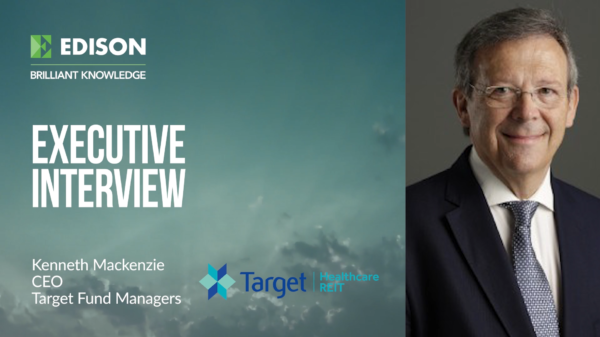
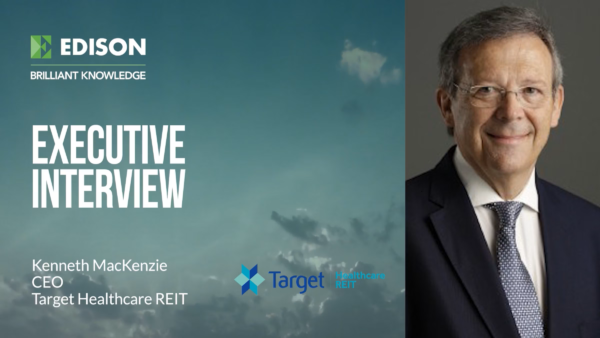
In this interview, Kenneth MacKenzie, CEO of Target Fund Managers, talks about the recently released annual report from Target Healthcare REIT and the outlook. The year to June 2026 (FY26) was very successful, and the c 12% accounting total return (the change in NAV per share plus dividends paid) was the strongest since Target was founded 13 years ago. But Target invests for the long term and perhaps more impressive is the consistency of performance, reflected in an average 7.8% annual return since launch. Kenneth believes there is much more growth ahead for the company, underpinned by its unwavering focus on asset quality in a sector with strong, long-term demographic tailwinds. Target’s portfolio of modern, high-quality, fully ESG-compliant homes is appealing to operators and residents alike, underpinning long leases, inflation-linked rental uplifts and income sustainability. With a strong pipeline of acquisition opportunities and capital recycling to keep the portfolio refreshed, Kenneth provides a confident outlook.
How sustainable is Target Healthcare REIT’s performance after another strong year, and how is it managed?
Kenneth MacKenzie: It really goes back to the foundation of the business, because we set out 13 years ago to create this long-term stable fund. In fact, I can remember very clearly some people who knew more about property than I did saying, ‘Kenneth, this really will be interesting in 10 years’ time to see if you actually deliver all that you’re promising.’ So for us, sure, this year is the best of the 13 years. But if you look over the 13 years, we have a total accounting return of 7.8% over that longer period – a bit higher this year – and that’s obviously very pleasing.
But it’s all predicated on really long leases with assets which are in demand, and which we expect to be in demand for a very long time to come. I don’t think we’re halfway into the life of what we’re doing. We’re maybe a third of the way into the life of what we’re doing, maybe only 25% into the life of what we do. We have really long legs here and real longevity, and it’s all based on these 35-year leases with assets that are in demand from the operators, with the demography behind it all.
How important is care home property quality to long-term demand from tenants and residents?
Kenneth MacKenzie: That’s fundamental. When we started in this, the real estate stock in care homes was generally substandard and not best in class. About 10% of the assets across the UK were fit for purpose. Today, that number has increased quite a bit, and we have been at the forefront of that. We’re quite a unique portfolio – exclusively modern, purpose-built and fit for purpose.
And when I say fit for purpose – because in the last two or three years we’ve been refreshing some of what we had – even the ones we sold were fit for purpose for the longer term. It’s just that they were a little smaller per resident, in square metres per resident. So that’s exclusively what we’ve been doing.
You can be sure we’ve had endless arguments internally. Do we buy and get some more yield in the poorer-quality stuff, or do we stay in this prime premium? And that’s who we are. Here we are with the results for the year to June 2026, and the evidence of that being wise is increasingly evident.
After selling a portfolio of nine assets and other disposals, how is Target Healthcare REIT progressing with redeployment?
Kenneth MacKenzie: We sell assets, if we can, at a price above NAV, because obviously that’s beneficial to our shareholders. When we’ve been trading at a discount, it also shows that in our case NAV is real. Remember what I said earlier: when we’ve been selling assets, we are not selling the best of our assets; we’re selling the poorer of our assets, if anything. So that has been part of the strategy. If you’re going to have a modern purpose-built portfolio, it can’t all be 30 years old, 20 years old or whatever.
Then, on the question of whether we are redeploying: at the time of these results, we had redeployed 85% of what we had sold. We’ll be announcing a further acquisition in a very few days, so that we will be well deployed against what we have sold.
With all of that, we still have significant space in our debt facilities. But we’ve been telling the market this week that our pipeline is in excess of our debt facilities, including the accordion element of our debt facilities. So we have a revolving credit facility [RCF] that we need to draw down and will draw down, and beyond that, we have an accordion that we will get into later in the year.
Why is it taking longer to deploy capital into new care home acquisitions?
Kenneth MacKenzie: We’ve done that for 13 years. We’ve taken just a little longer, and here we are 13 years later with a 7.8% return over 13 years. But there are some additional reasons. Currently, re-registering a care home with the regulator will take quite a bit longer than it used to.
And we are just naturally cautious. We have an incredibly stable investment team who do get into the weeds of every care home, and we would rather be slow but right than be hasty and get into some complexities with situations. So we’re kind of unapologetic about taking our time and doing this right. We realise that may be slightly countercultural in the age that we are in – but take your time and do it right.
It’s also true to say that 10 years ago, we could typically have bought a one-off asset in perhaps eight to 10 weeks, and that same transaction today will take four, five or six months.
Is competition from other investors also a factor in acquiring purpose-built care homes?
Kenneth MacKenzie: There’s also a bit of competition, yes. There’s nothing like doing something well, and then people think they can perhaps try and copy a little. So there are some unlisted funds that are also competing with us. And that’s okay. We’re fine with that. The market overall needs more purpose-built care homes. Only 36% of beds are in fit-for-purpose care homes, so there’s a long way to go, as well as the demographic bulge that’s coming.
With the share price close to NAV and equity raising returning to the sector, could Target Healthcare REIT deploy new equity capital?
Kenneth MacKenzie: Yes. As I said earlier, we have a pipeline beyond our debt book, so that opens up that potential. We don’t want to get ahead of ourselves, however, because the first thing is to fill the debt book up. We think filling the debt book up will keep us busy through the end of this year and into the first quarter of next year. Then let’s see the state of the markets in the first quarter of next year.
Beyond acquisitions, what organic growth opportunities does Target Healthcare REIT see over the next year?
Kenneth MacKenzie: We see significant opportunity to continue to build this business, following the strategy that we started 13 years ago. We set out, Martyn – as you know, because you have interviewed me many times – to create this long, stable, bor… and we use the word ‘boring’ because we just want it to be repetitive over the long term. One of my mentors from the past used to speak about downside protection. We’re trying to create that long, stable, downside-protected income fund – and inflation actually helps us a little bit.
Some of the stats in our reporting show that our underlying tenants’ income is rising ahead of inflation. Their major costs are wages, and income is rising ahead of wage costs. So with that, we get stable rents. Rent covers are very good, and that feeds through to dividends. It also feeds through to a little bit of capital uplift, which is a key part of the total accounting return that we have this year. But long, stable income. Long, stable income. And don’t be exciting about this, and take your time.
This transcript has been lightly edited for clarity and readability. Verbal fillers, false starts and minor repetitions have been removed from the interviewee’s responses only. Punctuation, spelling and formatting have also been standardised in line with Edison house style. No substantive changes have been made to the meaning of the discussion.