Last close As at 06/08/2026
GBP0.06
▲ −0.25 (−4.35%)
Market capitalisation
GBP7m
Research: Metals & Mining
Although until recently a SPAC listed on the Main Market of the LSE, Ajax has wasted no time in becoming a natural resources company listed on Aquis and executing its strategy to acquire orphaned assets at fire sale prices and bringing them to account rapidly. Its flagship asset, Eureka in north-western Argentina, has never been the subject of modern drilling. However, it has been estimated by major mining firms Codelco and Peñoles to contain up to 616,000t of contained copper (albeit neither NI 43-101 nor JORC-compliant). Having approximately doubled its land package from 7,000ha to 14,000ha by acquiring ground contiguous to Eureka, Ajax now plans to drill the project and to declare a JORC-compliant resource in H1 CY26 to crystallise the value of the asset. At the same time it is in the process of buying three other assets in the region (Pereira Velho in Brazil, Leon in Argentina and Paguanta in Chile).
| Year end | Revenue (£m) | PBT (£m) | EPS (p) | DPS (p) | P/E (x) | Yield (%) |
|---|---|---|---|---|---|---|
| 2/24 | 0.0 | (0.2) | (0.38) | 0.00 | N/A | N/A |
| 2/25 | 0.0 | (0.1) | (0.27) | 0.00 | N/A | N/A |
| 2/26e | 0.0 | (0.7) | (0.88) | 0.00 | N/A | N/A |
| 2/27e | 0.0 | (0.7) | (0.62) | 0.00 | N/A | N/A |
Under the terms of its acquisition of La Norteña (see the ‘Expansion potential’ section),
which neighbours Eureka to the north, the vendor and Ajax (via its Argentinean subsidiary
Puna Metals) will enter into an agreement to exploit alluvial gold down to a depth
of 6m, whereby the vendor will receive 20% of the profits of such activity. The costs
of establishing the alluvial gold extraction activity will be met exclusively by Puna.
However, production of just 150oz per month could result in revenue of c
Eureka has a mineral endowment (according to Codelco and Peñoles) that ranges between
40.8kt and 616.0kt contained copper. At a resource multiple of
Ajax Resources acquires and develops assets with historical production, unexploited reserves and exploration upside. Its flagship asset is the Eureka copper-gold project in Argentina, which was in production for 400 years until the 1980s. Upon acquisition of this asset (announced in February and completed in May), Ajax no longer qualified as a shell company under Chapter 13 of the FCA UK Listing Rules and, as a result, it cancelled its listing from the Equity Shares (Shell Companies) category of the Official List and instead sought admission to AQSE, which commenced on 18 June. At the present time, the company is also negotiating to buy a further three projects in South America (Pereira Velho, Leon and Paguanta). Completion of the Pereira Velho transaction, in particular, would leave Appian – one of the world’s largest specialist mining funds – as a significant shareholder in Ajax and create the opportunity for the latter to become the former’s preferred vehicle to source and develop projects that are either too early-stage or too small for its direct consideration.
Eureka has a mineral endowment (according to well-respected copper majors such as
Codelco and Peñoles) that ranges between 40.8kt and 616.0kt contained copper. At a
resource multiple of
Our valuation of Eureka could be discounted for the fact that it is not yet JORC-compliant
or it could be discounted by the estimated cost of making it JORC-compliant, for which
Ajax has budgeted a cost of no more than £1.4m (or 1.3p/share). Within this valuation
however, very little account is taken of blue-sky exploration potential, which could
increase Eureka’s valuation into the range
Ajax had £0.8m in net cash on its balance sheet as at end-February and £1.4m as at end-August 2025. It maintains no head office and, at the current time, pays only one cash salary. Hence, there is a minimal administrative cash drag. Since end-August, we estimate that it will have paid out £0.2m in administrative expenses and that it will pay out a further £0.6m in cash for acquisitions in H226 and a further £0.7m in exploration investment at Eureka. Over the same timeframe, it has raised an effective c £1.5m in equity finance to leave it with an estimated £2.6m currently. Hence, we estimate that it will still be net cash positive as at end-February 2026 and until approximately October 2026. By this time, it should have produced a maiden, JORC-compliant mineral resource estimate at Eureka, which will define the parameters of any future equity fund-raisings.
Ajax’s strategy is the acquisition of assets with historical past production that can be revitalised through targeted technical, geological and infrastructural investment. Its flagship asset is the Eureka copper-gold project in Argentina, which was in production for 400 years since the 16th century until the 1980s. Ajax is also in the process of buying three other assets in the region (Pereira Velho in Brazil, Leon in Argentina and Paguanta in Chile).
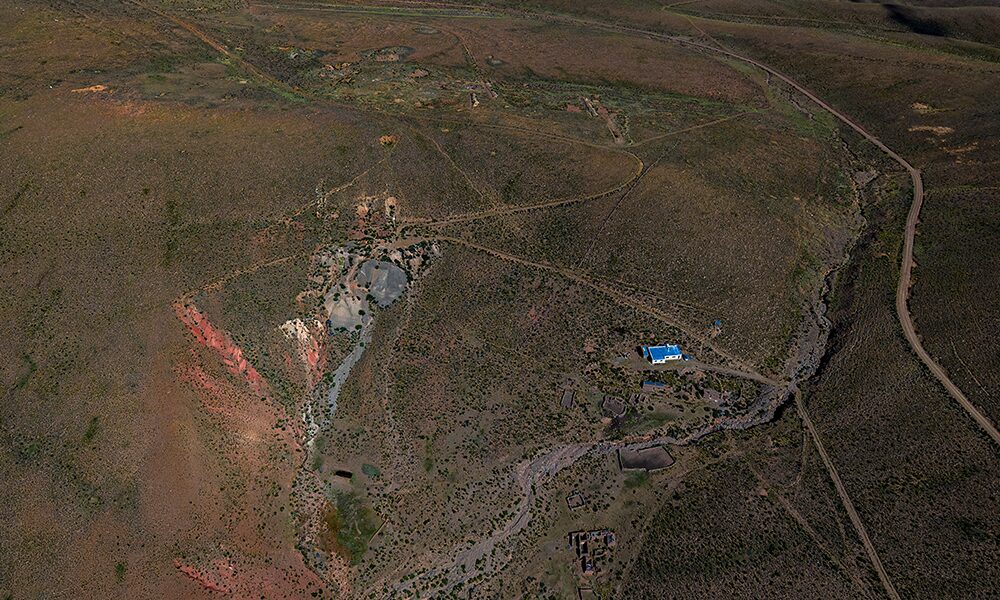
The Eureka project is located in north-west Argentina and comprises 18 exploration licences. Both copper and gold mineralisation have been identified, albeit in different geological environments. To date, neither JORC- nor NI 43-101-compliant resource estimates have been delineated. However, previous exploration of the project has resulted in a number of non-compliant resource estimates (see Exhibit 4, below) and, on 8 December 2025, Ajax received formal approval for its Environmental Impact Study on Eureka from the director and Mines and Energy Resources for the Province of Jujuy, which will allow it to undertake the first modern drilling campaign in the project’s history.
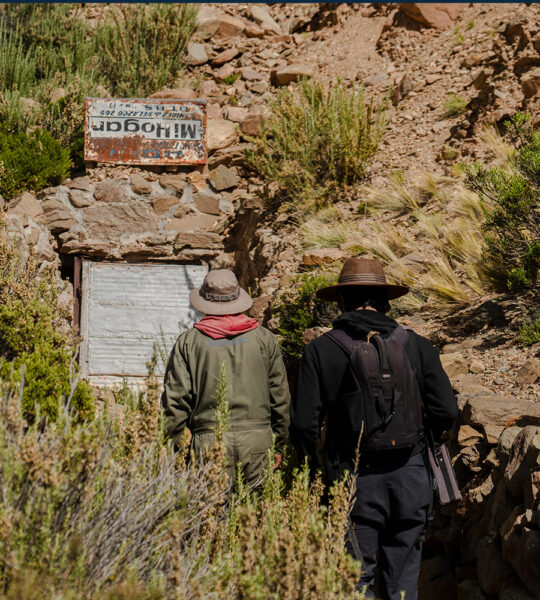
The 18 licences are situated within the Argentinean portion of the regionally extensive Bolivian-Argentinean Tertiary Belt, which is known to host Red Bed copper deposits such as Corocoro in south-west Bolivia. The underground Eureka gold mine (now closed and largely flooded), which has been mined intermittently since the 16th century, is situated in the middle of the property.
Copper oxide mineralisation occurs in loosely consolidated conglomerates and is the focus of the project’s economic potential. The mineralisation is amenable to heap leaching while the carbonate content of the conglomerate is reported to be low, thereby reducing potential acid consumption. However, the source of the copper mineralisation is uncertain. It could have formed as a result of mineralising fluids passing through the unconsolidated conglomerates typical of Red Bed deposits. Alternatively, the copper could have been eroded from upstream and deposited at the same time as the conglomerates.
Both primary and secondary gold mineralisation is also present at the project. In its primary form, vein hosted gold mineralisation is related to older, regional volcanism and has eroded to form secondary, placer deposits.
The Eureka mine has a long history dating back to Incan times and subsequently the Jesuits in the 16th century who recovered alluvial gold from a number of shallow surface pits as well as one underground drift with almost 2,000m of workings. In more recent times, it was mined for gold between 1885 and 1908 and between 1950 and 1960. In the 1970s and 1980s, the mine was worked for both gold and copper. It has been estimated that previous mining has recovered c 9,000oz of gold (70,000t at 4g/t) and 2,000t of copper. The mine is now largely flooded except for the upper level.
Since the 1980s, a number of operators have explored the project. A brief summary of their activities is outlined below.
Bezant Resources (AIM: BZT) entered into an agreement to acquire the property in late
2010 and completed its purchase in January 2012 for a consideration of c
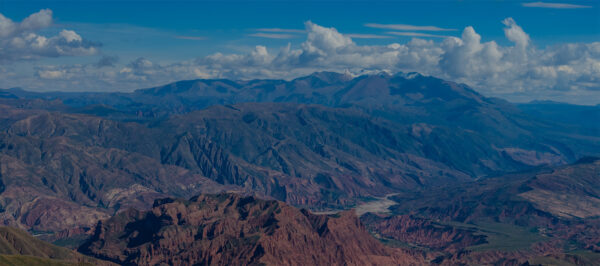
The Eureka property is located 3,600–4,386m above sea level in the north-west corner of the Jujuy Province in northern Argentina, close to the border with Bolivia. It is located approximately 250km east of Calama (in Chile) and 20km west of Santa Catalina (in Argentina) and accessible via a series of gravel roads. Its nearest major port is Antofagasta, in Chile.
The Eureka project is located in a northerly trending depositional basin that covers an area of approximately 20km × 6km. The basin developed within the Ordovician basement in a structural transfer zone between two regional scale north/south striking faults. Stratigraphically, the sequence consists of older Ordovician metasediments overlain by younger Cretaceous marine clastics and carbonates followed by Miocene lacustrine and fluvial sediments. The copper mineralisation is hosted within Miocene (5.3–2.6 million years old) conglomerates, which are thought to have been mineralised by hydrothermal waters circulating during volcanism. Miocene/Pliocene lavas and pyroclastics (c 23.0–2.6 million years old) partially cover all the older sequences. The Ordovician basement (487–443 million years old) is often mineralised with gold-bearing quartz veins and, when eroded, can develop placer deposits in alluvial settings.
‘Red Bed’ type stratabound copper oxide mineralisation is hosted within the pebble conglomerates of the weakly consolidated upper portion of the Eureka Formation. It has been suggested the mineralised conglomerates formed in active channels of a braided river system. Mineralisation occurs over multiple horizons over the entire 450m thick Eureka Formation, which covers an area c 3.5km × 4km. The mineralised horizons are generally flat lying to gently dipping and vary in thickness from 1cm to over 60cm. The horizons can be anything from one to hundreds of metres long and up to 10m in width.
In addition, placer gold has been recovered from basal conglomerate layers in the Eureka Formation. Within the region, north trending quartz veins up to 15m in width and striking for over 6km are also known to be gold bearing and represent the likely source of the placer deposits.
Copper mineralisation occurs within the conglomerate matrix as well as coatings on the pebbles. The minerals include mainly copper oxides such as malachite, chrysocolla, native cooper and cuprite. Lesser amounts of tenorite, azurite, atacamite and brochantite are also present. No primary copper mineralisation has been located in the fragments within the Eureka sediments nor have any copper sulphides been observed. The mineralisation occurs as discrete horizons with six main levels. The copper grades of these horizons vary from 0.1% to 6.3%.
The exact source of the mineralisation is open to interpretation. However, one suggestion is that the Eureka project hosts a possible Red Bed type deposit. In this scenario, low temperature copper bearing fluids migrated into the unconsolidated Eureka sediments via basin margin faults. Copper mineralisation was deposited along the permeable pebble conglomerate horizons. The source of the copper mineralisation has yet to be determined, however samples of the underlying Ordovician black shales reportedly contain up to 400ppm copper. Another hypothesis is that exotic, primary copper deposits to the north and west on the Bolivian side of the Rio San Juan de Oro could be the source of the metal. Erosion of these would have resulted in the syngenetic deposition of copper within the active channel conglomerates. A third possibility is that conglomerate hosted exotic mineralisation overlies deeper Red Bed type mineralisation.
Similar Red Bed type copper occurrences are located approximately 60km to the north-west in Bolivia. These are relatively small-scale (<50,000t). However, the Corocoro deposit, also in Bolivia, is estimated (by the state mining company, Comibol) to contain 80–100Mt ore at a copper grade of 0.6%.
Gold mineralisation at the project occurs as both primary mineralisation within the quartz veins of the Ordovician sediments and as secondary placer mineralisation within the conglomerates of the Eureka Formation (Exhibit 3). These primary quartz veins can be up to 10m wide and some contain visible gold. Surficial material overlying these vein outcrops has been exploited as a source of alluvial gold. Previous sampling returned up to 5.2g/t over 3m at the western margin of the El Torno vein and a gold resource of 52,000oz was estimated by Mantos Blancos.
Previous exploration by Codelco and Minera Peñoles has outlined non NI 43-101-compliant resources for the copper mineralisation. Their work consisted of extensive sampling of trenches, test pits, creek beds and the underground workings. These resource estimates are summarised in Exhibit 4 and discussed in more detail below. In addition, Mantos Blancos explored for gold around the Eureka Mine in the 1980s and established a potential resource of 600,000t at 2.7g/t Au containing 52,000oz.
As part of its work, Codelco estimated an undiluted copper resource of 2.04Mt at 2% Cu (equivalent to 40,800t Cu) based on a visible, near-surface resource that is partially exposed in the south-east of the Eureka property and covers approximately 1.0km × 0.6km. Codelco went on to estimate a corresponding diluted resource of 13.1Mt at 0.36% Cu (equivalent to 47,160t of copper) over a mineralised interval of 10m to 25m.
The Codelco report goes on to suggest an exploration potential by extrapolating fourfold the visible near-surface resource of the south-east portion over the entire property and the entire thickness of the Eureka sequence. On this basis, Codelco calculated an undiluted exploration potential of 8Mt at 2% Cu (containing 160,000t of copper) and a corresponding diluted exploration potential of 52Mt at 0.35% Cu containing 180,000t of copper (Exhibit 4).
According to the Codelco report, additional ‘blue sky’ exploration potential is expected to occur within the 90km district between the Eureka project in the north and the Providencia mine in the south. The size and grade of several near-surface mineral showings in the field suggest the presence of a number of small, dispersed but relatively high-grade copper accumulations, similar to those observed in the south-east portion of the Eureka property.
Edison understands that Codelco did not attempt to assess the exploration potential for alluvial gold on the Eureka property and the wider Eureka district. Mantos Blancos had previously estimated a gold resource potential of 52,000oz (600,000t at 2.7g/t Au) for the Eureka mine. However, according to Jim Chapman, author of the NI 43-101 technical reporton the Eureka property (which described the property but did not provide resource estimates), it could host a placer gold resource of several times this size. In addition, gold hosted within the Ordovician quartz veins is thought to represent an exploration target in its own right.
Minera Peñoles undertook a more extensive exploration programme than any of the previous owners. As a consequence, it calculated a resource estimate of 52.0Mt at 1% Cu (equivalent to 520,000t of contained copper). Although this is almost three times larger than the previous Codelco estimates, Edison understands that this is a direct consequence of the additional exploration undertaken by Minera Peñoles.
On the basis of its more extensive exploration programme, Minera Peñoles estimated an exploration potential of 61.6Mt at 1% Cu containing 616,000t Cu (Exhibit 4).
On 8 December, Ajax reported that its Environmental Impact Study (EIS) for Eureka had been formally approved by the Director of Mines and Energy Resources for the Province of Jujuy. Eureka is drill ready, and various highly prospective anomalies have already been identified by previous operators, including high grade copper oxides at surface, with grades up to 6.1% Cu and numerous samples returning more than 0.5% Cu across multiple historical programmes.The approval of the EIS represents a key permitting milestone for the company and now allows it to start the first ever modern, drilling exploration campaign on the property.
Ajax's drilling programme will commence with an initial 1,500m diamond drilling campaign, benefiting from and building upon the extensive historical mapping and pitting completed across Eureka by previous owners. This initial programme will be followed by a further 4,000m of drilling, guided by these initial results, designed to expand coverage across priority copper and gold targets and advance Eureka toward a maiden JORC-compliant mineral resource estimate in H1 CY26. Drilling will target shallow geochemical and IP anomalies, as well as a deeper IP chargeability anomaly outlined in a 2014 report authored by SRK, possibly representing the transition to a sulphide-rich feeder system.
We have valued the Eureka project on the basis of its estimated resources (outlined
in Exhibit 4). To these estimates, we have applied a weighted average resource multiple
of
A summary of the range of results for Eureka is presented in Exhibit 7, below, depending
on the resource estimate adopted. In the most conservative scenario, we value the
undiluted Codelco copper resource at
Our average in-situ resource valuations for copper and gold apply to JORC- and NI 43-101-compliant resources only. Strictly speaking therefore, our valuations must be interpreted on the condition that Ajax’s resources achieve JORC or NI 43-101 compliance. They may therefore be discounted either for the probability of achieving JORC or NI 43-101 compliance and/or the cost of achieving that compliance. On the other hand, we note that both Peñoles and Codelco are responsible, producing copper companies, which inherently confers confidence on their resource estimates (note we are unaware whether the Codelco or Peñoles estimates have been made public, but we obtained them in our discussions with Ajax and, previously, Bezant). Moreover, inasmuch as Ajax’s maiden resource at Eureka may not match the most optimistic exploration estimates for the project when it is announced (targeted for early next year), there is some evidence (albeit not statistically significant at the 5% level) that smaller resources attract higher in-situ valuations on the presumption that they have expansion potential, as shown in Exhibit 8, below:
On this basis, Codelco’s (minimum) resource estimate of 40,800 in-situ copper tonnes
could be valued at
Albeit with the same proviso regarding JORC or NI 43-101 compliance, taking blue-sky
exploration upside into account suggests an average valuation for Eureka of
Since acquiring Eureka in May, Ajax’s management has pursued an explicit strategy of maximising the property’s prospectivity by completing a series of bolt-on acquisitions (summarised below) that have more than doubled its land position in the region, to c 14,000ha.
On 15 May, Ajax announced the acquisition of Minas La Escondida (contiguous to Eureka) from a local Argentinean investor. The relevant characteristics of this prospect are:
On 27 August, Ajax confirmed the completion of the acquisition of 100% the 6,300ha
La Norteña licence area, which also neighbours Eureka to the north, for
Under the terms of the acquisition, the vendor and Ajax (via its Argentinean subsidiary
Puna Metals) will enter into an agreement to exploit alluvial gold (limited to gold
located within 6m of the surface) at La Norteña, whereby the vendor will receive 20%
of the profits of such activity. After 24 months, Puna will then have the option to
purchase the vendor's profit share for
Also in August, Ajax applied for mineral sub-surface rights over three areas of land similarly contiguous with Eureka. Two of these applications relate to mineral exploration licences (Cateo), covering a combined area of approximately 118ha. A third relates to a mining licence called La Piqueta, which covers a further 216ha.
On 11 December, Ajax announced that it had signed a heads of terms to acquire 100% of the issued share capital of Pereira Velho Exploração SA (PV), a Brazilian company that owns the Pereira Velho gold project in Alagoas State in Brazil, from well-known British private equity mining fund manager Appian Capital Advisory. On completion, Appian – one of the world’s largest speciality mining funds – will become a material shareholder in Ajax.
The Pereira Velho project is a significant licence package, of which only a small
portion has been drilled. It covers 14,596 hectares and hosts a more than 2.5km gold-in-soil
anomaly just 30km from the Mineração Vale Verde copper-gold project that Appian developed
and sold to Baiyin Nonferrous for
Access to the project area is via the AL-110 highway and municipal roads. The nearest urban centre is Arapiraca, which provides essential services such as healthcare, education, skilled labour and commercial infrastructure.
The region experiences a tropical rainy climate with dry summers, with rainfall concentrated between February and October, which nevertheless allows for year-round exploration and mining activities. Water resources are available from local rivers and groundwater sources, while electricity is supplied through the national grid, supplemented by hydroelectric power stations.
Between 2018 and 2022, PV was subject to 6,363m of diamond drilling across 47 holes (average 135m/hole), which confirmed widespread, near-surface, oxidised gold mineralisation hosted in fractured quartzite and gneiss units with modest clay content, resulting in a highly prospective potential deposit with a low-stripping ratio.
A historical mineral resource estimate – comprising both oxide and fresh material – was filed with the Brazilian National Mining Agency in 2023, as follows:
As at Eureka, this estimate is neither JORC nor NI 43-101 compliant and will require further delineation and potential re-estimation by Ajax. However, such exploration can now be undertaken within the context of an intuitive, structurally controlled exploration model, with multiple drill-ready targets defined via a combination of recent historical drilling, soil geochemistry and geophysical datasets. Metallurgically, over 80% of the mineralisation is reported to be oxidised, containing free gold, supporting the potential for a low-cost, open-pit, heap-leach development pathway in a region that has good road access, established local infrastructure and an experienced mining workforce.
Pereira Velho is located within the Rio Coruripe Domain of the Neoproterozoic Sergipano Orogenic Belt and represents a promising gold exploration venture within the Borborema province (a well-known metallogenic belt in northeastern Brazil). Local geology is dominated by high-grade metamorphic rocks of the Arapiraca Complex, including biotite and quartz-feldspathic gneisses, migmatites, granulites, quartzites and banded iron formations, intruded by minor Neoproterozoic granitoids, which are favourable hosts for gold mineralisation.
Multiple ductile–brittle deformation phases and major NW–SE and NE–SW shear zones exert strong structural control on gold emplacement.
Gold itself occurs within a low-sulphidation, gold-only orogenic system hosted in quartz–pyrite veins and fractured quartzites. The quartzite corridors extend up to 10km, providing significant scope for strike extensions and resource expansions. Mineralisation consists of free and pyrite-hosted gold, commonly associated with limonite, haematite, and magnetite. Hydrothermal alteration includes propylitic, sericitic, silicic and argillic assemblages.
Both bottle roll and column leach metallurgical studies have been conducted on Pereira Velho material. Results showed that oxidised ore samples achieved higher gold recoveries, suggesting that cyanidation or heap leaching could be viable processing options. However, sulphide-rich samples exhibited refractory characteristics, indicating that pre-treatment methods such as roasting or ultra-fine grinding may be necessary to enhance gold liberation.
At the same time, column leach tests provided insights into gold dissolution kinetics, showing moderate to high recovery potential, although further tests will be required to determine optimum leach times, reagent use and particle size distribution.
Under the terms of the agreements Ajax will acquire 100% of PV for a total consideration
of up to
It is intended that both parties will negotiate in good faith to sign and exchange a sale & purchase agreement (SPA) on or before 16 January and complete the transaction on or before 30 January 2026.
Pursuant to the PV/Appian agreement, Ajax raised an additional £1.2m in equity (gross)
via the issue of new ordinary shares at 5.5p to support its recent suite of transactions.
The issue price for these shares has then also be applied to Appian’s subscription
(see above and below), whereby it has agreed to subscribe for the sterling equivalent
of
Following completion, Ajax plans to execute a work programme at Pereira Velho divided into two phases:
As at Eureka, the resource estimated at Pereira Velho is currently neither JORC- nor NI 43-101 compliant. As such, the valuation below should be interpreted as being contingent upon Ajax’s being able to bring it up to compliant standards and/or it should also be discounted for the cost of doing so. With that proviso, the table below provides an indicative valuation for the prospect at our most recent, calculated comparison of several listed, small- to mid-cap gold explorers conducted at the same time as that for copper explorers for Eureka (above):
On this basis, it can be seen that Ajax is acquiring an asset with an indicative valuation
of
On 10 December, Ajax announced that it has (via its Argentinean subsidiary, Puna Metals) entered into a preliminary agreement with Madero Minerals SA to buy the León mining project in the Salta province of Argentina. The agreement is structured as a conditional exploration and option-to-purchase framework, whereby Puna is bound only if due diligence is satisfactory, while the vendor assumes binding obligations from signature. The assets covered in the transaction are:
Payments for the project occur 36 months after EIA approval, unless Puma does not
exercise the option. The minimum work commitment is
All payments, investments and obligations by Puna only apply after due diligence approval and signing the definitive contract. Transaction costs and stamp duties will be shared 50:50.
Leon is 55km south-east of Salta city and benefits from favourable access via paved
national highways and gravel roads, with water available from the nearby Juramento
River. It was previously owned by Alexander Mining, which reportedly spent
In the meantime, at a global average in-situ value of
Note that Leon also boasts a historical copper resource of 44.7Mt at 0.8% Cu and 21.8g/t
Ag. If Ajax were able to delineate a JORC resource of this magnitude, we estimate
that it would be valued in the order of
On 28 August, Ajax announced that it had agreed terms to conditionally acquire a 74.81% interest in the Paguanta project from ASX-listed Asara Resources.
Paguanta is an advanced exploration-stage polymetallic deposit, historically recognised for its silver production, located in the Tarapacá region of northern Chile and comprising 14 exploitation concessions and 14 pending applications for exploration concessions covering approximately 7,800ha. The project hosts noteworthy mineral resources, primarily silver, zinc and lead, as well as lying on the northern extension of Chile’s West Fissure, which is the world’s largest concentration of major porphyry copper-molybdenum deposits. Hence, it also boasts significant identified potential for copper and gold on ground surrounded by BHP and Codelco claims.
The core of Paguanta's current value resides in the Patricia prospect, which has been the subject of the most extensive exploration efforts. This prospect boasts a JORC-compliant mineral resource of 6.8Moz silver, alongside 265Mlb zinc and 74Mlb lead. A notable feature of these mineral resources is that they remain open at depth (where the deepest hole ended in mineralisation with grades of 1,765g/t Ag, 12% Zn, 7.5% Pb and 1.7g/t Au) and along strike, indicating considerable potential for future expansion.
Under the terms of the agreement:
In the event that it proceeds, consideration for the acquisition will be:
In similar fashion to our valuation of copper resources, for silver resources we apply
an average resource multiple of
Unlike at Eureka, Paguanta’s resource is already JORC-compliant. Similar to copper however, there is evidence (which, in this case, is statistically significant at the 5% level, based on the number of data points in the population and the correlation coefficient between them) that resource size is inversely proportional to resource multiple, such that smaller resources attract higher in-situ valuations on the presumption that they have expansion potential as shown below:
On this basis, Paguanta’s resource estimate of 6.8Moz in-situ silver (gross) could
be valued at
Prior to COVID-19, Chile was regarded as one of the best destinations for mining investment attractiveness in the world. This has waned since the election of Gabriel Boric as president in 2022. Nevertheless, it remains within the top half of global jurisdictions for mining investment attractiveness according to the most recent (2024) annual survey by the Fraser Institute (Exhibit 17).
Jujuy province’s mining investment attractiveness must necessarily be considered within the context of Argentina’s overall socioeconomic backdrop. President Javier Milei took office on 10 December 2023, amid a lack of support in Congress, an annual inflation rate approaching 200%, rising poverty and a polarised population. His administration’s focus is therefore necessarily focused on economic reform. Nevertheless, the country recently held midterm elections where Milei's party, La Libertad Avanza (LLA), made significant gains in Congress, improving its legislative position. While Milei's government has begun to stabilise inflation, its policies have faced criticism regarding social programme cuts and human rights challenges. Possibly as a result, Jujuy did not feature in the Fraser Institute’s 2024 survey. However, its 2023 survey position is shown by the arrow in the graph below. Were it to maintain the same score in 2024’s survey therefore, it would feature in the second-best quartile of jurisdictions for mining attractiveness.
Chile has operated a hybrid model of state-owned (Codelco) and privately owned mining companies that has remained central to government policy for over three decades. On 16 November 2025, it held a general election in which President Gabriel Boric was prohibited from running for re-election under the constitutional ban on consecutive presidential terms. There is a perception that President Boric’s administration has disappointed the Chilean electorate, with constitutional reform failure and broken campaign promises thereby weakening the position of the left wing in general. In the event, however, no presidential candidate secured an absolute majority in the first round, with the result that a run-off election was conducted on 14 December between the top two finishers – Jeannette Jara of the Communist Party and Jose Antonio Kast of the Republican Party – and was won by the latter, who will now be inaugurated on 11 March 2026.
Possibly, as a consequence of the above, Chile’s trend within the Fraser Institute survey has been generally downwards since 2018, when it ranked among the world’s top 10 destinations for mining investment attractiveness (albeit with a tick upward in 2024). By contrast, Jujuy has generally been on a flat to gently rising profile until 2023 (albeit with a noticeable dip in 2016 when a new government under President Mauricio Macri began its term amid economic instability, high inflation and a 32.6% poverty rate).
Brazil is the largest nation in South America and a globally recognised jurisdiction,
where mining accounts for c 4% of national GDP and c
Mining in Brazil is governed by the Brazilian Mining Code (Decree-Law 227/1967) and administered by the ANM. Titles are granted via Exploration Authorisation followed by Mining Concession, subject to technical and economic studies. Foreign companies may hold 100% ownership.
The country has well-developed rail, port, and power networks in core mining regions, while environmental permitting requires federal and state approval under the EIA/RIMA regime, with post-2019 reforms strengthening environmental, social & governance, safety, and tailings management standards.
Although it has the largest economy in South America and one of the top ten in the world in nominal terms, Brazil is seen in some quarters as a serial under-performer, possibly based on the perception of president Lula da Silva’s statist economic policies, its embrace of the BRICS grouping of countries in defiance of President Trump and limited structural reforms. As a result, its Investment Attractiveness declined in 2024 relative to 2023, although in the 13 years prior to that its ranking was broadly flat, just outside the top quartile of mining jurisdictions (Exhibit 17).
Taking our
In contrast to Exhibit 19, above, Exhibit 20, below, shows the maximum value that we can derive for Ajax (based on Peñoles’ exploration potential of 61.60Mt at 1.0% Cu) and compares this with the minimum value that we can derive based on Codelco’s undiluted resource of 2.04Mt at 2.0% Cu assuming no blue-sky exploration potential. It also takes into account the maximum potential values that we calculate for Leon and Paguanta.
On this basis, it can be seen that, while Ajax’s maximum valuation far exceeds both its mean valuation (Exhibit 19) and its share price, its minimum valuation (excluding Pereira Velho, Leon, Paguanta and blue-sky exploration potential) of 4.9p/share is only slightly below its share price of 5.875p (ie a 16.5% discount).
Ajax had £1.4m in net cash on its balance sheet as at end-August 2025. It maintains no head office and, at the current time, pays only one cash salary. Hence, there is a minimal administrative cash drag. Since end-August, we estimate that it will have paid only another c £0.2m in administrative overheads, before raising a further effective £1.5m in equity to leave it with an estimated £2.6m currently, from which it will pay out c £0.6m in cash for acquisitions in H226 and a further £0.7m in exploration investment. Therefore, we estimate that it will still be net cash positive as at end-February 2026 and until approximately October 2026. By this time, we anticipate it will have produced a maiden, JORC-compliant mineral resource estimate at Eureka, which will define the parameters of any future equity fund-raisings and development steps.
Thereafter, in order to bring the project to production, Ajax will probably have to complete at least two out of three studies (a scoping study and/or a pre-feasibility study and a definitive feasibility study), which will also involve drilling the deposit out to the fullest reasonable extent (a likely two- to three-year time frame). It will then need to raise both debt and equity finance to develop the project and finally, it will need to construct it (a further two to three years).
Ajax Resources
6th Floor
Gresham Street
London
EC2V 7NG
+44 (0) 208 146 6289
info@ajaxresources.com
N/A
Chief executive officer: Ippolito Cattaneo
Ippolito Cattaneo is an energy sector entrepreneur with a blend of financial and operational experience across various regulatory environments.
He is Ajax’s founder and speaks four languages fluently (English, French, Spanish and Italian). He started his career at Standard Chartered Bank in loan syndication, before joining Zenith Energy, a Canadian oil and gas company with interests in Azerbaijan, Tunisia, Italy and the Republic of the Congo, listed on both the London Stock Exchange and Euronext Growth Oslo.
Non-executive chairman: Michael Hutchison
Michael Hutchinson began his career at Metallgesellschaft, where he worked for 25 years, ultimately becoming its managing director in 1985. At the same time, he was a board member, between 1986 and 2006, of the London Metals Exchange (LME). Since then, he has held a number of notable board and management roles, including chairman of Metalloyd, a major supplier of steel and raw materials, and chairman of Wogen, a speciality metals trading house. From 2017 to 2021, he served as non-executive chairman of Bluejay Mining, an AIM-listed mining exploration and development company.
Executive director: Richard Heywood
Richard Heywood has experience in metal trading and financial services, having previously worked at J O Hambro Capital Management Group, assisting the leadership of the company. Before that, he was a commissioned officer in the Scots Guards. He is currently engaged in commodities trading across East Africa.
I.I. Cattaneo Esq.
JIM Nominees
J. Story Esq.
Orca Capital
Appian*
Elmlea Properties
A. O’Hara Esq.
First Corporate Consultants
R. Heywood Esq.
J. Simmons Esq.
*Estimated post-fundraising.
22.99
9.10
8.85
8.13
5.40
5.01
3.95
3.25
3.17
3.05
General disclaimer and copyright
This report has been commissioned by Ajax Resources Plc and prepared and issued by Edison, in consideration of a fee payable by Ajax Resources Plc. Edison Investment Research standard fees are £60,000 pa for the production and broad dissemination of a detailed note (Outlook) following by regular (typically quarterly) update notes. Fees are paid upfront in cash without recourse. Edison may seek additional fees for the provision of roadshows and related IR services for the client but does not get remunerated for any investment banking services. We never take payment in stock, options or warrants for any of our services.
Accuracy of content: All information used in the publication of this report has been compiled from publicly available sources that are believed to be reliable, however we do not guarantee the accuracy or completeness of this report and have not sought for this information to be independently verified. Opinions contained in this report represent those of the research department of Edison at the time of publication. Forward-looking information or statements in this report contain information that is based on assumptions, forecasts of future results, estimates of amounts not yet determinable, and therefore involve known and unknown risks, uncertainties and other factors which may cause the actual results, performance or achievements of their subject matter to be materially different from current expectations.
Exclusion of Liability: To the fullest extent allowed by law, Edison shall not be liable for any direct, indirect or consequential losses, loss of profits, damages, costs or expenses incurred or suffered by you arising out or in connection with the access to, use of or reliance on any information contained on this note.
No personalised advice: The information that we provide should not be construed in any manner whatsoever as, personalised advice. Also, the information provided by us should not be construed by any subscriber or prospective subscriber as Edison’s solicitation to effect, or attempt to effect, any transaction in a security. The securities described in the report may not be eligible for sale in all jurisdictions or to certain categories of investors.
Investment in securities mentioned: Edison has a restrictive policy relating to personal dealing and conflicts of interest. Edison Group does not conduct any investment business and, accordingly, does not itself hold any positions in the securities mentioned in this report. However, the respective directors, officers, employees and contractors of Edison may have a position in any or related securities mentioned in this report, subject to Edison's policies on personal dealing and conflicts of interest.
Copyright 2026 Edison Investment Research Limited (Edison).
Australia
Edison Investment Research Pty Ltd (Edison AU) is the Australian subsidiary of Edison. Edison AU is a Corporate Authorised Representative (1252501) of Crown Wealth Group Pty Ltd who holds an Australian Financial Services Licence (Number: 494274). This research is issued in Australia by Edison AU and any access to it, is intended only for "wholesale clients" within the meaning of the Corporations Act 2001 of Australia. Any advice given by Edison AU is general advice only and does not take into account your personal circumstances, needs or objectives. You should, before acting on this advice, consider the appropriateness of the advice, having regard to your objectives, financial situation and needs. If our advice relates to the acquisition, or possible acquisition, of a particular financial product you should read any relevant Product Disclosure Statement or like instrument.
New Zealand
The research in this document is intended for New Zealand resident professional financial advisers or brokers (for use in their roles as financial advisers or brokers) and habitual investors who are “wholesale clients” for the purpose of the Financial Advisers Act 2008 (FAA) (as described in sections 5(c) (1)(a), (b) and (c) of the FAA). This is not a solicitation or inducement to buy, sell, subscribe, or underwrite any securities mentioned or in the topic of this document. For the purpose of the FAA, the content of this report is of a general nature, is intended as a source of general information only and is not intended to constitute a recommendation or opinion in relation to acquiring or disposing (including refraining from acquiring or disposing) of securities. The distribution of this document is not a “personalised service” and, to the extent that it contains any financial advice, is intended only as a “class service” provided by Edison within the meaning of the FAA (i.e. without taking into account the particular financial situation or goals of any person). As such, it should not be relied upon in making an investment decision.
United Kingdom
This document is prepared and provided by Edison for information purposes only and should not be construed as an offer or sol icitation for investment in any securities mentioned or in the topic of this document. A marketing communication under FCA Rules, this document has not been prepared in accordance with the legal requirements designed to promote the independence of investment research and is not subject to any prohibition on dealing ahead of the dissemination of investment research.
This Communication is being distributed in the United Kingdom and is directed only at (i) persons having professional experience in matters relating to investments, i.e. investment professionals within the meaning of Article 19(5) of the Financial Services and Markets Act 2000 (Financial Promotion) Order 2005, as amended (the "FPO") (ii) high net-worth companies, unincorporated associations or other bodies within the meaning of Article 49 of the FPO and (iii) persons to whom it is otherwise lawful to distribute it. The investment or investment activity to which this document relates is available only to such persons. It is not intended that this document be distributed or passed on, directly or indirectly, to any other class of persons and in any event and under no circumstances should persons of any other description rely on or act upon the contents of this document.
This Communication is being supplied to you solely for your information and may not be reproduced by, further distributed to or published in whole or in part by, any other person.
United States
Edison relies upon the "publishers' exclusion" from the definition of investment adviser under Section 202(a)(11) of the Investment Advisers Act of 1940 and corresponding state securities laws. This report is a bona fide publication of general and regular circulation offering impersonal investment-related advice, not tailored to a specific investment portfolio or the needs of current and/or prospective subscribers. As such, Edison does not offer or provide personal advice and the research provided is for informational purposes only. No mention of a particular security in this report constitutes a recommendation to buy, sell or hold that or any security, or that any particular security, portfolio of securities, transaction or investment strategy is suitable for any specific person.
London │ New York │ Frankfurt
20 Red Lion Street
London, WC1R 4PS
United Kingdom
Research: TMT
Filtronic has won another material contract with a major European defence prime, with the initial tranche of the contract worth c £7m and the total value of the contract worth £11m over two years. The contract highlights the company’s growing exposure to the defence industry and ongoing efforts to diversify the business. We maintain our forecasts.