Last close As at 05/08/2026
AUD0.12
▲ 0.01 (4.55%)
Market capitalisation
AUD50m
Research: TMT
Freelancer reported a mixed performance in H124, with Escrow.com volumes down significantly after a very strong Q123, while the Freelancer platform benefited from growth in the Loadshift business. There are several promising opportunities in the enterprise business, including providing AI model training services and integration into new verticals within Escrow.com, that could reinvigorate growth from H224. Management is focused on making incremental improvements to the core marketplace platform with the aim of encouraging clients to become regular users of the platform and expanding the size of projects.
Freelancer |
Using AI to enhance revenue and profit growth |
H124 results |
Software and comp services |
1 August 2024 |
Share price performance
Business description
Next events
Analyst
Freelancer is a research client of Edison Investment Research Limited |
|||||||||||||||||||||||||||||||||||||||||||||
Freelancer reported a mixed performance in H124, with Escrow.com volumes down significantly after a very strong Q123, while the Freelancer platform benefited from growth in the Loadshift business. There are several promising opportunities in the enterprise business, including providing AI model training services and integration into new verticals within Escrow.com, that could reinvigorate growth from H224. Management is focused on making incremental improvements to the core marketplace platform with the aim of encouraging clients to become regular users of the platform and expanding the size of projects.
Year end |
Revenue (A$m) |
Operating EBITDA* |
PBT** |
EPS** |
EV/EBITDA |
P/E |
12/22 |
55.7 |
(6.6) |
(6.9) |
(1.52) |
N/A |
N/A |
12/23 |
53.3 |
0.6 |
0.3 |
0.06 |
106.1 |
297.9 |
12/24e |
51.5 |
0.4 |
0.2 |
0.02 |
157.5 |
769.5 |
12/25e |
53.5 |
0.9 |
0.7 |
0.11 |
72.9 |
173.0 |
Note: *Includes depreciation and interest charges associated with capitalised leases. **Excludes amortisation of acquired intangibles, exceptional items and share-based payments.
H124: Cost control limits impact of lower gross profit
Freelancer reported an 18% y-o-y decline in gross marketplace volume (GMV) in H124, with Escrow.com the largest contributor to the decline (-21%) and the Freelancer marketplace essentially flat. As most of the GMV decline was from the lower take rate Escrow.com service, revenue declined only 8% y-o-y. Gross profit was 12% lower and was partially offset by a reduction in operating costs, with operating EBITDA falling to -A$1.2m from -A$0.4m in H123. In Q224, project sizes increased quarter-on-quarter and marketplace liquidity improved. Since June, the core marketplace has seen improving metrics for short-term client retention and milestones created, pointing to a potential GMV recovery. We have revised our forecasts to reflect lower GMV and revenue in FY24 and FY25, partially offset by lower operating costs, predominantly through lower headcount.
Adapting to the threats and opportunities from AI
Freelancer is investing in tools and functionality that will help its freelancers to work more efficiently and on higher-value projects. It is also using AI internally to automate various processes and adapting customer acquisition channels to new generative AI (GenAI)-powered search methods. It has also identified the opportunity to supply a multi-lingual flexible workforce to companies seeking to train their AI models and is currently piloting a service with a major technology company.
Valuation: Volume growth
On an EV/sales basis across FY1e and FY2e, Freelancer trades at an average discount of c 38% to its closest peers (Upwork and Fiverr). Reversal of the GMV and revenue declines will be key to reducing this gap. Catalysts could include enterprise contract wins, growing Loadshift GMV, customers in new verticals for Escrow.com and a higher take rate for Escrow.com.
Investment summary
Company description: Developing the Amazon of services
Freelancer is an Australian company, operating one of the world’s largest online marketplaces connecting businesses with freelancers, including those from developing countries. As well as supporting entrepreneurs and SMEs, the company has blue-chip customers such as NASA and Deloitte. CEO Matt Barrie founded the company in 2009 and has used M&A for international expansion, as well as for the development of its two other businesses: Loadshift, Australia’s largest marketplace for heavy freight, and Escrow.com, which provides secure online escrow payment services for larger value transactions. Loadshift emerged from acquisitions in 2018 and 2021, and we believe the transition of customers over to Freelancer’s marketplace technology stack offers significant monetisation potential. Escrow.com facilitates secure and swift transactions in various domains, processing close to US$600m annually, serving clients like Meta and eBay. With a focus on client retention and engagement, the company is looking to reinvigorate revenue growth and improve profitability.
Financials: Adapting cost base to maintain profitability
Management generates revenue through commission on the value of work/payments transacted through its platforms. As well as reinvigorating volumes, expanding the take rate is key to the company’s growth strategy, which it delivers through value-added services like memberships for its marketplaces or additional security measures for Escrow.com. Volumes declined across both platforms over the last few years, primarily due to post-COVID-19 behaviour and a fall in domain name transactions, which can be lumpy. We are expecting a further volume and revenue decline in FY24, although we expect strong control over the cost base to allow the company to maintain profitability at the operational EBITDA level. To drive marketplace GMV, the company is using marketing to grow its client base and encourage existing clients to use the platform more regularly while investing in new features that can expand the average project size. The Loadshift business and enterprise operations have the potential to grow rapidly, leveraging the core marketplace’s technology. In Escrow.com, in the near term we expect volumes to be driven by domain name sales with a growing contribution from shopping cart platforms from FY25.
Valuation: Unlocking long-term potential key to upside
On an EV/sales basis across FY1e and FY2e, Freelancer trades at an average discount of c 38% to its closest peers (Upwork and Fiverr). Reversal of the GMV and revenue declines will be key to reducing this gap. Catalysts would include enterprise contract wins, growing Loadshift GMV, customers in new verticals for Escrow.com and a higher take rate for Escrow.com.
Sensitivities
Macroeconomic changes, like those during the COVID-19 pandemic, can affect the company’s marketplace due to shifts in working patterns. Technological advancements like generative AI could enable businesses to complete work internally, rather than use an external specialist. There are also execution risks as the company refines its platforms and explores growth opportunities. Additionally, the company’s limited free float, with non-executives owning a significant portion of shares, may limit share liquidity. Lastly, while its Escrow licences can act as a competitive moat, failure to meet regulatory requirements could cost the company in monetary and reputational terms.
Company description: Refined, now ready to grow
Freelancer operates one of the largest online marketplaces for freelancers, connecting businesses of all sizes to independent contractors based around the world. With a large proportion of contractors from developing countries, the platform provides competitive pricing for work and supports greater wealth distribution from the developed to the developing world.
The company operates and reports through two divisions. Within the Marketplace division, the company operates the Freelancer marketplace (which includes a specialist enterprise offering) and Loadshift, a marketplace for heavy haulage freight. The Escrow division operates Escrow.com, an escrow payment service that supports the secure processing of large-value transactions. The company’s customer roster includes blue-chip enterprise customers such as Deloitte, NASA and Meta. In Exhibit 1, we show the business lines within each division and the key growth drivers for each business.
|
Exhibit 1: Group structure and business divisions |
|
|
Source: Freelancer, Edison Investment Research |
Freelancer was founded in 2009 by current chairman and CEO Matt Barrie, following the acquisition of Swedish company GetAFreelancer. The acquisition was funded by Startive Ventures, a technology-focused venture capital fund owned by Simon Clausen, a current non-executive director of Freelancer. Later that year, GetAFreelancer was rebranded to Freelancer.com. Since then:
■
In 2010, the company acquired two freelance marketplace platforms, freelancer.co.uk (UK) and Lime Exchange (US), highlighting its ambition to grow internationally.
■
In 2011, the company launched its crowdsourcing platform Freelancer Contests, which remains a key feature for growing its portfolio of freelancers.
■
In 2012, the company made further acquisitions – Scriptlance (Canada) and vWorker/RentACoder (US) – and launched in Spanish and German.
■
The company listed on the ASX in late 2013, raising A$15m from the issue of 30m shares at A$0.50 per share.
■
In April 2015, the company raised A$10m to fund the Escrow.com acquisition.
■
In August 2015, the company raised A$10m for general working capital purposes.
Management has employed a buy and build strategy, which, as shown in Exhibit 2, has enabled it to accelerate international expansion and provided the foundations for its other two main business units, Escrow.com and Loadshift. Acquisitions have been cash rather than equity-settled.
Exhibit 2: M&A history since listing
Date |
Target |
Currency |
Amount |
Country |
Description |
19/03/2014 |
Zlecenia Przez |
PLN |
N/A |
Poland |
Acquired certain IP and domain name assets of Zlecenia, expanding its user base in Poland. Zlecenia had over 85k users and posted to 115,000 projects. |
02/04/2014 |
Fantero.com |
US$ |
N/A |
US |
1m digital content items, used to support freelancers on Freelancer platform. |
15/04/2014 |
Warrior Forum |
US$ |
3.2m |
US |
Was world's largest marketplace and community for internet marketers; had over 732,000 users. Kept name following acquisition and launched Warrior Payments on 22 July 2014. |
11/03/2015 |
DoNanza |
US$ |
N/A |
Israel |
Freelance job marketplace and aggregator. |
24/03/2015 |
Projectlinkr.com |
US$ |
N/A |
Spain |
Leading online jobs marketplace in Spain, expanding its presence among Spanish speaking regions. Had over 140k Spanish speaking users. |
01/11/2015 |
Escrow.com |
US$ |
7.5m |
US |
Provider of online escrow services, acquired from Fidelity National Financial. Originally it was acquired so that Freelancer marketplace could enter into regions whose regulation required a separate escrow platform; now it is a standalone business division. |
13/12/2016 |
Nubelo |
US$ |
N/A |
Spain |
Largest Spanish freelancer marketplace after Freelancer. |
13/12/2016 |
Prolancer |
US$ |
N/A |
Brazil/ |
Largest Portuguese freelancer marketplace after Freelancer, was taken over by Nubelo in July 2015. |
20/11/2018 |
Channel 40 |
A$ |
N/A |
Australia |
Connects freight owners and transport operators, number of synergies with Freelancer’s business model. Brand changed to Freightlancer following completion. |
24/05/2021 |
Loadshift Transport System |
A$ |
7.7m |
Australia |
Australia’s largest marketplace for long-distance freight trucking services; 85.8m km of freight requested in 2020. |
Source: ASX
We note that external investors acquired stakes in Freightlancer when the company acquired Loadshift. Freelancer now owns 60% of the Loadshift business.
Alongside its M&A programme, management has spent several years optimising the business models of the acquired companies and ensuring client bases are secure to limit potential fraud and spam. Now this process is largely complete, the company is positioned to scale securely across all three business units.
Strategy
Following the company’s M&A programme, management is now focused on growing the business organically. In the long term, we believe Freelancer may use M&A again to enter new verticals, employing a similar strategy to Loadshift, where management is transitioning the business from the acquired subscription bulletin board business model to the same codebase as its Freelancer marketplace.
To grow organically, Freelancer is primarily focused on increasing the volume of work it processes through its platforms (GMV). It can generate incremental revenue by expanding its GMV take rate.
To grow GMV, management focuses on:
■
Investments in its user interfaces with new features and displays to drive user engagement.
■
Adding more collaborative and personalisation tools to encourage collaboration, aiming to increase retention and conversion to drive up project size.
■
Focused search engine marketing (SEM) that has a demonstrable return on investment, to grow its demand-side client base. The company relies on organic channels for freelancers.
■
Working with partners and using referrals to grow its demand-side client base.
To expand its take rate of the GMV across its platforms, the company offers a portfolio of value-added services, which have the potential to generate sticky, recurring revenue. It has recently updated the prices for its Escrow.com service, which has the potential to increase the take rate.
We explain the specific strategies for each business unit in more detail below.
Freelancer: World’s largest freelancing marketplace
Freelancer.com is the world’s largest marketplace for freelancers by user base, with over 75m registered members spanning 247 countries, regions and territories. The number of freelancers on the platform ensures high liquidity, with each project receiving on average 45 bids and 67% of projects receiving bids within 60 seconds (H124). Exhibit 4 demonstrates how the majority of the source of jobs is from the Americas and Europe whereas the source of freelancers is weighted towards Asia. In H124, the company processed A$64.7m of GMV through its platform.
|
Exhibit 3: Freelancer’s online economy |
|
|
Source: Freelancer. Note: Pink lines represent jobs posted and blue lines represent jobs done. |
Freelancer specialises in enabling the fulfilment of customisable job requirements and to a high standard at relatively low cost by leveraging its deep pool of freelancers globally. Project sizes range considerably, from a US$10 logo design to as large as a US$10m project for NASA. Freelancers can select from over 3,000 skill areas, meaning that almost any job requirement can be fulfilled on the platform. Exhibit 4 shows that over half of completed projects fall into the categories of ‘design, media and architecture’ or ‘websites, IT and software.’
|
Exhibit 4: Completed project categories by volume, H124 |
|
|
Source: Freelancer |
Management has spent significant resource and time developing validation and rating systems to support project reliability and quality, instilling confidence in the client and supporting higher engagement. Competitions, rather than standard project tenders, enable freelancers who are new to the platform to build a reputation and high star rating. Discussed below, competitions can also be a lucrative alternative for freelancers and can allow them to collaborate on groundbreaking projects, such as the National Institutes of Health’s and NASA’s US$10m award for gene editing in the central nervous system.
In 2024, the company is focused on the following four areas:
■
Improving client retention. In the company’s words ‘turning Freelancer from a painkiller into a narcotic’. In other words, ensuring the initial experience of using the platform is positive for clients and putting in place effective cross-selling strategies to encourage clients to return to the platform to make repeat purchases and view the platform as an essential business service. The company is making incremental improvements to all aspects of the platform, including payments, user interface (UI) and AI-powered conversion.
■
Reinvent the world of work in the AI revolution. The company is helping its freelancers to stay at the forefront of AI technology, providing tools to enhance their productivity and quality of output. It is using AI internally to automate certain business processes, such as identifying spam, identifying bad-actor accounts and marketing to freelancers and customers. It is also providing services to customers who are training AI models (see Enterprise section for more details). The company has released the first version of its AI business transformation landing page, which aims to support customers to navigate the use of AI.
■
Rethink client acquisition in a world without Google. Management expects GenAI to change the landscape for organic customer acquisition channels and is adapting its customer acquisition methods accordingly.
■
World leading UX (user experience) and design that wins awards. The company made good progress with UI/UX in 2023, improving personalisation and collaboration functions. So far this year, it has introduced dark mode and overhauled the design of freelancer profile pages. A new feature, ‘Project updates’, was introduced in beta in Q124 and launched to all users in Q224. The focus for H224 is to bring all collaborative tooling together into a coherent package via the ‘Workspaces’ product.
Its enterprise package allows individual organisations to develop a custom platform, based on Freelancer’s proprietary InSource enterprise product. Management believes there is significant latent demand, particularly from multinationals, for customisable platforms that can connect either underutilised internal pools of talent or external pre-qualified freelancers to a particular project.
Business model
At the core level, management monetises the platform by taking a share of the value of projects posted: 3% commission from its demand-side clients and 10% from the freelancers. Freelancer then offers memberships and several value-added services, allowing it to expand its take rate of the GMV. Management rarely sees disputes between its clients and freelancers, but has a three-stage process to ensure optimum satisfaction among its membership base. We discuss the process and cash flows below.
For clients:
■
Clients can post jobs, review obligation-free quotes, chat with freelancers and review samples of their work and portfolios – all free of charge.
■
On the award of a project, the total payable will be 103% of the project size: 3% project commission to Freelancer (paid on contract award) and 100% to the worker (payable at various stages depending on the agreed milestones).
■
Projects can either be a fixed value or an hourly rate. Clients can add additional requirements onto a project once it has been awarded. The company’s quotation function allows clients and freelancers to discuss a project fee before it starts.
■
Clients can post jobs of any type, also including local work such as hardware repairs or building work.
■
Freelancers go through a Know Your Customer (KYC) verification process once they have earned over US$30 on the platform, providing a robust first layer of security for the client.
■
Freelancer.com’s technical co-pilots (project managers) provide an add-on service that can help evolve a client’s idea to a full project.
For freelancers:
■
Freelancers can view projects posted, bid on projects, chat to clients, fill in a profile, upload a portfolio and provide samples of work – all free of charge. Freelancers can also select from over 2,700 skill sets to help match the freelancer to a project.
■
After a project is awarded and accepted, the freelancer pays a 10% commission to Freelancer. Freelancer can also take a share of the project fee upon completion, rather than at the start, but charges 15% for this service.
■
Freelancers can also be recommended for a project through Freelancer’s recruit function, which can increase Freelancer’s commission to 15% if freelancers are part of the preferred programme (these would typically be higher-value projects, justifying the higher commission rate).
■
Becoming KYC verified ensures that freelancers are paid faster upon completion of a project and has historically allowed for faster dispute resolution.
■
Multiple freelancers can also collaborate on a project via the Groups feature.
In addition to the free version of the platform, the company offers membership programmes that provide freelancers with a host of benefits including increasing the number of bids they can make, exclusive access to higher-value projects and daily cash withdrawals. The four programmes are Basic, Plus, Professional and Premier, and as an example, in the UK they range in price from £4.45 to £59.95 per month. Management believes that freelancers convert to being paid members as it elevates their chances of being awarded a project, particularly at the higher-value end. For the company, memberships provide stable, monthly recurring revenue and the tiers provide upsell opportunities.
In addition to memberships, management has a selective Preferred Freelancer programme (PFP), where freelancers are chosen on reputation and previous quality of work. Benefits for the freelancer include exclusive invitations to high-value projects, preferential fee payment plans for Recruiter projects and premium support. To join the PFP, among other things freelancers need to be in the top 3% overall ranking in their chosen skill sets, be verified by Freelancer, have a professional profile and portfolio of work suitable for enterprise customers and be certified (ie rank in the Preferred Freelancer entrance exam).
In addition to its PFP scheme, Freelancer offers a higher-level verification process to KYC, including a video interview, confirming that the account is authentic – this service costs £96/$99. Once verified, the freelancer earns a blue tick by their name and has instant access to projects worth more than $2,500 and hourly projects worth more than $50.
Competitions: High-value prizes and supporting new freelancers
Competitions offer an alternative way of posting a project on the Freelancer.com platform, where freelancers can compete against each other to win a monetary award from the client. Management introduced competitions to its platform in 2011, providing several benefits to its clients and freelancers. These benefits include:
For clients:
■
Competitions allow them to assess a range of concepts, creative ideas and freelancers, most applicable to projects that are easily visually comparable, such as logos, visualisations and artwork. They are particularly beneficial if the client does not have a clear picture of the desired outcome.
■
It is free to post a competition, eliminating the 3% project fee.
For freelancers:
■
Newly joined freelancers can access competitions more easily than standard projects, to help them build their reputation on the platform (winning competitions earns reputation points at 5x the level of a standard project). A better reputation on the platform increases the likelihood of being awarded a project.
■
Competition awards may also be higher than for comparable project work, particularly for new freelancers to the platform.
For management, using competitions is key to expanding the number of high-quality freelancers globally, without having to incur the marketing costs of recruiting freelancers through traditional avenues. By expanding the ways in which they can post work, competitions are also important to growing its demand-side client base.
Enterprise: A growth lever
Since 2018, management has developed several avenues to work with enterprises of all sizes, including:
■
Custom marketplaces: Fortune 500/1000 companies are the target. Custom platforms are built on the company’s proprietary InSource product.
■
Government, which publishes tasks to the public, normally through a competition.
■
Field services: instead of going through local agencies/contractors, multinationals can use the platform to remove costs by connecting the customer directly to a local, vetted field engineer.
Separately through the platform, small and medium-sized enterprises (SMEs) can also post projects at a company level, rather than as an employee of a company, and may be able to reduce commission if volumes are high enough.
Management employs the same 3% fee from its clients and 10% commission from freelancers and can provide other value-added services to expand its take rate, such as additional levels of security or reach.
In FY23, the company reported that enterprise services (not including GMV-linked revenue) generated revenue of A$3.7m, up 12% y-o-y (contributing 8% of Freelancer divisional revenue and 7% of group revenue).
Building in-house platforms: InSource
In May 2022 (H122), management deployed the MyGigs platform developed for Deloitte, a collaborative product built on Freelancer’s enterprise platform, InSource. MyGigs provides Deloitte’s staff with access to external PFP freelancers or connects to internal teams worldwide, which may have the capacity to provide additional resource. MyGigs is integrated with several of Deloitte’s internal systems, including SAP Fieldglass, creating an end-to-end product allowing internal staff to hire freelancers, manage projects and process payments at scale. More than 67k consultants have been onboarded to the platform.
MyGigs generates SaaS recurring revenues based on the number of staff using the platform and Freelancer takes a commission on any external project work completed through its PFP freelancers. To date, Deloitte has made limited use of external freelancers via the MyGigs platform but the company has engaged with the newly appointed MyGigs adoption team to accelerate usage of the platform. So far, MyGigs is being used by the US consulting practice within Deloitte. Freelancer has scope to extend to other Deloitte practices in the US as well as in other countries.
|
Exhibit 5: Deloitte’s MyGigs user interface |
|
|
Source: Freelancer |
MyGigs is Freelancer’s flagship product for InSource, which was built alongside MyGigs over several years. Following completion, management believes that InSource can now be customised and integrated into an enterprise within a few months to a year.
Helping governments to innovate
Working with governments is a second core growth driver for Freelancer’s enterprise operations. In 2020, management jointly won the US$25m NASA Open Innovation Services (NOIS2) tender, giving the company responsibility for crowdsourcing talent to support the next era of space exploration. NASA has since increased its allocation to the NOIS2 programme to US$175m. Freelancer’s NASA tender currently underpins the government source of revenue for its enterprise offering, where management penetrates other areas within the US government through NASA (which acts as the lead organisation for government crowdsourcing).
For NASA and the US government, crowdsourcing expands the pool of talent they can access and can substantially lower costs by providing access to lower-cost labour markets. Given the award sizes, these contests can attract large research institutions and universities, as well as any qualified freelancer. The company monetises the work through project fees that include engineering and design as well as running the contest. The US is its primary source of revenue, but the company has generated some revenue from several countries in the Middle East and more recently supported the Australian Space Agency’s collaboration with NASA’s Artemis programme to develop a lunar rover. In FY23, Freelancer earned US$1.05m in revenue from NASA for managing projects with awards totalling US$805k.
Streamlining global field services
The third prong of its enterprise work is field services, connecting Freelancer’s qualified field service engineers to customers in those regions for local work, such as hardware repairs. For an enterprise, using Freelancer provides a low fixed cost and trusted way of locating specialists, replacing the work and potentially high variable costs of finding and managing local specialists or agencies. In Q123, Freelancer completed its integration with a global computer and printer company’s CRM and workflow management system, which is now fully operational in 48 cities across India, Malaysia, Australia, New Zealand and Indonesia (see Exhibit 6). Volumes for this customer increased 230% y-o-y in H124.
Freelancer believes there is a near-term growth opportunity in penetrating the much larger US market and expanding into installation work for the company, which is less capital intensive than hardware repair.
|
Exhibit 6: Geographic presence of field service engineers for computer and printer client |
|
|
Source: Freelancer |
AI creates new enterprise opportunities
In Q124, the company noted that it had delivered a large-scale pilot for a major technology company. The client wanted to crowdsource certain GenAI tasks to train its foundational model. As part of the pilot, Freelancer sourced and qualified more than 20,000 freelancers in 24 hours across 52 languages. The pilot expanded in Q224 and by the end of H124 Freelancer had sourced and qualified more than 60,000 freelancers. It is now exploring a direct integration with the customer’s platform to provide the service seamlessly. The company estimates that it has the capacity to provide more than 500,000 hours of GenAI training per month.
We believe this represents an opportunity for Freelancer to support other companies wishing to train their AI models, whether foundational models for the large technology players or smaller, niche models trained on company-specific data. Having access to freelancers all over the world who are native speakers of languages other than English is particularly useful to train models in less commonly spoken languages.
Loadshift: Australia’s largest transport marketplace
Loadshift is Australia’s largest marketplace for heavy haulage freight, in areas such as machinery, construction, industrial mining and all other types of ‘big, ugly freight’, according to management (see Exhibit 7). The platform processed a notional gross load value of c A$280m in FY23.
Freelancer made its foray into the freight marketplace with its acquisition of Channel 40 for an undisclosed amount in 2018, which then became Freightlancer once consolidated. The company then acquired Loadshift in 2021, augmenting Freightlancer’s marketplace platform with the client base of Australia’s largest heavy haulage freight marketplace. The merged entity kept the name Loadshift, with Freightlancer decommissioned.
|
Exhibit 7: Composition of loads processed in FY23 |
|
|
Source: Freelancer |
The focus for Loadshift in FY22 and FY23 was moving it from a classified membership model to a marketplace model. While the membership model remains, management sees the transition of companies over to the marketplace model as the greatest growth opportunity, allowing it to benefit from the increased volumes of freight posted through the platform; this process started in H222. In H124, Loadshift reported GMV of A$12.8m, up 43.6% y-o-y. Quotes placed increased 104.7% y-o-y to 176,225 and the average number of quotes per job increased from 3.3 in H123 to 7.9 in H124.
The main metric the company is currently focused on is the award rate (a measure of the number of jobs awarded compared to the number of jobs posted on the platform), which increased from 16.7% in Q223 to 28.3% in Q224. The reason it is not higher is that some clients post jobs and then move off-platform to award the work. Loadshift management is working hard to discourage this kind of activity and has removed certain clients from the platform who post jobs but never award them. It is also developing an in-app calling function that allows clients to speak to drivers while they are on the road, making it easier to communicate and giving drivers a higher chance of being awarded jobs.
Like the Freelancer marketplace, the company charges its clients and drivers 3% and 10% (5-7% for various membership categories) commission, respectively, on the cost of transporting the freight. These are largely standardised, but management may charge more for complex and large transportations, such as for construction sites that require large volumes of freight. Additionally, the marketplace provides value-added services for an additional fee, including the management of permits, road closures, import/export taxes and duties, shipping documents and more.
Loadshift solely operates in Australia given the size and the number of verticals that require the movement of heavy freight, including mining and infrastructure. In the longer term there is the potential to expand the marketplace to other geographies; we believe Canada would be an obvious next choice based on its size and the number of mining operations. There is also the opportunity to replicate Loadshift in other verticals by using its enterprise stack as a platform.
Loadshift currently sits within the Freelancer division, but we expect it to be segmented after it has reached a certain size. Additionally, the high value of the freight being moved provides an opportunity to cross-sell Escrow.com, ensuring additional security in the value chain.
Escrow.com: A unique large transactions processor
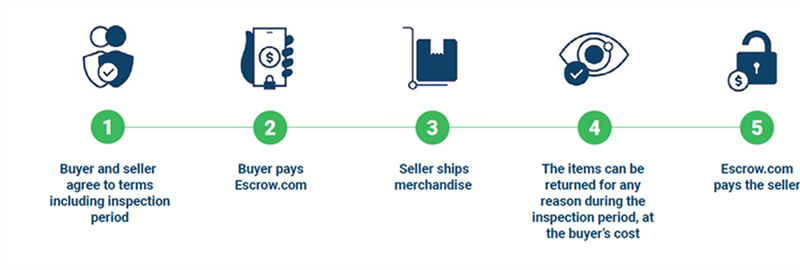
Freelancer describes Escrow.com as the PayPal for large-value transactions, providing a secure and quick checkout option for items ranging from c US$1k to US$100m in areas such as real estate, domain name transactions, luxury items and M&A. Escrow.com can also digitise traditional offline methods of trading goods, such as for oil, gas and mineral rights. The platform processed transactions worth nearly US$600m in FY23 and works through these stages:
|
Exhibit 8: Escrow.com process flow |
|
|
Source: Freelancer |
We believe that Escrow.com provides a compelling proposition for high-value transactions, where the alternatives, as shown below, are often less secure and inefficient:
■
Credit cards: merchants are reluctant to accept credit cards given the chargeback risk, where the cardholder requests the card issuer to reverse the charge if the purchased product or service is not delivered.
■
Cash or wire transfers: there is a risk in delivering cash safely and trusting the seller to deliver the goods in the promised condition.
■
PayPal: this runs the risk of buyer fraud, where the buyer takes delivery of the goods but claims there is something wrong with the item or that it never arrived, keeping both the item and the cash (a well-known problem on websites like eBay and Amazon).
■
Law firms and unregulated processors do not have same licences as Escrow.com, making transactions inherently less secure, which increases in importance as transactions grow in size.
The combined security and digitisation of the transaction process can simplify long distance and cross-border transactions, elevating the liquidity of a marketplace. The importance of features like KYC verification is growing to ensure regulatory compliance in several jurisdictions.
Since Escrow.com was acquired in 2015, management has invested in bolstering the security of the platform by ensuring that both parties are KYC verified and becoming fully licensed throughout the US, Canada and Australia. In the company’s experience, becoming fully licensed is typically a five- to seven-year process, creating significant regulatory barriers to entry. Additionally, Escrow.com is the only online payments solutions for eBay motors showcasing the importance of security for merchants selling high-value items.
As shown by Exhibit 9, the platform has been used for transactions involving several premium domain names, including Meta, Uber, Instagram, Twitter and Crypto.com, underpinning management’s claim that Escrow.com is ‘where the metaverse is bought and sold’. In H124, two-thirds of the Escrow.com’s gross payment volume came from domain names at US$174m (H123: c US$220m), with a particularly large transaction in Q123 accounting for the decline in H124.
|
Exhibit 9: Domain names transacted on Escrow.com |
|
|
Source: Freelancer |
Entering new verticals presents a growth opportunity, particularly in areas where processing large transactions can be complex, manual and involve many credit layers. The company notes it can grow utilisation in new and current verticals by penetrating the client bases of its partners, for example Acquire.com, which is a marketplace for the buying and selling of start-ups.
The company has identified the e-commerce segment as an attractive vertical and currently has four of the major shopping cart platforms lined up to integrate with Escrow.com. In Q224, the company’s focus was on integrating with one of the largest platforms that processes more than US$75bn in transaction volume per annum and has scheduled trials of the integration for Q324. Once fully live, we expect it will take time for users to become aware of and comfortable with the service.
In Q224, the business updated its price card, creating a wider range of price bands and introducing minimum fees in each band. This was the first material price change in more than 20 years. The business also has scope to increase its take rate by providing add-on services, such as checking shipping documents, post inspection sale adjustments and lease swap arrangements.
Market: Significant underlying drivers
Strong market dynamics for the adoption of cloud workers
After the 2008 financial crisis, companies sought a leaner and more efficient workforce. Until recently, technology lacked the capability for management teams to effectively leverage cloud-based contractors worldwide. With advancements like generative AI enabling real-time translation, accessing cost-effective, specialised talent has never been easier.
From SMEs to large multinationals, utilising cloud-based freelancers offers a host of benefits, which drives the adoption of marketplaces like Freelancer.com. These include:
■
Flexibility and cost management: tapping into a cloud-based platform allows firms to scale their workforces up and down depending on work requirements, enabling them to keep a tighter control of their cost bases, particularly if freelancers are available at more competitive rates versus traditional on-site workers.
■
Future proofing: investments in high-speed internet connections and advancements in communication technologies are making it easier for firms to work with contractors globally, who may have unique skill sets that can help the company to keep abreast of current technology trends at a potentially lower cost than hiring talent internally.
■
COVID-19 and changing workforce preferences: more companies are adopting a flexible work environment and may turn to cloud-based freelancers to fill in talent gaps and maintain productivity. More staff are also looking to work remotely, driving the liquidity of the freelancer market.
Marketplaces like Loadshift are benefiting from similar market dynamics. Moving heavy freight can be complex and requires significant coordination. Using a cloud-based platform can streamline the process of finding available carriers from a potentially larger and more diverse pool of specialists, resulting in cost savings and time efficiencies. Platforms can also extend reach by allowing shippers to connect with operators across different regions and countries. Marketplaces, like Loadshift, are also equipped with services that ensure regulatory compliance, reducing the risk of incurring penalties or non-delivery.
Market landscape
In the public market there are a limited number of companies that compete directly with Freelancer’s marketplace, including Fiverr and Upwork, which are both listed in the US.
Management believes Freelancer differentiates itself from its listed peers by providing both customised services and access to freelancers globally, including from developing nations. In place of customisation, Fiverr’s strategy focuses on efficiency optimisation and ease of use. Freelancers on its platform post the specifics of their service under a fixed pricing structure.
Upwork’s platform is similar to Freelancer in that its clients can leave open jobs for freelancers to bid on or can get in touch with them directly based on the freelancer’s skillset. However, Upwork is more US-centric and has a more rigorous process for freelancers to join its platform, targeting mostly US and western contractors.
There is significantly more fragmentation on the private side; however, all business models do share similarities with the listed peers. Several companies are vertical specific, including Superside, Dribbble, Behance and Australian-based 99designs, which provide digital design services, and Clarity, which is start-up focused.
Other platforms, like Guru, PeoplePerHour and Malt, are more pricing and job agnostic. Additionally, the company competes with traditional methods of hiring a freelancer, such as job boards, referrals and networking.
Large transactions are moving online
In today’s globalised economy, cross-border transactions are increasingly common and a growing number of verticals are looking to move to online payment methods. Distance may lead to information asymmetry between buyers and sellers, and there may be additional risks for international parties such as different legal systems, currencies and regulations. Regulators across the world are also becoming more stringent with financial institutions and customers being KYC compliant, with the US Financial Crimes Enforcement Network a key example.
In Exhibit 10, we show the size of the markets in which Escrow.com operates, management’s expected compound annual growth rate for each vertical and average industry take rates by category.
|
Exhibit 10: Escrow.com verticals, showing market size (US$bn), CAGR and take rate |
|
|
Source: Freelancer |
Secure escrow services offer a standardised and third-party platform, ensuring secure exchanges of assets or funds, reducing the risk of fraud, non-payment or non-delivery. Platforms can also handle the complexity of international hurdles, as well as compliance with local regulation, providing a streamlined end-to-end service. Therefore, we believe the opportunities for escrow platforms will only grow in a diverse range of verticals.
A concentrated market
Growing use of e-commerce, technological advancements and changing consumer behaviours have expanded the payments processing landscape. Global payment networks like Mastercard and Visa still play an important role in facilitating funds transfers between banks, merchants and consumers. However, as digital and online payments grow in popularity, new technologies are integrating into these networks to make transfers more efficient and secure, as well as provide consumers with more payment channels.
For consumers, solutions like PayPal, Apple Pay and Google Pay can make purchasing easier and more efficient, while keeping transfers secure with biometric and authentication technologies. Stripe and Square are typically B2B services, offering SMEs various tools for e-commerce and in-person transactions. These well-known payment methods tend to be used for smaller-value transaction payments. Conversely, Escrow.com, which processes payments between c US$1k and US$100m, has significantly fewer competitors. In the large transactions processing market there have been significantly fewer new entrants, where current alternatives to Escrow.com are primarily banks and law firms. However, these options can come with a significantly higher fee structure, potential conflicts of interest and limited interoperability with online platforms. There are also blockchain escrow services, where complexity may inhibit adoption, transactions are irreversible once recorded and there is limited jurisdictional control.
Management
Freelancer has a one-tier board structure, comprising Matt Barrie, CEO and chairman, as well as four non-executive directors, Darren Williams, Simon Clausen, Patrick Grove and Craig Scroggie. Collectively, the board owns 81.4% of the company’s stock, with Matt Barrie the top shareholder (43.4%).
As well as starting Freelancer in 2009, Matt founded and was CEO of Sensory Networks, a vendor of high-performance network security processors, which was sold to Intel Corporation in 2013. Matt was also an adjunct associate professor at the University of Sydney, where he taught cryptography for 15 years and, later, technology venture creation, while running Freelancer and Sensory Networks.
Two of the company’s non-executive directors also have deep roots with the company. Darren Williams transitioned to the role in late 2015 following his time as executive director and chief technology officer at Freelancer. He co-founded Sensory Networks with Matt. Simon Clausen was a founding investor in Freelancer through his venture capital fund Startive Ventures. Simon has over 17 years’ experience in high-growth technology businesses in both Australia and the US. He also founded and was CEO of PC Tools, a consumer-centric software company that generated over US$100m in revenue annually before it was sold to Symantec in 2008. Patrick Grove joined the board in June 2024. He is founder, chairman and CEO of Catcha Group, which invests in internet businesses in South-East Asia. Craig Scroggie joined the board in August 2024. He is CEO and managing director of NEXTDC, an ASX-100 listed company providing data centre-as-a-service in Asia.
The board is supported by a team of eight experienced managers, including Neil Katz (chief financial officer), Laurent Goudet (chief technology officer), Adam Byrnes (VP of products and growth), Shuan McMeeken (global sales director), Sebastián Siseles (VP, international), Andrew Bateman (director of product (enterprise)) and Ayen Torcuator (global head of customer experience).
Financials
Business model
In the table below, we summarise the fees that Freelancer earns within the Freelancer division.
Exhibit 11: Fees earned from clients and freelancers in the Freelancer division
Commission on GMV |
Contest |
|||
Client |
Freelancer |
Client |
Freelancer |
|
Freelancer marketplace |
3% |
10%/15% (if PFP) |
N/A |
10% of prize |
Freelancer enterprise |
3% |
10%/15% (if PFP) |
Fee |
N/A |
Loadshift |
3% |
10%/5% (members) |
N/A |
N/A |
Source: Freelancer. Note: PFP, preferred freelancer programme.
As well as commission fees, the company can also earn additional fees from the marketplace (eg membership fees, upgrade fees, verification fees, PFP fees) and from the enterprise business (eg engineering services, recruiter fees, co-pilot hourly fees, per user per annum fees for InSource).
For Escrow.com, Freelancer earns a percentage of the payment value. The rate varies depending on the type of asset or services bought/sold. It also earns a small amount from value-added services such as checking whether cars are stolen or subject to finance agreements or tracking the service history of medical equipment.
Income statement
Exhibit 12 shows our forecasts and the company’s performance over the last three years.
■
Freelancer: GMV declined in FY21 and FY22, partly reflecting post-COVID behaviour, before recovering in FY23 as the enterprise and Loadshift businesses made a growing contribution to volumes. We expect Loadshift’s share of divisional revenue to increase from 5% in FY22 to 11% by FY25. We forecast a decline in enterprise services revenue in FY24, reflecting a lower level of project-based work, with a forecast for flat enterprise GMV-linked revenue. We expect both to grow in FY25 as various initiatives gain traction. We forecast a small decline in GMV for the core marketplace in FY24, although we estimate that volume should grow as the year progresses.
■
Escrow.com: with the majority of volume coming from domain name sales, the business benefits when certain trends are hot (H221/H122) but sees lower volumes as bubbles burst (eg the crypto decline in H222). We expect a further GMV decline in FY24 before a return to growth in FY25 as integrations with e-commerce partners start to bring in new business.
The group has generated a gross margin in the range of 83–85% over the last five years although it has dipped in H124. We forecast a slightly lower rate in FY24 and FY25. Costs of sale include payment gateway and bank fees for processing transactions, as well as direct labour costs associated with managing certain enterprise engagements.
Employee costs make up the bulk of operating costs, followed by administrative costs, marketing costs and depreciation. The company currently has c 310 employees and we forecast this to rise gradually over the next two years. There are c 210 employees in Manila, Philippines, including an engineering group, customer support, quality assurance and fraud services. The remaining employees are spread across Australia (engineers and data scientists, finance, sales and marketing, HR, product management, Loadshift and security), Argentina (Escrow account managers and recruiters), Canada, the UK and the US.
We show reported EBITDA and operating EBITDA. Operating EBITDA is the company’s chosen profitability metric and it includes depreciation and interest charges associated with capitalised leases (ie it is essentially pre-IFRS 16 EBITDA). Both EBITDA measures exclude share-based payments. We forecast a small operating EBITDA profit in FY24 and FY25.
Exhibit 12: Summary of forecasts
FY20 |
FY21 |
FY22 |
FY23 |
FY24e |
FY25e |
|
GMV (A$m) |
833.0 |
1,201.6 |
1,071.8 |
1,011.6 |
925.4 |
951.4 |
Freelancer |
141.6 |
133.9 |
128.4 |
132.1 |
134.0 |
145.8 |
Escrow |
691.5 |
1067.7 |
943.4 |
879.5 |
791.4 |
805.6 |
GMV growth |
44.2% |
-10.8% |
-5.6% |
-8.5% |
2.8% |
|
Freelancer |
-5.4% |
-4.1% |
2.9% |
1.4% |
8.8% |
|
Escrow |
54.4% |
-11.6% |
-6.8% |
-10.0% |
1.8% |
|
Take rate |
7.05% |
4.78% |
5.19% |
5.27% |
5.57% |
5.63% |
Freelancer |
35.7% |
34.4% |
35.5% |
33.5% |
31.5% |
30.6% |
Escrow |
1.2% |
1.1% |
1.1% |
1.0% |
1.2% |
1.1% |
Revenue (A$m) |
58.8 |
57.4 |
55.7 |
53.3 |
51.5 |
53.5 |
Freelancer |
50.5 |
46.1 |
45.6 |
44.3 |
42.3 |
44.6 |
Escrow |
8.2 |
11.3 |
10.1 |
9.1 |
9.3 |
8.9 |
Revenue growth |
1.3% |
-2.3% |
-3.1% |
-4.2% |
-3.3% |
3.9% |
Freelancer |
0.2% |
-8.8% |
-1.1% |
-2.9% |
-4.5% |
5.5% |
Escrow |
9.0% |
37.3% |
-11.1% |
-9.9% |
2.4% |
-3.7% |
Gross profit (A$m) |
49.0 |
47.7 |
46.9 |
44.2 |
41.8 |
43.9 |
Gross margin |
83.4% |
83.1% |
84.3% |
83.0% |
81.0% |
82.0% |
EBITDA (A$m) |
5.8 |
4.0 |
(0.7) |
6.8 |
6.0 |
6.2 |
Lease depreciation & interest (A$m) |
(6.2) |
(6.7) |
(5.8) |
(6.2) |
(5.6) |
(5.3) |
Operating EBITDA (A$m) |
(0.4) |
(2.7) |
(6.6) |
0.6 |
0.4 |
0.9 |
Operating EBITDA margin |
-0.8% |
-4.7% |
-11.8% |
1.1% |
0.8% |
1.7% |
Normalised operating profit (A$m) |
1.1 |
(0.9) |
(5.2) |
2.1 |
1.3 |
1.6 |
Normalised operating margin |
1.8% |
-1.6% |
-9.4% |
3.8% |
2.5% |
3.0% |
Normalised net income (A$m) |
(0.7) |
(3.0) |
(6.9) |
0.3 |
0.1 |
0.5 |
Normalised diluted EPS (c) |
(0.149) |
(0.657) |
(1.524) |
0.064 |
0.025 |
0.110 |
Reported basic EPS (c) |
(0.144) |
(0.501) |
(1.201) |
0.042 |
0.007 |
0.092 |
Net (cash)/debt (A$m) |
(9.3) |
(8.4) |
(2.2) |
(4.0) |
(8.7) |
(13.7) |
Net (cash)/debt excluding lease liabilities (A$m) |
(34.1) |
(30.2) |
(23.2) |
(21.0) |
(22.5) |
(24.3) |
Source: Freelancer, Edison Investment Research
Net finance costs comprise interest charges relating to leases; the company has no other material debt. The company has been loss-making at a group level, but has incurred tax in Canada, India and the UK where it makes a profit. This has been more than offset by the tax credit on losses in Australia. We note that Freelancer only owns 60% of Loadshift (having taken its stake up in Q124 from the original 53% invested), although the contribution from the business is not yet material so there is minimal minority interest deduction. The company does not pay a dividend.
In FY21, the company launched a long-term incentive plan through which employees are awarded share options; by the end of FY23, 371k share options were outstanding.
Review of H124 results
On 30 July, the company reported H124 results (see Exhibit 13). Freelancer GMV was marginally down year-on-year while revenue declined 9% y-o-y on lower take rates. We estimate that this was due to the growing proportion of Loadshift volumes which have lower take rates. Escrow.com GMV was down 21% y-o-y, reflecting a tough comparative in Q123, while revenue only declined 4% over the same period, as large transactions such as those in Q123 tend to have a lower take rate. Gross margin declined 4.1pp y-o-y after higher fraud provisioning, fraud prevention costs and lower margin enterprise revenues. This was partially offset by a 7% decrease in net operating costs, resulting in an operating EBITDA of -A$1.2m compared to -A$0.4m in H123. Cash of A$21.2m was flat versus the end of FY23, while net cash after leases increased from A$4.0m at the end of FY23 to A$6.5m at the end of H124.
Exhibit 13: H124 results highlights
A$m |
H124 |
H123 |
y-o-y |
GMV total |
449.8 |
549.8 |
-18% |
Freelancer |
64.7 |
65.2 |
-1% |
Escrow |
385.1 |
484.6 |
-21% |
Revenue total |
25 |
27.2 |
-8% |
Freelancer |
20.4 |
22.4 |
-9% |
Escrow |
4.6 |
4.8 |
-4% |
Take rate - group |
5.6% |
4.9% |
12% |
Freelancer |
31.5% |
34.4% |
-8% |
Escrow |
1.2% |
1.0% |
21% |
Gross profit - group |
|||
Gross margin - group |
79.9% |
84.0% |
-4.1pp |
Operating EBITDA |
(1.2) |
(0.4) |
221% |
Cash |
21.2 |
23.1 |
-8% |
Net cash (after leases) |
6.5 |
3.8 |
71% |
Source: Freelancer
Cash flow
Freelancer generated A$1.9m in operating cash flow in FY23, up from an outflow of A$4.2m in FY22. In H124, the company generated A$2.2m in operating cash flow, up from $1.2m in H123. The company operates a negative working capital model as it receives cash from clients prior to paying over to freelancers. Capex is minimal at less than A$0.5m pa. Net cash outflow for leases totalled A$4.2m in FY23 and we forecast A$4.2m pa for FY24–25.
Balance sheet
Non-current assets mainly comprise goodwill and intangibles from acquisitions. The company does not amortise these intangibles but undertakes annual impairment reviews; Freelancer does not capitalise development costs. Right-of-use assets mainly comprise leases on property, with the largest lease for the company’s headquarters in Sydney and a smaller lease for staff in the Philippines. Part of the Australian premises is sublet, generating other income of A$1.8m in FY23. Freelancer had cash of A$21.2m at the end of H124 and no debt. Leases totalled A$14.7m, resulting in net cash of A$6.5m at the end of H124.
Changes to forecasts
In the table below, we show our revised forecasts. We have reduced our GMV assumptions for both businesses, resulting in reductions in our revenue forecasts. We have reduced gross margins in both years but assume that H224 margin improves versus H124. We have reduced our headcount assumptions for both years, resulting in lower operating expenses. Overall, we forecast a reduction in operating EBITDA in both years but continue to forecast profitability.
Exhibit 14: Changes to forecasts
A$m |
FY24e |
FY25e |
||||
New |
Old |
change |
New |
Old |
change |
|
Revenues |
51.5 |
56.6 |
-8.9% |
53.5 |
61.0 |
-12.3% |
Growth |
-3.3% |
6.1% |
-9.5% |
3.9% |
7.8% |
-4.0% |
Gross profit |
41.8 |
47.7 |
-12.5% |
43.9 |
51.4 |
-14.6% |
Gross margin |
81.0% |
84.3% |
-3.9pp |
82.0% |
84.3% |
-2.7pp |
Operating EBITDA* |
0.4 |
2.1 |
-80.5% |
0.9 |
3.3 |
-72.8% |
Operating EBITDA margin |
1% |
4% |
-2.9pp |
2% |
5% |
-3.7pp |
Normalised net income |
0.1 |
1.3 |
-91.3% |
0.5 |
2.1 |
-76.1% |
Normalised diluted EPS (c) |
0.02 |
0.28 |
-91.2% |
0.11 |
0.46 |
-76.1% |
Net debt/(cash), excl. leases |
(22.5) |
(25.7) |
-12.2% |
(24.3) |
(30.1) |
-19.2% |
Source: Edison Investment Research. Note: *Includes depreciation and interest charges associated with capitalised leases.
Valuation
As Fiverr and Upwork are the only two listed companies that compete with Freelancer, our peer table uses a range of small- and mid-cap online marketplaces, as well as some aspirational peers with an EV over A$1bn. Our forecasts indicate slower revenue growth and margin expansion for Freelancer compared to its peers, but we believe this does not reflect the long-term potential of the group. Recent changes, including Loadshift’s transition to a marketplace model and development of AI-related tools and services, indicate that the group is positioning itself to grow more rapidly in the mid-term.
Exhibit 15: Peer group
|
Year end |
Share price |
Quoted |
EV |
Forecast sales |
EBITDA margin* |
EV/sales |
||
Company |
|
|
|
A$m |
Two-year CAGR (%) |
FY1e (%) |
FY1e (x) |
FY2e (x) |
|
Freelancer |
Dec-24 |
0.19 |
AUD |
64 |
0.2 |
0.8 |
1.3 |
1.2 |
|
Recruitment marketplaces |
|||||||||
ZipRecruiter |
Dec-24 |
9.1 |
USD |
1,418 |
(6.1) |
14.9 |
2.0 |
1.7 |
|
Upwork |
Dec-24 |
11.4 |
USD |
2,203 |
12.4 |
18.7 |
1.7 |
1.6 |
|
Fiverr International |
Dec-24 |
22.7 |
USD |
1,399 |
5.7 |
18.5 |
2.4 |
2.2 |
|
DHI Group |
Dec-24 |
2.2 |
USD |
212 |
(0.9) |
24.1 |
1.0 |
0.9 |
|
Hipages Group |
Jun-24 |
1.1 |
AUD |
148 |
11.6 |
20.7 |
2.0 |
1.8 |
|
Other |
|||||||||
Auto Trader |
Mar-25 |
794.2 |
GBp |
13,993 |
11.9 |
65.5 |
13.2 |
12.1 |
|
Carsales.com |
Jun-24 |
34.6 |
AUD |
14,081 |
25.4 |
53.1 |
12.8 |
11.6 |
|
Rightmove |
Dec-24 |
560.0 |
GBp |
8,659 |
9.5 |
71.0 |
11.3 |
10.3 |
|
Moneysupermarket.com |
Dec-24 |
225.4 |
GBp |
2,460 |
6.8 |
31.4 |
2.8 |
2.6 |
|
TrueCar |
Dec-24 |
3.8 |
USD |
324 |
15.0 |
5.0 |
1.2 |
1.0 |
|
Mean |
11.7 |
28.7 |
4.7 |
4.3 |
|||||
Premium/(discount) |
(11.5) |
(27.9) |
(73.3) |
(71.7) |
|||||
Source: Edison Investment Research, LSEG Data & Analytics. Note: Prices as at 29 July. *Our forecasts use operating EBITDA, which is more comparable with US listed companies, including Fiverr and Upwork.
Looking at multiples, we compare Freelancer to its peers using EV/sales due to it being in the early stages of profitability. Across FY1e and FY2e, the company trades on 1.3x and 1.2x respectively at an average discount of 72.5%. When looking only at Upwork and Fiverr, the discount narrows to an average of 38% but widens when comparing solely with its aspirational peers at 80%.
Delivering material evidence of the true growth potential of its newer operations, namely Loadshift, enterprise and Escrow.com, should act as a catalyst to the stock. This could include Loadshift GMV growth as users convert to using the platform, winning more flagship clients like Deloitte or NASA, or a growing contribution to Escrow.com GMV from newer verticals such as checkouts.
Market is pricing in accelerating growth with limited margin expansion
Our reverse DCF suggests that the current market price implies a return to high single-digit revenue growth but only modest margin expansion, which is conservative when compared to peer profitability. To get to the current share price, after our explicit forecasts to FY25 we have assumed year-on-year revenue growth of 8% from FY25 to FY32 and EBITDA margin expansion of 3.6pp to 5.3%, as well as a 3% terminal growth rate and a 9% WACC.
Exhibit 16: DCF sensitivity table (A$/share)
Terminal growth rate |
||||||
1.00% |
2.00% |
3.00% |
4.00% |
5.00% |
||
WACC |
11.50% |
0.13 |
0.14 |
0.14 |
0.15 |
0.16 |
11.00% |
0.14 |
0.14 |
0.15 |
0.16 |
0.17 |
|
10.50% |
0.14 |
0.15 |
0.16 |
0.17 |
0.18 |
|
10.00% |
0.15 |
0.16 |
0.17 |
0.18 |
0.20 |
|
9.50% |
0.16 |
0.17 |
0.18 |
0.19 |
0.22 |
|
9.00% |
0.17 |
0.18 |
0.19 |
0.21 |
0.24 |
|
8.50% |
0.18 |
0.19 |
0.21 |
0.23 |
0.27 |
|
8.00% |
0.19 |
0.20 |
0.22 |
0.25 |
0.31 |
|
7.50% |
0.20 |
0.22 |
0.24 |
0.29 |
0.36 |
|
7.00% |
0.21 |
0.24 |
0.27 |
0.33 |
0.44 |
|
Source: Edison Investment Research
As discussed previously, we believe that the group could grow more rapidly in the mid- to long term, – we note that Freelancer also can leverage its Loadshift and Escrow.com businesses for growth, whereas Fiverr and Upwork solely rely upon their marketplaces. Operating leverage, gained through further automation of the platform, should also drive margin expansion after our near-term forecasts. Assuming year-on-year revenue growth of 10% from FY26 to FY33, and growing EBITDA margins from 1.7% in FY25 to 10.0%, would imply a share price of A$0.29, 51% upside to the current share price. We note that the forecast EBITDA margin is still lower than the peer average as well as the average of Fiverr and Upwork.
Sensitivities
Below we detail several sensitivities for Freelancer that investors should be aware of:
■
Macro issues: the performance across the business is sensitive to changes in the economic environment. For example, Freelancer marketplace was affected by changing working patterns from COVID-19.
■
Technological advancements: technologies like generative AI have been beneficial to the company, namely by adding more specialities to the marketplace. However, further proliferation of generative technologies may allow businesses to complete project work internally without additional resource.
■
Execution risk: after several years of refining its platforms, management believes it has several growth levers it can utilise to scale. However, there is only a limited track record of performance, creating some uncertainty as to their effectiveness.
■
Brand awareness: the company focuses its marketing spend on SEM, which may be insufficient to grow the brand awareness needed to expand its client base.
■
Limited free float: the three board directors own 81.4% of shares and the free float is 18.6%, limiting the liquidity of the shares.
■
Regulatory risk: Escrow.com is licensed in several jurisdictions, but as the process takes five to seven years, further geographical expansion would only contribute to growth in the longer term. While these licences act as a competitive moat, any failure to meet regulatory requirements could cost the company in monetary and reputational terms.
Exhibit 17: Financial summary
A$'k |
2018 |
2019 |
2020 |
2021 |
2022 |
2023 |
2024e |
2025e |
||
Year end 31 December |
IFRS |
IFRS |
IFRS |
IFRS |
IFRS |
IFRS |
IFRS |
IFRS |
||
INCOME STATEMENT |
||||||||||
Revenue |
|
|
51,675 |
57,911 |
58,771 |
57,419 |
55,660 |
53,334 |
51,548 |
53,534 |
Cost of Sales |
(7,651) |
(9,455) |
(9,786) |
(9,689) |
(8,740) |
(9,093) |
(9,794) |
(9,636) |
||
Gross Profit |
44,024 |
48,456 |
48,985 |
47,730 |
46,920 |
44,241 |
41,754 |
43,897 |
||
EBITDA |
|
|
(672) |
2,044 |
5,793 |
3,972 |
(746) |
6,784 |
6,016 |
6,225 |
Operating EBITDA |
|
|
(705) |
(1,084) |
(447) |
(2,690) |
(6,579) |
608 |
410 |
884 |
Normalised operating profit |
|
|
(1,202) |
(1,170) |
1,081 |
(922) |
(5,216) |
2,051 |
1,307 |
1,591 |
Exceptionals |
0 |
0 |
0 |
0 |
0 |
0 |
0 |
0 |
||
Share-based payments |
(558) |
(329) |
(192) |
(156) |
(159) |
(115) |
(115) |
(115) |
||
Reported operating profit |
(1,760) |
(1,499) |
889 |
(1,078) |
(5,375) |
1,936 |
1,192 |
1,476 |
||
Net Interest |
(33) |
(219) |
(1,751) |
(2,035) |
(1,655) |
(1,717) |
(1,148) |
(882) |
||
Profit Before Tax (norm) |
|
|
(1,235) |
(1,389) |
(670) |
(2,957) |
(6,871) |
334 |
160 |
709 |
Profit Before Tax (reported) |
|
|
(1,793) |
(1,718) |
(862) |
(3,113) |
(7,030) |
219 |
45 |
594 |
Reported tax |
309 |
127 |
216 |
856 |
1,617 |
(30) |
(13) |
(178) |
||
Profit After Tax (norm) |
(1,235) |
(1,389) |
(670) |
(2,957) |
(6,871) |
288 |
112 |
496 |
||
Profit After Tax (reported) |
(1,484) |
(1,591) |
(646) |
(2,257) |
(5,413) |
189 |
31 |
416 |
||
Minority interests |
0 |
0 |
0 |
0 |
0 |
0 |
0 |
0 |
||
Discontinued operations |
0 |
0 |
0 |
0 |
0 |
0 |
0 |
0 |
||
Net income (normalised) |
(1,235) |
(1,389) |
(670) |
(2,957) |
(6,871) |
288 |
112 |
496 |
||
Net income (reported) |
(1,484) |
(1,591) |
(646) |
(2,257) |
(5,413) |
189 |
31 |
416 |
||
Basic average number of shares outstanding (m) |
449 |
450 |
450 |
450 |
451 |
451 |
451 |
451 |
||
EPS - basic normalised (c) |
|
|
(0.27) |
(0.31) |
(0.15) |
(0.66) |
(1.52) |
0.06 |
0.02 |
0.11 |
EPS - diluted normalised (c) |
|
|
(0.27) |
(0.31) |
(0.15) |
(0.66) |
(1.52) |
0.06 |
0.02 |
0.11 |
EPS - basic reported (c) |
|
|
(0.33) |
(0.35) |
(0.14) |
(0.50) |
(1.20) |
0.04 |
0.01 |
0.09 |
Dividend (c) |
0 |
0 |
0 |
0 |
0 |
0 |
0 |
0 |
||
Revenue growth (%) |
0.0 |
12.1 |
1.5 |
(2.3) |
(3.1) |
(4.2) |
(3.3) |
3.9 |
||
Gross Margin (%) |
85.2 |
83.7 |
83.3 |
83.1 |
84.3 |
83.0 |
81.0 |
82.0 |
||
EBITDA Margin (%) |
-1.3 |
3.5 |
9.9 |
6.9 |
-1.3 |
12.7 |
11.7 |
11.6 |
||
Normalised Operating Margin (%) |
(2.3) |
(2.0) |
1.8 |
(1.6) |
(9.4) |
3.8 |
2.5 |
3.0 |
||
BALANCE SHEET |
||||||||||
Fixed Assets |
|
|
33,459 |
60,699 |
61,727 |
66,372 |
66,248 |
60,502 |
56,913 |
53,399 |
Intangible Assets |
26,429 |
26,429 |
26,457 |
34,119 |
34,120 |
34,120 |
34,120 |
34,120 |
||
Tangible Assets |
557 |
27,446 |
22,785 |
19,392 |
18,323 |
13,751 |
10,162 |
6,648 |
||
Deferred tax & other |
6,473 |
6,824 |
12,485 |
12,861 |
13,805 |
12,631 |
12,631 |
12,631 |
||
Current Assets |
|
|
37,657 |
37,326 |
41,964 |
38,955 |
30,797 |
28,182 |
30,112 |
32,090 |
Stocks |
0 |
0 |
0 |
0 |
0 |
0 |
0 |
0 |
||
Debtors |
3,474 |
4,003 |
5,593 |
6,448 |
4,825 |
3,927 |
4,469 |
4,641 |
||
Cash & cash equivalents |
33,211 |
32,014 |
34,341 |
30,316 |
23,358 |
21,153 |
22,542 |
24,347 |
||
Other |
972 |
1,309 |
2,030 |
2,191 |
2,614 |
3,102 |
3,102 |
3,102 |
||
Current Liabilities |
|
|
38,628 |
42,984 |
48,170 |
50,849 |
48,831 |
45,009 |
46,405 |
47,538 |
Creditors |
35,898 |
36,607 |
39,166 |
41,259 |
39,647 |
36,529 |
38,046 |
39,179 |
||
Tax and social security |
71 |
57 |
87 |
43 |
18 |
4 |
4 |
4 |
||
Short term borrowings |
121 |
121 |
286 |
121 |
121 |
121 |
0 |
0 |
||
Lease liabilities |
0 |
3,248 |
5,628 |
5,709 |
5,562 |
4,842 |
4,842 |
4,842 |
||
Other |
2,538 |
2,951 |
3,003 |
3,717 |
3,483 |
3,513 |
3,513 |
3,513 |
||
Long Term Liabilities |
|
|
1,413 |
25,102 |
26,356 |
23,148 |
21,749 |
16,850 |
13,649 |
10,448 |
Long term borrowings |
0 |
0 |
0 |
0 |
0 |
0 |
0 |
0 |
||
Lease liabilities |
0 |
23,134 |
19,094 |
16,082 |
15,519 |
12,187 |
8,986 |
5,785 |
||
Other long term liabilities |
1,413 |
1,968 |
7,262 |
7,066 |
6,230 |
4,663 |
4,663 |
4,663 |
||
Net Assets |
|
|
31,075 |
29,939 |
29,165 |
31,330 |
26,465 |
26,825 |
26,971 |
27,502 |
Minority interests |
(20) |
(20) |
(20) |
(3,674) |
(3,674) |
(3,674) |
(3,674) |
(3,674) |
||
Shareholders' equity |
|
|
31,055 |
29,919 |
29,145 |
27,656 |
22,791 |
23,151 |
23,297 |
23,828 |
CASH FLOW |
||||||||||
Op Cash Flow before WC and tax |
(717) |
1,623 |
4,066 |
2,637 |
(943) |
4,922 |
4,740 |
5,050 |
||
Working capital |
(660) |
300 |
5,094 |
(1,463) |
(3,930) |
(3,505) |
976 |
961 |
||
Exceptional & other |
(160) |
(196) |
(1,439) |
1,313 |
535 |
339 |
0 |
0 |
||
Share-based payments |
558 |
329 |
192 |
156 |
159 |
115 |
115 |
115 |
||
Net operating cash flow |
|
|
(979) |
2,056 |
7,913 |
2,643 |
(4,179) |
1,871 |
5,831 |
6,126 |
Capex |
(135) |
(227) |
(221) |
(429) |
(149) |
(53) |
(120) |
(120) |
||
Acquisitions/disposals |
23 |
0 |
(28) |
(7,662) |
0 |
0 |
0 |
0 |
||
Borrowings |
121 |
0 |
176 |
0 |
0 |
0 |
(121) |
0 |
||
Equity financing |
57 |
340 |
0 |
3,987 |
0 |
0 |
0 |
0 |
||
Dividends |
0 |
0 |
0 |
0 |
0 |
0 |
0 |
0 |
||
Other |
86 |
(3,091) |
(2,721) |
(3,479) |
(3,845) |
(4,201) |
(4,201) |
(4,201) |
||
Net Cash Flow |
(827) |
(922) |
5,119 |
(4,940) |
(8,173) |
(2,383) |
1,389 |
1,805 |
||
Opening net debt/(cash) |
|
|
(31,908) |
(33,090) |
(31,893) |
(34,055) |
(30,195) |
(23,237) |
(21,032) |
(22,542) |
FX |
2,130 |
(275) |
(2,792) |
915 |
1,215 |
178 |
0 |
0 |
||
Other non-cash movements |
(121) |
0 |
(165) |
165 |
0 |
0 |
121 |
0 |
||
Closing net debt/(cash) |
|
|
(33,090) |
(31,893) |
(34,055) |
(30,195) |
(23,237) |
(21,032) |
(22,542) |
(24,347) |
Source: Freelancer accounts, Edison Investment Research
|
|||||||||||||||||||||||||||||||||||||||||
|
|
Research: Real Estate
Picton Property Income’s Q125 trading update shows DPS, increased by 6% from Q423, fully covered by EPRA earnings. Our unchanged forecasts show continuing earnings growth, driven by positive leasing momentum and asset management initiatives underway. Net asset value has stabilised, supported by improving sentiment in the property market and the prospect of interest rate reductions.