Last close As at 21/08/2026
EUR4.38
▲ −0.01 (−0.23%)
Market capitalisation
EUR228m
Research: Consumer
Fourlis Holdings is a leading Southeast European retailer operating exclusive long-term franchise and licence agreements with brands such as IKEA, INTERSPORT and Foot Locker, combining their global brand strength with the group’s deep local market expertise. The partnerships provide exposure to product categories with favourable growth profiles, including home furnishings, sporting goods and health and wellness. Management has initiated a transformation agenda aimed at simplifying the operating model of its multi-brand retail platform, centralising selected functions and reinforcing cost and capital discipline, thereby enhancing efficiency and cash conversion over time.
Fourlis has exclusive long-term franchise agreements with IKEA across three countries and exclusive licence agreements with INTERSPORT and Foot Locker across four primary markets (Greece, Cyprus, Bulgaria and Romania), with plans to extend some brands into other markets. The first partnerships are longstanding, over 25 years, highlighting Fourlis’s reputation as a valued partner in the region. Revenue growth will be driven by expanding the multiple brands, some of which have a range of formats suited to different locations and customers, in what are considered under-penetrated categories, as well as growing e-commerce sales.
Recognising Fourlis’s growing scale and complexity, management has initiated a phased restructuring under which Fourlis will transition from a traditional holding company of retail brands into a regional multi-brand retail platform. The aim is to create a common platform that supports all brands across the region by centralising support functions that are currently independently operated. It expects this to reduce complexity, create delivery synergies, improve customer experience and ultimately deliver a higher return on capital. FY26 is viewed as a year of investment and transition, although management is optimistic about growth thereafter as the transformation benefits begin to come through, with gains in the operating margin of 50–100bp per year.
Fourlis’s FY27e P/E multiple is attractive on a relative basis, at discounts of 30% and 24% to the median/average multiples of its peers in the home furnishings and sporting goods industries. The valuation is before any discount that may be applied due to Fourlis’s relative market capitalisation and geographic exposure.
|
Consensus estimates |
||||||||
|---|---|---|---|---|---|---|---|---|
| Year end | Revenue (€m) | EBITDA (adj) (€m) | EBITDA (€m) | EPS (€) | DPS (€) | P/E (x) | EV/Adj EBITDA (x) | Yield (%) |
| 12/24 | 529.7 | 31.7 | 73.0 | 0.38 | 0.15 | 10.8 | 7.2 | 3.7 |
| 12/25 | 593.7 | 36.1 | 82.2 | 0.58 | 0.15 | 7.0 | 6.3 | 3.7 |
| 12/26e | 641.2 | 20.5 | 68.7 | 0.24 | 0.08 | 17.1 | 11.2 | 2.0 |
| 12/27e | 683.5 | 38.5 | 90.3 | 0.50 | 0.17 | 8.2 | 6.0 | 4.2 |
Fourlis is a diversified multi-brand retailer with exposure to several consumer product categories that management believes have attractive growth profiles. In addition to its home market of Greece, Fourlis has a strong regional presence in three countries (Bulgaria, Cyprus and Romania) and plans to expand Foot Locker into four additional markets, Bosnia and Herzegovina, Croatia, Montenegro and Slovenia, in the medium to long term.
The group’s logistics infrastructure, including a network of distribution centres and the new Inter IKEA regional distribution centre that is scheduled to begin operating in Q326, is an important strategic asset. It supports multiple retail concepts across the region. Alongside the expansion of the retail brands, management has increasingly focused on building shared capabilities across the group. It is implementing a platform-based operating model centred on common supply chain infrastructure, omnichannel capabilities, data and technology platforms, and support functions. The objective is to simplify operations, improve productivity and create operating leverage as the business scales across brands and geographies, while minimising the fixed and working capital investment. Ultimately, management targets a higher return on capital for the group.
In addition to its core operating assets, there are three strategic holdings in businesses with attractive growth prospects:
With an expected more stable macroeconomic backdrop, a growing portfolio of retail concepts and formats, expanding omnichannel capabilities and a transformation programme focused on improving efficiency and scalability, management has an ambitious multi-year growth plan.
The Fourlis family founded the business in 1950, and following its IPO on the Athens Stock Exchange in April 1988, retains a shareholding of 30%.
From its roots as an importer and domestic wholesale distributor of electrical appliances, the company has evolved into one of Southeast Europe’s leading multi-brand retail platforms. Its story is one of continuous innovation and diversification that has mirrored the evolution of the consumer, being a key player in introducing new products and concepts in its geographic markets. Increasing globalisation meant the company’s initial wholesale focus became structurally challenged from a profitability perspective, leading to a strategic shift towards franchise and licensing retailing, which began in 1999 with the award of agreements with IKEA and INTERSPORT. These were followed by expansion across Greece, Cyprus, Bulgaria and Romania, together with the addition of relationships with Foot Locker (2024) and Holland & Barrett (2022). Along the way, Fourlis also had relationships with other retail brands, including New Look (clothing and accessories) and The Athlete’s Foot (sporting goods), which were subsequently exited.
There has been considerable change in Fourlis’s activities over the long term as its strategy and positioning have evolved. The exits from several businesses make it relatively complex to demonstrate the group’s long-term growth, given financial results are typically restated following the completion of a transaction. Therefore, in Exhibit 1, we show both the initially reported and restated figures for each financial year, where appropriate (ie if there were material changes following disposals), to provide a better understanding of the effects of entering or exiting businesses.
The overall change in the divisional structure of the group is illustrated in Exhibit 2. It highlights the significance of winding down the low-margin wholesale business in electrical equipment and the rising importance of Fourlis’s current activities. The Greek debt crisis that followed the global financial crisis from FY09 had a significant effect on consumer spending for many years. Naturally, Fourlis was also heavily affected by the COVID-19 pandemic in FY20, but it has staged a strong recovery as the store portfolio has been developed and underlying growth has improved.
Fourlis’s geographic diversification over the long term has led to Greece representing a lower proportion of group revenue: 60% in FY25 versus over 92% in FY06. In FY25, Bulgaria accounted for 17% of group revenue, Cyprus 14% and Romania 9%.
Fourlis operates the IKEA franchise in its largest business, Home Furnishings (HF), and two complementary licences, INTERSPORT and Foot Locker, in its Sporting Goods division across the core Southeast European markets.
While their structures differ, both provide Fourlis with access to globally recognised brands, established product ecosystems and ongoing innovation, while leveraging the group’s local market expertise and operating capabilities. Fourlis’s long-standing relationships with IKEA (franchise) and INTERSPORT (licence), which date back to 1999, demonstrate the durability and strategic importance of these relationships.
The main differences relate to the level of control and integration between the franchisor or licensor and franchisee or licensee.
Franchise agreements typically involve a closer relationship between the parties and a high level of control by the franchisor, which has a vested interest in the franchisee’s success. Typically, franchise rights are exclusive to a territory. The franchisor grants the right to access its intellectual property, brand name, marketing strategies and proprietary systems, including its supply chain, and the majority of goods are purchased from the franchisor. The franchisee is required to follow the franchisor’s operating requirements and standards strictly to ensure brand consistency, which is closely monitored through, for example, annual audits. The financial terms of franchises vary widely and may include upfront fees, annual franchise fees (typically a percentage of sales) and contributions to marketing and advertising campaigns.
Under a licence, the agreement typically grants the right to use a trademark or intellectual property rather than access to the full business model, as described above for a franchise. The relationship between the licensor and licensee is less close than that of a franchise, with little to no control over operating standards. Therefore, the licensee has greater flexibility in how the business is operated. For example, products offered in stores in different territories are likely to differ markedly, and the licensee has greater flexibility on pricing. Licensees are required to pay the licensor for use of its intellectual property, although fees are usually lower than for a franchise, and they typically source goods from multiple suppliers.
The terms of both franchise and licence agreements are typically confidential, including the length of the contracts. This, naturally, raises questions for investors about contract longevity and the potential for early termination. While the former cannot be disclosed, reasons for contract breach by a franchisee could include non-payment of fees or royalties, failure to meet financial obligations, or non-compliance with operational procedures or quality control measures. Management believes there is limited risk to an agreement, provided the franchisee operates in a proper, compliant and transparent manner.
Fourlis’s HF division includes its exclusive IKEA franchise operations in Greece, Bulgaria and Cyprus. In addition to its physical store network, Fourlis operates e-commerce stores in each country. The division’s reported figures also included the results of the now publicly traded Trade Estates REIC from its creation in July 2021 until it ceased to be consolidated at the start of FY25, when Fourlis’s shareholding reduced to just below 50%.
HF is by far Fourlis’s most important division. In FY25, it represented 63% of group revenue and gross profit and 82% of operating profit. The quoted percentages are relative to group figures excluding revenue earned by Fourlis Holdings and are before intra-group consolidation adjustments.
With the company name House Market, Fourlis is one of IKEA’s 13 franchise partners, including the Ingka Group (established by IKEA’s founder), which have exclusive licences in their respective markets around the world. The importance of the franchise model to IKEA is clear; all but one of IKEA’s global stores are operated by franchisees. The longevity of Fourlis’s relationship, which began in 1999, suggests IKEA views Fourlis as a reliable and valued franchise partner.
The terms of the franchise relationships are confidential. Management indicates the partnership has an agreed long tenure. Franchisees provide Inter IKEA with valuable consumer and market insights and are afforded some flexibility in the product range of individual stores and pricing, subject to IKEA’s overall desire that products are at prices ‘so low that as many people as possible will be able to afford them’.
The strength of the relationship between IKEA and Fourlis was demonstrated in January 2024, when Fourlis announced that it will invest in the development of and operate a new distribution centre (in Aspropyrgos, Athens), which is expected to be operational by Q326. The new centre will serve IKEA stores in the Eastern Mediterranean, initially covering Greece, Bulgaria, Cyprus, Israel and Jordan, with the goal of eventually supporting other countries like Egypt. As the warehouse will serve markets outside Fourlis’s existing franchise territories (ie Israel, Jordan and Egypt), the investment undoubtedly strengthens Fourlis’s role as a critical logistics and distribution player for IKEA in the region. The distribution centre is owned by Trade Estates REIC and operated by Fourlis subsidiary Trade Logistics.
In addition to sourcing products from IKEA’s suppliers, franchisees pay Inter IKEA Group an annual royalty at a percentage of net sales. For Fourlis, this is recognised as an operating expense rather than within the cost of sales. Franchisees are responsible for all capital investment and there is no upfront cost.
A more favourable macroeconomic environment has enabled management to be more proactive in not only opening new stores but also increasing customer access with different formats that are more optimal from a capital perspective. The challenging macroeconomic backdrop after the financial crisis and the COVID-19 pandemic led to limited growth in the store portfolio for a number of years, meaning Fourlis only operated seven large stores across Greece, Bulgaria and Cyprus from FY11 to FY23.
The first new opening of a large out-of-town store for many years was that of the sixth Greek store in October 2024 in Patra, which took Fourlis into the western part of Greece. This was closely followed in April 2025 by the opening of its seventh large-format Greek store, in Heraklion, Crete. The next planned opening of a large-format store in Greece is in Hellinikon, Athens, in 2029. Hellinikon represents a major strategic project for Fourlis Group and is expected to showcase the breadth of the group’s multi-brand retail platform. In addition to a new large-format IKEA store, the development is planned to include a broader presence through the group’s retail ecosystem, including INTERSPORT, Foot Locker and a pharmacy-related concept, subject to the respective development plans and partnership structures.
From its traditional focus on large out-of-town stores, with an area of 20–25k sqm, in autumn 2021 the company began opening smaller ‘new-generation’ stores of 2–3k sqm in city centres and malls to reach new customers. The smaller stores typically hold around 2,000 products that are available on site, as well as the opportunity to order from the full product range. Management plans to open two to three new-generation stores in each of the next three years in Greece, Bulgaria and Cyprus. The smaller stores typically become profitable more quickly than the larger stores due to their lower costs and therefore, as they increase in importance, will be beneficial to return on investment. Management typically prefers to open new stores early in the financial year to take advantage of the higher absolute sales as the year progresses.
For a number of years, Fourlis has been operating ‘Pick-Up & Order Points’ (POPs) in Greece and Bulgaria. As might be guessed from the name, POPs allow customers to order products online or via the catalogue and pick up selected items locally instead of going to the large-format stores. POPs are typically quite small at 200–300sqm and lack commercial display space, but provide a valuable way of reaching new customers in areas where building a large-scale store may not be optimal at present. As revenue grows, management is likely to replace POPs with either slightly larger new-generation stores, or even larger out-of-town stores so that customers gain access to the fuller product range. Indeed, the most recent openings of the large-format stores in Patra and Heraklion replaced POPs.
Management believes HF has an exciting growth outlook, with underlying revenue growth to be compounded by the addition of the different formats of new stores.
With the publication of the FY25 results the financial disclosure was changed, with the divisions being allocated the operating expenses related to the shared services provided by the parent company, which affects EBITDA and operating profit but not gross profit. We highlight the differences between the three EBITDA measures (we only show two in Exhibit 4) that Fourlis reports in the Financials section.
The positive effects of management’s strategy are evident, with good year-on-year sales improvements in most quarters through FY24, FY25 and FY26 to date. Management has consistently stated it represents one of the best performing regions of IKEA’s franchises, and its market-leading position within Greece has been maintained.
The decline in revenue growth in Q125 was a result of disruption caused by a cyberattack just before Black Friday in FY24, which continued to affect operations through February 2025. There is clearly a high level of seasonality in the business, with Q125 representing a relatively small quarter from a financial perspective.
With the FY25 results management highlighted that Q425 revenue growth was a little lower than previously anticipated, which it stated was consistent with trends elsewhere in Greece for big-ticket items. Resilient demand, positive like-for-like growth and the continued development of the store network gave good revenue growth of 6.1% in Q126 against Q125’s relatively easy comparative. This included 3% like-for-like growth (see Exhibit 18),therefore implying a contribution from new and maturing space of 3%. With the Q126 results, management indicated total revenue growth through 16 May 2026 was 4%, which suggests a sequential decline at the start of Q226 versus Q126. While management’s commentary referred to some softness, we note a significant toughening in the comparatives from Q125’s decline of 0.6% to Q225’s total 8.1% growth, a swing of almost 9%, and for 9% cumulative growth at the same stage in Q225.
Management provided a further trading update at the AGM in June 2026, with like-for-like growth of 1% and total sales growth of 4% year-to-date to 6 June 2026. Therefore, there is an apparent slowing in like-for-like growth, while the contribution from new and maturing space of 3% was comparable to Q126. Geographically, Greece has seen the greatest pressure on sales, which appears to be consistent with the broader slowdown seen by other big-ticket retailers, while Cyprus is performing better and Bulgaria continues to perform well.
From a store perspective the key developments in FY25 included the opening of a large new 10,000sqm store in Heraklion, which replaced a POP, and the opening of a new Plan and Order studio in Bulgaria. A Plan and Order studio is similar to a POP with a planning service for kitchens and bathrooms. Future store developments will include: the upgrade of one store in each of Greece, Bulgaria and Cyprus to new-generation stores in FY26; the opening of new-generation stores near small cities from FY27 onwards; and the opening of a new large store in Ellinikon in FY29.
From a gross margin perspective, continued supply chain efficiencies and a more favourable product mix led to consistent year-on-year improvements in every quarter through FY25. Management indicated the gross margin achieved in Q225 is unlikely to be sustainable in the long term as the store portfolio and product mix evolves; it believes a sustainable gross margin is 46–47%, which is consistent with FY24’s profitability.
Higher upfront investment in new store growth and the phasing of operating costs led to year-on-year reductions in the operating margin in Q225 and H125, which normalised thereafter. Q126’s lower reported operating profit versus Q125 reflects the seasonality of the quarter, the phasing and inflation pressures in operating expenses, as well as investment in developing the network, customer experience and omnichannel capabilities.
In Exhibit 5 we show the longer-term performance of the HF division, while highlighting the restatement with the FY25 results affects the comparability a little. Revenue and profitability have improved well since the COVID-19 pandemic.
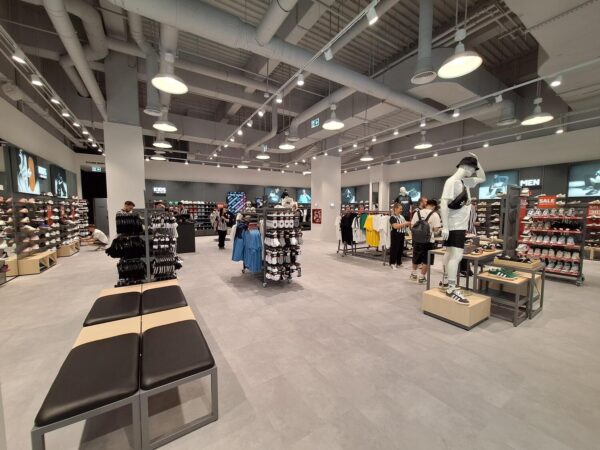
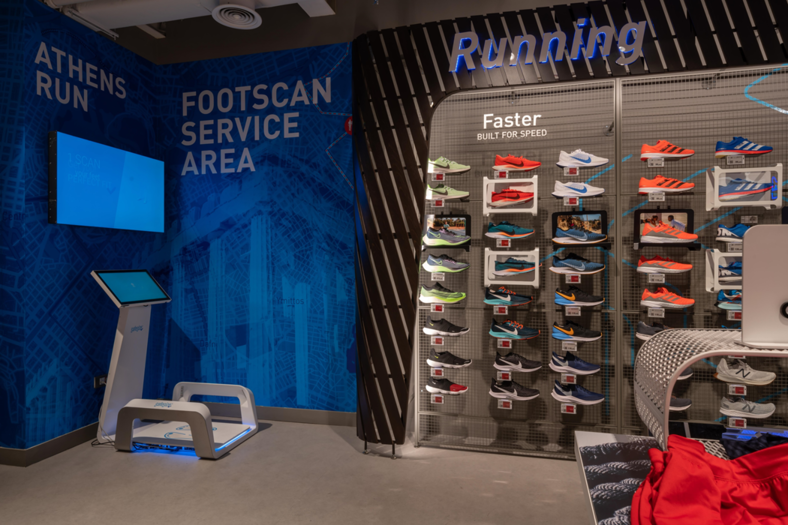
Fourlis’s Sporting Goods (SG) division includes exclusive licences to develop the INTERSPORT and Foot Locker brands. Although both formats sell sporting goods, they have quite different product offers and target customers, and are therefore deemed complementary to each other. INTERSPORT is focused on the sports enthusiast who participates in sports and its target customer is typically aged over 35 years, as well as catering to families. Conversely, Foot Locker’s target demographic is younger, aged 15–30 years, and is more interested in sporting goods from a lifestyle or fashion perspective, or ‘athleisure’.
The division also used to include the licence to develop The Athlete’s Foot retail format store network in Greece and Turkey, which had a similar product offer and customer demographic as Foot Locker, and was owned by INTERSPORT at the time. The licence was acquired towards the end of FY14. The subsequent loss of access to adidas-branded products negatively affected its growth outlook and therefore Fourlis exited the Greek business at the end of FY22 and the whole of its INTERSPORT activities in Turkey in January 2023.
Fourlis’s exclusive licence with INTERSPORT dates back to 1999, since when it has significantly expanded its presence to 124 stores by the end of FY25. The licence covers four countries: Greece (66 stores at end-FY25), Romania (40 stores), Bulgaria (12 stores) and Cyprus (six stores). It also operates e-commerce activities in all four countries. Fourlis entered the Turkish market with the acquisition of 75% of the licence and stores in FY11 but exited the business early in 2023 given the unstable macroeconomic, political and legal outlook in the country.
INTERSPORT is a private global sporting goods retail group headquartered in Switzerland. The group was founded in 1968 to unify the purchasing for sporting goods organisations in 10 western and northern European countries. Over time the group has expanded significantly and beyond Europe, such that the company has more than 5,350 stores in 42 countries, making it one of the leading sporting goods retailers in the world. The stores are independently owned and operated by local operators, with the network providing support in purchasing, brand management and marketing. The product range typically includes well-known global sporting brands as well as its own private-label brands including McKinley (outdoor sports), Pro Touch (running and ball sports) and Firefly (water and urban sports).
As we highlighted earlier with the relationship with IKEA, the terms of the licence with INTERSPORT are not known, but conversations with the company suggest the relationship is expected to continue for a long time.
With respect to space expansion, management is targeting opening a few stores per year in the countries outside Romania, and management believes there is plenty of scope for growth. The recent economic weakness in Romania has led management to focus on profitability, leading to the planned closure of 10 stores in Romania in FY26, which will annualise in FY27.
The exclusive licence to develop the Foot Locker store network in eight countries in Southeast Europe was signed in August 2024. This was followed by the acquisition of Foot Locker’s existing operations in Greece and Romania in April 2025, which comprised three locations in each country as well as e-commerce activities in Greece. In addition to the four countries where Fourlis has INTERSPORT stores, it has the licence to develop Foot Locker in four other countries: Bosnia and Herzegovina, Croatia, Montenegro and Slovenia.
Foot Locker, Inc. was a US-listed global footwear and apparel retailer, prior to its acquisition by DICK’s Sporting Goods (DSG) in August 2025. At the end of February 2025, Foot Locker had over 2,600 stores across its numerous brands in 26 countries, of which 224 stores were operated under licences. The Foot Locker brand is known for its curated selection of top brands. Prior to the acquisition of Foot Locker, Inc., DSG was one of the leading sporting goods omnichannel retailers in the US with no overseas presence. The lack of an existing overseas presence is important as two of the strategic rationales provided by the company for the acquisition were to better position the combined group to serve customers worldwide and expand DSG’s addressable market opportunity, and to serve a broader set of consumers across differentiated concepts.
Management plans to open eight to 10 new Foot Locker stores per year, which, with a smaller range than INTERSPORT, provide higher levels of profitability due to less complexity and lower markdown risks. A new store typically breaks-even in the first year and generates an operating profit of 5% in the second year before reaching a margin of 8–10% when mature, which would be helpful in taking SG towards a similar level of profitability as HF.
It is clear from the above that management has ambitious growth plans for SG through new store openings and new formats, with these stores naturally maturing in terms of sales productivity. The growing importance of the higher-margin Foot Locker licence should be beneficial for SG’s profitability in the medium term.
A combination of growth in the number of stores and improved product ranges that drive footfall have led to year-on-year growth in the division in most financial quarters in FY24 and FY25 and into Q126.
In FY25, not only did the company continue with the store roll-out programme for both formats, but it also demonstrated some genuine innovation with the development of new formats. The key developments in FY25 included:
In Q126, the division reported strong growth of c 25%, including like-for-like growth of 8%, implying a contribution from new and maturing space of 16%. The 25% reported growth compounds Q125’s c 6% growth and indicates strong momentum in the division. We see the same effect of what looks like a sequential slowdown into Q226 as for HF, with 16% growth for the year to 16 May. Here, we would highlight the more difficult comparative from Q225 of c 22% revenue growth, which represents a swing of c 16% from Q125 to Q225. Management highlighted trading in Romania as being particularly weak, with a revenue decline of 14% and a close to 30% decline in Q226 to date.
Management provided a further trading update at the AGM in June 2026 of total revenue growth of 16% and like-for-like growth of 8% in the year to 6 June 2026. Therefore, like-for-like growth appears consistent between Q126 and Q226, while the contribution from new and maturing space was slightly lower in Q226 than in Q126.
The gross margin has been quite variable between the financial quarters, with a range of c 43–50% in the individual periods in both FY24 and FY25, which reflects changes in volume, product mix, buying synergies and promotional activity between the periods. Further down the income statement, the profitability reflects the investment in rolling out Foot Locker, as well as integration and expansion-related costs.
Over the long term, SG’s gross margin has been in a relatively tight range of 47–50% in most years, with a number of exceptions in FY20, due to the pandemic, and in FY23.
There is a clear trend of improving store productivity (ie sales per average store) following the dramatic effects of the COVID-19 pandemic in FY20 and the long-term decline prior to that. In addition to the macroeconomic weakness, the long-term depreciation of the Turkish lira versus the euro was likely a negative drag on store productivity. We should note here the calculation is likely distorted a little as the revenue figures include e-commerce.
With the publication of the FY25 results, management announced the signing of a memorandum of understanding with Golden Age Capital, the majority shareholder of DrP Group, a domestic pharmacy chain, to accelerate the roll-out of the Holland & Barrett franchise. In return for Fourlis injecting its company, which represents Holland & Barrett in Greece, into the partnership, Fourlis will retain a 15% shareholding.
The financials of Fourlis’s Holland & Barrett franchise have been separately reported as the Health & Wellness (HW) division.
Holland & Barrett, which was founded in England in 1970, is the largest health and wellness retailer in Europe, and is one of the largest in the world, supplying a wide range of branded and own-label vitamins, minerals, health supplements, specialist foods and natural beauty products. The addition of other services, such as the launch of Health & Happiness Studios to offer consultations to customers, means that Holland & Barrett is evolving from a traditional focus on retail to being a provider of wellness solutions. The company distributes its products across 24 markets from a combination of own stores, franchises and other distribution channels, including e-commerce.
Following the signing of the original franchise agreement in FY22, Fourlis opened its first Holland & Barrett stores in FY23 and its presence has grown to 10 stores at the end of FY25, as well as offering products via e-commerce, which commenced in June 2023. As the Holland & Barrett brand is new to Greece, the initial focus was to build brand awareness. Management comments indicate the brand has been well received, and customer loyalty appears to be high; indeed management has stated customer loyalty is among the highest in Holland & Barrett’s network.
As part of building brand awareness, management experimented with a number of different store formats. Having initially focused on high street stores, the company trialled smaller neighbourhood stores and a shop-in-shop format in AB Vassilopoulos supermarkets, a subsidiary of multinational food retailer Ahold Delhaize. The focus will now shift to developing the franchise in the pharmacy channel through DrP stores with a combination of shop-in-shop concepts and dedicated merchandising spaces in pharmacies. At present, there are no details as to how quickly the formats will be developed, but management anticipates the operating losses for FY26 will not be consolidated upon completion of the transaction.
The results to date show strong sales growth as the number of stores have grown, along with high like-for-like growth, albeit from a low base, and relatively small operating losses. Management’s commentary indicates the underlying profitability of stores continues to improve as product mix evolves and they benefit from operational gearing. Although not material in a group context, HW’s headline results have been separately disclosed and are included in the intergroup eliminations on consolidation in the main divisional disclosure. In FY25 HW contributed €3.4m in revenue and an operating loss of €2.3m.
Fourlis Group established Trade Estates Real Estate Investment Company in July 2021 to unlock the value of its commercial property assets and thus enable it to grow. The core focus of the REIC is to invest in, develop and operate large retail developments, retail parks and e-commerce infrastructure. When it was established, the real estate portfolio consisted of all the existing properties of Fourlis’s HF division as well as two logistics centres in Schimatari and Oinofyta and a retail investment property.
The REIC listed on the Athens Stock Exchange in November 2023, since when Fourlis has reduced its shareholding further. Following the IPO and simultaneous capital raise, Fourlis owned 63.3% of the REIC, and its shareholding reduced to 47.1% when 16% of its shareholding was privately placed in February 2025, raising €29m. As a result of the lower shareholding, from Q125 the REIC’s results are no longer consolidated and are accounted for as an equity investment. When the REIC’s results were consolidated, up to and including FY24, it was included in HF.
The REIC has delivered a strong improvement in gross and net asset value since its formation; the former has increased from €217m at the end of FY21 to €602m at the end of FY25, a CAGR of c 27%.
As we discuss in more detail later, Fourlis’s holding is important within the context of its valuation. The REIC’s current market capitalisation is c €232m, and Fourlis’s 47.1% shareholding is worth c €109m, which is significant in the context of Fourlis’s valuation.
We believe Fourlis is a long-term shareholder of the REIC in the absence of requiring funds to invest in its core retail business. As the REIC is trading at a discount to the last-quoted NAV at the end of June 2025 of €313m, we believe it is reasonable to assume management will not reduce its stake further in the near term given the absence of significant capital commitments.
At the heart of Fourlis’s operations is Trade Logistics, which provides storage and distribution services for the omnichannel brands across all geographies. Trade Logistics is positioning itself as a third-party logistics provider to companies outside Fourlis. It currently operates the two warehouse and distribution centres in Schimatari (41k sqm) and Oinofyta (25k sqm) and will operate the new InterIKEA International Distribution Centre in Aspropyrgos when it opens towards the end of Q326, which are all owned by Trade Estates REIC.
Recognising Fourlis’s growing scale and complexity, management has initiated a phased restructuring under which it will transition from a traditional retail company into a regional multi-brand retail platform. The aim is to create a common platform that supports all brands across the region, centralising their support functions that are currently independently operated, in order to reduce complexity, duplicated costs and enhance the company’s ability to leverage its growing scale.
The key element is the creation of a unified operating platform so that functions that are currently duplicated across the businesses, including finance, human resources, procurement, legal, supply chain and customer data management, will be gradually centralised into shared services. By centralising these common activities, management believes the group can support multiple retail concepts without proportionately increasing overheads.
The restructuring requires investment in common digital platforms, omnichannel capabilities and customer analytics that should ultimately improve customer experience while allowing faster expansion of the retail brands and more efficient market entry. Building a common operating platform should make potential future acquisitions and new partnerships much easier to integrate while reducing execution risk. For example, knowing the purchasing habits of consumers across multiple brands is valuable to potential new partners.
The restructuring is being implemented in phases. In FY26 the focus is on establishing the new organisation structure, governance model, shared services and technology architecture. FY26 is very much viewed as a year of laying the foundations and of unquantified investment, which will limit profit growth despite management’s guidance for sales growth. The operating model and organisational structure are expected to be mainly completed by the end of summer and the company will proceed with the centralisation of selected support functions by the end of October 2026. The new CRM platform will be launched before the end of the year. In FY27 and FY28, the common supply chain and digital systems will be integrated across the brands and countries. From FY28, management expects to begin realising the full benefits of the transformation with faster store expansion, customer growth and improved operating margins.
If executed successfully, the transformation should allow Fourlis to grow more quickly with higher productivity, leading to an improved return on capital and greater resilience.
In Exhibits 12 and 13 we show how traumatic the global financial crisis and the subsequent PIIGS European debt crisis were to Greece’s GDP growth and retail sales growth, in order to put Fourlis’s historical growth and development in perspective.
Real GDP growth has been more than 2% in most quarters since the start of 2023, following the post COVID recovery. Retail sales growth has similarly been healthy in most months since the start of 2025.
Looking forward, the International Monetary Fund’s latest real GDP growth forecasts for Greece and Bulgaria indicate higher expected growth than in the Euro Area in 2026 and 2027, while Romania’s expected growth in 2026 is much closer to that of the Euro Area before a rebound in 2027.
In Exhibit 15 and Exhibit 16 we show the overall consumer confidence indicators for Greece, Bulgaria and Romania, as well as one of its constituents, expectations for household financial situation in the next 12 months. The indicators are a ‘balance’ of the percentage of positive responses minus the percentage of negative responses, therefore a reading of zero represents an overall neutral stance, and a negative reading implies more pessimism.
Overall consumer confidence is lower in all countries than 12 months ago, with a more significant drop in Romania than in Greece and Bulgaria. The most recent reading for May 2026 saw a month-on-month improvement in Greece and Romania, although the indicators are volatile on a monthly basis.
There is a similar pattern for household situation in the next 12 months, which is lower in all three countries versus a year ago, with a month-on-month improvement in the last monthly survey in Greece and Romania.
In the prior sections we have discussed the historical financial performance of the divisions and their growth plans. In this section we bring these together to look at the group’s performance and management’s growth expectations.
Before we look at Fourlis’s recent financial results, we should highlight an important addition to its financial disclosure from Q125, as a result of Trade Estates REIC no longer being consolidated. In addition to reported EBITDA, Fourlis discloses adjusted EBITDA, which represents reported EBITDA after rental/leases expenses, providing a cash profitability measure excluding the effects of IFRS 16 accounting.
At the AGM in June 2026, management provided financial guidance for FY26 for the first time, indicating a year of investment as well as underlying profit declines, with expectations of an annual improvement in profitability thereafter as the transformation benefits begin to come through. The business transformation, the deteriorating economic performance of Romania (9% of FY25 revenue) and elevated inflationary cost pressures have led to a re-set in management’s expected financial performance.
The new FY26 guidance is for: revenue of c €645m (year-on-year growth of 8.6%), a gross margin of 46.5% (a modest decline versus FY25’s 47.3%) and operating profit of €15–17m after accounting for one-offs and restructuring costs of €10.7m, which is therefore lower on an underlying basis versus FY25’s reported operating profit of €30.7m. The estimated one-off and restructuring costs include: €4.4m relating to the creation of a centralised platform and voluntary redundancies; €3.9m from the closure of loss-making stores in Romania; and €2.4m for the Holland & Barrett transaction.
The outlook beyond FY26 is more favourable as management expects the transformation and restructuring costs will generate a recurring benefit of c €9m per year from 2027, including €3.4m from the centralised platform, lower Romanian operating losses of €3.5m and the elimination of anticipated €2.2m operating losses at Holland & Barrett. Thereafter, management anticipates an annual improvement in the operating margin of 50–100bp from FY28.
As already highlighted, the HF and SG divisions have broadly comparable gross margins. The anticipated decline in FY26’s gross margin is a result of expected stock optimisation and higher promotional activity.
From an operating cost perspective there are a number of pressures, including: some dual running costs in the early stages of the transformation; higher payroll costs to stimulate employee retention and improved customer service; and the weak performance in Romania, which is expected to affect profit by about €5m. The Middle East conflict has also created inflationary pressures in energy and distribution costs, although management believes it is able to mitigate these cost pressures through efficiency gains.
In Exhibit 17 we show how the evolution of the group’s strategy and the more favourable backdrop following the COVID-19 pandemic have driven strong growth in Fourlis’s revenue and profitability. Presenting a long-term picture for the group is complicated due to the restatements of prior figures for disposals (eg Trade Estates was consolidated until FY24) and changes in the allocation of shared costs to the divisions (from FY25, which led to FY24’s already restated figures being restated again). We have simplified the company’s disclosure somewhat: in addition to results for HF and SG, Fourlis reports figures for the holding company, Fourlis Holdings, and intergroup eliminations, which includes the results of HW. Fourlis Holdings is the parent company and provides IT infrastructure, human resources, accounting, legal and procurement services across all subsidiaries. The HW transaction will likely lead to a further restatement, as prior to the completion of the transaction its results have been consolidated.
With those qualifying statements we can see the company has generated a strong revenue CAGR of 10% from FY21 to FY25. The long-term improvement in the gross margins of both HF and SG, which were comparable in FY25, and the addition of higher-margin HW, albeit it is relatively small in a group context, mean Fourlis’s overall gross margin has improved at a greater rate than revenue, at a CAGR of 13%. Reported EBITDA has grown at an even higher rate of 15% despite the investment in expanding the store base.
Fourlis’s FY24 results were negatively affected by a cybersecurity attack just before Black Friday in November, which disrupted digital systems across its operations, although it mainly affected store replenishment in HF and e-commerce channels more broadly in December. The issue was quickly contained and resolved, with an estimated impact on revenue of €15m, equivalent to about 3% of annual sales. Swift cost adjustments and operational agility meant the cyberattack did not negatively affect profit.
Fourlis’s FY25 revenue of c €594m and adjusted EBITDA of €36.1m was modestly behind management’s prior guidance for the year of €600m and €38m, respectively. This was attributed to HF’s trading being a little softer than anticipated in Q425, which management believes was reflective of the overall market rather than being specific to Fourlis. The overall growth for the year included c 6% like-for-like growth. Q126’s overall revenue growth of c 13% included like-for-like growth of 5%, and the trading update for the period to 6 June 2026 showed some further easing with total growth of 8% and like-for-like growth of 4%, with an apparent lower contribution from new stores so far in Q226.
In FY25 Trade Estates contributed associate income for about 11 months of the year of €17.5m, and was therefore important in the context of Fourlis’s PBT of €29.6m. Further down the income statement, in discontinued activities Fourlis recognised net income of €7.6m, of which €6.3m was the recognised gain on the sale of its partial stake in Trade Estates.
Fourlis regularly proposed annual dividends until FY09, when the challenging environment led to no dividends being proposed for many years. The company initially proposed to reinstate the annual dividend for FY19 at €0.12/share to be agreed at the AGM that was due to take place in June 2020. Unfortunately, the outbreak of the COVID-19 pandemic at the start of FY20 meant the dividend was not paid. The annual dividend was reinstated for FY21 as the company and wider economy emerged from the worst effects of the COVID-19 pandemic. In FY21, Fourlis declared a dividend of €0.11/share, which has gradually increased in steps to €0.15/share in FY24, which represented a payout ratio of 38% on basic EPS. FY25’s dividend was held flat versus FY24. Consensus estimates anticipate the lower anticipated profit for FY26 will lead to a lower dividend of €0.08 per share before increasing to €0.17 per share in FY27.
Fourlis has regularly repurchased shares since FY17, building up a treasury share balance of c 2.3m shares at the end of FY24 and 2.6m shares in FY25 from a total share count of c 53.6m at the end of FY24; the repurchased shares were subsequently cancelled in FY25.
Prior to its de-consolidation, the gross assets and liabilities of Trade Estates REIC were reported on the balance sheet as ‘held for sale’. These were substantial, with gross assets of c €557m and liabilities of c €298m at the end of FY24, in the context of Fourlis’s balance sheet, which had shareholders’ equity of €198m and the minority interest in the REIC of €105m.
From Q125, Fourlis recognises the REIC as an equity investment and capitalises the external lease liabilities, as well as removing the minority interest from the income statement and balance sheet. At the end of FY25, non-current financial investments were c €197m versus c €33m at the end of FY24, from a total net asset position of c €219m.
Fourlis’s core net debt at the end of FY25 of c €93m, equivalent to 2.6x adjusted EBITDA, was modestly higher in absolute terms than FY24’s c €86m but lower than the prior year’s 2.7x adjusted EBITDA. However, lease liabilities were significantly higher at c €415m, from €185m at the end of FY24, to give total net debt including lease liabilities of €508m at the end of FY25.
We believe the key sensitivities for Fourlis are as follows:
Due to its diversified product categories and geographic exposure, Fourlis has few directly comparable quoted peers. Therefore, in Exhibit 19 we show revenue growth estimates, profitability and valuation measures for two sets of peers: home furnishings and sporting goods retailers. All are annualised to Fourlis’s December year-end.
Relative to the median or average multiples for its two sets of peers, Fourlis is expected to generate more consistent and slightly higher revenue growth across FY26 and FY27, although its EBITDA and EBIT profit margins, which do not capture the important benefit of the associate income from Trade Estates, are lower.
From a valuation perspective, Fourlis’s EV/EBITDA multiples, which exclude the benefit of Trade Estates’ valuation and income, is higher than the peers. Conversely, with the inclusion of Trade Estates’ income in net earnings, Fourlis’s prospective FY27e P/E multiple is more attractive on a relative basis, at discounts of 30% and 24% to the home furnishing median and sporting goods average multiples, respectively. The valuation is before any discount that may be applied due to Fourlis’s relative market capitalisation and geographic exposure.
Management’s preferred EV/adjusted EBITDA measure, which excludes the lease liabilities from the calculation of enterprise value and compares it to adjusted EBITDA after lease rentals, is 6.0x for FY27. We are not able to perform the same calculation for its peers due to lack of detail in the consensus estimates.
Chairman of the board of directors: Vassilis Fourlis. Previously, Vassilis Fourlis was a member of the board of the Hellenic Society of Environment and Culture. He has also served on the boards of directors of prominent business organisations, including the Association of Enterprises and Industries, the Hellenic Corporate Governance Council, TITAN Cement, OTE, IMITHEA (Henry Dunant Hospital Center), Piraeus Bank, Vivartia and National Insurance. His contribution to entrepreneurship was recognised in 2004 when he received the Kouros Entrepreneurship award from the president of the Hellenic Republic.
Chief executive officer: John Vasilakos was appointed as CEO of Fourlis in July 2025. He has extensive experience in the retail sector. In 2010, he joined Kotsovolos, where he held a series of senior leadership positions, playing a key role in transforming the company into one of Greece’s leading technology retail destinations. From May 2018 to 2025, he served as vice president and CEO of Dixons Southeast Europe, a subsidiary of the Dixons Carphone Group based in London, where he successfully led the group’s strategic expansion across the broader Southeast European region. His career in retail began at the Public Retail World Group (Multirama), following earlier roles at Informer as business unit manager for Hospitality Solutions and at Pouliadis & Associates as marketing manager in the Business Solutions Division. He holds degrees from Ashridge Business School in the UK and the American College of Greece.
Group finance director: Tessy Latsou joined Fourlis in 2023 after more than 18 years at Sarantis Group, where she most recently served as CFO and led the company’s financial management, reporting and digital transformation initiatives. Earlier in her career she held senior finance roles at FAMAR, Imperial Tobacco, Roche Hellas and Russel Hellas, building extensive experience in financial control, reporting and corporate finance. Outside her executive responsibilities, she is a founding member of The Boardroom, an organisation promoting the development of women leaders, and is a member of both the Hellenic Association of Treasurers and the Economic Chamber of Greece.
General disclaimer and copyright
This report has been commissioned by Fourlis Holdings and prepared and issued by Edison, in consideration of a fee payable by Fourlis Holdings. Edison Investment Research standard fees are £60,000 pa for the production and broad dissemination of a detailed note (Outlook) following by regular (typically quarterly) update notes. Fees are paid upfront in cash without recourse. Edison may seek additional fees for the provision of roadshows and related IR services for the client but does not get remunerated for any investment banking services. We never take payment in stock, options or warrants for any of our services.
Accuracy of content: All information used in the publication of this report has been compiled from publicly available sources that are believed to be reliable, however we do not guarantee the accuracy or completeness of this report and have not sought for this information to be independently verified. Opinions contained in this report represent those of the research department of Edison at the time of publication. Forward-looking information or statements in this report contain information that is based on assumptions, forecasts of future results, estimates of amounts not yet determinable, and therefore involve known and unknown risks, uncertainties and other factors which may cause the actual results, performance or achievements of their subject matter to be materially different from current expectations.
Exclusion of Liability: To the fullest extent allowed by law, Edison shall not be liable for any direct, indirect or consequential losses, loss of profits, damages, costs or expenses incurred or suffered by you arising out or in connection with the access to, use of or reliance on any information contained on this note.
No personalised advice: The information that we provide should not be construed in any manner whatsoever as, personalised advice. Also, the information provided by us should not be construed by any subscriber or prospective subscriber as Edison’s solicitation to effect, or attempt to effect, any transaction in a security. The securities described in the report may not be eligible for sale in all jurisdictions or to certain categories of investors.
Investment in securities mentioned: Edison has a restrictive policy relating to personal dealing and conflicts of interest. Edison Group does not conduct any investment business and, accordingly, does not itself hold any positions in the securities mentioned in this report. However, the respective directors, officers, employees and contractors of Edison may have a position in any or related securities mentioned in this report, subject to Edison's policies on personal dealing and conflicts of interest.
Copyright 2026 Edison Investment Research Limited (Edison).
Australia
Edison Investment Research Pty Ltd (Edison AU) is the Australian subsidiary of Edison. Edison AU is a Corporate Authorised Representative (1252501) of Crown Wealth Group Pty Ltd who holds an Australian Financial Services Licence (Number: 494274). This research is issued in Australia by Edison AU and any access to it, is intended only for "wholesale clients" within the meaning of the Corporations Act 2001 of Australia. Any advice given by Edison AU is general advice only and does not take into account your personal circumstances, needs or objectives. You should, before acting on this advice, consider the appropriateness of the advice, having regard to your objectives, financial situation and needs. If our advice relates to the acquisition, or possible acquisition, of a particular financial product you should read any relevant Product Disclosure Statement or like instrument.
New Zealand
The research in this document is intended for New Zealand resident professional financial advisers or brokers (for use in their roles as financial advisers or brokers) and habitual investors who are “wholesale clients” for the purpose of the Financial Advisers Act 2008 (FAA) (as described in sections 5(c) (1)(a), (b) and (c) of the FAA). This is not a solicitation or inducement to buy, sell, subscribe, or underwrite any securities mentioned or in the topic of this document. For the purpose of the FAA, the content of this report is of a general nature, is intended as a source of general information only and is not intended to constitute a recommendation or opinion in relation to acquiring or disposing (including refraining from acquiring or disposing) of securities. The distribution of this document is not a “personalised service” and, to the extent that it contains any financial advice, is intended only as a “class service” provided by Edison within the meaning of the FAA (i.e. without taking into account the particular financial situation or goals of any person). As such, it should not be relied upon in making an investment decision.
United Kingdom
This document is prepared and provided by Edison for information purposes only and should not be construed as an offer or sol icitation for investment in any securities mentioned or in the topic of this document. A marketing communication under FCA Rules, this document has not been prepared in accordance with the legal requirements designed to promote the independence of investment research and is not subject to any prohibition on dealing ahead of the dissemination of investment research.
This Communication is being distributed in the United Kingdom and is directed only at (i) persons having professional experience in matters relating to investments, i.e. investment professionals within the meaning of Article 19(5) of the Financial Services and Markets Act 2000 (Financial Promotion) Order 2005, as amended (the "FPO") (ii) high net-worth companies, unincorporated associations or other bodies within the meaning of Article 49 of the FPO and (iii) persons to whom it is otherwise lawful to distribute it. The investment or investment activity to which this document relates is available only to such persons. It is not intended that this document be distributed or passed on, directly or indirectly, to any other class of persons and in any event and under no circumstances should persons of any other description rely on or act upon the contents of this document.
This Communication is being supplied to you solely for your information and may not be reproduced by, further distributed to or published in whole or in part by, any other person.
United States
Edison relies upon the "publishers' exclusion" from the definition of investment adviser under Section 202(a)(11) of the Investment Advisers Act of 1940 and corresponding state securities laws. This report is a bona fide publication of general and regular circulation offering impersonal investment-related advice, not tailored to a specific investment portfolio or the needs of current and/or prospective subscribers. As such, Edison does not offer or provide personal advice and the research provided is for informational purposes only. No mention of a particular security in this report constitutes a recommendation to buy, sell or hold that or any security, or that any particular security, portfolio of securities, transaction or investment strategy is suitable for any specific person.
London │ New York │ Frankfurt
20 Red Lion Street
London, WC1R 4PS
United Kingdom
Research: Consumer
Once again, there is a clear message in Greggs’ H126 results of outperformance in a challenging market, with menu innovation, its value proposition and growing distribution as key drivers in growing share. There was a general improvement in trading in company-managed stores through H126, albeit volumes are still declining. An easy comparative from H125, cost control, the phasing of cost inflation and good growth in grocery, helped to drive a strong increase in profit. Management’s outlook for cost inflation in FY26 has reduced, along with the expected rate of new store openings as they focus on fewer new stores with better returns while the environment remains challenging. The company has past peak investment and has reduced its required capital requirements for the year. This provides potential greater flexibility to consider shareholder returns beyond the ordinary dividend, which is constrained by earnings cover.