MindMaze Therapeutics (SWX: MMTX)

Last close As at 13/11/2026

CHF0.14

— 0.00 (−0.71%)

Market capitalisation

CHF26m

MindMaze Therapeutics (previously Relief Therapeutics) is a Swiss med-tech company advancing and commercialising a proprietary driven platform focused on neurotherapeutic solutions to treat neurological diseases (such as stroke and TBI), integrating software-based treatments with innovative technology, data and AI to improve patient outcomes.

EDISON VIEW

MindMaze Therapeutics is continuing the commercial roll-out of its digital neurotherapeutic platform, with a heightened focus on its home-based offerings, which is also supported by existing US reimbursement codes. The company is launching MindMotion Lite, a tablet-based format of its flagship MindMotion GO system, which is expected to be available by year-end 2026 and carries significantly reduced hardware requirements. MindMaze also expects to announce a pharma collaboration in Q426, which we expect will expand the sales reach for its products and leverage potential synergistic benefits with existing drug therapies. Following the H126 results, we have reduced our near-term revenue expectations while keeping our peak sales estimates largely unchanged. We obtain a valuation of CHF2.60 per share (vs CHF2.73 previously).

Q&A

What does MindMaze Therapeutics do and how does it make money?

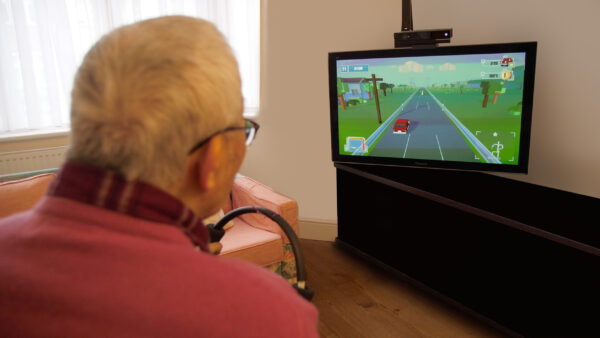
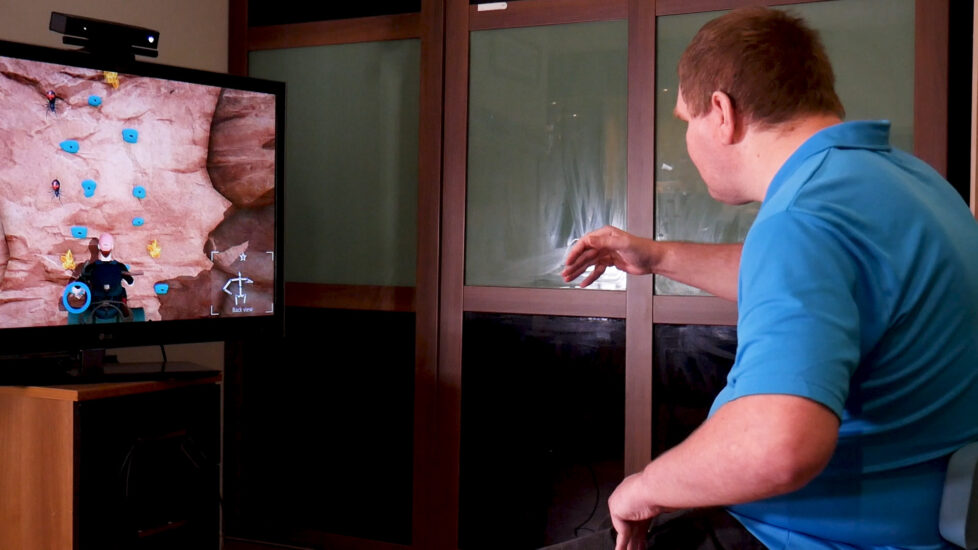
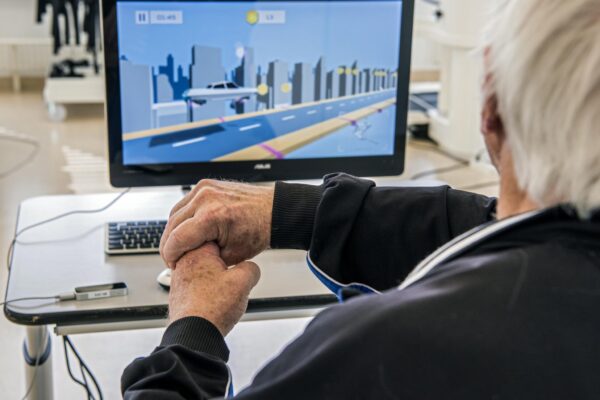
MindMaze Therapeutics is a commercial-stage health technology company developing AI-driven digital neurotherapeutics for treatment and recovery after neurological events such as stroke and traumatic brain injury (TBI). It makes money mainly from software, device sales and services, which made up c 44%, c 27% and c 23% of H126 operating revenue respectively. It monetises its offering through SaaS subscriptions for healthcare providers and per-patient fees for home therapy (CPT codes 0733T and 0734T), which let US providers bill insurers for monitoring a patient’s progress on MindMaze software at home. Its portfolio spans inpatient systems (MindPod Dolphin), outpatient and home-based therapy platforms (MindMotion GO), hand therapy devices (Izar) and digital biomarker sensors (Physilog and Census). In our view, this end-to-end offering increases switching costs for customers such as rehabilitation facilities and hospitals. Its shares trade under the code MMTX on the SIX Swiss Exchange.

Does MindMaze Therapeutics have enough cash to reach profitability?

In our October 2026 update, we noted that we do not believe MindMaze Therapeutics will need to raise capital beyond the additional CHF4.0m tranche from Neuro.io if our forecasts are achieved, with our base case assuming break-even and positive cash flows in FY27 (years to December). This remains contingent on ambitious sales growth. With lower near-term revenue expectations, we see a greater risk that revenue growth falls short of what positive cash generation in FY27 requires, so our model now assumes CHF5.0m of FY27 financing, modelled as illustrative debt, as an additional cushion before break-even. MindMaze ended H126 with gross cash of CHF5.3m, which it expects to last into late 2026. It expects Neuro.io to buy that tranche, in mandatory convertible loan notes, by the end of November 2026 and, if received, its cash to fund operating expenditure into Q227. We expect free cash flow of negative CHF11.5m in FY26 and positive CHF2.5m in FY27.

What revenue does MindMaze Therapeutics generate, and what are the forecasts?

MindMaze Therapeutics reported H126 operating revenue of CHF0.51m. In our October 2026 update, we forecast revenue of CHF3.1m in FY26 and CHF28.2m in FY27 (years to December), down from our prior estimates of CHF5.9m and CHF43.2m. We cut these near-term estimates after the H126 results, while our longer-term and peak forecasts remain largely unchanged. We see a high degree of near-term uncertainty in the pace of product adoption over H226 and FY27, so the confidence interval in our near-term estimates remains wide. MindMaze continues to see the potential to scale towards annual revenues of CHF200m within five years, but it is not providing near-term revenue or break-even guidance; it had previously guided for operating break-even by end-FY26 or early FY27.

What are the main risks for MindMaze Therapeutics?

MindMaze Therapeutics faces clinical development, regulatory, adoption, competitive and funding risks typical of healthcare companies at its stage. Its CPT CAT III codes enable US billing but are temporary, and private payer coverage is highly variable. Only a small percentage of CAT III codes convert to CAT I, and delays or an inability to secure a CAT I code would sharply constrain US market penetration. In our October 2026 update, we reduced our near-term revenue expectations and saw a greater risk that revenue growth may fall short of the level required for positive cash generation in FY27; if growth is lower than anticipated, we believe MindMaze may need additional capital, and raising capital when market conditions are not optimal could lead to significant dilution. Provider adoption depends on physician and therapist acceptance, IT integration, training and a demonstrated return on investment. Larger medtech, digital health, pharmaceutical and technology companies could erode MindMaze's position if they target its market.

What are the key catalysts for MindMaze Therapeutics?

The key medium-term catalyst for MindMaze Therapeutics would be progress on converting its CPT codes to permanent CAT I status. In our view, completing that transition from CAT III to CAT I would be the most significant reimbursement catalyst in the US healthcare market and could lead to a material re-rating of the company's stock. As of our October 2026 update, MindMaze expected to announce and launch a distribution collaboration with a large pharma company in Q426, and to introduce MindMotion Lite, a tablet format of its home-based MindMotion GO offering, by the end of 2026. We expect the channel partnership with Vibra Healthcare, a provider of neurological care and rehabilitation services, to be a key driver of new US customer acquisitions without any meaningful increase in sales spending. In Europe, the SwissNeuroRehab study has enrolled its first patients, and the REACT-AVC study has started; we expect data from these two studies to support reimbursement protocols in Europe.

Equity Proposition

MindMaze Therapeutics is advancing and commercialising evidence-based precision digital neurotherapeutics for treatment and recovery following neurological events such as stroke and traumatic brain injury (TBI). With the required FDA and regulatory certifications in place and a unique CPT Category III billing code for home-based therapy, the company is rolling out its comprehensive therapeutic platform across the US and Europe.

There are several reasons why MindMaze Therapeutics represents a unique and attractive investment opportunity:

1. Neurological disorders represent a huge global health challenge, with a global economic burden estimated at $1.7tn in 2019. Current in-person rehab care often delivers therapy levels far below recommended intensity guidelines, resulting in sub-optimal recovery in many cases and leaving opportunities for innovative solutions like those offered by MindMaze. The company’s unified platform provides personalised treatments with significantly reduced human therapist requirements.

2. MindMaze has developed a proprietary suite of software, hardware and wearable sensors and an integrated telehealth digital information gathering and analytical platform to provide personalised, intensive neurorehabilitation across the continuum of care between the acute event, inpatient rehabilitation and at-home recovery. This complete treatment pathway across all stages of recovery provides differentiation and helps to avoid treatment gaps.

3. MindMaze’s portfolio has shown meaningful benefits across multiple clinical trials, including an extensive two-year multi-site real world evidence study conducted with Vibra Healthcare. These trials show that a high-dose, high-intensity protocol delivered through MindMaze’s asynchronous and scalable platforms can deliver at least equal therapeutic gains to dose-matched conventional occupational therapy. Moreover, the platform can do this with substantially lower human capital and therapist requirements, opening the door to more accessible and personalised treatment for patients.

4. Importantly, MindMaze has demonstrated that its end-to-end platform can provide medico-economic value to healthcare systems, enabling resource-efficient high doses of therapy to be delivered remotely, and leading to cost savings of over 80% versus standard one-on-one therapy with a therapist. These benefits should occur in both the fee for service and value-based care delivery models. This significantly strengthens the value proposition for hospitals and healthcare systems.

5. MindMaze’s research activities and collaborations with leading clinics in advancing its digital neurotherapeutics platform for the past decade have refined and validated the technology, with more than 35,000 patients having been treated to date across more than 150 clinics. This differentiates the company from competing approaches and strengthens its competitive moat.

6. Beyond its internal sales efforts, MindMaze is developing commercial alliances to expand its sales footprint, including a recently announced US channel partnership with Vibra Healthcare, a recognised provider of neurological care and rehabilitation services. MindMaze is also engaging in pharma partnerships, which are expected to create multiple revenue streams. A distribution partnership with pharma should promote MindMaze’s platform; and in the longer term, potential drug/digital neurotherapeutics combination approaches provide further avenues for growth.

7. MindMaze is consistently collecting additional data from patients, and leveraging AI to further adapt the treatment to individual patient needs through precision medicine. This could provide multiple added growth levers by enabling continuous improvement of the platform and extending product differentiation. The refinement of treatment algorithms towards more personalised and adaptive care can strengthen patient engagement, potentially boost outcomes and further increase the company’s competitive advantage.

Published 17 July 2026

Latest Insights

View More

Market Data

Share Price CHF0.14
Market Cap CHF26m
52-Week High CHF3.00
52-Week Low CHF0.13
% Change 1M (2.4)
% Change 6M (64.0)
% Change 12M (95.3)
Ave. Daily Volume 1yr 890,355

Sector

Healthcare

Equity Analyst

Jyoti Prakash

Jyoti Prakash, CFA

Director, healthcare

Key Management

  • Zach Henderson

    CEO

  • Jeremy Meinen

    CFO

Share Price Chart

Cookie Policy Overview
Edison Group

This website uses cookies so that we can provide you with the best user experience possible. Cookie information is stored in your browser and performs functions such as recognising you when you return to our website and helping us understand which section of the website you find more interesting and useful. See our Cookie Policy for more information.

Strictly necessary and functional

These cookies are used to deliver our website and content. Strictly necessary cookies relate to our hosting environment, and functional cookies are used to facilitate social logins, social sharing and rich-media content embeds.

Advertising

Advertising Cookies collect information about your browsing habits such as the pages you visit and links you follow. These audience insights are used to make our website more relevant.

Performance

Performance Cookies collect anonymous information designed to help us improve the site and respond to the needs of our audiences. We use this information to make our site faster, more relevant and improve the navigation for all users.