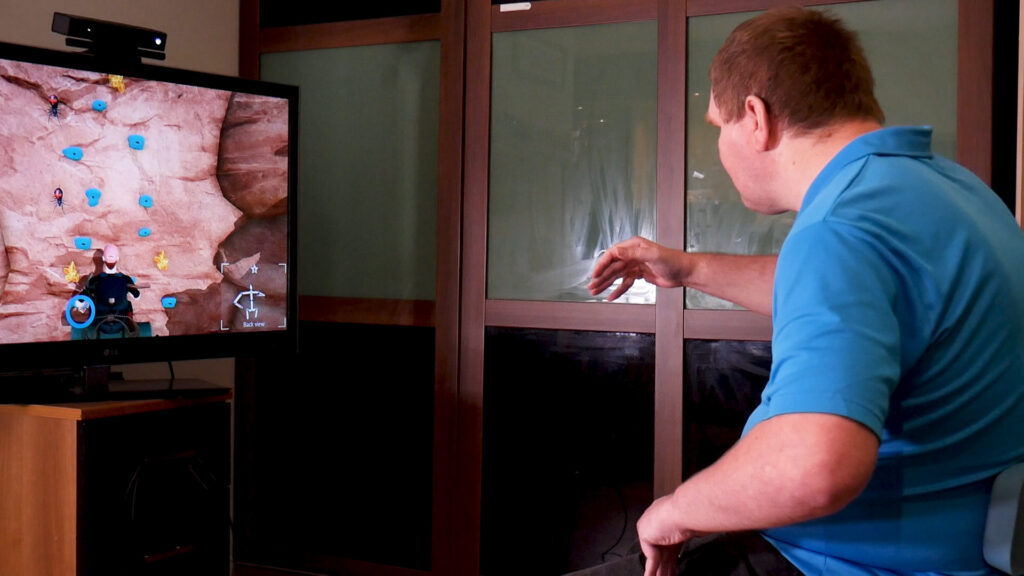
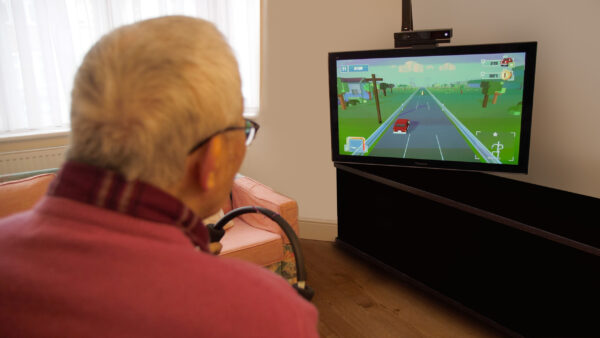
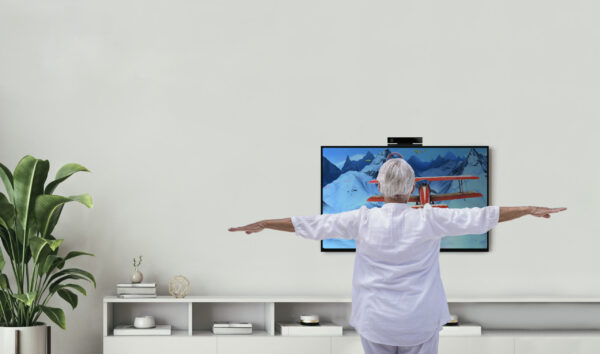
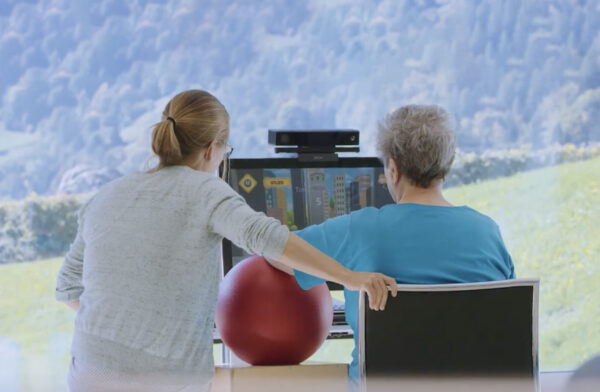
MindMotion Lite expands home offering and adds user flexibility
MindMaze announced that it is launching MindMotion Lite, a tablet-designed format of its flagship home-based MindMotion GO neurotherapeutic
offering. Expected to be introduced by the end of 2026 in the US and certain European
markets, MindMotion Lite is purpose-built for use in the home and is designed to deliver
all neurotherapeutic activities available on MindMotion GO through a tablet, thereby
significantly reducing hardware requirements for in-home deployment. This can augment
patient access to intensive at-home neurorehabilitation and the company believes it
could represent a key inflection point in the commercial scale-up of the company’s
platform.
| Exhibit 1: Overview of MindMotion Lite |
 |
| Source: MindMaze Therapeutics, September 2026 presentation |
MindMotion Lite is designed to complement the company’s existing platform, which combines
therapeutic software, digital sensors and proprietary hardware for neurorehabilitation
across the continuum of care (between the acute management of stroke towards inpatient
care and then outpatient-based and at-home recovery). MindMotion Lite’s tablet-based
format aims to reduce home deployment costs compared with MindMotion GO, supporting
a more scalable and capital-efficient expansion of the company’s home-based offering.
MindMotion Lite seeks to retain the full-body rehabilitation capabilities to maintain
patient engagement during intensive training, while providing a more accessible user
experience. The tablet will also provide teleconsultation and remote management services,
enabling healthcare professionals to support patients as they pursue in-home therapy.
In addition, the product’s integration with MindMaze’s existing product suite and
eligibility under existing reimbursement codes helps provide a seamless commercial
transition and add product option flexibility for patients and healthcare providers.
Ahead of launch, the company plans to demonstrate MindMotion Lite at upcoming clinical,
healthcare and investor conferences.
Real-world evidence for home rehabilitation presented at ACRM 2026 conference
MindMaze recently reported new real-world evidence from a multi-site QI programme conducted with Vibra Healthcare at the ACRM conference
in Washington, DC. The underlying principle behind the study was that, although high-dose,
high-intensity training is highly recommended in neurorehabilitation, delivering it
at scale remains difficult because of clinician time and resource constraints. The
retrospective study was designed to evaluate how asynchronous home-based training
can help bridge this gap by decoupling rehabilitation from direct therapist time.
In particular, the QI programme was designed to evaluate whether the asynchronous,
home-based training model (as delivered through MindMaze’s platform, including MindMotion
GO and the Izar hand-training peripheral) can be scaled across multiple clinical sites
in a broader mixed-diagnosis population (thus in conditions in addition to stroke).
The retrospective QI programme evaluated 177 rehabilitation episodes involving 172
adults (five individuals were enrolled twice) with a range of neurological conditions
across four Vibra Healthcare outpatient sites (taking place between June 2024 and
December 2025), without a control group. Of the 177 episodes, 99 were related to stroke
and cerebrovascular conditions, 35 to diverse neurological symptoms/sequelae, 10 to
spinal cord injury/dysfunction, nine to head trauma, eight to Parkinson’s disease
and the remainder to other conditions including demyelinating diseases.
In terms of patient feasibility and engagement: 92.7% (n=164) successfully completed
home setup (with only three of the 13 unsuccessful cases being due to technical/connectivity
or home environment/equipment issues), while 80.2% (n=142) achieved the predefined
minimum baseline training exposure of at least one hour of asynchronous training.
This group (n=142) formed the training analysis cohort. Participants in this cohort
completed an eight-week home-training programme using MindMotion GO, with an optional
four-week extension based on clinical need, delivered in addition to standard outpatient
care (including periodic therapist supervision).
| Exhibit 2: Home programme pathway: Baseline assessment, eight-week training phase, optional
four-week extension |
 |
| Source: MindMaze Therapeutics and Vibra Healthcare, ACRM 2026 Presentation |
Among the training analysis cohort (n=142), an average of 174 minutes of active training
was completed per week, and 57% of the cohort averaged over 120 minutes per week of
active training time (ATT), and 84.4% of training was asynchronous. Home training
was estimated to add a median 42.8 scheduled-hour equivalents per episode, raising
each episode’s total motor training dose by a median factor of 3.0x compared to standard-of-care
outpatient therapy motor training alone.
| Exhibit 3: Pre-post score distributions for episodes with available paired assessments (142-episode
analysis population) |
 |
| Source: MindMaze Therapeutics and Vibra Healthcare, ACRM 2026 presentation |
In terms of functional outcomes, when comparing measures at baseline to post-treatment,
the company notes that statistically significant pre-post improvements were observed
in independence (Barthel Index: +10.4 points), balance (Berg Balance Scale: +10.5
points), cognition (SLUMS: +3.4 points) and mobility (Timed Up and Go: -8.8 seconds)
among participants with available paired assessments.
Further, in terms of overall patient satisfaction, among survey respondents (n=109),
83.8% of ratings across the five satisfaction items were positive, which in our view
is very supportive of future engagement for the treatment population and in encouraging
healthcare providers and stakeholders to recommend MindMaze’s digital neurotherapeutics
programmes.
| Exhibit 4: Patient satisfaction survey |
 |
| Source: MindMaze Therapeutics and Vibra Healthcare, ACRM 2026 presentation |
Overall, the clinical improvements (and high patient satisfaction) along with the
effective tripling of total active motor-training dose relative to standard outpatient
therapy alone are very encouraging given the multi-site, mixed-diagnosis population
under routine clinical conditions.
The study authors note the trial was based on a retrospective before-after design
without a control group, which may limit attributing the outcome changes to the home
programme. Furthermore, as paired outcome assessments (Exhibit 3) were available for
only 23–49% of the analysis population (depending on which scale or measurement was
used), this could lead to selection bias in the analysis.
Nonetheless, the QI programme demonstrated that home-based rehabilitation using MindMotion’s
products increased total motor-training dose by a median factor of three compared
with usual outpatient therapy alone, and demonstrated high patient satisfaction and
statistically significant improvements in several care areas. We believe this bodes
well for the ongoing commercial roll-out of the platform.
Recent AHA/ASA guidelines reinforce need for robust rehabilitation intensity
In August 2026, the American Heart Association (AHA) and American Stroke Association
(ASA) updated their clinical guidelines for stroke rehabilitation and recovery (replacing previous guidelines issued in 2016).
Importantly, these guidelines emphasise that ‘participation in multidisciplinary rehabilitation
therapies is critical to reduce neurological impairment and improve function after
stroke’ and that ‘rehabilitation should provide sufficient amounts and intensity of
various types of task practice to reduce functional impairments’. These guidelines
are consistent with and reinforce the company’s efforts in advancing and commercialising
its evidence-based precision digital treatments, both internally and with partners
such as Vibra Healthcare, for the stroke rehabilitation population across inpatient
and outpatient facilities as well as in-home patient recovery. Specifically, they
support MindMaze’s strategy to help offer neurotherapeutic treatments across the continuum
of care. As highlighted previously, there are often gaps in care in rehabilitation
and recovery, such as inadequate human capital (ie therapist availability) once patients
are discharged from acute or inpatient facilities. MindMaze’s solutions aim to bridge
these gaps by offering continued availability of intensive rehabilitation across the
patient recovery journey.
| Exhibit 5: MindMaze Therapeutics’ offering of continued high-intensity therapy across patient
recovery stages |
 |
| Source: MindMaze Therapeutics presentation, September 2026 |
The publication of the AHA/ASA guidelines and increased awareness of them among healthcare
providers, facilities and relevant decision-makers should support increased commercial
traction for MindMaze’s offerings.
Further, the guidelines emphasise that ‘telehealth should be considered’ as part of
stroke recovery, which directly complements the continuum-of-care strategy and offerings
provided by MindMaze. Notably, MindMaze’s MindMotion GO and MindMotion Lite enable
and support telehealth and continued engagement between patients and their health
providers as well as remote monitoring as patients proceed on their respective at-home
recovery journeys.
Recruitment ongoing in key European reimbursement trials
While MindMaze has secured CPT Category III codes to enable home-based therapy billing
and reimbursement in the US, the company is also engaging in several trials aimed
at securing reimbursement in Europe. These efforts are intended to further demonstrate
the clinical and socioeconomic benefits of MindMaze’s integrated neurotherapeutic
platform compared to standard of care, in order to support broader reimbursement in
the region.
| Exhibit 6: MindMaze reimbursement strategy |
 |
| Source: MindMaze Therapeutics presentation, September 2026 |
The first patients using MindMaze’s high-dose, high-intensity rehabilitation platform
have been enrolled in the flagship SwissNeuroRehab study. This initiative involving six major Swiss centres is designed to generate clinical
and economic data from the involvement of novel digital therapeutics platforms such
as those offered by MindMaze, in conditions such as stroke and traumatic brain injury
(TBI). MindMaze recently also started the REACT-AVC study at Hospices Civils de Lyon, which is assessing the company’s MindMotion GO home-based
rehabilitation platform for early outpatient and home-based stroke rehabilitation.
We expect data from these two studies to support reimbursement protocols in Europe,
mirroring the at-home CPT reimbursement code model in the US.
Company expects to announce pharma partnership in Q426
MindMaze has been working on a distribution collaboration with a large pharma company
(undisclosed as of now) and it expects to announce and launch the arrangement in Q426.
We expect it will cover a developed-market territory in which the company does not
currently operate commercially (meaning outside the EU5 countries and the US). We
anticipate this approach involves integrating MindMaze’s digital neurotherapeutics
portfolio alongside a pharma company’s drug portfolio. The pharma partner would market
MindMaze’s portfolio alongside its own neurological drug products and aim to leverage
potential synergistic benefits of both treatment modalities.
H126 update shows commercial progress and streamlined operations
MindMaze’s H126 results highlighted the company’s progress as it streamlines its operations to focus on its
digital neurotherapeutics platform, in particular the ongoing US commercial roll-out.
Importantly, MindMaze has essentially completed its organisational simplification process. As highlighted in our prior note, the company in June announced a non-core asset sale to simplify its organisational
structure and sold the US and Canadian commercial rights to its phenylketonuria asset
RLF-OD032 for
US$3m, along with royalties on future net sales of the product (part of MindMaze’s rights
to RLF-OD032 royalties were subsequently exchanged for the release of certain contractual
obligations arising from Relief Therapeutics’ legacy operations). MindMaze has effectively
disposed of substantially all remaining non-neurology legacy operations (all of which
were acquired through the business combination with Relief Therapeutics in late 2025),
with the disposal initiatives substantially completed in August 2026. Altogether,
these transactions further simplify the organisation and reduce the company’s cost
base by approximately one-third.
The company in May signed a definitive channel partnership agreement with Vibra Healthcare, a leading provider of neurological care and rehabilitation
services that operates more than 30 facilities. We expect this arrangement to be a key driver of new customer acquisitions in the
US for MindMaze’s pioneering neurotherapeutics solutions without requiring any meaningful
increase in the company’s commercial and sales expenditures. Vibra has been an ongoing
collaborator with MindMaze and has robust experience with the neurotherapeutics platform
in its facilities, supported by Vibra’s own two-year, multi-site deployment of the
MindMaze therapeutics platform across five in-patient rehabilitation centres. The
two parties collaborated on a large-scale, real-world evidence study across five US
in-patient rehab facilities, with positive results reported in March at the ASNR 2026
meeting demonstrating that high-dose, high-intensity therapy recommended by treatment
guidelines can be applied at scale without increasing staffing burden.
As part of its recent corporate presentation, MindMaze reports that across five Vibra centres utilising the platform since 2025,
524 patients have used MindMaze’s solutions (such as MindMotion GO and MindPod) on
an in-patient basis and 321 have used the home-based therapies (such as MindMotion
GO). Among these patients, it reports that 80% of therapy doses were delivered without
a licensed therapist, demonstrating the scalability of the platform, and maintaining
an 82% patient satisfaction rate.
| Exhibit 7: Vibra/MindMaze Multi-site commercial deployment and scalability |
 |
| Source: MindMaze Therapeutics presentation, September 2026. |
MindMaze reiterates that it continues to see the potential to scale its business towards
annual revenues of CHF200m within five years. However, given uncertainties related
to the timing in converting its pipeline into revenue, it is not providing near-term
revenue or break-even guidance expectations at this stage, although we expect visibility
to increase as conversion matures. Previously, the company had guided for operating break-even by end-FY26 or early FY27.
Financials
In the H126 results, MindMaze restated H125 financials to reflect the discontinuation
and divestiture of the Relief assets and liabilities, and hence reported H125 revenue
was not material (CHF0.03m). The company also classified much of the legacy Relief
operations as ‘discontinued operations’ given that the disposal and discontinuation
of these activities (and of MindMaze’s ongoing related obligations) effectively became
complete as of August 2026. The company reported H126 operating revenue of CHF0.51m,
with c 44% (CHF0.22m) consisting of software-based revenue, followed by c 27% reflecting
device sales and c 23% representing service revenue. With gross R&D costs at CHF2.2m
and SG&A at CHF5.0m (inclusive of CHF0.67m in sales and marketing costs), MindMaze
reported an operating loss of CHF6.7m. The company reported a one-time gain of CHF3.3m
as ‘other income’ resulting from the de-recognition of a warrant liability that arose
from the business combination with Relief Therapeutics in late CY25. As a result,
the company reported net loss from continuing operations of CHF3.46m, which combined
with its loss from discontinued operations of CHF3.47m, led to a combined net loss
of CHF6.92m.
The company reported an operating cash burn rate of CHF8.7m in H126 (inclusive of
discontinued operations). Offsetting this cash outflow, the company received
US$3m (or CHF2.4m) proceeds in H126 from the disposal of RLF-OD032 (described above) alongside
CHF4.0m as the first tranche from a CHF8.0m strategic equity fund-raising from Neuro.io Group, which led to a net issuance of c 17.4m shares. Altogether, the
company reported a net change of CHF3.1m in cash and equivalents in H126, finishing
the period with a gross cash position of CHF5.3m (at 30 June).
Following the H126 results, and with the company no longer providing near-term guidance,
we have adjusted our financial forecasts to reflect more conservative near-term revenue
expectations for FY26 and FY27, but our longer-term and peak forecasts remain largely
unchanged, particularly as we remain encouraged by the company’s strategy to rely
on collaborations and partnerships (such as its channel agreement with Vibra Healthcare)
to extend its commercial reach. We now expect FY26 and FY27 revenue of CHF3.1m and
CHF28.2m, respectively, down from our prior estimates of CHF5.9m and CHF43.2m, respectively.
We expect the commercial trajectory to accelerate in coming quarters, but we reiterate
that there remains a high degree of near-term uncertainty and variability with the
pace of product adoption over H226 and FY27 and hence the confidence interval in our
near-term estimates remains wide. We expect FY26 and FY27 free cash flows of negative
CHF11.5m (thus outflow) and positive CHF2.5m (inflow), versus our prior estimates
of negative CHF6.9m and positive CHF10.9m.
MindMaze expects its period-end cash balance to be sufficient for it to maintain its
operations into late 2026; however, it reiterates that Neuro.io remains contractually
committed to completing the CHF8.0m equity fund-raising commitment (of which CHF4.0m
had been received in H126 as stated above). MindMaze expects Neuro.io to purchase
a second tranche of the funding requirement, consisting of an additional CHF4.0m in
mandatory convertible loan notes, by the end of November 2026. Assuming that these
proceeds are received as per the commitment, MindMaze expects its cash on hand to
fund its operating expenditure requirements into Q227, excluding any potential benefits
from offsetting cash inflows from its business operations.
In our base case forecasts, while the company has withdrawn near-term guidance, we
continue to assume that MindMaze will reach break-even and positive cash flows in
FY27. If our forecasts are achieved, we do not believe the company will be required
to raise additional capital (beyond the CHF4.0m additional tranche from Neuro.io in
H226) to maintain sustainable profitability. However, this remains contingent on the
company meeting the ambitious sales growth targets (both with its channel partners
and with its internal sales efforts) implied by our estimates. Should the company’s
growth trajectory be lower than anticipated, we believe it may need to seek additional
capital to reach sustainable profitability. Hence, with the decrease in our near-term
revenue expectations, we now believe that there is a lower margin for error and a
greater risk (versus our prior assumptions) that the company’s near-term pace of revenue
growth may fall short of the level required to reach positive cash generation in FY27.
Hence, our model now assumes CHF5.0m financing, modelled as illustrative debt, in
FY27 to provide an additional ‘cushion’ for the firm’s operations before reaching
break-even.
Valuation
We continue to value MindMaze using a risk-adjusted (50%) net present value (rNPV)
analysis based on our forecasts (with our probability of success applied to each of
the major revenue drivers, as shown in Exhibit 8 below). We have updated our forecasts
to reflect more modest near-term revenue growth trends, as discussed above, while
keeping our longer-term (FY29 and beyond) forecasts largely unchanged. We now use
a forex assumption of
US$1.20/CHF, vs
US$1.25/CHF previously.
| Exhibit 8: MindMaze Therapeutics rNPV valuation |
 |
| Source: Edison Investment Research |
In our prior note, we had assumed that the CHF8.0m Neuro.io financing (and the conversion of resulting
convertible notes into common shares) would have been fully completed shortly after
the note’s publication, resulting in a c 19% increase in prior shares outstanding.
In our updated valuation, we have decided not to include the remaining CHF4.0m tranche
from the Neuro.io financing given that this tranche had been postponed compared to
initial guidance, and hence our updated valuation is based on fewer shares outstanding
(181.5m) than our prior approach (which assumed 193.9m shares outstanding). Given
these adjustments and reductions to our near-term forecasts, we obtain a valuation
of CHF472.3m (vs CHF528.4m previously), or CHF2.60 per share (vs CHF2.73 previously).
The US commercialisation opportunity is the largest driver of our valuation, followed
by our assessment of the EU5 countries’ self-commercialisation of the product and
then our preliminary assessment of the Pill+ partnership opportunity described in
our outlook note.
While MindMaze has the regulatory freedom to operate in the US and EU5 countries,
we continue to believe a 50% risk adjustment is appropriate, given the early stage
of the commercialisation effort in the US and EU5 countries and limited immediate
visibility on revenue trends. As the company meets growth expectations, demonstrates
positive margins, delivers positive clinical data and generates progress on a potential
conversion to CPT CAT I reimbursement, and/or provides definitive clarity on its Pill+
pharma partnership, we plan to revise our probability assessments.
| Exhibit 9: Financial summary |
 |
| Source: Edison Investment Research, company accounts |