“Edison is the go-to for a new investor to get full understanding of the investment case and business. Edison’s distribution reaches investors that we want to connect with directly.”
Something fundamental has changed in the composition of public company shareholders – and most investor relations (IR) programmes have not kept pace. The retail investor, long treated as a peripheral presence on the shareholder register, has emerged as a material force in global capital markets. In the UK, 54% of adults nowhold investments, up from 42% just two years ago. In the US,stock ownershiphas risen to 62%, the highest level since 2008.Retail tradingnow accounts for between 20% and 35% of daily equity market volume across the US, the UK and South Korea and in 2025,retail investorschannelled an estimated $302bn into US equities, a 53% increase on the previous year.
These are not temporary flows. They are the product of structural change: commission-free trading, fractional shares, mobile-first platforms and a generational shift in attitudes towards investing. Two-thirds ofnew brokerage accountsin 2025 were opened by investors under the age of 45. And about 60% of retail investors usemobile appsas their primary trading platform.
Exhibit 1: The retail investor has emerged as a material force
Source: BestBrokers.com, CoinLaw
A different kind of investor
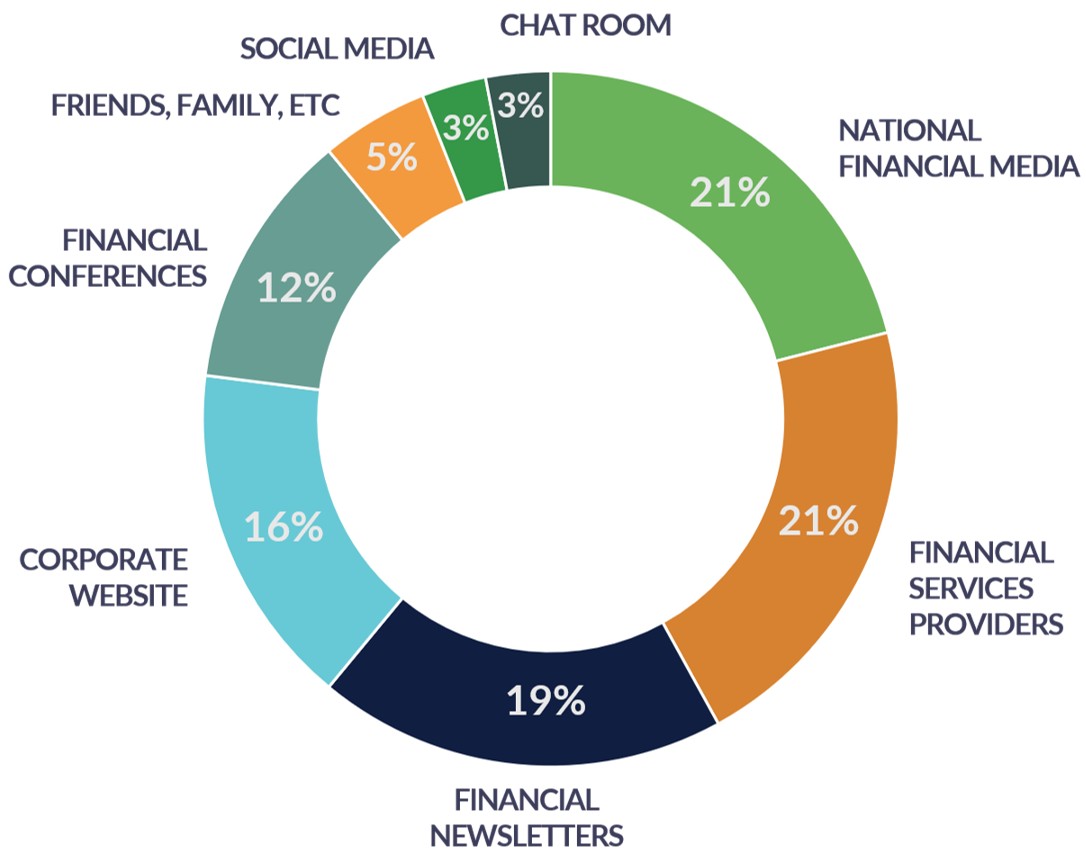
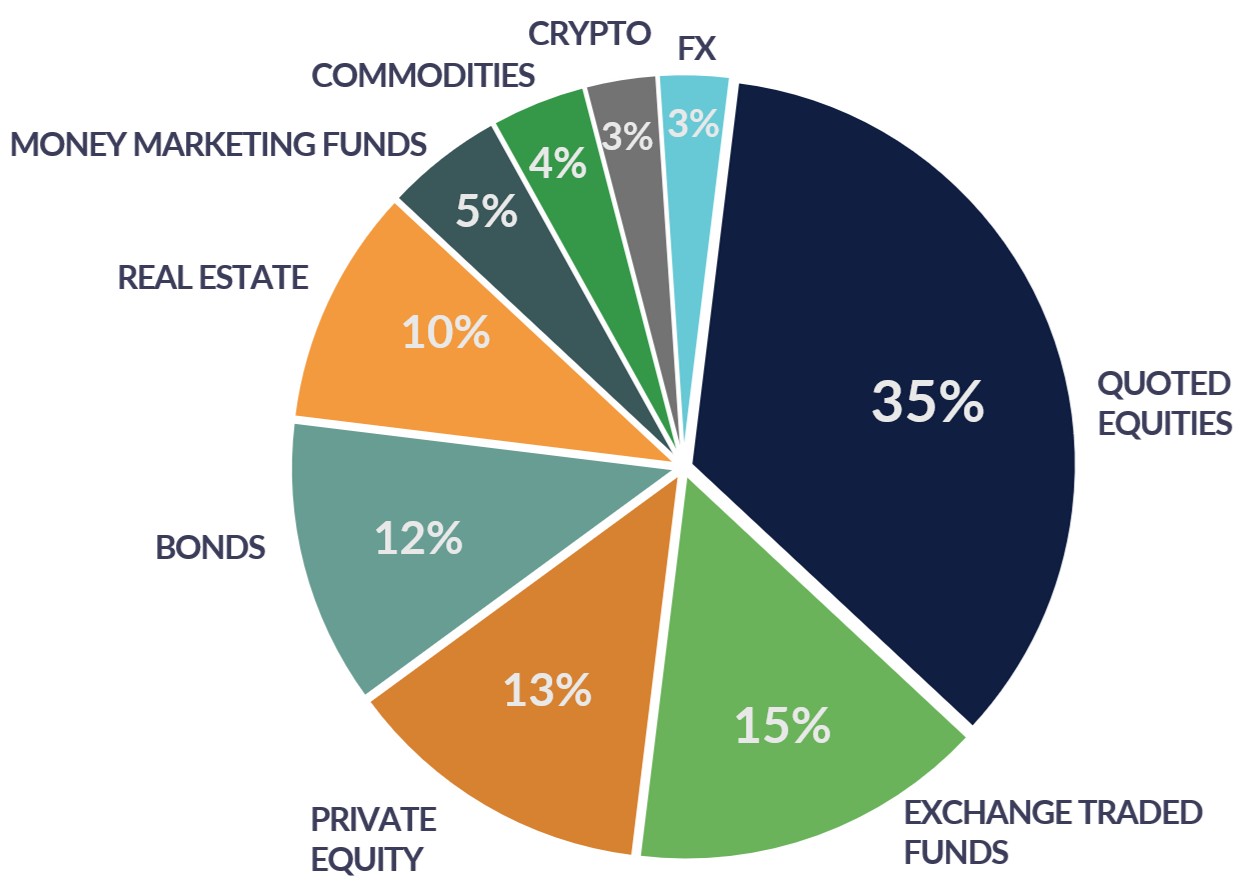
Today’s retail investor is not the passive shareholder of earlier decades.Edison’s 2025 surveyof over 4,000 investors found that quoted equities were the top investment choice for the year ahead, ranking above ETFs, private equity and bonds. These investors are engaged, informed and increasingly expectant about the quality of information available to them. Financial service providers and national financial media rank equally as their most trusted sources of insight, each cited by 21% of respondents, and C-suite interviews rank as the second most valuable tool for investment decision-making after independent research.
The implications are significant. Retail investors are no longer content to receive a diluted version of the institutional investor’s briefing pack. They want direct, accessible engagement with management. They want clarity on strategy. And they want information to be discoverable through the channels they actually use, not buried in a PDF on a corporate website.
Exhibit 2: Financial service providers and national financial media are investors’ most trusted sources of insight
Source: Edison’s Investor Survey, 2025
Exhibit 3: Quoted equities were the top investment choice for the year ahead
Source: Edison’s Investor Survey, 2025
The IR gap
Despite this shift, most investor relations programmes remain structurally oriented towards institutional audiences. Disclosure documents are written for analysts. Presentations are designed for fund manager roadshows. Digital channels, where retail investors conduct the majority of their research, are frequently an afterthought.
The data underline the gap. Arecent surveyof IR officers found that 71% still struggle to find and engage new investors. Only one in 16 companies has formalised anyfeedback loopbetween shareholders, IR teams and corporate strategy. And while 83% of investors believecompanies that communicate effectively also perform better, investment in retail-focused communications consistently lags behind its institutional equivalent.
This is not merely a missed opportunity; it’s a strategic risk. As retail ownership grows, companies that fail to engage this audience are choosing to leave a significant proportion of their shareholder base uninformed. Uninformed shareholders are more likely to sell in volatile markets, less likely to support management at shareholder votes and harder to mobilise when it matters most.
What good retail IR looks like
Effective retail IR is not a scaled-down version of institutional IR. It requires distinct content, distinct channels and a distinct mindset.
Language matters. Research consistently shows that low readability in financial disclosures increases information disparity between companies and investors, hampering decision-making and contributing to equity mispricing – yet most annual reports and regulatory announcements are still written for compliance, not comprehension. Companies that invest in translating their equity story into plain, accessible language, without sacrificing rigour, reduce that gap. So do those that make management visible:Edison’s investor surveyfound that C-suite interviews rank as the second most valuable tool for investment decision-making, ahead of financial newsletters, corporate websites and conferences.
Channel strategy is equally important.The surveyidentified corporate websites and financial platforms as key touchpoints – but only where content is structured, current and discoverable. In an environment where a growing proportion of investment research begins with an AI query rather than a search engine, content that is open-access, independently produced and digitally indexed carries a material advantage.
Consistency counts too. Retail investors who receive coherent, regular communication across results cycles, strategic updates and market events develop a familiarity with a company that translates into resilience – a shareholder base less prone to reactive selling and more inclined to hold through uncertainty.
The opportunity
The retail investor is no longer a nice-to-have audience. On many registers, retail shareholders already represent the largest single bloc, ahead of any individual institutional holder. The companies that recognise this, and build the IR infrastructure to match, will find themselves better valued, more broadly held and better equipped to weather the volatility that defines modern capital markets.
The shift has happened. The question now is whether corporate IR is ready to meet it.