“Edison is the go-to for a new investor to get full understanding of the investment case and business. Edison’s distribution reaches investors that we want to connect with directly.”
Join us for investment knowledge across your choice of sectors and equities.
To continue reading, log in or create a free account below.
Close
Close
Close
Create An Account
If you have an account with us, please click the sign in button below.
Edison explains: Jakarta takes control – What happens when the world’s largest exporter of coal, palm oil and nickel decides to sell everything through a single state-run gatekeeper?
Industrials
Edison explains: Jakarta takes control – What happens when the world’s largest exporter of coal, palm oil and nickel decides to sell everything through a single state-run gatekeeper?
Indonesia exported c US$65bn of thermal coal, palm oil and nickel last year. As of 1 June 2026, the channel through which much of that flows has fundamentally changed. President Prabowo Subianto has begun routing the country’s strategic commodity exports through a single state-owned enterprise, Danantara Sumberdaya Indonesia (DSI), overseen by the country’s sovereign wealth fund. The transition period started with coal, palm oil and ferroalloys, with full implementation due by 1 January 2027 at the latest.
For a country that supplies the world with the raw inputs for food, power and the transition to the green energy, this is not a minor administrative reshuffle. It is the insertion of the state into the middle of every major export contract, a change that reshapes how export prices are set, how revenues are retained and who captures the margin. The announcement caught the business community off guard, pressured the Jakarta Composite Index and prompted rating agencies to warn it could dent investor sentiment. This note explains the economic backdrop that produced the policy, what is actually changing, which London-listed companies sit in its path and why investors well beyond Jakarta should be paying attention.
What did Indonesia’s commodity economy look like before the shift?
Indonesia is a genuine resource superpower. It is the world’s largest exporter of thermal coal, palm oil and nickel, three commodities that sit at the heart of global power generation, the food chain and the electric vehicle (EV) supply chain respectively. Combined exports of these commodities topped c US$65bn last year.
The pre-2026 model was, by the standards of major resource economies, relatively open. Private producers, multinational traders and plantation groups bought, sold and shipped through their own commercial channels and long-standing relationships with buyers in China, India, Singapore and beyond. The state shaped the market through levies, quotas and domestic obligations rather than by standing in the middle of transactions. Indonesia had already shown a willingness to intervene more aggressively through its downstreaming (hilirisasi) agenda, most notably the ban on raw nickel ore exports that forced international miners to build smelting capacity onshore. The centralised export plan extends that interventionist instinct from a single metal to the bulk of the country’s resource base.
Why is Jakarta centralising exports now?
The official rationale is fiscal and monetary. According to Reuters, the policy is fiscally aimed at improving tax revenues by tackling under-invoicing and transfer pricing, the practices by which exporters understate sales values to shift profit offshore and reduce their domestic tax bills. Routing sales through a single state channel lets the government monitor, benchmark and tax the true value of what leaves the country.
The second monetary motive is currency. The rupiah hit historic lows several times during this year, and a parallel export earnings retention policy, also effective from 1 June 2026, now requires most natural-resource exporters to keep their proceeds in state banks. Forcing export dollars to stay onshore is intended to bolster domestic US dollar supply and stabilise the currency. Danantara’s chief operating officer, Dony Oskaria, pledged that DSI would operate transparently and could be monitored by the public, and the company has said it will honour long-term contracts while reviewing prices to ensure they are not struck below market levels. Finance Minister Purbaya Yudhi Sadewa argued that investors should ultimately see improved corporate profitability from better pricing of exports through DSI.
What is actually changing and how fast?
The transition began on Monday 1 June 2026 with coal, palm oil and ferroalloys. During this phase, exporters must report all export documents to DSI, but the government has signalled it expects shipments to continue on a business-as-usual basis. Coordinating Minister for Economic Affairs Airlangga Hartarto said the government would evaluate progress after three months before deciding its next steps, with full implementation due no later than 1 January 2027.
Two features make this more than a paperwork exercise. First, the scope is deliberately broad: Prabowo’s language pointed to all of the country’s natural resources flowing through a single appointed exporter, beginning with coal, palm oil and ferroalloys. The reference to ferroalloys is significant because it could capture certain varieties of nickel, the metal at the centre of the stainless-steel and EV-battery supply chains. Second, real uncertainty remains. The presidential decrees setting out the precise export mechanisms had not been made public, several business associations still had open questions and prices of palm oil fresh fruit bunches dropped sharply amid the confusion. The gap between the announced intent and the unpublished details is itself a source of risk for anyone with revenue tied to these flows.
Which London-listed companies sit within the blast radius?
The exposure runs deepest among the UK-listed palm oil estates, whose entire revenue base is Indonesian agricultural output. MP Evans Group manages more than 70,000 hectares of oil palm plantations across Sumatra and Kalimantan and is highly sensitive to state-set downstream pricing and biodiesel blending mandates. Anglo-Eastern Plantations, which operates roughly 69,300 planted hectares across North Sumatra, Bengkulu, Riau and Kalimantan, saw its shares move immediately after the 20 May announcement; any regulatory friction that compresses the margins of traders at Indonesian ports feeds straight through to the price these estates receive at the mill gate. REA Holdings, with concessions in East Kalimantan, faces the same dynamic, with its revenue effectively capped by the levies and tax structures Jakarta uses to keep domestic cooking-oil prices low.
Consumer and chemicals companies are also exposed on the input side. Unilever, embedded in Indonesia for close to a century and running nine manufacturing sites locally, is an extensive domestic consumer of crude palm oil derivatives, so any state management of palm-oil flows feeds into its raw-material costs. Croda International, the UK top 100 index specialty chemicals group, relies on certified sustainable palm-oil derivatives and now faces a compliance overlap between Indonesian export enforcement through DSI and the UK and EU’s anti-deforestation supply-chain rules.
In mining and diversified holdings, Jardine Cycle & Carriage offers the broadest read on Indonesian policy risk through its control of PT Astra International, whose United Tractors subsidiary is directly exposed to DSI tracking mandates for thermal coal and industrial-metal logistics. Diversified majors Glencore and Anglo American no longer own large Indonesian pits outright, following divestment rules that hand majority stakes to domestic entities, but both retain marketing agreements and supply contracts, and both remain highly sensitive to Indonesia’s downstreaming bans on raw nickel, bauxite and copper, which shape global base-metal pricing regardless of where the metal is mined.
Energy explorers Empyrean Energy, Criterium Energy and RH Petrogas round out the list and are less exposed to the export agency itself than to Indonesia’s domestic market obligations and shifting production-sharing fiscal terms. RH Petrogas, with producing assets in Indonesia, illustrates the point: its risk is sovereign and fiscal rather than a matter of DSI capturing its barrels directly.
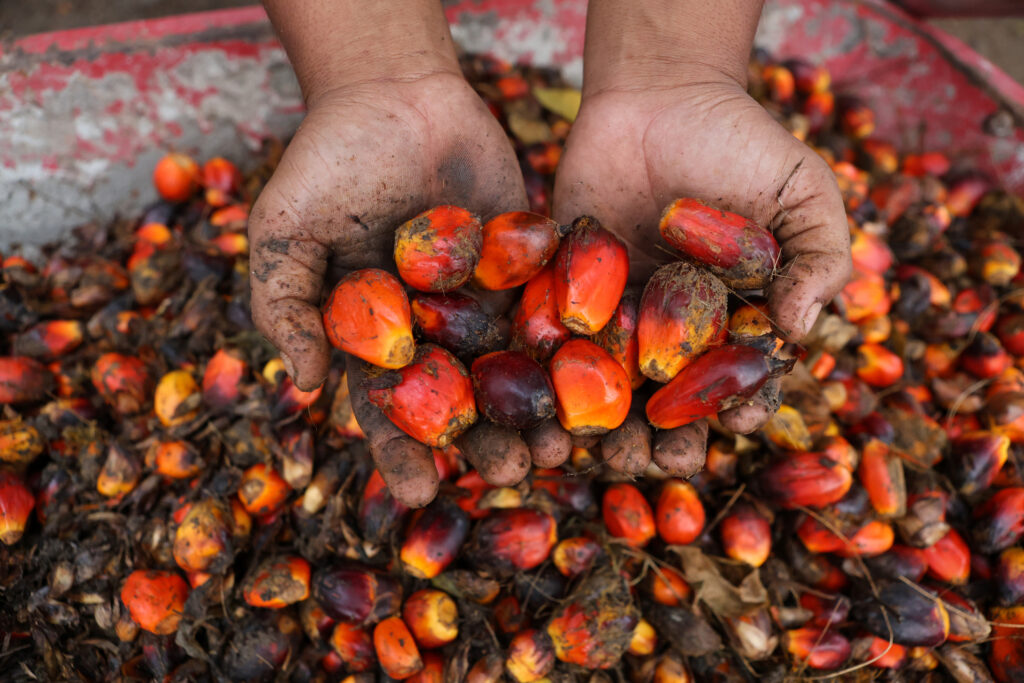
Exhibit 1: Indonesia-based palm oil fruit drives agricultural output
Source: iStock.com/Fachrul Reza
Who wins and who loses?
In the Indonesian government’s framing, the state and, eventually, shareholders are the intended winners through more tax captured, more dollars retained onshore and, per the finance minister, better realised export prices flowing through to corporate profits. If DSI genuinely secures higher benchmarked prices and honours existing contracts, producers selling through DSI could in theory see stronger realisations.
The reform may also redirect attention to producers outside Indonesia’s reach. In thermal coal, South African exporter Thungela Resources stands as a useful benchmark: if contract uncertainty unsettles Indonesian trade flows, non-Indonesian coal supply becomes relatively more attractive, particularly with thermal coal demand resilient against constrained supply. In battery metals, Nickel 28 Capital offers a comparator through its attributable exposure to the Ramu nickel-cobalt operation in Papua New Guinea, a reminder that nickel units sourced outside Indonesia carry none of the new export-channel risk. Neither sits in the Indonesian policy blast radius; both illustrate the read-through for supply that lies beyond Jakarta’s gate.
The near-term losers are clearer. Traders and intermediaries who historically captured margin between Indonesian mills or mines and the end buyer face disintermediation if a single state channel takes over that role. Producers and downstream manufacturers face a period of uncertainty in which contract terms, pricing benchmarks and counterparty arrangements are unsettled, and markets dislike uncertainty more than bad news. The sharp drop in palm-oil fresh-fruit-bunch prices and the pressure on the Jakarta Composite Index in the days after the announcement are early evidence of where sentiment initially landed.
What should investors watch from here?
Three things will determine whether this is a manageable reform or a structural repricing of Indonesian resource exposure. The first is the presidential decree: until the detailed export mechanism is published, the true scope, especially how far it extends into nickel and other metals exports via the ferroalloys reference, cannot be assessed. The second is the three-month review around the end of the transition’s first quarter, which will signal whether Jakarta accelerates, pauses or adjusts implementation. The third is pricing behaviour: whether DSI’s price reviews genuinely sit at or above market levels, as promised, or they become a mechanism for capturing margin at producers’ expense.
Edison insight
Indonesia’s move to centralise its commodity exports is more significant than just tax-collection reform. It marks a shift from a market where the state shaped prices at the edges to one where it stands in the middle of the transaction, in the world’s largest export market for thermal coal, palm oil and nickel. The mechanism echoes the logic of the raw nickel-ore export ban that built Indonesia’s domestic smelting industry: use control of the single state channel to redirect value onshore. This time the policy is aimed at tax revenue and retained dollars rather than factories. For investors, the consequence is a new layer of sovereign intermediation sitting between resource producers and global buyers, from UK-listed palm-oil estates to diversified mining majors. The key question is not whether Jakarta can collect more from its resource base, but whether it can do so without eroding the margins, contract certainty and the investor trust that drew capital to these companies in the first place.
Megatends: resource scarcity, supply-chain security, energy transition, automation and industrial innovation