Last close As at 06/08/2026
GBP17.92
▲ 6.00 (0.34%)
Market capitalisation
GBP501m
Research: TMT
XP Power has successfully transitioned its business and now designs and manufactures the majority of the products it sells. To reflect this achievement, management has refined its strategy to focus on maintaining its competitive position, increasing penetration of its existing customer base and targeting new high-value customers. With strong cash flow generation, the company has the resources to fund growth, whether through internal product development or via acquisition.
XP Power |
Strategy evolution |
FY16 results |
Tech hardware & equipment |
8 March 2017 |
Share price performance
Business description
Next events
Analysts
XP Power is a research client of Edison Investment Research Limited |
|||||||||||||||||||||||||||||||||||||||||||||||
XP Power has successfully transitioned its business and now designs and manufactures the majority of the products it sells. To reflect this achievement, management has refined its strategy to focus on maintaining its competitive position, increasing penetration of its existing customer base and targeting new high-value customers. With strong cash flow generation, the company has the resources to fund growth, whether through internal product development or via acquisition.
Year |
Revenue (£m) |
PBT* |
EPS* |
DPS |
P/E |
Yield |
12/15 |
109.7 |
25.7 |
104.3 |
66.0 |
18.7 |
3.4 |
12/16 |
129.8 |
28.6 |
115.3 |
71.0 |
16.9 |
3.6 |
12/17e |
143.7 |
31.0 |
121.4 |
75.0 |
16.1 |
3.8 |
12/18e |
150.1 |
32.8 |
128.3 |
79.0 |
15.2 |
4.1 |
Note: *PBT and EPS are normalised, excluding amortisation of acquired intangibles, exceptional items and share-based payments.
Strong performance in FY16
FY16 results beat our forecasts, with normalised EPS 7.5% ahead of our estimate (EPS +10.6% y-o-y). Revenue growth of 18% was boosted by currency (constant currency growth 7%) and the EMCO acquisition (c 6% of revenues). XP saw good order intake in H216, providing a strong backlog entering 2017. The company plans to expand the Vietnamese manufacturing facility with the addition of a second phase – the target is to break ground in Q417.
Refining the strategy to reflect the progress made
The company has revised its strategy to reflect the achievement of several key goals, including the completion of the transition to an own-design, own manufacturing business model. The company is now focused on driving growth from existing customers and adding new target customers as well as expanding its product range – either through internal development or acquisition.
Steady earnings growth forecast
We have revised our forecasts to reflect FY16 performance and a weaker pound versus the US dollar/euro. We forecast revenue growth of 10.7% in FY17 (c 4% underlying) and 4.5% in FY18. We are not forecasting material margin expansion from the current high level, assuming that earnings growth is driven from revenue growth. We forecast normalised EPS growth of 5.3% in FY17 and 5.7% in FY18.
Valuation: Undemanding, with strong dividend yield
The share price has gained 16% over the last year, with the stock now trading on a P/E of 16.1x FY17e and 15.2x FY18e normalised EPS, with a forecast dividend yield of 3.8% in FY17. The company trades at a discount to peers, despite its better profitability; evidence of accelerating earnings growth could reduce this discount. Strong forecast cash generation should enable the company to invest in further growth, either through internal product development or bolt-on acquisitions, while maintaining its high level of profitability.
Investment summary
Company description: Power converter solutions
XP Power designs, manufactures and distributes power converter solutions to original equipment manufacturers (OEMs) in the healthcare, technology and industrial markets. The group has its headquarters in Singapore and, to remain close to its global customer base, has a sales, design and engineering presence in the US, Europe and Asia. Unlike many in the industry, XP is vertically integrated; its manufacturing facilities in Asia allow the company to maintain quality control, improve flexibility, reduce product costs and minimise lead times.
Financials: Steady earnings growth
XP reported 18% revenue growth in FY16, boosted by currency and a full year of the EMCO acquisition. Normalised operating profit came in 4.1% ahead of our forecast and normalised EPS 7.5% ahead. We have factored in a rate of US$1.30/£ (down from US$1.35/£) for FY17 and FY18 – this results in an increase in FY17 revenues of 5.3% (10.7% growth, 4% underlying growth) and we introduce an FY18 growth rate of 4.5%. Due to natural hedging, currency has a minimal impact at the earnings level. We upgrade our FY17 EPS forecast by 1.5%, forecasting EPS growth of 5.3% in FY17 and 5.7% in FY18. The company returned to a net cash position of £3.7m at the end of FY16.
Exhibit 1: Changes to forecasts
EPS (p) |
PBT (£m) |
EBITDA (£m) |
|||||||
Old |
New |
% chg. |
Old |
New |
% chg. |
Old |
New |
% chg. |
|
2016 |
107.3 |
115.3 |
7.5 |
27.4 |
28.6 |
4.5 |
32.0 |
33.0 |
3.2 |
2017e |
119.5 |
121.4 |
1.5 |
30.5 |
31.0 |
1.8 |
35.3 |
36.4 |
3.2 |
2018e |
N/A |
128.3 |
N/A |
N/A |
32.8 |
N/A |
N/A |
38.6 |
N/A |
Source: XP Power accounts, Edison Investment Research
Valuation: Reasonable P/E supported by a strong dividend yield
With a current positive economic outlook, albeit with uncertainty relating to Brexit and US economic policy, XP should benefit from continued good order intake through 2017. With an already strong gross and operating margin profile, earnings growth is likely to come from top line growth. Strong forecast cash generation should enable the company to invest in further growth, either through internal product development or through the bolt-on acquisitions it continues to evaluate. XP now trades on a P/E of 16.1x FY17e and 15.2x FY18e normalised EPS, with a forecast dividend yield of 3.8% in FY17 and 4.1% in FY18. The number of listed power converter peers has reduced – these are trading at around 21x FY17e EPS on EBITDA margins of c 17% versus XP’s 25.6% forecast EBITDA margin. Looking at a range of UK electronics manufacturers, these trade on a P/E range of 14.2-28.2x FY17e on EBITDA margins of 8.5-34.2%, with a median P/E of 20.8x and a median margin of 19%.
Sensitivities: End-market demand, currency
XP Power has cyclical exposure to global industrial, technology and healthcare markets and is therefore sensitive to end-demand and product development expenditure in these markets. Visibility of customer volumes is limited and, as such, individual customer orders can be volatile. With the majority of XP’s revenues, manufacturing costs and opex US dollar-denominated, currency will continue to add volatility to XP Power’s reported revenues, although it will have less impact at the net income level. XP also has more limited exposure to the euro/sterling exchange rate; to minimise this, the company enters into forward contracts. Recent acquisitions add integration risk.
Company description: Power conversion solutions
XP Power designs, manufactures and distributes power converter solutions to OEMs in the industrial, healthcare and technology markets. Power converters take the high-voltage alternating current output from the mains supply and convert it into various lower-voltage, stable direct current outputs that are required to drive most electronic equipment. The company has transitioned from being a distributor to designing and manufacturing the majority of its products. In 2015, the company made two acquisitions, EMCO and a South Korean distributor, for a total cost of £9.1m. The group has its headquarters in Singapore and has volume manufacturing facilities in China and Vietnam and specialist high-voltage product manufacturing in the US. To provide customers with high-quality service and support, it has design, engineering and sales functions in the US, Europe and Asia. FY16 revenues were generated in North America (53%), Europe (38%) and Asia (9%).
Background: Specialist designer and manufacturer
XP Power was formed as a specialist distributor of power converters in 1988 (based in Pangbourne, UK). Subsequently, the business merged with Foresight (California, US) and IPS (New England, US) on flotation in 2000 to form a distributor with more than $100m of sales. In 2002, the board decided to begin developing its own IP and designs, and bought Switching Systems International (California, US), which designed its own configurable power converters with an outsourced manufacturing model. Since then the group has continued to develop its own products and brand, built out manufacturing capacity in China and Vietnam and completed the transition from distributor to designer and manufacturer. The company sells through 29 sales offices and multiple distributors across Europe, Asia and North America. XP has engineering service functions in Northern California, Germany and the UK.
Close to reaching targets for own-IP products
XP Power’s business splits along three business lines:
■
Own-manufactured product (73% of FY16 revenues). Products designed by XP, ownership of 100% of the IP and manufactured in its Shanghai or Vietnam facility. This includes engineered solutions where XP power supplies are customised for specific customer end-product design requirements, ie designing and engineering additional casings, metalwork, circuitry, connectors.
■
Labelled products (23%). Customer requirements identified and product design specified by XP, but products sourced from third-party manufacturers and labelled under the XP brand.
■
Distribution (3%). Supply of third-party products.
The company’s long-term target is to generate 75% of sales from own-designed product, a target that was close to being achieved 2016, increasing to 73% from 68% in FY15.
In-house manufacturing well-established
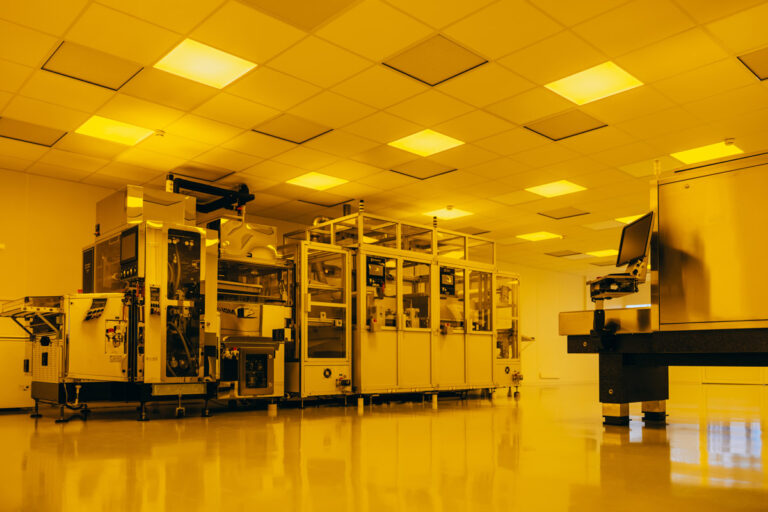
The company manufactures power converters and magnetic components in two locations, China and Vietnam, with smaller US facilities acquired as part of the EMCO deal. The company has worked on re-engineering the manufacturing process to reduce lead times and freight costs and improve customer service, which should result in cost benefits in FY17.
China: Main power converter facility
XP built a manufacturing facility in Kunshan, China (near Shanghai) and started production there in 2006. By the end of 2016, the Chinese facility was operating at c 70% capacity. In addition to making power converters at this facility, XP introduced small-scale production of magnetic components (these are components that go into the end-product and were previously bought in from third parties). This gives XP more control over the manufacturing process (important for some customers) and assists the design teams by shortening design cycles. At this facility, magnetic components are mainly produced for prototyping and short lead-time contracts.
Vietnam: Magnetics and less complex power converters
To reduce XP’s exposure to rising Chinese labour costs and gain more control over the manufacturing process, XP expanded manufacturing into Vietnam, at a site near Ho Chi Minh City. The first phase (approximately the same size as the Chinese facility) was completed in 2011. The first product to be manufactured at this facility in 2012 was magnetic components – these have a high labour component, hence the decision to manufacture them in a lower labour cost country. XP now manufactures virtually all of its magnetics requirements in house. In FY16, XP manufactured 4.9m magnetic components (+14% y-o-y).
In 2014, the company also started manufacturing power converters in this facility. It started with some of the less complex converters and, once qualified, their production was shifted entirely from China to Vietnam. The facility continues to qualify additional converter products, and runs production in parallel with the Chinese facility until it achieves acceptable yields on those products. This process is freeing up capacity in China for more complex product. In FY16, this facility manufactured 377.7k power converters (up from 172.5k in FY15), more than 20% of XP’s total converter output in the year. As the facility is now operating at 50% utilisation, management has decided to break ground on the second phase in Q417, with production expected in FY19.
EMCO provides US manufacturing capacity
EMCO has two facilities, Nevada and California, where it manufactures its high-voltage DC-DC converters. EMCO also uses outsourcing partners for some manufacturing. As EMCO converters are typically more complex than XP’s products (and therefore higher value), it makes sense to retain the specialist expertise of the US-based manufacturing facilities.
Growth strategy refined
XP’s strategy to drive revenue and profitability growth and to gain market share has been in place for a number of years. Certain targets have been substantially achieved (manufacture own products, increase contribution of own-design products, expand “green” product offering), prompting a review of the strategy. The refined strategy now aims to:
■
Develop a broad range of competitive products;
■
Target key customer accounts where XP can add value;
■
Increase vertical penetration of target key accounts;
■
Enhance brand awareness;
■
Achieve operational excellence;
■
Lead the industry on environmental matters; and
■
Acquire complementary businesses to expand the product offering.
We discuss the progress XP is making in each of these areas below.
Product development
XP aims to have the most comprehensive and up-to-date product range in its target markets. The company introduced 47 new products in 2016 (versus 22 in 2015 and 26 in 2014). This number was significantly higher than in previous years because of the introduction of a new third-party supplier of DC-DC product. In 2016, XP spent £8.0m on R&D (before capitalisation and amortisation), up 19% from the £6.7m spent in 2015; during the year the company added design engineering resource in the US and the UK.
Developing more custom capability
The company splits its R&D activities between developing new standard products and developing modifications to existing products to meet specific customer requirements. With emerging competition tending to come from Asian manufacturers of low-complexity converters, the company is focused on serving customers with more complex requirements and undertakes custom design work for large customers.
Expanding the product range
Before the EMCO acquisition, XP’s products could supply voltages up to 120V, with the majority of products sold supplying 24V. EMCO’s high-voltage, low-power DC-DC converters can supply voltages up to 40kV, with the majority of products in the 5-12kV range. XP is also developing a range of higher power products. The company continues to consider acquisitions to further expand the product range and engineering expertise.
Long product life cycles
Products in each end-market have very different life cycles. For example, a medical device could have a product life cycle of 10 years or more. Once a power converter is designed into this product, it is likely to remain in it for the full life of the product. Conversely, technology-related products such as routers have much shorter lives, sometimes as short as two years. On average, product life cycle is five to seven years. XP’s balanced mix of end-customers means it has a fairly high level of revenues that are recurring in nature and exposure to multiple end-markets mitigates the risk of individual industry cyclicality.
Targeting key accounts – new and existing
XP Power has more than 5,000 direct active customers, of which no customer makes up greater than 7% of revenues. In 2016, the top 30 customers made up 44% of revenues. XP Power supplies power converters to three key markets: industrial, healthcare and technology (see Exhibit 2).
Exhibit 2: End-market breakdown
Sector |
FY16 revenue split |
Types of products |
Industrial |
46% |
Factory automation, automated test equipment, industrial control, 3D printing, test & measurement, instrumentation, hazardous environments, defence, avionics. |
Healthcare |
29% |
Medically approved power solutions for use in patient vicinity applications and in the lab environment, including homecare devices, highly efficient convection-cooled designs for low-noise patient area devices and defibrillator-proof DC-DC converters for applied part applications. |
Technology |
25% |
Semiconductor production equipment, audio visual broadcast equipment, mobile & wireless communications, computing and data processing. |
Source: XP Power
Leverage approved supplier status
XP’s in-house manufacturing helps the company to sign up blue-chip customers, particularly in the medical equipment and semiconductor equipment markets. Stable and secure power supply is so crucial to the operation of these customers’ products that they demand complete control over their supply chain and product manufacture to ensure quality. XP has achieved approved or preferred supplier status at a large number of customers, including all of the main healthcare equipment companies, and is now working to expand its share of business at each customer.
Cross-selling from acquisitions
EMCO’s customer base has limited crossover with XP’s existing customer base. As XP’s AC-DC converters often provide the DC input for high-voltage DC-DC converters, there is good cross-selling potential. The acquisition of Hanpower, a distributor, added new customers in South Korea, a country to which XP has not previously had direct access. In addition, Hanpower has engineering services capability that enables it to customise power solutions.
Enhance brand awareness
In 2015, the company launched its redesigned website – the site is now mobile optimised with improved user experience to provide better information and encourage more interaction. In summer 2016, XP engaged Electrocomponents as an additional distributor of its products. It already distributes through DigiKey and Premier Farnell and the addition of Electrocomponents as an additional sales channel should enhance awareness of its products. It also has the added benefit of satisfying demand for small orders, freeing up the direct sales force to concentrate on selling to larger accounts with more complex requirements.
Focus on operational excellence
XP has generated gross margins approaching 50% and operating margins above 20% since 2010, showing how efficiently the business has been run since shifting to the design and manufacture business model. The company continually looks at ways to maintain and improve on this performance. This includes the focus on lean manufacturing as well as improvements to internal processes (upgraded CRM platform, SAP rolled out) to enable the company to share information internally more effectively and to provide better customer service.
High-efficiency products support ‘green’ credentials
XP is a full member of the Electronic Industry Citizenship Coalition (EICC). XP incorporated green technologies into the Vietnamese facility, and received the Gold Plus rating by the Singapore Building and Construction Authority (BCA) for non-residential buildings in tropical climates. This is the first BCA Green Mark industrial facility in Vietnam and is the industry’s most environmentally friendly building.
Having manufacturing facilities and products that meet high environmental standards helps XP to win approved supplier status with large OEMs, but its main ongoing contribution to sustainability is to design ever-more efficient power converters. For example, a 95% efficient product such as the CCM250 only wastes 5% of the input energy, thereby requiring a lower power input to achieve the same output as a device operating at a lower efficiency. The wasted power is often converted to heat, which in turn requires additional power or physical heat sinks to provide cooling, adding to the upfront and running costs of the product. In FY16, sales of ‘green’ (ie high-efficiency) products grew 28% to make up 23% of revenues, compared to 22% in FY15 and, of the 47 new products introduced in the year, 33 were high efficiency designs.
Market outlook
Exhibit 3 shows the split of revenues by geography and end-market over the last two years. On a sector basis, Industrial is the most fragmented. Areas where the company is seeing demand include 3D printing, industrial printing, industrial LED lighting and smart grid. Revenues from this sector grew 23% in FY16, with growth in all geographies. The sector was weak in North America in FY15 but has rebounded in FY16. Despite the slowdown in China, the sector saw very strong growth in Asia. The Healthcare business grew at a more moderate pace (+10%), with stronger revenues in North America as new programmes ramped up. XP has corporate approvals from all of the major healthcare companies. The Technology business had another strong year, particularly in North America. Revenues from semiconductor equipment companies grew 50% y-o-y to make up 12% of group revenues and nearly half of the sector’s revenues. For the group, North American revenues were flat excluding EMCO’s contribution, but strong order intake in H216 bodes well for growth in FY17.
Exhibit 3: Divisional and geographic split of revenues (£m)
Healthcare |
FY16 |
FY15 |
y-o-y |
Industrial |
FY16 |
FY15 |
y-o-y |
Technology |
FY16 |
FY15 |
y-o-y |
North America |
23.5 |
21.3 |
10.3% |
North America |
23.7 |
17.6 |
34.7% |
North America |
21.4 |
16.8 |
27.4% |
Europe |
12.7 |
11.3 |
12.4% |
Europe |
29.6 |
27.1 |
9.2% |
Europe |
7.1 |
6.7 |
6.0% |
Asia |
1.7 |
1.7 |
0.0% |
Asia |
6.5 |
3.9 |
66.7% |
Asia |
3.6 |
3.3 |
9.1% |
Total |
37.9 |
34.3 |
10.5% |
Total |
59.8 |
48.6 |
23.0% |
Total |
32.1 |
26.8 |
19.8% |
Source: XP Power
Competitive position
XP Power operates in a market that was estimated to be worth c £2.1bn in 2016 (source: Micro-Tech Consultants). The market is fragmented, with no player having more than a 10% global share. Based on Micro-Tech Consultants’ market statistics, XP Power estimates its global market share stands at 6.1%, with 10.4% market share in Europe, 9.0% in North America and 1.3% in Asia. XP Power does not operate in the high-volume, low-value commodity power converter markets that supply products such as PCs, laptops and cell phone chargers, or in the market for inverters used for renewable energy. Key players in the power converter market are described in Exhibit 4. After several years of M&A, some of XP’s competitors (Artesyn, SL Industries) are less evident in XP’s markets. XP competes most often with TDK-Lamda and Mean Well as well as with a number of local Asian suppliers of low power, lower complexity product.
Exhibit 4: Competitors
Company |
Corporate HQ |
Market cap |
Comment |
GE |
US |
$261bn |
Bought private equity-owned Lineage Power in 2011. Lineage itself was made up of the acquisitions of Tyco Electronics Power Systems and Cherokee in 2008 and PECO II in 2010, with revenues of $450m in 2010. |
Artesyn |
US |
N/A |
Artesyn was spun out of Emerson in 2013 when it sold a 51% stake in its Embedded Power & Computing (EPC) business to Platinum Equity for $300m. As part of Emerson’s Network Power division, EPC generated revenues of c $1.2bn in FY13. In December 2016, Emerson sold the rest of the Network Power division (which held the remaining 49% of Artesyn) to Platinum for $4bn. |
Delta Electronics |
Taiwan |
$14.6bn |
Diversified supplier of custom power supplies, components and systems. Revenues of $6.7bn in FY16 (+5% y-o-y), of which Power Electronics c $3.4bn. |
TDK Corporation |
Japan |
$8.8bn |
Subsidiary TDK-Lambda is a power supply specialist covering multiple end-markets. Key competitor to XP in Europe and US. |
Kaga Electronics |
Japan |
$0.5bn |
Volgen division is focused on ultra-small power supplies. |
Cosel |
Japan |
$0.4bn |
Specialist in compact, low-profile power supplies. Revenues of $190m in FY16 (-1.5% y-o-y). Competes with XP in Europe and the US. |
Handy & Harman |
US |
$0.3bn |
Handy & Harman acquired SL Industries in 2016. SL’s Power Electronics division (made up of Ault and Condor businesses) competes with XP in the healthcare market. |
Mean Well |
Taiwan |
N/A |
Standard off-the-shelf switching power modules. |
Source: Edison Investment Research
Short-term outlook
The strength of the industrial market depends on the health of the global economy. In 2016, manufacturing PMI data remained above 50 (the level that implies expansion rather than contraction) in the US, Germany and the eurozone. France was below 50 for much of the year but has since moved into positive territory. The UK dipped below 50 after the Brexit vote but rapidly recovered and remains strong.
|
Exhibit 5: Manufacturing PMI data |
|
|
Source: Markit |
The healthcare technology market is expected to show steady growth. Philips estimates that the healthcare technology market was worth c €145bn in 2015 and is likely to show a CAGR of 6-7% to 2019. Within that market, diagnostics and treatment technology (just over a third of the total market) is likely to grow at a CAGR of 4% over the same period. The shorter-term performance from the major healthcare equipment manufacturers is also positive. In 2016, GE Healthcare saw a 5% increase in equipment orders and a 4% increase in revenues. Philips’s healthcare technology revenues grew 5% in constant currency in 2016. Siemens’s healthcare business saw constant currency revenue growth of 5% and order growth of 4% in FY16, with order growth of 4% in Q117 (calendar Q416), providing support for steady progress in 2017.
According to Gartner, the global IT market declined marginally in 2016 after a larger decline in 2015 (-0.6% and -4.7%, respectively), although it is forecast to return to growth of 2.7% in 2017. Forrester is also forecasting growth for global technology revenues of 3.2% in 2017. The semiconductor market is forecast to grow 6.5% in 2017, after a small increase of 1.1% in 2016 (source: WSTS). According to SEMI, the semiconductor equipment market grew 8.7% in 2016 (much higher than its original forecast of 1.4%) and is forecast to grow a further 9.3% in 2017.
Long-term growth drivers
Key drivers of market growth include:
■
The environment: legislation and consumer pressure are driving OEMs to reduce the power consumption of their products. Legislation also extends to the efficiency of power converters, driving demand for new products. XP’s new products are designed to maximise efficiency – for example, the CCM250 has an efficiency of up to 95%;
■
Healthcare: as the population ages, while continuing to grow overall, people are living longer with chronic diseases, driving overall healthcare spending;
■
Emerging technology: alternative technologies are evolving for lighting (eg LEDs) and power generation (eg solar), which all have specific power conversion needs; and
■
Innovation: customers increasingly need to differentiate their products from the competition. XP’s in-house design capabilities enable it to develop products for niche applications.
Sensitivities
XP Power is a global electronics company supplying a broad range of end markets. The company is not immune to economic slowdown, but diversification and the low-cost structure afford the company some earnings resilience versus competitors.
■
Economic sensitivity: the group has cyclical exposure to global industrial, technology and healthcare markets. Therefore, any slowdown in end-demand in these markets or cutbacks in product development expenditure will have an impact on XP’s revenues.
■
Order book visibility: the group has around four months of order book visibility at any one time. However, it is essentially a tier two supplier to the electronics industry and still has a small proportion of distributor revenues. Therefore, visibility of customer volumes is limited and, as such, individual customer orders can be volatile.
■
Currency: around 75% of XP’s revenues, c 90% of cost of sales and c 60% of opex are US dollar-denominated. XP Power reports in sterling, exposing the company’s results to fluctuations in the US$/£ exchange rate. While moves in the exchange rate will have an impact on reported revenues, the overall impact of currency at the net income level is much less pronounced. XP is also exposed to fluctuations in the euro versus sterling (c 10% of revenues and c 15% of operating costs are euro-denominated). To minimise the impact, the company enters into forward contracts.
■
Large competitors: competition ranges from significantly larger players with big balance sheets through to smaller innovative companies. The deeper pockets of large competitors may make it more difficult for XP Power to keep pace with product development.
■
Acquisitions: XP has recently made acquisitions and continues to assess potential targets, adding integration risk.
Financials
Review of FY16 results
Exhibit 6: FY16 results highlights
£m |
FY15a |
FY16e |
FY16a |
Diff |
y-o-y |
Revenues |
109.7 |
127.2 |
129.8 |
2.1% |
18.3% |
Gross profit |
54.6 |
62.6 |
62.0 |
-1.0% |
13.6% |
Gross margin |
49.8% |
49.2% |
47.8% |
-1.5% |
-2.0% |
EBITDA |
29.7 |
32.0 |
33.0 |
3.2% |
11.3% |
EBITDA margin |
27.0% |
25.1% |
25.4% |
1.1% |
-1.6% |
Normalised operating profit |
25.9 |
27.7 |
28.8 |
4.1% |
11.2% |
Normalised operating profit margin |
23.6% |
21.8% |
22.2% |
0.4% |
-1.4% |
Reported operating profit |
25.6 |
27.4 |
28.0 |
2.3% |
9.4% |
Reported operating margin |
23.3% |
21.5% |
21.6% |
0.0% |
-1.8% |
Normalised PBT |
25.7 |
27.4 |
28.6 |
4.5% |
11.3% |
Reported PBT |
25.4 |
27.1 |
27.8 |
2.7% |
9.4% |
Normalised net income |
20.0 |
20.6 |
22.1 |
7.4% |
10.5% |
Reported net income |
19.7 |
20.3 |
21.3 |
5.1% |
8.1% |
Normalised basic EPS (p) |
105.3 |
108.4 |
116.2 |
7.2% |
10.4% |
Normalised diluted EPS (p) |
104.3 |
107.3 |
115.3 |
7.5% |
10.6% |
Reported basic EPS (p) |
103.7 |
106.8 |
112.0 |
4.9% |
8.0% |
Dividend per share (p) |
66.0 |
69.0 |
71.0 |
2.9% |
7.6% |
Net debt/(cash) |
3.7 |
2.1 |
(3.7) |
N/A |
N/A |
Source: XP Power, Edison Investment Research
XP reported revenue growth of 18.3% for FY16, with constant currency growth of 7%. Revenues benefited from the full year inclusion of EMCO (acquired November 2015), which we estimate contributed revenues of c £7.6m. While the weaker pound had a positive impact on revenues, it also increased cost of sales (c 90% are in US dollars), resulting in a lower gross margin than in the prior year, although gross profit was 13.5% higher year-on-year. For sterling-denominated business (c 13% of revenues), the weaker pound led to a 130bp hit to gross margins; the company has now put prices up in the UK so this effect should not continue into FY17.
EBITDA of £33.0m was 3% ahead of our forecast and +11% y-o-y. The company incurred aborted acquisition costs of £0.4m that have been treated as exceptional. The effective tax rate for the year (on reported PBT) was 22.7%, lower than our 24% forecast. Better than expected operating profit combined with lower tax resulted in normalised EPS 7.5% ahead of our forecast.
Debt significantly reduced – return to net cash position
In 2015, the company took out a $12m term loan to fund the EMCO acquisition. This is being repaid on a quarterly basis with the final repayment due in December 2017. This stood at $6.9m/£5.5m at the end of FY16. The company renewed its annual working capital facility in September 2016 – it has a facility of $7.5m available, which was unused at year-end.
Dividend up 7.6% y-o-y
The company announced a final quarterly dividend of 26p per share, making a total of 71p per share for FY16, up 7.6% on FY15. Dividends have grown at a CAGR of 9.5% over the last five years.
Outlook and changes to forecasts
XP received orders worth £133.5m in FY16 (+21% y-o-y), equating to a book-to-bill of 1.03x for FY16. In Q416, orders reached £37.1m, growing 6% q-o-q and 24% y-o-y. This provides a strong backlog entering FY17.
We have revised our forecasts to reflect the following:
■
Revenues: our previous forecasts used a $1.35/£ exchange rate. Year-to-date the rate has averaged $1.24/£, so we are reducing the rate to $1.30/£ for FY17 onwards. We forecast reported growth of 10.7% and underlying growth of c 4% for FY17. For FY18 we introduce a forecast for 4.5% growth.
■
Gross margins: we have reduced margins to reflect the impact of currency.
■
Dividends: we have increased our forecast from 73p to 75p in FY17 and introduce a forecast of 79p for FY18.
■
Capex: we have increased our tangible capex forecast from £2.0m to £5.0m in FY17 to reflect the costs of building out phase two of the Vietnam manufacturing facility ($1.5m in Q417 and $4.5m in FY18) as well as an increase in spending in the remainder of the business.
■
Net cash: we forecast net cash is relatively flat year-on-year at the end of FY17 (reflecting higher capex and a higher dividend) increasing to £7.7m by the end of FY18.
Exhibit 7: Changes to forecasts
£m |
FY17e – old |
FY17e – new |
Change |
y-o-y |
FY18e – new |
y-o-y |
Revenues |
136.4 |
143.7 |
5.3% |
10.7% |
150.1 |
4.5% |
Gross profit |
67.4 |
68.3 |
1.5% |
10.2% |
71.5 |
4.6% |
Gross margin |
49.4% |
47.6% |
-1.8% |
-0.2% |
47.6% |
0.1% |
EBITDA |
35.3 |
36.4 |
3.2% |
10.4% |
38.6 |
5.9% |
EBITDA margin |
25.9% |
25.4% |
-2.0% |
-0.1% |
25.7% |
0.3% |
Normalised operating profit |
30.8 |
31.3 |
1.7% |
8.8% |
33.1 |
5.6% |
Normalised operating profit margin |
22.6% |
21.8% |
-0.8% |
-0.4% |
22.0% |
0.2% |
Reported operating profit |
30.6 |
30.9 |
1.1% |
10.5% |
32.7 |
5.6% |
Reported operating margin |
22.4% |
21.5% |
-0.9% |
0.0% |
21.8% |
0.2% |
Normalised PBT |
30.5 |
31.0 |
1.8% |
8.5% |
32.8 |
5.6% |
Reported PBT |
30.3 |
30.6 |
1.1% |
10.2% |
32.4 |
5.7% |
Normalised net income |
22.9 |
23.3 |
1.5% |
5.4% |
24.6 |
5.7% |
Reported net income |
22.7 |
23.0 |
1.1% |
7.9% |
24.3 |
5.8% |
Normalised basic EPS |
120.8 |
122.7 |
1.5% |
5.5% |
129.6 |
5.7% |
Normalised diluted EPS |
119.5 |
121.4 |
1.5% |
5.3% |
128.3 |
5.7% |
Reported basic EPS |
119.7 |
121.1 |
1.1% |
8.1% |
128.1 |
5.8% |
Dividend per share |
73.0 |
75.0 |
2.7% |
5.6% |
79.0 |
5.3% |
Net debt/(cash) |
(3.9) |
(3.6) |
-8.1% |
-3.7% |
(7.7) |
115.6% |
Source: Edison Investment Research
Valuation
The stock has gained 16% over the last 12 months, as it has seen a recovery in bookings, particularly in H216. XP now trades on a P/E of 16.1x FY17e and 15.2x FY18e normalised EPS, with a forecast dividend yield of 3.8% in FY17 and 4.1% in FY18. The number of listed power converter peers has reduced; these are trading at around 21x FY17e EPS on EBITDA margins of c 17% versus XP’s 25.6% forecast EBITDA margin. Looking at a range of UK electronics manufacturers, these trade on a P/E range of 14.2-28.2x FY17e on EBITDA margins of 8.5-34.2%, with a median P/E of 20.8x and a median margin of 19%. Based on XP’s superior margins, the company is undervalued versus peers, and is further supported by its dividend yield.
With a current positive economic outlook, albeit with uncertainty relating to Brexit and US economic policy, XP should benefit from continued good order intake through 2017. With an already strong gross and operating margin profile, earnings growth is likely to come from top line growth. Strong forecast cash generation should enable the company to invest in further growth, either through internal product development or through the bolt-on acquisitions it continues to evaluate.
Exhibit 8: Financial summary
£m |
2012 |
2013 |
2014 |
2015 |
2016 |
2017e |
2018e |
||
Year end 31 December |
IFRS |
IFRS |
IFRS |
IFRS |
IFRS |
IFRS |
IFRS |
||
INCOME STATEMENT |
|||||||||
Revenue |
|
|
93.9 |
101.1 |
101.1 |
109.7 |
129.8 |
143.7 |
150.1 |
Cost of Sales |
(49.0) |
(51.5) |
(51.0) |
(55.1) |
(67.8) |
(75.3) |
(78.6) |
||
Gross Profit |
44.9 |
49.6 |
50.1 |
54.6 |
62.0 |
68.3 |
71.5 |
||
EBITDA |
|
|
23.3 |
26.0 |
27.6 |
29.7 |
33.0 |
36.4 |
38.6 |
Normalised operating profit |
|
|
21.0 |
23.3 |
24.5 |
25.9 |
28.8 |
31.3 |
33.1 |
Amortisation of acquired intangibles |
0.0 |
0.0 |
0.0 |
0.0 |
(0.4) |
(0.4) |
(0.4) |
||
Exceptionals |
0.0 |
0.0 |
0.0 |
(0.3) |
(0.4) |
0.0 |
0.0 |
||
Share-based payments |
0.0 |
0.0 |
0.0 |
0.0 |
0.0 |
0.0 |
0.0 |
||
Reported operating profit |
21.0 |
23.3 |
24.5 |
25.6 |
28.0 |
30.9 |
32.7 |
||
Net Interest |
(0.8) |
(0.4) |
(0.2) |
(0.2) |
(0.2) |
(0.3) |
(0.3) |
||
Joint ventures & associates (post tax) |
0.0 |
0.0 |
0.0 |
0.0 |
0.0 |
0.0 |
0.0 |
||
Exceptional & other financial |
0.0 |
0.0 |
0.0 |
0.0 |
0.0 |
0.0 |
0.0 |
||
Profit Before Tax (norm) |
|
|
20.2 |
22.9 |
24.3 |
25.7 |
28.6 |
31.0 |
32.8 |
Profit Before Tax (reported) |
|
|
20.2 |
22.9 |
24.3 |
25.4 |
27.8 |
30.6 |
32.4 |
Reported tax |
(4.5) |
(4.5) |
(4.8) |
(5.5) |
(6.3) |
(7.4) |
(7.8) |
||
Profit After Tax (norm) |
15.7 |
18.4 |
19.5 |
20.2 |
22.3 |
23.6 |
24.9 |
||
Profit After Tax (reported) |
15.7 |
18.4 |
19.5 |
19.9 |
21.5 |
23.3 |
24.6 |
||
Minority interests |
(0.2) |
(0.2) |
(0.1) |
(0.2) |
(0.2) |
(0.3) |
(0.3) |
||
Discontinued operations |
0.0 |
0.0 |
0.0 |
0.0 |
0.0 |
0.0 |
0.0 |
||
Net income (normalised) |
15.5 |
18.2 |
19.4 |
20.0 |
22.1 |
23.3 |
24.6 |
||
Net income (reported) |
15.5 |
18.2 |
19.4 |
19.7 |
21.3 |
23.0 |
24.3 |
||
Basic average number of shares outstanding (m) |
19 |
19 |
19 |
19 |
19 |
19 |
19 |
||
EPS – basic normalised (p) |
|
|
81.67 |
95.84 |
102.12 |
105.28 |
116.22 |
122.67 |
129.64 |
EPS – diluted normalised (p) |
|
|
81.35 |
95.05 |
101.07 |
104.32 |
115.33 |
121.39 |
128.28 |
EPS – basic reported (p) |
|
|
81.67 |
95.84 |
102.12 |
103.70 |
112.02 |
121.09 |
128.06 |
Dividend (p) |
50 |
55 |
61 |
66 |
71 |
75 |
79 |
||
Revenue growth (%) |
(9.4) |
7.7 |
0.0 |
8.5 |
18.3 |
10.7 |
4.5 |
||
Gross Margin (%) |
47.8 |
49.1 |
49.6 |
49.8 |
47.8 |
47.6 |
47.6 |
||
EBITDA Margin (%) |
24.8 |
25.7 |
27.3 |
27.0 |
25.4 |
25.4 |
25.7 |
||
Normalised Operating Margin |
22.4 |
23.0 |
24.2 |
23.6 |
22.2 |
21.8 |
22.0 |
||
BALANCE SHEET |
|||||||||
Fixed Assets |
|
|
52.8 |
53.3 |
56.1 |
65.4 |
73.2 |
76.9 |
80.7 |
Intangible Assets |
38.1 |
39.1 |
40.5 |
48.2 |
53.0 |
54.2 |
55.2 |
||
Tangible Assets |
13.2 |
12.7 |
14.4 |
16.1 |
19.1 |
21.6 |
24.4 |
||
Investments & other |
1.5 |
1.5 |
1.2 |
1.1 |
1.1 |
1.1 |
1.1 |
||
Current Assets |
|
|
39.3 |
42.2 |
47.0 |
53.5 |
65.7 |
67.3 |
74.1 |
Stocks |
19.8 |
20.4 |
25.2 |
28.7 |
32.2 |
36.9 |
38.5 |
||
Debtors |
14.2 |
15.4 |
16.0 |
17.5 |
21.5 |
23.6 |
24.7 |
||
Cash & cash equivalents |
4.1 |
5.0 |
3.8 |
4.9 |
9.2 |
4.0 |
8.1 |
||
Other |
1.2 |
1.4 |
2.0 |
2.4 |
2.8 |
2.8 |
2.8 |
||
Current Liabilities |
|
|
(20.2) |
(22.4) |
(18.6) |
(19.8) |
(25.7) |
(21.8) |
(22.6) |
Creditors |
(11.1) |
(12.7) |
(14.4) |
(14.6) |
(16.0) |
(17.7) |
(18.5) |
||
Tax and social security |
(1.6) |
(1.1) |
(1.7) |
(1.2) |
(3.3) |
(3.3) |
(3.3) |
||
Short term borrowings |
(7.3) |
(8.5) |
(2.5) |
(4.0) |
(5.5) |
(0.4) |
(0.4) |
||
Other |
(0.2) |
(0.1) |
0.0 |
0.0 |
(0.9) |
(0.4) |
(0.4) |
||
Long Term Liabilities |
|
|
(10.6) |
(3.7) |
(4.2) |
(10.0) |
(6.2) |
(6.2) |
(6.2) |
Long term borrowings |
(7.4) |
0.0 |
0.0 |
(4.6) |
0.0 |
0.0 |
0.0 |
||
Other long term liabilities |
(3.2) |
(3.7) |
(4.2) |
(5.4) |
(6.2) |
(6.2) |
(6.2) |
||
Net Assets |
|
|
61.3 |
69.4 |
80.3 |
89.1 |
107.0 |
116.2 |
126.0 |
Minority interests |
(0.2) |
(0.2) |
(0.1) |
(0.8) |
(0.9) |
(1.0) |
(1.1) |
||
Shareholders' equity |
|
|
61.1 |
69.2 |
80.2 |
88.3 |
106.1 |
115.2 |
124.9 |
CASH FLOW |
|||||||||
Op Cash Flow before WC and tax |
23.3 |
26.0 |
27.6 |
29.7 |
33.0 |
36.4 |
38.6 |
||
Working capital |
4.2 |
(0.3) |
(4.1) |
(4.6) |
(6.2) |
(5.1) |
(1.9) |
||
Exceptional & other |
0.4 |
(0.5) |
1.9 |
0.6 |
5.2 |
0.0 |
0.0 |
||
Tax |
(4.3) |
(5.0) |
(3.6) |
(4.7) |
(4.1) |
(7.4) |
(7.8) |
||
Net operating cash flow |
|
|
23.6 |
20.2 |
21.8 |
21.0 |
27.9 |
23.9 |
28.9 |
Capex |
(4.7) |
(3.2) |
(5.8) |
(5.4) |
(6.8) |
(9.2) |
(9.7) |
||
Acquisitions/disposals |
(1.6) |
0.1 |
0.1 |
(8.3) |
0.1 |
(0.5) |
0.0 |
||
Net interest |
(0.5) |
(0.3) |
(0.1) |
(0.1) |
(0.2) |
(0.3) |
(0.3) |
||
Equity financing |
(0.5) |
0.1 |
(0.2) |
0.0 |
0.2 |
0.0 |
0.0 |
||
Dividends |
(9.1) |
(10.1) |
(11.0) |
(12.2) |
(13.1) |
(14.1) |
(14.8) |
||
Other |
0.5 |
0.2 |
0.1 |
0.2 |
0.0 |
0.0 |
0.0 |
||
Net Cash Flow |
7.7 |
7.0 |
4.9 |
(4.8) |
8.1 |
(0.1) |
4.1 |
||
Opening net debt/(cash) |
|
|
18.6 |
10.6 |
3.5 |
(1.3) |
3.7 |
(3.7) |
(3.6) |
FX |
0.3 |
0.1 |
(0.1) |
(0.2) |
(0.5) |
0.0 |
0.0 |
||
Other non-cash movements |
0.0 |
0.0 |
0.0 |
0.1 |
(0.2) |
0.0 |
0.0 |
||
Closing net debt/(cash) |
|
|
10.6 |
3.5 |
(1.3) |
3.7 |
(3.7) |
(3.6) |
(7.7) |
Source: XP Power accounts, Edison Investment Research
|
|||||||||||||||||||||||||||||||||||||||||||||||||
|
|
Having completed its capital investment projects, Devro’s manufacturing footprint is now aligned to customer demand and should allow growth in more profitable areas as management purposefully moves away from the oversupplied low-price segment. The transition was complex and there is still more work to do, especially in Latin America. Devro has now commenced a new programme, Devro 100, to accelerate sales and profit growth in order to make the most of the new capacity.