Differentiated oncology asset with early validation
TT represents a differentiated approach in oncology, targeting tumours through direct
injection rather than systemic exposure. This localised delivery allows for rapid
tumour destruction at the injection site. In Phase IIa STS studies, TT has shown high
objective response rates (ORR) and durable ablation, with no recurrence observed in
fully responding lesions over follow-up periods. Emerging translational data also
show signs of systemic immune responses after local treatment, suggesting broader
therapeutic relevance. While these findings remain early, we believe they provide
encouraging initial validation of this asset and the platform. We note that TT has
already been marketed as a veterinary formulation (Stelfonta), providing evidence
of real-world safety and activity in live disease settings across >30k dogs, somewhat
de-risking the human oncology programme.
Platform optionality provides longer-term upside
QBiotics’ pipeline is powered by its discovery platform, EcoLogic, based on the development
of bioactive molecules from natural sources. This approach generates chemical platforms
such as the current epoxytiglianes platform, which is producing multiple programmes
extending into wound healing and antibiotics, providing longer-term optionality beyond
the core oncology focus. In our view, the company’s ability to translate platform-derived
molecules into clinically validated drug candidates supports the credibility of the
approach. Over time, successful creation of additional assets could diversify the
pipeline and unlock further partnering opportunities.
Enterprise value assessed at A$361m
We value QBiotics at A$361m (73.7c/share), with TT representing the primary value
driver across STS, HNC and breast cancer, underpinning the bulk of risk-adjusted returns.
EBC-1013 and Stelfonta offer additional diversification and medium-term upside. We
note that, given the early stage of clinical development, our valuation is highly
sensitive to clinical readouts, regulatory execution and the scalability of intratumoral
delivery, as well as the successful translation of TT’s combination potential within
immuno-oncology settings.
Investment case and use of proceeds
Why invest now?
QBiotics presents an opportunity to invest in a differentiated oncology asset at a
stage where early clinical validation is established, yet potentially significant
value inflection points remain ahead. The company is targeting areas of high unmet
medical need, including STS, HNC and breast cancer, all of which have the potential
to translate to lucrative commercial opportunities. TT offers a relatively underexplored
intratumoural approach, combining direct tumour ablation with broader immune-mediated
effects, differentiating the asset from current treatment options. While the therapy
may be positioned as a monotherapy, we see potentially greater opportunities in combination
approaches, which are becoming increasingly prevalent in modern cancer treatment regimens,
and, hence, of interest to prospective pharma partners.
Clinical traction is already evident. Early studies have shown encouraging response
rates across multiple tumour types, all while showcasing a favourable safety profile.
Programmes in STS and HNC are progressing through Phase II, with an additional Phase
II study in breast cancer in planning, supported largely by non-dilutive external
funding, and is expected to broaden the dataset. Further opportunities also exist
in additional solid tumour settings, including liver cancer and melanoma based on
preclinical and early clinical data, respectively, offering multiple shots at goal.
We believe that the human oncology programme is somewhat de-risked by the successful
development and commercialisation of Stelfonta. These achievements highlight TT’s
safety and activity in live disease settings, while demonstrating QBiotics’ capabilities
in manufacturing and providing the company with learnings to support the current human
oncology focus.
In parallel, management is actively engaging potential pharma partners, suggesting
the asset is approaching a stage where its robust scientific backing can translate
into a commercial transaction. As such, any further developments may help secure a
partner under more attractive deal terms.
Use of proceeds and path to value inflection
The proposed fundraise (seeking up to c A$40m) has been planned with the clear objective
of augmenting the oncology programme for a commercial partnership, and we understand
that management is already in discussions with prospective pharma partners. Most of
the proceeds will be allocated to progressing TT through ongoing and planned clinical
development efforts, generating important data to enhance both partnering discussions
and the overall value proposition. This includes completing key Phase II studies and
expanding the clinical evidence base across all relevant oncology indications.
A secondary component of the funding will support preparations for a potential ASX
IPO. Importantly, the use of proceeds is tightly aligned with near-term value creation,
providing investors with a clear line of sight between capital deployment and milestone
delivery.
The wound healing drug candidate (EBC-1013) is expected to progress independent of
newly raised capital. The programme is already funded through its current stage of
development, and management is exploring non-dilutive funding opportunities, including
grants and strategic partnership opportunities, to support further advancement. As
such, investors in QBiotics may gain exposure to this additional opportunity without
a meaningful increase in near-term funding requirements. We highlight that QBiotics
also has a novel antibiotics programme (preclinical), but since this represents a
longer-term opportunity, we do not discuss it in detail in this report.
Overall, the investment case is underpinned by a disciplined capital strategy: deploying
capital into the highest-value programme, targeting a defined partnering inflection
point, while maintaining optionality across the broader pipeline with limited incremental
spend.
Company overview
Translating natural molecules into clinical assets
QBiotics is a clinical-stage biotechnology company headquartered in Brisbane, Australia.
It is a public unlisted company, having historically funded its operations through
private capital. Its operating model spans early-stage drug discovery, through clinical
development, to marketed products. The leadership team brings a diverse mix of scientific,
clinical and commercial experience, with recent changes reflecting a renewed focus
on capital discipline, clinical execution and strategic positioning. This includes
a reconstituted board and management structure, aligning the organisation more closely
with its next stage of development and funding objectives.
At the core of QBiotics’ approach is its EcoLogic platform that produces novel biologically
active chemical platforms sourced from botanical origins, drug candidates from which
are subsequently optimised for therapeutic use (Exhibit 1). The current epoxytiglianes
platform is derived from Fontainea picrosperma (a rainforest tree endemic to the Atherton Tablelands in North Queensland, Australia),
exemplifying this approach.
Natural products have historically played an important role in drug discovery, offering
structurally diverse and biologically active molecules that can interact with complex
disease pathways. Key successful examples include quinine for malaria, paclitaxel
in oncology and the penicillin class of antibiotics. QBiotics’ platform seeks to harness
these properties, identifying molecules with inherent biological activity and translating
them into clinically viable therapies. The epoxytiglianes class is of particular interest
due to its ability to induce rapid, localised and systemic biological effects, which can be leveraged in settings such as tumour destruction and tissue regeneration.
This discovery strategy differentiates QBiotics from many small biotechnology companies,
which often focus on synthetic or highly targeted molecular approaches, which can
be complex and expensive.
| Exhibit 1: QBiotics’ epoxytiglianes platform is a source of potential therapeutics across a
range of disease areas |
 |
| Source: QBiotics corporate presentation (April 2026) |
Corporate strategy
QBiotics’ epoxytiglianes platform has given rise to a pipeline spanning oncology,
wound healing and antibiotics, with each programme reflecting a different application
of its underlying chemistry (Exhibit 2). The lead oncology asset, TT, is being developed
as an intratumoural therapy for solid tumours, with active programmes in STS and HNC.
Additional exploratory work is ongoing in other tumour types, including breast cancer,
supported in part by external funding, highlighting TT’s ‘pipeline-in-a-product’ potential.
The company’s second clinical-stage asset, EBC-1013, is being developed for chronic
wound healing, with additional potential in acute wounds and burns. This programme
targets conditions where tissue repair represents a medical challenge, with early
clinical work suggesting potential to accelerate healing through localised biological
activity. In parallel, QBiotics maintains a preclinical antibiotics programme, although
this remains a longer-term opportunity. Together, these programmes illustrate the
breadth of the epoxytiglianes platform and its potential to generate multiple assets
across distinct therapeutic areas. While oncology is deliberately the primary focus,
the broader pipeline provides strategic optionality, with scope to expand into additional
indications over time as new candidates are identified.
Management is prioritising the clinical development of TT in oncology, with the objective
of generating robust data to augment a commercial partnership to support subsequent
development efforts and eventual potential commercialisation. This reflects a disciplined
approach to capital allocation, concentrating resources on the programme with the
clearest path to near-term value realisation, while maintaining longer-term upside
through the broader platform. As an example of an oncology deal involving the intratumoral
delivery approach, French biotech Nanobiotix secured a $2.6bn licence agreement with Janssen (a Johnson & Johnson company), including a $60m upfront payment for its
intratumoral candidate, highlighting the big pharma interest in this space.
| Exhibit 2: QBiotics’ clinical development pipeline |
 |
| Source: QBiotics corporate presentation (April 2026) |
Lead asset: Tigilanol tiglate
Mode of action and positioning
TT is QBiotics’ lead oncology asset and represents a novel approach to cancer treatment
based on intratumoural delivery. Unlike conventional anti-cancer therapies, which
typically circulate throughout the body, TT is administered directly into the tumour
site. This localised approach is designed to enable targeted tumour destruction while
limiting systemic exposure.
As characterised by Johnson & Johnson, such intratumoural treatments offer the potential to:
- Minimise toxicity: offering more favourable risk-benefit profiles, in particular for
earlier-stage cancers.
- Increase efficacy: expose tumours to higher concentrations of therapy and activate
anti-tumour immunity.
- Unlock new therapies: enable use of immunotherapeutic agents that otherwise may not
be usable via systemic delivery.
Following injection, TT induces a localised biological response within the tumour
microenvironment. This includes disruption of tumour vasculature (disrupting the blood
vessels supplying the tumour) and oncosis (activation of cellular processes that lead
to tumour cell death), leading to rapid tumour ablation. TT also stimulates healing
of the site post tumour destruction. By concentrating activity at the tumour site,
the therapy achieves meaningful local control while reducing off-target effects associated
with systemic therapies.
Beyond this local effect, there is emerging evidence of TT having broader biological
implications. The destruction of tumour tissue can release tumour-specific antigens
(proteins that our immune systems can recognise), stimulating systemic immunological
responses. While these distal effects remain under investigation, they support the
potential for QBiotics’ lead asset to act as a local therapy as well as for wider
anti-cancer activity (Exhibit 3).
| Exhibit 3: TT’s mode of action |
 |
| Source: QBiotics resources |
This mode of action positions TT as a flexible component within the evolving oncology
treatment landscape. Standards of care are increasingly incorporating synergistic
combination approaches, especially in immuno-oncology (as discussed in our recent thematic report), where therapies are used together to improve response rates and durability. Intratumoural
therapies such as TT may complement these approaches by improving both tumour accessibility
and immune recognition (as demonstrated in mouse studies), potentially enhancing responses
to existing therapies (immune checkpoint inhibitors (ICIs) response rates are only 15–30% in solid tumours, and the market is still currently valued at c $50bn, according to Grand View Research). This means that while TT could be initially
developed as a monotherapy, combination strategies may provide a greater value proposition,
in our view.
Preclinical development
QBiotics has progressed TT through a structured development path, including preclinical
research, veterinary clinical development, a Phase I study and ongoing Phase II programmes
across multiple tumour types. Preclinical and veterinary clinical work showed the
molecule’s ability to induce the rapid destruction of tumour cells after local dosing,
alongside evidence of vascular disruption and immune activation. These findings provided
the rationale for advancing into human studies.
Early clinical development
Early clinical development focused on establishing safety, tolerability and signals
of efficacy in nine different solid tumour types. The Phase I study (EBC46-H01/2) assessed TT in 22 patients with advanced solid tumours, including STS,
HNC, as well as other accessible lesions, such as breast cancer, melanoma and squamous
cell carcinoma. The therapy was generally well tolerated, with no maximum tolerated
dose identified and a safety profile characterised primarily by localised, manageable
effects at the injection site, normal for this type of administration. While the study
was not powered to test efficacy, early signals of anti-tumour activity were observed
across multiple tumour types. Encouragingly, 6/22 patients (27%) experienced a treatment
response, with 4/22 (18%) achieving a complete response. Furthermore, abscopal responses
were observed in two patients, meaning that tumour responses were recorded in distal
(non-injected) tumour sites in two cases. Collectively, an overall injected-tumour
response rate of 60% was reported following single injections of TT, providing early
validation of the mode of action. However, we highlight that the data here correspond
to a relatively small sample size. (See Exhibit 14 in the appendix for a supplementary
figure relating to the Phase I study.)
Building on these findings, QBiotics advanced TT into Phase II development with larger
cohorts, with an initial focus on STS and HNC. These indications were selected based
on a combination of clinical need, accessibility of tumours for injection and compelling
early signals of efficacy.
Phase IIa in STS, programme supported by ODD
The Phase IIa study (QB46C-H07) in STS represents the most advanced clinical programme
and is a key driver of the current investment case. QB46C-H07, being undertaken at
the recognised site Memorial Sloan Kettering Cancer Center in the US, is designed
as an open-label study, evaluating both the safety and efficacy of intratumoural TT
in patients with a range of accessible STS lesions. The study is being conducted in
stages, the first of which is a pilot in 10 patients, while the second is the expansion
portion of the trial. The primary efficacy endpoint is based on ORR of injected tumours
compared to baseline, defined as the portion of patients who achieve complete (100%
reduction in volume) or partial (at least 30% reduction) ablation of tumours and/or
tumour segments. Secondary endpoints are based on safety and tolerability, alongside
pharmacokinetics. Exploratory endpoints include local rate of recurrence at the injection
site at six months after initial injection and assessment of tumour responses in biopsy
samples. Initial results have been reported from the first stage of the trial, and
the expansion stage is ongoing.
The data from the first stage (announced in June 2025) were encouraging, in our view. The study reported an ORR of 80% in injected tumours
(8/10 patients), with 22 of the 27 tumours treated (81%) across the 10 participants
showing complete or partial ablation (Exhibit 4). This comprised 14/27 (52%) cases
of complete ablation and 8/27 (30%) cases of partial ablation. Notably, in the 14
tumours that were fully ablated, no recurrence was observed over a six-month follow-up
period, suggesting that TT delivers durable local tumour control in settings where
treatment options are often limited and outcomes can be poor. In addition, TT efficacy
response was consistent across six STS subtypes. Encouragingly, it has also been reported
that three patients exhibited better-than-expected responses to subsequent systemic
therapy, despite previously being refractory to such treatments, highlighting the
promise for potential future combination treatment approaches. In terms of safety,
the drug candidate was well tolerated, consistent with prior data, adding to a robust
data package. (See Exhibit 15 in the appendix for a supplementary figure relating
to QB46C-H07, showing an angiosarcoma patient achieving a complete response.)
The second stage of QB46C-H07 is underway with the aim of expanding the dataset and further validating the findings; management
has communicated it will provide an update once this stage has been completed. It
is our opinion that the results to date represent a meaningful signal of efficacy
for a therapy at this stage of development.
We note that TT has received ODD in STS from the FDA, providing validation that the regulators see TT as a potentially
viable product in this indication. Benefits of ODD include tax credits for qualified
clinical trials and exemption from user fees, which may support an accelerated regulatory
pathway. ODD also allows for a minimum of seven years of market exclusivity, enhancing
the commercial attractiveness of the programme to prospective partners.
Phase I/II in HNC
QBiotics has conducted a Phase I/IIa study (QB46C-H03) and is conducting a Phase II
study (QB46C-H08) in HNC, another indication characterised by significant unmet need
and where local tumour control may have a meaningful effect on patient outcomes. These
studies have explored the use of TT in accessible tumours, with a focus on safety,
tolerability and preliminary efficacy.
QB46C-H03 was a dose-escalation safety study, for which results were announced in August 2023. It treated 19 patients in a window-of-opportunity before-surgery study, meeting
its primary endpoint of safety and tolerability. It was not designed to generate efficacy
data but focussed on exploring the immunological response of TT treatment. Study outcomes
confirmed the induction of immunological cell death and tumour immune cell infiltration.
QB46C-H08 is designed as an open-label trial in up to 37 HNC patients, based at sites
in Australia and the UK. The primary objective is to evaluate local control through
tumour ablation, while secondary objectives focus on safety and tolerability, alongside
time to local disease recurrence, recurrence rates at injected tumour sites and progression-free
survival. As announced in March 2026, recruitment for QB46C-H08 has been completed and a readout is anticipated in Q2
or Q3 CY26. Management has communicated that early efficacy signals have been supportive,
including interim data showing a 71% ORR across 25 tumours in 16 HNC patients (Exhibit
5). We expect the final data package will provide greater clarity on the clinical
potential of the drug candidate in this indication.
| Exhibit 4: QB46C-H07 (first stage) data in STS – change in tumour volume |
 |
| Source: QBiotics corporate presentation (April 2026) |
| Exhibit 5: QB46C-H08 (interim) data in HNC – change in tumour volume |
 |
| Source: QBiotics corporate presentation (April 2026) |
Plans for Phase II in breast cancer, 90% collaborator-funded
Beyond STS and HNC, QBiotics is exploring broader applicability across additional
solid tumours, including breast cancer, as reflected in the March 2026 announcement that QBiotics and Unicancer France (a French hospital network specialised
in oncology that coordinates research and treatment across the country, and a recognised
organisation for conducting oncology trials and advancing new cancer therapies) have
signed a letter of intent to establish a collaborative partnership, looking at breast
cancer recurrence. This will involve a Phase II, multi-centre, open-label, single-arm,
investigator-initiated clinical trial (expected n=50) assessing intratumoural TT for
loco-regional and superficial breast cancer recurrences. Management is finalising
a definitive collaboration agreement, where Unicancer is expected to fund 90% of the
programme, serving as an encouraging form of external validation, in our view. Overall,
we believe this programme has the potential to expand the clinical utility of TT to
another cancer type where effective new treatment options are needed. We note that
Unicancer’s interest in the programme stemmed from some encouraging case studies as
part of a compassionate use scheme with the Gustave Roussy Cancer Centre in Paris.
(See Exhibit 16 in the appendix for a supplementary figure relating to a case study,
showing a metastatic breast angiosarcoma patient achieving a complete response.)
Clinical strategy and next steps
Taken together, the clinical data to date provide supportive evidence of TT’s therapeutic
potential. However, it is important to note that these findings are based on early-stage
studies with limited patient numbers. As such, further validation in larger, more
comprehensive trials will be critical to confirm the prior observed outcomes. Looking
ahead, QBiotics’ clinical strategy remains focused on advancing TT through its three
Phase II programmes. Beyond these, where TT targets external solid tumours, we understand
that QBiotics is also exploring the potential of TT to address internal tumours, with
an initial focus on liver cancer. We note that this is in the preclinical stages of
development; hence, we do not include it in our valuation. Nevertheless, positive
progression on that front may enhance discussions with prospective pharma partners.
Other expandable opportunities include indications such as melanoma, where QBiotics
generated encouraging Phase I clinical data, highlighting the company’s potential
to have multiple shots at goal.
Target markets: STS, HNC and beyond
Oncology remains the largest, fastest growing and most innovation-intensive therapeutic
area globally, reflecting both the scale of the unmet medical need and the commercial
value associated with improved patient outcomes. Within this, immuno-oncology (harnessing
the body’s own immune system) has transformed many treatment paradigms over the past
decade (ICIs in particular), although response rates to these therapies remain limited
in some specific cancers.
The field of immuno-oncology now has a growing interest in combination treatment regimens,
as well as novel modes of action, intended to enhance efficacy and minimise the risk
of resistance, all while improving or maintaining favourable safety profiles.
Soft tissue sarcoma
STS is a rare and heterogeneous group of cancers that arise from connective tissues
(such as muscle, fat, nerves and blood vessels). This encompasses over 50 subtypes,
contributing to complexities in diagnosis and treatment. It is estimated that there are c 14k new cases of STS each year in the US alone, with many patients
expected to present with advanced or unresectable disease. Standard of care typically
involves a combination of surgery, radiotherapy and chemotherapy, although outcomes
remain variable and recurrence rates can be high. Systemic therapies are often associated
with limited durability of response and significant side effects (immunotherapies such as ICIs struggle in STS, achieving only low ORR), while surgical options are
invasive and not always feasible, meaning treatment options are often limited.
From a commercial perspective, STS represents a relatively small, but underserved
market, with high unmet needs creating the potential for premium pricing for therapies
that improve local tumour control. The competitive landscape is relatively sparse,
with few targeted therapies and modest innovation beyond chemotherapy. Within the
field, Immunome’s varegacestat (a small molecule drug candidate) garnered attention
in December 2025 after meeting the primary endpoint in its registrational Phase III trial (n=156) in desmoid tumours
(a specific STS), delivering an ORR of 56% as a monotherapy and a statistically significant
benefit in progression-free survival compared to placebo; FDA submission is planned
within Q2 CY26. Other emerging approaches, including next-generation immunotherapies,
have shown some activity, but response rates remain inconsistent across subtypes and
durability is often limited. As a result, there remains scope for differentiated therapies
to establish a role in selected populations.
In this setting, TT may be positioned to address specific gaps in this market. Its
intratumoural approach enables direct and rapid tumour ablation, which could be particularly
relevant where local control is clinically meaningful. As discussed previously, early
clinical data suggest high response rates and potential durability in treated tumours.
To capture meaningful market share, the asset will need to demonstrate reproducible
outcomes in larger cohorts, sustained durability and a clear role in clinical practice.
If achieved, it may offer an alternative to more invasive or systemic approaches,
supporting its commercial potential within this niche indication.
Head and neck cancer
HNC refers to a group of malignancies that originate in the oral cavity, throat and
larynx, commonly associated with tobacco and alcohol use, or caused by human papillomavirus
infection. It is significantly more prevalent than STS, with c 73k new cases of HNC in the US each year. Despite advances in treatment,
outcomes remain challenging, particularly in recurrent or metastatic disease. Standard
of care typically includes surgery and systemic therapies, often alongside radiotherapy.
Unlike STS, immunotherapies have been more promising in HNC, although these approaches can be associated with substantial toxicity and
high recurrence rates.
The commercial landscape for HNC is correspondingly larger and more competitive than
in STS (Exhibit 6). Immunotherapies, particularly ICIs, have improved outcomes in
some patient populations, but response rates remain modest, and many patients either do not respond or relapse. As a result, there is a continued
focus on combination strategies and novel modes of action to improve efficacy. The
size of the market and ongoing unmet need have attracted notable investment from big
pharmaceutical companies. Key recent transactions include Genmab’s acquisition of Merus for c $8bn (announced in September 2025) and Galapagos’s license deal with Adaptimmune for $100m upfront and up to $465m in milestones (announced in June
2024). The target of Genmab’s acquisition was petosemtamab (a bispecific antibody),
which has been granted Breakthrough Therapy designation by the FDA for two HNC settings;
it is currently in Phase III development across both these settings and updates are
expected within 2026. Compelling prior clinical data showed that petosemtamab in combination with the ICI pembrolizumab delivered an ORR of 63%
in a Phase II trial (among 43 evaluable patients), alongside a 79% overall survival
rate at 12 months.
| Exhibit 6: Projected worldwide drug sales for STS and HNC, reaching over $2.0bn and $6.4bn,
respectively, by 2032 (according to Evaluate Pharma) |
 |
| Source: Evaluate Pharma, Edison Investment Research |
As discussed above, TT’s intratumoural approach offers a differentiated modality that
may complement existing therapies. Early studies have shown a favourable safety profile
and initial signs of efficacy. To establish a meaningful position, QBiotics will need
to demonstrate consistent and durable responses in larger trials, alongside clear
positioning relative to existing therapies.
We discuss some scenarios within the STS and HNC treatment landscapes, where TT may
find clinical utility, below (see the Valuation section of this report).
Breast cancer
Beyond the two priority indications, QBiotics is also exploring breast cancer. This
is the second most commonly diagnosed cancer globally, arising from malignant cells in breast tissue, with a sizable
c 2.3 million new cases reported each year. This makes it significantly more prevalent,
and commercially larger, than both STS and HNC (the global breast cancer treatment
market is projected to exceed $60bn by 2032, according to Evaluate Pharma). As mentioned
above, QBiotics is currently exploring TT in breast cancer in collaboration with Unicancer
France, although Phase II data are yet to be generated. Nevertheless, if clinical
results are supportive, this indication could meaningfully broaden the asset’s applicability
and enhance its long-term value proposition.
Pipeline optionality beyond human oncology
As a reminder, QBiotics’ broader pipeline is underpinned by its epoxytiglianes platform,
which has generated multiple programmes across oncology, wound healing and anti-infectives.
While TT in human oncology represents the primary near-term value driver, the platform
offers longer-term optionality, through additional therapeutic applications.
One component of this broader portfolio is Stelfonta, the veterinary formulation of
TT, approved for the treatment of mast cell tumours in dogs. It has been commercialised
across multiple regions, including the US, Europe and Australia. Beyond generating
a modest revenue stream, this programme is strategically relevant as it demonstrates
the molecule’s clinical activity and safety in real-world disease settings, having
been tested in >30k dogs, while also showcasing manufacturability. While not directly
translatable to human oncology, we believe it somewhat de-risks the programme, as
it provides supporting evidence for the underlying mode of action and the company’s
ability to advance assets from discovery through to approval.
Non-oncology pipeline
Beyond oncology, QBiotics is advancing EBC-1013 as a topical gel for wound healing,
targeting chronic wounds such as venous leg ulcers (VLUs), as well as acute wounds
and burns. It is already funded through the ongoing Australia-based Phase I study
in VLU patients, for which a clinical update is anticipated within 2026. Management
has highlighted diabetic foot ulcers as a potentially lucrative expandable opportunity.
The programme is designed to leverage the anticipated ability of epoxytiglianes to
stimulate local biological responses, including immune activation and tissue repair,
with the aim of promoting effective healing in conditions where this process is impaired.
The programme has been supported by encouraging results in veterinary models, showing accelerated
closure of infected wounds compared to control treatments. The company has highlighted
potential applications across both civilian and military settings, alongside opportunities
for non-dilutive funding and partnerships. (See Exhibit 17 in the appendix for a supplementary
figure relating to vet case studies, showcasing the benefit of EBC-1013 gel across
various wound types.)
QBiotics also maintains an earlier-stage antibiotics programme, focused on addressing
antimicrobial resistance. This work explores molecules that target bacterial virulence
pathways, with the aim of reducing the development of resistance. While still preclinical,
it reflects the broader versatility of the platform, although it is not expected to
contribute to near-term value inflection.
Implications
From a capital allocation perspective, the company remains focused on advancing TT
in human oncology, with the planned fundraise (seeking up to c A$40m) directed towards
this programme. The wound healing asset is expected to progress through its current
stage with existing resources and potential external non-dilutive funding, while the
antibiotics programme remains longer term. As a result, investors gain exposure to
these additional programmes alongside the core oncology opportunity, providing incremental
upside without a corresponding increase in near-term funding requirements.
Key upcoming milestones and catalysts
- Expansion data from Phase II trial (throughout 2026). Clinical updates are anticipated in STS and HNC, from the QB46C-H07 and QB46C-H08
trials, respectively.
- Additional indication entry (2026 and beyond). Plans have already been announced for a Phase II trial in breast cancer. Beyond this,
liver cancer represents an internal tumour opportunity, though this is in the earlier
planning stages.
- Strategic partnerships (timing difficult to predict). While it is feasible that QBiotics may already be able to engage a pharma partner,
it is currently augmenting its offering by generating incremental data for TT. Any
further developments may enable management to secure a partner under more attractive
deal terms.
- Capital raise and IPO (planned for 2026 and 2027 respectively). As discussed, the capital raise planned for this year is intended to augment the
oncology programme for a commercial partnership and extend the company’s operating
runway ahead of a potential ASX IPO in 2027.
Financial overview
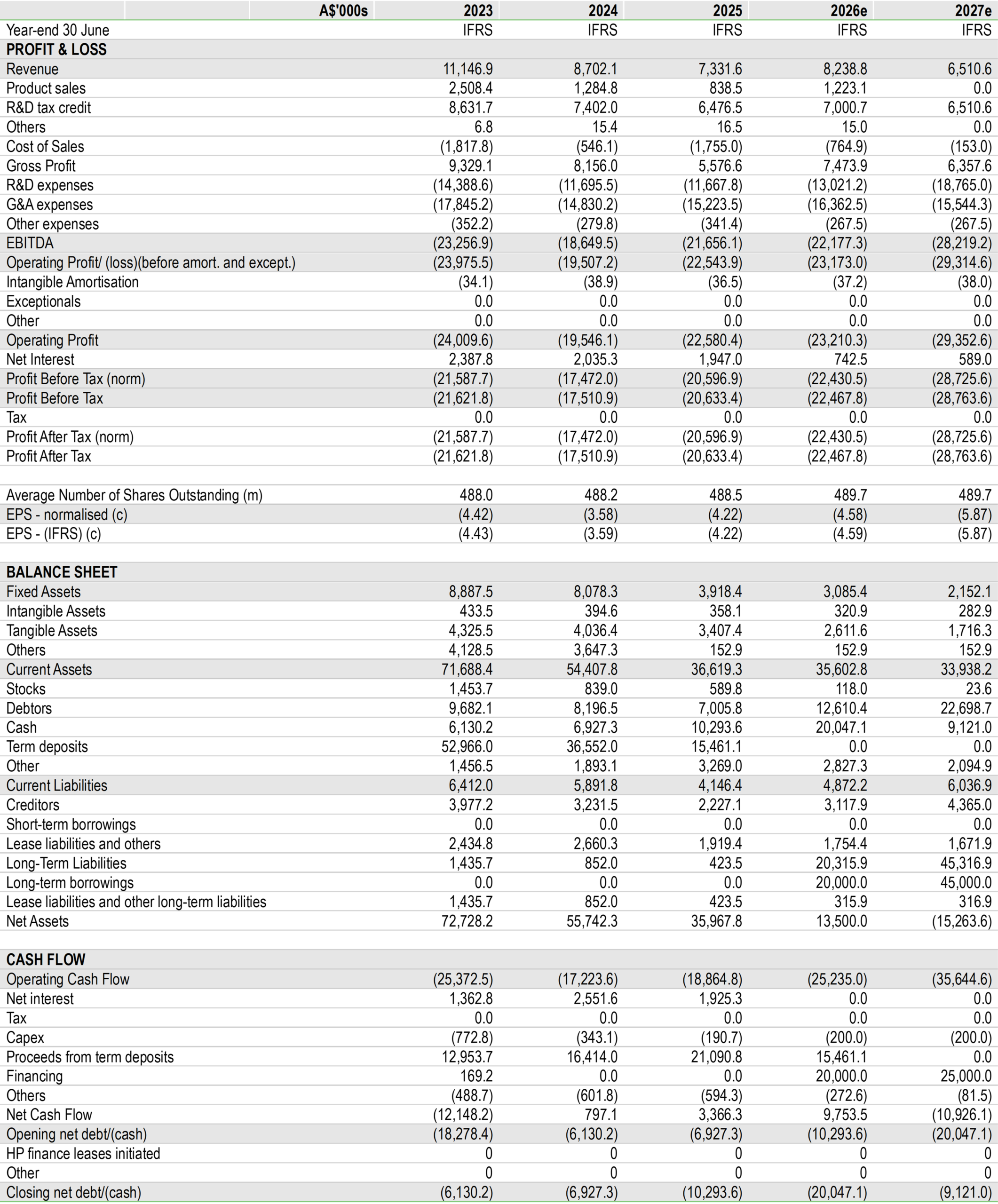
Being a clinical-stage biotech, QBiotics does not generate any meaningful recurring
revenues from its core human therapeutics pipeline, and as such is currently reliant
on external funding to support operations, with a high degree of forward-looking execution
risk. Historically, the company has benefited from a veterinary revenue stream via
Stelfonta (TT for veterinary use; FDA approved in late 2020), which has generated
product sales and milestone revenues through a commercial partnership with Virbac.
QBiotics reported A$1.3m in revenues in FY24 (the period ended June 2024) and A$0.8m
in FY25. Management had noted sales had underperformed expectations and, more recently,
the distribution arrangement has been disrupted (both QBiotics and Virbac agreed not
to renew for a second term), resulting in an absence of any product-related revenues
in H126 (the six-month period ended December 2025). Pending a new commercial agreement,
we expect modest top-line contribution from Stelfonta in FY26 (we currently model
A$1.2m in product revenues in FY26 based on management guidance of the last 5,000
doses of Stelfonta to be shipped to Virbac in May 2026).
The company also benefits from Australia’s R&D Tax Incentive, which provides a cash
rebate of up to 43.5% on eligible R&D expenditure, offering a meaningful source of
non-dilutive funding and partially offsetting operating cash burn. QBiotics reflects
these R&D tax credits as revenues in its P&L statement. In FY25, the company reported
A$6.5m as R&D credits (A$7.4m in FY24). Note that the R&D credit figure tends to vary
with underlying R&D expenses for a particular period. In FY25, QBiotics recorded A$11.7m
as R&D expenses (FY24: A$11.7m), which we attribute to the ongoing clinical programmes
as well as other R&D activities. In addition, the company reported A$15.2m as general
and administrative expenses, broadly in line with the FY24 figure of A$14.8m. Overall,
QBiotics booked an operating loss of A$22.6m in FY25 versus A$19.5m in FY24. This
translated to operating cash outflows of A$18.9m and A$17.2m in FY25 and FY24, respectively.
While management has emphasised disciplined cost control and capital allocation, the
business remains structurally dependent on capital markets and non-dilutive funding
sources ahead of commercialisation of its ongoing clinical programmes. At the end
of December 2025, the company had a cash balance of A$13.5m, bolstered by another
c A$7.7m in R&D tax credits received in May 2026. Based on our cash burn rates, we
expect these pro-forma funds to provide the company with headroom into H2 CY26, with
another c A$20m required in H2 to support operations into CY27 (we reflect this as
illustrative debt in our model). Considering these requirements QBiotics is seeking
to raise up to c A$40m in bridging capital, which is expected to support ongoing clinical
development activities, including progression of key trials across its oncology programmes,
while positioning the company for a potential IPO on the ASX in 2027. Should the company
be successful in raising the planned funds, we estimate these, along with existing
cash on hand, will be sufficient to fund operations to the planned IPO in 2027. We
note that proceeds from the planned fundraise have been earmarked for the oncology
programme, with the wound healing clinical development to be supported by non-dilutive
government funding and grants.
We therefore view the planned raise as a critical near-term financing event, effectively
serving as a bridge to a larger liquidity event (ASX IPO). As such, execution risk
is twofold: successful completion of the capital raise itself and delivery of further
clinical and strategic milestones to augment a partnership and/or credible public
market listing within the targeted time frame.
Given the scenario, we believe that capital efficiency will remain a key variable.
QBiotics’ approach to clinical development, including trial design, use of investigator-sponsored
studies and prioritisation across indications, will materially affect cash burn. The
company has indicated ongoing efforts to explore partnering opportunities, particularly
for later-stage development and commercialisation, which could enable the sharing
of costs, de-risking the funding profile.
Valuation framework: Risk-adjusted NPV
Business case anchored by tigilanol tiglate
While QBiotics maintains a diversified pipeline across oncology (human and veterinary),
wound management and antibiotics, TT remains the primary value driver underpinning
the investment case. As an intratumoral small molecule with a potential dual mode
of action, TT is building a differentiated position within oncology, straddling both
local tumour control and systemic immuno-oncology potential across a range of solid
tumours.
Clinical validation to date supports TT’s potential role as a local tumour control
agent, evidenced by Stelfonta (FDA-approved for non-metastatic mast cell tumours in
dogs) and early clinical studies in STS and HNC. This provides a clear and tangible
near-term commercial opportunity. In parallel, combination strategies, particularly
within immuno-oncology, offer another promising avenue for future growth. While evidence
of synergy with ICIs is still emerging, early observations point to the potential
for immune-mediated abscopal effects. We note that in an earlier Phase I/IIa combination
study in melanoma with pembrolizumab, one of the three patients dosed achieved a complete
response with the injected tumours, with a non-injected distal tumour showing a partial
response. However, the trial was terminated prematurely (planned n=40), with the company
citing enrolment-related challenges due to COVID-19. Materially larger trials will
be required to establish efficacy and TT’s role as an immune primer, unlocking additional
therapeutic impact.
The valuation of TT is therefore best approached through a risk-adjusted net present
value (rNPV), sum-of-the-parts framework, separating near-term, more de-risked settings
from longer-term platform optionality.
Valuation scope by indication and treatment setting
In line with management’s stated clinical development priorities, our valuation of
TT focuses on a defined set of oncology indications and settings where there is both
a clear rationale and near- to medium-term development visibility. Specifically, we
model TT across selected settings in STS, HNC and breast cancer, reflecting current
pipeline focus and potential pathways to value inflection. QBiotics had previously
evaluated TT in melanoma (two Phase I/II clinical trials discontinued in late 2022
due to recruitment challenges during COVID-19) and is currently collaborating with
the University of Edinburgh in its cancer research project in oronasal mucosal melanoma.
However, given the early stages of these activities, we currently exclude melanoma
from our projections but note the upside potential with clinical progression.
Note that all our assumptions are contingent on the clinical development pathways
ultimately selected by management, and that not all of these pathways may be pursued.
Within STS, which represents the most advanced and de-risked opportunity, we include:
- Advanced unresectable STS as an adjunct to first-line doxorubicin.
- Advanced unresectable STS in the second-line setting in combination with ICIs.
- Early-stage STS in the neoadjuvant setting for localised, accessible tumours.
In HNC, we capture both monotherapy and combination approaches:
- Locally advanced HNC as a monotherapy.
- Recurrent/metastatic HNC in first-line combination with ICIs.
In breast cancer, which reflects a key platform expansion opportunity, we include:
- Recurrent breast cancer, particularly skin and chest wall recurrence.
- Metastatic breast cancer in combination with ICIs.
We believe that this indication set captures a balance between nearer-term, clinically
tangible applications (eg STS and accessible tumours) and higher-upside combination
strategies in larger markets, particularly in immuno-oncology. Our approach therefore
aligns with management’s strategy of advancing TT both as a local tumour control agent
and as a potential immune-priming therapy in combination settings.
Across all the target indications and settings, we use certain broad assumptions to
model the market opportunity (discussed below):
- We explicitly model the US market opportunity, forecasting indication-specific cash
flows through to 2045. No terminal value is applied, reflecting our assumption that
revenues decline to negligible levels thereafter.
- Global commercial potential is derived by extrapolating from US forecasts, assuming
a 50:50 revenue split between the US and the rest of the world (RoW). This assumption
is informed by our analysis of ICI sales, where the US typically accounts for approximately
50–60% of global revenues.
- Given the early stage of development and as yet limited public visibility on the timing
and structure of a potential licensing agreement, identified by management as the
preferred exit route, we assume self-commercialisation across all modelled indications,
incorporating both revenue and cost profiles at the indication level.
- We assume a realisable price of
US$50,000 per dose of TT, based on management guidance.
- A flat discount rate of 15% is applied across all indications. This includes a 2.5%
illiquidity premium over the standard Edison discount rate of 12.5% for clinical-stage
biotechs, reflecting QBiotics’ private company status and the associated liquidity
and execution risks.
- We assume a combined COGS and SG&A of 20% of product revenues. These ratios are widely
accepted standards for small molecule drugs.
STS opportunity overview
We believe that STS represents one of the most advanced and clinically validated opportunities
for TT, with the highest contribution to our current investment case for QBiotics.
We value the STS opportunity across multiple settings, including neoadjuvant, first-line
adjunct and second-line combination use, where we believe that TT is well positioned
to address a defined sub-set of patients with accessible tumours (palpable or visible),
where its intratumoral injectable delivery and rapid tumour ablation mode of action
offer clear clinical utility. While the overall market remains relatively small, it
is characterised by high unmet need, and favourable orphan-like pricing and commercial
dynamics. We remind readers that TT holds ODD in STS, providing seven years of market
exclusivity following regulatory approval.
Indication specific assumptions for STS are detailed below:
| Exhibit 7: Assumptions for STS rNPV |
 |
| Source: Edison Investment Research |
Overall, we view the STS franchise as a core, partially de-risked value driver, with
multiple potential clinical entry points. While individual indications are modest
in scale, together they provide a meaningful revenue base. More importantly, we believe
that success in STS would help solidify TT’s utility in solid tumours, supporting
broader expansion into larger oncology indications and higher-value combination strategies.
HNC opportunity overview
HNC represents a significant step-up opportunity for TT, leveraging its intratumoral
delivery in a large and accessible tumour setting (cutaneous and subcutaneous tumours
that are either visible or palpable). In this indication, we believe the opportunity
landscape for TT spans both locally advanced and recurrent/metastatic settings, particularly
where tumours are accessible, injectable and amenable to local control strategies.
We note that compared to STS, HNC offers a materially larger addressable population,
supporting meaningful commercial upside.
Indication specific assumptions for HNC are detailed below:
| Exhibit 8: Assumptions for HNC rNPV |
 |
| Source: Edison Investment Research |
Overall, we view HNC as a key value driver beyond STS, with the locally advanced setting
contributing the majority of risk-adjusted value, supported by a large patient population
and clearer clinical positioning. The recurrent/metastatic setting provides additional
upside, albeit with higher clinical risk given its reliance on combination strategies
and refractory populations.
Breast cancer opportunity overview
While breast cancer is QBiotics’ most recent, and still early-stage, oncology focus,
we view it as a potentially meaningful commercial opportunity for TT, supported by
the high prevalence of the disease and the subset of patients presenting with accessible
cutaneous or chest wall lesions. The indication may offer a logical expansion pathway,
given the intratumoral mode of action, which appears conceptually suited to localised
recurrence settings.
That said, while there have been some encouraging case studies under compassionate
use (an example shared by the company shows one complete response, refer to Exhibit
16), the programme is yet to generate controlled clinical trial data and, therefore,
carries a significant degree of development risk. The planned clinical evaluation
is expected to be conducted as an investigator-sponsored study (Unicancer France),
which may introduce additional variability in execution and timelines relative to
company-sponsored trials.
Over the longer term, there may be scope to explore use in broader metastatic disease,
including in combination with ICIs, an approach management has indicated interest
in pursuing. However, ICI use in breast cancer remains relatively limited, primarily
confined to certain subtypes such as triple-negative breast cancer. As such, the nearer-term
opportunity is likely more concentrated in accessible recurrence settings, with any
combination-driven expansion representing longer-term and less certain optionality.
Indication specific assumptions for breast cancer are detailed below:
| Exhibit 9: Assumptions for breast cancer rNPV |
 |
| Source: Edison Investment Research |
Overall, we view breast cancer as a potential long-term value driver, with the recurrence
setting underpinning the majority of risk-adjusted value due to its scale and feasibility.
The metastatic combination setting provides additional upside, albeit with higher
clinical risk given ICI use in breast cancer remains relatively limited. While TT’s
mode of action indicates a potential ability to stimulate an immune response and potentially
modulate the tumour microenvironment, any hypothesis around converting immunologically
‘cold’ tumours into ‘hot’ tumours will require substantial clinical work and validation.
Upside optionality from EBC-1013 in wound healing
While the clear focus for QBiotics is on TT, we believe that EBC-1013 represents an
incremental medium-term diversification opportunity for the company, supported by
a large addressable population and relatively lower development costs. As previously
highlighted, QBiotics is evaluating EBC-1013 as a novel topical pharmacological wound
care treatment, with an initial focus on VLUs.
A Phase I, multi-centre, dose-escalation study is underway to evaluate the safety
and tolerability of EBC-1013 gel in patients with VLUs, with planned enrolment of
approximately 21–33 participants. Wound healing and quality of life measures are expected
to be assessed as exploratory endpoints. At this stage, no human clinical efficacy
data are available, and the programme remains early and high risk. While supportive
findings have been reported from veterinary case studies, suggesting potential wound-healing
activity, the extent to which these observations translate into human clinical outcomes
remains to be confirmed.
We note that there are currently no approved topical treatments for VLUs, with the
segment dominated by compression therapy and wound dressings that primarily serve
supportive functions rather than actively drive healing. As a result, clinical outcomes
remain suboptimal, with a large proportion of patients experiencing chronic, slow-healing
wounds, highlighting a clear unmet need for therapies that can accelerate tissue repair.
QBiotics is positioning EBC-1013 as an active treatment applied topically, with the
potential to enhance wound healing rather than simply maintain a favourable environment.
We believe this positions EBC-1013 favourably, as a complement to the existing standard
of care, potentially allowing for easier integration into the treatment pathway. We
believe that the most relevant patient group will be patients with hard-to-heal or
non-responsive ulcers, where incremental clinical benefit can be clearly demonstrated.
From a modelling perspective, we assume a US VLU population of c 600,000 patients
annually seeking treatment (1% y-o-y growth), with EBC-1013 achieving peak penetration
of 10%, reflecting its adjunctive use in a subset of patients. We assume a per patient
treatment cost of c $1,500, supporting accessibility while maintaining attractive
unit economics. This results in peak global revenues of c $260m, which we believe
will be achieved in 2041, following launch in 2035. This translates to an NPV of $122.3m
or an rNPV of $12.2m (A$17.1m), assuming a 10% probability of success (given the early
stage of clinical development) and a 15% discount rate.
If QBiotics successfully establishes proof of concept in VLUs, we believe this could
materially de-risk EBC-1013’s broader applicability across other hard-to-treat wounds
and burns. Management has specifically highlighted diabetic foot ulcers (DFUs) as
a key adjacent indication. The global DFU treatment market was valued at $9.4bn in
2025 and is projected to reach $16.4bn by 2034 (6.4% CAGR, according to Fortune Business Insights), underscoring a meaningful commercial opportunity. Notably, the current treatment
landscape remains limited, with becaplermin representing the only approved topical
gel therapy. In our view, an effective topical agent with differentiated efficacy
could capture significant share in this underserved market. That said, in the absence
of clinical data in DFUs, we do not currently incorporate this indication into our
valuation framework for QBiotics.
Stelfonta: Commercial-stage with potential to be unlocked
Stelfonta represents the veterinary oncology analogue of TT, providing a useful proof-of-concept
for the mode of action in a commercial setting. Developed for the treatment of canine,
non-metastatic mast cell tumours, Stelfonta was commercialised via a partnership with
Virbac (launched in 2020/21), leveraging its established global animal health distribution
network. The agreement concluded in early 2026 and QBiotics is in the process of finalising
a new distribution partnership before recommencing sales. While we note that initial
sales for the product have been modest, management remains confident in the treatment’s
potential (treatment efficacy has been encouraging) and will continue to pursue this
market opportunity. We model Stelfonta achieving a peak market penetration of 10%,
which equates to a treatment pool of c 25,000 dogs with localised, mast cell tumours
per year. Assuming an effective treatment price of $1,500/patient, we project peak
sales potential of c $40m in the US and c $70m globally for the treatment, to be achieved
in 2031. Assuming a transfer pricing model with the new partner, we model an economic
share of 20% of sales for Stelfonta. Although Stelfonta is a commercial-stage asset,
we apply an 80% PoS to reflect current uncertainty around the re-establishment of
distribution. This yields an NPV of $16.4m or an rNPV of $13.2m (A$18.4m).
Valuation: enterprise value assessed at A$361m
Incorporating our core pipeline assumptions and the latest net cash position, we derive
a base-case valuation for QBiotics of A$361m or 73.7c/share. Exhibit 10 presents a
breakdown of our valuation for the company by indication.
| Exhibit 10: QBiotics risk-adjusted NPV valuation |
 |
| Source: Edison Investment Research |
Our base case rNPV valuation for QBiotics, as presented above, is heavily reliant
on our market estimates, risk adjustments and discount rates. Given that these are
subject to variability, we also present a sensitivity table that provides the range
of valuations, based on different success probabilities and discount rates. We use
only the most clinically advanced clinical programme for this exercise: advanced unresectable
STS (adjunct to first-line doxorubicin) (Exhibit 11).
| Exhibit 11: Sensitivity of rNPV/share (Ac) to success probabilities and discount rates |
 |
| Source: Edison Investment Research |
The table above demonstrates the meaningful sensitivity of our valuation for QBiotics
to both PoS and the applied discount rate. The valuation expands materially at higher
PoS assumptions (A$0.91/share at a 50% PoS), reflecting the binary and step-change
nature of clinical de-risking. Conversely, increases in the discount rate have a dampening
effect, compressing the valuation as future cash flows are more heavily discounted.
The interaction of these variables produces a broad valuation range, reinforcing that
our base-case should be viewed as one point within a wider, risk-adjusted spectrum
of potential outcomes.
Partnering potential
While our base-case valuation assumes self-commercialisation of QBiotics’ lead assets,
we acknowledge that a licensing or co-development partnership with a larger pharmaceutical
player represents a more realistic and preferred route to market, particularly given
the capital intensity and infrastructure required to commercialise oncology therapeutics
globally. Such a structure involves upfront payments, development and commercial milestones
and royalties, and while this may reduce peak revenue capture relative to full commercialisation,
it would also lower funding requirements and execution risk and could provide external
validation of the TT platform.
To contextualise potential partnering outcomes for QBiotics, we highlight a selection
of precedent transactions involving intratumoral and locally delivered oncology assets
(Exhibit 12).
| Exhibit 12: Select intratumoral licensing deals |
 |
| Source: EvaluatePharma, Edison Investment Research |
While deal activity in this niche remains relatively limited, these deals demonstrate
the significant step-up in value associated with clinical proof-of-concept, as well
as strong strategic interest from large pharmaceutical companies. In particular, these
transactions demonstrate that differentiated platforms with combination potential
and applicability across multiple tumour types can attract substantial upfront payments
and milestone-driven deal structures. In our view, a successful Phase II readout for
QBiotics’ TT platform could position the company to pursue a similar licensing or
strategic transaction, providing a meaningful valuation inflection beyond our base-case
assumptions.
Risks and sensitivities
As a clinical-stage biotech, QBiotics is subject to risks typical of early-stage drug
development, with clinical outcomes representing the most significant inflection points.
While TT has shown encouraging early efficacy signals, these findings are based on
limited patient cohorts and require validation in larger, more diverse populations.
Clinical development inherently carries uncertainty, including binary event risks,
and future trials may not replicate the response rates or durability observed to date.
While TT’s ‘pipeline-in-a-product’ potential somewhat mitigates the binary event risk,
the investment case remains closely tied to the successful progression of the lead
programme.
Regulatory risk is also a key consideration. The clinical study design pathway to
approval for TT is yet to be defined, and its intratumoural mode of delivery may be
a key consideration. While such therapies can offer potential advantages, their adoption
has historically been limited, reflecting considerations such as tumour accessibility
and clinical practice integration; though we note that clinical feedback thus far
for TT has been supportive. While designations such as ODD may support expedited pathways,
approval will ultimately depend on demonstrating clear clinical benefit in well-controlled
studies (ie randomised, double-blind, placebo-controlled). The design and execution
of these trials will be critical in determining regulatory outcomes.
From a commercial perspective, QBiotics will need to establish a clear positioning
for TT within increasingly competitive (for HNC, less so for STS) and rapidly evolving
oncology landscapes. While the asset may offer complementary benefits, particularly
alongside systemic therapies, its role in clinical practice remains to be defined.
Adoption will depend on not only showing efficacy and safety, but also practical advantages
relative to existing treatments, including ease of use and impact on quality of life.
These considerations apply regardless of whether development is undertaken independently
or in partnership.
Financing risk remains a crucial factor. As a pre-revenue company (except for Stelfonta),
QBiotics relies largely on external capital to fund operations and clinical development.
While the planned fundraise is expected to extend the company’s cash runway, additional
funding may be required to support later-stage development, particularly in the absence
of a strategic partnership. The timing and terms of future financing, including any
potential partnership agreements, may affect shareholder value and are inherently
challenging to predict.
Execution risk spans all aspects of the development process, including trial design,
patient recruitment and operational timelines. Delays or challenges in any of these
areas could affect the pace of development and, consequently, the timing of key value
inflection points. More broadly, QBiotics must demonstrate that TT can deliver consistent
and scalable outcomes across indications, while establishing a clear role within the
treatment paradigm.
Conclusion and outlook
QBiotics presents a differentiated clinical-stage opportunity, centred on TT and its
novel intratumoural approach. The asset has demonstrated encouraging early clinical
activity, and its positioning alongside existing treatment regimens may support future
adoption and partnering interest.
In our view, the characteristics that may enable QBiotics to move beyond a typical
small-cap biotech profile include:
- a differentiated intratumoural modality that has the potential to complement existing
therapies;
- early clinical data that are both visible and indicative of potential durability;
- a platform with demonstrated biological breadth and translational validation; and
- a development strategy aligned with anticipated partner expectations, with promise
in combination treatment regimens, a highly sought after approach.
Looking ahead, value creation is expected to be driven by continued clinical progress
and strategic execution, including advancement through key development milestones
and potential partnering activity. While risks remain inherent, particularly around
clinical validation and positioning, it is our opinion that successful delivery could
support meaningful value creation.
Appendix
Supplementary figures
| Exhibit 13: Financial Summary |
 |
| Source: Company data, Edison Investment Research |
| Exhibit 14: Phase I outcomes for TT |
 |
| Source: QBiotics corporate presentation (April 2026) |
| Exhibit 15: QB46C-H07 outcome for an angiosarcoma patient with a complete response by day 28 |
 |
| Source: QBiotics corporate presentation (April 2026) |
| Exhibit 16: Metastatic breast angiosarcoma patient case study with a complete response by day
69 |
 |
| Source: QBiotics corporate presentation (April 2026) |
| Exhibit 17: Vet case study of solid tumour single treatment with tigilanol tiglate |
 |
| Source: QBiotics resources |
| Exhibit 18: Vet case studies of wound healing treatment with EBC-1013 gel |
 |
| Source: QBiotics corporate presentation (April 2026) |
Board of directors and executive leadership team
The board and executive management of QBiotics comprise an experienced leadership
team with backgrounds across biotechnology, drug development, commercialisation, capital
markets and corporate governance. Collectively, the team brings robust scientific,
clinical, operational, financial and partnering capability, supporting the company’s
strategy from early-stage research through to advanced development and commercialisation.
Consistent with its focus on best-practice governance and continuous board renewal,
the company has identified the need to further strengthen the board through the appointment
of independent non-executive directors and is already in active discussions with suitably
qualified candidates.
The board currently consists of Simon Pollard as non-executive chairman, together
with three executive directors: co-founders Dr Victoria Gordon and Dr Paul Reddell,
and interim chief executive officer Ebru Davidson.
Non-executive chairman: Simon Pollard. Mr Simon Pollard is an experienced director and senior executive with a background
in strategy, governance, capital markets and global commercialisation. He is a long-term
QBiotics investor and served as chief commercial officer from 2016–2019. Over 25 years,
he has held senior roles at Macquarie Group, IBM and HSBC, leading large-scale operations
and driving revenue growth across Asia-Pacific, Europe and the US. He has extensive
board, chair and advisory experience across public and private companies, with a track
record in capital raising, M&A, partnerships and commercialisation of healthcare,
life sciences and technology assets. More recently, he has focused on non-executive
director roles, mentoring and investing in biotech, software and AI startups. He is
chairman of Yarken and Valorica. Earlier, he was partner and co-head of technology
law at Gilbert+Tobin. He holds a BA in economics, an LLB and an LLM.
Executive director, chief strategy officer and co-founder: Dr Victoria Gordon, PhD,
FTSE. Dr Victoria Gordon has 25+ years’ experience in biotechnology with extensive executive
and governance experience across drug discovery and development, investment, commercialisation,
investor relations and strategic partnerships. She founded EcoBiotics in 2000 and
QBiotics in 2010, leading the merger forming QBiotics Group in 2017 and serving as
CEO and managing director from 2000 to 2023 before transitioning to chief strategy
officer and executive director. She was elected a fellow of the Australian Academy
of Technological Sciences and Engineering in 2025 for contributions to medical innovation.
Prior to founding EcoBiotics, she was a research scientist with the CSIRO. Relevant
board and advisory roles include Biopharmaceuticals Australia, the Australian Rainforest
Foundation, the QLD Government Biotechnology Advisory Council and Federal Government
Expert Forums on Biomedicine and Environmental Biotechnology. She holds a PhD in microbiology,
a BAppSc (Hons) in chemistry and biology and is a Graduate of the Australian Institute
of Company Directors.
Executive director, chief scientific officer and co-founder: Dr Paul Reddell, PhD. Dr Paul Reddell is a biotechnology executive and co-founder of EcoBiotics, QBiotics
and the QBiotics Group, serving as chief scientific officer since 2000. He has extensive
experience in scientific leadership, translational research and complex multi-institutional
research and development projects, leading drug discovery and development initiatives
and strategic scientific partnerships to advance novel therapeutics. Prior to EcoBiotics,
he held senior leadership roles at CSIRO, including senior principal research scientist
and programme leader at the Tropical Forest Research Centre, and he later served as
principal plant ecologist within a Rio Tinto Group environmental consulting business.
He holds a PhD in forest ecology and a BSc (Hons) from the University of Western Australia
and has been a fellow of the Australian Institute of Company Directors since 2007.
Interim CEO and managing director: Ms Ebru Davidson. Ms Ebru Davidson brings 17+ years’ experience in commercial law, governance, equity
capital markets, M&A, corporate transactions and regulatory matters across listed
and unlisted companies. She advised QBiotics from 2015–21 and joined as general counsel
in 2021, where she supported board matters, investor engagement and corporate governance
to advance the company’s strategic and capital markets objectives. Previously, she
was a partner in Thomson Geer’s equity capital markets team. She holds a BSc from
the University of Melbourne and a Juris Doctor (Hons) from Bond University. She is
an associate member of the Governance Institute of Australia, a graduate of the Australian
Institute of Company Directors, and she serves as a non-executive director of Kazia
Therapeutics (NASDAQ: KZIA) and the Centre for Eye Research Australia.
Chief operating officer: Dr Peter Schmidt, PhD. Dr Peter Schmidt has extensive experience in developing drug candidates for TGA and
FDA submissions through to clinical phase III, including preparation of chemistry,
manufacturing and controls (CMC) and preclinical data packages for Investigational
New Drug applications and support of clinical Phase I and II programmes. His human
drug development experience strengthens QBiotics’ veterinary drug development team.
Prior to joining QBiotics, he was director of CMC and preclinical drug development
at Xenome for six years. Earlier roles included senior scientist at Agen Biomedical
and professional officer at the Australian Nuclear Science and Technology Organisation.
He holds a PhD in experimental medicine and a BSc (Hons).
Global investor relations officer: Mr Andrew Craig. Mr Andrew Craig is an investment banker with nearly 30 years’ experience in global
capital markets, beginning at SBC Warburg (now UBS) and later holding senior equity
roles in London and New York, advising institutional investors and public company
leadership teams. From 2015–21, he was partner at life sciences investment bank WG
Partners, advising 60+ biotechnology companies. He has met with senior management
teams from 1,000+ companies, contributing to transactions including Sweden’s
US$7.6bn selldown of Nordea Bank AB and IPOs for easyJet, Burberry, Campari and lastminute.com.
He is a bestselling author of How to Own the World and Our Future is Biotech (2024), focused on biotechnology’s role in health, sustainability and economic development.
He founded Plain English Finance and is a UK media commentator. He holds a bachelor
of social science (economics and politics) from the University of Birmingham and is
a chartered member of the CISI.
Chief financial officer: Mr Brendan Brown. Mr Brendan Brown is a partner and director at Prime Accounting & Business Advisory,
part of the Prime Financial Group. He is a chartered accountant (CA ANZ) and registered
tax agent with more than 20 years’ experience. With a background in accounting and
business advisory (particularly in the life sciences sector), he brings significant
experience to QBiotics’ financial strategy and operations. He has a strong track record
in supporting executive teams through growth, operational scaling and capital market
engagement, with responsibility for financial governance, risk management and performance
optimisation. He is recognised in the Research & Development Tax Incentive and other
Australian government funding programmes. He holds a bachelor of business (accounting)
from La Trobe University.
Clinical advisory board
Prof Alexander Eggermont, MD, PhD (board chairperson). Professor Alexander Eggermont is a recognised oncology key opinion leader with more
than 37 years’ experience in clinical immunotherapy, melanoma, sarcoma, drug development
and translational tumour immunology. He is chief scientific officer at the Princess
Máxima Center for Paediatric Oncology, professor of clinical and translational immunotherapy
at University Medical Center Utrecht, and coordinator of the Comprehensive Cancer
Center Program Deutsche Krebshilfe. He holds board roles with the Comprehensive Cancer
Center Munich, Technical University Munich and Ludwig Maximilians University, and
is strategic adviser for DKFZ-NCT Heidelberg within Germany’s National Center for
Tumours Program. Previously director general of Gustave Roussy Cancer Campus Grand
Paris, he has served as president of ECCO and EORTC, board director of ASCO, and held
editorial roles with the Journal of Clinical Oncology. He is currently editor-in-chief of the European Journal of Cancer. He has authored 1,000+ peer-reviewed publications and received international awards,
including Chevalier of the Légion d’Honneur (2015).
Prof Kevin Harrington, FRCP, FRCR, FRSB, PhD. Professor Kevin Harrington is a senior investigator at the National Institute for
Health and Care Research and head of radiotherapy and imaging at the Institute of
Cancer Research (ICR)/Royal Marsden Hospital (RMH). He is director of the ICR/RMH
CRUK RadNet Centre of Excellence and a leading international key opinion leader in
oncology and drug development. His research spans immunotherapy, targeted radiation
sensitisers and oncolytic virotherapy, including DNA and RNA viral platforms such
as HSV-based agents (talimogene laherparepvec, RP1, RP2, RP3), vaccinia, reovirus,
coxsackievirus A21, Maraba and Newcastle Disease virus across translational and clinical
development. He has received major honours including the 2019 British Association
of Head and Neck Oncology President’s Award and lectureships in 2021 (Semon), 2023
(Elia) and 2024 (Tata). He has authored 600+ peer-reviewed publications and 50+ book
chapters and is a Clarivate Highly Cited Researcher (2021–23).
Prof Aurelien Marabelle, MD, PhD. Professor Aurelien Marabelle is a senior oncologist and an internationally recognised
key opinion leader in oncology and drug development at Gustave Roussy Cancer Center,
Paris, within the drug development department. He is also professor of clinical immunology
at the University of Paris-Saclay, with a clinical focus on early-phase cancer immunotherapy
trials across tumour types. He directs the Clinical Investigation Centre BIOTHERIS,
specialising in intratumoural immunotherapies. He trained at École Normale Supérieure
de Lyon, King’s College London and Léon Bérard Cancer Center, and completed a postdoctoral
fellowship with Professor Ronald Levy at Stanford University, where he returned as
visiting professor in 2021. He is an active member of ESMO, ASCO, AACR, SITC and EATI,
and he co-founded and serves as vice-president of the French Society for Cancer Immunotherapies
(FITC). He has published 250+ peer-reviewed papers with an h-index of 62.
Prof Ignacio Melero, MD, PhD. Professor Ignacio Melero is an internationally recognised key opinion leader in oncology
and drug development with more than 36 years’ experience in immunology and immunotherapy.
Since 2015, he has been co-director of the immunology and immunotherapy service at
the University of Navarra, with a translational research focus spanning experimental
models through to clinical trials in cancer immunology. He also holds senior editorial
roles, including senior editor of Clinical Cancer Research, scientific editor of Cancer Discovery, associate editor of Frontiers in Immunology, and section editor of the Journal for Immunotherapy of Cancer. He sits on multiple editorial boards, including Immunotherapy, Oncoimmunology, Cancer Immunology Research and Cancer Research. He is a member of external advisory boards for the Curie Institute, Gustave Roussy
Institute, Biomedical Research Institute of Granada and the Netherlands Cancer Institute.
Assoc Prof Jason Luke MD, FACP. Dr Jason Luke is one of the noteworthy clinical-translational investigators in immuno-oncology
and an associate professor of medicine at the University of Pittsburgh, director of
the Immunotherapy and Drug Development Center and associate director for clinical
research at the UPMC Hillman Cancer Center. He has been a lead investigator on clinical
trials of immunotherapy agents, including but not limited to novel immune checkpoints,
bispecific antibodies, innate immune-modifiers and oncolytic viruses, immune-metabolism
and cellular therapies in solid tumours. He conceived of and was the principal investigator
for the KEYNOTE-716 trial that changed the landscape of stage II melanoma oncology
and underpinned the FDA and EMA approval of pembrolizumab in this setting.
Dr Edmund Bartlett, MD. Dr Edmund Bartlett is an assistant attending surgeon in the gastric and mixed tumour
service at Memorial Sloan Kettering Cancer Center in New York City, specialising in
cutaneous malignancies and sarcoma. He is a clinical and translational surgeon-scientist
focused on improving the efficacy of oncology drug development, particularly immunotherapeutics
in sarcoma. He is co-principal investigator on a trial combining PD-1 and adenosine
receptor inhibition in dedifferentiated liposarcoma, principal investigator on a study
combining pembrolizumab with isolated limb infusion of melphalan and dactinomycin
in extremity sarcoma (NCT04332874), and principal investigator on a trial evaluating
intratumoural tigilanol tiglate in soft tissue sarcoma (NCT05755113).
Dr Alan Barge, MBBS, MRCP. Dr Alan Barge trained in medicine at Oxford and London, specialising in leukaemia
and bone-marrow transplantation. He joined Amgen in 1990 as European medical director,
leading global development of Neupogen (filgrastim) across cancer, leukaemia, HIV
and infectious disease indications. In 1999, he joined AstraZeneca, overseeing early-phase
oncology development and advancing multiple first-in-human programs, including Gefitinib
(Iressa) and Olaparib (Lynparza). In 2003 he became vice president of clinical development
and head of oncology and infection, leading global execution of AstraZeneca’s oncology
portfolio. He left AstraZeneca in 2011 to co-found ASLAN Pharmaceuticals, focused
on Asia-prevalent cancers, and in 2016 co-founded Carrick Therapeutics, specialising
in early-stage oncology assets.
Scientific advisory board
Prof David Thomas BDS, FDSRCS, FDSRCSEng (ad eundem), PhD (board chairperson). Professor David Thomas is a leading scientist and clinician with more than 40 years’
experience in oral and maxillofacial surgery, with research spanning wound healing,
nanomedicines, tissue engineering and antimicrobial therapies. He is professor and
honorary consultant at Cardiff University and leads the advanced therapies group.
His work has advanced understanding of microbiome, biofilms and chronic wound biology,
supported by more than £15m in funding. He co-founded the Cardiff Institute of Tissue
Engineering and Repair and has advanced polymer therapies to Phase II trials, including
OligoG, which received US FDA Orphan Drug Status. He also collaborates with QBiotics
on rainforest-derived antimicrobials targeting multidrug-resistant infections. He
has held senior leadership roles including president of the Academic Association of
British Oral and Maxillofacial Surgeons and innovation lead at Cardiff University.
He has an h-index of 53 with 8,500+ citations and holds honours including the King
James IV Professorship and Fellowship of the Learned Society of Wales.
Prof Timothy Walsh, PhD, DSc, MAE, OBE. Professor Timothy Walsh OBE is professor of medical microbiology and antimicrobial
resistance and director of biology at the Ineos Oxford Institute for Antimicrobial
Research, University of Oxford. He is a globally recognised leading scientist with
more than 30 years’ experience in antimicrobial resistance (AMR). He discovered and
named two major resistance genes: NDM, now a dominant global carbapenemase, and MCR-1,
a plasmid-mediated colistin resistance gene co-discovered in 2015. He also co-discovered
TetX, a key tigecycline resistance mechanism. Through unique models with collaborators,
he has shown that microplastics and rising temperatures accelerate AMR spread, reshaping
global intervention approaches. He currently leads two major AMR burden studies in
LMICs - BARNARDS (neonates) and BALANCE (adults). He contributed to China’s 2017 ban
on colistin in agriculture and advises the WHO, national health ministries, the Chinese
CDC and ENABLE 2. He was appointed OBE in 2020 for services to microbiology and international
development, was awarded his DSc in 2022, and is a member of Academia Europaea (2023).
Prof Aurelien Marabelle, MD, PhD. Professor Aurelien Marabelle is a senior oncologist and an internationally recognised
key opinion leader in oncology and drug development at Gustave Roussy Cancer Center,
Paris, within the drug development department. He is also professor of clinical immunology
at the University of Paris-Saclay, with a clinical focus on early-phase cancer immunotherapy
trials across tumour types. He directs the Clinical Investigation Centre BIOTHERIS,
specialising in intratumoural immunotherapies. He trained at École Normale Supérieure
de Lyon, King’s College London and Léon Bérard Cancer Center, and completed a postdoctoral
fellowship with Professor Ronald Levy at Stanford University, where he returned as
visiting professor in 2021. He is an active member of ESMO, ASCO, AACR, SITC and EATI,
and he co-founded and serves as vice-president of the French Society for Cancer Immunotherapies
(FITC). He has published 250+ peer-reviewed papers with an h-index of 62.
Prof Thomas Wishart, BSc, MBA, PhD, FRSB, FAS. Professor Thomas Wishart is a leading scientist in molecular anatomy. Formerly co-head
of Translational Biomarker Discovery at the Centre for Dementia Prevention and deputy
director of the Roslin Institute (University of Edinburgh), he currently leads neuroscience
activity at the School of Science and Technology, Nottingham Trent University. He
also leads the ALLMoND programme (Academic Led Livestock Models of Neurological Disorders)
at the Roslin Institute. His research focuses on neurodegenerative disease mechanisms,
including synaptic vulnerability, multi-omics biomarkers and clinically relevant animal
models. He is well known for his research advancing understanding of conditions such
as motor neurone disease – both adult onset (ALS) and childhood onset (ie SMA with
patent applications for therapeutics). He is also an expert in dementia, again including
both adult onset forms such as Alzheimer’s disease, and childhood dementias (such
as Batten disease) with expertise in therapeutic assessments including cross-species
efficacy of enzyme replacement therapy (JCI, 2022) and viral interventions (Molecular
Therapies, 2025) for CLN1 disease in mouse and sheep models. He has 80+ peer-reviewed
publications and an h-index of 38. Professor Wishart has secured millions of pounds
in competitive funding, including NIH R01 support and industry partnerships. He is
a fellow of the Royal Society of Biology (2021) and the Anatomical Society (2018).
Prof Andrew Sewell, BPharm, PhD, FBPhS. Professor Andrew Sewell is a leading scientist and distinguished research professor
at Cardiff University, specialising in T-cell biology and cancer immunotherapy. With
more than 30 years’ experience in viral immunology, autoimmunity and translational
oncology, he is internationally recognised for experience in T-cell receptor biology
and therapeutic application. His work includes landmark discoveries in HIV immune
escape, T-cell cross-reactivity and epitope recognition, including showing that a
single T-cell receptor can recognise more than 1m peptides. He pioneered combinatorial
peptide library approaches for epitope mapping and co-developed VDJdb, a leading T-cell
receptor specificity database. His group also demonstrated that CRISPR-mediated TCR
replacement can generate highly sensitive anticancer T-cells, advancing next-generation
immunotherapy. His research has strong translational impact, contributing to spinouts
including Avidex, Adaptimmune and Immunocore, the latter achieving FDA approval of
tebentafusp for metastatic uveal melanoma. He holds a Wellcome Trust Senior Investigator
Award and received the Genentech Distinguished Research Award (2023).
Prof Giovanni Appendino, PhD. Professor Giovanni Appendino is a leading scientist and emeritus professor of organic
chemistry at the Università del Piemonte Orientale, Italy, where he served as full
professor until 2022. He is a highly distinguished natural products chemist with a
four-decade career spanning organic chemistry, pharmacology and chemical biology.
His work focuses on natural product discovery and synthesis, including isolation of
more than 200 novel compounds and development of new synthetic methodologies. Key
areas include cannabinoids, taxoids and isoprenoids, with translational work in collaboration
with the University of Córdoba producing clinical candidates VCE-004.8 and VCE-003.2
with Orphan Drug Status in the EU and USA. He has authored 429 publications with 16,505+
citations, an h-index of 65 and 14 patents, placing him among the world’s top 2% of
scientists. He has received major international honours including the Egon Stahl Gold
Award (2023) and held senior editorial roles, including editor-in-chief of Fitoterapia (2009–22).
Prof Kelly Blacklock, BVM&S PhD, DipECVS, FRCVS. Professor Kelly Blacklock is a leading scientist in small animal soft tissue surgery
at the Royal (Dick) School of Veterinary Studies, University of Edinburgh, and a fellow
of the Royal College of Veterinary Surgeons. Her research spans translational oncology,
mucosal melanoma, surgical infection control and surgical education. She established
the dog as a natural immunocompetent model of human oronasal mucosal melanoma, generating
multi-omics datasets that demonstrate shared tumour biology and provide a translational
platform for drug discovery. This work, supported by the Wellcome Trust and QBiotics
Group, underpins ongoing canine clinical trials and organoid-based melanoma research.
Her infection control research has influenced global veterinary practice and contributed
to Infection Control in Small Animal Practice (CABI, 2023). She holds a PhD from the University of Liverpool and collaborates internationally
across veterinary, surgical and bioinformatics networks. In 2024 she was awarded a
personal chair for her clinical and research leadership.
Prof Gian Cesare Tron PhD. Professor Gian Cesare Tron is a leading scientist and full professor of medicinal
chemistry at the Università del Piemonte Orientale, Italy, with a career at the forefront
of synthetic medicinal chemistry and drug discovery. His research focuses on novel
multicomponent reactions, isocyanide chemistry and the development of new anticancer
agents. He has completed research placements at leading global institutions including
the University of Bristol, Institut de Chimie des Substances Naturelles (France) and
The Scripps Research Institute (the US), shaping an internationally recognised research
programme. He has authored 122 peer-reviewed publications, holds five patents, and
has an h-index of 39, with recognition among the World’s Top 2% Scientists (2022–23).
His work has strong translational impact through collaborations with pharmaceutical
and biotech companies including QBiotics Group and others. He has received competitive
funding from MIUR and AIRC and was awarded the Farmindustria Prize (2007).
Company contact details
QBiotics Group
PO Box 42
Toowong BC, QLD 4066
Australia
victoria.gordon@qbiotics.com
andrew.craig@qbiotics.com
www.qbiotics.com