Last close As at 06/08/2026
—
— 0.00 (0.00%)
Market capitalisation
—
Research: Healthcare
Targovax is an immuno-oncology (IO) company specialising in two distinct, but complementary approaches. ONCOS-102 is a genetically engineered adenovirus being tested in advanced melanoma, mesothelioma and three other indications run by partners. From the TG platform two mutant RAS-specific, neo-antigen cancer vaccines are in development for colorectal and pancreatic cancers, for which interim Phase I/II results with positive survival data were presented at ASCO in June 2017. Targovax’s core proposition is to use its products as immune response primers and combine with other anticancer therapies, such as checkpoint inhibitors, for increased efficacy. We value Targovax at NOK1.69bn or NOK32.1 per share.
Written by
Targovax |
Priming immune response in anticancer combos |
Initiation of coverage |
Pharma & biotech |
8 November 2017 |
Share price performance
Business description
Next events
Analyst
Targovax is a research client of Edison Investment Research Limited |
|||||||||||||||||||||||||||||||||||||||||||||||||
Targovax is an immuno-oncology (IO) company specialising in two distinct, but complementary approaches. ONCOS-102 is a genetically engineered adenovirus being tested in advanced melanoma, mesothelioma and three other indications run by partners. From the TG platform two mutant RAS-specific, neo-antigen cancer vaccines are in development for colorectal and pancreatic cancers, for which interim Phase I/II results with positive survival data were presented at ASCO in June 2017. Targovax’s core proposition is to use its products as immune response primers and combine with other anticancer therapies, such as checkpoint inhibitors, for increased efficacy. We value Targovax at NOK1.69bn or NOK32.1 per share.
Year end |
Revenue (NOKm) |
PBT* |
EPS* |
DPS |
P/E |
Yield |
12/15 |
0.1 |
(89.9) |
(5.06) |
0.0 |
N/A |
N/A |
12/16 |
0.0 |
(122.7) |
(3.55) |
0.0 |
N/A |
N/A |
12/17e |
0.0 |
(122.7) |
(2.58) |
0.0 |
N/A |
N/A |
12/18e |
0.0 |
(124.2) |
(2.35) |
0.0 |
N/A |
N/A |
Note: *Normalised, excluding amortisation of acquired intangibles and exceptional items.
Combination treatments are the future of IO
Checkpoint inhibitors (CPIs) gained popularity over the past several years because of the additional clinical benefit over standard of care cancer treatment. However, a large proportion of patients do not respond to CPIs, which act later in the cancer immunity cycle. Both Targovax’s platform technologies are designed to elicit an immune response against cancerous cells and act early in the cancer immunity cycle. While ONCOS-102 also directly targets the tumour, it is the immune response priming element of both ONCOS-102 and TG that offers additional synergies for other immuno-oncology therapies.
TG01 first data paint a positive overall picture
The latest TG01 vaccine data were presented at ASCO in June 2017 from the first cohort of patients (n=19) in the ongoing Phase I/II trial with resected pancreatic cancer patients in combination with gemcitabine after surgery. 89% of the patients responded early with a production of mutant RAS specific T-cells and the overall survival rate at two years was 68.4% (13/19), which compares favourably with historical survival rates of 30-53% of resected pancreatic cancer patients treated with gemcitabine alone. In the near term, Targovax expects to present further multiple readouts from both its platforms. In 2017, interim results from trials of ONCOS-102 in melanoma (Phase I) and mesothelioma (Phase Ib/II) and TG02 in colorectal cancer (Phase Ib) are expected. In 2018, five readouts are expected, with final results from melanoma, colorectal cancer and pancreatic cancer trials and interim data from an additional two partnered studies with ONCOS-102.
Valuation: NOK1.69bn or NOK32.1/share
We value Targovax at NOK1.69bn or NOK32.1/sh (NOK204m net cash estimated at end-2017), which is spread fairly evenly among four indications we currently value using probabilities of 10-15% to reflect early stage of the development. Targovax is funded into 2019, which is beyond multiple R&D events: three interim data readouts are expected in 2017 and five readouts in 2018, of which two will be final data.
Investment summary
Description: Oncolytic virus/neo-antigen cancer vaccine expert
Targovax is an immuno-oncology company headquartered in Oslo, Norway, with two technology platforms that are being developed in a number of oncological indications. ONCOS-102 is an oncolytic virus, developed by a Finnish biotech, Oncos Therapeutics, and acquired by Targovax in July 2015. It is currently in four clinical trials, two of which are sponsored by partners. TG is a therapeutic cancer vaccine platform comprising peptides mimicking the most common RAS oncogenic mutations and is being tested in two clinical trials. RAS mutated proteins are neoantigens highly prevalent among various cancers, making RAS an attractive target, albeit not an easy one, as industry experience shows. Any technology showing efficacy in targeting RAS would represent a breakthrough. Targovax was listed in July 2016. In June/July 2017 the company conducted a private placement with a subsequent repair issue totalling NOK206m gross.
Valuation: NOK1.69bn or NOK32.1/share
We value Targovax based on a risk-adjusted NPV analysis using a 12.5% discount rate, including an estimated NOK204m net cash at end-2017. Notably, NOK46m of the long-term liabilities are R&D grants from the Finnish government given as long-term loans. This results in a value of NOK1.69bn or NOK32.1/share. We include four out of seven indications currently. Namely, those indications in which Targovax is running trials itself and has control. The further development of ONCOS-102 for ovarian/colorectal and prostate cancer in sponsored trials depends on many variables. Targovax is at an early stage of bringing its products to the market and is open to out-licensing opportunities, most likely post proof-of concept studies. We therefore assume an out-licensing deal in each of the indications.
Financials: Funded to multiple R&D catalysts
The 9M17 operating loss was NOK87.59m, compared to NOK88.3m in 9M16, with external R&D expenses at NOK33.4m vs NOK33.2m a year ago. The company received NOK206m gross after the share issue in Q317 close and we estimate a cash positon of NOK249.3m by end-2017 (long-term debt of NOK45.8m in the Finnish government grants; repayment needed only if the products are sold or launched). Our total opex estimates for 2017 and 2018 are NOK123.8m and NOK126.1m with R&D costs at similar level to 2016. Targovax indicated that after the recent share issue it has sufficient funds to finance the operations through 2018. According to our model, this should be sufficient well into 2019, depending on the pace of R&D activities. The company expects to deliver three data readouts in H217 and another five in 2018 in the form of interim or final trial results, which provides plenty of catalysts for the share price.
Sensitivities: Typical early-stage drug developer risks apply
Targovax is subject to typical biotech company development risks. It is an early-stage drug developer, and therefore in the foreseeable future value creation will depend on successful R&D progress and any potential partnering activities. The near-term R&D sensitivities are fairly well spread across three assets and six indications, with all reporting interim or final data over the next two years. Markets in such indications as melanoma and colorectal cancer are already rather fragmented with innovative drugs addressing certain segments, which means subsequent therapies need to demonstrate added benefit. This is partially mitigated in Targovax’s case, as the underlying rationale of its technology is synergistic effect when used in combinations with current treatment options. TG01 composition-of-matter patent expired in 2016; however, TG01 is protected by the orphan drug designation and a therapeutic use patent, combining TG vaccination with chemotherapy, which seems to provide sufficient protection. TG02 composition-of-matter patent has been granted recently, providing protection until 2034.
Outlook: Well-balanced R&D newsflow ahead
Norwegian and Finnish origins
Targovax was founded in 2010 to further advance the TG vaccine technology, which was originally developed by a team of researchers as a part of collaboration between diversified Norwegian conglomerate Norsk Hydro and Oslo University Hospital. In the early 1990s, Norsk Hydro initiated commercial development of TG01 and conducted several exploratory trials before deciding to discontinue its whole pharmaceutical programme in 2002, as it was not part of the core business model. The culmination of this early work on RAS neo-antigen technology was published as 10-year survival data in resected pancreatic cancer patients. Targovax was able to leverage the accumulated clinical data, and obtained orphan drug designations from the FDA and EMA in pancreatic cancer and continued the development in this indication with its Phase I/II trial TG01-01 in combination with gemcitabine, which reported first results in June 2017 at the American Society of Clinical Oncology Annual Meeting 2017 (ASCO).
In July 2015, Targovax acquired Oncos Therapeutics, based in Helsinki, Finland, which now operates as a subsidiary. Oncos, founded in 2009, was an expert in oncolytic virus technology and brought ONCOS-102 to Targovax’s portfolio. Over 2007-12, ONCOS-102 was tested in 115 patients as part of a compassionate use programme (advanced therapy access programme, ATAP EU), which allowed early access to clinical data. Oncos then conducted a Phase I study in refractory patients with various solid tumours in 2011-13 and obtained three orphan designations from the FDA and EMA in malignant pleural mesothelioma, ovarian cancer and soft tissue sarcoma.
Six clinical trials with ONCOS-102 and TG in progress
The ONCOS-102 programme (oncolytic virus) currently consists of four clinical trials (Exhibit 1). The Phase I/II trial in malignant pleural mesothelioma was initiated in June 2016 with interim data (immune activation) expected in H217 and final results in H119. A Phase I trial in melanoma was initiated in H117 with interim data in H217 and final results planned in H218. Two other trials are in peritoneal cancers (ovarian and colorectal) (Phase I/II) and prostate cancer (Phase I), both sponsored by partners. The former has recently started, while the latter is about to.
The TG platform (RAS neo-antigen vaccine) includes two cancer vaccines: TG01 and TG02. Interim data from a Phase I/II trial with TG01 in resected pancreatic cancer were presented in June 2017 and final data are expected in H118. A Phase Ib trial with TG02 in colorectal cancer was initiated in H117, with an interim data announcement planned later this year and final results in H218.
Exhibit 1: Targovax’s R&D pipeline, current status and upcoming newsflow
Product |
Stage |
Combo with |
Trial design and upcoming events |
ONCOS-102 |
|||
|
■ Melanoma |
CPI (pembrolizumab) |
■ N = 12; open-label, single-arm trial with patients with advanced and unresectable melanoma progressing after previous treatment with PD1 inhibitors. In combination with pembrolizumab, which is given after the priming treatment with ONCOS-102. ■ Primary endpoint – safety; secondary endpoints – ORR, changes in immune cells in blood and tumour biopsies. ■ Interim immune activation data in H217; final results in H218. |
|
|
■ Mesothelioma |
Chemotherapy |
■ N = 30; open-label, randomised trial with patients with unresectable malignant pleural mesothelioma in combination with pemetrexed/cisplatin regimen. ■ Primary endpoint – safety and tolerability; secondary endpoints – tumour-specific immune activation in peripheral blood and tumour biopsies, ORR, PFS, OS. ■ Interim data (safety) in H217; final results in H119. |
|
|
■ Ovarian and colorectal cancer |
CPI (durvalumab) |
■ Rather large open-label clinical trial (up to 78 patients) sponsored by US Ludwig Institute for Cancer Research and the Cancer Research Institute (CRI). In combination with durvalumab supplied by MedImmune (AstraZeneca). ■ Primary endpoint – safety/tolerability, clinical efficacy benefit at week 24, ORR, PFS, OS. ■ Interim dose escalation data in 2018; final results in 2019. |
|
|
■ Prostate cancer |
Phase I |
Dendritic cell therapy |
■ A single-arm trial with patients with advanced metastatic castration-resistant prostate cancer. Sponsored and managed by privately owned Sotio, which is testing the combination of ONCOS-102 with its own dendritic cell vaccine DCVAC/pca – dendritic cells activated ex-vivo by allogenic prostate cancer cells. Clinical trial design information not public. ■ Primary endpoint – safety/tolerability. ■ Interim data in H218. |
TG |
|||
TG01 – Resected pancreatic cancer Orphan drug designation |
Chemotherapy |
■ N = 19 (main group) and up to 13 (modified group); single-arm, open-label trial with patients with resected adenocarcinoma of the pancreas (stage I or II disease). In combination with gemcitabine as adjuvant therapy after surgery. ■ Primary endpoint – safety/tolerability, immune response to TG01; secondary endpoint – clinical efficacy after two years. ■ 2-year OS data from main group released in Q117; 2-year data from modified group in H218. |
|
TG02 – Colorectal cancer |
CPI (pembrolizumab) |
■ N = 20; open-label trial with patients with locally recurrent rectal cancer. Two-part trial assessing TG02 as a standalone therapy or in combination with pembrolizumab. ■ Primary endpoint – safety, TG02-specific immune response in blood and tumour biopsies; secondary endpoints – changes in immunological and pathological markers, changes in imaging studies. ■ Interim immune activation data (TG02 standalone part) in H217; final results in H218 (TG02 standalone part). |
|
Source: Edison Investment Research, Targovax. Notes: CPI – checkpoint inhibitor; ORR – objective response rate; PFS – progression-free survival, OS – overall survival.
Targovax’s technology in the IO landscape
TG and ONCOS-102 represent two distinct, but complementary approaches:
■
ONCOS-102 is an engineered oncolytic adenovirus armed with immune-stimulating transgenes aimed at boosting the immune system's capacity to recognise and attack cancer cells, which often develop features that allow them to “hide” from the immune system.
■
TG01/02 are neo-antigen therapeutic vaccines targeting the difficult to treat yet highly prevalent cancers with RAS mutations, which are found in more than 85% of cases of pancreatic cancer, 45% of cases of colorectal cancer, 20-30% of cases of non-small cell lung cancer and 25-30% of all cancers.1
A. Fernández-Medarde and E. Santos. Ras in Cancer and Developmental Diseases. Genes & Cancer, 2(3) 344 –358, 2011.
Classical cancer treatment options include surgery, radiation and chemotherapy. However, improving knowledge about the immune system has led to the development of innovative therapies such as cytokines (interferon alfa, interleukin 2) and antibodies (rituximab, trastuzumab, bevacizumab). More recent drugs in this area are checkpoint inhibitors, with Yervoy (ipilimumab, Bristol-Myers Squibb) being the first launched in 2011, followed by Keytruda (pembrolizumab, Merck & Co) and Opdivo (nivolumab, Bristol-Myers Squibb); and the first virus-based cancer vaccine Imlygic (talimogene laherparepvec, Amgen). Adoptive T-cell therapies represent the latest breakthrough in cancer treatment, with the first chimeric antigen receptor T-cell therapy Kymriah (tisagenlecleucel, Novartis) approved by the FDA in August 2017 for paediatric acute lymphoblastic leukemia.
There are two immune system types: innate and acquired. Innate is in-born, non-specific ability to defend against infections; acquired (adaptive) immunity is specific to a pathogen and is responsible for a long-lasting effect, eg vaccination. The latter is subdivided into antibody-based immune response (humoral) and cellular response, which involves T-cells. T-cells sense and can kill infections or patient’s own tissue cells if those become abnormal and cause risk of the development of a tumour. There are several subsets of T-cells, but the two major ones are CD4+ (also called “helper”) and CD8+ (“killer”), indicating which CD glycoprotein they express. CD4+ cells are involved in the coordination of other immune cells that participate in the immune response. CD8+ cells can directly attack and kill other cells, which, for example, are infected with viruses or become malignant.
In a malignant process, T-cells are activated when cancer cells die and release abnormal proteins/antigens (step 1 in Exhibit 2). These are then picked up by so-called antigen presenting cells, which in lymph nodes present these antigens to T-cells (step 2). This leads to an activation and production of populations of T-cells that are able to recognise and destroy cancerous cells that display the same antigens as those presented (steps 3-7). This process is not perfect all the time, which is why not every malignant process is stopped. Once a cancer develops, it often also has mechanisms that suppress the immune response enabling the tumour to “hide” from the immune cells. The goal of cancer immunotherapies is to change this tumour microenvironment so that the patient’s own immune system could fight the disease.
|
Exhibit 2: Cancer immunity cycle and Targovax technologies |
|
|
Source: Targovax |
Oncolytic viruses such as Amgen’s Imlygic and Targovax’s ONCOS-102 target the first step – to infect and kill cancerous cells without harming healthy cells. This would then release cancer antigens and initiate the immunity cycle resulting in anti-tumour immunity. Targovax’s TG vaccines already act as antigens, which are picked up by antigen presenting cells with the goal of mounting an immune response against mutant RAS neoantigens expressed in a variety of cancers. Checkpoint inhibitors are effective in certain indications; however, a very significant part of the patient population is non-responsive to the treatment (Exhibit 2). Since checkpoint inhibitors act late in the cancer immunity cycle, there is strong rationale to combine therapies that initiate this cycle, which is the main idea behind Targovax’s technologies.
Oncolytic viruses 101
Oncolytic viruses are a diverse set of DNA or RNA viruses that naturally target cancerous cells or are genetically engineered to, so that harm to normal cells is minimised. As with other immunotherapy modalities, oncolytic virus treatment aims to harness the immune system to attack the cancer. Immunologically, this means that the oncolytic virus activates immune cells and immune cell infiltration in the tumour, turning it from ‘cold’ to ‘hot’. This class of cancer therapeutics emerged over the last three decades together with improving genetic engineering techniques. Cancer-specific cell replication together with making the virus non-pathogenic to humans is the main goal of designing oncolytic viruses.2 The attractiveness of oncolytic viruses as a therapeutic modality arises from a number of unique features3:
H. Fukuhara et al. Oncolytic virus therapy: A new era of cancer treatment at dawn. Cancer Sci 107 (2016) 1373–1379.
E. A. Chiocca and S. D. Rabkin. Oncolytic Viruses and Their Application to Cancer Immunotherapy. Cancer Immunol Res. 2014 April ; 2(4): 295–300.
■
Low probability of the development of tumour resistance, as oncolytic viruses often employ multiple means to infect cancer cells;
■
Tumour-selective replication limits systemic toxicity;
■
Due to replication, the virus dose in a tumour increases with time as opposed to classical drug pharmacokinetics;
■
Additional safety features can be built in, such as drug and immune sensitivity, which allows control if needed.
The classical route of delivery is intratumoural injection, and while intravenous administration is simpler and could reach more types of cancer, the main drawback is neutralising antibodies that limit the efficacy of the treatment. In addition, the virus is rapidly sequestrated in the liver.
ONCOS-102: Genetically engineered adenovirus
ONCOS-102 is based on the common cold adenovirus serotype 5, which was genetically engineered in three ways:
■
To increase the virus’s ability to infect cancer cells, a knob domain from the surface of adenovirus 3 has been added, which improves viral adhesion to cancer cell surface.
■
A 24bp deletion in the E1A region enhances selective viral replication in malignant cells, but not in healthy cells.
■
The gene encoding a well-known immune stimulator granulocyte macrophage colony stimulating factor (GM-CSF) was also added. Once the virus starts replicating in the cancer cells, the GM-CSF is released and attracts innate immune cells, strengthening the immune response.
Adenovirus, on which ONCOS-102 is based, is a known toll-like receptor 9 (TLR 9) agonist. TLRs are expressed on the surface of innate immune system cells, such as dendritic cells (sub type of antigen presenting cells), and represent another mechanism for immune activation. In contrast, other oncolytic viruses based on herpes simplex virus (eg Imlygic) are TRL 2 and 4 agonists with a lesser capacity to activate immune response.4,5
M. Villalba. Herpes simplex virus type 1 induces simultaneous activation of Toll-like receptors 2 and 4 and expression of the endogenous ligand serum amyloid A in astrocytes. Med Microbiol Immunol. 2012 Aug;201(3):371-9.
P. A. Bart. HIV-specific humoral responses benefit from stronger prime in phase Ib clinical trial. J Clin Invest. 2014 Nov;124(11):4843-56.
To date, Targovax has used the intratumoural injection route in its all clinical trials with ONCOS-102 because the rapid production of neutralising antibodies after intravenous injection compromises the efficacy. This limits the number of cancers it can target; however, the advantage is that the virus is delivered where it is needed, ie in a tumour lesion. In addition, local administration significantly decreases the likelihood of systemic side effects, which is beneficial in the perspective of combination treatments. For example, it has been shown that combining two CPIs (eg anti–CTLA-4 agent with anti–PD-1 agent) would increase the tumour response to treatment, but the safety/benefit ratio becomes unfavourable due to side effects. The favourable safety profile of oncolytic viruses is a significant benefit for combination treatments with other immuno-oncology therapies.
Existing clinical data with ONCOS-102
The first Phase I clinical trial with ONCOS-102 was conducted in 2011-13. The study enrolled 12 treatment refractory patients with seven different solid tumours. ONCOS-102 was administered intratumourally nine times over a period of six months. The main endpoints were safety, dose escalation and preliminary signs of efficacy. The main findings included:6
T. Ranki. Phase I study with ONCOS-102 for the treatment of solid tumors – an evaluation of clinical response and exploratory analyses of immune markers. Journal for ImmunoTherapy of Cancer (2016) 4:17.
■
Safety. No dose-limiting toxicities were observed. There were no serious grade 4-5 adverse events. Most of the grade 1-3 adverse events that could have been associated with the treatment resembled symptoms of a viral infection (fever, chills, fatigue, decreased appetite) and were transient. Notably, the patients were in an advanced malignant process, hence some of the symptoms may have been an expression of or aggravated by the disease.
■
Immune activation. One of the most interesting aspects of the study was baseline biopsies of the tumour lesions. Comparing to post-treatment biopsies researchers were able to assess vaccine-induced immune cell infiltration, which is thought to predict positive clinical outcome. In 11 of the 12 patients enrolled, ONCOS-102 activated the immune response as measured by an increase CD68+ macrophages. Furthermore, the increase in CD68+ cells significantly correlated with overall survival of the patients (Exhibit 3A).
■
CD8+ “killer” cells infiltrate the tumour. In 11 out of the 12 patients, CD8+ infiltrated the tumour at the injection site, which also significantly correlated with overall survival. In six patients, the log increase was 2-5-fold, while in five patients the log increase was more than 8-fold and only one patient showed no response (Exhibit 3B).
■
Tumour specific T-cell production. Systemic anti-tumour cellular response was recorded in two patients. Induction of CD8+ T-cells specific to tumour antigen MAGE-A3 was seen in one pleural mesothelioma case. Another patient with ovarian cancer had CD8+ T-cells specific to tumour antigens NY-ESO-1, MAGE-A1, MAGE-A3 and mesothelin. Furthermore, a non-injected lesion in one patient had an increased level of CD8+ cells. The small patient numbers of the study prevent us from drawing any final conclusion, but the finding of this abscopal effect together with the production of tumour-specific T-cells indicate that ONCOS-102 potentially has the ability to induce a systemic anti-tumour response.
■
Clinical outcomes. In total, 40% of the patients showed stable disease at the end of the study. Due to diverse set of cancer types among the patients, there is no measure to compare against. However, all these patients had treatment resistant, progressive disease when they were recruited to the trial. As a case example, a patient with refractory ovarian cancer was immune-reactivated by ONCOS-102 (both at a lesional level and systemically) and started again to respond to chemotherapy. This patient lived for 41 months with stable disease without further treatment with ONCOS-102.
|
Exhibit 3: Immune response after ONCOS-102: increased CD68+ macrophages and CD8+ T-cells |
|
|
Source: Targovax |
New in vivo study with ONCOS-102 and Keytruda combination
With its Q317 business update, Targovax released new in vivo data from a study using a humanised mouse melanoma model (Exhibit 4). The arm with the combination treatment with ONCOS-102 and Keytruda (high dose) performed best in terms of the tumour shrinkage (69% versus control over 40 days of treatment), while ONCOS-102 monotherapy reduced the tumour volume versus control by 52%, both differences versus vehicle being statistically significant. Keytruda monotherapy was no different to vehicle. In addition, the combination treatment resulted in a two-fold increase in CD8+ T cells in the tumour when compared to control or Keytruda alone groups. This supports the thesis that ONCOS-102 primes the immune system and enhances the response to Keytruda.
|
Exhibit 4: ONCOS-102 in combination with Keytruda in humanized mouse melanoma model |
|
|
Source: Targovax |
Malignant melanoma
Targovax runs a Phase I trial with advanced melanoma patients. Melanoma is a cancer of melanocytes, pigment producing cells in the bottom layer of the skin. If diagnosed early, surgery is the treatment method of choice. A subsequent adjuvant therapy is administered if stage III melanoma is diagnosed, meaning that the cancer has started spreading to local or regional lymph nodes. Current guidelines from the National Comprehensive Cancer Network (NCCN) recommend treating metastatic or unresectable disease with immunotherapy or with targeted therapy. The advent of checkpoint inhibitors revolutionised melanoma treatment practice, with Yervoy (ipilimumab, anti CTLA-4, Bristol-Myers Squibb) being the first to get the FDA’s approval in March 2011. Since then Opdivo (nivolumab, anti-PD-1, Bristol-Myers Squibb) and Keytruda (pembrolizumab, anti-PD1, Merck & Co) were also approved. Novel targeted therapies have also been developed and approved over the past several years, such as BRAF and MEK inhibitors (dabrafenib/trametinib and vemurafenib/cobimetinib, respectively). However, CPIs quickly gained popularity, moved to first-line treatment of metastatic melanoma and are expected to comprise the bulk of the market share (Exhibit 5).7
A. Castellino. The Evolving Treatment Landscape of Metastatic Melanoma: From Ipilimumab to New Checkpoint Inhibitors. American Society of Clinical Oncology (ASCO), 26 May 2016.
|
Exhibit 5: Melanoma drug sales |
|
|
Source: EvaluatePharma, Top 10 available products in 2022 + other |
Before Yervoy, patients with metastatic melanoma had a median survival of 6-9 months with five-year overall survival of <10%. With new treatments, two-year and three-year overall survival reached 48% and 41%, respectively, with median survival improving to 17 months.12 While the progress is substantial on a relative basis, melanoma remains one of the most aggressively spreading cancers. Targovax sees the opportunity in the immuno-oncology non-responder population, which in melanoma is around 40%. According to the American Cancer Society, c 87k new melanoma cases will be diagnosed in 2017 in the US alone. According to Cancer Research UK, around 10% of patients with known stage at diagnosis present with stage III or IV melanoma. Targovax is currently running a melanoma trial with advanced and unresectable tumours that progress after CPI treatment. We believe that such second-line positioning is the most sensible way to the market. Since virtually all patients will relapse and many of those who are still alive will receive second line treatment (we assume 80%), we calculate that the addressable patient population for ONCOS-102 in the US and key European countries (top five, Benelux, Scandinavia, Austria and Switzerland) is c 15.400.
Mesothelioma
A second trial with ONCOS-102, which Targovax runs itself, is in Phase Ib/II with mesothelioma patients. Mesothelioma is a rare cancer of the mesothelium, a sheet that covers most internal organs. Most often the location of mesothelioma is pleural mesothelium, a double layer sheet that covers the lungs and the inside of the pleural cavity forming a pleural space. Breathing difficulty and pain are the hallmark symptoms of mesothelioma, with death occurring due to infection or respiratory failure.
It is a rare cancer with c 3,000 cases diagnosed in the US annually. Incidence of mesothelioma ranges from about seven to 40 per 1,000,000 in industrialised Western countries, depending on the amount of asbestos exposure in the past, which is major risk factor.8 Therefore the main focus in managing mesothelioma is on prevention measures, which otherwise is a hard to treat cancer with a five-year survival rate of only around 8%.9 Surgery, radiation therapy and chemotherapy with cisplatin and pemetrexed are the main treatment options, as there are no novel drugs proved to be efficacious.
B. W. Robinson, R. A. Lake. Advances in malignant mesothelioma. The New England Journal of Medicine. 353 (15): 1591–603, October 2005.
Age-Adjusted SEER Incidence and U.S. Death Rates and 5-Year Relative Survival By Primary Cancer Site, Sex and Time Period. NCI. Archive originally published on 6 September 2015. Accessed on 27 September 2016.
Pemetrexed (Alimta, Eli Lilly; folate antimetabolite) was approved by the FDA for the treatment of malignant pleural mesothelioma in 2004, with patents starting to expire in 2016-17. In 2016 Alimta brought in $253m in sales in the mesothelioma indication (it is also approved for non-small cell lung cancer).
There is a clear unmet need in this indication given the aggressive nature of the cancer and lack of innovative treatment options. Targovax became interested in this indication after a mesothelioma patient from the Phase I trial (described above) was one of two patients who demonstrated lesional immune activation (CD8+). The mesothelioma patient had systemic anti-tumour cellular immune response (CD8+ T-cells specific to the tumour antigen MAGE-A3). This patient then had a close to 50% reduction of tumour size on a PET scan six weeks after the last ONCOS-102 vaccination. Targovax has also demonstrated synergism between ONCOS-102 and pemetrexed/cisplatin in a mesothelioma animal model.
TG and RAS – Holy Grail in cancer drug development
RAS proteins have potential to become oncogenic if any of the three encoding genes (HRAS, KRAS and NRAS) mutate. RAS as a cancer target has gained a rather notorious reputation over the last four decades, primarily because of its widespread prevalence among different cancers, which makes it an obvious target to pursue. However, so far there are no RAS-targeted treatment options approved. As Ledford (2015) summarised, RAS is a “high hanging fruit” in the oncology research arena.10 Since RAS mutations are present only inside malignant cells and represent well characterised neoantigens, the logic is that an RAS vaccine could induce cancer-specific, T-cell-based immunity without harming healthy tissues. The intracellular location of RAS proteins makes it impossible to use targeting molecules that recognise cell surface targets (eg antibodies). In contrast, T-cells recognise intracellular antigens as peptide fragments of those when presented in complex with MHC molecules on the target cells, thus making the RAS mutations visible to RAS specific T-cells generated by TG vaccination.
H. Ledford.The RAS renaissance. Nature, vol 520, April 2015.
RAS mutations that turn normal cells into cancerous cells are single base alterations meaning that only one amino acid substitution turns the expressed protein oncogenic. In total several different amino acid substitutions are found and usually only one is present in a tumour. TG01 consists of seven peptides that mimic the most common position 12 and 13 RAS mutations in pancreatic and colorectal cancer, while TG02 consists of eight peptides covering the most common position 12 and 13 mutations of RAS in cancer in general, including colorectal and lung cancer.
With currently available tools, stratifying patients according to what RAS mutations are present is hardly feasible on a large scale. Therefore, the TG platform inventors decided to produce a vaccine that would cover most of known RAS mutations. Weden et al, the original research team, which included Targovax’s co-founder and current Chief Technology Innovation Officer Jon Amund Eriksen, published long-term (10+ years) follow-up data from the early clinical trials conducted by Norsk Hydro. Resected pancreatic patients were treated with TG01 as a monotherapy (no chemotherapy after the surgery), either with a single TG peptide (nine patients) or TG01 (11 patients) (Exhibit 6). The findings were that Targovax’s vaccine induced long-lasting T-cell responses.11 Analysis showed median survival of 28 months, with 20% of the 20 patients still alive 10 years post-surgery. While this was a retrospective analysis with no control arm, for comparison, the reported historical median survival in similar group of patients with standard of care is 20.0 months with 7.7% 10-year survival.12
S. Weden et al. Long-term follow-up of patients with resected pancreatic cancer following vaccination against mutant K-ras. Int. J. Cancer: 128, 1120–1128 (2011).
H. Oettle et al. Adjuvant Chemotherapy With Gemcitabine and Long-term Outcomes Among Patients With Resected Pancreatic Cancer. JAMA. 2013;310(14):1473-1481.
|
Exhibit 6: 10-year survival of resected pancreatic cancer patients, monotherapy with TG |
|
|
Source: Targovax |
In contrast to ONCOS-102, TG vaccines are administered by intradermal injection also with the immune booster GM-CSF. From the perspective of the cancer immune cycle, once injected TG peptides are picked up by antigen presenting cells, which correspond to a step later than ONCOS-102 (step 2 in Exhibit 2). Nevertheless, the TG vaccine is still an immune primer since the goal is to activate tumour-specific T-cell production, therefore like with ONCOS-102, this mechanism of action lends to a combination treatment with CPIs. The anticancer effect of TG is comprised of T-cells produced due to direct TG stimulation, but once cancer cells are attacked and killed, they release more cancer antigens, which further stimulate specific anticancer immunity.
Fresh data from the main group in the Phase I/II TG01-01 study
The ongoing Phase I/II trial with resected pancreatic cancer patients is the most advanced trial with the TG platform so far. Exhibit 7 shows the trial design. In total, 32 patients have been enrolled into two cohorts. TG01 was administered immediately after the surgery and there was no control arm. In order to establish the influence of chemotherapy timing, patients were given different dosing regimens.
|
Exhibit 7: TG01-01 study design |
|
|
Source: Targovax |
Targovax presented the results from the first cohort (n=19) in June 2017 at ASCO.13 Of the 19 patients enrolled, 18 discontinued study treatment prematurely mainly due to disease progression and associated side effects from treatment, which in most cases resembled those associated with gemcitabine chemotherapy. However, all patients were followed for the planned two-year period. The primary endpoints were safety and immune response. The secondary endpoint was clinical efficacy at two years. The main findings were:
D. H. Palmer et al. A Phase I/II trial of TG01/GM-CSF and gemcitabine as adjuvant therapy for treating patients with resected RAS-mutant adenocarcinoma of the pancreas. Poster at ASCO, 3 June 2017.
■
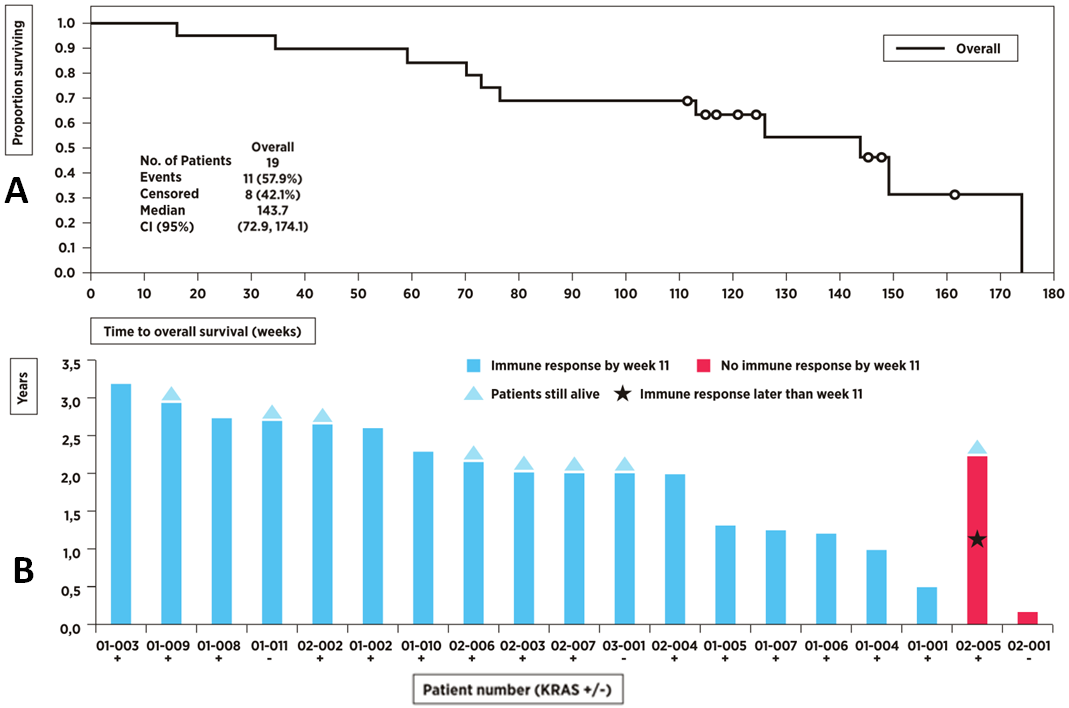
Overall survival rate at two years was 68.4% (13/19), which compares favourably with historical survival rates of 30-53% of resected pancreatic cancer patients treated with gemcitabine alone.10 The median overall survival from surgery was 33.1 months (Exhibit 8A). While there was no control arm, according to the large published ESPAC-4 study published in Q117, patients receiving gemcitabine alone live for a median of 27.6 months.14
J. P. Neoptolemos, D. H. Palmer et al. Comparison of adjuvant gemcitabine and capecitabine with gemcitabine monotherapy in patients with resected pancreatic cancer (ESPAC-4): a multicentre, open-label, randomised, phase 3 trial. The Lancet, Volume 389, No. 10073, p1011–1024, 11 March 2017.
■
Immune response was measured using two methods: delayed type hypersensitivity (DTH) test was considered positive if TG01 injected in the skin resulted in a redness reaction of ≥5mm; T-cell proliferation assay was used to determine whether a blood sample contained TG01 specific T-cells (peripheral blood mononuclear cells). Exhibit 8B shows that 18/19 (95%) patients had immune response during the course of the study (17/18 or 89% responded early by week 11). Eight patients were still alive after the last patient completed the two-year follow up. One patient was considered a late responder with immune response detected after week 11, but still alive at the time of the analysis. The only patient without immune response died because of an unrelated cause by week 8, and therefore was not fully evaluable.
■
13 serious adverse events were reported in seven out of 19 patients. Of these three were linked to TG01 – two anaphylactic reactions and one hypersensitivity reaction, which resolved within 1-2 hours. Grade 1-2 adverse events due to TG01 included mainly expected effects such as influenza-like symptoms or injection site reactions.
The allergic reactions were seen when TG01 was administered concomitantly with chemotherapy. As a result, Targovax started a modified second cohort where TG01 is given less frequently and not during chemotherapy. This cohort of 13 patients will complete the study in H218. Recently, encouraging interim data from this cohort showed 100% survival and 85% immune activation at one year while no allergic reactions were seen.
|
Exhibit 8: Phase I/II TG01-01 study – survival and immune response |
|
|
Source: Targovax |
Overall, we find the first data set to be positive since the vaccination with TG01 was associated with 89% of the patients responding early with a production of mutant RAS specific T-cells. Only three late allergic reactions were reported, while otherwise the treatment was well tolerated. Recently released data from the modified cohort showed that there were no allergic reactions during the first year of treatment. While not a controlled trial, in the context of a very recent ESPAC-4 study, the median overall survival compares well: 33.1 months (TG01-01 study) versus 27.6 months (ESPAC-4 study). TG01-01 study also echoes the early Norsk Hydro trials, which supports further investigation of TG01.
Pancreatic cancer
TG01 is being tested in pancreatic cancer in Phase I/II trial. Pancreatic cancer, more precisely pancreatic adenocarcinoma, is responsible for 7% of all cancer-related deaths – the fourth leading cause of cancer deaths and 11th most common cancer diagnosed in the US.15 Pancreatic cancer is somewhat unique among cancers in that there has been very little progress over the past four decades in prolonging survival rates when compared to other types of cancer. This challenge has been compounded by the facts that the disease is usually diagnosed in a late stage; even if the tumour is resectable, the surgery is complicated and dangerous with high recurrence rates; and the tumour is relatively resistant to chemotherapy. This has meant that the overall five-year survival is still around 8%.16
American Cancer Society American cancer society. Cancer Facts Figures 2014.
Cancer Facts & Figures 2017. American Cancer Society. Accessed: July 14, 2017.
An estimated 54k new cases will be diagnosed in the US in 2017.16 Targovax’s current pancreatic cancer trial includes patients with stage I or II disease, who underwent resection surgery. Around 20% of cases are stage I or II at diagnosis (Cancer Research UK); we therefore calculate an addressable population of c 24,000. Surgery is the primary mode of treatment; however, because around half of patients are diagnosed with a distant disease, often the resection is palliative.
For resected pancreatic cancer, there is no approved treatment, implying a high unmet need. For non-resectable cancer chemotherapy options include gemcitabine alone or in combinations with several other agents such as capecitabine, erlotinib (Tarceva, Roche) and nab-paclitaxel (Abraxane, Celgene). The non-gemcitabine regimen FOLFIRINOX has been shown to be somewhat more effective than gemcitabine alone in a certain subset of patients. Recently, the standard of care chemotherapy (adjuvant) in resected disease has been changed to gemcitabine plus capecitabine (GemCap).
Tarceva brought in $229m in sales for Roche in 2016, second highest to Abraxane with $367m. Both drugs accounted for the majority of the pancreatic cancer market, which was $760m in 2016 (EvaluatePharma). With Tarceva’s patent expiring over the next couple of years, sales are forecasted to decrease.
Colorectal cancer
TG02 is also being tested in colorectal cancer patients in Phase Ib trial. Colorectal cancer is the most common type of gastrointestinal malignancy and the third most common cancer overall. The five-year survival rate of colorectal cancer patients is 65% in the US, with rates being as high as 95% for stage I cancer at diagnosis, falling to 10% for stage IV patients. The majority of cases can be prevented and if detected early, could be cured. Screening programmes are therefore a major factor in the decline of colorectal cancer incidence. Survival rates were further substantially improved over the last decade due to advances in systemic therapy. Before mid-1990, the only approved chemotherapeutic drug was 5-fluorouracil, while currently the therapeutic treatment landscape is rather fragmented with established chemotherapeutic agents, but also a number of innovative biological drugs (bevacizumab [Avastin], cetuximab [Erbitux], nivolumab [Opdivo], pembrolizumab [Keytruda], regorafenib [Stivarga]) (emedicine.com). Avastin, humanised monoclonal antibody to VEGF, was the first anti-angiogenesis drug approved in combination with chemotherapy, which improved overall survival. The drug brought $3.9bn in sales for Roche in this indication in 2016, the bulk of the total market size of $7.1bn (EvaluatePharma). Although patents are to expire in 2019, the consensus estimates it will still earn $2.6bn with size staying flat at $7.1bn by 2022.
Keytruda and Opdivo are the only checkpoint inhibitors approved for patients with unresectable or metastatic colon cancer that are identified as having a biomarker referred to as microsatellite instability-high (MSI-H) or mismatch repair deficient (dMMR) (Keytruda is approved for any solid tumour with MSI-H or sMMR despite location). The MSI-H or dMMR constitutes only 5% of metastatic colorectal cancer patients and 60-70% of patients still did not respond to these CPIs. The consensus estimates that Keytruda’s sales will reach $10bn by 2022 with main indications being non-small cell lung cancer and melanoma, while sales for colorectal cancer will be only c $140m at that time (EvaluatePharma). Opdivo received the approval from the FDA in August 2017. Roche’s Tecentriq (atezolizumab, anti-PD-L1) is in Phase III for this indication.
The American Cancer Society estimates c 96,000 new cases of colon cancer with be diagnosed in the US in 2017. Targovax’s current trial includes patients with locally recurrent rectal cancer and it has indicated that the next trial could be in unresectable advanced colorectal cancer with standard of care chemotherapy or checkpoint inhibitor. According to Cancer Research UK, around one-quarter of patients have metastasis at diagnosis; we therefore calculate that the addressable patient population is c 53,000.
Path forward for ONCOS-102 and TG
Exhibit 9 shows clinical trials conducted so far and currently ongoing studies. Trial design, endpoints and news flow are summarised in Exhibit 1. With ONCOS-102 Targovax is running two trials on its own, while two other trials are about to start and will be sponsored by partners. The TG platform is being tested in two currently ongoing trials. All studies include Targovax’s products in combination with either checkpoint inhibitors or standard of care chemotherapy. Near-term news flow includes interim data (safety and/or immunogenicity) from all four trials with ONCOS-102 (melanoma and mesothelioma studies in H217; sponsored trials in 2018), with final results from the melanoma trial expected in H218 and from the mesothelioma trial in 2019. Near-term news flow from TG trials includes interim data from the colorectal cancer study in H217 with final results in H218. As mentioned above, the final data from the pancreatic cancer trial are due in H118.
|
Exhibit 9: Targovax’s past and currently ongoing trials |
|
|
Source: Targovax |
Targovax has two collaboration partners for the ONCOS-102 platform. The Ludwig Institute for Cancer Research (LICR) is running the ovarian/colorectal trial, while Sotio, a privately owned drug developer based in the Czech Republic, is running the prostate cancer trial. The partners are:
■
The second collaboration was initiated by two US-based non-profit organisations: the Ludwig Institute for Cancer Research (LICR) and the Cancer Research Institute (CRI). The two cancer expert centres saw the potential synergy in combining immune priming oncolytic virus with checkpoint inhibitors, which is the core idea behind Targovax’s technology. Targovax will supply ONCOS-102, while MedImmune (AstraZeneca) will contribute with its checkpoint inhibitor durvalumab (Imfinzi, anti-PD-L1). The drug was approved by the FDA in May 2017 for urothelial carcinoma and consensus (EvaluatePharma) estimates sales will reach $2.6bn in 2022. The financial costs to Targovax are small and, as with Sotio, the future development has not been defined yet and depends on the obtained data.
■
Sotio initiated discussions with Targovax, which resulted in a collaboration agreement signed in November 2015, according to which Sotio is financing the trial, which tests its own dendritic cell vaccine DCVAC/PCa in combination with ONCOS-102. Targovax mainly contributes the oncolytic virus with minimal financial costs. The future relationship has not been defined yet; the combination treatment could be carried into later stage development or Targovax could initiate its own trial in the prostate cancer indication, all depending on the data.
Competitive landscape
In general, in recognition of the non-responder issue with IO drugs, many trials have been initiated in the industry, exploring a variety of combinations with different experimental or approved anticancer treatments in combinations with IO products. Of these, the combinations that show the greatest clinical benefit compared to current standard of care are the ones most likely to succeed in the clinic.
When it comes to more technology-specific peers, we are not aware of other commercial organisations actively developing mutated RAS neo-antigen vaccine technology. However there are a variety of other technologies, such as dendritic cells, which aim to activate antigen presenting cells.
In the oncolytic virus area, the Australian company Viralytics recently presented fresh data. Viralytics’ main asset is Cavatak, a wild-type coxsackievirus A21, which the company is testing for late-stage melanoma and other solid tumour types as a standalone therapy and in combination with checkpoint inhibitors (Keytruda and Yervoy). Recent impressive data were reported in H117 (Cavatak with Keytruda in Phase Ib at AACR and Cavatak with Yervoy in Phase Ib at ASCO). Overall, 33% of melanoma patients who had failed prior single-agent, anti-PD1 therapy responded to Cavatak plus Yervoy. Response rates were 67% and 60% when CPI-naive melanoma patients were treated with Cavatak in combination with Yervoy or Keytruda respectively. The combinations were well tolerated.
Imlygic (Talimogene laherparepvec [herpes virus], Amgen) was approved for melanoma by the FDA in the US in October 2015 and subsequently approved in Europe in January 2016. Although Imlygic did not significantly improve overall survival in patients with unresectable melanoma, it demonstrated a durable response rate defined as complete or a partial response maintained continuously for a minimum of six months. Amgen conducted a Phase Ib/II study with its Imlygic in combination with Yervoy and the results were presented at ASCO in 2017. 38.8% of patients (n = 98) treated with Imlygic plus Yervoy achieved an objective response versus 18% of patients (n = 100) treated with Yervoy alone. Patients in the combination arm also demonstrated nearly double the complete response rate compared to Yervoy alone (13.3% versus 7%). Amgen also partnered with Merck to explore Imlygic in combination with Keytruda. In a small Phase Ib study (n=16), 56% of previously untreated, unresected advanced melanoma patients responded to combination treatment without worsening the safety profile of Keytruda on its own. Amgen and Merck are conducting a Phase III trial in this indication. Amgen also runs other trials in various indications and combinations in earlier stages to expand the application of Imlygic.
A number of other private and listed companies are developing oncolytic virus technologies. Oncolytics Biotech develops Reolysin (reovirus) and is preparing for a pivotal trial in metastatic breast cancer and has run earlier trials in other indications, including a recently initiated Phase Ib in relapsed myeloma with Revlimid/Imnovid (Celgene’s immunomodulatory drugs). Cold Genesys has CG0070 (modified common cold adenovirus) in Phase II for high-grade, non-muscle invasive bladder cancer after failure of BCG therapy. Transgene is investigating Pexa-Vec (engineered vaccinia virus) in Phase III in frontline treatment of hepatocellular carcinoma with Nexavar (sorafenib) and with Opdivo (partnered with SillaJen), and in several other combinations for other solid tumours in earlier stages. PsiOxus develops Enadenotucirev (group B adenovirus) in partnership with Bristol-Myers Squibb in Phase I in combination with Opdivo in solid tumours and a couple of other trials. DNAtrix runs several trials with its proprietary virus technology in several early-stage trials as well.
Sensitivities
Targovax is subject to typical biotech company development risks, including the unpredictable outcome of trials, regulatory decisions, success of competitors, financing and commercial risks. Our model assumes that products will be out-licensed; therefore, our valuation is sensitive to potential licensing timing and actual deal terms. Targovax is mainly an early stage drug developer, therefore in the foreseeable future the value creation will depend on successful R&D progress and any potential partnering activities, although typically the timing of licensing deals is difficult to forecast. The near-term R&D sensitivities are fairly well balanced across three assets and six indications, with all reporting interim or final data over the next two years. Markets in such indications as melanoma and colorectal cancer are already rather fragmented with innovative drugs, which mean that subsequent therapies need to demonstrate added benefit. This is partially mitigated in Targovax’s case, since the underlying rationale of its technology is synergistic effect when using in combinations with current treatment options. TG01’s original patent expired in 2016; however, TG01 is protected by the orphan drug designation and a new combination patent, which seems to provide sufficient protection (timelines are summarised in Exhibit 9).
Valuation
We value Targovax based on risk-adjusted NPV analysis using a 12.5% discount rate, including NOK204m net cash estimated at end-2017. This results in a value of NOK1.69bn or NOK32.1/share. Exhibits 10, 11 and 12 provide assumptions and our valuation of assets in specific indications. We include four out of six indications currently, namely those that Targovax is running trials itself. The further development of ONCOS-102 for the ovarian/colorectal and prostate cancer in partner-sponsored trials depends on many variables that are currently outside the control of Targovax. Should there be clear encouraging immunogenicity/clinical efficacy signals in the ongoing studies, it is likely that these opportunities would be further explored. However, for the time being we do not include these indications in our model due to lack of visibility of exactly who would be involved in the future development, i.e. the partnerships would continue in similar arrangements as they are currently or whether Targovax could use the insights from the data and initiate its own trials in these indications. We have derived rNPVs based on the assumptions discussed above such as target population and market penetration. Remaining assumptions (pricing, R&D costs, patent expiry dates) are summarized in the Exhibit 10 with calculated peak sales in Exhibit 11.
Targovax is still at an early stage of bringing its products to the market and is open to out-licensing opportunities, most likely post proof-of concept studies. We therefore assume a subsequent Phase II study in each of the indications and then an out-licensing deal. The exception is with TG01 for pancreatic cancer. Targovax guided that the next trial will likely be pivotal Phase IIb/III sufficient for registration, if successful. We assume that the company will initiate the trial and will establish a partnership deal later on. Deal terms are based on relevant benchmarks (Exhibit 11) over the last few years (sourced form EvaluatePharma). We looked at oncolytic virus and checkpoint inhibitor licensing deals. As can be seen, in recent years upfront/milestone values in three oncolytic virus deals with products in pre-clinical or Phase II stages varied significantly (Amgen’s $1bn deal with BioVex not shown as the asset was in late stage). For comparison we show deal values in CPI area, which tended to be higher. We use average values from oncolytic virus deals with upfront/milestones of $50/$396m in our model for all indications.
We assume $75k pricing per year per patient for the product from both platforms, comparable to Imlygic pricing of $65k reported at launch in 2015. This is very conservative compared to some checkpoint inhibitors, which can reach price tags of c $12k a month as with Opdivo and Keytruda. In addition, EvaluatePharma calculates that on average orphan and drug cost per patient was $140k in 2016, while a median was $84k, therefore our assumed $75k pricing errs on the conservative side.
Exhibit 10: Assumptions for R&D and commercial projects
Product/stage/indication |
Comments |
ONCOS-102 ■ Phase I ■ Advanced melanoma |
■ Target population c 15,400k unresectable tumours that progress after CPI treatment. Calculated using c 190k incidence rate in defined countries (see notes), 10% of those present with stage III/IV disease, 80% of those who do not respond to CPIs, but are still alive, will progress to second line treatment. Assumed 30% penetration. Potential for increase if ONCOS-102 moves to front-line treatment in combinations. ■ Pricing*: $75k per patient per year, comparable with Imlygic pricing of $65k reported at launch in 2015; peak sales in six years. ■ R&D cost: $1.6m for Phase I; $13.7m for Phase II; then out-licensed. ■ Rights: proprietary technology; original patent expires in 2029; last patent expires in 2036. |
ONCOS-102 ■ Phase Ib/II ■ Mesothelioma |
■ Target population c 6,600k estimated mesothelioma incidence in the US and defined European countries. Assumed 50% penetration as small patient population with few treatment options. ■ Pricing*: $75k per patient per year; peak sales in six years. ■ R&D cost: $4.1m for Phase Ib/II; $13.7m for Phase II. ■ Rights: proprietary technology; original patent expires in 2029; last patent expires in 2036. |
TG01 ■ Phase I/II ■ Resected pancreatic cancer |
■ Target population c 24k resectable pancreatic cancer patients. Calculated as 20% (stage I or II disease) of the total incidence of c 60k in the US and defined European countries. Assumed 30% penetration. ■ Pricing*: $75k per patient per year; peak sales in six years. ■ R&D cost: $4.4m for Phase I/II; $20.6m for Phase IIb/III. ■ Rights: proprietary technology. Original patent expired in 2016; however, TG01 is protected by orphan drug designation and a newer patent, which protects TG01 in combination with gemcitabine with the expiry date in 2035. |
TG02 ■ Phase Ib ■ Colorectal cancer |
■ Target population c 53k unresectable advanced colorectal cancer patients. Calculated as 25% (patients with metastatic disease at diagnosis) of the total incidence of 212k in the US and defined European countries. Assumed 30% penetration. ■ Pricing*: $75k per patient per year; peak sales in six years. ■ R&D cost: $2.7m for Phase Ib; $20.6m for Phase II. ■ Rights: proprietary technology; last patent expires in 2034. |
Source: Edison Investment Research. Note: Target geographies used in the model are the US, top five European countries, Benelux, Scandinavia, Austria and Switzerland. *Pricing in US; 30% discount applied in Europe.
Exhibit 11: Selected licensing deals involving oncolytic viruses and checkpoint inhibitors
Date |
Licensor |
Licensee |
Product |
Stage |
Upfront, |
Deal value (excl. upfront), $m |
Oncolytic viruses |
||||||
28/09/2016 |
ViraTherapeutics |
Boehringer Ingelheim |
VSV-GP |
Pre-clinical |
235 |
|
20/12/2016 |
PsiOxus |
Bristol-Myers Squibb |
NG-348 |
Pre-clinical |
50 |
886 |
07/09/2010 |
Jennerex Biotherapeutics |
Transgene |
Pexa-Vec |
Phase II |
116 |
|
Anti-PD1 agents |
||||||
06/07/2017 |
BeiGene |
Celgene |
BGB-A317 |
Phase II |
263 |
1,393 |
28/07/2015 |
Regeneron Pharmaceuticals |
Sanofi |
REGN2810 |
Phase I |
650 |
1,025 |
Anti PD-L1 agents |
||||||
24/04/2015 |
AstraZeneca |
Celgene |
Imfinzi |
Phase II |
450 |
450 |
17/11/2014 |
Merck KGaA |
Pfizer |
Bavencio |
Phase II |
850 |
2,850 |
Source: EvaluatePharma
Exhibit 12: Sum-of-the-parts Targovax valuation
Product |
Launch |
Peak sales |
Unrisked NPV (NOKm) |
Unrisked NPV/share (NOK) |
Probability (%) |
rNPV |
rNPV/share (NOK) |
|||
ONCOS-102 – Advanced melanoma |
2025 |
604 |
2,073.7 |
39.4 |
10% |
341.4 |
6.5 |
|||
ONCOS-102 – Mesothelioma |
2026 |
434 |
1,642.0 |
31.2 |
10% |
254.8 |
4.8 |
|||
TG01 – Pancreatic cancer |
2024 |
785 |
2,748.9 |
52.3 |
15% |
495.6 |
9.4 |
|||
TG02 – Colorectal cancer |
2026 |
1,744 |
3,290.7 |
62.5 |
10% |
395.6 |
7.5 |
|||
Estimated net cash at end-2017 |
203.5 |
3.9 |
100% |
203.5 |
3.9 |
|||||
Valuation |
9,958.8 |
189.3 |
1,691.0 |
32.1 |
||||||
Source: Edison Investment Research. Note: WACC = 12.5% for product valuations.
Financials
Targovax reported immaterial revenues and an operating loss of NOK87.5m in 9M17, compared to NOK88.3m in 9M16. External R&D expenses were NOK33.4m versus NOK33.2m a year ago, and payroll and related expenses came in at NOK35.2m versus NOK35.9m. So far, Targovax has expensed R&D-related costs. Income associated with government grants is recognised in the P&L as a reduction of related operating expenses. In 9M17 and 9M16 these amounts were NOK4.1m and NOK6.7m, respectively.
Targovax had cash and cash equivalents of NOK285.8m at the end of Q317 compared to NOK171m at the beginning of 2017. The company has received NOK206m gross after a share issue in Q317 and also booked NOK45.8m as long-term debt (no short-term debt). The latter is three government grants in Finland, associated with ONCOS-102, with beneficial terms, such as low interest rates (c 1%) for periods from 10 to 13 years, and will need to be repaid only if the products are sold or launched.
Our total operating expense estimates for 2017 and 2018 are NOK123.8m and NOK126.1m, respectively with R&D costs staying at a similar level as in 2016. We expect a cash positon of NOK249.3m by end-2017. Targovax indicated that after the recent share issue it has sufficient funds to finance the operations through 2018. According to our model, this should extend well into 2019, depending on the pace of the R&D activities. Notably, the company expects to deliver three data readouts in H217 and an additional five in 2018 in the form of interim or final trial results, which provides plenty of catalysts for the share price. At the end of Q317 Targovax had NOK350m booked as intangible assets, which were allocated after the acquisition of Oncos Therapeutics in July 2015 and therefore are related to ONCOS-102.
Exhibit 13: Financial summary
NOK'000s |
2014 |
2015 |
2016 |
2017e |
2018e |
||
December |
IFRS |
IFRS |
IFRS |
IFRS |
IFRS |
||
PROFIT & LOSS |
|||||||
Revenue |
|
|
73 |
146 |
37 |
40 |
0 |
Cost of Sales |
0 |
0 |
0 |
(21) |
0 |
||
Gross Profit |
73 |
146 |
37 |
19 |
0 |
||
Research and development |
(7,766) |
(25,231) |
(45,001) |
(47,018) |
(47,018) |
||
EBITDA |
|
|
(17,558) |
(89,468) |
(119,226) |
(123,498) |
(125,820) |
Operating Profit (before amort. and except.) |
(17,569) |
(89,616) |
(119,510) |
(123,782) |
(126,104) |
||
Intangible Amortisation |
0 |
0 |
0 |
0 |
0 |
||
Exceptionals |
0 |
0 |
0 |
0 |
0 |
||
Other |
(1) |
0 |
0 |
0 |
0 |
||
Operating Profit |
(17,570) |
(89,616) |
(119,510) |
(123,782) |
(126,104) |
||
Net Interest |
(77) |
(269) |
(3,203) |
1,054 |
1,925 |
||
Profit Before Tax (norm) |
|
|
(17,646) |
(89,885) |
(122,713) |
(122,728) |
(124,179) |
Profit Before Tax (reported) |
|
|
(17,647) |
(89,885) |
(122,713) |
(122,728) |
(124,179) |
Tax |
0 |
(1,930) |
260 |
260 |
260 |
||
Profit After Tax (norm) |
(17,647) |
(91,815) |
(122,453) |
(122,468) |
(123,919) |
||
Profit After Tax (reported) |
(17,647) |
(91,815) |
(122,453) |
(122,468) |
(123,919) |
||
Average Number of Shares Outstanding (m) |
7.1 |
18.2 |
34.5 |
47.4 |
52.7 |
||
EPS - normalised (NOK) |
|
|
(2.50) |
(5.06) |
(3.55) |
(2.58) |
(2.35) |
EPS - normalised and fully diluted (NOK) |
|
(2.50) |
(5.06) |
(3.55) |
(2.58) |
(2.35) |
|
EPS - (reported) (NOK) |
|
|
(2.50) |
(5.06) |
(3.55) |
(2.58) |
(2.35) |
Dividend per share (NOK) |
0.0 |
0.0 |
0.0 |
0.0 |
0.0 |
||
Gross Margin (%) |
100.0 |
100.0 |
100.0 |
47.0 |
N/A |
||
EBITDA Margin (%) |
N/A |
N/A |
N/A |
N/A |
N/A |
||
Operating Margin (before GW and except.) (%) |
N/A |
N/A |
N/A |
N/A |
N/A |
||
BALANCE SHEET |
|||||||
Fixed Assets |
|
|
150 |
359,660 |
339,512 |
351,133 |
350,954 |
Intangible Assets |
0 |
358,070 |
338,213 |
350,000 |
350,000 |
||
Tangible Assets |
150 |
1,590 |
1,299 |
1,133 |
954 |
||
Investments |
0 |
0 |
0 |
0 |
0 |
||
Current Assets |
|
|
67,212 |
185,455 |
185,832 |
265,796 |
149,961 |
Stocks |
0 |
0 |
0 |
0 |
0 |
||
Debtors |
0 |
0 |
0 |
0 |
0 |
||
Cash |
62,552 |
173,898 |
171,629 |
249,314 |
133,479 |
||
Other |
4,660 |
11,557 |
14,203 |
16,482 |
16,482 |
||
Current Liabilities |
|
|
(6,689) |
(25,420) |
(29,184) |
(26,747) |
(25,652) |
Creditors |
(6,689) |
(25,420) |
(29,184) |
(26,747) |
(25,652) |
||
Short term borrowings |
0 |
0 |
0 |
0 |
0 |
||
Long Term Liabilities |
|
|
0 |
(96,821) |
(94,992) |
(101,085) |
(101,085) |
Long term borrowings |
0 |
(38,112) |
(39,714) |
(45,807) |
(45,807) |
||
Other long term liabilities |
0 |
(58,709) |
(55,278) |
(55,278) |
(55,278) |
||
Net Assets |
|
|
60,673 |
422,874 |
401,168 |
489,097 |
374,178 |
CASH FLOW |
|||||||
Operating Cash Flow |
|
|
(13,628) |
(81,159) |
(112,892) |
(119,214) |
(117,915) |
Net Interest |
(207) |
269 |
3,203 |
1,054 |
1,925 |
||
Tax |
0 |
0 |
0 |
260 |
260 |
||
Capex |
(160) |
(158) |
(37) |
(118) |
(104) |
||
Acquisitions/disposals |
0 |
1,313 |
0 |
0 |
0 |
||
Financing |
0 |
200,000 |
114,593 |
195,700 |
0 |
||
Other |
68,177 |
(47,031) |
(8,738) |
(6,090) |
0 |
||
Dividends |
0 |
0 |
0 |
0 |
0 |
||
Net Cash Flow |
54,182 |
73,234 |
(3,871) |
71,592 |
(115,835) |
||
Opening net debt/(cash) |
|
|
(8,370) |
(62,552) |
(135,786) |
(131,915) |
(203,507) |
HP finance leases initiated |
0 |
0 |
0 |
0 |
0 |
||
Other |
0 |
0 |
(0) |
0 |
0 |
||
Closing net debt/(cash) |
|
|
(62,552) |
(135,786) |
(131,915) |
(203,507) |
(87,672) |
Source: Targovax accounts, Edison Investment Research
|
|||||||||||||||||||||||||||||||||||||||||||||||
|
|
Research: Investment Companies
Templeton Emerging Markets Investment Trust (TEMIT) aims to generate long-term capital growth from a portfolio of emerging market equities that is diversified by geography and sector. Carlos Hardenberg took over as lead manager on 1 October 2015, since when there has been a noticeable improvement in performance. TEMIT has outperformed its MSCI Emerging Markets Index benchmark by c 11pp over the last 12 months and has the best performance versus its peers by a considerable margin. Due to its substantial revenue reserves, the trust was able to maintain its FY17 annual dividend at 8.25p per share and a change in expense allocation will boost revenue returns from FY18; its current yield is 1.1%.