“Edison is the go-to for a new investor to get full understanding of the investment case and business. Edison’s distribution reaches investors that we want to connect with directly.”
‘Petflation’ describes the rapidly rising cost of keeping a pet, from the initial purchase price through to food, healthcare and insurance. As these costs climb, the premium prices charged by pet food, veterinary and insurance companies are being tested. The question is whether rising prices will deter people from getting a pet in the first place, and whether that could cost these companies sales. The market is not uniform, with one group of owners cutting back wherever it can, while others are spending more than ever on the newest member of the family.
What is the cost of petflation in the UK?
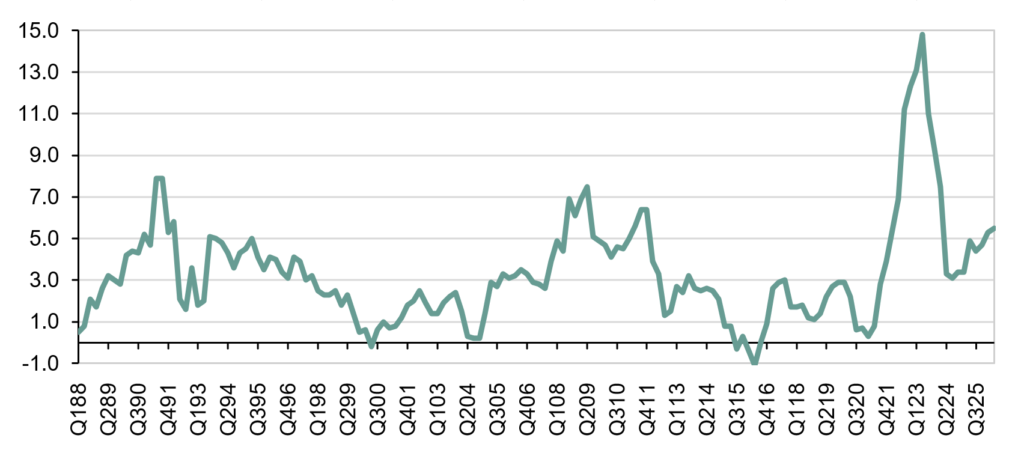
The UK’s pet population now exceeds 30 million, and Pets at Home sizes the resulting pet care market at £7.2bn, characterising it as structurally growing. However, that growth comes at a rising cost. According to the UK Office for National Statistics, the cost of pet care is climbing relative to the cost of goods. Between 2024 and 2025, pet product prices rose 3.1%, while veterinary and healthcare costs more than doubled that rate at 7.1%. The gap has since narrowed: in the year to July 2026, the prices for pet food and related products, including litter and toys, rose 4.3% while veterinary and healthcare service costs rose 4.6% over the same period, both comfortably ahead of headline inflation.
Typical pet insurance plans offer a coverage of treatments ranging from routine checkups to complex surgeries. Market Data Forecast estimated in August 2026 that 60% of UK pet owners are unaware of, or misunderstand, what pet insurance actually covers. Yet that lack of understanding appears to sit at odds with the underlying value of the product. Across the FCA’s full dataset of general insurance products in 2025, only healthcare cash plans returned a higher share of premiums to policyholders through claims. With a claims ratio of 63%, lifetime pet insurance is therefore the second best-value product in UK general insurance.
Are owners quietly downgrading their pets’ care?
The People’s Dispensary for Sick Animals (PDSA) recently published its Pet Health Inequality Report, and the findings suggest that many owners are cutting back. Only 36% of UK pet owners say they could cover the cost of unexpected pet surgery, and 16% have already cut back on their own non-essentials to make sure their pet is looked after. Nearly 1 in 10 owners have gone into debt to pay for their pet’s care, and 11% have delayed a vet visit purely on cost grounds. The report also found that the PDSA itself treated more than 422,000 pets in 2025 compared to 360,000 the year prior, evidence that a significant number (17%) of owners are turning to charitable provision rather than paying for private veterinary care.
The PDSA also report that 22% of owners say pet ownership has turned out to be more expensive than they expected, and 61% of UK adults reported a rise in their overall cost-of-living bills over the past year, a squeeze that has reportedly cost more than 1.5 million pet owners sleepless nights. That pressure is not spread evenly either. The same report found that owners earning less than £25,000 per year are twice as likely as higher earners to avoid taking their pet to the vet at all, out of fear that an inability to pay could mean losing their pet. Perhaps most tellingly, 20% of owners say they would be embarrassed to admit to a vet that they can’t afford a recommended treatment. This could suggest that some spending that looks like loyalty to premium pricing might actually be owners avoiding the embarrassment of downgrading, rather than a genuine ability to pay.
Is humanisation pushing spending the other way?
The same PDSA report found that 66% of UK pet owners say pet ownership improves their lives, 50% describe their pet as a lifeline through tough times and 25% believe financial circumstances shouldn’t be a barrier to pet ownership at all. The report found that 72% go further still, saying a pet’s health shouldn’t suffer because of an owner’s financial hardship. These numbers suggest a sizeable share of owners see their pet as something closer to a necessity than a luxury and help explain why some pet owners keep paying premium prices even when money is tight. Pets at Home points to animal ‘humanisation’, which is the tendency of owners to treat pets as family members and buy premium products for them accordingly, as the driving force. Pew Research Center found that 51% of pet owners say their pets are as much a part of their family as a human member. Supermarket News adds a generational dimension: Gen Z and millennials are twice as likely as boomers to plan on getting a pet within the next year and tend to buy premium products from the outset rather than trading up over time. If that holds, it suggests humanisation isn’t a passing trend but the incoming generations’ default, which should support premium spending even as affordability pressures build elsewhere.
Can premium pricing survive regulatory scrutiny?
Part of the answer lies in the UK government’s recent Competition and Markets Authority (CMA) investigation into large veterinary groups (LVGs), which found that a lack of price and ownership transparency was weakening competition and contributing to high veterinary care prices. The scale of public interest was considerable – the investigation ran from September 2023 to March 2026 and drew 45,000 responses from members of the public. It examined the UK’s six LVGs: CVS Group, IVC, Linnaeus, Medivet, Pets at Home and VetPartners; two of the four companies examined in this report, CVS and Pets at Home, sat directly inside the inquiry. Martin Coleman, who chaired the independent inquiry group, called it ‘the most extensive review of veterinary services in a generation’.
The problems the CMA uncovered have resulted in concrete reforms, which became legally binding on 23 September 2026 Practices must now publish a full price list for standard services as fewer than 40% of the those reviewed published their prices online. Vet businesses must now clearly disclose group ownership as less than half of people using an LVG-owned practice knew it was part of a chain. In addition, some practices were charging £30 or more for a written prescription, a fee now capped at £21 for the first medicine and £12.50 for each additional one. The CMA also found that pet care plans, the subscription-style products at the heart of Pets at Home’s recurring revenue, needed clearer disclosure of what is covered and how any advertised savings are calculated. For CVS and Pets at Home, this looks less like a threat than an opportunity: greater transparency should make it easier to demonstrate the quality and value behind their pricing and to build the kind of consumer trust that a historically fragmented, opaque market made harder to earn.
Exhibit 1: RPI: Percentage change over 12 months (1988–2026) – Pet care
Source: ONS
How are key UK players performing?
Despite the scrutiny, CVS Group does not appear especially concerned. According to their full-year trading update, revenue for FY26 was £712.8m, showing growth of 5.9%. Even while its UK business faced regulatory pressure, the company kept expanding through acquisitions in Australia, growing to more than 50 sites. Australia now makes up c 11% of group revenue, and management is clearly directing growth capital towards the market least exposed to UK cost-of-living pressure. CVS is also running a £50m share buyback programme, even as net bank borrowings have risen to c £199.6m, a combination that signals real confidence in future cash generation rather than a business retrenching under pressure.
Pets at Home saw subscriptions grow to 15.3% of consumer revenue, up from 14.5% a year earlier according to Global Pet Industry. The same report notes the company has been expanding its clinical workforce, growing headcount by 4% to c 3,700 full-time vets and nurses. Read together, this indicates a company investing in the health and subscription side of its business at exactly the point where transparency and consumer trust are becoming the industry’s key battlegrounds.
How are international players responding?
Elsewhere in the industry, Swedencare reported Q126 net revenue of SEK650.3m (c £50m), up 11% once currency effects are stripped out, suggesting genuine underlying demand for its premium supplements is holding up better than the headline number implies. The company also improved its operational EBITDA margin to 19.6% and used its operating cash flow to pay down SEK50m of net debt during the quarter, evidence that the growth it is reporting is translating into a healthier balance sheet rather than being bought with debt. Meanwhile, Trupanion posted revenue of $392.9m in their Q226 earnings results, up 11% compared to Q225. Its subscription revenue, the core insurance product, grew 14% and now makes up 70% of total revenue. Management also authorised a new share repurchase programme alongside the results, a further signal of confidence in the business’s future.
How should investors approach this sector?
Investors should watch key signals rather than relying on headline growth alone. Regulatory compliance matters because new rules, such as the CMA’s required price transparency and prescription fee caps, target the pricing practices that have supported margins across the sector. Currency exposure is also worth watching, since many pet care companies earn a large share of revenue overseas, and a weaker dollar or euro against the currency they report in can cause strong underlying growth to look weaker than it really is. Leverage is another key signal, as much of the sector’s recent growth has been funded through acquisitions and share buybacks running at the same time, a strategy that works well while growth continues but leaves less room for error if conditions worsen. Subscription and recurring revenue models are worth tracking closely as well, since growth that is built on charging existing customers more, rather than attracting new customers, can look healthier on paper than the actual underlying demand. Taken together, these factors say more about whether premium pricing across the sector is sustainable than any single quarter’s results.
Edison Insight
Premium pricing across the pet sector looks sustainable, propped up by a growing base of younger, price inelastic owners who consider their pets family rather than an optional expense. Companies in the sector are still growing, with some confident enough to keep buying back shares even while parts of their market are under pressure. The CMA’s reforms, which have now taken effect, should work in favour of well-run operators, such as CVS and Pets at Home, giving both a clearer stage to show that their pricing reflects the high quality of care and services they provide. For an industry built on the close bonds between owners and their pets, as reflected in the humanisation trend, the combination of resilient demand and improving transparency appears to be a durable foundation for premium pricing rather than a threat to it.
Following our rare earth M&A thematic published on 30 September, Lynas Rare Earths’ proposed acquisition of Meteoric Resources provides another useful transaction benchmark and reinforces the main conclusions of our report. The offer represents a 68% premium to Meteoric’s previous close, providing another example of strategic transaction value sitting materially above listed-market valuations. Meteoric brings a large, advanced upstream rare earth project, while Lynas offers established mining, processing and separation capability and an existing route to market. The transaction further highlights the divergence between relatively subdued developer valuations and the selective value being attributed to rare earth assets by strategic buyers, supporting a constructive longer-term view as capital continues to target advanced ex-China supply.