Data from the 443-patient Phase III CORAIL study of Zepsyre® (lurbinectedin, PM01183) in platinum-resistant ovarian cancer is expected in H217 (most likely Q4). Patients are receiving either Zepsyre® or pegylated liposomal doxorubicin (PLD) or topotecan, and progression free survival (PFS) is the primary endpoint. In a previous Phase II, Zepsyre® was able to demonstrate a statistically significant PFS benefit over topotecan (5.7 months vs 1.7 months, p=0.005) in 33 platinum-resistant ovarian cancer patients.
Written by
PharmaMar |
Preparing for ovarian Phase III data |
Development update |
Pharma & biotech |
19 July 2017 |
Share price performance
Business description PharmaMar is a Spanish biopharmaceutical company with a core focus on the development of marine-based drugs for cancer. Yondelis is approved in the US, EU and Japan, and is partnered with Janssen (J&J) in the US and Taiho in Japan. The group also has consumer chemicals, molecular diagnostics and RNAi operations. Next events
Analysts
PharmaMar is a research client of Edison Investment Research Limited |
||||||||||||||||||||||||||||||||||||||||||||||||
Data from the 443-patient Phase III CORAIL study of Zepsyre® (lurbinectedin, PM01183) in platinum-resistant ovarian cancer is expected in H217 (most likely Q4). Patients are receiving either Zepsyre® or pegylated liposomal doxorubicin (PLD) or topotecan, and progression free survival (PFS) is the primary endpoint. In a previous Phase II, Zepsyre® was able to demonstrate a statistically significant PFS benefit over topotecan (5.7 months vs 1.7 months, p=0.005) in 33 platinum-resistant ovarian cancer patients.
Year |
Sales revenue |
PBT* |
EPS* |
DPS |
P/E |
Yield |
12/15 |
162.0 |
5.9 |
3.0 |
0.0 |
131 |
N/A |
12/16 |
164.0 |
(24.7) |
(10.8) |
0.0 |
N/A |
N/A |
12/17e |
174.0 |
3.6 |
1.6 |
0.0 |
246 |
N/A |
12/18e |
192.7 |
5.5 |
2.5 |
0.0 |
157 |
N/A |
Note: *PBT and EPS are normalised, excluding amortisation of acquired intangibles, exceptional items and share-based payments.
Platinum-resistant ovarian cancer is an unmet need
Ovarian cancer is estimated to cause approximately 22,000 new cases and 14,000 new deaths in the United States each year, with an additional 44,000 cases and 30,000 deaths in the EU. Even with optimal surgical and front-line platinum therapy, around 70% of patients relapse in the first three years.
Current therapies are not very effective
Those who relapse within six months of the end of treatment are defined as platinum-resistant and have limited options. The current standard of care for platinum-resistant patients is either PLD (FDA approved in 1999) or topotecan (FDA approved in 1996) both of which typically have shown PFS of approximately 3.5 months and overall survival of 12 months in large trials.
Phase II data promising
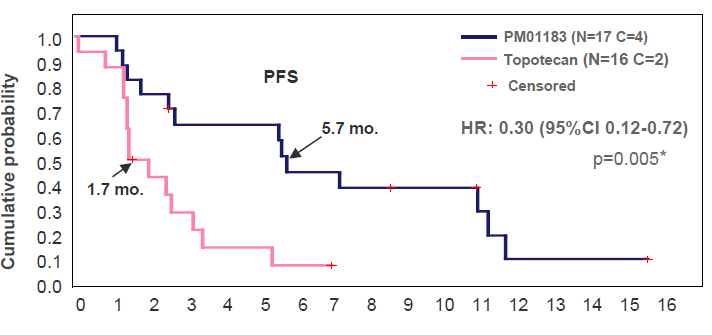
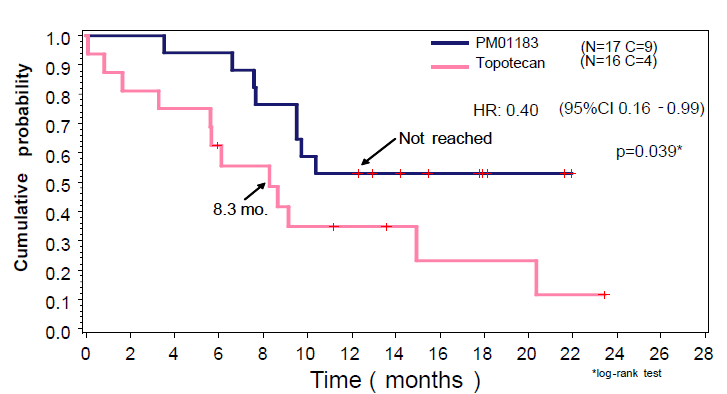
In the randomised-controlled stage of the Phase II trial comparing Zepsyre® to topotecan, the drug showed a statistically significant PFS benefit in platinum-resistant cancer patients (5.7 months versus 1.7 months, p=0.005). The benefit extended to overall survival as well (median not reached versus 8.3 months, p=0.039). Including the single-arm portion, the response rate was 30% in platinum-resistant patients.
Valuation: Increased to €1.68bn or €7.56/share
We are increasing our valuation from €1.50bn or €6.75/share to €1.68bn or €7.56/share, due to the inclusion of Zepsyre® for endometrial cancer as the company plans to enter Phase III in that indication. The CORAIL study is the main near-term valuation driver for the company; positive data (the study hits its primary endpoint and the drug shows at least strong trends in overall survival) would increase our valuation to around €1.86bn (€8.36/share), due to the increase in probability of success to 90% in ovarian cancer and to 70% in small-cell lung cancer (SCLC), where the drug previously had very strong data.
Zepsyre® for ovarian cancer
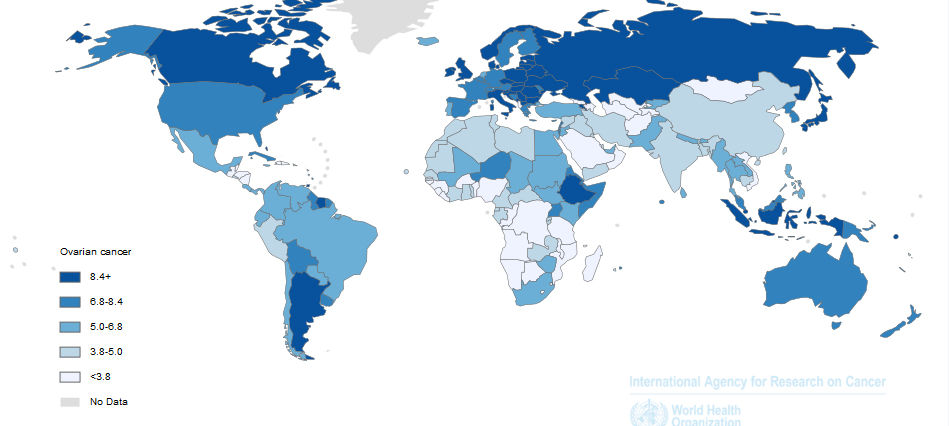
A major catalyst for PharmaMar will be data from its 443-patient Phase III CORAIL study of Zepsyre® in platinum-resistant ovarian cancer, which is expected in H217 (most likely Q4). According to the National Cancer Institute, there will be over 22,000 new ovarian cancer cases in the US in 2017 and over 14,000 deaths from the disease.
|
Exhibit 1: Ovarian cancer incidence rates by country |
|
|
Source: IARC GLOBOCAN 2012 |
Worldwide there are an estimated 239,000 new cases and 152,000 deaths annually, according to the International Agency for Research on Cancer (IARC), with the highest rates coming from developed countries. The majority of those diagnosed already have distant metastases, which is associated with a 28.9% five-year survival rate (see Exhibit 2).
Exhibit 2: Ovarian cancer statistics
Stage |
% of cases |
Five-year survival |
Localised (confined to primary site) |
15% |
92.5% |
Regional (spread to regional lymph nodes) |
20% |
73.0% |
Distant (metastatic) |
60% |
28.9% |
Unknown |
6% |
25.1% |
Source: National Cancer Institute, Surveillance, Epidemiology and End Results Program (SEER)
Patients who present with ovarian cancer are typically treated with surgery followed by a platinum-based chemotherapy (such as paclitaxel and carboplatin). Unfortunately, around 70% of patients relapse in the first three years following therapy1 though this figure is expected to improve, especially among the 10% of ovarian cancer patients with BRCA mutations, with the approval of PARP inhibitor Niraparib by the FDA as a maintenance therapy. Those who relapse between one and six months after the completion of platinum-based treatment are called platinum-resistant; those who relapse past six months are considered platinum-sensitive. Additionally, patients progressing during therapy or within four weeks of the conclusion of treatment are categorised as platinum refractory.
Newly diagnosed and relapsed epithelial ovarian carcinoma, Annals of Oncology 24 (Supplement 6): vi24–vi32, 2013
A patient’s subsequent treatment heavily depends on whether they are platinum sensitive or resistant/refractory. Platinum-sensitive patients are typically treated with additional platinum-based therapy (either carboplatin alone or in combination) due to the higher response rates (typically over 50%2). Standard practice is to continue treating with additional lines of platinum therapy while the patient remains sensitive. Sometimes Avastin is added in, which can increase the response rate to 78.5% and PFS to 12 months.3 Generally, overall survival is around 30-36 months regardless of which platinum-based regimen a platinum-sensitive patient receives. Yondelis from PharmaMar is also used in platinum-sensitive patients outside the US (approved in the EU and across the globe, but not the United States) and PARP inhibitors are used in those with BRCA mutations in third-line therapy (in addition to maintenance).
Bolis et al, Carboplatin Alone vs Carboplatin plus Epidoxorubicin as Second-Line Therapy for Cisplatin- or Carboplatin-Sensitive Ovarian Cancer, Gynecologic Oncology 2001 Apr;81(1):3-9.
Aghajanian et al, OCEANS: A Randomized, Double-Blind, Placebo-Controlled Phase III Trial of Chemotherapy With or Without Bevacizumab in Patients With Platinum-Sensitive Recurrent Epithelial Ovarian, Primary Peritoneal, or Fallopian Tube Cancer, Journal of Clinical Oncology 30, no. 17 (June 2012) 2039-2045.
The situation is far more dire for those who are platinum resistant (a condition that eventually occurs to all surviving platinum-sensitive patients following repeated platinum courses). The current standard of care for platinum-resistant patients is either PLD (FDA approved in 1999) or topotecan (FDA approved in 1996), both of which typically have shown a response rate of 10-15%, PFS of approximately 3.5 months and overall survival of 12 months in large trials.4 This segment of the ovarian cancer population continues to be an unmet medical need.
Luvero et al., Treatment options in recurrent ovarian cancer: latest evidence and clinical potential. Therapeutic Advances in Medical Oncology. 2014 Sep; 6(5):229-39.
Zepsyre® Phase II data
PharmaMar ran an 81-patient, two-stage, controlled Phase II trial in platinum-resistant/refractory ovarian cancer patients. The first stage was exploratory and included 22 patients who received 7mg of Zepsyre® every three weeks. The second stage compared the same dose of Zepsyre® (30 patients) with either daily or weekly Topotecan regimens (29 patients). Across all patients and both stages, Zepsyre® demonstrated a 23% response rate compared to 0% in patients receiving Topotecan (p=0.0033). Among those with platinum-resistant disease, the drug achieved a 30% response rate (those with refractory disease, who by definition are difficult to treat, had a 10.5% response rate).
Exhibit 3: Phase II data
ORR (%) – all patients |
ORR (%) – platinum-resistant |
PFS (months) – all patients |
PFS (months) – platinum-resistant |
Overall survival (months) – all patients |
Overall survival (months) – platinum-resistant |
|
Zepsyre® – both stages |
23% |
30% |
4.0 |
5.0 |
10.6 |
13.5 |
Zepsyre® – second stage |
17% |
24% |
3.9 |
5.7 |
9.7 |
15.6 |
Topotecan – second stage |
0% |
0% |
2.0 |
1.7 |
8.5 |
8.7 |
Source: PharmaMar, Poveda et al., Phase II randomized study of PM01183 versus topotecan in patients with platinum-resistant/refractory advanced ovarian cancer. Annals of Oncology. 2017 June; 28(6):1280-1287.
Note: The trial as a whole had 52 patients who received Zepsyre® (30 in the second stage of the study) and 29 who received Topotecan. There were 17 platinum-resistant patients who received Zepsyre® in the second stage and 16 who received Topotecan.
PFS, the primary endpoint of the upcoming CORAIL study, was a relatively modest 4.0 months in the 52 patients who received Zepsyre® in both stages and was 3.9 months in the 30 patients receiving the drug in the second stage, though that compares favourably to the 2.0 months seen in the 29 patients who received Topotecan (p=0.0067). Also, the PFS in all patients who received Zepsyre® was skewed by the platinum-refractory patients, who progressed relatively quickly (2.9 months in the first stage and 1.4 months in the second stage according to the original abstract5). Among platinum-resistant patients, PFS in those who received Zepsyre® was 5.0 months for the trial as a whole and 5.7 months in the second stage of the trial, a significant improvement over the 1.7 months seen in patients receiving Topotecan (p=0.005).
Poveda et al., Lurbinectedin (PM01183), an active compound in platinum-resistant/refractory ovarian cancer (PRROC) patients. Journal of Clinical Oncology 32, no. 15_supple (May 2014) 5505.
|
Exhibit 4: Platinum-resistant patient PFS data from the second stage of the Phase II |
|
|
Source: PharmaMar, ASCO 2014 |
There were trends towards an overall survival benefit. Median overall survival was 10.6 months for all patients who received Zepsyre®, 9.7 months for patients in the second stage vs 8.5 months for Topotecan patients (p=0.2871). Including only platinum-resistant patients, the median overall survival improves to 13.5 months for Zepsyre® patients (15.6 months for those in the second stage vs 8.7 months for Topotecan patients). One caveat when trying to interpret the survival data is that 52% of the patients in the control arm crossed over to Zepsyre® following disease progression, which could have affected the results in the control arm’s favour.
|
Exhibit 5: Platinum-resistant patient OS data from the second stage of the Phase II, as of ASCO 2014 |
|
|
Source: PharmaMar, ASCO 2014. Note: The survival data has since been updated so that median survival in the Zepsyre® arm is currently reported as 15.6 months versus 8.7 months for Topotecan among patients in the second stage of the trial |
The Phase III CORAIL study
PharmaMar initiated its Phase III CORAIL study in June 2015. Patient recruitment was completed in October 2016 and data is expected by the end of the year (likely in Q417). It has enrolled 443 patients across 113 sites in North America and Europe. It is testing 3.2mg/m2 of Zepsyre® given intravenously every three weeks to Topotecan given daily for five days every three weeks intravenously and PLD given once every four weeks intravenously. The primary endpoint is PFS. The study was designed to detect a hazard ratio (HR) of 0.7 with 90% power, though the company believes it can achieve statistical significance with an HR of 0.8.
There are a few important changes in the design of the Phase III trial compared to the Phase II. First, the trial is focusing on platinum-resistant patients rather than both resistant and refractory. Second, the comparator arm is different as it now includes both Topotecan and PLD. Initially, the Phase II trial was supposed to have PLD as a comparator but due to a worldwide shortage at the time, it was switched to Topotecan. Additionally, in the Phase III, patients who receive Topotecan will only be receiving the standard, five-day regimen rather than the weekly regimen. In the Phase II, patients could receive both and 21 of the 29 Topotecan patients were on the weekly regimen. In a previous trial comparing the two Topotecan regimens in platinum-resistant ovarian cancer patients, there were trends favouring the five-day regimen in both response rate (15% vs 4%) and PFS (4.3 months vs 3.0 months), though neither difference was significant.6 This makes it likely that the control arm in the Phase III will have stronger results than in the Phase II (the company is assuming a PFS in the control arm of 3.5 months, higher than the Phase II results and comparable to historical data).
Sehouli et al., Topotecan Weekly Versus Conventional 5-Day Schedule in Patients With Platinum-Resistant Ovarian Cancer. Journal of Clinical Oncology 29, no. 2 (January 2011) 242-248.
Another key change is that the company amended the Zepsyre® dosing regimen. It was a flat dose of 7mg given every three weeks in the Phase II, but is now based on body surface area. At a dose of 3.2mg/m2 and an average body surface area of around 1.7 for women with ovarian cancer,7 the average dose should be approximately 5.4mg, somewhat lower than the previous dose. The main reason for the change was the high level of neutropenia found in the Phase II (85% grade 3/4, 64% grade 4) especially in those with low body surface area. Neutropenia is a fairly common toxicity of chemotherapy (the rate of grade 4 neutropenia in the five-day Topotecan regimen was 88% in the Phase II) that increases the risk of infection. It can be managed with granulocyte-colony stimulating factor (G-CSF) as well as antibiotics.
Sacco et al., The Average Body Surface Area of Adult Cancer Patients in the UK. PLoS One. 2010; 5(1): e8933
Based on pharmacokinetic (PK) modelling, the 3.2mg/m2 is expected to still be above the efficacy threshold (the PK profile in the Phase II indicated patients were well above the efficacy threshold at the 7mg flat dose) while lowering grade 4 neutropenia by at least 20%8 (it is expected to also reduce the incidence of grade 3/4 hematologic and biochemical abnormalities, gastrointestinal disorders and fatigue). However, we will not know for sure until we see the data and this change in dosing regimen between trials increases the risk that the results will not be statistically significant (though based on the Phase II data, they have a cushion).
Fernandez-Teruel et al., Lurbinectedin (PM1183) efficacy in platinum resistant/refractory ovarian cancer (PRROC) patients correlates with drug exposure using pharmacokinetic/pharmacodynamic (PK/PD) modelling. International Journal of Gynecologic Cancer 2015; 25: 433 (Abs N_ ESGO-0843).
Scenarios
Zepsyre® is clearly active across quite a few different cancers and is closely related to Yondelis (though with much lower toxicity, a far more convenient dosing method and the ability to dose higher), which is currently approved for soft tissue sarcoma in the US, EU and Japan, and is approved for ovarian cancer in the EU and across the globe. So the prospect of outright failure is low, at least in comparison to more unproven mechanisms. If CORAIL misses statistical significance, it seems likely (though this is heavily dependent upon the final data) that the development program in this area will continue but with changes, possibly with a higher dose.
That being said, we continue to expect that the CORAIL trial will hit the primary PFS endpoint and model a 65% chance of success in the US/EU. The response rate in the previous trial was approximately double what we would normally see in Topotecan and PLD and had a PFS 1.5-2 months better than historical data. The toxicity profile should not pose much of an issue as neutropenia is a common chemotherapeutic side effect that oncologists are used to managing. Also the hepatotoxicity is much lower than what we saw in the Yondelis data in combination with Doxil in this indication (liver toxicity was a major reason why it was never approved for ovarian cancer in the US). While Yondelis showed a 50% incidence of grade 3/4 ALT elevations, Zepsyre® had a 17% incidence in the Phase II and that will likely be even lower in the Phase III due to the different dosing regimen.
If the CORAIL study hits its primary endpoint (PFS) and shows at least strong trends in overall survival (overall survival was not necessary for the recent PARP inhibitor approvals in ovarian cancer), we would increase our probability of success to 90% in all regions (from 65% in the US/EU and 50% in Japan). Also, positive CORAIL data would increase our confidence in the success of the Phase III ATLANTIS study in second-line small cell lung cancer (the response rate in a Phase II was 67%, double that of other therapies) and we would increase our chance of success from 65% to 70%. If these changes take effect our valuation would increase to €1.86bn or €8.36/share, up from €1.68bn or €7.56/share.
In the event that the results are indicative of activity but not clinically meaningful (which would encompass a scenario where there is a statistically significant benefit in PFS but it is not clinically meaningful due to a short duration or a hazard ratio of greater than 0.8, as well as a scenario where there is no survival benefit), we would expect another trial to be required, likely with some trial design changes (such as a higher dose). This would delay approval for Zepsyre® in the US/EU by three years (assuming one year to plan and two years to conduct, like the CORAIL study) to 2022. We would also likely reduce our probability of success to 50% in ovarian cancer (though this is heavily dependent upon the data). This would reduce our valuation to around €1.50bn or €6.70/share.
In what we believe would be the unlikely event of a completely unsalvageable failure where we would eliminate all of the ovarian program, we would reduce our valuation to €1.40bn or €6.10/share.
Promising data in endometrial cancer
PharmaMar presented positive data for Zepsyre® in endometrial cancer (EC) at the ASCO meeting held in Chicago on 2-6 June 2017. There were an estimated 320,000 cases of EC and 76,000 deaths globally in 2012 according to the IARC, with an estimated ~61,000 new cases and ~11,000 deaths from EC in the US each year, according to the National Cancer Institute. Unlike ovarian cancer where the majority of cases are caught late, in the case of EC, most are caught in the early stages, as uterine bleeding is a sign the cancer is present.
Exhibit 6: Endometrial cancer statistics
Stage |
% of cases |
Five-year survival |
Localised (confined to primary site) |
67% |
95.3% |
Regional (spread to regional lymph nodes) |
21% |
68.5% |
Distant (metastatic) |
9% |
16.2% |
Unknown |
4% |
50.3% |
Source: National Cancer Institute, Surveillance, Epidemiology and End Results Program (SEER)
The ASCO data included four cohorts of endometrial cancer patients from three separate studies, who were treated with Zepsyre® as a single agent or in combination with chemotherapy drugs.
In cohort B (which used the regimen that will be used in the upcoming Phase III trial, Zepsyre® at 2mg/m2, doxorubicin at 40mg/m2) of the Zepsyre® plus doxorubicin Phase Ib trial, there was 44% ORR (8/18) and acceptable toxicity. Only three of the 18 subjects experienced disease progression, so the disease control rate (DCR) was a high 83%.
In cohort A where patients received a fixed dose of 3-5mg Zepsyre® in combination with 50mg/m2 of doxorubicin every three weeks, there was a 28% ORR (4/14), including two patients who had a complete response rate. However there was also a high incidence of myelosuppression, including febrile neutropenia in 40% of subjects (3/14). In other cohorts, the toxicity was more tolerable, with only 16% of subjects experiencing febrile neutropenia in cohort B and 3.6% in the Zepsyre® only arm. Patients in the Zepsyre®/doxorubicin trials had been treated with up to two lines of prior chemotherapy for advanced disease (median one prior line).
The 44% response rate seen in cohort B of the Zepsyre®/doxorubicin combination trial is a very encouraging outcome for a study in which all of the subjects were undergoing second-line chemo treatment where EC is largely a chemo resistant disease.9 Also, the platinum-free interval (PFI) in these patients was just 4.3 months, an interval associated with a low rate of response (the average response rate for those with a PFI of less than six months is 25% compared to 65% for patients with a PFI of greater than 24 months10). The 13% single agent response rate was also promising as typical single agent chemotherapy response rates for patients who received platinum therapy previously ranges from 4-13.5%11. The 7.7-7.8 month PFS seen in the Zepsyre®/doxorubicin combination trial was also encouraging as PFS is typically closer to 3.2 months in similar patients.12
Colombo et al., Endometrial cancer: ESMO Clinical Practice Guidelines for diagnosis, treatment and follow-up. Annals of Oncology (2013) 24 (suppl_6): vi33-vi38
Nagao et al., Applicability of the concept of “platinum sensitivity” to recurrent endometrial cancer., Gynecologic Oncology 2013 Dec; 131(3):567-73
Fleming et al., Second-Line Therapy for Endometrial Cancer: The Need for Better Options. Journal of Clinical Oncology 33, no. 31 (November 2015) 3535-3540.
Nagao et al., Applicability of the concept of “platinum sensitivity” to recurrent endometrial cancer., Gynecologic Oncology 2013 Dec; 131(3):567-73
Exhibit 7: Activity of Zepsyre® (lurbinectedin, PM01183) as single agent and in combination in patients with endometrial cancer
L+DOX (q3wk) |
L+TAX (q3wk) |
L alone (q3wk) |
||
Response (evaluable patients) |
Cohort A |
Cohort B |
L 2.2 mg/m2 D1 + TAX 80 mg/m2 D1 & D8 |
L 3.2 mg/m2 D1 |
CR |
2 (14%) |
- |
- |
1 (3%) |
PR |
2 (14%) |
8 (44%) |
3 (27%) |
4 (10%) |
ORR |
4 (28%) |
8 (44%) |
3 (27%) |
5 (12.5%) |
SD |
8 (57%) |
7 (39%) |
2 (18%) |
15 (38%) |
PD |
2 (14%) |
3 (16%) |
6 (55%) |
20 (50%) |
DCR |
9 (85%) |
15 (83%) |
5 (45%) |
20 (50%) |
DOR (months) |
19.5 |
6.8 |
6.1 |
4.3+ |
PFS (months) |
7.8 |
7.7 |
1.9 |
2.5+ |
Source: PharmaMar 2017 ASCO abstract 5586. Note: L, lurbinectedin; CR, complete response; D, day; DCR, disease control rate; DOR, duration of response; DOX, doxorubicin; FD, flat dose; ORR, overall response rate; PD, progressive disease; PFS, progression-free survival; PM, PM1183; PR, partial response; q3wk, every three weeks; SD, stable disease; TAX, paclitaxel.
PharmaMar plans to initiate a Phase III study of Zepsyre® in EC. While the design has not been finalised, it is expected to have 500 patients who will either receive 2.0mg/m2 of Zepsyre® plus 40mg/m2 of doxorubicin or 60mg/m2 of doxorubicin with a primary endpoint of overall survival. The trial is expected to begin in H118. Due to the indication from the company that it is moving forward to a pivotal trial, we are adding EC into our model. We assume a 65% chance of success in the US and EU, in line with ovarian cancer and SCLC. We estimate €198m in peak sales, which is based on pricing consistent with other areas and 12.5% penetration of the addressable market and a 2022 launch.
Sylentis starts dry eye Phase III
PharmaMar has initiated a Phase III trial of SYL1001 for the treatment of dry eye syndrome. SYL1001, which is being developed by PharmaMar’s Sylentis business unit, is based on RNA interference technology. The company has agreed with the US FDA on its plans for the HELIX Phase III trial, which is designed to support a new drug application (NDA) for the US market. The double-blinded, placebo-controlled study will enrol about 300 subjects with moderate to severe dry eye in five European countries and will evaluate the efficacy of SYL1001 eye drops for improving the signs and symptoms of dry eye syndrome. The primary outcome measures are the change from baseline over 28 days in eye discomfort/pain scores; damage to the eye surface measured by corneal fluorescence staining scores; and conjunctival hyperaemia (redness) scores.
The entry on clinical trial.gov (NCT03108664) indicates that the final data for the primary endpoints is expected to be collected in March 2018.
Dry eye syndrome is a disorder of the tear film and the surface of the eye, and is associated with symptoms such as pain, stinging, itching and irritation of the eye tissues. The main treatments for the condition are artificial tears presented as gels, drops or creams.
SYL1001 selectively inhibits the production of the transient receptor potential cation channels (TRPV1) that mediates the transmission of eye pain signals. PharmaMar reported positive results from a Phase II study of SYL1001 for treating dry eye discomfort in March 2016; the dose of 1.125% significantly reduced pain scores (p<0.016) and hyperaemia (p<0.0134).
Dry eye represents a significant market opportunity, with an estimated 25 million people in the US affected by chronic dry eye. For example, in 2015 Allergan in-licensed the Phase III dry eye drug Tavilermide in a deal that included a US$50m upfront payment, and undisclosed milestone payments and royalties on sales.
Valuation
We are increasing our valuation from €1.50bn or €6.75/share to €1.68bn or €7.56/share due to the inclusion of Zepsyre® for endometrial cancer due to plans to enter Phase III. This was mitigated in part by a slightly more conservative peak sales estimate for Yondelis in soft-tissue sarcoma (STS) in Europe (from €93m to €90m). The CORAIL study is the main near-term valuation driver for the company; positive data (the study hits its primary endpoint and the drug shows at least strong trends in overall survival) would increase our valuation of the company to around €1.87bn, or €8.50/share, due to raising our probability of success to 90% in ovarian cancer and to 70% in small cell lung cancer (SCLC), where the drug previously had very strong data.
Exhibit 8: PharmaMar sum-of-the-parts DCF
Product |
rNPV (€m) |
rNPV/ share (€) |
Assumptions |
Chemicals business FCF |
97.1 |
0.44 |
7.5% WACC, 3% growth rate from 2019 onwards, accounts for 45% of group capex. |
Yondelis (Europe) |
552.2 |
2.49 |
Second-line soft- tissue sarcoma (STS) peak sales of €90m with 40% penetration; third-line ovarian cancer peak sales of €37m with 8% penetration into addressable platinum sensitive market. First potential generics in 2024. 10% WACC. |
Yondelis (US) |
134.7 |
0.61 |
STS (second-line) peak sales of $130m, launched 2016; peak sales in platinum-sensitive ovarian cancer of $50m, 65% risk adjustment, 2020 launch; both assume 15% royalty from J&J. |
Yondelis (Japan) |
22.4 |
0.10 |
STS only: peak sales of €34m; 15% royalty from Taiho. 10% WACC. |
Aplidin (multiple myeloma) |
207.9 |
0.94 |
Global peak sales of $300m assuming 40% of MM patients ultimately receive fourth-line therapy and 25% penetration; pricing of $25k in EU with 25% US premium; 90% success probability in Europe, 65% in the US; launch 2018 in Europe, 2021 in the US; sold by Chugai in eight European territories (assume effective royalty of 25%) and direct in other EU regions, assume 25% royalty in US; includes €20m of near-term regulatory milestones out of €30m total Chugai milestones. No milestones included for other territories at this stage. |
Zepsyre® (resistant ovarian cancer) |
316.8 |
1.43 |
Second-line, platinum-resistant ovarian cancer: peak sales of €193m; US and EU: 65% success probability, 2019 launch – sold direct in Europe and the US; Japan: 50% success probability, 2021 launch, 20% royalty. |
Zepsyre® (SCLC) |
633.3 |
2.85 |
Peak sales of €680m; US and EU: 65% success probability, 2020 launch sold direct in Europe and US; Japan: 50% success probability, 2022 launch, 20% royalty. |
Zepsyre® (breast – BRCA2 mutated) |
133.2 |
0.60 |
Peak sales of €250m; 45% success probability; US and EU: 2021 launch – sold direct in Europe and US; Japan: 50% success probability, 2023 launch, 20% royalty. |
Zepsyre® (endometrial cancer) |
193.7 |
0.87 |
Peak sales of €198m; US and EU: 65% success probability, 2022 launch sold direct in Europe and US; Japan: 50% success probability, 2023 launch, 20% royalty. |
Zepsyre® upfront and milestones |
43.7 |
0.20 |
Chugai upfront €30m, plus Chugai Japan development milestones assumed to be €35m of ~€70m total potential Chugai milestone payments (assumed to average €7m/year over 2017-21), risked at 50-90%; no Chugai sales-based milestones or milestones for other territories included in our forecasts at this stage. |
Sylentis |
6.8 |
0.03 |
Cumulative peak sales of $200m, with 20% probability of success, potential launch 2021, 10% royalty. |
Genomica |
55.8 |
0.25 |
Conservative 2% growth rate. |
R&D |
(337.7) |
(1.52) |
12.5% WACC. |
SG&A |
(303.1) |
(1.36) |
10% WACC. |
Capex |
(15.7) |
(0.07) |
55% of group capex for biopharma business. |
Net debt |
(62.0) |
(0.28) |
At end-FY16. |
Total |
1,679.2 |
7.56 |
Source: Edison Investment Research. Note: WACC of 12.5% used except where indicated otherwise.
Financials
PharmaMar had €41.1m in cash and financial assets and €53.5m in total net debt at the end of March 2017. Net debt fell by €8.5m in Q117, reflecting the receipt of the €30m Chugai upfront payment in January 2017. The modest net debt, combined with anticipated revenue growth flowing from recent Yondelis launches in the US and Japan, puts PharmaMar in a robust financial position to fund its clinical trial programme and pursue self-commercialisation of Zepsyre® in the US and Europe (if approved).
Exhibit 9: Financial summary
€000s |
2014 |
2015 |
2016 |
2017e |
2018e |
||
Year end 31 December |
IFRS |
IFRS |
IFRS |
IFRS |
IFRS |
||
PROFIT & LOSS |
|||||||
Revenue |
|
|
149,652 |
161,992 |
164,035 |
174,039 |
192,735 |
Cost of Sales |
(40,765) |
(45,705) |
(43,971) |
(46,665) |
(49,069) |
||
Gross Profit |
108,887 |
116,287 |
120,064 |
127,374 |
143,666 |
||
R&D Expenses (gross) |
(52,456) |
(63,549) |
(79,780) |
(88,443) |
(79,416) |
||
Capitalised in-house R&D |
5,979 |
3,258 |
1,357 |
2,024 |
1,800 |
||
Sales, General and Administrative Expenses |
(57,043) |
(74,067) |
(71,550) |
(62,552) |
(64,698) |
||
Other (milestones and royalties) |
28,060 |
31,825 |
16,913 |
43,284 |
22,417 |
||
EBITDA |
|
|
25,704 |
17,578 |
(11,463) |
15,665 |
17,687 |
Operating Profit (before GW and except.) |
22,095 |
11,297 |
(18,706) |
8,204 |
10,003 |
||
Depreciation & Amortisation |
(5,467) |
(6,281) |
(7,243) |
(7,460) |
(7,684) |
||
Exceptionals |
0 |
0 |
0 |
0 |
0 |
||
Operating Profit |
20,237 |
11,297 |
(18,706) |
8,204 |
10,003 |
||
Net Interest |
(5,762) |
(5,388) |
(5,993) |
(4,576) |
(4,541) |
||
Other |
0 |
0 |
0 |
0 |
0 |
||
Profit Before Tax (norm) |
|
|
16,333 |
5,909 |
(24,699) |
3,628 |
5,462 |
Profit Before Tax (as reported) |
|
|
14,475 |
5,909 |
(24,699) |
3,628 |
5,462 |
Tax |
(1,304) |
654 |
592 |
0 |
0 |
||
Deferred tax |
0 |
0 |
0 |
0 |
0 |
||
Profit After Tax (norm) |
15,029 |
6,563 |
(24,107) |
3,628 |
5,462 |
||
Profit After Tax (FRS 3) |
13,171 |
6,563 |
(24,107) |
3,628 |
5,462 |
||
Minority interests |
20 |
25 |
25 |
0 |
0 |
||
Discontinued operations |
(76) |
0 |
0 |
(48) |
0 |
||
Net income (normalised) |
|
|
15,049 |
6,588 |
(24,082) |
3,628 |
5,462 |
Net income (FRS3) |
|
|
13,115 |
6,588 |
(24,082) |
3,580 |
5,462 |
Average Number of Shares Outstanding (m) |
222.2 |
222.2 |
222.2 |
222.2 |
222.2 |
||
EPS - normalised (c) |
|
|
6.8 |
3.0 |
(10.8) |
1.6 |
2.5 |
EPS - FRS 3 (c) |
|
|
0.06 |
0.03 |
(0.11) |
0.02 |
0.02 |
Dividend per share (c) |
0.00 |
0.00 |
0.00 |
0.00 |
0.00 |
||
Gross Margin (%) |
72.8% |
71.8% |
73.2% |
73.2% |
74.5% |
||
EBITDA Margin (%) |
17.2% |
10.9% |
-7.0% |
9.0% |
9.2% |
||
Operating Margin (before GW and except.) (%) |
14.8% |
7.0% |
-11.4% |
4.7% |
5.2% |
||
BALANCE SHEET |
|||||||
Fixed Assets |
|
|
99,473 |
99,804 |
100,145 |
98,190 |
95,968 |
Intangible Assets |
28,836 |
29,377 |
27,448 |
29,472 |
31,272 |
||
Tangible Assets |
29,218 |
30,624 |
31,141 |
27,161 |
23,139 |
||
Other |
41,419 |
39,803 |
41,556 |
41,556 |
41,556 |
||
Current Assets |
|
|
101,916 |
112,135 |
120,992 |
109,355 |
108,552 |
Stocks |
24,404 |
22,990 |
22,158 |
25,570 |
26,887 |
||
Debtors |
36,989 |
40,200 |
62,652 |
40,530 |
44,884 |
||
Cash and current financial assets |
35,511 |
45,625 |
32,367 |
39,441 |
32,966 |
||
Other |
5,012 |
3,320 |
3,815 |
3,815 |
3,815 |
||
Current Liabilities |
|
|
(82,626) |
(70,623) |
(87,164) |
(78,940) |
(79,376) |
Creditors |
(38,160) |
(41,994) |
(59,258) |
(51,034) |
(51,470) |
||
Short term borrowings |
(44,466) |
(28,629) |
(27,906) |
(27,906) |
(27,906) |
||
Long Term Liabilities |
|
|
(58,694) |
(68,280) |
(85,478) |
(76,478) |
(68,688) |
Long term borrowings |
(47,003) |
(64,973) |
(67,583) |
(67,583) |
(67,583) |
||
Other long term liabilities |
(11,691) |
(3,307) |
(17,895) |
(8,895) |
(1,105) |
||
Net Assets |
|
|
60,069 |
73,036 |
48,495 |
52,128 |
56,456 |
CASH FLOW |
|||||||
Operating Cash Flow |
|
|
23,475 |
10,195 |
(3,040) |
17,156 |
3,528 |
Net Interest |
(1,000) |
252 |
(5,000) |
(4,576) |
(4,541) |
||
Tax |
(366) |
654 |
(374) |
0 |
0 |
||
Capex |
(10,179) |
(9,221) |
(6,093) |
(5,505) |
(5,462) |
||
Acquisitions/disposals |
4 |
0 |
129 |
0 |
0 |
||
Financing |
(2,905) |
6,169 |
(632) |
0 |
0 |
||
Other |
0 |
0 |
0 |
0 |
0 |
||
Net Cash Flow |
9,029 |
8,049 |
(15,010) |
7,074 |
(6,475) |
||
Opening net debt/(cash) |
|
|
64,585 |
54,886 |
46,910 |
61,984 |
54,910 |
Exchange rate movements |
0 |
0 |
0 |
0 |
0 |
||
Other |
670 |
(73) |
(64) |
0 |
0 |
||
Closing net debt/(cash) |
|
|
54,886 |
46,910 |
61,984 |
54,910 |
61,385 |
Source: PharmaMar accounts, Edison Investment Research
|
|
Research: TMT
Mondo TV has radically improved its financial profile over the last three years and targets a tripling of EBITDA over the next five. Funding is in place and the new strategy is underpinned by a number of shows with high-margin licensing and merchandising potential. Announcements of additional licensing deals or significant new partners should help build confidence in the deliverability of its ambitious targets and close the 20% FY18 EV/EBIT discount to peers.