Adocia is a clinical-stage biotech company that leverages its proprietary BioChaperone (BC) platform technology to generate improved formulations of approved products for diabetes. Its most advanced asset is BC Lispro, an ultra-fast formulation of insulin lispro ready to enter Phase III trials, after Lilly terminated a partnership agreement. Adocia has recently started a clinical study with BC Pramlintide Insulin and plans to start two more clinical trials in 2018 with its hormonal products, BC Glucagon GLP-1 and BC GLP-2. End 2017 net cash was €27.5m.
Written by
Adocia |
Pipeline and partnerships drive prospects
Pharma & biotech |
Spotlight - Initiation
19 April 2018 |
Share price graph
Share details
Business description
Bull
Bear
Analysts
Edison profile page Adocia is a research client of Edison Investment Research Limited |
||||||||||||||||||||||||||||
Adocia is a clinical-stage biotech company that leverages its proprietary BioChaperone (BC) platform technology to generate improved formulations of approved products for diabetes. Its most advanced asset is BC Lispro, an ultra-fast formulation of insulin lispro ready to enter Phase III trials, after Lilly terminated a partnership agreement. Adocia has recently started a clinical study with BC Pramlintide Insulin and plans to start two more clinical trials in 2018 with its hormonal products, BC Glucagon GLP-1 and BC GLP-2. End 2017 net cash was €27.5m.
Phase III-ready asset targeting $6.5bn+ market
BC Lispro has completed 10 clinical trials aiming to demonstrate a potential best-in-class profile over current rapid-acting insulin Humalog (Lilly), Novolog (Novo Nordisk) and the new ultra-rapid Fiasp (Novo Nordisk). For instance, BC Lispro has demonstrated a significant faster-on and faster-off effect over Humalog, with an action profile closer to the physiologic secretion of insulin at meal times, which gives BC Lispro the potential to be a best-in-class product for this unmet medical need. Although Eli Lilly terminated the licensing deal for BC Lispro in January 2017 to focus on its own ultra-short-acting insulin, Adocia now has a complete clinical dossier for a product that is Phase III-ready, addresses an unmet need and belongs to a large (we estimate over $6.5bn based on sales of current products) and growing portion of the diabetes market. The company is seeking a partner to conduct Phase III trials.
Strategy for value creation: Form partnerships
Adocia’s near-term strategy is to develop its pipeline using its BC technology and partner them as they advance through development. It plans to advance BC Glucagon GLP-1 and BC GLP-2 into clinical development during 2018. In addition to BC Lispro, Adocia is also looking for partnerships in emerging markets for BC Combo and HinsBet. In the longer term, we believe Adocia will seek partners for the rest of its clinical pipeline to pursue late-stage development, registration and marketing. We think it is unlikely that Adocia will conduct Phase III trials itself, due to the high cost associated with this type of trial in diabetes, particularly insulin trials – glucagon trials cost less. The company may opt to conduct additional small clinical trials in niche indications and potentially market some products itself.
Valuation: Value from pipeline and partnerships
|
Consensus estimates
Source: Bloomberg |
Adocia’s market cap is c €108m and its enterprise value (EV) is c €80.5m based on last reported net cash of €27.5m. Pipeline progression and partnerships are the main value drivers.
Innovative formulations for diabetes and beyond
Adocia is a clinical-stage biotechnology company focused on the development of innovative formulations for metabolic diseases. Its proprietary BC technology allows the formulation of biologic drugs in a ready-to-use format with improved pharmacokinetics (PK) and pharmacodynamics (PD) profiles that have the potential for better efficacy and safety over current marketed products. The BC technology also allows other characteristics such as stable liquid formulation or the combination of two molecules that are not stable together. Adocia was founded in 2005 and is based in Lyon, France. It had 130 employees at the end of 2017.
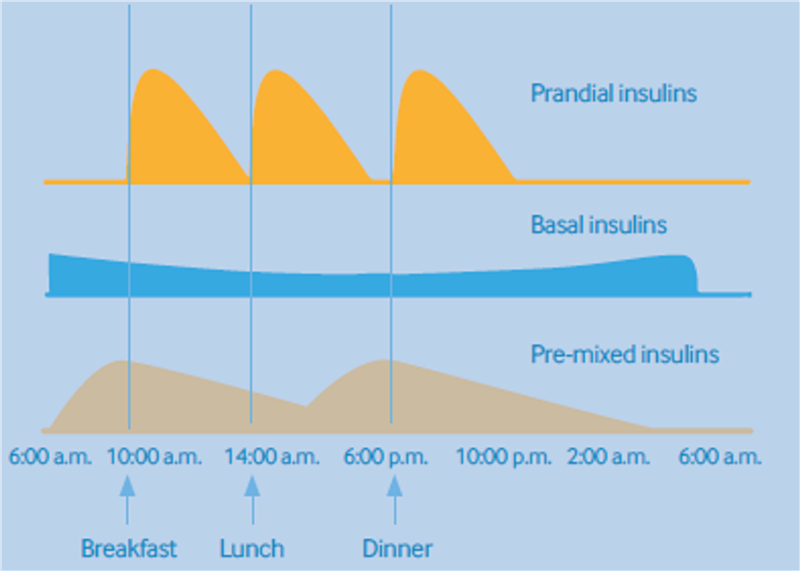
Adocia’s clinical pipeline is focused on therapeutic proteins for the treatment of diabetes, in particular insulin. Insulins can be divided into basal (long-acting) and prandial (rapid-acting or mealtime). Basal insulins provide a constant level of insulin action throughout the day and help keep blood sugars at a consistent level when a person is not eating, but it is not enough to cover glucose spikes after mealtime. Prandial insulins, on the other hand, are taken at mealtime and act rapidly on the body, serving to bring down the high sugar levels after meals.
Exhibit 1: Schematic action profiles of therapeutic insulins
|
Source: Adocia
Adocia’s pipeline consists of the following products:
■
BC Lispro U100 is an ultra-fast formulation of insulin lispro, ready to enter Phase III clinical testing after 10 Phase I/II clinical trials in c 400 patients and volunteers. Adocia is looking for a partner to advance it into late-stage development. The product is also available in a concentrated U200 formulation that has demonstrated bioequivalence to BC Lispro U100.
■
BC Combo is a combination of basal insulin glargine and prandial (mealtime) insulin lispro that has completed five Phase I/II clinical trials. We believe that BC Combo can compete in the market of premix insulins and new basal/prandial combinations. Adocia is looking for a partner in China and other emerging markets.
■
BC Glucagon is a ready-to-use aqueous solution of human glucagon for the rescue treatment of severe hypoglycaemia and other indications. It has completed a Phase I trial and the company will take it to further testing (timeline not provided).
■
HinsBet U100 is a new rapid form of human insulin for emerging countries. It has completed a Phase I/II trial and Adocia is looking for partners in emerging markets. HinsBet U500 is a high concentration of the product in preclinical development for people in developed markets that require large doses of insulin.
■
BC Pramlintide Insulin is a combination of the amylin analog pramlintide and human fast-acting insulin. It has recently started a first-in-man clinical trial in T1D patients. The study will complete in Q318.
■
Additionally, Adocia has a preclinical pipeline comprising BC Glucagon GLP-1 and BC GLP-2, both of which are slated to start clinical trials in Q418.
Exhibit 2: Pipeline
Produc |
Indication |
Stage |
Comments |
BioChaperone Lispro |
T1D and T2D |
Phase III ready |
Available for global partnering |
BioChaperone Combo |
T1D and T2D |
Phase I trials completed |
Looking for partners in China & emerging markets |
BioChaperone Glucagon |
Hypoglycaemia |
Phase I trial completed |
To advance into further development |
HinsBet |
T1D and T2D |
Phase I/II completed |
Looking for partners in emerging markets |
BioChaperone Pramlintide Insulin |
T1D |
Phase I |
Trial completion expected in Q318 |
BioChaperone Glucagon GLP-1 |
Obesity |
Preclinical |
Start clinical trial in Q418 |
BioChaperone GLP-2 |
SBS |
Preclinical |
Start clinical trial in Q418 |
Source: Edison Inv. Research, Adocia. T1D: type 1 diabetes; T2D: type 2 diabetes; SBS: short bowel syndrome
BC Lispro was part of a 2014 licensing deal between Adocia and Lilly. The deal’s overall value was $570m plus tiered royalties on sales. Lilly terminated the agreement in January 2017, presumably to pursue its own ultra-fast insulin LY900014, which is in Phase III trials with potential filings in H218/2019. At the time of termination, Adocia had received $60m in milestone payments and $30m as part of the research collaboration included in the agreement. Recently, Adocia has filed arbitration proceedings against Lilly arising out of their collaboration and confidentiality agreements. The company’s legal action is divided into two arbitration filings. The first one was brought in October 2017 and seeks $11m plus other specific relief due to Lilly’s change of development plan. Adocia expects the arbitration proceeds to complete in Q218. The second case was announced in February 2018. Adocia filed further claims related to the misappropriation and improper use and breach of confidential information by Lilly. Adocia seeks over $200m in damages from this second case. The company expects a decision by Q318.
Upcoming newsflow: Start clinical trials, potential partnerships
Adocia is looking for partners for its clinical pipeline. A global partner for BC Lispro is being sought. Moreover, Adocia is seeking a partner in China and other emerging countries for BC Combo, a combination of basal insulin Lantus (insulin glargine, Sanofi, 2017 sales $5.2bn) with the rapid insulin Humalog (insulin lispro, Lilly, 2017 sales $2.9bn). Finally, Adocia is looking for a partner for emerging countries for HinsBet, a fast-acting human insulin.
Adocia has started a clinical trial with BC Pramlintide Insulin (April 2018), and expects to start clinical trials for BC Glucagon (GLP-1 Q418) and BC GLP-2 (Q418).
Exhibit 3: Present and upcoming activities
|
Source: Edison Investment Research, Adocia
The BC molecular delivery system
BC is Adocia’s proprietary technology platform. BCs are oligomers or polymers that are inspired by the interactive properties of heparin with proteins. They form a soluble complex with proteins, which protects them from enzymatic degradation, permits solubilisation at physiological pH and provides improved stability and accelerated absorption. This also may allow for reduced dosage and frequency of administration.
Exhibit 4: Graphic representation of BioChaperone
|
Source: Adocia
Adocia has 32 patent families on BC with first expirations starting in 2033.
BC Lispro: Phase III and partner ready
Adocia is developing its BC product of insulin lispro (BC Lispro) as a new ultra-fast prandial insulin that can be given at the same time as a meal or shortly after. BC Lispro has completed 10 clinical trials and has demonstrated a favourable profile head-to-head versus Humalog, Novolog and Fiasp. Adocia has a complete clinical dossier ready for Phase III testing. The company is looking for a global partner to conduct late-stage clinical trials, registration and marketing.
Fast-acting prandial insulins are given before meals to cover glucose spikes that occur after eating. They start working about 20 minutes after the injection, gradually rise in activity over 1.75 to 2.25 hours, then gradually fall over the next three hours. The Tmax (time at maximum concentration) is 1-1.5 hours. This provides about five to six hours of insulin coverage, which is common with these insulins, instead of 24 hours of coverage for long-acting insulins. In general, these fast-acting insulins are still too slow for many common meals where the glucose peaks within an hour, hence the need for new, ultra-rapid insulins that can reproduce the metabolic profile that ensues after meal ingestion in healthy people. The goal is to improve glycaemic control, the risk of hypoglycaemia, weight gain, convenience and quality of life. In the most recent clinical study, using insulin pumps BC Lispro showed:
■
Faster on effects (as area under the glucose infusion rate (GIR) curve in the first hour or AUCGIR 0-1h, which measures early glucose-lowering effect) compared to Humalog and Novolog.
■
Faster off metabolic effects (measured as time to late 50% of maximum GIR, which is the offset of the glucose-lowering effect) compared to Novolog and Humalog.
■
Significantly faster off effect and similar onset of action compared to Fiasp.
Although these are early stage data, we believe they show a potential best-in-class profile of BC Lispro over competitors that will need to be confirmed in further late-stage studies.
Exhibit 5: Clinical trials with BC Lispro
Study |
Phase (n) |
Condition |
Main outcomes |
Phase I (n=43) |
T1D |
Met primary endpoint with 63% statistically significant increase in metabolic effect during the first hour vs Novolog. BC Lispro showed statistically significant faster-off metabolic profile vs Novolog and Fiasp (data). |
|
Phase I (n=80) |
T1D |
Two-part trial comparing a continuous subcutaneous insulin infusion (CSII) of BC Lispro and Humalog. The first part comparing the products in the Roche Accu-Chek Spirit pump did not show a benefit for BC Lispro over Humalog. The second part showed a statistically significant increase in insulin exposure over the first 30 minutes compared to Humalog in the two pumps tested: early exposure was increased by 33% in the Roche pump (primary endpoint, p=0.0007) and by 54% in the Medtronic pump (p<0.0001) (ref). |
|
Phase I (n=15) |
Healthy |
Demonstrated proportional dose-exposure relationship in healthy Japanese subjects as demonstrated in Caucasians. Faster absorption/activity and higher early and lower late exposure/effect (data). |
|
Phase I (n=51) |
T2D |
Statistically significant 83% increase in exposure to insulin lispro over the first 30 minutes compared to Humalog (data). |
|
Phase I (n=36) |
T1D |
BC Lispro showed a statistically significant 31% reduction in blood glucose excursion over the first two hours vs Humalog. After 14 days of each treatment, BC Lispro demonstrated a statistically significant 42% reduction in blood glucose excursion over the first two hours compared to Humalog, when injected at the time of the meal (data). |
|
Phase I (n=26) |
Healthy |
Bioequivalence study between BC Lispro U200 and BC Lispro U100. Met all endpoints, company concluded U200 retained the ultra-rapid profile of U100 (data). |
|
Phase I (n=38) |
T1D |
Statistically significant 61% reduction in post-prandial glucose excursion over the first two hours compared to Humalog (data). |
|
Phase II (n=38) |
T1D |
Three doses of BC Lispro (0.1 U/kg, 0.2 U/kg and 0.4 U/kg) compared with one dose of Humalog (0.2 U/kg). The time to peak insulin lispro concentration was significantly reduced (median Tmax 40 vs 60 min; p=0.001). Early metabolic effect was increased by more than 70% relative to Humalog during the first hour after administration (AUCGIR_0-1h = 207 ± 87 vs. 123 ± 58 mg/kg; p<0.0001) (ADA 2015 poster). |
|
Phase I (n=37) |
T1D |
Compared with Humalog, BC Lispro showed a faster onset of action (23.1±7.0 (mean±SD) vs 34.4±15.3 min, p<0.0001); an earlier maximum effect (TGIR max 99±42 vs. 133±45 min, p=0.0002) and a stronger early metabolic effect in the first hour (AUCGIR 0-1h 218±88 vs 129±63 mg/kg, p<0.0001) and first two hours (AUCGIR 0-2h 627±235 vs. 525±214 mg/kg, p=0.0041) (data). |
|
Phase I (n=37) |
Healthy |
Primary endpoints: PK: AUC, Tmax, Cmax. No data available. |
Source: Edison Investment Research, Adocia, clinicaltrials.gov. Note: Trials shown in order from most recent to oldest. n: number of participants; T1D: type 1 diabetes; T2D: type 2 diabetes; AUC: area under the curve; TGIR max: time to maximal glucose infusion rate; Tmax is the amount of time that a drug is present at the maximum concentration in serum; Cmax: maximum serum concentration that a drug achieves in a specified compartment or test area of the body.
The primary endpoints of Fiasp’s Phase III programme (onset-1 and onset-2) and of Lilly’s ongoing Phase III studies with its ultra-fast insulin LY900014 (PRONTO-T1D and PRONTO-T2D) are change from baseline in glycated haemoglobin (HbA1c) after 26 weeks. Fiasp was compared with insulin aspart and LY900014 is being compared with insulin lispro. We believe that to gain regulatory approval, BC Lispro will need to successfully complete at least two Phase III clinical trials in patients with T1D and T2D, respectively in around a thousand patients per trial; with a similar design as Lilly and Novo Nordisk’s trials. Costs per trial could be in the $100m range for c 2,000 patients.
Lilly’s Humalog and Novo Nordisk’s Novolog are the most prominent rapid insulins. They are both off-patent. Humalog (insulin lispro) generated revenues of $2.87bn in 2017; Evaluate Pharma’s 2022 consensus forecast is $1.8bn due to biosimilar competition from Sanofi’s Admelog. Novolog (insulin aspart) reported 2017 sales of $3bn; Evaluate Pharma’s 2022 consensus forecast is $2.8bn. Novo Nordisk recently launched Fiasp, an ultra-fast insulin. 2017 sales were $11m and Evaluate Pharma’s 2022 consensus forecast is $347m. We expect new ultra-fast insulins and biosimilars to gain market share over the next few years due to advantages such as faster onset of action and lower price. BC Lispro will need to demonstrate a best-in-class profile in late-stage clinical trials over current fast-acting insulins to garner market share.
BC Combo for better glycaemic control
BC Combo is a 75/25 combination of basal insulin Lantus with the rapid insulin Humalog. The aim of BC Combo is to replicate the simplicity of administration of pre-mixed insulins (two injections per day) and the glycaemic control of basal-bolus regimen. Pre-mixed insulins are usually prescribed for patients that need a single treatment plan, eg patients that just started therapy, patients with regular meal patterns or those with impaired vision. They are also the best-selling insulins in emerging countries such as China. The BC technology enables this combination by solubilising insulin glargine at a neutral pH, where it is compatible with fast-acting insulin analogues. Adocia is looking for partners in China and other emerging countries, where premix products are the top treatment option. The company has not disclosed its strategy for developed countries.
In clinical trials BC Combo has demonstrated superiority vs Lilly’s Humalog Mix25 in T1D and T2D patients and showed no difference compared to the separate injections of Lantus and Humalog.
Exhibit 6: Clinical trials with BC Combo
Study |
Phase (n) |
Condition |
Main outcomes |
Phase I (n=32) |
T2D |
Three single doses of BC Combo and one single dose of Humalog Mix25. BC Combo displayed a statistically significant faster early metabolic effect, lower late prandial effect and stronger late basal effect than Humalog Mix25. The overall metabolic effect was similar for both treatments (data). |
|
Phase I (n=36) |
T2D |
Compared the PD profile of BC Combo with Humalog Mix25 and with simultaneous injections of Humalog and Lantus. BC Combo showed a statistically significant superiority to Humalog Mix75/25 and showed no difference vs the separate injections of Lantus and Humalog (data). |
|
Phase I (n=28) |
T1D |
BC Combo showed a statistically significant superiority in reducing post-meal blood glucose over the first two hours compared to Humalog Mix75/25 (data). |
|
Phase I (n=24) |
T2D |
BC Combo was found to be significantly superior to Humalog Mix75/25 and exhibited no difference compared to the separate injections of Lantus and Humalog (data). |
|
Phase I (n=21) |
T1D |
Single dose of BC Combo compared with Humalog Mix25. BC Combo had statistically significant faster onset of action, higher early metabolic effect, stronger late metabolic effect and a longer duration of action than Humalog Mix25. Basal action lasted over 30 hours (data). |
Source: Edison Investment Research, Adocia, clinicaltrials.gov. Note: Trials shown in order from most recent to oldest; n; number of participants; T1D: type 1 diabetes; T2D: type 2 diabetes.
Novo Nordisk’s premix insulin Novomix recorded sales of $1.6bn in 2017 and EvaluatePharma’s (EP) consensus forecast is $1.5bn in 2022. Lilly does not show Humalog Mix sales, but global Humalog sales were $2.87bn in 2017 and EP consensus forecast is $1.8bn in 2022. Novo Nordisk’s Ryzodeg (insulin degludec plus insulin aspart) is the only direct competitor to BC Combo. Ryzodeg was launched in 2015 in selected markets and sold $75m in 2017 (EP consensus forecast is $351m in 2022). Adocia plans to compete in price with Ryzodeg taking advantage of biosimilar insulin products. Novo Nordisk plans to launch Ryzodeg in China in 2020.
According to Adocia the premix insulin market is $5bn globally and represents 65% of the total insulin market in China per volume; it is expected to reach $2bn in 2025.
HinsBet: Two concentrations of rapid-acting human insulin
HinsBet is a rapid-acting formulation of recombinant human insulin using Adocia’s BC technology. In low-income countries, human insulin is used as the most common prandial insulin. Human insulin acts slower than insulin analogues Adocia plans to partner HinsBet U100 in emerging markets as a low-cost, prandial human insulin that can act as fast as insulin analogues. Adocia has a high U500 concentration of HinsBet that is in preclinical development for people that require large doses of insulin in developed markets.
The company conducted a Phase I/II clinical trial (NCT02739906) with HinsBet U100 in 36 patients with type 1 diabetes (T1D). The study met the primary endpoint as HinsBet achieved a statistically significant reduction of blood glucose concentration one hour after the start of intake of a standardised meal compared with Humulin (Lilly, 2017 sales $1.3bn).
Multi-hormonal approach for diabetes management
In healthy people normoglycaemia is maintained by a time-dependent hormonal pattern. This pattern is mainly comprised of four hormones: insulin, glucagon, glucagon-like peptide 1 (GLP-1) and amylin. In patients with T1D this hormonal pattern is severely disrupted.
Exhibit 7: Representation of hormonal pattern
|
Source: Adocia
BC Glucagon to the rescue
Adocia has applied its BC technology to generate a new formulation of human glucagon. The company is developing BC Glucagon as a potential improved product of current rescue treatment for severe hypoglycaemia. Potential additional indications would be: 1) as a dual hormone artificial pancreas, which would secrete insulin and glucagon and would be an improvement over hybrid closed-loop insulin pumps as glucagon would allow more use of insulin by reducing hypoglycaemia at night and during the day; 2) for the treatment of congenital hyperinsulinism, an orphan disease that affects 1 in 50,000 children worldwide; and 3) for the treatment of chronic hypoglycaemia resulting from post-bariatric surgery, as around 0.2% of bariatric surgery patients suffer from chronic hypoglycaemia. The company intends to advance it into late-stage development; the timeline has not been released.
Adocia has conducted a Phase I clinical trial (NCT03176524) in 27 patients comparing two formulations of BC Glucagon to Novo Nordisk’s Glucagen Hypokit. The median time to reach a clinically safe blood glucose level was 11 minutes for BC Glucagon and c 7 min for Glucagen. All subjects achieved resolution of hypoglycaemia at 35 minutes (press release). Given the importance that time has in this emergency setting, we believe BC Glucagon will need to show it is a ready-to-use solution with a similar profile to current glucagon to gain market share. Full data will be released at a major diabetes congress in late 2018.
Current glucagon rescue kits on the market are Novo Nordisk’s GlucaGen HypoKit (sales not disclosed) and Eli Lilly’s Glucagon emergency kit (2017 sales $142.2m). However, due to glucagon’s instability in aqueous solutions, it must be kept lyophilised and needs to be mixed with sterile water before use. In this emergency situation most caregivers have difficulties administering the right dose to the patient. We view BC Glucagon as an interesting ready-to-inject alternative. Current competitors are Xeris Pharmaceuticals (expects to file an NDA with the FDA in Q218); Zealand Pharma’s dasiglucagon (Phase III, data expected in 2018); and Arecor (preclinical). Eli Lilly’s Locemia is developing a nasal spray of glucagon for the same indication; an NDA submission is expected in 2018. According to Adocia, the current market for these devices is $300m in the US based on similar sales for Lilly and Novo Nordisk’s products, which it expects to grow due to other ready-to-use kits entering the market.
BC Pram Insulin, a combination of amylin analogue and insulin
Adocia is developing BC Pramlintide Insulin (BC Pram Insulin) as a combination product of pramlintide and human fast-acting insulin for diabetic patients. The company started a first-in-man clinical trial in April 2018. Amylin is a hormone that is co-secreted with insulin in physiologic conditions. Amylin acts synergistically with insulin by suppressing glucagon secretion, slowing down gastric emptying and creating a feeling of satiety. Pramlintide (Symlin, AstraZeneca) is an analog of amylin that has demonstrated better glycaemic control, reduced insulin consumption and reduced weight gain in clinical trials when used in addition to prandial insulin compared to prandial insulin alone. Symlin is approved by the FDA to control blood sugar levels in adults with T1D or T2D. Patients have to undergo seven injections per day: one of basal insulin, three of prandial insulin and three of Symlin. According to Adocia, by combining pramlintide and insulin in a single product, BC Pram Insulin could significantly improve post-prandial control in people with diabetes without increasing the number of daily injections. AstraZeneca reported FY17 sales of $48m for Symlin. EP consensus forecast is $63m in 2022.
BC Glucagon GLP-1 for obesity
Another opportunity for the BC technology is in obesity. Adocia is using the GLP-1 receptor agonist exenatide (Byetta, AstraZeneca, 2017 sales $176m, off-patent) in combination with glucagon. Adocia plans to start a first-in-man study in Q418.
Although obesity is a potential large market (36.5% of US adults were obese in 2014 according to the Centers for Disease Control), a number of companies (eg Arena, Vivus and Orexigen) targeting this market failed to achieve meaningful sales; among other reasons, due to increased side effects, small weight loss and reluctance from physicians to prescribe drugs to treat obesity. On the other hand, GLP-1 receptor agonist liraglutide (Saxenda, Novo Nordisk) has been successful, with 2017 sales of $389m and is projected to achieve $927m in 2022 according to EvaluatePharma’s consensus forecast.
We believe that a product with dual GLP-1 and glucagon agonistic properties could be effective in promoting weight loss, increasing energy expenditure and reducing calorie intake. For example, this clinical study shows that glucagon and GLP-1 co-infusion significantly reduced food intake by 13% in the study meal compared with placebo, which was also significant with respect to the administration of either glucagon or GLP-1 alone.
BC GLP-2 for short bowel syndrome
The BC technology is used to stabilise GLP-2 analog teduglutide (Gattex, Shire, 2017 revenues $336m, EP consensus forecast for 2022 is $505m) in a ready-to-use liquid formulation for short bowel syndrome (SBS). Gattex needs reconstitution prior to use, which involves 22 steps, two syringes, is time consuming and there is the potential of dosing mistakes. Adocia plans to start a first-in-man study in Q418.
SBS is a malabsorption disorder associated with partial or total loss of intestinal function. It usually develops after surgery. The worldwide incidence is estimated at two to five patients per million people (ref). Management of SBS frequently requires lifelong parenteral nutrition. GLP-2 stimulates the growth of intestinal tissue, increases nutrient absorption potentially reducing dependence on parental nutrition.
Glepaglutide from Zealand Pharma is a ready-to-use formulation of a new GLP-2 agonist analog that will start a Phase III trial in 2018 as a once- and twice-weekly dose. Positive Phase II results were announced in June 2017. Evaluate Pharma’s forecast is for launch in 2020 and revenues of $125m in 2022. We believe that BC GLP-2 will need to differentiate itself in terms of dosage, or a broader application beyond patients on parenteral nutrition to compete with glepaglutide.
Financials
Adocia’s FY17 operating revenue decreased to c €27.2m from €30.4m in FY16. Most of the top line came from the recognition of the non-amortised part of the upfront received from Lilly in 2014 (€18.8m), which has no impact on the cash balance. Additionally, €7.5m of research tax credit was recognised. FY17 expenses decreased from to €35.36m from €38.45m in FY16. Most (77%) of the total of operating costs accounted for research and development. FY17 operating loss was €8.2m, similar to €8.0m in FY16. Net loss was €8.6m in 2017 versus €7.9m in 2016.
In 2017 Adocia consumed €23.9m in cash versus €13.1m in 2016. It also received €3.1m from the licensing agreement with Lilly and other collaborative agreements versus €14.3m in 2016. Financial debt at end 2017 was €7.6m vs €7.1m in 2016. Most debt is associated with a 2016 loan to finance the acquisition of the company’s headquarters and research facilities. The company’s gross cash balance was €34.8m at end 2017 versus €58m at end 2016.
Adocia guides for the same burn rate in 2018 as 2017, ie c €23m. We believe Adocia is funded into mid-2019. Additional cash inflow may come from potential partnerships, the decision on the legal cases against Lilly and equity/debt financings.
Exhibit 8: Financial summary
Year end 31 December (€m) |
2014 |
2015 |
2016 |
2017 |
Income statement |
||||
Revenue |
4.2 |
44.8 |
30.4 |
27.2 |
Profit before tax (as reported) |
(16.6) |
12.2 |
(7.8) |
(8.5) |
Net income (as reported) |
(20.7) |
12.6 |
(7.9) |
(8.6) |
EPS (as reported) (€) |
(3.05) |
1.8 |
(1.2) |
(1.2) |
Dividend per share (€) |
0.00 |
0.00 |
0.00 |
0.00 |
Balance sheet |
||||
Total non-current assets |
1.7 |
2.1 |
8.8 |
9.1 |
Total current assets |
50.8 |
86 |
70 |
44.7 |
Total assets |
52.5 |
88.1 |
78.8 |
53.8 |
Total current liabilities |
19.3 |
20.4 |
28 |
8.8 |
Total non-current liabilities |
30.7 |
20.6 |
8 |
8.0 |
Total liabilities |
50 |
41 |
36 |
16.8 |
Net assets |
2.5 |
47 |
42.8 |
37.0 |
Shareholders’ equity |
2.5 |
47 |
42.8 |
37.0 |
Cash flow statement |
||||
Net cash from operating activities |
30.6 |
(6.2) |
(13.1) |
(22.2) |
Net cash from investing activities |
(0.2) |
(0.8) |
(7.2) |
(1.7) |
Net cash from financing activities |
0 |
29.3 |
6.3 |
0.7 |
Net cash flow |
30.4 |
22.3 |
14 |
23.3 |
Cash and cash equivalent end of year |
49.8 |
72.1 |
58 |
34.8 |
Source: Adocia accounts. Note: Figures are rounded.
Valuation
Adocia’s market cap is c €108m and its enterprise value (EV) is c €80.5m, based on the last reported net cash balance of €27.5m. Adocia’s lead products BC Lispro and BC Combo target a market of over $11bn, according to 2017 worldwide sales of the main products marketed in their respective indications. According to Adocia, in 2016 the worldwide pre-mix insulin market was $5bn and the hypoglycaemia rescue market was $300m. Although it is early stage, BC Glucagon GLP-1 also targets the obesity market. According to Evaluate Pharma, sales of the top 10 obesity products were c $1bn in 2017, expected to grow to $1.8bn in 2022.
We note, however, that the insulin market is becoming more crowded, dominated by big players. We believe that Adocia will need strong Phase III results and to partner with a large pharmaceutical company to achieve meaningful sales.
For the peer comparison we focus on other biotech companies working mainly in diabetes, at a similar stage of development to Adocia. We find Adocia’s EV lowest in the peers group, however, further relative valuation comparison is not meaningful as companies are loss making.
Exhibit 9: Peer group comparison
Company |
Market cap (m) |
EV (m) |
Lead product |
Status |
Rest of pipeline |
Comments |
MannKind Corp. |
$247 |
$304 |
Afrezza |
Market |
Phase II for paediatric T1D |
Sold $9m in 2017 |
Poxel |
€151 |
€107 |
Imeglimin oral |
Phase IIb EU/US/Others |
Phase I for NASH and hepatitis B |
Partners: Dainippon, Roivant, Enyo |
Zealand Pharma |
$479 |
$389 |
Dasiglucagon rescue |
Phase III |
PhI/II:Dasiglucagon/Glepaglutide/GLP-2/GLP1+gcg |
Partnered with Boehringer Ingelheim |
Adocia |
€104 |
€76.5 |
BC Lispro |
Phase III ready |
Phase I/II BioChap. pipeline |
To start three clinical trials in 2018 |
Source: Bloomberg. Note: Prices as at 17 April 2018.
Sensitivities
Adocia is subject to the risks associated with biotech development. This includes clinical development, manufacturing, regulatory applications, launch and reimbursement for its products. As Adocia is developing new formulations of approved products, we see potentially reduced clinical risk. However, this needs to be confirmed in larger trials. So far Adocia has run ten Phase I/II clinical trials in 400 patients for BC Lispro and five clinical trials in 141 patients for BC Combo. It plans to start two first-in-man clinical trials in 2018 with its preclinical assets, self-conducted. Adocia is behind its competitors for the insulin and glucagon products and will need to differentiate them to gain market share. For BC Pram Insulin, Adocia is in a unique position. We believe the company is funded for 2018 and mid-2019, but it will likely need new funds and a partner to advance its pipeline into late-stage development and realise the value of these products. A licensing deal and decisions on the two legal proceedings against Lilly for over $211m (or equity/debt financing) are expected this year and could add to its cash balance.
Contact details |
Revenue by geography |
Adocia www.adocia.com |
N/A |
Contact details |
Adocia www.adocia.com |
Revenue by geography |
N/A |
Management team |
|
CEO: Gérard Soula |
CFO: Valérie Danaguezian |
Gérard Soula co-founded Adocia in 2005. Mr Soula has an MBA from IAE (Aix Marseille), a PhD in organic chemistry and graduated from IAE. Mr Soula founded Flamel Technologies in 1990 (now Avadel), a Nasdaq-listed, drug delivery company whose pipeline was developed from its platforms, Micropump and Medusa. Mr Soula was the CEO and director of research there until June 2005. He has a strong track record in business development and negotiation with large pharmaceutical companies. He is co-author of more than 120 patents. |
Valérie Danaguezian joined Adocia in 2006 as financial director and member of the Adocia committee. She has a degree in auditing and finance from ISC Paris. Before joining Adocia, Ms Danaguezian was financial director at Flamel Technologies from 2003 to 2006. Prior to Flamel, she spent 12 years in Sanofi Pasteur where she was in charge of the financial consolidation of the group and was promoted to director of R&D controlling. |
Deputy general manager and R&D director: Olivier Soula |
Business development and IP director: Rémi Soula |
Olivier Soula is co-founder of Adocia. Mr Soula has a PhD in polymer science and graduated from ENSIC Mulhouse. Additionally, Mr Soula has an MBA from IAE, Lyon. He worked for eight years at Flamel Technologies as director of the Nanotechnologies department. He led the development of the Medusa drug delivery platform and conducted clinical trials for three of their projects. Mr Soula is co-author of nearly 40 patents relating to protein delivery. He has worked for 16 years on insulin formulation. |
Rémi Soula is co-founder of Adocia. Mr Soula has a PhD in polymer science and an MBA from HEC Paris. Mr Soula completed his postdoctoral fellowship at the Max Planck Institute in Postdam, Germany. Mr Soula spent three years at Flamel Technologies as senior manager in polymer synthesis. He is non-executive board member of Cellnovo Group. Mr Soula is the co-author of more than 30 patents and six scientific publications. |
Management team |
CEO: Gérard Soula |
Gérard Soula co-founded Adocia in 2005. Mr Soula has an MBA from IAE (Aix Marseille), a PhD in organic chemistry and graduated from IAE. Mr Soula founded Flamel Technologies in 1990 (now Avadel), a Nasdaq-listed, drug delivery company whose pipeline was developed from its platforms, Micropump and Medusa. Mr Soula was the CEO and director of research there until June 2005. He has a strong track record in business development and negotiation with large pharmaceutical companies. He is co-author of more than 120 patents. |
CFO: Valérie Danaguezian |
Valérie Danaguezian joined Adocia in 2006 as financial director and member of the Adocia committee. She has a degree in auditing and finance from ISC Paris. Before joining Adocia, Ms Danaguezian was financial director at Flamel Technologies from 2003 to 2006. Prior to Flamel, she spent 12 years in Sanofi Pasteur where she was in charge of the financial consolidation of the group and was promoted to director of R&D controlling. |
Deputy general manager and R&D director: Olivier Soula |
Olivier Soula is co-founder of Adocia. Mr Soula has a PhD in polymer science and graduated from ENSIC Mulhouse. Additionally, Mr Soula has an MBA from IAE, Lyon. He worked for eight years at Flamel Technologies as director of the Nanotechnologies department. He led the development of the Medusa drug delivery platform and conducted clinical trials for three of their projects. Mr Soula is co-author of nearly 40 patents relating to protein delivery. He has worked for 16 years on insulin formulation. |
Business development and IP director: Rémi Soula |
Rémi Soula is co-founder of Adocia. Mr Soula has a PhD in polymer science and an MBA from HEC Paris. Mr Soula completed his postdoctoral fellowship at the Max Planck Institute in Postdam, Germany. Mr Soula spent three years at Flamel Technologies as senior manager in polymer synthesis. He is non-executive board member of Cellnovo Group. Mr Soula is the co-author of more than 30 patents and six scientific publications. |
Principal shareholders |
ssss(%) |
||||||||||
|
|||||||||||
Companies named in this report |
Novo Nordics (NVO), Eli Lilly (LLY), Sanofi (SAN), Boehringer Ingelheim Mannkind (MNKD), Poxel (POXEL), Zealand Pharma (ZEAL), Sumitomo Dainippon Pharma (4506), Roivant, Enyo |
|
||||||||
After nearly a decade developing its cloud services platform for the asset management industry, the investment at StatPro is starting to pay off. Fund administrators have begun to extend their use of Revolution and StatPro has beefed up its sales team to drive direct sales. The acquisition of Delta in May 2017 has added depth to StatPro’s front office capabilities, complementing its traditional middle office focus. Organic revenue growth was 2% in FY17 and management is optimistic that growth will accelerate over the next few years. Given the busy M&A backdrop, and the significant valuation disparity between StatPro and its US-listed financial software peers, we continue to see strong upside potential in the shares.