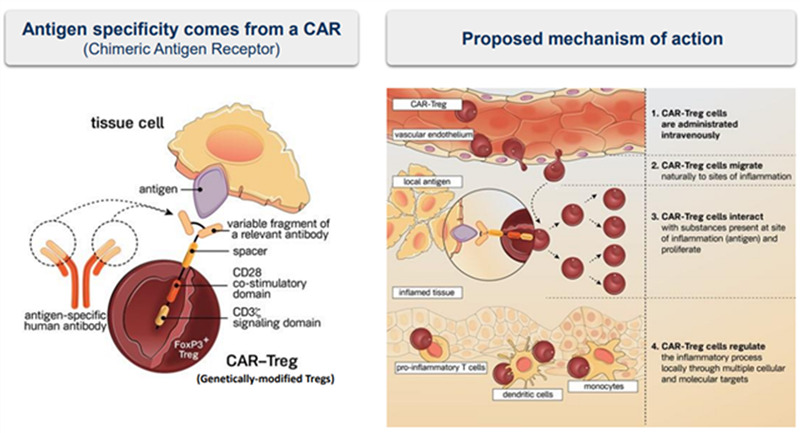
Tregs are used by the immune system to control other immune cells, like CD8+ killer T-cells, to prevent them attacking normal tissues or generating toxic levels of cytokine signalling molecules to attract and activate other immune cells. It is assumed that CAR Tregs will enable immune disorders to be controlled without the use of toxic drugs. TxCell is developing CAR Tregs that recognise a specific antigen trigger. This can be a self- recognition antigen, like HLA (crucial for tissue matching in type, in transplantation), or a natural protein, perhaps as in multiple sclerosis. When the CAR Treg is activated by the signal, it will limit the activity of any active immune cells in the neighbourhood so down-regulating the immune response.
Exhibit 2: Selected Treg indications
Indication |
Comments and description |
Graft vs Host Disease |
GvHD occurs in about 37% of patients within a year of an allogeneic stem cell transplants used to treat and ideally cure a haematological cancer (Arai et al (2016)). Done to cure haematological cancers if a patient enters remission. The patient’s immune system is destroyed with chemotherapy and radiation. A donor bone marrow graft is given to regenerate the immune system. However, this can lead to GvHD. Jacobsohn and Vogelsang (2007) noted 5,500 cases of GvHD out of 13,700 stem cell transplants in 2003. It also occurs, although very rare, if T-cells contained within a transplanted solid organ recognise the host as foreign and attack. |
Type 1 diabetes (T1D) |
Relatively uncommon autoimmune disease where the insulin-producing cells of the pancreas are attacked and destroyed. Patients lead normal lives but need to inject insulin and are prone to long-term diabetic complications and dietary restrictions. Often manifests in adolescence but can occur in later life. No current TxCell project disclosed but possible target |
Lupus nephritis |
Lupus nephritis is a particularly severe and potentially fatal complication of lupus, the systemic chronic inflammatory disease. Some patients progress to end-stage renal disease, which can only be treated through dialysis and transplant. |
Multiple sclerosis |
This is an autoimmune disease in which the immune system attacks the insulating fatty myelin sheaths around the nerve fibres in the central nervous system. This means that the nerves progressively lose the ability to transmit signals effectively. The condition is chronic and progressive. Current therapies aim to control the immune system but can only slow disease progression. |
Bullous pemphigoid |
Bullous pemphigoid is a rare chronic skin inflammation where the lower layers of the skin are attacked by the immune system causing blistering. The condition can cause dehydration, which can be fatal. It is treated with steroids. |
Organ transplant |
This is the transplant of a whole organ. The commonest such operation is kidney followed by liver, lung and heart. Kidney donors can be living family members but most donors are deceased. Other transplants are more complex and need deceased donors. Rejection is a major issue controlled for life with drugs. Rejection can be acute and occur quickly driven by CD8+ T-cells or late and driven by antibodies. The rate of first acute rejection episodes in kidney transplants is about 10% after 12 months, 15% after three years and about 17% after five years. Only a few percent of grafts fail within 90 days of transplantation. Late-stage graft failure rates have been falling. The usual measure takes patients who have survived for one year with no problems and uses this cohort to assess half-life. Patients who have early problems tend to have short graft survival. On this basis, grafts from deceased donors had a half-life of 12.5 years and from living donors there was a half-life of 15.3 years. Note that GvHD from T-cells carried in a donated organ is rare. |
Source: Edison Investment Research
Commercial potential Treg competitors
Industrial competitors are limited and many are not in the CAR Treg area but instead use either general Treg populations or sorted polyclonal Tregs against a target like an allograft (usually bone-marrow). Others are using mesenchymal or adipose stem cells. Exhibit 3 summarises projects.
Exhibit 3: Commercial Treg and other cell types in clinical developments
Company |
Type and Indication |
Trial number |
Patients |
Reporting |
Comments |
Mesoblast (Australia) |
Phase III paediatric GvHD using Remestemcel-L |
NCT02336230 |
60 |
Q417 |
The dose is eight doses of at 2m cells /kg. Doses are given between 3 and 5 days apart over four weeks. |
Novartis |
Pilot study in kidney transplant patients |
NCT03284242 |
12 |
“Jan 17” |
Autologous cultured Tregs given to patients using Zortress (Everolimus) as immunosuppressive therapy |
ILTOO Pharma (France) |
Open-label Phase II |
NCT01988506 |
132 |
H117 |
12 autoimmune and auto-inflammatory diseases. |
Phase II Type 1 diabetes, |
NCT02411253 |
138 |
Late 2017 |
Recently diagnosed, trial still recruiting but one year follow up |
Phase II in lupus |
NCT02955615 |
100 |
Q118 |
Trial still recruiting, 12-week follow-up |
Miltenyi Biotec Prometheus Labs |
Phase I Tregs plus Low-Dose IL-2 in GvHD |
NCT01937468 |
25 |
Q418 |
Led by Dana-Farber. Uses Treg enriched cells in patients with chronic GvHD after stem cell transplant |
Caladrius Biosciences (US) |
Phase II adolescent Type I diabetes |
NCT02691247 |
120 |
2019 |
Autologous expanded Treg project: there are three dose arms “low” and “high” plus control. There is a one-year follow-up. |
TiGenix |
Phase III data with fistula in Crohn’s disease |
Positive outcome |
212 |
2016 |
Not a Treg therapy but uses expanded adipose stem cells to help heal complex perianal fistulas. 120m dose. EMA opinion late 17. |
Targazyme with MD Andersen |
GvHD |
NCT02423915 |
47 |
Mid-2019 |
A dose of 2.1x10⁷ Tregs/kg is envisaged. The cells are modified before the graft by enzymic addition of fucose (a sugar).. |
Source: Edison Investment Research based on clinicaltrials.org. Note: These are not antigen-specific.
The main new development project is a pilot study at the University of Kentucky with Novartis as a collaborator. This is enrolling 12 patients undergoing a kidney transplant. Tregs will be harvested, cultured and infused. The patients will use Zortress (Everolimus) as immunosuppressive therapy. These are unmodified Tregs and the study is small. However, it could yield interesting data and it is very interesting that Novartis, the leader in CAR-T cell cancer, is collaborating. Novartis also has a licence to use Celyad’s patent on allogeneic T-cell production. It is therefore well placed to develop a Treg programme. TxCell holds key patents in Treg CAR technology.
Caladrius has a polyclonal Treg concept but only in Type 1 Diabetes so far. ILTOO is developing low-dose IL-2. This aims to stimulate Tregs but not other immune cells. This is the area that Celgene (via Delinia) is targeting but that project is still preclinical. ILTOO appears to be behind schedule on recruitment. In other cell types, Mesoblast is perhaps the most advanced with an NCI-run allogeneic 60 patient Phase III for GvHD intravenous. Data is may be released in H2 2017. Mesoblast has also reported promising Phase II safety and efficacy data in biologic refractory RA patients using a single dose of 1m/kg or 2 m/kg cells.
TxCell sees the solid organ transplant indication as a good starting indication for its CAR Treg programme. Unless a transplanted organ or tissue is a close match for the HLA type of the host, there is always a risk of rejection where the host immune system attacks the transplant. Mismatch means the number of HLA types that are the same between the donor and recipient. As the HLA system is very polymorphic with six genes to match, it is hard to get exact matches. Over four mismatches seems to be a risk factor.
The concept is that if a CAR Treg targets and binds to a non-self HLA in the graft, it will be activated locally and suppress direct cytotoxic T-cell and indirect helper T-cell antibody-led responses against the transplanted organ. Any activated CAR Treg should suppress any local immune response.
The evidence that CAR Tregs can control rejection comes from a paper by Professor Levings of the University of British Columbia with preclinical work on a mouse antibody fragment CAR Treg published (MacDonald 2016). TxCell has a collaboration with this group to target solid organ transplantation. The September 2017 preclinical data on humanised CAR Tregs is not yet published. The project is based on the HLA-A2 CAR Treg discussed above. This will work in about 25% of cases.1 TxCell may need to develop other HLA-type CAR Treg constructs.
Possible transplant markets
The market value for Tregs in transplant management is hard to assess. This is a niche opportunity but potentially of high value as long-term management of grafts is not optimal and as these are very expensive procedures. Graft failure is expensive to manage and often fatal so there are good reasons to use effective Treg therapies even at the Kymriah US$475,000 price point. The lung procedure should easily transfer into kidney transplant if efficacy is seen. Tregs may be useful for other organs like liver as well (c 6,000 USS transplant a year) but these are not assessed.
In the United States in 2016, there were 2,327 lung transplants, data. Over 80% of lung transplants had four or more HLA mismatches so have higher rejection risk. Survival of lung transplant patients is not good at about 50% after five years. A 2014 report indicates 1,809 lung transplants in Europe. Initial lung transplant data is planned to be available in 2020 or 2021. This may be enough for a named patient approval but a larger study will probably be needed especially for an FDA approval so 2024 is used tentatively as the expected date.
In the United States in 2016, there were 13,431 deceased donor kidney transplants. About 75% of decreased kidney donor grafts had 4 four or more mismatches. These are better managed but as a larger market offer more commercial upside and still have high medical need if a graft starts to fail due to rejection. The European markets are more fragmented. A 2014 report showed 9,912 decreased donor transplants.
An initial value assessment is shown in Exhibit 4. This is tentative but reflects known parameters. It is based on lung and kidney grafts. The patient column is the number of transplants (lung) or decrease donor grafts (kidney) each year. Accessible patients are 25% of this due to HLA type. A further adjustment is made based on the level of four or more mismatches discussed above. We estimate a relatively high market share based on medical need although lower in the EU due to funding limits. The price used is US$475,000. NPV are calculated from 2024 for 12 years biological exclusivity in the US and 10 in the EU based on an assumed 25% post-tax net margin. An alternative scenario would be a partnering deal. If so, earlier upfront payments with a lower cash flow based on royalties would be assumed instead. It seems possible that TxCell, with funding, could develop the small and specialist centre based transplant niche. We assume 12.5% probability for lung although this is high for preclinical. However, cell therapies have been approved by the FDA on fast track with limited data compared to mainstream drugs. As Kidney is less well defined, it is given a 7.5% probability.
Exhibit 4: Possible transplant markets
|
Patients |
Accessible |
Share |
Treated |
Peak value (€m) |
NPV |
Probability |
Indicative value |
Lung transplant |
|
|
|
|
|
|
|
|
US |
2,327 |
465 |
80% |
372 |
€150 |
€93.2 |
12.5% |
€11.7 |
EU |
1,809 |
362 |
60% |
217 |
€88 |
€51.9 |
12.5% |
€6.5 |
Kidney transplant |
|
|
|
|
|
|
|
€18.1 |
US |
13,431 |
2,518 |
50% |
1,259 |
€508 |
€315 |
7.5% |
€23.7 |
EU |
9,912 |
1,982 |
30% |
595 |
€240 |
€142 |
7.5% |
€10.7 |
|
|
|
|
|
|
|
|
€34.3 |
Total |
27,479 |
5,327 |
46% |
2,443 |
986 |
603 |
|
€52.47 |
Source: Edison Investment Research
These calculations indicate a value of about €71m before clinical trial costs. The overall market peak sales could be nearly €1bn. Adding in other HLA types will extend use rates and add value but as these are separate development projects, they are not included in our current forecasts.
The global multiple sclerosis (MS) market has grown to an estimated US$21.1bn. About $11bn of products come off-patent before 2020. Dimethyl fumarate (Tecfidera, Biogen), the leading product comes off patent in 2023. None of these drugs enable gain of function.
For a CAR Treg therapy against MS, a suitable antigen target is needed. A paper from Uppsala University Fransson (2012) showed that in a model of multiple sclerosis, Tregs diminished symptoms and enabled some nerve function to be regained. TxCell and the Center for Research in Transplantation and Immunology, will collaborate to develop CAR CD8+ Treg cells. The collaboration specifically focuses on multiple sclerosis and manufacturing development. This collaboration expands TxCell’s internal research in MS which is focused on CD4+ CAR Treg cells.
The prevalence of multiple sclerosis is high at about 90/100,000 people. This indicates about 650,000 cases across North America and the leading European states. The prevalence is very variable across regions and ethnic groups. It is likely that significant large trials will be required to gain approval and prove efficacy and safety so any launch before 2026 seems implausible and partnering looks essential given the clinical complexities and costs.
MS is a major possible indication and could have a high NPV estimate once more information is available. It is currently given a €10m nominal valuation. This is unchanged.
Bullous pemphigoid – interesting orphan disease
A collaboration with the Lübeck Institute of Experimental Dermatology will develop CAR Treg approaches in bullous pemphigoid (BP). The incidence of BP is poorly known. A 2008 study, Langham et al (2008), indicates perhaps 12-15,000 European cases and perhaps 12,000 US cases. The disease is treated with steroids (UK guidelines). This indication would be a niche orphan product. The market is likely to be very price sensitive and limited to very severe chronic refractory disease. It is given an unchanged nominal value of €5m.
TxCell has a collaboration with the San Raffaele Scientific Institute in Milan to develop a CAR Treg product for lupus nephritis. Lupus nephritis is a complication of lupus where the kidney is damaged and this can lead to end stage renal failure. Currently, TxCell has not disclosed the antigen.
In the US, the Centers for Disease Control and Prevention (CDC) published two studies in 2014 (Sommers (2014), Lim (2014)). There may be about 160,000 lupus prevalence cases in the US. In Europe, accessible European markets may have a prevalence of about 170,000. This is discussed in the cited February 2017 Edison note. The epidemiology of lupus nephritis as a severe subset of lupus is complicated, but a US estimate is of about 30,000 lupus nephritis cases. The European figure will be lower because of different ethnic profile, perhaps about 17,000 cases. As it is a prevalence market, only a small proportion will be treated each year.
We have retained the €7.5m nominal value.
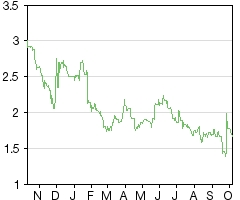
At year-end 2016, TxCell had €3.5m cash. The H1 report shows that the Q1 rights issue raised €11.01m gross, €10.06m net. The Yorkville convertible loans in 2016 raised €5m gross, €4.9m net, The unconverted loans were €3.57m in December 2016 and €2.27m on 30 June 2017. The amount unconverted as of 27 September 2017 was €1m. The conversion and sale of €2.7m of shares over the first 9 months of 2017 may account for the weak share price performance. Edison expects the remaining Yorkville convertible loans to be converted and sold before December 2017.
TxCell has some complex accounting on its tax credits. Normally, these are paid in the following financial year. To bring forward the tax credit TxCell has sold the 2016 credits to Predirect Innovation 2020. Of the tax credit in 2016 of €2.8m, noted in other income, €1.6m was gained in 2016 (after presumed fees and costs of €0.3m). The remaining €0.9m was listed as “Other receivables (Note 7, DDR). The amount was realised as €0.8m net cash in H1 2017. The H1 2017 tax credit of €1.03m, is recognised as an asset. Some €0.57m is noted in the cash flow as being a pre-financed tax credit. Edison has assumed that the whole 2017 tax credit is pre-sold with €1m in other receivables at the year-end.
In H1, costs dropped. R&D costs were €3.89m (vs €5.62m) as no clinical trials were run in the period. R&D costs are expected to rise in 2018, Edison estimates by €3m, as the transplant CAR Treg trial starts. Administration and other costs fell in 2016 to €1.84m (vs €2.51m) as the Besançon internal production facility for Ovasave closed. TxCell retains manufacturing pilot facilities.
The 2017 cash outflow, as guided by management, will be about €13m. Year-end 2017 cash could be about €2m depending on cash inflows and working capital. We have assumed that the rights issue warrants convert to yield €10.8m. This is possible as conversion and sale of shares by Yorkville ceases and if further good preclinical data is announced in Q4 2017. The 2018 cash outflow indicated by Edison’s forecast is c €13m; management guidance is that if the rights issue warrants are fully exercised, the cash is sufficient till the start of the transplant CAR Treg clinical study by late 2018. If the warrants remain out of the money, other financing routes will be needed. TxCell does have further €15m of Yorkville funding available. Financial estimates are in Exhibit 8.
Exhibit 8: Financial summary
|
|
€000s |
2015 |
2016 |
2017e |
2018e |
Year end December |
|
|
IFRS |
IFRS |
IFRS |
IFRS |
PROFIT & LOSS |
|
|
|
|
|
|
Revenue |
|
|
920 |
153 |
262 |
250 |
Tax refund |
|
|
3,718 |
2,794 |
2,340 |
3,240 |
Cost of Sales |
|
|
0 |
0 |
0 |
0 |
Gross Profit |
|
|
4,638 |
2,947 |
2,602 |
3,490 |
EBITDA |
|
|
(10,797) |
(11,947) |
(8,911) |
(11,110) |
Operating Profit (before amort. and except.) |
|
|
(9,662) |
(12,047) |
(9,011) |
(11,210) |
Intangible Amortisation |
|
|
0 |
0 |
0 |
0 |
Exceptionals |
|
|
(1,167) |
(87) |
0 |
0 |
Share based payments |
|
|
(483) |
(649) |
(587) |
(600) |
Operating Profit |
|
|
(11,312) |
(12,784) |
(9,598) |
(11,810) |
Net Interest |
|
|
42 |
(18) |
2 |
2 |
Profit Before Tax (norm) |
|
|
(10,782) |
(12,734) |
(9,143) |
(11,432) |
Profit Before Tax (FRS 3) |
|
|
(11,297) |
(13,570) |
(9,830) |
(12,132) |
Tax |
|
|
0 |
0 |
0 |
0 |
Profit After Tax (norm) |
|
|
(10,782) |
(12,734) |
(9,143) |
(11,432) |
Profit After Tax (FRS 3) |
|
|
(11,297) |
(13,570) |
(9,830) |
(12,132) |
|
|
|
|
|
|
|
Average Number of Shares Outstanding (m) |
|
|
12.2 |
13.1 |
21.3 |
25.8 |
EPS - normalised (c) |
|
|
(88.4) |
(97.5) |
(42.8) |
(44.3) |
EPS - (IFRS) (c) |
|
|
(92.6) |
(103.9) |
(46.1) |
(47.0) |
Dividend per share (c) |
|
|
0.0 |
0.0 |
0.0 |
0.0 |
|
|
|
|
|
|
|
Gross Margin (%) |
|
|
NA |
NA |
NA |
NA |
EBITDA Margin (%) |
|
|
NA |
NA |
NA |
NA |
Operating Margin (before GW and except.) (%) |
|
|
NA |
NA |
NA |
NA |
|
|
|
|
|
|
|
BALANCE SHEET |
|
|
|
|
|
|
Fixed Assets |
|
|
6,938 |
7,032 |
7,004 |
6,954 |
Intangible Assets |
|
|
5,907 |
5,911 |
5,933 |
5,933 |
Tangible Assets |
|
|
876 |
799 |
749 |
699 |
Other |
|
|
155 |
322 |
322 |
322 |
Current Assets |
|
|
13,782 |
5,763 |
3,564 |
1,709 |
Stocks |
|
|
0 |
0 |
0 |
0 |
Debtors |
|
|
1,551 |
1,381 |
504 |
505 |
Cash |
|
|
9,208 |
3,482 |
2,060 |
204 |
Other |
|
|
3,023 |
900 |
1,000 |
1,000 |
Current Liabilities |
|
|
(7,467) |
(7,893) |
(4,272) |
(3,160) |
Creditors |
|
|
(7,467) |
(7,724) |
(3,934) |
(2,822) |
Short term borrowings |
|
|
0 |
(169) |
(338) |
(338) |
Long Term Liabilities |
|
|
(1,664) |
(3,710) |
(1,536) |
(1,536) |
Long term borrowings |
|
|
(1,641) |
(3,650) |
(1,324) |
(1,324) |
Other long term liabilities |
|
|
(23) |
(60) |
(212) |
(212) |
Net Assets |
|
|
11,589 |
1,192 |
4,760 |
3,967 |
|
|
|
|
|
|
|
CASH FLOW |
|
|
|
|
|
|
Operating Cash Flow |
|
|
(10,108) |
(10,417) |
(12,942) |
(12,579) |
Net Interest |
|
|
42 |
(18) |
2 |
2 |
Tax |
|
|
0 |
0 |
0 |
0 |
Capex |
|
|
(214) |
(337) |
(100) |
(100) |
Acquisitions/disposals |
|
|
(5,879) |
0 |
0 |
0 |
Equity financing |
|
|
7,631 |
270 |
11,618 |
10,821 |
Other |
|
|
3,818 |
4,776 |
0 |
0 |
Net Cash Flow |
|
|
(4,710) |
(5,726) |
(1,422) |
(1,856) |
Opening net debt/(cash) |
|
|
(12,290) |
(7,567) |
337 |
(398) |
HP finance leases initiated |
|
|
0 |
0 |
0 |
1 |
Other |
|
|
(13) |
(2,178) |
2,157 |
0 |
Closing net debt/(cash) |
|
|
(7,567) |
337 |
(398) |
1,457 |
Source: TxCell accounts, Edison Investment Research
Edison is an investment research and advisory company, with offices in North America, Europe, the Middle East and AsiaPac. The heart of Edison is our world-renowned equity research platform and deep multi-sector expertise. At Edison Investment Research, our research is widely read by international investors, advisers and stakeholders. Edison Advisors leverages our core research platform to provide differentiated services including investor relations and strategic consulting. Edison is authorised and regulated by the Financial Conduct Authority. Edison Investment Research (NZ) Limited (Edison NZ) is the New Zealand subsidiary of Edison. Edison NZ is registered on the New Zealand Financial Service Providers Register (FSP number 247505) and is registered to provide wholesale and/or generic financial adviser services only. Edison Investment Research Inc (Edison US) is the US subsidiary of Edison and is regulated by the Securities and Exchange Commission. Edison Investment Research Limited (Edison Aus) [46085869] is the Australian subsidiary of Edison and is not regulated by the Australian Securities and Investment Commission. Edison Germany is a branch entity of Edison Investment Research Limited [4794244]. www.edisongroup.com DISCLAIMER
Copyright 2017 Edison Investment Research Limited. All rights reserved. This report has been commissioned by TxCell and prepared and issued by Edison for publication globally. All information used in the publication of this report has been compiled from publicly available sources that are believed to be reliable, however we do not guarantee the accuracy or completeness of this report. Opinions contained in this report represent those of the research department of Edison at the time of publication. The securities described in the Investment Research may not be eligible for sale in all jurisdictions or to certain categories of investors. This research is issued in Australia by Edison Aus and any access to it, is intended only for "wholesale clients" within the meaning of the Australian Corporations Act. The Investment Research is distributed in the United States by Edison US to major US institutional investors only. Edison US is registered as an investment adviser with the Securities and Exchange Commission. Edison US relies upon the "publishers' exclusion" from the definition of investment adviser under Section 202(a)(11) of the Investment Advisers Act of 1940 and corresponding state securities laws. As such, Edison does not offer or provide personalised advice. We publish information about companies in which we believe our readers may be interested and this information reflects our sincere opinions. The information that we provide or that is derived from our website is not intended to be, and should not be construed in any manner whatsoever as, personalised advice. Also, our website and the information provided by us should not be construed by any subscriber or prospective subscriber as Edison’s solicitation to effect, or attempt to effect, any transaction in a security. The research in this document is intended for New Zealand resident professional financial advisers or brokers (for use in their roles as financial advisers or brokers) and habitual investors who are “wholesale clients” for the purpose of the Financial Advisers Act 2008 (FAA) (as described in sections 5(c) (1)(a), (b) and (c) of the FAA). This is not a solicitation or inducement to buy, sell, subscribe, or underwrite any securities mentioned or in the topic of this document. This document is provided for information purposes only and should not be construed as an offer or solicitation for investment in any securities mentioned or in the topic of this document. A marketing communication under FCA Rules, this document has not been prepared in accordance with the legal requirements designed to promote the independence of investment research and is not subject to any prohibition on dealing ahead of the dissemination of investment research. Edison has a restrictive policy relating to personal dealing. Edison Group does not conduct any investment business and, accordingly, does not itself hold any positions in the securities mentioned in this report. However, the respective directors, officers, employees and contractors of Edison may have a position in any or related securities mentioned in this report. Edison or its affiliates may perform services or solicit business from any of the companies mentioned in this report. The value of securities mentioned in this report can fall as well as rise and are subject to large and sudden swings. In addition it may be difficult or not possible to buy, sell or obtain accurate information about the value of securities mentioned in this report. Past performance is not necessarily a guide to future performance. Forward-looking information or statements in this report contain information that is based on assumptions, forecasts of future results, estimates of amounts not yet determinable, and therefore involve known and unknown risks, uncertainties and other factors which may cause the actual results, performance or achievements of their subject matter to be materially different from current expectations. For the purpose of the FAA, the content of this report is of a general nature, is intended as a source of general information only and is not intended to constitute a recommendation or opinion in relation to acquiring or disposing (including refraining from acquiring or disposing) of securities. The distribution of this document is not a “personalised service” and, to the extent that it contains any financial advice, is intended only as a “class service” provided by Edison within the meaning of the FAA (ie without taking into account the particular financial situation or goals of any person). As such, it should not be relied upon in making an investment decision. To the maximum extent permitted by law, Edison, its affiliates and contractors, and their respective directors, officers and employees will not be liable for any loss or damage arising as a result of reliance being placed on any of the information contained in this report and do not guarantee the returns on investments in the products discussed in this publication. FTSE International Limited (“FTSE”) © FTSE 2017. “FTSE®” is a trade mark of the London Stock Exchange Group companies and is used by FTSE International Limited under license. All rights in the FTSE indices and/or FTSE ratings vest in FTSE and/or its licensors. Neither FTSE nor its licensors accept any liability for any errors or omissions in the FTSE indices and/or FTSE ratings or underlying data. No further distribution of FTSE Data is permitted without FTSE’s express written consent. |
Frankfurt +49 (0)69 78 8076 960 Schumannstrasse 34b 60325 Frankfurt Germany |
London +44 (0)20 3077 5700 280 High Holborn London, WC1V 7EE United Kingdom |
New York +1 646 653 7026 295 Madison Avenue, 18th Floor 10017, New York US |
Sydney +61 (0)2 8249 8342 Level 12, Office 1205, 95 Pitt St Sydney NSW 2000 Australia |
Frankfurt +49 (0)69 78 8076 960 Schumannstrasse 34b 60325 Frankfurt Germany |
London +44 (0)20 3077 5700 280 High Holborn London, WC1V 7EE United Kingdom |
New York +1 646 653 7026 295 Madison Avenue, 18th Floor 10017, New York US |
Sydney +61 (0)2 8249 8342 Level 12, Office 1205, 95 Pitt St Sydney NSW 2000 Australia |
|
Edison is an investment research and advisory company, with offices in North America, Europe, the Middle East and AsiaPac. The heart of Edison is our world-renowned equity research platform and deep multi-sector expertise. At Edison Investment Research, our research is widely read by international investors, advisers and stakeholders. Edison Advisors leverages our core research platform to provide differentiated services including investor relations and strategic consulting. Edison is authorised and regulated by the Financial Conduct Authority. Edison Investment Research (NZ) Limited (Edison NZ) is the New Zealand subsidiary of Edison. Edison NZ is registered on the New Zealand Financial Service Providers Register (FSP number 247505) and is registered to provide wholesale and/or generic financial adviser services only. Edison Investment Research Inc (Edison US) is the US subsidiary of Edison and is regulated by the Securities and Exchange Commission. Edison Investment Research Limited (Edison Aus) [46085869] is the Australian subsidiary of Edison and is not regulated by the Australian Securities and Investment Commission. Edison Germany is a branch entity of Edison Investment Research Limited [4794244]. www.edisongroup.com DISCLAIMER
Copyright 2017 Edison Investment Research Limited. All rights reserved. This report has been commissioned by TxCell and prepared and issued by Edison for publication globally. All information used in the publication of this report has been compiled from publicly available sources that are believed to be reliable, however we do not guarantee the accuracy or completeness of this report. Opinions contained in this report represent those of the research department of Edison at the time of publication. The securities described in the Investment Research may not be eligible for sale in all jurisdictions or to certain categories of investors. This research is issued in Australia by Edison Aus and any access to it, is intended only for "wholesale clients" within the meaning of the Australian Corporations Act. The Investment Research is distributed in the United States by Edison US to major US institutional investors only. Edison US is registered as an investment adviser with the Securities and Exchange Commission. Edison US relies upon the "publishers' exclusion" from the definition of investment adviser under Section 202(a)(11) of the Investment Advisers Act of 1940 and corresponding state securities laws. As such, Edison does not offer or provide personalised advice. We publish information about companies in which we believe our readers may be interested and this information reflects our sincere opinions. The information that we provide or that is derived from our website is not intended to be, and should not be construed in any manner whatsoever as, personalised advice. Also, our website and the information provided by us should not be construed by any subscriber or prospective subscriber as Edison’s solicitation to effect, or attempt to effect, any transaction in a security. The research in this document is intended for New Zealand resident professional financial advisers or brokers (for use in their roles as financial advisers or brokers) and habitual investors who are “wholesale clients” for the purpose of the Financial Advisers Act 2008 (FAA) (as described in sections 5(c) (1)(a), (b) and (c) of the FAA). This is not a solicitation or inducement to buy, sell, subscribe, or underwrite any securities mentioned or in the topic of this document. This document is provided for information purposes only and should not be construed as an offer or solicitation for investment in any securities mentioned or in the topic of this document. A marketing communication under FCA Rules, this document has not been prepared in accordance with the legal requirements designed to promote the independence of investment research and is not subject to any prohibition on dealing ahead of the dissemination of investment research. Edison has a restrictive policy relating to personal dealing. Edison Group does not conduct any investment business and, accordingly, does not itself hold any positions in the securities mentioned in this report. However, the respective directors, officers, employees and contractors of Edison may have a position in any or related securities mentioned in this report. Edison or its affiliates may perform services or solicit business from any of the companies mentioned in this report. The value of securities mentioned in this report can fall as well as rise and are subject to large and sudden swings. In addition it may be difficult or not possible to buy, sell or obtain accurate information about the value of securities mentioned in this report. Past performance is not necessarily a guide to future performance. Forward-looking information or statements in this report contain information that is based on assumptions, forecasts of future results, estimates of amounts not yet determinable, and therefore involve known and unknown risks, uncertainties and other factors which may cause the actual results, performance or achievements of their subject matter to be materially different from current expectations. For the purpose of the FAA, the content of this report is of a general nature, is intended as a source of general information only and is not intended to constitute a recommendation or opinion in relation to acquiring or disposing (including refraining from acquiring or disposing) of securities. The distribution of this document is not a “personalised service” and, to the extent that it contains any financial advice, is intended only as a “class service” provided by Edison within the meaning of the FAA (ie without taking into account the particular financial situation or goals of any person). As such, it should not be relied upon in making an investment decision. To the maximum extent permitted by law, Edison, its affiliates and contractors, and their respective directors, officers and employees will not be liable for any loss or damage arising as a result of reliance being placed on any of the information contained in this report and do not guarantee the returns on investments in the products discussed in this publication. FTSE International Limited (“FTSE”) © FTSE 2017. “FTSE®” is a trade mark of the London Stock Exchange Group companies and is used by FTSE International Limited under license. All rights in the FTSE indices and/or FTSE ratings vest in FTSE and/or its licensors. Neither FTSE nor its licensors accept any liability for any errors or omissions in the FTSE indices and/or FTSE ratings or underlying data. No further distribution of FTSE Data is permitted without FTSE’s express written consent. |
Frankfurt +49 (0)69 78 8076 960 Schumannstrasse 34b 60325 Frankfurt Germany |
London +44 (0)20 3077 5700 280 High Holborn London, WC1V 7EE United Kingdom |
New York +1 646 653 7026 295 Madison Avenue, 18th Floor 10017, New York US |
Sydney +61 (0)2 8249 8342 Level 12, Office 1205, 95 Pitt St Sydney NSW 2000 Australia |
Frankfurt +49 (0)69 78 8076 960 Schumannstrasse 34b 60325 Frankfurt Germany |
London +44 (0)20 3077 5700 280 High Holborn London, WC1V 7EE United Kingdom |
New York +1 646 653 7026 295 Madison Avenue, 18th Floor 10017, New York US |
Sydney +61 (0)2 8249 8342 Level 12, Office 1205, 95 Pitt St Sydney NSW 2000 Australia |
|