Dialight — First phase of transformation strategy complete

Dialight (LSE: DIA)

Last close As at 05/08/2026

GBP5.16

19.00 (3.82%)

Market capitalisation

GBP209m

More on this equity

Research: TMT

Dialight — First phase of transformation strategy complete

Dialight’s FY26 results show that the first phase of its Transformation Plan is now visible in the numbers. Revenue declined 9.0% to $166.9m, reflecting continued pressure in Lighting, but underlying gross margin increased by 340bp to 39.0%, underlying EBITDA rose to $19.8m from $12.9m and underlying operating profit more than doubled to $10.3m. Net bank debt reduced to $1.9m and the Sanmina liability has now been fully settled. The investment case is shifting from balance sheet repair and margin self-help towards delivery of profitable revenue growth.

Written by

Harry Kilby

Analyst

Industrials

FY26 results

Spotlight — update

7 July 2026

Price 458.00p
Market cap £185m
Price Performance
Share details
Code DIA
Listing LSE

Shares in issue

40.4m

Net cash/(debt) at end-FY26

$(1.9)m

Business description

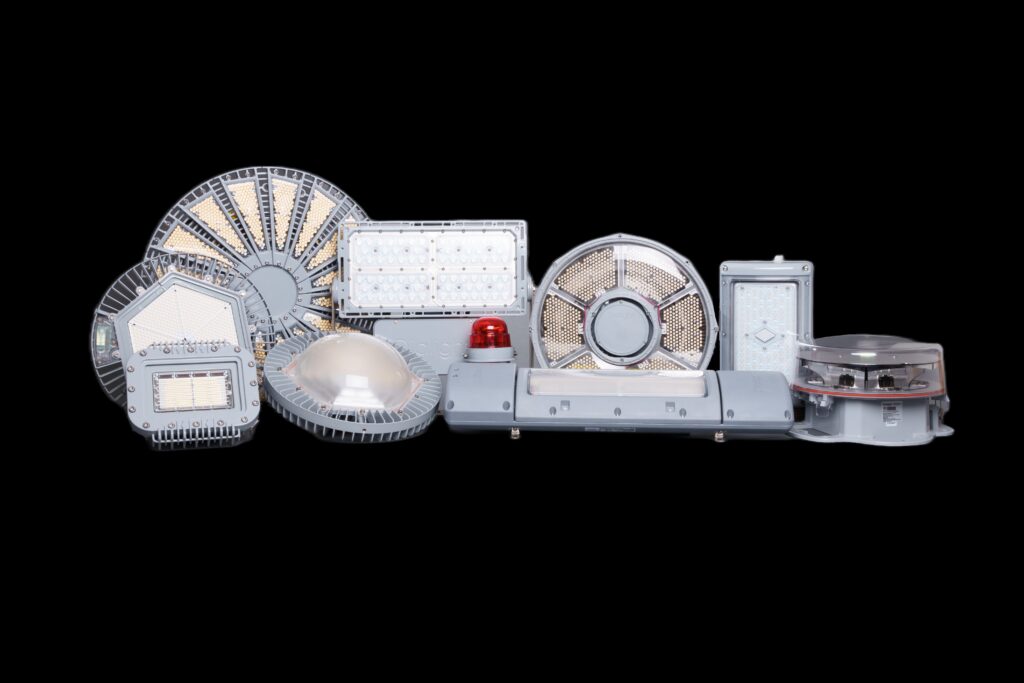
Dialight is a global leader in industrial light-emitting diode (LED) technology, with more than 1.8m fixtures installed worldwide. Its products are used for industrial and commercial applications, with a focus on demanding solutions for hazardous environments, including liquefied natural gas plants, oil refineries and high-risk manufacturing environments.

Bull points

  • FY26 showed clear margin and cash delivery, with gross margin up 340bp to 39.0% and net bank debt reduced to $1.9m.
  • Stronger order book and restructured sales incentives provide a clearer route back to revenue growth.
  • Signals & Components offers incremental growth exposure through opto-electronics, partnerships and AI/data-centre demand.

Bear points

  • Lighting revenue recovery remains unproven and is the key requirement for the next stage of the investment case.
  • Further margin progress depends on successful manufacturing transfers and supply-chain execution.
  • Peer discount has narrowed, making revenue growth proof points more important.

Analyst

Harry Kilby
+44 (0)20 3077 5700

Dialight is a research client of Edison Investment Research Limited

Margin and cash recovery ahead of revenue growth

The main feature of FY26 was that profit recovery came before revenue recovery. Underlying gross profit was broadly flat at $65.1m despite lower revenue, while underlying overheads fell to $54.8m from $61.1m. This reflected the benefits of stock keeping unit (SKU) reduction, procurement savings, headcount realignment and tighter cost control. Cash performance was also strong, with underlying operating cash flow of $34.2m, equivalent to c 173% of underlying EBITDA, supported by profitability and working capital discipline. Inventory reduced from $46.6m to $30.0m, already below the previous medium-term ambition of $35–40m.

Outlook: Growth now the test

Dialight enters FY27 with a cleaner balance sheet, a more focused portfolio and an improved order book. Management stated that Q4 order performance was much stronger and that the backlog increased by more than 25% y-o-y. The FY27 base case used in the going concern assessment assumes net revenue growth of 2.9%, or 8.4% excluding Traffic and Rail, with a 4.8pp gross margin improvement. Growth is expected to be supported by strategic relationships, price increases, margin approval on sales, SKU reduction and continued progress in Signals & Components. The key challenge remains converting backlog into revenue, particularly in Lighting, while maintaining the pricing and margin discipline achieved in FY26.

Valuation: In line with peers

Dialight’s share price has recovered strongly as investors gained more confidence in the turnaround. On available data from LSEG Data & Analytics, Dialight trades on 12.4x one-year forward EV/EBITDA, versus the peer average of 12.3x, and 10.7x two-year forward EV/EBITDA, a 3% discount to the peer average of 11.0x. In our view, further upside is likely to depend on evidence that Dialight can convert its stronger backlog and sales transformation into sustained revenue growth, particularly in Lighting.

Source: Dialight and LSEG Data & Analytics. Note: Multiples calculated from current market capitalisation and last reported net debt.

Consensus estimates

Year end Revenue ($m) EBITDA (£m) PBT ($m) EPS (¢) P/E (x) EV/EBITDA (x)
3/25 183.5 12.9 (14.1) (34.70) N/A 14.5
3/26 166.9 19.8 3.8 1.00 N/A 9.4
3/27e 173.9 21.1 11.9 20.00 30.6 8.8
3/28e 181.2 24.4 15.1 26.30 23.3 7.6

Investment thesis: From margin recovery to revenue growth

In our view, Dialight’s investment case has moved into a more demanding phase. The first phase of the recovery was largely self-help: simplifying the product portfolio, reducing SKUs, improving procurement, lowering overheads, tightening working capital and settling the Sanmina liability. FY26 showed that these actions are now visible in reported profitability, with gross margin recovering to 39.0%, underlying operating margin reaching 6.2% and net bank debt falling to $1.9m. The share price recovery therefore looks justified, but the next stage of the equity story requires different evidence. Investors will need to see Dialight convert its stronger backlog and restructured sales capability into revenue growth, particularly in Lighting, while maintaining the pricing and margin discipline achieved through the transformation.

A return to revenue growth is where Dialight’s investment case debate now sits. Dialight’s reported operating profit margin was negative in several recent years, including FY24 and FY25, before returning to a positive reported margin in FY26. That makes the margin recovery important, but not sufficient on its own. The upgraded medium-term targets imply a business capable of sustaining higher margins and better returns, rather than simply recovering from a depressed base. To support a further re-rating, Dialight needs to demonstrate that the engineering, procurement and construction (EPC)/specification-led sales rebuild, margin-linked sales incentives, new products and Signals & Components investment can deliver profitable growth rather than just protect margins on a smaller revenue base.

Share price: Back to pre-reset levels, but with a different operating profile

Dialight’s five-year share price history shows both the scale of the reset and the recovery. The shares are now back around the level seen five years ago, following a period in which operational disruption, margin pressure, balance sheet concerns and the Sanmina dispute weighed on the rating. Over the last year, the shares have increased by c 110–130%, reflecting growing confidence that the Transformation Plan has moved from operational activity into financial delivery. The market has therefore started to price in a cleaner business, with lower net debt, stronger cash conversion and a more credible margin base.

The next move in the share price is likely to depend less on further evidence of cost savings and more on revenue conversion. Investors will focus on whether Lighting can return to growth, whether the order book converts without margin dilution and whether Signals & Components can become a more consistent growth contributor through opto-electronics and AI/data-centre-related demand. The wider sector backdrop provides some support: Signify’s capital markets day (23 June 2026) pointed to a stabilising lighting market, growth in connected lighting and targeted investment in professional segments, including specification-led channels, connected platforms and data centres. However, Dialight still needs to prove this at its own level. The key test is whether FY26’s margin and balance sheet recovery can become the base for sustainable growth, rather than the high point of the self-help phase. In this context, Dialight’s EV/EBITDA discount to peers is therefore perhaps understandable. The business has made clear progress on margins, cash generation and balance sheet repair, but the market is likely to require more evidence of sustained sales growth, particularly in Lighting, before fully closing the valuation gap.

FY26 results: Profit recovery despite revenue pressure

Dialight’s FY26 results show a cleaner profit and cash profile, despite a weaker revenue backdrop. Group revenue declined 9.0% to $166.9m, or 6.8% excluding Traffic in both years, reflecting continued pressure in Lighting as capital projects were deferred. Against this, underlying gross margin increased 340bp to 39.0%, underlying EBITDA rose to $19.8m from $12.9m and underlying operating profit increased to $10.3m from $4.2m. Statutory operating profit was $6.2m, compared with a loss of $11.6m in FY25.

One of the key takeaways from the results is that profit recovery has come before revenue recovery. Underlying gross profit was broadly flat at $65.1m, despite the lower revenue base, while overheads and impairment losses reduced materially. Management attributes the improvement to the Transformation Plan, including SKU reduction, headcount realignment, procurement savings and productivity gains. In our view, this indicates that the first phase of the transformation has improved Dialight’s cost and margin structure, although the next stage still depends on restoring revenue growth, particularly in Lighting.

Lighting remained the main area of revenue pressure. Revenue declined 11.5% to $122.1m, reflecting weak demand for larger capital projects in a difficult macroeconomic environment. The segment’s underlying gross margin improved to 40.8% from 39.2%, but underlying operating profit before central costs declined to $11.1m from $12.9m as lower revenue offset the margin gain. The segment therefore looks operationally cleaner than a year ago, but it has not yet returned to growth.

Signals & Components was a better contributor than the reported revenue line suggests. Reported revenue declined slightly to $44.8m from $45.5m, but this includes the wind-down of Traffic. Excluding Traffic in both years, revenue increased 13.7%. Gross margin increased to 34.2% from 24.6%, and underlying operating profit before central costs rose to $8.4m from $3.3m. This reflected a renewed focus on opto-electronics, better mix and the exit from lower-quality Traffic activity.

Non-underlying items were lower, at $4.0m versus $21.6m in FY25, when the prior year was dominated by Sanmina litigation and settlement costs. This helped statutory results move back into profit, although the underlying figures remain the cleaner measure of performance. H1 statutory profit benefited from $2.9m of Employee Retention Credits, which management treated as non-underlying and non-recurring.

Cash conversion was another key feature of the results, although the quality of future cash generation should be judged after the FY26 working capital release. Underlying operating cash flow increased to $34.2m from $19.7m, representing c 173% of underlying EBITDA, while inventory reduced from $46.6m to $30.0m. Net bank debt declined from $17.8m to $1.9m, despite $7.7m of Sanmina payments during the year. The Sanmina liability is now fully settled, removing a financial overhang, while the new £15m revolving credit facility, with a £10m accordion and maturity to at least April 2029, provides additional liquidity headroom. Future cash generation is likely to be driven less by further working capital release and more by underlying profitability, capex discipline and delivery of the medium-term margin targets.

Overall, FY26 was a self-help year rather than a demand-led recovery year. Dialight has shown progress in margins, overheads, working capital and net debt. The next test is whether the stronger backlog, sales reorganisation, EPC focus, new products and reinvigorated Signals & Components activity can restore revenue growth without reversing the pricing and margin discipline achieved during FY26.

Medium-term ambitions upgraded as transformation moves into its next phase

Dialight has upgraded parts of its medium-term (three- to five-year) financial framework following progress delivered through the first phase of its Transformation Plan. The revenue growth ambition is unchanged at 3–5%, while the underlying gross margin ambition is broadly unchanged at c 45%, now expressed as 45.0%+. The updated June 2026 framework targets an underlying EBITDA margin of 18.0%+, return on sales of 15%+, a cash-positive net bank debt position and return on average net assets of 25–50%. This compares with the June 2025 targets of a 15.0% EBITDA margin, return on sales of 11–13%+, net bank debt elimination and return on average net assets of 25%+.

In our view, the upgraded framework marks a shift in the investment case from balance sheet repair and margin self-help towards profitable revenue growth. The unchanged revenue growth target is important in this context. Management is not assuming a step-change in top-line growth; rather, the upgrade reflects greater confidence in revenue quality, manufacturing efficiency, cost control and cash conversion.

The rationale for the upgrade is twofold. First, Dialight has made progress on the controllable elements of the turnaround, including product simplification, supply chain improvement, labour optimisation, sales transformation, the realignment of the Components business and the exit from Traffic. These actions have reduced operational complexity and should support a higher-quality earnings base as revenue growth returns. Second, management highlights improved financial controls, reporting, forecasting and project financial planning, giving the business better visibility over performance drivers. This appears to be one reason for raising the return on sales target to 15%+ and setting a broader 25–50% target range for return on average net assets.

The removal of the explicit inventory target is also notable. The June 2025 framework targeted inventory of $35–40m, while FY26 inventory has already been reduced to $30.0m. The next phase of cash generation is therefore likely to be driven less by working capital release and more by underlying profitability and capital discipline. The targets look more stretching, but not dependent on a single lever. Delivery will require continued manufacturing execution, further mix and pricing discipline, and a return to growth in Lighting, where the sales transformation remains the key test for management.

Transformation Plan assessment: Visible benefits, growth still to be proven

Dialight’s FY26 results provide clearer evidence that the first phase of the Transformation Plan has moved from operational activity into financial delivery. The plan is structured around five pillars: winning hearts and minds, sales transformation, operations transformation, margin improvement and cash generation, and creating a platform for future growth. Management now describes the first phase as complete, with the focus moving to further initiatives and next-generation products.

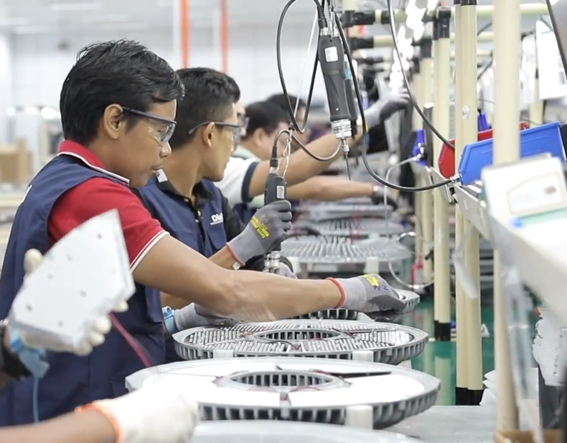
The visible benefits in FY26 were concentrated in the areas most directly within management’s control. Underlying group overheads reduced by $6.3m in FY26 to $54.8m, helped by lower headcount, reduced legal and professional fees and tighter cost-centre control. Dialight also delivered direct labour reductions of c 30%, finished goods SKU reduction of c 30%, procurement benefits, inventory reduction of $16.6m, product cost savings, a focus on higher-margin SKUs and product development in Signals & Components. These actions fed into higher gross margin, tighter overhead control and a lower net debt position. With FY27 revenue growth expected to be modest in management’s base case, maintaining this cost discipline will be important to converting any revenue recovery into higher operating profit.

The next phase is more manufacturing-led. Dialight plans to transfer manufacturing from Roxboro, North Carolina, to Mexico, close the Roxboro facility, transfer the remaining Components assembly from Ensenada, Mexico, to Penang, Malaysia, and use hybrid manufacturing for power supplies and selected commodity moulded parts. These actions should support the next stage of margin improvement, but they also introduce execution risk around logistics, customer service, lead times and inventory management during the transition. Management expects completion within 18 months, with benefits annualising into FY28 and beyond.

This makes the upgraded targets more credible than a year ago, but with increased execution risks. The balance sheet target is close to being achieved, and the FY26 margin performance shows that the business can operate with a better cost base even at lower revenue. However, the 45.0%+ gross margin, 18.0%+ EBITDA margin and 15%+ return on sales ambitions still require manufacturing delivery, continued mix and pricing discipline and a return to revenue growth. The key test remains whether Lighting can grow again without reversing the margin discipline achieved this far through the transformation.

Revenue growth and execution is the final requirement. Dialight’s growth plan is focused on converting a stronger opening backlog, a restructured sales team and a refreshed product portfolio into profitable revenue growth. This will be supported by next-generation solid-state lighting development, a new margin- and volume-based commission plan, further Signals & Components partnerships and renewed focus on EPC, strategic accounts and specification-led sales. The challenge for management is to restore growth in Lighting while maintaining the pricing and margin discipline achieved through the transformation.

Outlook and risks: Order book improving, but recovery still execution-led

Outlook and FY27 base case

Dialight enters FY27 with a cleaner balance sheet, a more focused portfolio and an improved order book. Management noted that order performance was much stronger in Q4 and that the backlog increased by more than 25% y-o-y. This is important because, as mentioned earlier, FY26 was not a demand-led recovery: group revenue declined, Lighting remained under pressure and reported Signals & Components revenue was affected by the Traffic exit. The route back to growth therefore depends on converting the stronger backlog, rebuilt sales capability and new product activity into revenue, while preserving the margin discipline achieved during the transformation.

The FY27 base case in Dialight’s going concern assessment provides useful context for management’s planning assumptions, rather than formal guidance. It assumes net revenue growth of 2.9% in FY27, or 8.4% excluding Traffic and Rail, supported by strategic relationships, price increases and continued growth in Signals & Components. It also assumes a 4.8pp gross margin improvement, driven by sales price increases, margin approval on sales, SKU reduction, freight normalisation and workforce optimisation, with operating costs at 34.0% of revenue.

Route back to revenue growth

In Lighting, the main growth levers are a stronger sales team, renewed focus on EPC-led specification work, strategic accounts, new geographies and a broader product portfolio. Dialight has opened new markets such as Nigeria and Angola for oil and gas, launched products for hydrogen production and storage environments, and added source-and-sell products such as lower-cost linear lights and high-output floodlights. These actions should help broaden the addressable revenue base, but the timing of recovery remains linked to customer capital spending, particularly in the US hazardous industrial market (liquefied natural gas plants, oil refineries and high-risk or hazardous manufacturing facilities).

Signals & Components offers a second route to growth. The strategic review of opto-electronics has repositioned the product line from a mature, lower-priority business to an area for investment. Management is adding sales resource, developing new products, reducing lead times and building partnerships with Asian contract equipment manufacturers. The link to data centres and AI provides a useful growth angle, although it should not be overstated until the revenue contribution is more visible.

Risks and execution points

Tariffs remain a manageable but important risk. Dialight’s products manufactured in Mexico have been tariff-free under USMCA for most of the year, and the impact of tariffs on components imported from outside the US and Mexico has been less than 1% of material cost, offset by supplier price reductions. However, the company continues to monitor the position and has contingency plans should trade terms change. This matters because North America remains Dialight’s core market and Mexico is central to its manufacturing footprint.

The broader supply chain risk has also shifted. At the start of FY26, tariffs were the primary concern; by year-end, management was also monitoring freight cost inflation and possible supply chain shortages, particularly semiconductors and components. These risks could affect lead times, working capital and gross margin, particularly if revenue growth returns faster than the supply chain can support. The production transfers to Mexico and Penang, and the hybrid manufacturing model, should improve flexibility over time, but they also add execution risk over the next 18 months.

Overall, the outlook may be better than the FY26 revenue decline suggests, but the investment case is entering a different phase. FY26 demonstrated cost, margin and cash delivery. FY27 and beyond need to demonstrate revenue conversion. In our view, the main upside risk is that the stronger backlog, EPC focus and Signals & Components investment translate into growth with good drop-through to profit. The main downside risks are a slower Lighting recovery, renewed tariff or freight pressure, disruption from production transfers and less scope for further working capital release after the inventory reduction already delivered.

Signals & Components: AI/data centre exposure adds a growth angle

Dialight’s exposure to AI and data centres sits primarily within its Signals & Components division rather than the core Lighting business. The relevant product area is opto-electronics, which management has historically described as a lower-priority product line that had been flat to marginally declining over the past decade. Following a strategic review, Dialight has decided to reinvest in the business through additional sales resource, new product development, SKU reduction, shorter lead times and partnerships with Asian contract equipment manufacturers. Management states that the opto-electronics (OE) product line has a direct correlation to growth in data centres and AI, as Dialight’s products are used on servers and related equipment.

The early financial evidence is encouraging, although the scale of the opportunity is not yet quantified. Signals & Components revenue declined by 1.5% in FY26 to $44.8m, but this included the wind-down of Traffic. Excluding Traffic in both years, segment revenue increased by 13.7%. Segment gross margin also increased to 34.2% from 24.6%, while underlying operating profit before central costs rose to $8.4m from $3.3m. Management attributed the margin improvement to higher OE sales and the exit from lower-margin Traffic activity.

In our view, this gives Dialight a second route to growth alongside the recovery in Lighting. The AI/data centre theme is useful because it is linked to a higher-margin product line that now has dedicated management focus. It also broadens the investment case away from a sole reliance on hazardous industrial Lighting recovery, which remains tied to customer capital spending cycles. However, the opportunity should be framed carefully. Management has not provided a specific revenue target, pipeline value or margin target for OE, and the AI/data centre contribution is not yet separately disclosed.

The key issue for investors is whether the reinvestment in OE can turn a historically stable product line into a consistent growth contributor. The actions being taken are sensible: improving lead times, increasing sales coverage, reducing complexity and partnering with Asian contract equipment manufacturers. If successful, this should support profitable growth in Signals & Components and improve group mix. For now, the AI/data centre opportunity should be treated as an emerging growth driver rather than a central valuation pillar, but FY26 suggests it is becoming more relevant to the medium-term equity story.

Estimates and relative valuation

Available estimates on LSEG Data & Analytics point to continued progress in FY27 and FY28, with revenue forecast to increase 4.2% to $173.9m in FY27e and 4.2% to $181.2m in FY28e. FY27e revenue growth is broadly in line with Dialight’s FY27 base case, which assumes net revenue growth of 2.9%, or 8.4% excluding Traffic and Rail. The available estimates also assume further margin progression, with gross margin increasing to 40.1% in FY27e and 41.8% in FY28e, although the FY27 estimate is below the company’s base-case assumption of a 4.8pp gross margin improvement on FY26. EBITDA is forecast to rise to $21.1m in FY27e and $24.4m in FY28e, while reported EPS is forecast to increase to 20.0c and 26.3c, respectively. Overall, the estimates are consistent with a gradual recovery rather than a sharp revenue rebound, with earnings growth driven primarily by margin improvement, lower below-the-line costs and continued benefits from the transformation programme.

On available data from LSEG Data & Analytics estimates, Dialight trades on a 12.4x one-year forward EV/EBITDA multiple, broadly in line with the selected peer average of 12.3x, and on a 10.7x two-year forward EV/EBITDA, a modest 3% discount to the peer average of 11.0x. On P/E, Dialight currently trades at a premium, at 26.7x one-year forward earnings versus the peer average of 21.3x, and 21.2x two-year forward earnings versus 18.7x. In our view, this leaves less scope for a valuation-led re-rating than when the shares traded at a clearer discount. Further share price performance is therefore likely to depend more on delivery against FY27 and FY28 estimates, and on evidence that the group can convert its stronger backlog and sales transformation into sustained revenue growth, particularly in Lighting.

General disclaimer and copyright

This report has been commissioned by Dialight and prepared and issued by Edison, in consideration of a fee payable by Dialight. Edison Investment Research standard fees are £60,000 pa for the production and broad dissemination of a detailed note (Outlook) following by regular (typically quarterly) update notes. Fees are paid upfront in cash without recourse. Edison may seek additional fees for the provision of roadshows and related IR services for the client but does not get remunerated for any investment banking services. We never take payment in stock, options or warrants for any of our services.

Accuracy of content: All information used in the publication of this report has been compiled from publicly available sources that are believed to be reliable, however we do not guarantee the accuracy or completeness of this report and have not sought for this information to be independently verified. Opinions contained in this report represent those of the research department of Edison at the time of publication. Forward-looking information or statements in this report contain information that is based on assumptions, forecasts of future results, estimates of amounts not yet determinable, and therefore involve known and unknown risks, uncertainties and other factors which may cause the actual results, performance or achievements of their subject matter to be materially different from current expectations.

Exclusion of Liability: To the fullest extent allowed by law, Edison shall not be liable for any direct, indirect or consequential losses, loss of profits, damages, costs or expenses incurred or suffered by you arising out or in connection with the access to, use of or reliance on any information contained on this note.

No personalised advice: The information that we provide should not be construed in any manner whatsoever as, personalised advice. Also, the information provided by us should not be construed by any subscriber or prospective subscriber as Edison’s solicitation to effect, or attempt to effect, any transaction in a security. The securities described in the report may not be eligible for sale in all jurisdictions or to certain categories of investors.

Investment in securities mentioned: Edison has a restrictive policy relating to personal dealing and conflicts of interest. Edison Group does not conduct any investment business and, accordingly, does not itself hold any positions in the securities mentioned in this report. However, the respective directors, officers, employees and contractors of Edison may have a position in any or related securities mentioned in this report, subject to Edison's policies on personal dealing and conflicts of interest.

Copyright 2026 Edison Investment Research Limited (Edison).

Australia

Edison Investment Research Pty Ltd (Edison AU) is the Australian subsidiary of Edison. Edison AU is a Corporate Authorised Representative (1252501) of Crown Wealth Group Pty Ltd who holds an Australian Financial Services Licence (Number: 494274). This research is issued in Australia by Edison AU and any access to it, is intended only for "wholesale clients" within the meaning of the Corporations Act 2001 of Australia. Any advice given by Edison AU is general advice only and does not take into account your personal circumstances, needs or objectives. You should, before acting on this advice, consider the appropriateness of the advice, having regard to your objectives, financial situation and needs. If our advice relates to the acquisition, or possible acquisition, of a particular financial product you should read any relevant Product Disclosure Statement or like instrument.

New Zealand

The research in this document is intended for New Zealand resident professional financial advisers or brokers (for use in their roles as financial advisers or brokers) and habitual investors who are “wholesale clients” for the purpose of the Financial Advisers Act 2008 (FAA) (as described in sections 5(c) (1)(a), (b) and (c) of the FAA). This is not a solicitation or inducement to buy, sell, subscribe, or underwrite any securities mentioned or in the topic of this document. For the purpose of the FAA, the content of this report is of a general nature, is intended as a source of general information only and is not intended to constitute a recommendation or opinion in relation to acquiring or disposing (including refraining from acquiring or disposing) of securities. The distribution of this document is not a “personalised service” and, to the extent that it contains any financial advice, is intended only as a “class service” provided by Edison within the meaning of the FAA (i.e. without taking into account the particular financial situation or goals of any person). As such, it should not be relied upon in making an investment decision.

United Kingdom

This document is prepared and provided by Edison for information purposes only and should not be construed as an offer or sol icitation for investment in any securities mentioned or in the topic of this document. A marketing communication under FCA Rules, this document has not been prepared in accordance with the legal requirements designed to promote the independence of investment research and is not subject to any prohibition on dealing ahead of the dissemination of investment research.

This Communication is being distributed in the United Kingdom and is directed only at (i) persons having professional experience in matters relating to investments, i.e. investment professionals within the meaning of Article 19(5) of the Financial Services and Markets Act 2000 (Financial Promotion) Order 2005, as amended (the "FPO") (ii) high net-worth companies, unincorporated associations or other bodies within the meaning of Article 49 of the FPO and (iii) persons to whom it is otherwise lawful to distribute it. The investment or investment activity to which this document relates is available only to such persons. It is not intended that this document be distributed or passed on, directly or indirectly, to any other class of persons and in any event and under no circumstances should persons of any other description rely on or act upon the contents of this document.

This Communication is being supplied to you solely for your information and may not be reproduced by, further distributed to or published in whole or in part by, any other person.

United States

Edison relies upon the "publishers' exclusion" from the definition of investment adviser under Section 202(a)(11) of the Investment Advisers Act of 1940 and corresponding state securities laws. This report is a bona fide publication of general and regular circulation offering impersonal investment-related advice, not tailored to a specific investment portfolio or the needs of current and/or prospective subscribers. As such, Edison does not offer or provide personal advice and the research provided is for informational purposes only. No mention of a particular security in this report constitutes a recommendation to buy, sell or hold that or any security, or that any particular security, portfolio of securities, transaction or investment strategy is suitable for any specific person.

London │ New York │ Frankfurt

20 Red Lion Street

London, WC1R 4PS

United Kingdom

More on Dialight

View All

Latest from the TMT sector

View All TMT content

Research: Consumer

The London Tunnels — Strategic partnership with Opportunity London

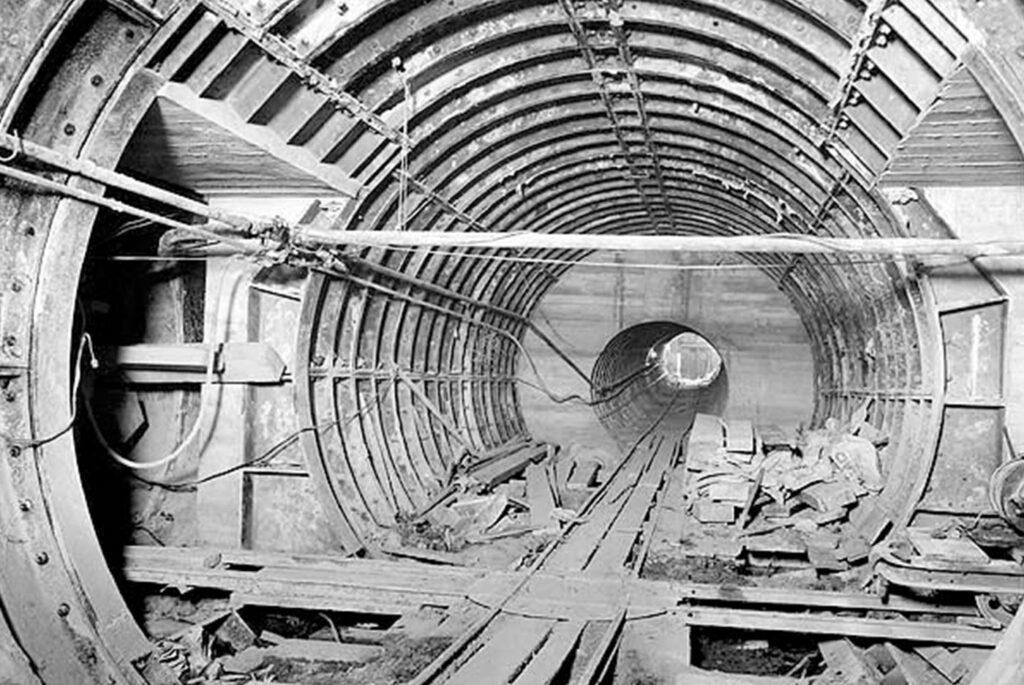
The inclusion of The London Tunnels (TLT) as a partner within Opportunity London greatly increases the project’s visibility with global institutional investors that seek exposure to London’s project development pipeline. TLT’s inclusion is recognition of the project’s maturity and scale, and increases its potential attractiveness to international investors.

Continue Reading
Cookie Policy Overview
Edison Group

This website uses cookies so that we can provide you with the best user experience possible. Cookie information is stored in your browser and performs functions such as recognising you when you return to our website and helping us understand which section of the website you find more interesting and useful. See our Cookie Policy for more information.

Strictly necessary and functional

These cookies are used to deliver our website and content. Strictly necessary cookies relate to our hosting environment, and functional cookies are used to facilitate social logins, social sharing and rich-media content embeds.

Advertising

Advertising Cookies collect information about your browsing habits such as the pages you visit and links you follow. These audience insights are used to make our website more relevant.

Performance

Performance Cookies collect anonymous information designed to help us improve the site and respond to the needs of our audiences. We use this information to make our site faster, more relevant and improve the navigation for all users.