Bavarian Nordic
Written by
Bavarian Nordic |
Seeking a cash injection from the US |
Potential NASDAQ IPO |
Pharma & biotech |
17 February 2016 |
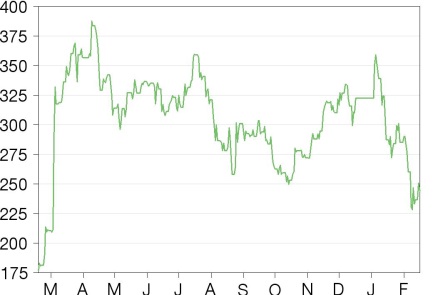
Share price performance
Business description
Next events
Analysts
Bavarian Nordic is a research client of Edison Investment Research Limited |
|||||||||||||||||||||||||||||||||||||||||||||||||||||
Bavarian Nordic’s intention to list on NASDAQ is a strategic move to broaden its appeal to US investors and raise additional funds to accelerate clinical development of multi-tumour cancer immunotherapy CV-301 and respiratory syncytial virus vaccine MVA-BN RSV and to expand its manufacturing capacity. As a well-funded revenue generating company, it should still appeal to investors despite market headwinds. While pricing is to be determined, the likely timing of the proposed IPO represents an attractive entry point for US investors ahead of a newsflow-rich 2016.
Year end |
Revenue (DKKm) |
PBT* |
EPS* |
DPS |
P/E |
Yield |
12/13 |
1,213 |
154 |
0.39 |
0.0 |
N/A |
N/A |
12/14 |
1,217 |
110 |
0.27 |
0.0 |
N/A |
N/A |
12/15e |
1,036 |
65 |
0.21 |
0.0 |
N/A |
N/A |
12/16e |
1,299 |
159 |
0.52 |
0.0 |
N/A |
N/A |
Note: *PBT and EPS are normalised, excluding intangible amortisation, exceptional items.
IPO: Accessing the US investor pool
An F-1 filing with the SEC in January signalled Bavarian Nordic’s intention to raise c $86m in an NASDAQ IPO. Pricing and timing are to be determined. In preparation, a 3:1 effective split of OTC ADS was effected on 15 January (1 share = 3 ADS). US investors make up c 17% of the shareholder base; the IPO will not materially increase this at closing, but will facilitate future investment by US funds.
Use of proceeds: Trials and manufacturing
With DKK1.234bn of cash/equivalents (end-Sept 2015), plus a DKK384m unutilised credit line, and recurring (albeit lumpy) Imvamune revenues, BAVA’s operations are well funded. However, cash inflow from an IPO would expedite development of two earlier-stage but potentially highly valuable assets. Initiation of Phase II trials in 2016 is planned for CV-301 (NSCLC), and MVA-BN RSV in the elderly/ adults at risk and in children <5 years old. Funds will also expand manufacturing capacity.
Pipeline update: A newsflow-rich 2016
Further orders from various governments for Imvamune (smallpox) are expected, securing near-term revenues; clinical data for Prostvac (prostate cancer) use in several settings (neoadjuvant and combination) will come due, as well as further data for MVA-BN Filo (Ebola) and first clinical data for MVA-BN RSV.
Valuation: NPV-based valuation of DKK12bn
Our updated valuation is DKK12.04bn or DKK430/share (down from DKK12.6bn or DKK454/share) on account of rolling forward in time, updating net cash and DKK/
US$ strengthening. A successful IPO would provide greater clarity on MVA-BN RSV and CV-301 development plans/timelines, representing upside potential. RSV is a significant opportunity; although, in the absence of clinical data we do not yet include a contribution for MVA-BN RSV. More insight into the clinical programme for MVA-BN Brachyury (also not yet included in our valuation) and additional income from J&J for MVA-BN Filovirus and MVA-BN HPV also represent upside.
Cash injection to expedite portfolio progress
Bavarian Nordic is well funded (management have guided to DKK1.450bn of cash preparedness at end FY15) hence its proposed NASDAQ IPO is strategic rather than necessary to fund operations. Although pricing is to be determined, as a revenue generating company (with a solid balance sheet) this investment opportunity should appeal to investors despite the general biotech market headwinds. A US listing, under the ticker ‘BAVN’, will facilitate investment by US institutions (currently 17% of the existing shareholder base), and by raising c US$86m (c DKK570m) in the process, the company will secure additional funds for investment into accelerating the development of two key programmes, CV-301 and MVA-BN RSV, and into expanding the existing manufacturing facility. Advancing the earlier-stage pipeline is a key priority area for Bavarian Nordic and with clinical progress comes increased demand for drug product. Investment into line extensions and filling and packing capabilities will expand capacity for both manufacturing of clinical trial material and commercial scale production ahead of further government orders of smallpox vaccine Imvamune.
Precise detail on the pricing and timing of the fund raise is not yet available; however, assuming the IPO happens during H116, it represents an attractive entry point for new (or existing) investors. The fund raise will enable investment into attractive pipeline opportunities that have not been the focus of investor attention and consequently may be undervalued by the market. Indeed, we do not yet model a contribution from MVA-BN RSV in our valuation in the absence of clinical data; however, we have explored its potential in our report Advancing the pipeline with start of RSV trial. Additionally, 2016 should be a newsflow-rich year, with a number of important upcoming catalysts (summarised in Exhibit 1). We explore some of this anticipated newsflow below.
Exhibit 1: Key anticipated 2016 newsflow
Programme |
Indication |
Timing |
Comment |
|
Infectious disease vaccines |
Imvamune |
Smallpox |
2016 |
US government RFP for freeze-dried formulation |
2016 |
Follow-on contract from Canadian government |
|||
2016+ |
Potential first orders from European government s |
|||
MVA-BN RSV |
Respiratory syncytial virus |
H116 |
Phase I data from 63-pt trial in adults |
|
H216 |
Initiate Phase II in elderly/adults at risk |
|||
2016 |
Initiate Phase I/II in children <5 years old |
|||
MVA-BN Filo |
Ebola |
2016 |
Data from multiple trials |
|
Cancer immunotherapy |
Prostvac |
Prostate cancer |
Q116+ |
Phase III PROSPECT trial in mCRPC: three interim analyses likely starting in Q116 with top-line data in 2017 |
H116 |
NCI Phase II data + enzalutamide in non-metastatic PC |
|||
2016 |
NCI Phase II data as neoadjuvant in localised PC |
|||
Early-2016 |
BMS to initiate combination trial with checkpoint inhibitor |
|||
2016 |
Initiation of open label investigator sponsored Phase II combination therapy trials in localised PC (Prostvac + ipilimumab, Prostvac + ipilimumab + nivolumab) as neoadjuvant therapy |
|||
CV-301 |
NSCLC |
2016 |
Initiate Phase II trial |
|
Bladder cancer |
2016 |
Phase II enrolling |
||
MVA-BN Brachyury |
Solid tumours |
2016 |
Initiation of Phase II trials in multiple solid tumours |
|
Corporate |
NASDAQ IPO |
H116 – tbc |
Potential $86m financing |
|
Financial reporting |
15 March |
FY15 results |
||
13 May |
Q116 results |
|||
17 August |
Q216 results |
|||
9 November |
Q316 results |
Source: Bavarian Nordic, Edison Investment Research
Infectious diseases: Imvamune orders and other clinical data
■
Imvamune transition to freeze-dried formulation could prompt new orders: Bavarian Nordic received a US$133m order from the US government in July 2015 to supply bulk Imvamune to maintain the current stockpile. With completion of the conversion process to the next generation freeze-dried formulation (which has a longer shelf life), a new tender from the US government covering the conversion of stockpiled bulk active into the new formulation and/or further doses is anticipated in 2016. Precise timelines remain uncertain for ex-US government orders. However, there is potential for a follow-on contract from the Canadian government (the latest contract for US$6.4m was secured in October 2015 for delivery of 143,000 liquid-frozen doses in 2016) as well as first orders from European governments against a background of increased alertness to the ongoing terror threat. We note that ex-US orders will likely be lower volume but will benefit from better pricing.
■
Phase I data for MVA-BN RSV and progress into Phase II: Initial results of a 63-pt Phase I study in healthy adults are expected mid-2016. Safety, cellular and antibody responses are being measured for up to 34 weeks in this trial. Given that the vector is well characterised and is the same as that used in Imvamune, no safety concerns are expected. Confirmation of the safety and immunogenicity profile in Phase I should support advancement into Phase II development in H216, and determine the size of the Phase II programme. Trial design and endpoints may vary depending on the target population. Two trials in different populations (where the risk of severe RSV-associated lower respiratory tract infections is highest) are planned: one in the elderly and adults at risk of RSV and the second in children aged under five years old. IPO proceeds will provide funding for Phase II development, although given the potential size of the opportunity in RSV, Bavarian Nordic may seek a commercial partner for MVA-BN RSV in the longer term. RSV is a significant market opportunity with high unmet need: the virus is ubiquitous, highly contagious and transmitted via direct contact, infecting human airway epithelial cells and there are currently no vaccines approved. In the US alone, RSV infection is estimated to cause 177,000 hospitalisations annually in the elderly, more than in infants (estimated at 75,000-125,000 per year).
■
Contract extensions possible under J&J Ebola co-development and supply deal: The 2014 deal with Janssen (J&J) for co-development of a prime boost regimen for Ebola comprising MVA-BN Filo in combination with J&J’s AdVac technology (Ad26.ZEBOV) has been a significant contributor to 2015 revenues. Up to end-September 2015, DKK379m of revenues have been recognised along with deliveries to Janssen. The deal includes a supply agreement for production and delivery of bulk material; 2m doses have been produced for delivery by the end of 2015. Ongoing clinical trials of this prime boost regimen include a UK/France Phase II study in 612 healthy adult patients, a 1,188-pt Phase II multi-site African trial and the 728-pt EVOBAC-Salone Phase III trial in Sierra Leone; the latter trial is expected to read out in 2016.
■
Potential to expand the relationship with J&J: In addition to the Ebola deal, Bavarian Nordic has two other collaborations with J&J. In December 2015, a US$171m licence agreement was signed for exclusive rights to Bavarian Nordic’s MVA-BN technology to develop a prime-boost vaccine regimen (in combination with J&J’s AdVac technology) targeting cancers induced by human papillomavirus (HPV). J&J also retains an exclusive option to licence MVA-BN for two additional undisclosed infectious disease targets under its October 2014 evaluation agreement. Thus there may be potential for these options to be exercised during 2016. The range of potential targets is broad, with J&J’s most recent corporate pipeline overview1 highlighting its priority areas in infectious disease including: HIV, RSV, flu and hepatitis (HBV and HCV).
J&J Pharmaceutical business review, May 20, 2015: Pages 106-140.
Cancer immunotherapy: Clinical progress of Prostvac & CV-301
■
PROSPECT interim analyses loom; other studies to broaden the Prostvac data package: The 1,297-pt Phase III PROSPECT study of Prostvac as monotherapy in asymptomatic or minimally symptomatic mCRPC is fully enrolled, with top-line data anticipated in 2017. The trial is event driven and includes three interim analyses, the first of which could occur imminently. Nevertheless, while there is potential for the trial to be stopped early, we and management expect the study to continue until completion. In parallel, Bavarian Nordic is running five Phase II studies in collaboration with the NCI in earlier disease (localised, neoadjuvant and non-metastatic) and/or in combination with other therapies (enzalutamide, flutamide). Data read out is expected in 2016 from the combination trial plus enzalutamide in non-metastatic prostate cancer and a monotherapy trial as neoadjuvant in localised disease. The results of these studies will help inform on Prostvac’s potential benefit and hence positioning in earlier disease settings, which could help to expand its market potential. With this in mind, and to gain a greater understanding of Prostvac’s mechanism and efficacy in combination, Bavarian Nordic and partner Bristol Myers Squibb (BMS) will initiate two additional Phase II trials in combination with BMS’s immune checkpoint inhibitors in 2016. The planned trials are a 75-pt study in combination with ipilimumab as neoadjuvant therapy, and an NIC sponsored 28-pt trial in combination with ipilimumab +/- nivolumab
■
Plans underway for CV-301 NSCLC trial, with other indications to follow: CV-301 has potential in a broad range of tumours, although Bavarian Nordic has prioritised development in lung cancer. This shift away from prior development, which has included both colorectal and bladder cancer, is based on recent advances in immuno-oncology and the potential to combine CV-301 with a PD-1 (programmed death-1) checkpoint inhibitor to potentially improve efficacy.2 Further down the line, development in bladder cancer and colorectal cancer may also be pursued. There are a large number of lung cancer patients who could benefit from a CV-301/checkpoint inhibitor approach, and potential for trials based on shorter endpoints such as overall response rate and progression-free survival to rapidly establish proof-of-concept. Bavarian Nordic has developed an improved CV-301 construct based on MVA-BN (rather than vaccinia), which has improved manufacturing yield and immunogenicity. It plans to progress this new construct progress into Phase II trials in 2016 as part of a combination development strategy with a checkpoint inhibitor. Two PD-1 checkpoint inhibitors are approved by the FDA: BMS’s Opdivo (nivolumab) and Merck’s Keytruda (pembrolizumab). Paying for an approved therapy as part of a clinical trial could be expensive, although with a successful fund raise this should be well within Bavarian Nordic’s resources.
PD-1 inhibition appears to be most effective when tumour cells express high levels of PD-L1 (PD-L1 on tumour cells binds to PD-1 on T cells blocking the immune system from killing the tumour). Hence, as CV-301 can upregulate PD-L1, a combination with PD-1 in patients with low PD-L1 expression has the potential to improve efficacy.
Valuation
Our updated Bavarian Nordic sum-of-the parts valuation stands at DKK12.04bn or DKK430/share (previously DKK12.6bn or DKK454/share). We have rolled our valuation forward in time and updated the number of shares outstanding. Other specific changes to our valuation are the inclusion of MVA-BN HPV now that J&J has licensed the technology (although at this stage we only value the upfront payment as there is no visibility on the future milestone schedule), updating for FY15 forecast cash (vs last-reported cash at end March) and FX rates that reflect the strengthening of the Danish kroner (now US$1:DKK6.62 vs DKK6.86 previously).We summarise the components of our valuation in Exhibit 2. All the product valuations represent the present value of future cash flows forecast for each product, risk-adjusted where appropriate, which are then taxed.
At this stage, we do not include a contribution for MVA-BN RSV as this is in Phase I and assessing its potential, in the absence of any clinical data, is challenging. However, as highlighted in a previous report there are no approved RSV vaccines and this could be a significant opportunity; hence it represents pure upside potential. For a similar reason we do not include MVA-BN Brachyury; Phase I data is available, however, this immunotherapy has broad potential and the cancer types in which further development is planned have not yet been disclosed.
Other sources of potential upside come from additional income for MVA-BN Filovirus and MVA-BN HPV from existing deals with J&J; our valuation does not capture all milestones or any future royalty contributions, or the potential for any contract extensions, all of which are possible.
Exhibit 2: Bavarian Nordic sum-of-the-parts valuation
Value driver |
Value (DKKm) |
Value/share (DKK) |
Key assumptions |
Prostvac (CRPC) |
9,132 |
325.9 |
Launch: 2018. Peak sales: $2.6bn. Price: $50k pa. Probability of success: 65%. Effective royalty: 30%. |
Imvamune/Imvanex |
3,181 |
113.5 |
Includes expected revenues under existing contracts (US and Canada) in addition to risk-adjusted forecasts for future contracts (US, Canada and EU). US average price of $28.5; assume premium price ex-US. WACC of 10% as limited development risk (approved in EU and Canada). |
MVA-BN FiloVirus (J&J) |
132 |
4.7 |
Includes future payments under existing J&J deal; excludes future royalty payments or contract extensions. |
MVA-BN HPV (J&J) |
41 |
1.5 |
Includes US$9m upfront payment (to be recognised in 20160; excludes future development and regulatory milestones and future royalty payments. |
CV-301 (lung cancer) |
477 |
17.0 |
Launch: 2020. Peak sales: $865m. Price: $50k pa. Probability of success: 25%. Royalty: 20%. |
R&D |
(1,076) |
(38.4) |
Risk-adjusted future R&D spend. |
SG&A |
(822) |
(29.3) |
Risk-adjusted future SG&A spend. |
Net cash |
977 |
34.9 |
As per Edison forecast at end-December 2015. |
Total |
12,041 |
429.7 |
Source: Edison Investment Research. Note: DCF out to 2025; WACC of 12.5% (unless specified); DKK6.62/$.
Finally, we highlight that closure of the US fund raise/IPO should provide both greater financial resources and clarity on development plans/indications and timelines for MVA-BN RSV and CV-301. This will inform our assumptions for future commercial potential (and future R&D spending), as well as our assessment of economics of downstream licensing deals.
Financials
Our financial forecasts have been updated to reflect reported Q315 interim financial results and guidance, and the removal of potential revenues from Imvanex contracts of around DKK115m, which we had previously expected to fall into 2015 (although this was not in management guidance). Bavarian Nordic’s 2015 financial targets for revenue, EBIT and R&D are shown in Exhibit 3, along with our updated financial forecasts. Guidance for cash preparedness of DKK1,450m reflects the €50m (c DKK350m) European Investment Bank loan granted in May.
Exhibit 3: Bavarian Nordic financial guidance versus Edison estimates for 2015 (DKKm)
Measure |
Guidance |
Edison estimates |
Revenue |
1,000 |
1,036 |
EBIT |
0 |
56.5 |
Cash preparedness* |
1,450 |
1,394 |
P&L R&D costs |
480 |
455 |
Source: Edison Investment Research; Bavarian Nordic. Note: *Cash preparedness includes cash, cash equivalents and credit lines (DKK384m from the EIB and other undrawn credit lines).
Bavarian Nordic ended September 2015 with cash and equivalents of DKK1,234m (which does not include any undrawn credit lines), a substantial increase from the end of 2014 (DKK980m), owing to receipt of milestone payments from both J&J for Ebola and BMS relating to Prostvac. To date around $95.8m has been received from J&J, stemming from the $25m upfront payment and around 50% of the $70.8m supply agreement upfront, which were received in 2014, followed by the most recent $35.8m received in January 2015; DKK379m has been recognised in the P&L to end-September. The $60m option upfront payment from BMS was received in March 2015 but has not yet been recognised in the P&L. Hence, current deferred revenue on the balance sheet is now DKK613m (up from DKK375m at end 2014) to reflect these payments.
Bavarian Nordic will report FY15 financial results on 15 March 2016.
Exhibit 4: Financial summary
DKKm |
2012 |
2013 |
2014 |
2015e |
2016e |
||
Year end 31 December |
IFRS |
IFRS |
IFRS |
IFRS |
IFRS |
||
PROFIT & LOSS |
|||||||
Revenue |
|
|
1,017 |
1,213 |
1,217 |
1,036 |
1,299 |
Cost of Sales |
(514) |
(485) |
(495) |
(341) |
(514) |
||
Gross Profit |
503 |
728 |
722 |
695 |
785 |
||
EBITDA |
|
|
(32) |
181 |
62 |
19 |
209 |
Operating Profit (before GW and except) |
|
(32) |
181 |
62 |
5 |
153 |
|
Intangible Amortisation |
0 |
(148) |
(46) |
(9) |
(16) |
||
Other |
0 |
0 |
0 |
0 |
0 |
||
Exceptionals |
0 |
0 |
0 |
0 |
0 |
||
Operating Profit |
(32) |
33 |
17 |
(4) |
137 |
||
Net Interest |
(17) |
(27) |
48 |
60 |
6 |
||
Other |
0 |
0 |
0 |
0 |
0 |
||
Profit Before Tax (norm) |
|
|
(49) |
154 |
110 |
65 |
159 |
Profit Before Tax (FRS 3) |
|
|
(49) |
6 |
64 |
57 |
143 |
Tax |
(191) |
(53) |
(38) |
(7) |
(13) |
||
Deferred tax |
0 |
0 |
0 |
0 |
0 |
||
Profit After Tax (norm) |
(240) |
101 |
71 |
59 |
146 |
||
Profit After Tax (FRS 3) |
(240) |
(47) |
26 |
50 |
130 |
||
Average Number of Shares Outstanding (m) |
26.1 |
26.1 |
26.2 |
27.7 |
28.0 |
||
EPS - normalised (ore) |
|
|
(92.0) |
38.8 |
27.3 |
21.1 |
52.3 |
EPS - (IFRS) (ore) |
|
|
(92.0) |
(17.9) |
9.9 |
18.0 |
46.4 |
Dividend per share (ore) |
0.0 |
0.0 |
0.0 |
0.0 |
0.0 |
||
Gross Margin (%) |
49.5 |
60.0 |
59.3 |
67.1 |
60.4 |
||
EBITDA Margin (%) |
(3.1) |
15.0 |
5.1 |
1.9 |
16.1 |
||
Operating Margin (before GW and except.) (%) |
(3.1) |
15.0 |
5.1 |
.5 |
11.8 |
||
BALANCE SHEET |
|||||||
Fixed Assets |
|
|
644 |
552 |
568 |
527 |
467 |
Intangible Assets |
148 |
105 |
109 |
82 |
66 |
||
Tangible Assets |
321 |
323 |
337 |
311 |
281 |
||
Other |
175 |
124 |
122 |
134 |
121 |
||
Current Assets |
|
|
895 |
900 |
1,319 |
1,388 |
1,612 |
Stocks |
229 |
234 |
122 |
140 |
211 |
||
Cash |
550 |
532 |
980 |
1,010 |
1,121 |
||
Debtors |
114 |
135 |
218 |
170 |
214 |
||
Other |
1 |
0 |
0 |
67 |
67 |
||
Current Liabilities |
|
|
(485) |
(389) |
(583) |
(569) |
(588) |
Creditors |
(433) |
(381) |
(581) |
(567) |
(586) |
||
Short term borrowings |
(52) |
(8) |
(2) |
(2) |
(2) |
||
Long Term Liabilities |
|
|
(54) |
(87) |
(52) |
(50) |
(50) |
Long term borrowings |
(37) |
(72) |
(33) |
(32) |
(32) |
||
Other long term liabilities |
(17) |
(15) |
(19) |
(18) |
(18) |
||
Net Assets |
|
|
1,000 |
976 |
1,252 |
1,295 |
1,441 |
CASH FLOW |
|||||||
Operating Cash Flow |
|
|
31 |
160 |
346 |
30 |
133 |
Net Interest |
(9) |
(11) |
15 |
32 |
6 |
||
Tax |
(3) |
(2) |
(22) |
(18) |
(3) |
||
Capex |
(45) |
(155) |
(106) |
(27) |
(26) |
||
Acquisitions/disposals |
0 |
2 |
0 |
0 |
0 |
||
Financing |
0 |
0 |
265 |
18 |
0 |
||
Dividends |
0 |
0 |
0 |
0 |
0 |
||
Other |
(1) |
0 |
0 |
0 |
0 |
||
Net Cash Flow |
(26) |
(7) |
498 |
35 |
110 |
||
Opening net debt/(cash) |
|
|
(485) |
(461) |
(452) |
(945) |
(977) |
HP finance leases initiated |
0 |
0 |
0 |
0 |
0 |
||
Exchange rate movements |
0 |
0 |
(0) |
(16) |
0 |
||
Other |
1 |
(2) |
(5) |
14 |
0 |
||
Closing net debt/(cash) |
|
|
(461) |
(452) |
(945) |
(977) |
(1,087) |
Source: Edison Investment Research; Bavarian Nordic accounts
|