Leading Edge Materials — Addressing the European REE shortage

Leading Edge Materials (TSX: LEM)

Last close As at 14/08/2026

0.00 (0.00%)

Market capitalisation

More on this equity

Research: Metals & Mining

Leading Edge Materials — Addressing the European REE shortage

Leading Edge Materials (LEM) offers strategic, European-based exposure to critical heavy rare earth elements (HREEs) through its 100%-owned Norra Kärr project in Sweden. Against a backdrop of structurally tight HREE supply and elevated global REE pricing, Norra Kärr represents one of the few advanced Western assets capable of delivering substantial volumes of permanent magnet HREEs. With significant progress on permitting, an updated pre-feasibility study (PFS) due in H226 and a generally supportive political environment, LEM is well positioned to supply the European EV, renewable energy and defence sectors, while trading at a steep discount to its fundamental value.

Written by

Andrey Litvin

Energy and Resources Analyst

Metals and mining

Initiation of coverage

21 April 2026

Price C$0.30
Market cap C$77m

US$/C$1.36

Net cash/(debt) at Q126, adjusted for April directors’ option exercise

C$1.8m

Shares in issue

255.5m
Code LEM
Primary exchange TSXV
Secondary exchange N/A
Price Performance
% 1m 3m 12m
Abs (22.1) 0.0 43.2
52-week high/low C$0.5 C$0.1

Business description

Leading Edge Materials is a Canadian public company focused on developing a portfolio of critical raw material projects within the European Union, including: in Sweden, the 100% owned Norra Kärr heavy rare earth element project, recognised as one of Europe's most significant deposits of heavy rare earth elements crucial for permanent magnets, and the 100% owned Woxna Graphite mine; and, in Romania, the Bihor Sud Nickel-Cobalt exploration alliance.

Next events

Q226 results

June 2026

Analyst

Andrey Litvin
+44 (0)20 3077 5700

Leading Edge Materials is a research client of Edison Investment Research Limited

Note: PBT and EPS as reported.

Year end Revenue (C$m) EBITDA (C$m) PBT (C$m) EPS (C$) P/E (x)
10/24 0.0 (2.4) (2.7) (0.01) N/A
10/25 0.0 (3.2) (3.2) (0.01) N/A
10/26e 0.0 (3.4) (3.4) (0.01) N/A

Norra Kärr: Strategic HREE asset

Norra Kärr is one of Europe’s most significant HREE projects and is characterised by its high exposure to dysprosium and terbium, two scarce and high-value magnet rare earths. The 2021 preliminary economic assessment (PEA) outlined a 26-year operation producing an average of 5,341tpa of total rare earth oxides (TREOs), including 284tpa of DyTb, based on material representing c 30% of the inferred resource. While DyTb accounts for only c 6% of in-situ TREOs, it contributes c 40% of our forecast revenue. The project’s pre-production capex of US$487m implies a competitive capital intensity of US$91/kg TREO. It also benefits from significant by-product revenue, which materially lowers total opex of US$33/kg TREO. LEM is advancing the project through permitting, with the Swedish Mining Inspectorate formally recommending exploitation concession approval in March 2026.

REE market: Structural deficit drives premiums

Norra Kärr’s economics are highly geared to the structurally tight HREE market. Chinese export controls introduced in April 2025 have contributed to a bifurcated pricing environment, with European prices for dysprosium and terbium materially above Chinese FOB levels. At the same time, medium- to long-term demand fundamentals for magnet rare earths remain well-supported by growth in permanent magnet applications, with industry forecasts suggesting a significant shortage of DyTb by 2030. Against this backdrop, our assumptions result in a long-term TREO basket price of US$85/kg for Norra Kärr, versus US$53/kg in the 2021 PEA.

Valuation: Steep discount to fundamental value

Using a discounted cash flow approach, we estimate an unrisked valuation for Norra Kärr of US$1.8bn at a 10% discount rate, or US$0.9bn on a 50% risked basis. On a relative basis, LEM trades at an EV/resource multiple of just US$100/t contained TREO, versus a peer-group weighted average of US$218/t. We believe LEM’s current valuation of US$56m ( C$77m) does not reflect the scale and quality of the Norra Kärr project and view the anticipated mining lease decision and the updated PFS as the key near-term catalysts.

Investment summary

Advancing a strategic European HREE project

Leading Edge Materials is a Canadian-listed developer of critical raw material assets in Europe. Its principal asset is the 100%-owned Norra Kärr project in Sweden, one of Europe’s most significant heavy rare earth deposits. Norra Kärr is characterised by its high exposure to dysprosium (Dy) and terbium (Tb), two scarce and high-value magnet rare earth elements (REEs) used in high-temperature permanent magnet applications across electric vehicles, wind turbines, defence, aerospace, robotics and consumer electronics. The 2021 PEA outlined a 26-year operation producing an average of 5,341tpa of rare earth oxides (REOs), including 284tpa of DyTb, based on material representing only c 30% of the project’s inferred resource. While DyTb accounts for only c 6% of in-situ TREO, it contributes c 40% of our estimated revenue. The revised project design incorporates zero process water discharge on site and relocates chemical processing to an off-site brownfield facility. Recovery of nepheline syenite, zirconium and niobium further supports resource utilisation and a substantially reduced waste footprint. The project has also recently reached an important permitting milestone: following endorsements from regional authorities, in March 2026 the Swedish Mining Inspectorate formally recommended the approval of Norra Kärr's exploitation concession, with a final decision now pending from the Swedish government. In parallel, LEM is advancing an updated PFS on Norra Kärr, expected in H226, which will incorporate the recovery of industrial mineral by-products into the project's economics. In addition to Norra Kärr, LEM owns the fully built and permitted Woxna graphite mine in Sweden, which is currently on care and maintenance and offers restart optionality into the European lithium-ion battery anode market.

Financials: Elevated HREE basket supports strong project economics

Norra Kärr’s economics are highly geared to the structurally tight market for heavy rare earths. The market supply-demand balance was further tightened by Chinese export controls introduced in April 2025 and recent geopolitical tensions in the Middle East, which disrupted ex-China access to critical magnet rare earths and contributed to a bifurcated pricing environment. As a result, European prices for Dy and Tb have moved materially above Chinese FOB levels. In addition, the medium- to long-term outlook for magnet rare earth demand remains supportive, driven by significant growth in permanent magnet applications. Based on our REO price assumptions, implying a basket price of US$85/kg TREO versus US$53/kg in the PEA, we estimate Norra Kärr’s average annual gross revenues of US$603m and a project-level EBITDA of US$356m. The PEA estimated project pre-production capex at US$487m, implying a competitive capital intensity of US$91/kg of TREO. Importantly, significant by-product revenue materially offsets the higher processing costs associated with a complex silicate deposit, reducing net operating costs to a highly competitive US$15/kg TREO on a PEA basis. At the corporate level, LEM ended Q126 with a net cash position of c C$1.0m, which was subsequently bolstered by a c C$0.8m cash injection from directors exercising options. While this may provide sufficient near-term liquidity to advance critical permitting and PFS workflows, additional funding will be required to further progress the company’s project portfolio.

Valuation: Substantial upside on every metric

We value the Norra Kärr project using a discounted cash flow (DCF) approach. Reflecting a visible upward revision in ex-China HREE prices since the 2021 PEA, which was partly offset by the upward adjustments to operating and capital costs, our unrisked DCF-based valuation for the project stands at US$1.8bn at a 10% discount rate. Applying a 50% risk-weighting to reflect the current stage of development results in a risked valuation of US$0.9bn. This represents a substantial upside compared to LEM’s current market capitalisation of approximately US$56m ( C$77m). Conservatively, we assign no value to the Woxna graphite project at this stage. On a relative basis, LEM trades on an EV/resource multiple of US$100/t of contained TREO, versus a peer-group weighted average of US$218/t. While acknowledging the risks associated with permitting and the hydrometallurgical processing of complex silicates, we believe the current valuation does not reflect the scale and quality of the Norra Kärr project.

Risks and sensitivities

The principal risks are REE price volatility and market sentiment, project funding requirements and potential dilution, and execution risk across project delivery. We view the anticipated mining lease decision and the outcome of the updated PFS as the key near-term de-risking events that would justify the application of a lower valuation risk weighting.

Norra Kärr: Heavy REE project in the heart of Europe

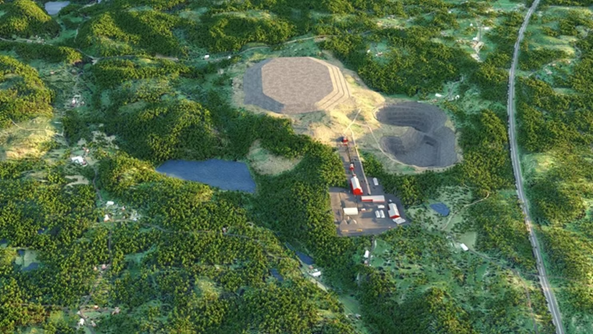
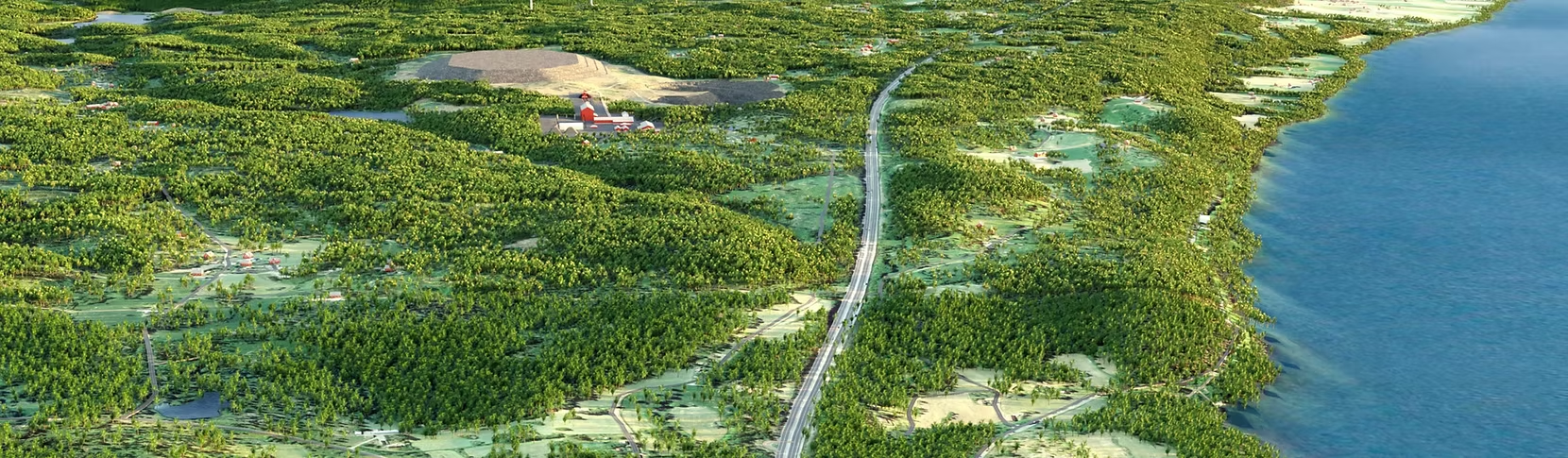
The Norra Kärr project, located in southern Sweden, is an REE deposit. An updated PEA, completed in August 2021, redesigned the project to minimise its environmental footprint and increase resource utilisation by recovering by-products, including nepheline syenite (NS), zirconium (Zr) and niobium (Nb), alongside REEs. The project’s current mine plan supports production of 5,341tpa of REO, with a significant share of heavy REO, over a 26-year mine life, with additional upside coming from its vast resource base. Compared to an earlier PFS, it features a reduced on-site waste footprint, a targeted zero-discharge water circuit at the mine site and an off-site chemical processing facility.

Below we provide a summary of the main differences between the latest PEA and earlier PFS studies:

  • Operational footprint: The 2021 PEA design achieves a 65% reduction in the project's land area compared to the previous concession application.
  • Chemical processing relocated: To protect the sensitive local environment, all chemical processing has been removed from the mine site. Only physical beneficiation (crushing, grinding and magnetic separation) will occur at Norra Kärr. The heavy chemical processing (acid leaching and solvent extraction) will take place at an established, brownfield industrial site.
  • Water management and Lake Vättern: The new design eliminates any direct contact with Lake Vättern or nearby Natura 2000 areas. It introduces a closed-loop process water system with controlled storm/groundwater management, resulting in zero process water discharge and a 20–30% reduction in overall on-site water demand.
  • Resource utilisation (zero waste target): The 2015 PFS planned to sell less than 1% of extracted materials as final products. The 2021 PEA targets 100% resource utilisation by recovering and selling by-products like nepheline syenite, zirconium and niobium. This virtually eliminates the need for traditional, large-scale waste rock and tailings storage facilities.

Geology: In-situ HREO at 52%, magnet REO at 20%

Located in southern Sweden, Norra Kärr is an alkaline igneous intrusion hosted within the Precambrian Trans Scandinavian Igneous Belt. The deposit consists of agpaitic grennaite, a peralkaline nepheline syenite containing complex silicate minerals. Crucially, the primary REE- and zirconium-bearing mineral is eudialyte. The deposit is globally notable for its exceptionally high proportion of HREEs, which constitute 52% of the TREO in the ground (including yttrium). The project is underpinned by a large inferred mineral resource of 110Mt grading 0.5% TREO, 1.7% ZrO2, and 0.05% Nb2O5, providing significant scale and long-term optionality. The share of magnet REO in the overall resource is 20%, comprising 14% NdPr (neodymium/praseodymium oxides) and 6% DyTb (dysprosium/terbium oxides).

It is worth noting that the project's earlier 2015 PFS achieved a higher mineral classification for the REEs. Based on this historical estimate (effective 30 June 2014), the project outlined an indicated mineral resource of 31.1Mt at 0.61% TREO (at a 0.4% cut-off). Furthermore, the study delineated a probable mineral reserve (effective 1 November 2014) of 23.6Mt at 0.59% TREO. While historical, these estimates point to a well-understood geological model of the deposit, highlighting the potential for the ongoing updated PFS to upgrade the current inferred resources.

Production profile: Long-life, high magnet HREO operation

Mining operations will employ conventional open-pit methods utilising standard excavators and haul trucks. The ultimate pit design is highly efficient, scheduled to produce 29.3Mt of mineralised rock alongside just 9.4Mt of waste, resulting in a very low life-of-mine (LoM) strip ratio of 0.3x. To optimise the environmental footprint, the mine plan is phased across four stages. The deliberate delay of the final mining stage allows for 21% of the total waste material to be backfilled directly into the pit void, significantly reducing external waste storage requirements and surface disturbance.

The PEA outlines a production profile over a 26-year LoM, driven by a targeted mining and processing rate of 1.2Mtpa of ore. At steady state, the project is estimated to produce an average of 5,341tpa of separated/mixed REO. Importantly, Norra Kärr’s production will include c 20% of magnet REO, with 722tpa of magnet light rare earth elements (LREO; NdPr) and 284tpa of magnet HREO (DyTb). Furthermore, the amount of DyTb, among the scarcest and the highest priced REOs that are crucial for high-temperature magnet applications, is one of the highest among the most advanced REE projects globally. We estimate the combined share of DyTb in the project’s output at c 6% of TREO, which implies a very low NdPr/DyTb ratio of just 2.5x (Exhibit 4). This has a significant positive impact on the project’s economics, given the much higher basket price of DyTb. Browns Range in Australia is the only project with both a higher DyTb share and higher expected DyTb production.

Another important feature of Norra Kärr’s economics is its diversification through by-product streams, which collectively account for approximately 25% of projected gross LoM revenues based on the PEA. By-product output is forecast to average 10,200tpa of chemical-grade zirconium oxide (ZrO2) and 525tpa of niobium oxide (Nb2O5). Furthermore, the non-magnetic beneficiation residue is expected to be commercialised as an industrial mineral, generating a combined 733ktpa of nepheline syenite across three distinct product tiers. This multi-commodity approach not only lowers unit costs but is deeply integrated into the project’s environmental strategy, as commercialising the nepheline syenite should eliminate a large portion of its waste footprint.

Processing: Minimising environmental impact

The PEA proposed a two-stage processing strategy to minimise environmental impacts at the mine site (as illustrated in the flowsheet in Exhibit 5). The on-site processing at the mine site is straightforward, with the run-of-mine material undergoing primary and secondary crushing and two stages of magnetic separation. This chemical-free process will produce an eudialyte-rich mineral concentrate and a nepheline syenite by-product (sold as an industrial mineral), while the company is also assessing the potential to commercialise and sell the aegirine residue, which would further minimise the on-site waste footprint.

Off-site chemical processing

The eudialyte concentrate will be transported by road and rail to a dedicated hydrometallurgical facility at a brownfield location. Here, two-stage sulphuric acid leaching and solvent extraction will be used to recover REEs, Zr and Nb. The final outputs will include a mixed REE oxide, chemical-grade zirconium oxide and niobium oxide. This location was strategically selected to leverage regional infrastructure, including cost-competitive, low-carbon electricity and proximity to established reagent supply chains such as bulk sulphuric acid.

Metallurgical testing and silica management

The hydrometallurgical flow sheet is underpinned by extensive testing campaigns involving prominent research institutions such as GTK and ANSTO Minerals, and the European Commission-funded EURARE programme. Historically, the primary technical bottleneck in processing complex silicates like eudialyte has been the formation of silica gel upon acid dissolution, which traps dissolved metals and blinds the leach circuit. To overcome this, the PEA adopted a proven two-stage sulphuric acid leach process, utilising a pre-treatment known as ‘fuming’ or ‘acid pugging’. This involves adding concentrated sulphuric acid to a heated concentrate at boiling temperatures, followed by a weak ambient water/acid leach. This approach effectively suppresses silica gel formation while ensuring high metal liberation.

Leach recoveries and impurity removal

Under these optimised two-stage leaching conditions, extraction rates from the concentrate into the pregnant leach solution (PLS) are highly efficient, achieving 91% for REEs, 91% for niobium and 65% for zirconium. Following the leach phase, the PLS undergoes an impurity removal step where the pH is raised to precipitate out unwanted elements. Importantly, any trace uranium and thorium solubilised during leaching are precipitated into a neutralised solid residue, resulting in a waste stream that is classified as non-radioactive under international (IAEA) guidelines. Furthermore, comparative life cycle assessment data demonstrates that processing Norra Kärr's eudialyte ore has a much lower environmental impact across key metrics – including climate change, freshwater ecotoxicity and ionising radiation – when compared to the ionic adsorption clays that currently dominate global HREE supply.

Solvent extraction (SX) and final product generation

Following neutralisation, the PLS advances to a series of solvent extraction and precipitation circuits to isolate the saleable products:

  • Rare earth elements: based on kinetic and equilibrium loading isotherm studies conducted by ANSTO, REEs are recovered from the PLS using a primary amine solvent. The loaded REEs are stripped, precipitated using oxalic acid and finally calcined to produce a high-purity, low-impurity mixed REE oxide (REO) concentrate ready for final separation.
  • Zirconium and niobium: these by-products are sequentially separated using specialised SX circuits (utilising Alamine 336 for Zr) and targeted thermal precipitation/chelation methods (such as EDTA for Nb) to produce chemical-grade zirconium oxide (ZrO2) and niobium oxide (Nb2O5).

Factoring in the combined losses from the on-site magnetic beneficiation and the off-site hydrometallurgical extraction, the overall LoM plant recoveries are estimated at 84.1% for the suite of REEs, 81.6% for Nb2O5 and 48.6% for ZrO2.

Competitive operating and capital costs

The PEA estimates the initial capital expenditure for the project at US$487m (detailed in Exhibit 6). To minimise the environmental footprint of the mine, the capital cost is split between the on-site mining and beneficiation infrastructure ( US$165m) and the off-site hydrometallurgical processing plant ( US$323m). Direct costs account for US$351m, heavily weighted towards the off-site processing facilities ( US$232m) required for acid leaching, solvent extraction and rare earth separation. Indirect costs, which include EPCM and contingency, total US$137m. The total pre-production capital cost implies a capital intensity of US$91/kg of TREO. This metric highlights the higher capital intensity typical of complex silicate/peralkaline deposits compared to traditional ionic clays. However, within the selected group of broadly geologically similar projects, Norra Kärr boasts one of the lowest capital intensities when compared to US$93/kg for Kipawa (2013 PFS), US$157/kg for Strange Lake (2014 PEA) and US$162/kg for Lofdal (2026 PFS).

Norra Karr’s total operating expenditure is estimated at US$158/t of ore processed ( US$33.3/kg TREO), as summarised in Exhibit 7. The largest individual cost component is the third-party toll treatment and sales charge of US$90/t of ore ( US$19/kg TREO), followed by the off-site chemical processing at US$33.3/t of ore ( US$7.0/kg TREO). Conversely, upstream mining and on-site beneficiation are highly efficient at US$1.2/kg and US$3.8/kg, respectively, benefiting from a low LoM strip ratio and a relatively simple, chemical-free magnetic separation circuit at the mine. Crucially, the project’s unit economics are heavily supported by estimated by-product credits ( US$18.7/kg TREO) from the sale of nepheline syenite, zirconium oxide and niobium oxide, which significantly offset the downstream processing costs. Based on the PEA, by-product credits lower the project’s cash opex from US$33/kg TREO to US$15/kg TREO. Within the similar group of projects, the most recent PFS on the Lofdal project puts its opex at US$64/kg, while the much earlier PEA on the Strange Lake project estimated its opex at US$34/kg.

In our modelling we have conservatively assumed that both opex and capex will increase at the PFS stage. To account for the industry-wide cost escalation in recent years, we have applied a 2.5% annual inflation rate to index the 2021 PEA costs to 2026 terms.

Permitting: Legislative shifts unlock stalled progress

Historically, Norra Kärr’s advancement was stalled after an initial 2013 mining lease was revoked due to retroactive environmental demands regarding its proximity to Lake Vättern (a Natura 2000 site). However, the permitting landscape has improved dramatically over the last several years, driven by the project's 2021 footprint redesign and highly favourable regulatory shifts in Sweden and the EU.

Key recent milestones include:

  • Regulatory deadlock broken (2024): The project’s 2013 mining lease was revoked due to retroactive environmental demands. However, in 2024, the Swedish government officially removed the requirement that a Natura 2000 environmental permit must be obtained before a mining lease can be granted.
  • New mining lease application (December 2024): Following this legislative change, LEM submitted a new application for a 25-year exploitation concession (mining lease) in December 2024, supported by a comprehensive environmental impact assessment based on the much smaller footprint of the 2021 PEA.
  • Major milestone achieved (December 2025): In December 2025, the project secured an important milestone when the County Administrative Boards (CABs) of Jönköping and Östergötland formally endorsed its mining lease application.
  • Mining Inspectorate recommendation (March 2026): In a major de-risking event, the Swedish Mining Inspectorate formally recommended the approval of the exploitation concession in March 2026. The Inspectorate has now submitted the application to the Swedish government for a final decision. With all involved government agencies now having recommended approval, the company expects to work constructively through any specific conditions attached to the final concession.

Once the mining lease is officially granted, the company will advance to the final environmental permitting stage, where specific environmental matters will be regulated and controlled. We understand that the company may consider applying for 'Strategic Project' status under the recently adopted EU Critical Raw Materials Act (CRMA) once the mining lease is granted and the updated PFS is completed. This designation would legally mandate a streamlined permitting timeline and facilitate access to strategic European financing. Given the current shortage of HREEs ex-China, the anticipated strong market growth, the progress LEM is making on the permitting and the project’s feasibility work, we would not rule out the project’s addition to the CRMA at a later stage. Further integrating into the European critical minerals ecosystem, LEM was accepted as a Project Partner by EIT Raw Materials in December 2025, positioning the company favourably within European innovation and strategic funding networks.

Current work streams: Updated PFS is due H226

LEM is currently undertaking an updated PFS on the project, which is expected to be completed in H226. Among other things, we would expect an upgrade in confidence in the mineral resource estimate, with the establishment of the measured and indicated resource category, and potentially a mineral reserve. Another important part of the updated PFS could be the validation of the processing approach. In particular, we expect to see more detailed metallurgical test works, especially related to the hydrometallurgy/sulphuric acid leach step. That said, we understand that at this stage the company may choose to prioritise the mine component of the project to support the environmental permitting process, while also incorporating the recovery of industrial mineral by-products into the updated PFS.

We note that the company has recently announced a strategic collaboration with Ascension Earth Resources, a University of Oxford spin-out company developing technologies to recover critical minerals from novel resources, aiming to assess innovative recovery methods from Norra Kärr eudialyte mineralisation. If successful, the work would progress towards a larger-scale pilot plant project.

Highly experienced management team and board

We provide more details on the management team at the end of the report; however, in this short section, we highlight the industry experience of the company's executive and board leadership.

The management team is led by CEO Kurt Budge, who provides relevant Swedish permitting experience and project development background from his tenure as CEO of Beowulf Mining, alongside CFO Sanjay Swarup. Included in the technical team is Kristian Larsson, hydrometallurgist, engineer and scientist, who studied chemical engineering with engineering physics at Chalmers University and stayed there for a PhD in chemistry. Kristian has several postdocs, the first of which specialised in REE separations at the University of Leuven. While in Belgium he also worked in the EURARE EU-project, which studied eudialyte processing.

The board of directors features Chairman Lars-Eric Johansson, who brings substantial operational and financial experience from the large-cap mining sector (former president and CEO of Ivanhoe Mines and CFO of Kinross Gold, Noranda and Falconbridge), independent director Daniel Major (former CEO of GoviEx Uranium) and the strategic and financial backing of major shareholder and director Eric Krafft.

We believe this combined expertise is well-suited to advancing Norra Kärr through the European regulatory and project financing processes.

REE market: Dominated by China with acute HREE shortage

The REE group comprises 17 metals: 15 lanthanides plus scandium and yttrium. As illustrated in Exhibit 8, these are broadly classified into light (LREE) and heavy (HREE) categories based on atomic weight. While all elements share similar chemical properties, their market dynamics, scarcity and end-uses differ significantly.

REE demand growth: It is all about magnets

Economic value in the REE market is overwhelmingly concentrated in four permanent magnet metals: neodymium (Nd) and praseodymium (Pr) (LREEs), alongside dysprosium (Dy) and terbium (Tb) (HREEs). The initial demand super-cycle was mainly driven by decarbonisation (EVs and wind turbines); according to the International Energy Agency (IEA), rare earth demand for EVs is projected to grow at a compound annual growth rate (CAGR) of 17% through 2030, followed by wind turbines at an 8% CAGR. While these segments have seen some moderation in growth recently, it is becoming increasingly offset by highly inelastic demand from the defence, aerospace, advanced robotics and consumer electronics segments. Overall, the IEA forecasts total rare earth demand to grow at 5% annually over the remainder of the decade, expanding by 50–60% in absolute terms by 2040.

At present, permanent magnets account for more than one third of total demand for REOs, growing from just about 20% in 2018. As growth in magnet REO demand has already been outstripping other sources, this trend is expected to continue. CRU estimates that magnet REO demand will increase by 87% between 2024 and 2040, while non magnet demand will grow at a still healthy 9%. CRU expects that by 2040 permanent magnets will grow to c 51% of the overall REO demand. Importantly, these forecasts primarily reflect energy transition trends and may not fully capture the recent surge in defence-related demand driven by ongoing geopolitical tensions, potentially suggesting further upside to these growth estimates.

The market for magnet HREEs is expected to be particularly tight due to an acute and growing supply deficit. Dy and Tb are critical, non-substitutable additives required to prevent demagnetisation in high-temperature operating environments. To illustrate the extreme supply constraints, the total global market for separated DyTb oxides currently stands at only around 5,000tpa. With permanent magnets consuming the vast majority of this supply (for instance, global EV production required over 2,000t of Dy oxide alone in 2023), and demand accelerating from defence (eg next-generation military applications such as precision-guided munitions, stealth technology), aerospace and advanced robotics, the market is operating with virtually no supply buffer.

Due to extreme physical scarcity and price volatility, magnet manufacturers have aggressively pursued thrifting: the engineering practice of reducing the amount of Dy and Tb used in each magnet (often through advanced techniques like grain boundary diffusion). However, there is a hard metallurgical limit to thrifting as removing too much heavy rare earth content causes the magnet to fail under intense heat. Therefore, while thrifting has slightly moderated the rate of demand growth, the sheer explosion in global manufacturing volumes means absolute demand for DyTb will start to severely outstrip supply, with a deep structural supply-demand deficit projected through 2035 (see Exhibits 11 and 12).

Response to China’s REE dominance: Is Europe doing enough?

China retains a near-monopoly across the entire REE value chain, controlling roughly 60% of global mining and 90% of downstream separation and metallisation. Western vulnerability is most acute in magnet HREEs, where non-Chinese supply accounts for less than 5% of global output. This vulnerability was exposed severely in 2025 when Beijing implemented aggressive export controls on HREEs, including the critical magnet inputs dysprosium and terbium, and later expanded these controls to include extraterritorial rules. These restrictions have significantly strained global supply chains and caused ex-China prices for heavy rare earths to surge.

Unlike the US, which has rapidly accelerated its efforts to build a resilient, ‘zero-China’ supply chain via massive federal funding and defence initiatives (accounting for c 65% of the US$6bn in domestic rare earth investment announcements in 2025, according to Benchmark Minerals), Europe has moved more slowly in developing coordinated funding and industrial-policy support for domestic REE supply chains. The region is a major consumer of magnet metals but currently possesses very limited domestic extraction or commercial separation capacity. To combat this, the EU’s CRMA establishes strict benchmarks to be achieved by 2030: the EU must mine at least 10% of its annual consumption domestically, process at least 40% domestically and recycle 25%. Given the projected demand growth for magnet rare earths and a global DyTb market of just around 5,000tpa, the development of tier-one European assets like Norra Kärr (capable of producing 284tpa of DyTb, representing roughly 6% of current global supply) is strategically significant in addition to being economically attractive.

A closer look at CRMA REE projects

Apart from the REE recycling projects and the vertically integrated ReeMAP project (LKAB), the CRMA includes two relatively advanced upstream REE projects and two midstream processing projects. The upstream projects are Songwe Hill in Malawi (Mkango Resources, or Mkango) and Zandkopsdrift in South Africa (Frontier Rare Earths, or Frontier). Both are non-EU with somewhat different production profiles.

Songwe Hill is a hard rock, predominantly LREE project focused on NdPr with a full production rate of 4,634tpa TREO in mixed rare earths carbonate (MREC), including c 1,953tpa of NdPr and 56tpa of DyTb. On the processing side, Mkango is advancing a Pulawy REE separation plant in Poland, which was also selected as a strategic project as part of the CRMA. The Pulawy plant is expected to produce 2,000tpa of separated NdPr oxides, alongside just c 50tpa of DyTb oxides. A definitive development timeline for the mine is currently pending; in its latest financial disclosure, Mkango noted that it was finalising a revised NI 43-101 technical report on Songwe Hill and a PFS on Pulawy.

The Zandkopsdrift project is more HREO focused, with an estimated production of c 3,038tpa of NdPr and 139tpa of DyTb oxides in MREC. The project is targeting first production in 2030. Frontier signed technology supply and offtake agreements with Carester, a midstream REE processing company, which is currently advancing a REO separation facility in Lacq, France. Caremag is expected to be commissioned at the end of 2026 and will have production capacity of 800tpa of NdPr and 600tpa of DyTb oxides (c 15% of current global DyTb production) from both concentrates and recycled magnets. We note that if Zandkopsdrift comes online, it will supply less than a quarter of Caremag's DyTb capacity, which leaves significant headroom to process feedstocks from other sources.

Separately, LKAB announced the start of construction of a demonstration plant in Luleå, Sweden, to process phosphorus and REEs from the Malmberget iron ore mine in Gällivare and later from the Per Geijer project in Kiruna. Based on the 2023 resource statement, Per Geijer contains REE grades of 0.84–0.85% TREO and has an HREO/LREO split of 17%/83%, with no specific in-situ REE distribution and volumes provided. LKAB’s Luleå facility is expected to be operational in the 2030s.

From a geographical point of view, based on the latest Fraser Institute annual survey of mining companies, South Africa is ranked 57th in the Global Attractiveness Index. While Malawi does not feature in the survey, its economy is considered relatively high risk for business and investment (we note the 2025 executive order that prohibited exports of raw, unprocessed minerals, including REEs, in order to promote local value addition). In contrast, Sweden is ranked sixth in the Fraser Institute survey, underscoring its status as a premium, low-risk jurisdiction for European strategic supply.

New upstream REE supply is coming, but focus is mainly on NdPr

Breaking the geographic monopoly requires developing new mine supply and processing capabilities outside China. Below we provide an overview of currently producing and emerging mine capacity by main geological types of REE deposits. Historically, global REE production heavily relied on hard-rock carbonatites (producing mainly LREEs) and ionic adsorption clay deposits (the primary source of HREEs). However, as the data in the following exhibits suggests, the vast majority of new capacity entering the market appears to be heavily skewed toward NdPr, potentially leaving the structural deficit in heavy rare earths (in particular, DyTb) largely unaddressed.

Carbonatites: Massive NdPr volumes with high capital intensity

Carbonatite REE deposits are traditional hard-rock mining operations, with deposits such as Mt Weld and Mt Pass dominating current Western production. As shown in Exhibit 14, the development pipeline includes large-scale projects like Kangankunde (Lindian Resources), Nolans (Arafura Rare Earths), Longonjo (Pensana) and Yangibana (Hastings Technology Metals). While these assets offer high grades and proven processing routes, they are overwhelmingly LREE-dominant. For example, the Nolans project is targeting a substantial 4,440tpa of NdPr oxide production. Achieving fully integrated processing for these hard-rock deposits does require significant capital, with Nolans carrying a US$1.2bn capex (capital intensity of US$250/kg TREO). Ultimately, while this expansion in carbonatite supply will significantly ease the global NdPr deficit, it does not directly address HREE scarcity. Additionally, these projects must carefully manage naturally occurring radioactive materials (thorium/uranium), and many (like Yangibana Phase 1 and Ngualla) will initially produce concentrate, requiring subsequent midstream processing.

Ionic clays: The traditional HREE source

Ionic adsorption clay deposits have historically been the primary source of the world's HREE supply, with production previously concentrated in China and Myanmar. However, a new source of Western supply is now potentially emerging from deposits in Brazil and Uganda. As shown in Exhibit 15, Serra Verde’s Pela Ema project in Brazil is already in production, targeting 5,000tpa of MREC. Meanwhile, Meteoric Resources' Caldeira project boasts a planned output of 13,584tpa MREC and a relatively low initial capex of US$443m. While some of these projects benefit from lower capital intensity and attractive HREE ratios, such as Makuutu at c 29% HREO, the use of in-situ leaching in Western jurisdictions is generally more constrained by environmental permitting and groundwater protection requirements. As a result, these projects typically rely on surface mining methods, which require careful management of land disturbance and may affect the pace at which operations scale up.

Peralkaline/complex silicates: By-products enhance project economics

Peralkaline/complex silicate projects represent the emerging alternative for secure supply of strategic metals. As highlighted in Exhibit 16, projects like Norra Kärr, Tanbreez (Greenland), Strange Lake (Canada) and Dubbo (Australia) are medium-grade but highly enriched in HREEs and valuable industrial by-products. Fully integrated complex silicate projects tend to have higher capital intensity due to the bespoke hydrometallurgy required to manage silica gel formation, as evidenced by Dubbo's US$1.2bn capex and Strange Lake's US$1.6bn capex. Against this backdrop, Norra Kärr's US$487m capex compares favourably. Importantly, significant by-product credits from zirconium, niobium and nepheline syenite help partly offset generally higher operating costs and capital intensity, reinforcing the economic rationale for these polymetallic projects as well as their strategic relevance.

Hydrothermal (xenotime): Hard-rock processing with an HREE basket

Another distinct REE category includes hydrothermal vein and breccia systems, where rare earths are primarily hosted in xenotime. This phosphate mineral generally yields a higher proportion of heavy rare earths, particularly DyTb, than traditional carbonatite ores. As shown in Exhibit 17, the most advanced projects in this category are Northern Minerals' Browns Range (Australia) and Namibia Critical Metals' Lofdal (Namibia). These projects require moderate capital investments ( US$420m and US$348m, respectively) to produce HREE-rich baskets. Browns Range, for example, is expected to generate 86% of its REO from heavy rare earths, providing strong leverage to DyTb prices while utilising conventional, proven hard-rock processing techniques.

Other projects: Woxna graphite is another strategic asset

LEM holds two other strategic European assets in its portfolio: the Woxna graphite mine and anode project and the Bihor Sud nickel-cobalt project.

The Woxna graphite mine and anode project

Woxna (Sweden, 100%-owned) is one of the few fully built and permitted natural flake graphite mines in Europe. The project comprises the Kringelgruvan exploitation concession (which formed the basis of the 2021 PEA), an open-pit mine, a permit to process 100ktpa of mineralised material, a processing plant and a tailings dam. Although currently on care and maintenance following a prolonged period of weak graphite prices, the mine is being maintained on a ‘production-ready’ basis while keeping operational holding costs to a minimum.

The company is preparing for a potential production restart to supply the growing European lithium-ion battery market. In partnership with an engineering consultant, LEM is updating an internal production restart study undertaken in 2022, and metallurgical testwork is being conducted to assess potential improvements to the processing facility to maximise operational efficiency. The company’s goal is to deliver premium-quality, high-grade flake graphite concentrate or value-added products to the market.

A 2021 PEA on the project assessed a vertically integrated mine-to-anode material production project incorporating downstream thermal purification and spheronisation. This downstream processing would target ultra-high-purity anode materials and could allow Woxna to leverage Sweden’s low-carbon hydropower as a regional alternative to Chinese supply. Importantly, preliminary life cycle assessment data indicate that coated spherical purified graphite (CSPG) produced at Woxna would have an 85–90% lower CO2 footprint than market-dominant Chinese natural or synthetic alternatives. The PEA estimated average annual production at 7,435t of CSPG and 8,421t of micronised graphite over a mine life of 15 years and a project life of 19 years. Woxna’s initial capex was estimated at US$121m, average EBITDA at US$49m per year and post-tax NPV8 at US$248m.
Industry forecasters, including Benchmark Mineral Intelligence, note that graphite buyers are increasingly seeking to diversify their raw material supply away from China amid disrupted trade flows, tariffs and new export licence requirements. With China expected to produce roughly 70% of global supplies of natural flake graphite and almost all the spherical graphite used in anodes in 2025, the EU’s reliance on imports (currently c 100,000tpa of natural graphite) remains a critical vulnerability. Against this backdrop – and supported by the EU’s CRMA and Sweden’s recent momentum in awarding graphite exploitation concessions – market interest remains strong, reinforcing confidence in Woxna’s commercial potential.

The Bihor Sud nickel-cobalt project

Bihor Sud (Romania, 51%-owned) is an exploration alliance focusing on a historically significant mining district. The licence has a diverse and lengthy mining history, and despite considerable historical extraction, significant areas of mineralisation observed underground suggest the potential for a profitable, modern mining operation likely remains.

Mapping and sampling data as part of the 2025 exploration campaign revealed extensive mineralisation. This notably includes uranium oxide associated with jasperoid silicification, polymetallic sulphides (copper, cobalt, nickel, lead and zinc) hosted in silica-carbonate rocks, and crystalline carbonate exhibiting disseminated and stockwork-style sulphide mineralisation. Supergene enrichment phases, such as erythrite and annabergite, further characterise the mineralogical diversity of the licence area.

Importantly, massive sulphide mineralisation is present across the Valea Leucii, Dibarz and Avram Iancu prospects. Through the reopening of historical adits and systematic channel sampling, LEM has outlined a prospective mineralised system that appears to be interconnected, extending approximately 6km north-south and a similar distance east-west. Although more analysis is required to fully understand the geometry, the mineralisation appears open in all directions. Channel sampling has been extremely encouraging, with intercepts showing reasonably wide zones of low-grade mineralisation encompassing higher-grade cores. This builds upon historical prospecting rock-chip data, which reported evidence of widespread and pervasive uranium, base and precious metal mineralisation, including anomalous values of up to 28% nickel, more than 6% cobalt and more than 3ppm gold.

In March 2026, LEM filed an independent competent person’s report (CPR) on the project. The CPR consolidates the substantial work completed to date, confirming the large 6km mineralised system and establishing a clear roadmap for the project. Management is now exploring alternative financing options to secure external funding and advance the next phase of underground exploration.

Financials

Norra Kärr: HREO shortage, geopolitics boost basket price and margins

Historically, the majority of REO supply originated in China, and European REO prices broadly tracked Chinese FOB prices. However, the introduction of export controls in China on dysprosium, terbium, yttrium (Y) and selected other HREOs in April 2025 triggered a structural pricing divergence, leading to a significant increase in ex-China premiums. Industry sources suggest that prices in Europe for Dy and Tb exceeded Chinese FOB by 4x in September 2025, while Y prices were 9x higher. More specifically:

  • Dysprosium (Dy): The Argus Dy price assessment for Europe jumped from US$280/kg to US$850/kg in early May 2025. Despite some indications of a relaxation of export controls, prices remained at c US$800/kg in August 2025 and were quoted at about US$800–900/kg in early 2026. We understand that the current CIF Europe Dy price is c US$950/kg. This compares to a spot Dy price FOB China of c US$200/kg.
  • Terbium (Tb): Similarly, for terbium oxide, the Argus CIF Europe price assessment jumped from US$965/kg to US$3,000/kg in early May 2025, with further increases towards the US$3,500/kg level reported in late August. Current spot European prices for Tb are c US$4,000/kg compared to a spot CIF China price of c US$1,000/kg.
  • Neodymium-praseodymium (NdPr): European NdPr prices were not directly affected by the export controls and continued to broadly track the Chinese market. However, global NdPr prices have been on the rise since H225, supported by the agreement between the US Department of War and MP Materials that set a price floor at US$110/kg NdPr oxide. Global NdPr prices are currently reported at about US$120/kg.
  • Yttrium (Y): Yttrium, which represents a c 37% share of Norra Karr’s production basket, was also significantly affected by China’s export restrictions. A PFS study on the Lofdal project, published in January 2026, noted that European spot prices for Y oxide jumped as much as 4,400% to US$270/kg in 2025. This compares to the spot China FOB price of just US$11/kg. While it is assumed that export restrictions will gradually ease and new ex-China supply ramps up, the Lofdal PFS models a conservative long-term yttrium price of US$60/kg.

In addition to China’s supply restrictions, the recent geopolitical escalation in the Middle East has brought the vulnerability of global critical mineral logistics into sharp focus. Potential disruptions to key maritime trade routes and the energy inputs necessary for REE refining reinforce a distinct risk premium for ex-China heavy rare earth supplies. As defence and industrial sectors actively prioritise securing resilient supply chains, we expect heightened price volatility and stronger baseline pricing for Western-sourced magnet metals, in particular for the more undersupplied dysprosium and terbium.

Noting the above market shifts, we have updated the REO and by-product prices used in the Norra Kärr 2021 PEA to reflect more up-to-date market conditions and the ongoing divergence between domestic China and ex-China prices, in particular for magnet REOs and selected HREOs. We show the Norra Kärr PEA REO price assumptions and our expectations in Exhibit 18. Overall, the project’s calculated REO basket increased from US$53/kg to US$85/kg on our expectations. Once again, we note Norra Kärr’s high share of HREO – more specifically DyTb – in its production basket, which has a significant impact on its basket price and overall project economics. Expressed differently, based on our REO price assumptions, we expect Norra Kärr to produce an average of 532tpa of REO in DyTb equivalent terms.

Importantly, our long-term ex-China REO price expectations are in real 2026 terms and implicitly assume flat premiums to Chinese FOB prices. We note that Benchmark Mineral Intelligence recently forecast that ex-China rare earth price premiums could expand to as much as 8x compared to China ex-works prices in 2027, with these price differentials expected to gradually decline to 2–3x post 2030. Once again this underscores the tight market supply-demand fundamentals outside China. Against the current market backdrop our REO price expectations appear conservative.

Overall, we expect the project to generate US$603m per year in average gross revenue, which compares to the average revenue estimate of US$383m in the PEA. We note that based on our price assumptions, DyTb oxides contribute c 5% to Norra Kärr’s REO production but c 40% to the project’s revenue, while yttrium accounts for 37% and 16%, respectively (see Exhibits 19 and 20 for breakdown).

A significant portion of the project’s PEA opex of US$33.3/kg was represented by the toll treatment charge of US$19.0/kg. Separation costs are typically associated with processing REE concentrates and/or MREC/MREO into individual high-purity REOs. At present, China remains the most viable option for achieving full separation of REEs, with midstream processing capacity outside China, in particular for HREEs, extremely limited. The toll treatment charge accounted for c 35% of Norra Kärr’s PEA basket price. Given the current elevated REE price environment and shortage of ex-China processing capacity, we believe it is prudent to at least maintain the same ratio in our cost assumptions. This increases our estimate of the treatment charge from US$19/kg in the PEA to c US$30/kg. As a cross-check, technical reports on some other REE projects use the following separation related price discounts per kilogram of REO costs: Caldeira US$10/kg, Colossus US$13/kg and Makuutu US$36/kg. Further, in its most recent FS on the Carina REE project published in April 2026, Aclara Resources assumed an average separation charge of 34% of gross revenue. In general, a higher proportion of HREOs typically results in higher separation charges.

To account for the passage of time since the 2021 PEA, we have built a 2.5% annual inflation rate into our estimates for both pre-production capital expenditure and operating costs (excluding the separation charge, which was adjusted as outlined above). This inflation rate reflects the natural hedge provided by the Swedish krona's depreciation against the US dollar. As a result, on our estimates, the project’s overall cash opex reaches US$46/kg in 2026 real terms, while the pre-production capital cost assumption increases from US$487m in the PEA to US$551m.

Our basket price and updated opex expectations imply an average project level EBITDA of US$356m compared to US$206m in the PEA. We provide a financial sensitivity analysis to changes in prices and costs in Exhibit 21.

The impact of by-products: Nepheline syenite market offers upside

As we noted before, Norra Kärr’s economics are to a significant extent driven by the by-product revenue streams. In particular, the project is expected to produce c 733ktpa of nepheline syenite (NS) products. NS is a quartz-free feldspathoid and is commonly reported together with feldspars but has a number of advantages in industrial use. In particular, the high alumina content and low melting point make it attractive for ceramic flux, glass, coatings, paint, functional fillers and cement fillers. At present the main industrial uses for NS are in glass, ceramics and paint/coatings. The NS market is estimated at c 750ktpa of imported volumes and is dominated by two producers, Covia in Canada and Sibelco in Norway, with FOB prices ranging from €150/t to €500/t depending on the end market and application. The glass-grade NS products attract a price of c €150–200/t, while filler/extender grade NS is priced at c €400–500/t and ceramics grade NS sits in the middle. The PEA assumed Norra Kärr would sell three types of NS products with a price range of just US$12–65/t. We understand that LEM is currently considering selling c 150ktpa of the NS product into the NS market, with the remainder sold into the feldspar market. The European feldspar market is much larger and stands at approximately 6Mtpa, with supplies primarily originating from Turkey. Prices are quoted in the US$100–180/t range. Overall, we conservatively assume a flat NS price of US$100/t for our modelling purposes but see an upside potential from the NS products. On our current estimates, NS contributes c US$73m per year in revenue, or c 12% of the total.

Norra Kärr’s other by-product revenue streams include chemical-grade zirconium oxide (ZrO2) and niobium oxide (Nb2O5). Various zirconium compounds are used in ceramics, chemicals, refractories, foundry and other end markets. The main supply of zirconium comes from China, which controls c 90–95% of the market. In turn, niobium is predominantly used in the ferro-alloy steel industry, with supply heavily concentrated in Brazil. It is designated as a critical raw material by the EU as the region is 100% dependent on imports.

Overall, our modelling suggests that the by-product streams will contribute c 25% of revenues over the project’s life. Alternatively, we estimate that the by-products reduce the project’s opex from our base case assumption of US$46/kg to just US$19/kg of TREO. We provide a sensitivity analysis to changes in main financial inputs in Exhibit 21.

LEM: Funded in the near term

The company reported a net cash outflow from operating activities of C$2.0m in FY25 (to end October) and incurred C$2.5m in capitalised exploration and evaluation expenditure on top of this. It ended the year with C$1.9m in cash, which included an equity raise of C$3.0m in gross proceeds completed in August 2025. Subsequently, the company announced its Q126 results, which showed a cash position of C$1.0m. In April 2026, this was reinforced by a capital injection of C$788k following the exercise of options by company directors. In its quarterly disclosure, LEM noted that it has sufficient funds to sustain operations over the next 12 months but will need additional capital to further advance its projects, in particular Norra Kärr. We therefore assume that the company will be looking to raise equity in the near term. We have provisionally factored in an additional cash injection in our financial estimates shown in Exhibit 25.

Valuation: High REO prices lead to an NPV boost

We value Norra Kärr using a DCF approach that yields an unrisked valuation of the project of US$1.8bn at a 10% discount rate. The 2021 PEA valued the project at US$0.8bn on a post-tax basis at a 10% discount rate. The main difference between the PEA and our valuation of the project stems from a significant increase in REE prices, in particular for heavy REEs, which was partly offset by the upward adjustments to operating and capital costs. As we discussed above, the dual pricing regime that was created by export restrictions in China has led to a visible boost to the project’s basket price, which we estimate at US$85/kg TREO using our long-term REO price assumptions, versus the PEA-based basket of US$53/kg TREO. Our operating and other financial assumptions (ie royalties and taxation) are in line with the PEA, while opex and capex estimates were indexed at 2.5% per year to account for the general industry cost inflation in recent years.

While risking is a subjective exercise, if we assume a 50% chance of success for Norra Kärr’s stage of development, our valuation of the project would reduce to US$0.9bn. The latter still offers a substantial upside compared to LEM’s current market valuation of just US$56m ( C$77m). We believe that the project’s path to further de-risking mainly lies with the confirmation of the processing route as part of the ongoing PFS work and further progress on permitting. Achieving these milestones would justify a lower valuation risk weighting. Conservatively, we assign no value to the Woxna graphite project at this stage, noting that the 2021 PEA valued the project at US$248m at an 8% discount rate. Below we provide Norra Kärr’s valuation sensitivity analysis to changes in discount rate, the TREO basket price and operating costs.

Finally, we look at the current resources-based valuation for the wider REE peer group. LEM is currently trading at an EV/resource multiple of US$100/t on a contained TREO basis compared to an average multiple of US$218/t (excluding outliers Aclara and Northern Minerals) weighted by contained TREO resource and a simple average of US$306/t. While not a perfect metric as some of the resource-based valuations are distorted by factors such as stage of development, different project economics, off-take or processing agreements, as well as other assets owned by the companies, we nevertheless believe it serves as a crude indication of LEM’s undervaluation and potential upside.

Risks and sensitivities

We see the following risks associated with LEM and the Norra Kärr project:

  • Commodity prices and REE market sentiment. Recent strength in REE prices has been driven largely by geopolitics and supply-chain disruption, and may persist over the near to medium term. However, any easing in market tightness, whether through improved supply availability or weaker-than-expected demand growth, would likely put downward pressure on prices and, in turn, on project economics.
  • Project funding and dilution. LEM remains a relatively small company, with a market capitalisation of c US$56m ( C$77m). Advancing Norra Kärr and, potentially, restarting Woxna are likely to require additional capital, which could result in further shareholder dilution. However, it is worth noting the growing trend of Western governments – including the EU, the US and Canada – providing strategic public funding and grants for critical minerals projects. Accessing such government-backed support could provide LEM with non-dilutive financing optionality.
  • Operational and execution. While the company has made meaningful progress in the permitting process at Norra Kärr, more detailed technical work is still required on the proposed off-site processing route. We expect the upcoming updated PFS to provide greater clarity on the project’s broader development plan. Together with the anticipated mining lease approval, this should represent an important de-risking milestone for the project.
 Contact details

Leading Edge Materials Corp.
14th Floor 1040 West Georgia Street
Vancouver, B.C. Canada V6E 4H1

info@leadingedgematerials.com

  Revenue by geography

N/A

Management team

CEO: Kurt Budge

Mr Budge has 30 years’ experience in the mining sector, from major to junior companies, in operations and corporate roles, private equity and investment research. His most recent role was as CEO of Beowulf Mining, having joined the company in September 2014 and left in May 2023. Kurt has worked in Sweden for 8.5 years, during which time he delivered the exploitation concession and PFS for the Kallak iron ore project. He is also experienced in Nordic graphite, battery value chains and Eastern European exploration campaigns. Kurt read mining engineering at the Royal School of Mines, Imperial College London, and has an MBA from London Business School.

CFO: Sanjay Swarup

Mr Swarup is a chartered accountant from India and the UK with over 25 years of experience in accounting and business consulting, with 15 of those years in the resource industry. Mr Swarup has held the role of CFO for a number of UK and Canadian listed resource companies. Between 2009 and 2018 Mr Swarup was the CFO of TSX-listed Mandalay Resources, which operates a producing gold mine in Sweden.

Non-executive chairman and director: Lars-Eric Johansson

Mr Johansson has over 30 years of experience managing Canadian mining companies listed on major stock exchanges in Canada and the United States, including serving as CEO and president of Ivanhoe Mines from 2007 to 2019 and CFO and executive vice president of Kinross Gold, Noranda and Falconbridge from 1989 to 2006 and various Boliden companies in Sweden from 1983 to 1989. In addition, Mr Johansson has held the position of chair of the audit committee for several issuers, including Harry Winston (later named Consolidated Diamonds) from 2003 to 2009, Golden Star Corp from 2003 to 2005 and 2007 to 2010 and Canadian Solar from 2006 to 2019.

Director: Eric Krafft

Mr Krafft is a Swedish shipowner and industrial investor. He is chief executive and owner of Star Clippers, a sailing ship cruise line. Non-maritime investments are focused on mining and natural resources positioned to benefit from the trends of increased electrification, electric mobility and energy storage. Mr Krafft serves as non-executive director of Atomic Eagle, an Australian-listed issuer. Until 2006, Mr Krafft was the managing owner of Trafalgar Shipping/Dragon Maritime, a Chinese-based dry bulk shipping operation. Prior to this, he worked in corporate finance for DVB Bank, a German specialist transportation finance bank. Mr Krafft worked mainly in mergers and acquisitions in London and equity capital markets in New York.

Director: Daniel Major

Mr Major is a mining engineer from the Camborne School of Mines in the UK. His career spans over 30 years in the mining industry where he has established a solid track record initially with Rio Tinto at the Rössing Uranium Mine in Namibia and later as a mining analyst with HSBC Plc followed by JP Morgan Chase & Co. in London. Most recently Mr Major held the position of CEO for GoviEx Uranium Inc.

Principal shareholders
%

Eric Krafft

39.4%

General disclaimer and copyright

This report has been commissioned by Leading Edge Materials and prepared and issued by Edison, in consideration of a fee payable by Leading Edge Materials. Edison Investment Research standard fees are £60,000 pa for the production and broad dissemination of a detailed note (Outlook) following by regular (typically quarterly) update notes. Fees are paid upfront in cash without recourse. Edison may seek additional fees for the provision of roadshows and related IR services for the client but does not get remunerated for any investment banking services. We never take payment in stock, options or warrants for any of our services.

Accuracy of content: All information used in the publication of this report has been compiled from publicly available sources that are believed to be reliable, however we do not guarantee the accuracy or completeness of this report and have not sought for this information to be independently verified. Opinions contained in this report represent those of the research department of Edison at the time of publication. Forward-looking information or statements in this report contain information that is based on assumptions, forecasts of future results, estimates of amounts not yet determinable, and therefore involve known and unknown risks, uncertainties and other factors which may cause the actual results, performance or achievements of their subject matter to be materially different from current expectations.

Exclusion of Liability: To the fullest extent allowed by law, Edison shall not be liable for any direct, indirect or consequential losses, loss of profits, damages, costs or expenses incurred or suffered by you arising out or in connection with the access to, use of or reliance on any information contained on this note.

No personalised advice: The information that we provide should not be construed in any manner whatsoever as, personalised advice. Also, the information provided by us should not be construed by any subscriber or prospective subscriber as Edison’s solicitation to effect, or attempt to effect, any transaction in a security. The securities described in the report may not be eligible for sale in all jurisdictions or to certain categories of investors.

Investment in securities mentioned: Edison has a restrictive policy relating to personal dealing and conflicts of interest. Edison Group does not conduct any investment business and, accordingly, does not itself hold any positions in the securities mentioned in this report. However, the respective directors, officers, employees and contractors of Edison may have a position in any or related securities mentioned in this report, subject to Edison's policies on personal dealing and conflicts of interest.

Copyright 2026 Edison Investment Research Limited (Edison).

Australia

Edison Investment Research Pty Ltd (Edison AU) is the Australian subsidiary of Edison. Edison AU is a Corporate Authorised Representative (1252501) of Crown Wealth Group Pty Ltd who holds an Australian Financial Services Licence (Number: 494274). This research is issued in Australia by Edison AU and any access to it, is intended only for "wholesale clients" within the meaning of the Corporations Act 2001 of Australia. Any advice given by Edison AU is general advice only and does not take into account your personal circumstances, needs or objectives. You should, before acting on this advice, consider the appropriateness of the advice, having regard to your objectives, financial situation and needs. If our advice relates to the acquisition, or possible acquisition, of a particular financial product you should read any relevant Product Disclosure Statement or like instrument.

New Zealand

The research in this document is intended for New Zealand resident professional financial advisers or brokers (for use in their roles as financial advisers or brokers) and habitual investors who are “wholesale clients” for the purpose of the Financial Advisers Act 2008 (FAA) (as described in sections 5(c) (1)(a), (b) and (c) of the FAA). This is not a solicitation or inducement to buy, sell, subscribe, or underwrite any securities mentioned or in the topic of this document. For the purpose of the FAA, the content of this report is of a general nature, is intended as a source of general information only and is not intended to constitute a recommendation or opinion in relation to acquiring or disposing (including refraining from acquiring or disposing) of securities. The distribution of this document is not a “personalised service” and, to the extent that it contains any financial advice, is intended only as a “class service” provided by Edison within the meaning of the FAA (i.e. without taking into account the particular financial situation or goals of any person). As such, it should not be relied upon in making an investment decision.

United Kingdom

This document is prepared and provided by Edison for information purposes only and should not be construed as an offer or sol icitation for investment in any securities mentioned or in the topic of this document. A marketing communication under FCA Rules, this document has not been prepared in accordance with the legal requirements designed to promote the independence of investment research and is not subject to any prohibition on dealing ahead of the dissemination of investment research.

This Communication is being distributed in the United Kingdom and is directed only at (i) persons having professional experience in matters relating to investments, i.e. investment professionals within the meaning of Article 19(5) of the Financial Services and Markets Act 2000 (Financial Promotion) Order 2005, as amended (the "FPO") (ii) high net-worth companies, unincorporated associations or other bodies within the meaning of Article 49 of the FPO and (iii) persons to whom it is otherwise lawful to distribute it. The investment or investment activity to which this document relates is available only to such persons. It is not intended that this document be distributed or passed on, directly or indirectly, to any other class of persons and in any event and under no circumstances should persons of any other description rely on or act upon the contents of this document.

This Communication is being supplied to you solely for your information and may not be reproduced by, further distributed to or published in whole or in part by, any other person.

United States

Edison relies upon the "publishers' exclusion" from the definition of investment adviser under Section 202(a)(11) of the Investment Advisers Act of 1940 and corresponding state securities laws. This report is a bona fide publication of general and regular circulation offering impersonal investment-related advice, not tailored to a specific investment portfolio or the needs of current and/or prospective subscribers. As such, Edison does not offer or provide personal advice and the research provided is for informational purposes only. No mention of a particular security in this report constitutes a recommendation to buy, sell or hold that or any security, or that any particular security, portfolio of securities, transaction or investment strategy is suitable for any specific person.

London │ New York │ Frankfurt

20 Red Lion Street

London, WC1R 4PS

United Kingdom

More on Leading Edge Materials

View All

Latest from the Metals & Mining sector

View All Metals & Mining content

Research: Metals & Mining

The Metals Company — Focus on accelerated execution in 2026

The Metals Company (TMC) reported FY25 results on 27 March. End-March 2026 liquidity is expected to be c $154m, and TMC believes cash on hand is sufficient for at least the next 12 months. FY25 was transformative, and TMC sees FY26 as a year of accelerated execution. Expected milestones include its full compliance, certification and commercial recovery permit granted within 12 months, the delivery of its environmental impact statement (EIS) and a definitive agreement with Allseas. Management is confident about its pathway to production, targeting Q427.

Continue Reading
Cookie Policy Overview
Edison Group

This website uses cookies so that we can provide you with the best user experience possible. Cookie information is stored in your browser and performs functions such as recognising you when you return to our website and helping us understand which section of the website you find more interesting and useful. See our Cookie Policy for more information.

Strictly necessary and functional

These cookies are used to deliver our website and content. Strictly necessary cookies relate to our hosting environment, and functional cookies are used to facilitate social logins, social sharing and rich-media content embeds.

Advertising

Advertising Cookies collect information about your browsing habits such as the pages you visit and links you follow. These audience insights are used to make our website more relevant.

Performance

Performance Cookies collect anonymous information designed to help us improve the site and respond to the needs of our audiences. We use this information to make our site faster, more relevant and improve the navigation for all users.