Alter Ego Media — A Greek media and entertainment champion

Alter Ego Media (ATHENS: AEM)

Last close As at 05/08/2026

EUR6.21

0.34 (5.79%)

Market capitalisation

EUR365m

More on this equity

Research: TMT

Alter Ego Media — A Greek media and entertainment champion

Alter Ego Media (AEM) owns a portfolio of leading media and entertainment assets in Greece. Management’s strategy is to evolve the group from a traditional advertising-dependent media company into a broader media and entertainment business with more diverse and resilient revenue streams, while delivering operational efficiencies. The relatively underdeveloped nature of the Greek media and entertainment sectors, following a prolonged period of economic disruption, together with a supportive macroeconomic backdrop, provides opportunities to grow market share and drive the evolution of the industries. A conservative balance sheet, with no financial debt except operating leases, provides plenty of flexibility in its capital allocation, which already includes shareholder returns in the form of an annual dividend, with a scrip alternative, and a share buyback programme.

Written by

Russell Pointon

Director of Content, Consumer and Media

Media

Initiation of coverage

24 June 2026

Price €5.68
Market cap €332m

Net cash/(debt) at 31 December 2025 including IFRS 16 liabilities and pro forma for acquisitions

€0.7m

Shares in issue

58.4m
Free float 26.4%
Code AEM
Primary exchange ATHENS
Secondary exchange N/A
Price Performance
% 1m 3m 12m
Abs 4.2 9.1 33.8
52-week high/low €6.7 €4.3

Business description

Alter Ego Media owns media assets in broadcasting and content production, newspaper and magazine publishing and live entertainment. It also invests in technology startups that have the potential to change industries or have media-heavy business models.

Next events

H126 results

24 September 2026

Analysts

Russell Pointon
+44 (0)20 3077 5700
Chloe Wong
+44 (0)20 3077 5700

Alter Ego Media is a research client of Edison Investment Research Limited

Note: EBITDA and fully diluted EPS are reported.

Year end Revenue (€m) EBITDA (€m) EPS (€) DPS (€) EV/EBITDA (x) P/E (x) Yield (%)
12/24 124.4 46.7 0.25 0.10 7.1 22.3 1.8
12/25 140.1 53.7 0.35 0.12 6.2 16.4 2.1
12/26e 171.5 67.4 0.44 0.20 4.9 12.9 3.5
12/27e 178.3 73.8 0.56 0.23 4.5 10.2 4.0

A core of leading traditional media assets

Through a combination of acquisitions and organic investment, AEM has assembled a portfolio of some of Greece’s strongest media brands in broadcasting and publishing. These are supported by strong content production capabilities and extensive libraries and archives, providing ownership of both content and distribution. As media consumption continues to evolve, the combination of content ownership, established brands, proprietary data and audience reach provides a solid foundation to develop new revenue opportunities.

Diversifying beyond advertising

Recognising the economics of the industry continue to change as audiences fragment, AEM’s strategy is centred on diversifying the revenue base away from advertising (88% of FY25 revenue). Recent investment and acquisitions have strengthened the company’s digital presence in its core traditional media verticals, which should enable it to build more direct relationships with audiences and further monetise its intellectual property (IP) via new and recurring revenue streams such as subscriptions. Other investments, such as entering the live entertainment and ticketing sectors, broaden its addressable markets and present the opportunity for revenue synergies. The revenue diversification, including in to potentially higher-margin verticals, should make the business less economically sensitive and improve the quality of earnings over time.

Valuation: Good upside before deploying capital

We determine a valuation of €7.1 per share by equally weighting our peer-based sum-of-the-parts valuation and our DCF valuation. AEM’s conservative balance sheet penalises the valuation somewhat. Therefore, deployment of capital at a good return would be helpful in increasing the company’s valuation.

Investment summary

From traditional media to multi-platform media and entertainment

AEM provides a unique investment opportunity as the only quoted company that provides direct exposure to the Greek media and entertainment markets. At the core of AEM are some of Greece’s most popular and influential television, press and digital assets, which were acquired from their previous financially-distressed owners and had ceased to be published or broadcast. Having rebuilt the respective media’s presence and relevance with their viewers/readers and advertising partners, management has undertaken a strategy to transfer the group from an over-reliance on advertising to a multi-platform media and entertainment group. The aim of the strategy is to improve the monetisation of its content and enhancing its distribution in order to generate new revenue streams, such as subscription services, and entering new higher-growth verticals. FY25 and FY26 saw AEM enter the live entertainment sector, with exposure to entertainment venues and ticketing sales. Much of AEM’s history has been characterised by acquisition, investment and portfolio development. While M&A is likely to continue to be a feature of its strategy, AEM now has the opportunity to improve profitability and cash generation, and reap the benefits of its broader media and entertainment assets. Successful execution should support profitability growth and improve the quality of earnings.

Financials: Growth, operating leverage and shareholder returns

The revitalisation of the core media properties, a supportive advertising market and M&A have driven an impressive financial performance, with a revenue CAGR of 16% and an EBITDA CAGR of 28% between FY21 and FY25. The improvement in profitability has been accompanied by better management of working capital and fixed capital investment to drive a significant improvement in free cash flow generation on an absolute basis and relative to revenue. Management is optimistic about AEM’s growth prospects, having guided to over 20% revenue growth and more than 25% EBITDA growth in FY26, which includes the benefit of acquisitions made in FY25 and FY26. It also anticipates even greater leverage in the operating margin, helped by greater penetration of digital assets and the higher-margin acquisitions in live entertainment. A drop in the effective tax rate to the standard Greek corporate tax rate means the growth in operating profit will be magnified at the net income level. We forecast c 27% growth in EPS in FY26 and FY27. Over the medium term, FY25–28, we forecast a CAGR for revenue of 11% and an EBITDA CAGR of 14%. With a forecast net cash position at the end of FY26, we expect investors will be rewarded with growing shareholder returns. We forecast low-double-digit increases in the annual dividend from €0.20 per share in FY26, and the continuation of an annual share buyback. The strong balance sheet provides management with flexibility to address potential M&A in addition to shareholder returns.

Valuation: DCF and SOTP supportive of upside, before deploying capital

AEM’s portfolio of assets across media and entertainment means there is no pure comparator against which to compare its valuation in isolation. Our valuation is determined by equally weighting our discounted cash flow (DCF) based valuation of €7.1 per share (Exhibit 24) and our sum-of-the-parts (SOTP) valuation of €7.1 per share (Exhibit 25). We believe a combination of higher expected revenue growth and profitability relative to its European peers supports a premium multiple for the Broadcasting and Content Creation (BCC) and Publishing divisions

Sensitivities: Macroeconomic sensitivity, industry evolution, transformation, free float

The main sensitivities relate to the health of the Greek economy and advertising market, audience trends across traditional and digital media, and the successful integration and monetisation of recently acquired assets, many of which are in new industries for the group. Management’s transformation strategy presents the typical execution and financial risks that accompany potential M&A in a rapidly evolving industry. The company has a restricted free float as the company’s founder, Evangelos Marinakis, retains control of the group with a 73.6% shareholding.

Greece’s leading listed media and entertainment group

AEM was founded in 2016 and has quickly established itself as one of Greece’s largest diversified media and entertainment companies, with a presence in television and radio broadcasting, audiovisual content production, publishing and live entertainment.

The company listed on the Euronext Athens stock exchange in January 2025 at €4.0 per share, raising gross proceeds of c €57m and net proceeds of c €51m. It is the only domestic-quoted company in the sector, thus providing a unique way of gaining access to growth drivers including the late stage of development of the country’s media and entertainment markets and a favourable outlook for economic growth and advertising.

AEM’s founder and majority shareholder, with direct and indirect holdings of 73.6%, is Evangelos Marinakis, a prominent Greek entrepreneur. In addition to AEM, Mr Marinakis has interests in shipping and sports. He is the founder and chairman of Capital Maritime & Trading Corp, an international shipping group. He is the majority owner of two listed shipping companies, one in New York (Capital Clean Energy Carriers Corp) and one in Oslo (Capital Tankers Corp). He is the owner of Olympiacos FC in Greece’s Super League and Nottingham Forest FC in the English Premier League.

Ownership of leading media brands at the core

AEM has leading assets in each of its three core businesses: Broadcasting and Content Creation (BCC), Publishing and Live Entertainment.

AEM was founded through two significant acqusitions in broadcasting and publishing, completed under a special tender process. These include the 2017 acquisition of Greece’s most historic and iconic newspaper and magazine publishing brands. This was followed by the 2019 acquisition of Greece’s first and largest private television channel, MEGA, along with its extensive content library. As the assets came from a special bankruptcy process, AEM had to revitalise them by re-building audience engagement and advertiser confidence. This required stabilisation of the publishing assets and making them more digitally relevant, and relaunching the television channel, which had ceased broadcasting in 2018.

To date, the company has disclosed the results of its broadcasting and content creation assets on an aggregate basis, reflecting the fact that Greek broadcasters typically produced content mainly for their own channels. However, recognising the significant changes in AEM’s distribution of content to more third parties, the results for each are to be disclosed at some stage in the future. AEM entered live entertainment in FY25 and increased its exposure in FY26, therefore Exhibit 1 and Exhibit 2, which show our estimated mix for FY26 revenue and EBITDA, do not reflect the full contribution of its current assets.

Transformation to a multi-platform media and entertainment group

Having established its leading positions in traditional media, management initiated a Strategic Transformation Plan in 2022, to transform AEM from a traditional media group into a multi-platform media and entertainment group. The aim is to diversify the group away from its high reliance on advertising (88% of group revenue in FY25) by improving the monetisation of its content and distribution of its assets with new revenue streams, such as subscriptions services, and entering new higher-growth verticals. AEM’s 2025 prospectus listed the five key elements of its strategy as:

  • diversification of revenue sources, including the development of subscription services, ad-supported streaming services (AVOD), the production of and organisation of theatrical and musical events, electronic and online games and e-commerce.
  • achieving economies of scale through increasing market shares, developing cross-selling opportunities and increasing negotiating power;
  • technological transformation in the production of content, developing new distribution platforms and analysing customer preferences;
  • content development and exploitation (ie seeking to invest in high-quality content and exploit it in different media and new platforms); and
  • maintaining a low financial leverage ratio.

Strong financial delivery and growth forecasts

The revitalisation of the media brands, with the support of a favourable advertising background, and the addition of new businesses has provided strong financial results, with a revenue CAGR of c 16% from FY21 to FY25. BCC has contributed the greatest growth in absolute and percentage terms, with a CAGR of c 18%, while Publishing’s revenue CAGR of c 11% has also been strong. We forecast continued strong growth in revenue, with a CAGR of c 11% through FY28, including some benefit from the annualisation of acquisitions made in both FY25 and FY26.

AEM’s EBITDA growth, with an overall CAGR of c 28% from FY21–25, has been even more impressive than its revenue growth, indicating good operational leverage at both divisions. Publishing’s c 33% CAGR has outstripped Broadcasting’s c 26% CAGR. We forecast continued operating leverage for both BCC and Publishing, and the growing contribution from higher-margin Live Entertainment gives an overall EBITDA CAGR of c 14% from FY25–28. Management has guided to greater growth in the operating and net income margin in FY26.

Greek media and advertising markets

Strong recovery following the economic crisis and COVID-19

The Greek media market has demonstrated good overall growth since 2019, with a CAGR of 6% through 2024. The largest constituents of the market, advertising (36% of the market in 2024) and online platforms (27% of the market), have outpaced the overall rate of growth, while pay-TV subscriptions (including streaming) and public broadcasting have grown at lower rates and press circulation has declined in most years.

Advertising is typically considered to be more cyclical than GDP as, rightly or wrongly, many advertisers consider advertising to be a discretionary expense that can be flexed to protect profit during an economic downturn. AEM’s management estimates the advertising market has grown broadly in line with the economy following the Greek economic crisis, and it believes this will continue, with a projected growth rate of 4–5% per year in the medium term.

The dominant media from an advertising perspective in Greece are free-to-air television and publishing, which represented 54% and 26% respectively of the market in 2024. Publishing advertising, which includes online activities, has grown at a greater rate than the overall market, while free-to-air advertising has grown at a slightly lower rate.

Macroeconomic forecasts support management’s positive outlook

The International Monetary Fund (IMF) forecasts the Greek economy’s growth rate will outpace that of the wider Euro Area in both 2026 and 2027, as it has in recent years, making it a relatively attractive market in which to seek exposure to advertising-related companies.

The IMF’s forecast for real GDP growth in Greece in 2026 is unchanged over the last 12 months while its forecast for growth in the Euro Area has reduced modestly. It is no surprise to have seen an increase in forecast consumer inflation as a result of the Middle East conflict. The IMF’s forecasts for real GDP growth for Greece of 1.8% in 2026 and consumer price inflation of 3.5% are therefore supportive of overall advertising growth of 5%+ if advertising continues to grow in line with nominal GDP. Looking into FY27, the IMF’s forecasts for real GDP growth for Greece of 1.7% and consumer price inflation of 2.7% are also supportive of management’s projection of 4–5% growth in advertising in the medium term.

The European Commission (EC) forecasts a broadly similar deceleration in Greece’s real GDP growth to 1.8% in 2026 and 1.6% growth in 2027 in its latest (May 2026) forecast. The main cause for the expected slowdown in 2026 is a dampening of consumption growth, as higher energy prices erode household disposable income while EU funding sustains robust investment growth. The EC also forecasts an increase in inflation to 3.7% in 2026, from 2.9% in 2025, on the back of energy price increases, before expecting a reduction to 2.4% in 2027. Therefore, the EC’s forecasts for c 2% economic growth and 2–3% inflation are supportive of management’s estimate for 4–5% advertising growth.

Broadcasting and Content Creation

Management’s strategy for the BCC division has been to leverage Greece’s most popular private free-to-air commercial broadcaster and extensive content library into a strategic platform to further develop its audiovisual IP and digital distribution, and deliver incremental revenues beyond advertising, such as on-demand and subscription services.

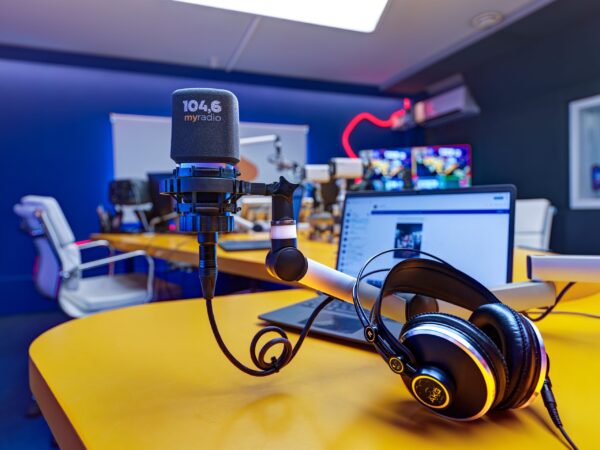
AEM’s assets include Greece’s most popular private free-to-air television channel, MEGA, a hybrid broadcast broadband (HbbTV) service, a number of free ad-supported streaming television (FAST) channels with niche content that target attractive demographics, and a commercial radio station. Supporting these distribution channels are a studio production business and the country’s most extensive visual content library. In Greece, AEM has agreed, subject to approval by the competition authorities, to acquire a one-third stake in ANT1+, a subscription TV platform, alongside other important parties in the Greek broadcasting landscape as partners. Outside Greece, AEM leverages its domestic content to the Greek diaspora in Australia, Canada and the US via the channel Mega Cosmos.

From linear television...

The foundation of the division was laid in late-2019, with the award, following a tender, of the 10-year broadcasting licence of free-to-air channel MEGA for €35m to be paid in 10 equal instalments. The term of the current licence is due to expire in October 2029. This was followed by the February 2020 acquisition of the extensive content archive, trademark and brand name of MEGA for €34m.

MEGA is an important asset to have at the core of the division. When the channel launched in November 1989 following the liberalisation of broadcasting in Greece, it was the first private (ie non-state owned) channel in the country. A high level of investment in high-quality Greek-language original programming, unlike many of its new competitors that relied heavily on imported international content, ensured it became the dominant commercial channel. Many of its series became cultural landmarks, which underlines the strength of the content library that AEM acquired along with the broadcasting licence. MEGA’s decline prior to being acquired was closely linked to Greece’s sovereign debt crisis, which led to significant falls in advertising and the prior management’s response of gradually reducing new production and greater reliance on its archive. The key turning point was the then-owner’s failure to secure a licence in 2018 when the regulatory structure of the market was finalised, which brought about its financial collapse, and it ceased broadcasting in October 2018.

The channel was relaunched in February 2020 following AEM’s successful tender for a 10-year licence. AEM has rebuilt the broadcaster as the centrepiece of the BCC division. It has rebuilt audience share through a deliberate programme strategy focused on premium Greek fiction, entertainment, news programming and major sports events while leveraging its extensive archive. Alter Ego Studios was established in 2021 to produce, distribute and supply high-quality audiovisual content. Of particular note is the investment in news, with integration with AEM’s publishing assets, creating a cross-media newsroom ecosystem that few others could replicate. AEM’s success in original programming is reflected in its content being licensed to subscription platforms, including Netflix and international broadcasters. This indicates an important strategic shift from being primarily a domestic broadcaster to a content producer and rights owner.

The Greek free-to-air television market consists of state- and privately-owned channels. The state-owned channels (ERT1, ERT2, ERT3 and ERT News) are funded by a combination of a broadcasting fee charged via electricity bills, advertising, sponsorship and other commercial activities. As is typical in other markets, the state-owned channels are required to be less commercially driven and have a greater focus on public service broadcasting, including culture and education, than the privately owned channels.

In addition to MEGA, the private television channels include:

  • ANT1 – ultimately owned by Antenna Group with the Kyriakou family, whose wealth came from the shipping industry, as the controlling shareholder.
  • Alpha TV – equally owned by Motor Oil Hellas Group and United Media. Motor Oil Hellas is one of Greece’s largest energy groups, and is controlled by the Vardinogiannis family, which also has interests in shipping, oil, energy, banking and other media assets including TV production and radio stations. United Media is the media arm of United Group, the owner of NOVA, Greece’s second-largest pay-TV business (see Greek pay-TV market section below).
  • SKAI – controlled by Ioannis Alafouzos, who has interests in shipping and publishing.
  • Star Channel – controlled by the Vardinogiannis family, which also controls Alpha TV.
  • OPEN TV (previously Epsilon) – controlled by Ivan Savvidi, who also has interests in tobacco, real estate and football.

As can be seen, a defining characteristic of the Greek free-to-air television industry is that almost all the major broadcasters are controlled by families or individuals, the primary wealth of which came from outside media, highlighting the importance of the media for influence.

The current formal licensing framework for the industry emerged after the Greek financial crisis. Prior to then, private broadcasters operated under temporary or transitional licences, which created regulatory uncertainty and political controversy. All licences typically have a term of 10 years.

...to multi-platform content distribution and new revenue sources

The first step in the division’s digital transition was the November 2021 launch of MEGA Play, MEGA’s HbbTV service, which enables the distribution of the linear television channel as well as other interactive services, such as catch-up and video-on-demand via smart TVs and other digital devices. The service enables the distribution of other new FAST channels. It is strategically important as it reduces the reliance on linear broadcast and took it into owned-digital distribution, enabling it to increase the engagement of the linear channel and creating more niche content for subscription services. To date, MEGA has launched specialist channels for news, children’s entertainment and sport.

March 2026 brought the announcement of the strategically significant acquisition of a 33.33% stake in ANT1+, a domestic subscription streaming (SVOD) platform, for €5.5m. The acquisition is currently subject to regulatory approval by the relevant competition authorities. The other partners in the platform include the founding investor of ANT1+, Antenna Group, the owner of ANT1, the other dominant private broadcaster in Greece, and Motor Oil Hellas Group, the co-owner of Alpha TV, which joined the partnership at the same stage as AEM. Having Motor Oil Hellas as a partner is interesting as it co-owns Alpha TV with United Group, which also owns NOVA, the Greek pay-TV operator.

The aim of the partnership is to turn ANT1+ into a revamped subscription platform, under a new brand name, offering enriched audiovisual content, advanced technological features and an enhanced viewing experience for users. The partnership should enable the shareholders to pool their resources (ie technology and content) in developing a major digital video platform to offer an alternative or complementary service to international platforms such as Netflix and Amazon Prime Video as well the domestic pay-TV companies. The transaction is important as it addresses the key structural concern for traditional broadcasters of the migration of audiences away from linear channels towards alternate platforms. In addition to all partners having extensive content libraries for drama and entertainment, Antenna Group currently owns the broadcasting rights for Formula 1 in Greece, which should be beneficial in positioning the revamped platform as a premium television service.

AEM’s involvement highlights the appeal of its content to the platform’s other partners in creating a national champion with a much deeper catalogue of Greek content, which has been a competitive weakness for the existing platform. AEM will benefit from a quick and direct involvement in an already operating subscription streaming platform that will deliver incremental non-advertising revenues, while sharing future development costs with its partners.

For all partners in the venture, development of the platform provides the opportunity to grow both a B2C and B2B customer base while realising content cost efficiencies.

The Greek pay-TV market

The Greek pay-TV market has developed later than many Western European markets, given the high popularity of the free-to-air channels that were launched as recently as 1989 and a relatively limited appetite by Greeks to pay for television. The market is dominated by two major platforms, Cosmote and NOVA, which invest in content in addition to owning distribution rights. Vodafone is a relatively minor player in the pay-TV market, with a focus on aggregating the content of others instead of investing in proprietary content and channels.

As in other pay-TV markets, key sports rights have been an important battleground for the competing pay-TV services in Greece. Cosmote has invested heavily in content in recent years in order to grow its subscriber base. Below we highlight the key sporting broadcast rights that are owned by the two main platforms. We note that a reciprocal arrangement, by which the sports channels of each operator are available on the other’s platform for an additional fee, has been in place since July 2024.

Cosmote

Cosmote is Greece’s leading pay-TV and streaming platform. It is bundled with the telecoms offering of fixed-line, mobile and broadband of the parent company, Cosmote Group. Cosmote Group is majority owned by Deutsche Telekom as well as other shareholders, including the Greek state and has a public market free float of under 40%.

Cosmote first won the pay-TV broadcasting rights to UEFA’s club football competitions for the three-year cycle for the 2015/16 football season from NOVA and has retained the rights in every subsequent auction, including the current cycle that runs through the 2026/27 season.

Cosmote TV also currently holds the pay-TV broadcasting rights to the home games for a number of football clubs in Greece’s Super League, with the home games of the remaining clubs held by NOVA. The broadcasting rights for the individual clubs are negotiated individually, which is a relatively unusual structure among European leagues, where the majority of broadcasting rights are negotiated on a centralised basis. Match highlights are available via both Cosmote and NOVA, and on the clubs’ own YouTube channels and official Super League channels.

NOVA

When NOVA was launched in 1999 it was Greece’s first pay-TV company. Originally a direct-to-home satellite broadcaster, it is now also available via streaming. NOVA is owned by United Group, a major Southeast European telecom and media group, with NOVA forming part of its bundle of content and telephony services.

NOVA currently holds the pay-TV broadcast rights in Greece to England’s Premier League, Germany’s Bundesliga, Spain’s La Liga, the home games of a number of clubs in Greece’s Super League and certain UEFA national team football rights including the Nations League.

The pay-TV market is growing but has low penetration versus other markets

The Greek pay-TV market is relatively lowly penetrated versus other European countries for a number of reasons:

  1. The recent economic crisis had a severe impact on disposable incomes.
  2. The attractiveness of the content available on free-to-air channels.
  3. Piracy is elevated.

The most recent Market Review from the Hellenic Telecommunications & Post Commission to the end of December 2024 quantified the number of pay-TV subscribers at 1.373m. The report indicates that the number of subscribers has increased in every year since 2015. The indicated market shares in 2024 were 45–55% for Cosmote TV and 25–35% for NOVA TV. More recent data for Cosmote TV indicate pay-TV subscriptions of 792k with an estimated pay-TV market penetration of 34%.

Overview of the main broadcasting regulations and requirements

As Greece is a member of the EU, BCC is subject to the Audiovisual Media Services Directive (AVMSD).

From a revenue perspective, the most important restriction is that a maximum of 20% of the minutes per hour on average in two separate time blocks, between 06:00 and 18:00 and between 18:00 and 00.00, are permitted for advertising and tele-shopping. The overnight period, from 00:00 to 06:00, is regarded as commercially less important and therefore there is more flexibility on advertising. The updated limits on advertising replaced the prior stricter regulations, which allowed a maximum of 12 minutes in every individual hour, and give broadcasters more scheduling flexibility in order to maximise monetisation of advertising inventory. As advertising inventory on the free-to-air channel is capped, with upside limited to yield increases that are subject to changes in ratings and demand, AEM has invested in other platforms to stimulate incremental revenue from its audiovisual content.

From a cost perspective, the AVMSD requires that more than 50% of qualifying broadcast time, excluding news and sports events etc, should consist of European works, which includes productions/co-productions from/with EU member states. In practice this does not have major implications for the Greek broadcasters given the audience prefers domestic programming and the uniqueness of the Greek language presents a barrier to entry for non-domestic producers. The AMVSD also requires broadcasters to reserve as least 10% of transmission time or programming budget for European works created by independent producers, to support independent production companies and encourage a broader audiovisual ecosystem.

In addition to the AVMSD requirements, the local regulator requires 1.5% of annual gross revenues to be invested into Greek audiovisual (co)productions. Again, this has little direct impact on the broadcasters given the audience preference for Greek language content.

The AVMSD also applies to SVOD streaming platforms such as Netflix, Amazon Prime Video and Disney+ as they must ensure at least 30% of catalogue content consists of European works and give prominence to European content. This was designed to improve the competitive imbalance between these platforms and the regulated broadcasters.

Strong profit recovery following COVID-related slowdown

BCC has demonstrated strong growth in revenue and profitability under AEM’s ownership, helped by the recovery in advertising following the COVID-related decline, as well as management’s investment in content.

In FY21–25, BCC’s revenue CAGR was c 18%. Within this, advertising, the most important source of the division’s revenue at over 90%, grew at a higher CAGR of c 20% versus c 3% for programme licensing, for which revenues have been relatively lumpy, reflecting the natural variable release schedule of content and licensing agreements. AEM’s investment in programming, specifically scripted content such as soap operas and short series, has helped the company to recover its audience share, which has supported the strong growth in advertising. The company has also been proactive in marketing the competitive strengths of the combined group to advertisers. AEM’s success in content development is reflected in the licensing of the successful television series Maestro and Famagusta to Netflix. Three series of Maestro have been licensed to and broadcast on Netflix so far and a fourth series is currently in production, which should provide a positive boost to FY26. A different series has been licensed to a Greek subscription platform and another to foreign television networks in Australia, Canada, Italy and the US.

We assume advertising growth of just over 5% in FY26, which is in line with management’s outlook for the market. We forecast a slight slowdown in growth to 3.5% in FY27, as advertising growth typically slows in the year of parliamentary elections, before reverting to 5% growth in FY28.

The exposure to advertising provides an inherently high level of operational gearing with an EBITDA CAGR of c 26% from FY21 to FY25, at a greater rate than revenue growth.

Operating income has grown at an even greater rate than EBITDA, with a 34pp increase in the operating margin from negative 16.9% in FY21 to 17.3% in FY25. This reflects the broad downward trend in the amortisation charge for capitalised content, which was c €17m in FY25 compared with c €23m in FY24 and c €19m in FY21. Management is optimistic that the industry is becoming more rational from a competition perspective.

In addition to the amortisation of capitalised content costs, AEM also amortises the cost of the MEGA broadcast licence on a straight-line basis, an annual cost of c €3.0m based on the present value of the licence cost when awarded.

AEM’s profitability compares favourably versus European peers

In Exhibit 13 we show how the reported operating margin for AEM’s BCC division compares with the adjusted operating margins for the major European broadcasters. AEM does not disclose adjusted figures as many of its peers do.

Our main observations are:

  • AEM’s BCC division’s profitability compares favourably with peers.
  • The operating margins for the majority of the peers have been on a downward trajectory over the long term, reflecting the fragmentation of audiences, loss of pricing power of advertising and increasing costs to compete for audiences.
  • All companies have seen a high level of operational gearing through the macroeconomic and advertising cycles.

Publishing: From legacy newspapers to scaled digital media

AEM’s Publishing division combines Greece’s leading newspaper brands with a growing presence in online verticals spanning news, business, lifestyle, health and entertainment. The division has been built through a combination of acquiring distressed legacy assets followed by the digital exploitation of those brands and acquisitions of targeted online assets.

The foundation of the division was the 2017 acquisition of all assets of the Lambrakis Press Group, which collapsed in early 2017, for €22.9m. The acquisition gave AEM ownership of some of Greece’s best-known publishing brands, with strong archives, established offline and online audiences and advertiser relationships. The brands include:

  • TO VIMA, one of Greece’s most established and influential weekly Sunday newspapers with origins dating back to 1922. Its primary focus is on politics, business, international affairs and culture, and it targets higher-income readers. The newspaper was relaunched in August 2017 as a Sunday publication and is now a multi-platform brand with its own websites, tovima.gr and tovima.com (and English language international editions), as well providing podcasts and video content. In order to internationalise its content it has partnered with Dow Jones and The Wall Street Journal.
  • TA NEA, Greece’s largest and most recognisable daily newspaper, with broader coverage than TO VIMA, including sport, health and lifestyle content among others. Originally launched in 1931, it became of the country’s dominant mass-market newspapers. The newspaper was similarly relaunched in August 2017 following its acquisition. Its digital platform, tanea.gr, acts as the online extension of the newspaper.
  • in.gr is one of Greece’s oldest (originally launched in 1999) and most recognised digital news portals with broad content coverage. It is the digital anchor of AEM’s Publishing division. Following the acquisition by AEM, the platform has been relaunched and modernised.
  • Oikonomikos Tachydromos, first published in 1926, is one of Greece’s oldest weekly financial and economic magazines. Under AEM’s ownership it has been repositioned as an online business information platform, ot.gr, providing live market coverage, newsletters, podcasts, conferences and forums and the magazine is published as a supplement with TO VIMA.

Having established a presence in political, economic and business news, AEM focused on diversifying its content and digital distribution. It founded More Media, a lifestyle and thematic publishing platform, as part of the group’s broader strategy to diversify its content, audiences (more female and family) and revenue streams. For most of the brands, there is a hybrid model combining print magazines that are distributed independently and in TO VIMA. The main hybrid brands are VITA (health and wellness), DIAKOPES (travel and leisure), ELLINIKI KOUZINA (Greek cuisine), GRACE (women’s lifestyle and fashion) and ARGIRO (food and cooking centred around a celebrity chef). In addition to the hybrid brands, AEM operates the website imommy.gr, which focuses on parenting and family life.

In FY25 AEM acquired NEWSIT and TLIFE to accelerate the group’s transition from a legacy newspaper publisher into a scaled digital media platform with broader demographic reach:

  • NEWSIT is a large digital news company operating a number of websites that focus on different verticals, including newsit.gr (general news), zappit.gr (entertainment news and television guide), iatropedia.gr (health and medical information), onalter.gr (geopolitics and defence) and perpetual.gr (men’s lifestyle and modern culture).
  • TLIFE is one of Greece’s leading women’s lifestyle and entertainment portals.

The combined acquisition costs of the two businesses amount to €28.5m, with the first instalment of €18.5m paid in FY25 and the second instalment of €10m to be paid in FY27. The enterprise value of the acquisitions was €26m given a €2.5m net cash position at the time. Both shareholders reinvested €2m in AEM. The pro forma FY25 financials for the business were: revenue €7.9m, EBITDA €3.6m (margin c 46% subject to rounding) and EBIT €3.5m (margin c 44% subject to rounding).

Strong growth despite structural declines in circulation

Newspapers have been some of the most disrupted businesses in the media sector, with circulation declines as a result of media fragmentation and the shift of both classified and display advertising towards digital platforms. In Greece, these structural pressures were accentuated by the long-term economic crisis.

AEM’s publishing assets have not been immune to these broader global trends, with circulation declining from €13.5m in FY21 to €7.4m in FY25, with a slowing in the rate of annual decline to 7% in FY25. The importance of the newspapers and their influence within Greek society is reflected in strong advertising growth despite circulation declines. Stripping out our estimate of the contributions from NEWSIT and TLIFE in FY25, we estimate an underlying CAGR of almost 20% for advertising from FY21 to FY25.

We forecast circulation declines will continue at 5% per year in our FY26–28 estimates. With respect to advertising, we project a similar profile as for BCC, that is 5% growth in FY26 and FY28, and a slowdown in the rate of growth in FY27 due to the parliamentary elections. FY26 will include the annualisation of the acquisitions of NEWSIT and TLIFE.

The revenue growth has translated through to a strong improvement in profitability, despite growth in the operating cost base. The improvement in FY25’s margin to 31.3% includes some benefit from the acquisitions of NEWSIT and TLIFE, which are more profitable, with an indicated FY25 EBITDA margin of c 46%. To date, management has focused on identifying costs savings and efficiencies in back office functions. Management will look to identify potential synergies from the combinations of newsrooms and content creation, and exploiting AI.

AEM’s Publishing profitability compares well versus peers

With its combination of newspapers, magazines and digital titles, there are relatively few perfect quoted peers against which to compare AEM. In Exhibit 15 we show how AEM’s Publishing EBITDA margin compares with a range of European publishers; however, we would stress a number of these companies have exposure to other industries too. This will be relevant when we consider AEM’s valuation versus its peers. Please note the companies do not all have the same financial year-end.

Our observations are:

  • AEM’s recent and projected profitability compares favourably with peers.
  • There has been a broad improvement in the EBITDA margins of the companies over the long term.
  • Despite the general improvement in profitability over the long term, levels of profitability have been volatile.

Live Entertainment

Live Entertainment is a relatively new and important division for AEM. It is aligned with the broader strategy of diversifying beyond the group’s reliance on advertising-funded media activities into higher-margin, experience-led entertainment and cultural assets. There should be meaningful cross-promotion opportunities across AEM’s media ecosystem while increasing direct relationships with customers.

Acquisition of cultural and entertainment venues

The first venture into live entertainment was the acquisition of a 40% stake in Stages Network in October 2025 for an initial investment of €4m and a further maximum potential consideration of €2.1m dependent on its profitability for the year ended June 2027. This implies a potential enterprise value for the company of c €15m. AEM also has an option to acquire an additional 9% stake, exercisable in the final six months of 2027, at a valuation that is dependent on its profitability in the year-ended June 2027. The company’s financial results are fully consolidated despite AEM owning less than 50% as it exercises control.

Stages Network produces theatrical and musical shows as well as managing a number of venues, including 10 historic theatres and Stage Seven, a more modern venue for a broader range of cultural events for a younger demographic. All theatres and venues are located in or close to Athens.

Move into ticketing

AEM’s presence in the sector was strengthened with the March 2026 acquisition of a majority stake in More.gr, the leading e-ticketing platform for live events, such as entertainment and sports, in Greece and Cyprus.

The website provides a comprehensive technology ecosystem that supports events organisers in pricing, marketing and capacity management. The platform’s leading position is demonstrated by it having 3.8 million monthly users and 1.85 million registered users from Greek and Cypriot populations of more than 10 million and one million, respectively. In FY25, it sold over 7m tickets for 27,000 events with a gross transaction value of c €155m. Management anticipates a number of synergies from the acquisition including lower-cost event promotion across AEM’s various media and lower customer acquisition costs; bundled media and ticketing packages for events organisers; targeted advertising with shared first-party data across the organisation; and upselling from events/cross-selling of group/other partners’ opportunities.

AEM has paid c €20m for a 50.1% majority stake in More.gr plus an additional amount for its share of net cash. The transaction is subject to future earn-out payments dependent on More.gr’s financial results in FY26–28, with a cap of c €30.1m or an enterprise value for the whole group of €60m. The platform has attractive levels of profitability, with the current FY26 business plan, prior to any potential post-acquisition synergies, for EBIT of €5.2m on revenue of €11m. These compare favourably to the margins of larger global companies, which have e-ticketing margins of c 30%. More.gr’s more than 50% operating margin will be accretive to AEM’s overall level of profitability, which had an operating margin of c 14% in FY24 and 6.7% in H125. More.gr has low capital requirements and favourable working capital dynamics.

High growth with above-average margins

Post the annualisation of the acquisitions in FY26 and F27, we expect strong growth in ticketing revenue of 20%+ per year in what is a currently lowly penetrated market as well as benefits from incremental revenue synergies with the rest of AEM.

Our projections of a c 50% EBITDA margin and c 46% operating margin by FY28 make Live Entertainment AEM’s most profitable division.

Alter Ego Ventures

Alter Ego Ventures (AEV) is AEM’s corporate venture capital arm, which has a mission to help the company’s broader strategy of evolving into a multi-platform media and entertainment group and diversify revenue streams away from advertising by investing in innovative startups and emerging technologies.

AEV focuses on investing in companies that can either create commercial synergies with AEM, benefit materially from AEM’s audience reach, or contribute to future media infrastructure and AI transformation. Its investment strategy specifically targets AI companies, media/tech startups, creative content platforms, B2C digital brands, data and automation businesses and retrieval augmented generation/AI infrastructure businesses. All investments must have a clear path to profitability, implying commercial discipline rather than mere speculation from an investment perspective.

AEV was founded in October 2024 and has subsequently invested in a number of enterprises:

  • In April 2025, a c €110k investment for a 1% stake in CH Gamed Development Software (‘Couch Heroes’), a gaming platform.
  • In July 2025, a €1.5m investment for a c 1.9% stake in Spotmechanic, owner of a number of circular used-car subscription and sales platforms (Spotmechanic and Spotawheel) in Greece, Poland and Romania.
  • In May 2026, a €4.75m investment for a 10% stake in Fitquest Symvouleftiki, which operates 90 (at the time of the announcement) owned and franchised fitness centres under the brand Afterlife in Greece. AEM’s investment in Alterlife is underpinned by significant strategic synergies in content creation, cross-selling opportunities across its subscription and audience base, and the commercial utilisation of consumer data to enhance audience engagement and monetisation. AlterLife currently has 165k active subscribers.

Financials

In the prior sections for the individual divisions we have discussed their historical growth drivers and our financial projections for FY26–28; in this section we show how these come together at the group level.

Income statement

AEM has reported strong revenue growth from FY21 to FY25 as the Greek advertising market has rebounded following the economic crisis and management has stabilised and recovered the positioning of its main media properties. Along with the recovery in revenue, the company has demonstrated strong operational gearing with an increase in the EBITDA margin from c 26% in FY21 to c 38% in FY25.

Management is optimistic about the outlook, guiding to revenue growth of over 20% in FY26 and EBITDA growth of over 25%, which includes underlying growth and the contributions from acquisitions made in FY25 and FY26. In addition, management anticipates further expansion in operating and net profit margins due to an increasing contribution from digital and live entertainment as well as from a lower effective tax rate versus FY25.

Our FY26 forecasts are aligned with management’s guidance, with revenue growth of 22% to c €172m and EBITDA growth of 25% to c €67m. While FY27 should benefit from the annualisation of the acquisitions made in FY26, as discussed in the divisional sections, we assume lower advertising growth in FY27 due to the Greek parliamentary elections scheduled to take place before July 2027 and lower content licensing revenue from Netflix. These combine to give c 4% revenue growth in FY27. Following the dampening effects of the parliamentary elections in FY27, we assume a normalisation of trends with higher advertising growth in FY28 so that overall revenue grows by 6%.

We have already highlighted that management’s strategy is to diversify AEM’s revenue away from its high dependence on advertising. The move into live entertainment provides a quick diversification away from advertising, and over time the potential to develop other revenue streams from its audiovisual content should help to further reduce AEM’s advertising exposure. In FY25, advertising represented 88% of group revenue, and we forecast this to move below 80% in FY26 and beyond. Our calculation of the change in revenue mix does not include any potential developments in AEM’s equity-accounted investment in ANT1+, which will focus on developing both advertising and subscriptions, so does not fully reflect AEM’s direct and indirect revenue exposure.

Our forecast 11% revenue CAGR from FY25 to FY28 includes some benefit from entering live entertainment in FY25 and FY26, a c 6–7% CAGR for advertising and licensing of television programming and an annual decline for newspaper and print circulation of 5%, which was a relatively small 5% of group revenue in FY25.

The growth in AEM’s EBITDA margin from c 38% in FY25 to c 42% in FY28, a profit CAGR of c 14%, reflects a combination of the operational gearing in AEM’s three divisions as a result of the revenue growth as well as mix benefits from the greater relative contribution from the higher-margin businesses, BCC and Live Entertainment.

We forecast greater operational leverage in operating profit as management expects to benefit from lower amortisation of programming costs.

FY25’s effective tax rate of 26% was higher than the standard corporation tax rate due to a higher deferred tax charge as a result of the amortisation of scripted content. The effective corporate tax rate will normalise from FY26.

AEM does not have a formal dividend policy with respect to payout ratios. It declared dividends in both FY24 and FY25. A three-year dividend reinvestment plan was approved at the AGM in June 2025 and 85% of shareholders participated in the programme to reinvest their FY25 dividends in AEM’s shares. We assume AEM declares a dividend of €0.20/share in FY26 and this grows by low-double-digit rates in FY27 and FY28, and only the majority shareholder continues to participate in the dividend reinvestment plan, which may be conservative versus the take-up rate for FY25. The declared shareholder returns for FY25 of €0.09 per share, including a dividend of €0.03 per share and a capital return of €0.09 per share as a higher dividend, would have required the payment of additional taxes.

Strong balance sheet and improving cash generation provide opportunity

We examine AEM’s free cash generation and uses in two ways. First, we look at how the constituent parts of free cash flow generation have varied relative to revenue. We do this in order to determine how efficiently the company converts incremental revenue to free cash flow. Second, we show the absolute amounts of free cash flow, how it has been deployed and the options available to the company with respect to its capital allocation.

There is a clear trend of improving profitability and lower amortisation driving growth in operating cash flow on a relative basis from FY21 to FY25, while working capital investment has been relatively variable between the years, albeit on an improving trend. The company began to use factoring in order to improve the rate at which it received money from its advertiser receivables. The move into live entertainment will be positive for working capital due to the cycle of receipts and payments in the ticketing industry.

Net capex has been relatively stable at €1–6m per year and represents a relatively small part of AEM’s operating cash flow.

By far the most significant call on AEM’s cash generation is its investment in intangibles, which is predominantly its investment in television content that is ultimately amortised. The company, like most other broadcasters, both expenses some own and purchased content costs and capitalises and then amortises other content costs. The capitalisation and amortisation recognises different forms of content can generate revenue beyond the accounting period in which the content is created or purchased.

In absolute terms, AEM has moved from negative free cash flow generation in FY21 and FY22 to positive free cash flow in FY25. Our operational forecasts point to a continuing improving trend, so that between FY26 and FY28 we estimate the company generates cumulative free cash flow of more than €100m. This looks even more interesting when considering the company’s already strong financial position.

The January 2025 IPO, in which AEM raised net proceeds of €51m, and its free cash generation in the year led to a net cash position at the end of FY25, with no financial debt beyond its IFRS 16 liabilities of c €13m. The IPO proceeds have been deployed as management envisaged at the time of the IPO.

In April 2026, management announced the commencement of a share buyback programme for which it has authority to repurchase up to 10% of the company’s paid-up share capital, equivalent to c 5.7m shares over the next 24 months. In our model we assume AEM repurchases 1m shares in each year from FY26 to FY28. At an annual cost of c €5m, at the current share price, and with a c €3m annual dividend cost after FY27, AEM clearly has plenty of optionality in how to deploy its free cash flow given its conservative balance sheet.

Higher profitability, higher returns

An improving net margin is supportive of an increase in AEM’s returns on equity and invested capital over the medium term, with FY26 including less than a full-year contribution from the acquisitions made in FY26.

Sensitivities

We believe the key sensitivities for AEM are:

  • Advertising exposure and cyclicality. In FY25, AEM generated 88% of revenue from advertising, which is highly sensitive to changes in macroeconomic conditions and business sentiment. While AEM should be able to realise cost savings in the event of a downturn, it would also see a high level of operational gearing on its profitability. A key pillar of management’s strategy is the transformation from a traditional media group into a multi-platform media and entertainment group and the diversification of revenue streams away from advertising, so the potential effects of a downturn would be lower than at present.
  • Competitive industry dynamics. AEM competes for audience attention across its television, publishing assets and digital assets. Its advertising revenues are directly linked to viewing figures and audience share metrics, and digital monetisation depends on traffic growth and wider engagement. Failure to produce engaging content, adapt to changing consumer preferences or react to changing competitor activity could lead to lower audiences and revenue.
  • M&A and expansion. Management is pursuing an active M&A strategy to position the company as a multi-platform media and entertainment group. While these acquisitions broaden the group’s reach and revenue opportunities, they introduce integration risk, greater complexity and the potential for financial returns to disappoint versus initial expectations.
  • Digital disruption and platform dependency. Although AEM has expanded successfully into digital publishing and other distribution channels for its broadcasting assets, the media industry continues to experience rapid structural change. Global technology platforms, social media networks and international streaming services continue to compete for audience attention and advertising budgets. Failure to adapt to evolving habits could limit future growth.
  • Free-to-air terrestrial broadcast licence renewal. In Greece the standard length of a broadcast licence is 10 years. AEM’s current licence for the MEGA channel is due to expire in October 2029, therefore failure to renew the licence, which is carried out via a competitive process conducted by auctions, would have a material effect on AEM’s financial performance. As AEM was awarded the current licence following the Greek economic turmoil, there is a risk the cost of the next licence could increase. We incorporate a higher cost of €40m versus the previous cost of €35m into our DCF-based valuation.
  • Regulatory risk. The group’s broadcasting and publishing operations are subject to extensive media regulation. Failure to comply with regulations or changes to regulations could affect the profitability of its operations.
  • IP and content rights. Media companies depend on the protection and management of their IP and content rights.
  • Greek and Cyprus market concentration. Despite growing international content distribution, the vast majority of group revenue is linked to Greek and Cypriot macroeconomic conditions. The IMF and EC currently forecast Greece will enjoy economic growth above their estimates for growth in the Euro Area.
  • Majority shareholder. While AEM’s January 2025 IPO improved market liquidity, the company continues to have a relatively limited free float of approximately 26%. As a result, trading volumes may remain constrained relative to larger Greek listed peers, potentially contributing to share price volatility and limiting institutional ownership. The company remains effectively controlled by its principal shareholder. Although such ownership concentration can support long-term strategic execution, it may also result in a governance discount being applied by some investors.

Valuation

AEM’s unique combination of assets across its verticals means there are few direct comparators against which its valuation can be directly assessed.

Our valuation for the group of €7.10 per share is determined by equally weighting our DCF valuation of €7.10 per share analysis and our SOTP valuation of €7.10 per share. We have not incorporated any potential valuation upside from the ANT1+ partnership given that it has yet to receive regulatory approval and management has not elaborated on the strategy or commercial operations.

DCF valuation

Constructing a DCF valuation for a company with a potentially high level of cyclicality presents the challenge of predicting when the next advertising downturn may be and how deep and long it might be. In order to incorporate some cyclicality in to our valuation, and in the absence of any better information, we factor in a 10% decline in advertising for both BCC and Publishing in FY29, the year after our explicit forecasts end. We assume advertising for both divisions reverts to its prior growth rate of 5% per year from FY30, fading to 4% in our terminal year, FY35, at which stage we are back to a mid-cycle revenue. From a profit perspective we assume the FY29 EBITDA margins for BCC and Publishing reduce to their recent lows, 33% and 15% respectively, which were both achieved in FY21. We do not have access to the financial statements of the prior owners of these businesses, however it is reasonable to conclude the profitability of these assets was lower during the Greek financial crisis given the financial distress of the assets. We take the view the Greek financial crisis was an extreme event and a future downturn is likely to be less extreme. Following the projected dip in FY29, we assume the profitability of both BCC and Publishing reverts to mid-cycle margins in FY35, our terminal year. Our terminal year operating margin of c 26% compares to our forecast operating margins for FY27 and FY28 of c 28% and c 30%, including a positive influence from a greater relative contribution from the higher-margin Live Entertainment division. Our free cash flow/sales ratio in FY35 of c 22% compares with our estimates for FY27 and FY28 of c 21% and c 22%, respectively. Again this reflects the greater relative contribution from Live Entertainment, which is less intensive from a working and fixed capital investment perspective than BCC and Publishing.

Our DCF valuation is €7.10 per share. We use an estimated weighted average cost of capital (WACC) of 11.0%, which includes a cost of equity of 11.4% and a pre-tax cost of debt of 5.0%. AEM’s low level of debt to equity penalises our estimate of its WACC. Our cost of equity is derived from a risk-free rate of 3.6%, the Greek 10-year bond yield, an equity risk premium of 7.1% (source: Damodaran, January 2026) and a beta of 1.1. AEM’s sensitivity to the advertising cycle suggests a beta of greater than 1 is appropriate; however, we highlight our estimate of AEM’s beta relative to the Greek market of 0.64 is much lower. This may reflect the company’s relatively short trading history. We incorporate a terminal growth rate of 2% in our DCF valuation.

Sum-of-the-parts valuation

We have created our SOTP valuation by applying an appropriate premium or discount to the median multiples (see Exhibit 26) of the peers, which are annualised to AEM’s December year-end, to our divisional estimates for AEM. We focus on EBITDA multiples for Publishing and Live Entertainment and EBIT multiples for BCC so that we recognise content amortisation. We believe it is more appropriate to look at the FY27 valuation of €7.10 per share as FY26 does not include the full annual contribution from the acquisitions made in FY26. Our SOTP includes no potential discount for the holding company structure.

For AEM’s BCC division we forecast revenue growth of c 10% in FY26 and limited growth in FY27, which is healthier than the median consensus growth estimates for the broadcasting peers of 2% and 1%. We also expect AEM to be more profitable, with FY26 and FY27 EBIT margins of c 17% and c 24%, versus the consensus median for the European broadcasting peers of c 10% and c 11%. Therefore, we believe it is appropriate for AEM’s BCC division to be valued at a premium to the median FY27 7.5x EV/EBIT multiple. Applying a 20% premium to the median multiple gives an implied enterprise value for BCC of c €211m. This represents a good premium to the original acquisition costs for the licence and the library of €69m. A higher valuation should be justified based on the fact that the latter was acquired at a distressed acquisition cost and profitability has improved.

Similarly, we forecast Publishing will generate higher revenue growth than the peers, with consensus forecasting median declines for the group of 1% in FY26 and FY27, and AEM is more profitable than the peers. Applying a 20% premium to the median FY27 EV/EBITDA median multiple of 5.1x gives an implied enterprise value of c €111m. This is also a good premium to the combined acquisition costs of the assets of €22.9m (Lambrakis) and €26m (NEWSIT and TLIFE). A higher valuation should be justified by the expected revenue synergies and significant improvement in profitability of the former since acquisition.

For Live Entertainment we have arrived at a valuation of c €89m (with the minority eliminated further down) that is at a premium to the combined enterprise values of acquisitions of Stages Network and More.gr of c €50m. This equates to a 40% discount to the median peer EBITDA multiple of 13.6x. We believe value accretion to the acquisition costs is justified by the potential revenue synergies to be realised as a result of joining the group. While the company’s geographic exposure is narrower than its peers, we believe there is potential for the discount to narrow if the company delivers strong growth and, given its higher profitability, an FY27e operating margin of over 40% versus the peer median of 16.5%.

 Contact details

340 Andrea Syggrou Avenue,

Kallithea,

176 73,

Athens,

Greece

+30 210 754 7000

www.alteregomedia.org/en/

  Revenue by geography

Enlarge

Management team

Chairman: Spyridon Zavitsanos

Mr Zavitsanos has many years’ experience in the media and advertising sector. From 1985 to 1988, he worked at the Hellenic Management Association, setting up and running the Centre for Postgraduate Studies in Business Administration. He served as a special advisor to the Hellenic Ministry of the National Economy. In 1992, he started working at AGB as a general manager, and in 2003 he took over as the company’s CEO. In 2008, when AGB was acquired by Nielsen, he took over as CEO of Nielsen Greece. In 2019, he served as chair of its board of directors, also serving as CEO of Nielsen Cyprus from 2014. In addition, he was chair of the board and CEO of the software house Organotiki. He has also served as president of the Association of Greek Market and Opinion Research Companies.

CEO: Ioannis Vrentzos

Mr Vrentzos has been CEO since June 2022. Prior to his active involvement in the company he held was managing director of Olympiakos FC and Nottingham Forest FC. He was also employed for 15 years in the principal shareholder’s non-maritime activities, having been actively involved in a number of the group’s investments in the media, football, energy and real estate sectors. Previously, he also served as director at EFG Eurobank Telesis.

General manager of financial and business operations: Georgios Karamanolakis

Mr Karamanolakis worked at leading auditing and consulting firms, including Moore Stevens and Ernst & Young. For 20 years, he served as the CFO at multinational telecommunications technology company Ericsson, initially in Greece, Cyprus, Malta and Albania. He subsequently assumed responsibility for the operational oversight of all Mediterranean countries and later undertook the financial management of the entire Southeastern Europe region. He concluded his career at Ericsson as CFO for the UK and Ireland, based in London. He then worked as CFO of Landis & Gyr Greece at the second-largest factory of the Swiss multinational group. Before joining AEM, he held the position of CFO at the Thessaloniki Port Authority (OLTH SA).

Principal shareholders
%

Evangelos Marinakis

Optima Asset Management

Alpha Trust Mutual Fund Management

Praude Asset Management

73.6

0.7

0.7

0.7

General disclaimer and copyright

This report has been commissioned by Alter Ego Media and prepared and issued by Edison, in consideration of a fee payable by Alter Ego Media. Edison Investment Research standard fees are £60,000 pa for the production and broad dissemination of a detailed note (Outlook) following by regular (typically quarterly) update notes. Fees are paid upfront in cash without recourse. Edison may seek additional fees for the provision of roadshows and related IR services for the client but does not get remunerated for any investment banking services. We never take payment in stock, options or warrants for any of our services.

Accuracy of content: All information used in the publication of this report has been compiled from publicly available sources that are believed to be reliable, however we do not guarantee the accuracy or completeness of this report and have not sought for this information to be independently verified. Opinions contained in this report represent those of the research department of Edison at the time of publication. Forward-looking information or statements in this report contain information that is based on assumptions, forecasts of future results, estimates of amounts not yet determinable, and therefore involve known and unknown risks, uncertainties and other factors which may cause the actual results, performance or achievements of their subject matter to be materially different from current expectations.

Exclusion of Liability: To the fullest extent allowed by law, Edison shall not be liable for any direct, indirect or consequential losses, loss of profits, damages, costs or expenses incurred or suffered by you arising out or in connection with the access to, use of or reliance on any information contained on this note.

No personalised advice: The information that we provide should not be construed in any manner whatsoever as, personalised advice. Also, the information provided by us should not be construed by any subscriber or prospective subscriber as Edison’s solicitation to effect, or attempt to effect, any transaction in a security. The securities described in the report may not be eligible for sale in all jurisdictions or to certain categories of investors.

Investment in securities mentioned: Edison has a restrictive policy relating to personal dealing and conflicts of interest. Edison Group does not conduct any investment business and, accordingly, does not itself hold any positions in the securities mentioned in this report. However, the respective directors, officers, employees and contractors of Edison may have a position in any or related securities mentioned in this report, subject to Edison's policies on personal dealing and conflicts of interest.

Copyright 2026 Edison Investment Research Limited (Edison).

Australia

Edison Investment Research Pty Ltd (Edison AU) is the Australian subsidiary of Edison. Edison AU is a Corporate Authorised Representative (1252501) of Crown Wealth Group Pty Ltd who holds an Australian Financial Services Licence (Number: 494274). This research is issued in Australia by Edison AU and any access to it, is intended only for "wholesale clients" within the meaning of the Corporations Act 2001 of Australia. Any advice given by Edison AU is general advice only and does not take into account your personal circumstances, needs or objectives. You should, before acting on this advice, consider the appropriateness of the advice, having regard to your objectives, financial situation and needs. If our advice relates to the acquisition, or possible acquisition, of a particular financial product you should read any relevant Product Disclosure Statement or like instrument.

New Zealand

The research in this document is intended for New Zealand resident professional financial advisers or brokers (for use in their roles as financial advisers or brokers) and habitual investors who are “wholesale clients” for the purpose of the Financial Advisers Act 2008 (FAA) (as described in sections 5(c) (1)(a), (b) and (c) of the FAA). This is not a solicitation or inducement to buy, sell, subscribe, or underwrite any securities mentioned or in the topic of this document. For the purpose of the FAA, the content of this report is of a general nature, is intended as a source of general information only and is not intended to constitute a recommendation or opinion in relation to acquiring or disposing (including refraining from acquiring or disposing) of securities. The distribution of this document is not a “personalised service” and, to the extent that it contains any financial advice, is intended only as a “class service” provided by Edison within the meaning of the FAA (i.e. without taking into account the particular financial situation or goals of any person). As such, it should not be relied upon in making an investment decision.

United Kingdom

This document is prepared and provided by Edison for information purposes only and should not be construed as an offer or sol icitation for investment in any securities mentioned or in the topic of this document. A marketing communication under FCA Rules, this document has not been prepared in accordance with the legal requirements designed to promote the independence of investment research and is not subject to any prohibition on dealing ahead of the dissemination of investment research.

This Communication is being distributed in the United Kingdom and is directed only at (i) persons having professional experience in matters relating to investments, i.e. investment professionals within the meaning of Article 19(5) of the Financial Services and Markets Act 2000 (Financial Promotion) Order 2005, as amended (the "FPO") (ii) high net-worth companies, unincorporated associations or other bodies within the meaning of Article 49 of the FPO and (iii) persons to whom it is otherwise lawful to distribute it. The investment or investment activity to which this document relates is available only to such persons. It is not intended that this document be distributed or passed on, directly or indirectly, to any other class of persons and in any event and under no circumstances should persons of any other description rely on or act upon the contents of this document.

This Communication is being supplied to you solely for your information and may not be reproduced by, further distributed to or published in whole or in part by, any other person.

United States

Edison relies upon the "publishers' exclusion" from the definition of investment adviser under Section 202(a)(11) of the Investment Advisers Act of 1940 and corresponding state securities laws. This report is a bona fide publication of general and regular circulation offering impersonal investment-related advice, not tailored to a specific investment portfolio or the needs of current and/or prospective subscribers. As such, Edison does not offer or provide personal advice and the research provided is for informational purposes only. No mention of a particular security in this report constitutes a recommendation to buy, sell or hold that or any security, or that any particular security, portfolio of securities, transaction or investment strategy is suitable for any specific person.

London │ New York │ Frankfurt

20 Red Lion Street

London, WC1R 4PS

United Kingdom

More on Alter Ego Media

View All

Latest from the TMT sector

View All TMT content

Research: Investment Companies

SDCL Efficiency Income Trust — Circular sets out proposed managed wind-down

SDCL Efficiency Income Trust (SEIT) published a circular setting out the proposed managed wind-down and a general meeting for 10 July 2026. Shareholders are being asked to approve three resolutions: adoption of a wind-down Investment Objective and Policy, cancellation of the share premium account to create further distributable reserves and removal of the Continuation Vote provisions. Resolution 1 is an ordinary resolution, while Resolutions 2 and 3 are special resolutions; Resolution 3 is conditional on Resolution 1. The share premium cancellation also requires court sanction. If approved, SEIT will stop making new investments outside the existing portfolio and focus on orderly realisations, balancing timely cash returns and value. Proceeds will reduce borrowings before cash is returned. The board will not declare a fourth interim dividend for FY26 and will suspend interim dividends, except as required to maintain investment trust status.

Continue Reading
Cookie Policy Overview
Edison Group

This website uses cookies so that we can provide you with the best user experience possible. Cookie information is stored in your browser and performs functions such as recognising you when you return to our website and helping us understand which section of the website you find more interesting and useful. See our Cookie Policy for more information.

Strictly necessary and functional

These cookies are used to deliver our website and content. Strictly necessary cookies relate to our hosting environment, and functional cookies are used to facilitate social logins, social sharing and rich-media content embeds.

Advertising

Advertising Cookies collect information about your browsing habits such as the pages you visit and links you follow. These audience insights are used to make our website more relevant.

Performance

Performance Cookies collect anonymous information designed to help us improve the site and respond to the needs of our audiences. We use this information to make our site faster, more relevant and improve the navigation for all users.