“Edison is the go-to for a new investor to get full understanding of the investment case and business. Edison’s distribution reaches investors that we want to connect with directly.”
Copper sits at the heart of the global electrification story. From renewable energy infrastructure and electric vehicles (EVs) to power grids and advanced electronics, it offers a combination of electrical conductivity, thermal performance and mechanical durability in a way no other metal has been able to match at scale. Yet the same forces driving copper’s importance are placing its supply chain under severe structural strain, opening the door to a new generation of advanced conductive materials that investors are only beginning to price.
The International Energy Agency (IEA) expects global copper demand to grow by c 40% from c 30Mt in 2023 to 2040, driven by the transition to clean energy and the rapid expansion of digital economies. The IEA has warned that without urgent action supply will fall 30% short of demand by 2035. UN Trade and Development highlights that meeting net-zero targets would require around 80 new copper mines and up to $250bn in investment, a significant undertaking given that bringing a large new mine online typically takes 15 to 25 years, though smaller projects can move faster.
How much harder is it getting to produce the copper the world needs?
Beyond increasing demand lies a quieter but equally serious constraint: the copper that remains in the ground is getting harder and less rewarding to extract. The mining industry has responded by processing ever-increasing volumes of lower-grade ores; according to McKinsey the volume of ore sent to concentrators increased by 1,100Mt over the past decade, a 44% rise. As that ore is processed, the declining grade feeds through. McKinsey reports that the average grade of copper concentrate in Chile, the leading copper mining producer, has fallen 30% since 2005. Meeting the copper demand implied by the energy transition would require a further 1,600Mt of additional ore to be processed by 2031. Of that, only 600Mt can be accounted for by recently announced mines or expansions. This leaves a gap of 1,000Mt by 2031, where there is no clear supply answer.
Can recycling meaningfully close the copper supply gap?
The most immediate response to copper scarcity is recycling. Copper can be reused without a loss of performance, retaining its physical properties through multiple processing cycles, and nearly a third of copper supply already comes from secondary sources. However, much of the copper in use, including overhead cables, building wiring and industrial equipment, has a long service life before it becomes available for recycling.
The IEA outlines that the share of secondary supply in total demand is set to rise to 20% by 2030 and 30% by 2040, driven by policy efforts to raise collection rates, optimise sorting systems and encourage investment in new processing facilities. Growing end-of-life volumes of copper scrap from EV batteries are expected to become a major contributor from 2030.
Why does ultra-high-purity copper change the equation?
Recycling runs into constraints regarding copper quality outputs. The most demanding applications require copper to be 99.999% purity (known in the industry as 5N). The semiconductor sector alone accounts for approximately 45% of global high-purity copper demand. Even trace impurities can compromise signal integrity or cause electromigration failures that degrade or destroy device reliability. The adoption of AI and high-performance computing has intensified these requirements, as processors with complex copper interconnect networks demand ever-tighter material specifications. Beyond semiconductors, 5G base stations, precision defence electronics and particle accelerators all place similar purity demands on their conductive materials. In each case, the performance gap between pure and ultra-pure copper is not marginal but fundamental.
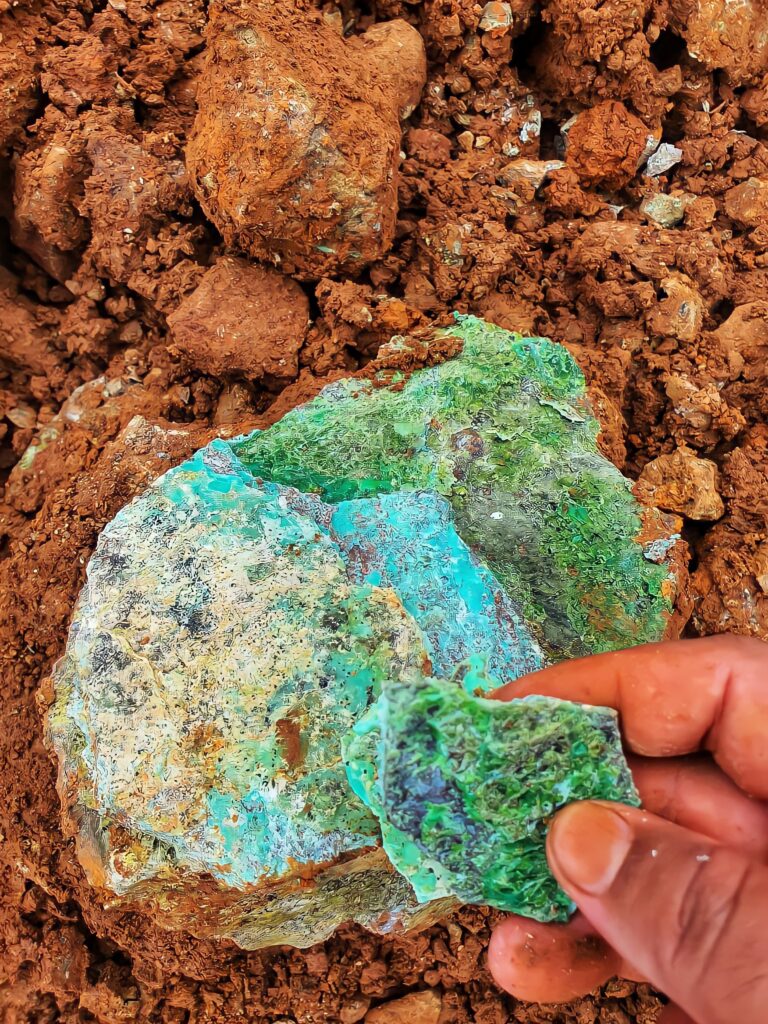
Exhibit 1 – Nickel shares several key properties with copper, making it a strong substitute
Source: iStock/Rakhmat Sobirin
Conventional recycling processes struggle to reach these thresholds economically, but new processes are emerging. UK start-up Aeramine, part of the UKC Group and backed by Innovate UK, has made meaningful progress by developing a process that refines cable-grade scrap copper to 5N purity, with significantly reduced oxygen content. Alongside established 5N producers such as JX Advanced Metals (formerly JX Nippon), Mitsubishi Materials, Sumitomo and Luvata, Aeramine’s process points towards a more circular high-purity supply chain. However, scaling remains difficult as producing 5N material from scrap requires specialised infrastructure and careful feedstock selection that cannot simply be replicated at the volumes the market now demands. Recycling will play an increasingly important role in the copper supply picture, but it cannot fully close the gap.
Is nickel the most credible high-performance alternative to copper?
Among the near-term alternatives for ultra-high-purity copper, nickel occupies a distinct position. Nickel’s proximity to copper in the periodic table means that, as transition metals, they share several key properties such as conductivity, corrosion resistance and workability. Crucially, nickel has one structural advantage that copper does not: it is ferromagnetic. This means nickel can absorb and redirect magnetic fields, a capability that is necessary for radar absorption, electromagnetic interference (EMI) shielding and high-frequency electronics where copper alone is insufficient.
This makes nickel not just a substitute but, in some cases, a superior material. Nickel is also slightly less dense than copper, which matters in aerospace and defence contexts where weight carries a direct cost. According to the IEA, nickel’s wide thermodynamic stability range also makes it suitable for satellite electronics and high-reliability aerospace connectors. Beyond electronics, nickel plays a critical role in green hydrogen production as an electrocatalyst for the hydrogen evolution reaction, the electrochemical process by which water is split to produce hydrogen and oxygen. It provides an active catalytic surface, shows high resistance to poisoning and maintains stability under repeated electrochemical cycling.
How is the nickel market evolving for high-purity applications?
On the supply side, Glencore and Vale are among the world’s largest nickel miners, but nickel accounts for only 2% and c 0.04% of their transition metals output, respectively, a relatively small portion of their operations. Specialist suppliers such as Alkemya Metacore and Stanford Advanced Materials are focused specifically on ultra-pure nickel for advanced applications. Alkemya Metacore holds approximately 7m metres of ultra-pure nickel wire, with the asset tokenised as a security token and traded on regulated exchanges in the UK, Singapore and El Salvador. This model reflects a broader shift in how industrial metals are being structured and accessed by investors: rather than pricing nickel by the tonne, Alkemya Metacore monetises its performance characteristics, with engineered mesh products commanding pricing multiples well above the commodity exchange rate across end markets including green hydrogen, EMI shielding and aerospace.
The IEA projects clean energy applications could account for up to 55% of total nickel demand by 2040, with EV battery demand alone expected to increase ninefold by 2050. This trajectory is likely to drive increasing attention towards high-purity and ultra-high purity nickel supply chains.
Which materials are gaining traction alongside Nickel?
Aluminium is the most commercially mature alternative, offering c 60% of copper’s electrical conductivity at a third of its density. Aluminium is increasingly used in power transmission, automotive and aerospace applications, where weight reduction is critical. However, aluminium cannot substitute copper as a battery anode current collector due to chemical limitations, and its lower conductivity in power grids requires thicker cables, increasing weight and maintenance complexity. Aluminium processing is nearly five times more energy-intensive than copper refining, which sits awkwardly against sustainability objectives.
Carbon nanotubes present a compelling long-term opportunity. They offer exceptional conductivity, strength and thermal performance, with potential applications in power transmission, motors and ultra-lightweight wiring. Industrial players such as Arkema, Toray and Nanocyl are advancing in this space, and the production process has the added benefit of generating hydrogen efficiently. However, high costs and manufacturing complexity mean large-scale adoption remains some way off.
Where will investors capture value in the shift beyond copper?
The most interesting investment questions are not about copper itself, which will remain essential, but about the adjacent materials and technologies that the copper shortfall is bringing into focus.
The near-term opportunity is in purity infrastructure: facilities capable of producing conductive materials at the extreme specifications that advanced applications demand, whether through primary production or advanced recycling processes. The medium-term opportunity lies in nickel’s expanding role at the intersection of electromagnetic performance, green hydrogen and battery chemistry. Nickel is a metal with specific properties that happen to align with several of the most important industrial transitions.
Edison insight
The copper supply deficit is structural and already developing. Recycling and primary production cannot keep pace with demand from electrification, AI and defence, and the gap is widest at the purity levels that advanced applications require. This is opening a distinct investment opportunity in advanced conductive alternatives: aluminium where weight matters, carbon nanotubes as a longer-dated bet, and nickel as the most compelling near-term case. Nickel is ferromagnetic, electrochemically stable and thermodynamically resilient in ways copper simply is not. These properties make it uniquely suited to radar absorption in stealth and defence systems, and to the electrolysers and fuel cells at the heart of the green hydrogen economy. In these markets, pricing follows performance rather than tonnage. That distinction is where the investment case lives.
Megatrends: resource scarcity, energy transition, disruptive technologies, climate change, automation and industrial innovation