Prima BioMed
Written by
Prima BioMed |
AIPAC Phase IIb starts randomized component |
Clinical update |
Pharma & biotech |
16 February 2017 |
ADR research
ADR share price performance
Business description
Next events
Analysts
|
||||||||||||||||||||||||||||||||||||||||
Prima BioMed maintains its leadership in LAG-3 immunotherapies with the initiation of the randomized Phase IIb component of the AIPAC trial of IMP321 in breast cancer. In addition, the TACTI-Mel study of IMP321 combined with Keytruda in melanoma is expected to complete recruitment and report safety data in mid-2017, while the pipeline now includes a first-in-class Lag-3 agonist antibody. Initial efficacy data on the first 15 patients in AIPAC is also expected mid-year. We have revised development timelines for in-house and partnered LAG-3 programs, which sees our valuation decrease to US$192m or US$9.24/ADR (vs US$215m or US$10.40/ADR).
Year end |
Revenue (US$m) |
PTP |
EPADR |
DPADR |
P/E |
Gross yield |
06/15 |
1.0 |
(9.8) |
(0.65) |
0.0 |
N/A |
N/A |
06/16 |
1.5 |
(10.4) |
(0.43) |
0.0 |
N/A |
N/A |
06/17e |
1.0 |
(9.7) |
(0.47) |
0.0 |
N/A |
N/A |
06/18e |
8.0 |
(3.1) |
(0.15) |
0.0 |
N/A |
N/A |
Note: Converted at A$1/US$0.76 for the table above and throughout the note.
Randomized AIPAC Phase IIb underway
In January Prima dosed the first of 226 patients in the randomized Phase IIb component of the AIPAC trial in metastatic breast cancer (mBC). Patients will receive either 30mg of the IMP321 APC activator or placebo, in combination with paclitaxel. The 30mg dose is 5x higher than the dose that delivered a 50% response rate in an earlier study, and was well tolerated in the safety run-in study.
TACTI-mel expected to fully recruit by mid-2017
Recruitment commenced in January in the second cohort in the Phase I trial of IMP321 combined with the immune checkpoint inhibitor Keytruda (pembrolizumab) in melanoma; the final cohort is expected to complete recruitment mid-year. IMP321 is being used to enhance immune responses in melanoma patients who have had sub-optimal responses to initial treatment with Keytruda.
Pipeline expands, out-licensed programs progress
Prima has expanded its LAG-3 pipeline with the addition of IMP761, a first-in-class LAG-3 agonist antibody in preclinical development. IMP761 could potentially help treat autoimmune diseases by temporarily switching off activated LAG-3+ T cells. Partners Novartis and GSK are both conducting clinical trials of LAG-3 antibody programs licensed from Prima designed to either stimulate (Novartis) or inhibit (GSK) immune responses, with both trials scheduled to be completed in 2018.
Valuation trimmed to US$192m, US$9.24 per ADR
Our valuation decreases to US$192m (vs US$215m). After reviewing probable development time lines we have delayed forecast market launch dates for each pipeline product by 12 months. Furthermore, we have removed CVac from our valuation model until partner Sydys raises funds to complete development. Our valuation is equal to US$9.24/ADR on an undiluted basis (vs US$10.40) or US$6.37/ADR after accounting for dilution from options, warrants and convertible notes (vs US$7.07).
Investment summary
Company description: LAG-3 immunotherapy programs
Prima BioMed is an ASX-listed immunotherapy company headquartered in Sydney, Australia, which is focused on developing products based on the LAG-3 pathway, following the acquisition of the private French immunotherapy company Immutep in December 2014. Its lead product IMP321 is in Phase II in breast cancer and in Phase I in combination with the checkpoint inhibitor Keytruda – Prima retains all the product rights except for China (partnered with Eddingpharm). IMP731 is in Phase I with GSK for autoimmune diseases, while IMP701 is in Phase I for solid tumors with Novartis. Prima previously conducted Phase II trials for the dendritic cell vaccine CVac in ovarian and pancreatic cancer, but has out-licensed the program to Sydys Corporation. The company has facilities in Paris, France; Leipzig and Berlin, Germany; and its headquarters are in Sydney, Australia.
Valuation: DCF valuation of US$192m, US$9.24 per ADR
Our DCF valuation is US$192m or US$9.24 per ADR (US$6.37/ADR fully diluted). The fully diluted value per share is based on potential dilution from the 1.3bn options, warrants and convertible notes that would be in the money at the undiluted valuation of US$9.24 per ADR, including an assumption that the $10.5m Ridgeback Capital convertible note is converted to 688m shares at US$1.52/ADR. There would be further upside if the LAG-3 products progress and if studies indicate broader potential in new indications. GSK has indicated that it expects to progress the IMP731 program into Phase II, which would provide upside to our current valuation. The next catalysts include efficacy data from the 15 patients in the two dose-finding cohorts in the Phase II study of IMP321 in metastatic breast cancer (MBC) in mid-2017. We also anticipate newsflow from the ongoing Phase I trial of IMP701 with Novartis.
Financials: Cash position of US$12.6m
The gross cash position at the end of December 2016 was US$12.6m. Operating cash burn in H117 was US$3.1m, 39% lower than the corresponding period in the previous year. This has led us to modestly reduce forecast total expenditure in FY17, although we still forecast cash burn to more than double in the second half of FY17 as the randomized Phase IIb component of the AIPAC trial gets underway. The lower expenditure sees our forecast FY17 EBITDA loss contract by 5% to US$10.9m (vs US$11.4m). Our forecasts assume that Prima receives a risk-adjusted US$7m milestone payment from GSK in FY18 under the IMP731 license agreement. If no milestone payments are received in the period we estimate that an extra US$4m will be needed to fund operations until end FY18.
Sensitivities: Relying on LAG-3
Prima is exposed to clinical, regulatory and commercialization risks typical of all biotech companies. The key sensitivity is clinical progress of its pipeline of LAG-3 candidates, primarily the internally funded IMP321. While Prima has funds to initiate the randomization stage of the IMP321 Phase II study in MBC, it would require a partnership, milestone payments or alternative forms of funding to complete the study and advance IMP321 further. Existing partnerships with big pharma reduce the financial and execution risk for IMP701 and IMP731; in addition, if the Phase I study of IMP701 reveals evidence of efficacy, this could lead GSK to extend the study to additional indications including rheumatoid arthritis and multiple sclerosis, which could increase the potential peak sales and therefore the value of the product. Separately, progress with CVac depends on partner Sydys raising sufficient funds to progress development
Focused on LAG-3 immunotherapies
In December 2014 Prima BioMed completed the acquisition of French private immunotherapy company Immutep for a total consideration of US$20.0m. Immutep had a pipeline of three products, two of which are partnered, based on pathways in the Lymphocyte Activation Gene 3 (LAG-3) immune control mechanism. Subsequently, Prima took the strategic decision to prioritize the development of its lead LAG-3 product IMP321, a first-in-class fusion protein over its previous sole product CVac (a dendritic cell therapy), which it out-licensed to Sydys Corporation in May 2016.
The Immutep acquisition brought established relationships with Eddingpharm, GSK and Novartis, together with potential milestones of over US$100m plus royalties. Immutep’s founder, Professor Frédéric Triebel, a leading expert on LAG-3, joined Prima BioMed as CMO/CSO.
Exhibit 1: Prima BioMed pipeline
Product /Partner |
Indication |
Status |
Notes |
IMP321/Eddingpharm, (China) |
Metastatic breast cancer + chemotherapy; |
Phase IIb/ |
Clinical trials underway as an antigen-presenting cell (APC) activator combined with chemotherapy or immune checkpoint inhibitor. WuXi AppTec China produces IMP321 under terms of partnership with Eddingpharm, to US European and Chinese GMP standards. |
GSK2831781/IMP731/GSK (worldwide) |
Autoimmune disease/plaque psoriasis |
Phase I |
Depleting anti-LAG-3 antibody, depletes activated T-cells. Phase I trial in healthy subjects and patients with plaque psoriasis started January 2015, data in 2017/2018. Potential milestone payments of up to US$100m + royalties. |
IMP701/Novartis (worldwide) |
Cancer and chronic infectious disease |
Phase I |
Antagonist anti-LAG-3 antibody, activates T-cell proliferation, immune checkpoint blocker. Phase I trial started June 2015, expanded to 416 pts (vs 240) June 2016. |
IMP761 |
Autoimmune disease |
Preclinical |
First in class LAG-3 agonist antibody. Preclinical studies to investigate potential applications to help treat autoimmune disease by temporarily switching off activated LAG-3+ T cells. |
CVac/Sydys (worldwide except Israel), Neopharm (Israel) |
Second remission ovarian cancer, pancreatic cancer |
Phase II terminated |
Prima terminated a Phase IIb study in second remission ovarian cancer, CAN-004B, and a Phase IIa study in pancreatic cancer, CAN-301, to focus its resources on IMP321. Out-licensed to Sydys Corporation in May 2016. Potential milestone payments of US$293m + low single-digit royalties. |
Source: Prima BioMed
IMP321 uses soluble LAG-3 to activate APCs
Prima BioMed’s lead product IMP321 is a LAG-3 Ig fusion protein that is based on the soluble form of LAG-3 and can activate antigen presenting cells (APCs). These activated APCs process tumor antigens, including those released from cells killed by chemotherapy, transport the antigens to lymph nodes and present the tumor antigens to T lymphocytes, thus activating and amplifying the immune response.
Randomized AIPAC breast cancer Phase IIb underway
Prima announced on 20 January 2017 that the first patient has been dosed in the randomized Phase IIb component of its AIPAC Phase IIb chemo-immunotherapy trial of IMP321 soluble LAG-3 fusion protein in mBC. The randomized double blind phase will enroll 226 patients, with half receiving standard paclitaxel chemotherapy on days 1, 8 and 15, plus 30mg of IMP321 on days 2 and 16 of each four-week cycle; the other half will receive Paclitaxel plus placebo. According to the record on clinicaltrials.gov (NCT02614833), the final data for the progression free survival (PFS) primary endpoint is expected to be collected in June 2019. Depending on the recruitment rate and PFS observed, we estimate that top line PFS data could mature sometime between late 2018 and mid-2019. The details of the trial are summarized in Exhibit 2. The European regulator (EMA) has indicated that this trial could be sufficient to support a marketing authorization if it achieves certain (undisclosed) clinical endpoints.
The trial is recruiting women with hormone receptor positive mBC who are eligible for first line treatment with paclitaxel. Many of these women would have been previously treated with hormone therapy. Women with HER2 positive tumors who are eligible for treatment with trastuzumab (Herceptin) are excluded from the trial.
|
Exhibit 2: Overview of AIPAC Phase IIb trial from recent company presentation |
|
|
Source: Company presentation, January 2017 |
The initiation of the randomized component of the trial follows the release in December 2016 of data from the 15 patients treated at two doses (6mg and 30mg) in the safety run-in phase of the trial, which found that IMP321 was well tolerated at both dosage levels. Immune monitoring data demonstrated immune activation and increased levels of blood monocytes, dendritic cells and effector T cells.
Initial data on tumor response rates in the first 15 patients are expected mid-year. The response rate in these patients will give an initial indication of activity of the combination therapy. The response rate was 50% in a 30-patient Phase I trial of IMP321 (dosed at 0.25-6.25mg) plus paclitaxel that was conducted by Immutep in mBC compared to 25% in a historical control group.
TACTI-mel expected to fully recruit mid-year
In January Prima began recruiting patients in the second of three planned dose cohorts in the Phase I TACTI-mel (Two ACTive Immunotherapies in melanoma) trial, after the Database Safety Monitoring Board confirmed that the 1mg dose of IMP321 used in the first cohort was safe and well tolerated. This study will test three doses of IMP321 in combination with the anti-PD-1 immune checkpoint inhibitor (ICI) Keytruda (pembrolizumab, Merck) in 18 patients with advanced melanoma, as shown in Exhibit 3.
The trial is investigating IMP321 in subjects who have had a suboptimal response to initial cycles of treatment with Keytruda. Subjects are assessed after they have undergone three cycles to treatment with Keytruda; patients with stable disease or slow progression not requiring urgent intervention are eligible to participate in the IMP321 trial. This strategy eliminates early responders to Keytruda as well as patients with rapidly progressive disease after initiation of ICI treatment who generally do not respond to further ICI therapy.
The TACTI-mel study will evaluate anti-tumor activity and the nature of the immune response at the three doses, in addition to safety, pharmacokinetics and pharmacodynamics. We expect some of the immune response data collected from the first dose cohort to be presented at scientific conferences in H1 CY17.
|
Exhibit 3: Overview of TACTI-mel Phase I trial |
|
|
Source: Company presentation, January 2017 |
The TACTI-mel study combines the APC activation properties of IMP321, which helps to initiate an immune response, with an ICI which ‘releases the brakes’ on the immune effector cells, enabling a stronger immune response. Prima has shown in preclinical studies that combining IMP321 with immune checkpoint inhibitors increased the strength of an anti-cancer immune response and the speed and level of tumor regression.
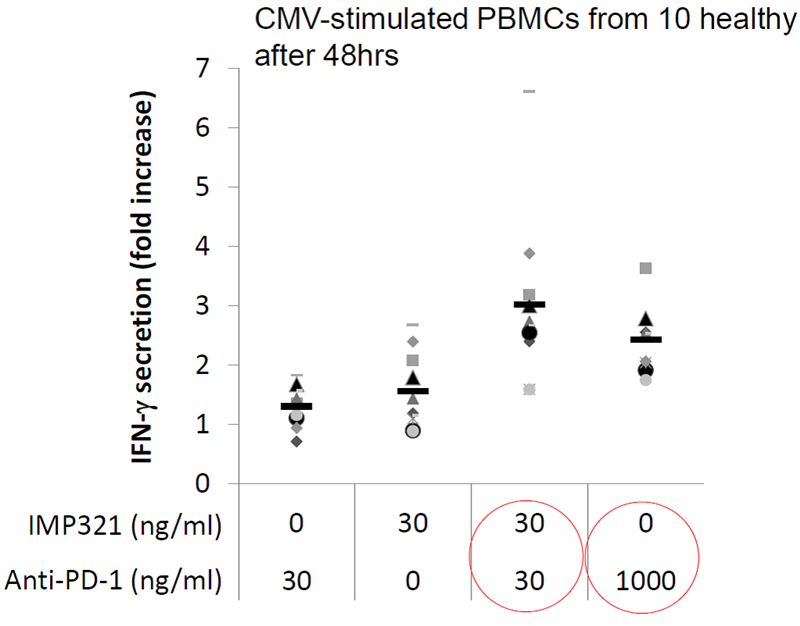
Exhibit 4 shows that combining IMP321 with a PD-1 blocking antibody increased the activation of lymphocytes when human white blood cells (peripheral blood mononuclear cells) were stimulated in vitro. Similarly, in a mouse model of colon cancer, combination therapy with the mouse analogue of IMP321 (mLAG-3Ig) plus a PD-L1 blocking antibody inhibited tumor growth to a greater degree than either treatment on its own.
|
Exhibit 4: Combining IMP321 with anti-PD-1 antibodies produces stronger immune responses and greater anti-tumor efficacy in preclinical studies |
|
|
|
|
Source: Prima Biomed presentation to Society for Immunotherapy of Cancer (SITC) conference |
|
|
Exhibit 4: Combining IMP321 with anti-PD-1 antibodies produces stronger immune responses and greater anti-tumor efficacy in preclinical studies |
|
|
|
|
|
|
Source: Prima Biomed presentation to Society for Immunotherapy of Cancer (SITC) conference |
Incyte/Calithera Biosciences deal highlights IO deal values
In January Incyte paid US$45m upfront (plus buying US$8m shares) to enter a global collaboration and license agreement with Calithera Biosciences to jointly develop Calithera’s CB-1158 small molecule arginase inhibitor. CB-1158 blocks the arginase enzyme which depletes the amino acid arginase in the tumor microenvironment and thereby prevents activation of cytotoxic T cells and natural killer (NK) cells. This activity of CB-1158 is expected to complement PD-1/PD-L1 ICI drugs and lead to stronger overall anti-tumor immune responses.
In addition to US$53m upfront, deal terms included up to US$430m in development, regulatory and commercialization milestones. Calithera will receive a 40% share of US profits and tiered royalty ranging from low to mid-teens on ex-US sales. Incyte will fund 70% of global development and Calithera the remaining 30%. If Calithera opts out of its co-funding obligations it would receive the same low to mid-teens royalty on US sales and the potential milestones will increase to US$750m.
This transaction highlights that immuno-oncology transactions can involve substantial deal values and suggests that the US$50m upfront and US$175m in development and approval milestones that we model for an IMP321 license deal could turn out to be conservative estimates.
IMP761: First in class LAG-3 agonist antibody
Prima has expanded its LAG-3 pipeline with the addition of IMP761, a first-in-class LAG-3 agonist which was developed in its laboratories in France. The antibody is an early stage product candidate that could potentially help in the treatment of autoimmune diseases by temporarily switching off activated LAG-3+ T cells that are creating an inflammatory response. IMP761 is undergoing preclinical development to better understand its potential applications.
LAG525 Phase I/II scheduled for late 2018 completion
IMP701, which is partnered with Novartis, is an antagonist mAb, which blocks the LAG-3-mediated inhibitory signal given to tumor-infiltrating T-cells and thus activates T-cell proliferation. LAG525 is Novartis’s humanized version of IMP701, which it has taken into clinical development.
Novartis is conducting a 416-patient Phase I/II trial of LAG525 under its collaboration and licensing agreement with Prima. The trial (clinicaltrials.gov identifier: NCT02460224) is testing LAG525 as a single agent, as well as in combination with Novartis’s in-development anti-PD-1 immune checkpoint inhibitor PDR001, in patients with melanoma, NSCLC and renal cancers. The trial began in June 2015 and has an estimated completion date of October 2018, so we anticipate news flow from this study in late 2018.
IMP731/GSK2831781 Phase I in psoriasis
Prima’s second out-licensed LAG-3 program utilizes LAG-3 in a different way to target autoimmune disease. It is based on IMP731, which is a cytotoxic mAb that will kill the few LAG-3+ activated T-cells that infiltrate autoimmune disease sites.
IMP731 is under development by partner GlaxoSmithKline (GSK), which in-licensed the program from Prima (Immutep) in 2011. GSK has developed a humanized form of the IMP731 mAb, which it has termed GSK2831781. GSK dosed the first patient in a Phase I study of GSK2831781 in January 2015 in patients with plaque psoriasis.
The trial is testing GSK2831781 at lower doses in four cohorts of healthy subjects previously vaccinated with Bacillus Calmette Guérin (BCG), where it will measure safety and impact on the immune response to BCG vaccine. In the second part of the trial, 32 patients with plaque psoriasis will be treated in four higher-dose cohorts randomly assigned to be administered either GSK2831781 or placebo.
The trial will measure the activity of GSK2831781 in the psoriasis patients, including the proportion of patients achieving 50% and 75% improvement from baseline in Psoriasis Area Severity Index (PASI), and change from baseline in Psoriatic Lesion Severity Scores (PLSS). This suggests that the Phase I trial could potentially produce early evidence of activity of the therapy in psoriasis patients.
The heading on a slide shown at GSK’s R&D investor day in November 2015 which listed GSK2831781 alongside three other first-in-class immuno-inflammation antibodies indicated that all four were expected to enter Phase II in 2016 with anticipated regulatory filings in 2021-25. However, there is currently no entry for the mooted Phase II trial of GSK2831781 on clinicaltrials.gov, so it is not clear when it will commence.
CVac out-licensed to Sydys but future uncertain
In May 2016, Prima out-licensed CVac to Sydys Corporation (OTC: SYYC, www.sydyscorp.com), a publicly traded New York company that has been repurposed to develop the CVac assets. There was no upfront payment, but Prima received a 9.9% equity stake in Sydys at the time of closing. Should CVac be successfully commercialized, Prima could receive over US$293m in development, regulatory and commercial milestone payments for achieving set commercial sales targets, in addition to low single-digit royalties on sales. The deal removes any requirement to fund further development of CVac, while allowing Prima to participate in upside if the vaccine proves effective in future clinical trials.
However, there is no evidence on the Sydys website that it has been able to raise the funds necessary to progress the development of CVac, and Google Finance suggests that Sydys has a market capitalization of US$3m. Due to the uncertainty around the ability of Sydys to fund the development program, we have removed CVac from our valuation model of Prima.
Valuation
After reviewing the probable development timelines for Prima’s pipeline of in-house and partnered products, taking into account the expansion of the AIPAC randomized Phase IIb from 196 to 226 patients and the fact that GSK has not yet commenced a Phase II trial of GSK2831781, we have delayed the forecast launch date for each product by 12 months and have in turn extended our cash flow forecast period by 12 months to 2035. We have removed CVac ovarian cancer vaccine (previously valued at US$21.1m) from our valuation model as we await evidence that Sydys has the resources to fund the necessary clinical trials. Prima’s primary listing is on the ASX under the code PRR; on 28 December 2016 the ratio for the company’s ADR program was changed so that each NASDAQ-listed ADR now represents 100 ordinary shares (vs 30 shares previously). Our undiluted valuation equals A$0.12 per ASX-listed ordinary share at current exchange rates.
We have updated our risk-adjusted DCF valuation to account for these changes and have rolled forward the model to end H117 (December 2016). Our valuation of Prima has decreased to US$192m (previously US$215m) or US$9.24 per ADR (undiluted, previously US$10.40 per ADR). On a fully diluted basis our valuation falls to US$6.37 per ADR (vs US$7.07 per ADR), after taking into account the options, warrants and convertible notes on issue. We assume that product sales reach peak market share six years after launch, grow in line with the market for the next four years and then decline at 10% per year. Other core valuation assumptions are unchanged. Exhibit 5 summarizes the constituent parts of our valuation, which is based on a discount rate of 12.5%.
The gross cash balance at end FY16 was US$15.9m. For valuation purposes we deduct the US$10.5m face value of the Ridgeback Capital convertible note in calculating end-FY16 net cash of US$5.4m as shown in Exhibit 6. We note that this is different to the accounting treatment of the convertible note, which includes only the US$3.8m estimated fair value of the convertible note as a non-current liability with the remainder treated as equity, resulting in a balance sheet net cash figure of US$12.3m as shown in Exhibit 7.
Our unchanged peak sales estimates for IMP321 and IMP701/LAG525 are based on pricing per patient of US$60k and US$40k in the US and Europe, respectively. The marketed ICIs Keytruda, Nivolumab and Tecentriq are all priced at about US$12,500 per month (US$150k per year) in the US, which suggests that our pricing assumptions may be conservative depending on the approved indications, duration of treatment and total cost of combination therapies.
Exhibit 5: DCF valuation of Prima BioMed
Value driver |
Launch date |
Likelihood of success |
Peak sales (US$m) |
Royalty |
Value (US$) |
Value per ADR (US$) |
IMP321-MBC |
2021 (EU), |
35% |
971 |
17.5% |
137.0 |
6.61 |
IMP321+anti-PD1 ICI-melanoma |
2025 |
15% |
480 |
17.5% |
22.0 |
1.06 |
IMP321 milestones - assume partnered post PII in MBC |
US$225 estimated risk-adjusted milestones from out-licensing North American and European rights. |
36.1 |
1.74 |
|||
IMP731-autoimmune disease |
2023 |
15% |
1,079 |
8% |
30.4 |
1.47 |
Potential IMP731 milestones from GSK |
US$90m of total US$100m in risk-adjusted milestones from GSK |
13.6 |
0.65 |
|||
IMP701-solid tumors (lung cancer) |
2025 |
15% |
2,440 |
5% |
31.6 |
1.52 |
Potential IMP701 milestones from Novartis |
US$20m in risk-adjusted milestones from Novartis |
2.2 |
0.11 |
|||
Grants |
0.0 |
0.00 |
||||
R&D expenses |
(12.5) |
(0.60) |
||||
Admin expenses |
(13.1) |
(0.63) |
||||
Capex |
(0.1) |
(0.00) |
||||
Tax |
(61.1) |
(2.95) |
||||
Net cash |
End FY16 net cash (including US$10.5m convertible note at face value) |
5.4 |
0.26 |
|||
Total |
191.6 |
9.24 |
||||
Source: Edison Investment Research
Exhibit 6 shows that in addition to the 2,073m Prima shares currently in issue, there are a further 1,373m potential shares that could be issued on the exercise of options, warrants and convertible notes, including 1,296m that would be in the money at our US$9.24 per ADR undiluted valuation. Exhibit 6 shows that after taking into account these potential shares, our diluted valuation is US$6.37 per ADR. Depending on the timing of milestone payments from partners, Prima is likely to require additional funding to complete the IMP321 clinical trials; our diluted valuation of US$6.37 per ADR does not take into account potential dilution from any future capital raising.
Exhibit 6: Potential further dilution and value per ADR
Average exercise price per ADR equivalent (US$) |
m |
|
Current number of ADRs |
20.7 |
|
Ridgeback convertible note potential ADRs |
1.52 |
6.9 |
Ridgeback warrants |
1.80 |
3.8 |
Listed options |
15.20 |
0.8 |
Unlisted options |
3.83 |
1.5 |
Performance rights |
0.00 |
0.8 |
Total in-the-money potential ADRs |
13.0 |
|
Total potential diluted number of ADRs |
33.7 |
|
Net cash raised from options and CN exercise |
23 |
|
Valuation (above plus additional cash) |
215 |
|
Diluted value per ADR |
6.37 |
Source: Edison Investment Research
The breadth of the LAG-3 pipeline means there could be further upside if Prima or its partners launch additional products into the clinic or broaden the indications being studied.
We include risk-adjusted milestones payable by current partners GSK for IMP731 and Novartis for IMP701, plus milestones from prospective deals for IMP321. Possible catalysts include efficacy data from the AIPAC dose-finding cohorts, progression of the licensed anti-LAG-3 antibody into Phase II by GSK or news on partnering, all of which could provide upside to our current valuation.
Financials
The gross cash position at the end of December 2016 was US$12.6m. Operating cash burn in H117 was US$3.1m, 39% lower than the corresponding period in the previous year. This has led us to modestly reduce our forecast total expenditure in FY17, although we still forecast cash burn to more than double in the second half of FY17 as the randomized Phase IIb component of the AIPAC trial gets underway. The lower expenditure sees forecast FY17 EBITDA loss contract by 5% to US$10.9m (vs US$11.4m). Our forecasts assume that Prima receives a risk-adjusted US$7m milestone payment from GSK in FY18 under the IMP731 license agreement. If no milestone payments are received in the period we estimate that an extra US$4m will be needed to fund operations until end FY18.
Sensitivities
Prima is exposed to the same clinical, regulatory and commercialization risks as all biotech companies. The key sensitivity is clinical progress of its pipeline of LAG-3 candidates, primarily the internally funded IMP321. While Prima has funds to initiate the randomization stage of the IMP321 Phase II study in MBC, it would require a partnership or alternative forms of funding to complete the study and advance IMP321 further. Existing partnerships with big pharma reduce the financial and execution risk for IMP701 and IMP731; in addition, if the Phase I study of IMP701 reveals evidence of efficacy, it could lead GSK to extend the study to additional indications including rheumatoid arthritis and multiple sclerosis, which could increase the potential peak sales and therefore the value of the product. Separately, progress with CVac depends on partner Sydys raising sufficient funds to progress development.
Exhibit 7: Financial summary
|
US$000s |
2015 |
2016 |
2017e |
2018e |
|
Year end 30 June |
IFRS |
IFRS |
IFRS |
IFRS |
||
PROFIT & LOSS |
||||||
Revenue |
|
|
1,015 |
1,481 |
952 |
8,028 |
Cost of Sales |
(6,804) |
(5,365) |
(5,526) |
(5,692) |
||
Gross Profit |
(4,350) |
(5,307) |
(5,413) |
(5,575) |
||
EBITDA |
|
|
(10,142) |
(9,191) |
(9,987) |
(3,239) |
Operating Profit (before GW and except.) |
|
(10,390) |
(9,329) |
(9,990) |
(3,244) |
|
Intangible Amortization |
(772) |
(1,515) |
(1,426) |
(1,298) |
||
Exceptionals |
(13,937) |
(36,076) |
0 |
0 |
||
Operating Profit |
(25,099) |
(46,920) |
(11,416) |
(4,542) |
||
Other |
409 |
(1,304) |
0 |
0 |
||
Net Interest |
146 |
194 |
317 |
185 |
||
Profit Before Tax (norm) |
|
|
(9,835) |
(10,439) |
(9,672) |
(3,059) |
Profit Before Tax (IFRS) |
|
|
(24,543) |
(48,029) |
(11,099) |
(4,357) |
Tax |
108 |
898 |
0 |
0 |
||
Profit After Tax (norm) |
(9,727) |
(9,541) |
(9,672) |
(3,059) |
||
Profit After Tax (IFRS) |
(24,435) |
(47,132) |
(11,099) |
(4,357) |
||
0.0 |
0.0 |
0.0 |
0.0 |
|||
Average Number of Shares Outstanding (m) |
1,490.1 |
2,236.3 |
2,061.6 |
2,073.1 |
||
Average Number of ADRs Outstanding (m) |
14.9 |
22.4 |
20.6 |
20.7 |
||
EPS - normalized (c) |
|
|
(0.7) |
(0.4) |
(0.5) |
(0.1) |
EPS - IFRS (c) |
|
|
(1.6) |
(2.1) |
(0.5) |
(0.2) |
Dividend per share (c) |
0.0 |
0.0 |
0.0 |
0.0 |
||
Earnings per ADR - normalized ($) |
(65.3) |
(42.7) |
(46.9) |
(14.8) |
||
Earnings per ADR - IFRS (c) |
(164.0) |
(210.8) |
(53.8) |
(21.0) |
||
Dividend per ADR (c) |
0.0 |
0.0 |
0.0 |
0.0 |
||
Gross Margin (%) |
N/A |
N/A |
N/A |
N/A |
||
EBITDA Margin (%) |
N/A |
N/A |
N/A |
N/A |
||
Operating Margin (before GW and except.) (%) |
N/A |
N/A |
N/A |
N/A |
||
BALANCE SHEET |
||||||
Fixed Assets |
|
|
17,450 |
15,871 |
14,464 |
13,183 |
Intangible Assets |
17,223 |
15,847 |
14,421 |
13,123 |
||
Tangible Assets |
226 |
24 |
43 |
60 |
||
Other |
0 |
0 |
0 |
0 |
||
Current Assets |
|
|
6,098 |
16,470 |
6,779 |
3,702 |
Stocks |
0 |
0 |
0 |
0 |
||
Debtors |
240 |
128 |
128 |
128 |
||
Cash |
5,137 |
15,868 |
6,177 |
3,101 |
||
Other |
720 |
473 |
473 |
473 |
||
Current Liabilities |
|
|
(3,329) |
(1,119) |
(1,119) |
(1,119) |
Creditors |
(2,121) |
(1,098) |
(1,098) |
(1,098) |
||
Short term borrowings |
(1,146) |
(0) |
(0) |
(0) |
||
Short term leases |
0 |
0 |
0 |
0 |
||
Other |
(61) |
(21) |
(21) |
(21) |
||
Long Term Liabilities |
|
|
(1,455) |
(4,381) |
(4,381) |
(4,381) |
Long term borrowings incl. conv. note |
0 |
(3,821) |
(3,821) |
(3,821) |
||
Long term leases |
0 |
0 |
0 |
0 |
||
Other long term liabilities |
(1,455) |
(560) |
(560) |
(560) |
||
Net Assets |
|
|
18,764 |
26,841 |
15,742 |
11,386 |
CASH FLOW |
||||||
Operating Cash Flow |
|
|
(5,917) |
(8,811) |
(9,987) |
(3,239) |
Net Interest |
0 |
216 |
317 |
185 |
||
Tax |
(1) |
0 |
0 |
0 |
||
Capex |
(37) |
(21) |
(22) |
(23) |
||
Acquisitions/disposals |
(15,894) |
99 |
0 |
0 |
||
Financing |
5,886 |
20,694 |
0 |
0 |
||
Dividends |
0 |
0 |
0 |
0 |
||
Other |
(125) |
0 |
0 |
0 |
||
Net Cash Flow |
(16,088) |
12,176 |
(9,691) |
(3,076) |
||
Opening net debt/(cash) |
|
|
(17,632) |
(3,991) |
(12,047) |
(2,356) |
HP finance leases initiated |
0 |
0 |
0 |
0 |
||
Other |
2,447 |
(4,120) |
0 |
0 |
||
Closing net debt/(cash) |
|
|
(3,991) |
(12,047) |
(2,356) |
720 |
Source: Prima Biomed accounts, Edison Investment Research. Note: Solely for the convenience of the reader the financial summary table has been converted to US$ at a rate of US$0.76 to A$1. Prima reports statutory accounts in Australian dollars. These translations should not be considered representations that any such amounts have been or could be converted into US dollars at the assumed conversion rate.
|
|||||||||||||||||||||||||||||||||||||||||||
|
|