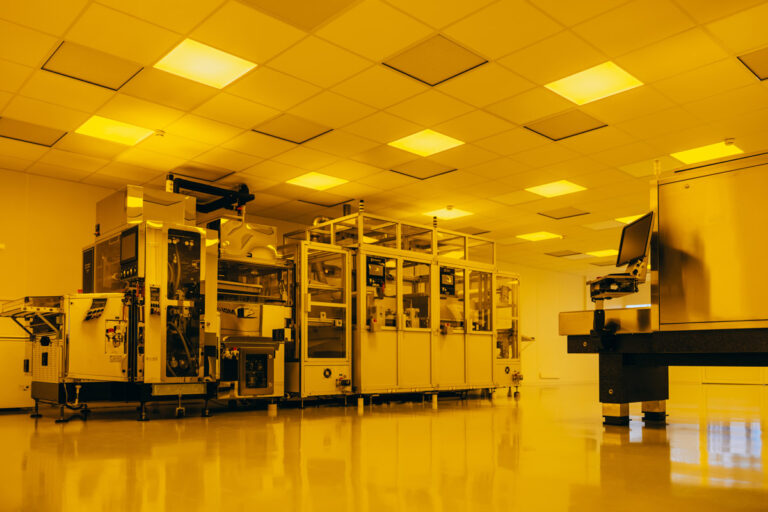
SCHMID — Precision equipment for AI growth

SCHMID (NASDAQ: SHMD)

Last close As at 05/08/2026

USD4.44

−0.16 (−3.48%)

Market capitalisation

USD292m

More on this equity

Research: TMT

SCHMID — Precision equipment for AI growth

SCHMID is a designer and manufacturer of equipment used in the electronics industry for printed circuit board (PCB) and advanced packaging manufacturing. Focused on the higher end of the sector where advances in packaging are driving demand for new processes and materials, SCHMID has developed cutting-edge tools and patented processes. After a couple of years of weaker demand, management expects to see a material uplift in FY26, with the rollout of high-volume manufacturing of new advanced packaging techniques a driver of sustained demand in the medium to longer term. The recently strengthened balance sheet, a growing addressable market and the potential to progressively improve profitability provide drivers for upside to the current valuation.

Written by

Katherine Thompson

Director

Technology

Initiation of coverage

11 June 2026

Price $5.00
Market cap $294m

$1.16:€1

Net cash/(debt) at end FY25 adjusted for debt/equity swaps year-to-date.

€(48.0)m

Shares in issue

58.8m
Free float 29.0%
Code SHMD
Primary exchange NASDAQ
Secondary exchange N/A
Price Performance
% 1m 3m 12m
Abs (17.2) (22.3) 85.1
52-week high/low $10.6 $2.0

Business description

SCHMID develops customised equipment and process solutions for multiple industries including high-tech electronics, photovoltaics, glass and energy systems.

Next events

H126 results

August 2026

Analyst

Katherine Thompson
+44 (0)20 3077 5700

SCHMID is a research client of Edison Investment Research Limited

Note: EBITDA and EPS are normalised, excluding share-based payments and exceptional items.

Year end Revenue (€m) EBITDA (€m) EPS (€) DPS (€) P/E (x) EV/sales (x) EV/EBITDA (x)
12/24 60.8 (2.9) (0.34) 0.00 N/A 5.0 N/A
12/25 66.9 1.7 (0.15) 0.00 N/A 4.5 178.9
12/26e 100.3 18.1 0.12 0.00 35.3 3.0 16.7
12/27e 114.7 22.7 0.18 0.00 23.9 2.6 13.3

Order recovery, debt restructuring

Through the course of FY25, the company saw a recovery in orders, providing backlog to support FY26 targets. A cost-cutting project initiated in January to right size overheads should improve profitability and a major restructuring of debt, while dilutive in FY26 and FY27, reduces gearing significantly. A recently arranged equity funding facility provides access to further funds as and when required. These actions have put the company in a much stronger position to exploit the opportunities in the high-end PCB and advanced packaging markets.

Targeting above-market growth

Buoyed by demand from multiple end markets, particularly AI, the PCB and advanced packaging markets are expected to achieve double-digit annual revenue growth over the medium term. SCHMID’s embedded trace and glass substrate solutions have been developed to serve leading-edge manufacturers, with high-volume manufacturing expected by the end of the decade. We expect demand for tools for well-established processes to at least match market growth, with the adoption of the newer tools for advanced processes helping to push group growth ahead of the market.

Valuation: Long-term growth potential

We estimate that SCHMID is trading at a discount to peers (PCB and packaging equipment manufacturers) on an EV/sales and EV/EBITDA basis, while recent debt/equity swaps mean it trades at a premium on a P/E basis. Triggers for upside from the current level include: evidence of order intake picking up to meet FY26 guidance, profitability improving towards the peer group average and, in the longer term, adoption of SCHMID’s embedded trace and glass substrate tools for high-volume manufacturing.

Investment summary

Equipment for the AI compute age

SCHMID is a fifth-generation family-run designer and manufacturer of tools used in the electronics industry for the manufacturing of PCBs and advanced packaging. With facilities in Germany and China, the company serves a wide range of customers globally, with roughly half of revenue from Asia, 30% from the US and the remainder from Europe. Various end markets drive demand, with the buildout of AI infrastructure in particular driving demand for AI server boards and optical modules, which have demanding technical requirements. SCHMID tends to service the higher end of the market, where customers are willing to pay for superior quality and access to global support. The company has developed technology to support advances in packaging techniques, including its proprietary embedded trace technology and glass core substrates. Adoption of the more recently introduced tools that support these advanced processes will be crucial to the company outgrowing the market.

Financials: Major debt restructuring puts the company on better footing

After two years of weak end demand as the industry worked down excess inventory built up post-COVID and one customer changed its expansion plans, SCHMID saw equipment orders recovering from Q225, with order intake for FY25 up 314% y-o-y and a book-to-bill ratio of 1.67x. For FY26, the company expects order growth of 25%, revenue of c €100m and an EBITDA margin well in excess of 12%. We forecast revenue growth of 50% in FY26, 14% in FY27 and 13% in FY28 and stable gross margins of 35%. Helped by a cost-cutting programme launched earlier this year, we expect a small decline in opex this year followed by modest growth in FY27 and FY28. We forecast an EBITDA margin of 18.1% for FY26, growing to 21.2% by FY28. This translates to an EBIT margin of 11.4% in FY26, growing to 15.5% in FY28. We forecast a return to positive EPS in FY26, and EPS growth of 48% in FY27 and 29% in FY28. During the period of reduced revenues in FY24 and FY25, debt ballooned and the company experienced issues with working capital. To reduce the high level of debt, the company has undertaken various debt-to-equity swaps, which has resulted in the number of shares outstanding increasing by 48% since the start of the year, while reducing gearing to a much more manageable level. We forecast net debt/EBITDA of 1.4x by the end of FY26 reducing to 0.3x by the end of FY27, assuming both the Black Forest loan from December 2025 and the convertibles issued in January and March 2026 fully convert.

Valuation: Long-term growth potential not factored in

We estimate that SCHMID is trading at a discount to peers (PCB and packaging equipment manufacturers) on an EV/sales and EV/EBITDA basis, while recent debt/equity swaps mean it trades at a premium on a P/E basis. Triggers for upside from the current level include: evidence of order intake picking up to meet FY26 guidance, improving profitability and, in the longer term, adoption of SCHMID’s embedded trace and glass substrate tools for high-volume manufacturing. A reverse discounted cash flow (DCF) analysis implies that the market is factoring in only modest growth after the forecast period, with EBITDA margins growing, but still below the industry average.

Sensitivities: Family ownership, order timing, technology adoption

The company is majority-controlled by CEO Christian Schmid and his sister, Anette Schmid, who is a non-executive director. The timing and magnitude of orders is difficult to predict, requiring flexible operational and manufacturing management. The PCB and advanced packaging industries take their lead from the design of semiconductor chips – the ability of SCHMID to stay abreast of technology changes and develop tools that are adopted by leading-edge manufacturers will be critical to remaining competitive. The company’s performance will also be sensitive to geopolitical factors, raw material costs and availability and the PCB cycle.

Company description

SCHMID is a designer and manufacturer of machines and systems for wet and vacuum processing for various industries, with the main focus on the electronics market, where it supports PCB and organic packaging, as well as special glass applications and, to a lesser extent, other high-tech industries.

Background

SCHMID was originally founded in 1864 as an iron foundry. The company has evolved since then, starting to serve the electronics market in the 1960s and the photovoltaic market in the early 2000s. It is currently run by the fifth generation of the Schmid family (CEO Christian Schmid and non-executive director Anette Schmid).

The company is now focused on supplying equipment, software and services to PCB and integrated circuit (IC) substrate manufacturing companies, with manufacturing facilities in Germany and China, and a service and sales network in six centres across the US, Europe and Asia. The group comprises SCHMID Group and 13 subsidiaries in Germany, the US, China, Hong Kong, Malaysia, Singapore, South Korea and Taiwan. The company also has two joint ventures (JVs): SCHMID Avaco Korea, in which it owns a 50% stake, and SCHMID Energy Systems (SES), in which it owns a 48% stake; both are equity accounted.

On 30 April 2024, the company listed on Nasdaq via a de-SPAC process, merging with Pegasus Digital Mobility Acquisition Corp. At the end of FY25, the company had 734 employees.

SCHMID reported revenue of €67m in FY25, with the split of revenue by type and geography shown in Exhibits 1 and 2.

Strategy

SCHMID’s growth strategy is focused on expanding its position in electronics manufacturing equipment, particularly in high-end PCB, IC substrate, substrate-like PCB (SLP), advanced substrate, panel-level packaging and glass-core substrate applications. The company aims to drive above-market growth through broader adoption of its embedded trace and glass substrate technology.

The company expects demand to be supported by structural growth drivers including AI, Internet of Things, 5G, electric vehicles, autonomous driving and high-performance computing infrastructure, which in turn are driving demand for chiplet architectures and advanced packaging. While SCHMID is not directly exposed to front-end semiconductor manufacturing, it expects to benefit from upstream PCB and substrate manufacturing technologies required to support advanced packaging architectures such as chip-on-wafer-on-substrate (CoWoS).

Sustainability is an additional differentiator, with embedded trace positioned as a lower-resource process that can help customers reduce energy, water, chemical use and CO₂ emissions while lowering total cost of ownership.

Geographically, the company is targeting growth in Asia outside China and Taiwan, as well as in North America. Its Malaysian subsidiary has begun contributing meaningful revenue and is intended to serve as a regional spare-parts and service hub. In Europe, weaker near-term conditions may be partly offset by investment linked to strategic autonomy, supply-chain resilience and sustainability.

Management

Christian Schmid is the CEO and owns 28.2% of outstanding shares. He is supported by CFO Arthur Schuetz, who joined SCHMID in January 2026, chief sales officer Roland Rettenmeier, COO Helmut Rauch, CTO Dian Zhang and chief innovation officer Thomas Widmann.

The board of directors is made up of Christian Schmid and five non-executive directors: his sister Anette Schmid (who holds 25.1% of outstanding shares), Prof Dr Sir Ralf Speth (chairman), Dr Stefan Berger, Boo-Keun Yoon and Dr Annedore Streyl.

Christian and Anette Schmid recently signed a joint filing and voting arrangement that will see them vote their shares together, with a combined stake of 53.3%.

PCB manufacturing market and technology

SCHMID mainly serves the electronics market, with occasional sales into the solar panel manufacturing industry and, via its JV with Pekintaş (SES), the energy storage market.

We focus our analysis on the electronics market. SCHMID tools can be used for the manufacturing of PCBs as well as for advanced packaging. SCHMID focuses on supplying higher-complexity PCBs, such as high-density interconnect (HDI), flexible PCBs and high-complexity motherboards. Within the electronics market, it is therefore more exposed to the AI, military, space, communications and mobility markets, where demand for more complex PCBs and packaging is highest. It also serves the advanced packaging market, including flip-chip ball grid array (FCBGA) substrates, SLPs and substrates. AI (server boards and optical modules), military and space currently make up more than half of the demand for SCHMID’s products.

The PCB industry is typically cyclical, with commodity PCBs more influenced by supply and demand than high-end PCBs, which are more influenced by technological change. The PCB cycle is often linked to the semiconductor cycle. The industry is also affected by supply chain factors such as the cost of copper, the cost and availability of specialist glass used to make laminate boards, and freight costs.

In 2025, PCB market revenue was c $81bn (source: AT&S investor presentation), of which c $11bn was for IC substrates. The market grew by c 15% from 2024, which itself was a recovery year. Uncertainty caused by US tariffs was more than offset by strong demand for AI-related infrastructure and, to a lesser extent, growing demand from the aerospace and defence sector. In terms of product types, HDI is the fastest growing, followed by multilayer boards. Capex budgets vary: commodity PCB manufacturers spend c 7–10% of revenue per annum, whereas higher-end PCB manufacturers spend c 10–15%, and advanced substrate manufacturers spend closer to 25% per year (through cycle). The company estimates that for FY26, it has a total addressable market of c $4.5bn (the total market for equipment) of which it can currently supply 20–25% for a served addressable market of c $1.1bn. As it focuses on the higher-end of the market, its serviceable obtainable market (SOM) is nearer to $560m.

In the chart below, we show the supply chain within the electronics industry. SCHMID primarily supplies its equipment to PCB and substrate manufacturers (section 4 in the chart below).

PCB design driven by advances in semiconductor manufacturing

A PCB is a flat board that mechanically supports and electrically connects electronic components using conductive copper pathways, called traces, etched or printed onto insulating material. PCBs are used in most electronic devices, including phones, computers, servers, appliances, cars and industrial equipment. A PCB connects processing chips (central processing units (CPUs)/graphics processing units (GPUs)/microcontrollers (MCUs), memory chips, power components (eg amplifiers, voltage regulators), connectors, communication chips, sensors and smaller electrical parts so that the device can function as a complete electronic system.

As semiconductor manufacturing has continued to reduce the linewidths (the patterning to create the chip structure) and hence increase the complexity of chip design, requirements for packaging and PCBs have become more demanding. In order to optimise system design for the most complex products, the industry has developed chiplets. A chiplet combines multiple dies (chips) within one package – each chip can be manufactured at the optimum linewidth, with processing chips using the smallest linewidths (4–5nm) and memory slightly higher linewidths (10nm). The packaging for the chiplet needs to deal with the connections between each component and the heat that is generated during processing.

For example, an Nvidia Blackwell GPU contains two GPU dies (chips) combined with multiple high bandwidth memory (HBM) stacks mounted on an interposer. On the bottom of the GPU package are solder balls that are used to connect the electrical wiring in the GPU to the interposer. The HBM and GPU dies are connected via wiring inside the interposer, with very fine wires that enable high-density connections. The interposer is then connected to the PCB. The use of an interposer supports higher bandwidth processing and the shorter connections between components mean that less power is required with the added benefit of lower heat generation.

The image below shows advances in packaging and PCB design to manage the complexity of the underlying components. To route the electrical connections accurately and effectively, as described above, interposers have been developed. This year, manufacturing of SLPs is expected to ramp up for use in high-end applications. These are manufactured in a similar way to PCBs but offer denser electrical routing between chips, packages, memory and the rest of the system. They are less complex than an interposer but more complex than a PCB. In the next couple of years, packaging technology is expected to shift towards embedded trace boards and glass core substrates (discussed in more depth below).

Another development in packaging is the shift from wafer level packaging (WLP) to panel level packaging (PLP). For WLP, the chips are partially packaged on the wafer they were produced on before being diced up. Wafers are round with a 300mm diameter, and with rectangular chips, there is some wastage at the edges using this method. PLP uses a rectangular panel frame on which the chips are placed; the frame is usually larger than a wafer, with sizes of 515x510mm and 600x600mm offering three to five times as much area as a 300mm wafer. This results in more efficient usage of packaging materials but with the disadvantage that panels can be harder to control, resulting in lower yields.

To a large extent, developments in packaging and PCB design are driven by chip manufacturers such as Nvidia, Intel and AMD, even if they are not the immediate customers for PCBs. The architectures they choose for their processors influence the way that the chips need to be packaged.

Multi-stage manufacturing process

A PCB is manufactured by layering together laminate boards patterned with copper. The process starts with the middle of the PCB and then adds layers to the top and bottom of the initial layer. The laminate board is usually copper-clad (ie provided covered with a layer of copper). The first stage of the process will be to create a pattern on the copper. The stages involved in this are:

  • Resist is applied over the surface of the board.
  • The required trace pattern is projected onto the resist using photolithography.
  • The resist is developed. Resist that received light reacts differently than the remaining resist, much like a photo negative.
  • Unwanted resist is stripped away using a chemical process.
  • Exposed copper is etched away using a chemical process.
  • The remaining resist is removed using a chemical process, leaving the desired copper pattern on the laminate board.

The next step will be to add a new board on top of the first one and laminate them together. Then the patterning process begins again. This is repeated with layers added above and below the central layer until the required number of layers is reached.

To enable electrical connections through the layers of the PCB and to provide locations in which to connect components, vias and through holes are drilled into the board. Through holes, as the name suggests, pass through all the layers of the PCB, and are designed to allow component leads to be soldered into the board. Through holes can be plated with copper or left unplated. Vias are used to enable electrical signals to pass through the board. They can run the whole way through (through hole vias), run from outer to inner layers (blind vias) or from one inner layer to another (buried vias). Vias are always plated with metal, usually copper, to provide a conductive path for electrical signals.

Through holes and vias would typically be drilled once all layers have been laminated together. Blind and buried vias will need to be drilled and plated earlier in the process before the outer layers are added. The process of plating and filling vias involves both wet processing (electro-chemical deposition) and plasma deposition (sputtering to create the seed layer).

There are other steps to finish the PCB and test it, but SCHMID is not involved in those processes.

To give an idea of the complexity of the process, a mobile phone PCB is likely to have 6–10 layers whereas an AI server board has closer to 20–24 layers, and layer counts are expected to increase materially as AI server board complexity rises.

SCHMID’s product range

SCHMID’s tools are focused on wet processing (including cleaning, surface preparation, etching, stripping and resist developing) and metallisation. The company is not involved in resist application or patterning, laminating or drilling. The images below show a selection of SCHMID tools. The company’s modular product range provides customers with the flexibility to configure a solution around their needs, supports better lead times and enables SCHMID to optimise its cost structure.

  • InfinityLine H+: provides horizontal wet processing, in particular surface treatment and develop, etch, strip (DES). Panels move through the line lying flat on rollers. Customers specify the different functions they require for the line and this influences the length of the machine. This is the company’s most popular tool and has the largest installed base.
  • InfinityLine V+: provides vertical wet processing, including semi-additive processing (SAP) and modified SAP (mSAP). Typically used for developing, etching and stripping. Panels are clamped in frames and then moved along the line vertically. As the panels are not touched, better yields can be achieved. This tends to be used for the most advanced products such as SLPs and substrates.
  • InfinityLine C+: a cluster tool for wet processing of next-generation substrates, used for developing, flash-etching and surface treatment. Its advantage over the H+ or V+ is that each process takes place in a sealed chamber, removing the opportunity for chemicals to bleed from one part of the process to another. It can process linewidths down to 1µm, providing better precision than the V+, which operates in the range 5–8µm.
  • InfinityLine P+: provides touch-free, double-sided single-panel vertical plating, combining pre-treatment, plating, resist stripping and rinsing in one modular platform. This tends to be used for mSAP for HDI products and SAP and ET for substrates.
  • InfinityLine L+: chemical mechanical polishing (CMP); used to clean surfaces and to remove excess copper. The tool can process panels up to 635x635mm, which is larger than its competitors. This is particularly relevant for next-generation substrates.
  • PlasmaLine: this is different from most of SCHMID’s other tools in that it provides plasma rather than wet processing. Materials are turned into a partially ionised gas and directed at the surface of the PCB either to etch the surface (PlasmaLine S for single-sided processing) or to deposit dielectric material or a copper seed layer (PlasmaLine D for double-sided processing). Again, this tool is focused on advanced products including HDI and substrates.
  • InfinityLine A+: this is an add-on tool to increase automation of the other lines. It would be added at the start or end of a line for loading/unloading to reduce manual handling of panels.

The company more recently introduced the InfinityLine C+, L+ and P+ tools, which are all targeted at more advanced applications, including advanced substrates, PLP and high-density PCB applications. Each of these is progressing from single module use to full cluster adoption for high-volume manufacturing (HVM). The company gave an update with its FY25 results:

  • InfinityLine C+: first single modules were installed at key customers in 2023, and cluster-type R&D systems were installed in 2024 and 2025, with cluster-type HVM tools being installed in 2025 and 2026.
  • InfinityLine L+: two single modules were installed at key customers in 2021 and 2022. Two tools were installed at a key customer in China in 2025 and 2026, and a cluster tool is due to be installed in July 2026.
  • InfinityLine P+: first single modules were installed at a key customer in 2023, first cluster-type tool was installed in 2023, and the first full cluster-type tool was installed this year.

R&D focus: Embedded trace and glass substrates

SCHMID has c 150 employees working in R&D, with core R&D work carried out in Germany. It expects to focus its R&D efforts in two key areas:

  • To support advanced packaging roadmaps, SCHMID is developing embedded trace and glass substrate technology. We estimate that this is where the majority of the R&D budget will be spent.
  • Strategic investment in automation solutions to support the next generation of fully automated factories.

Embedded trace – adding flexibility to package designs and supporting miniaturisation

Embedded trace (ET) technology has been developed for substrates and HDI boards. This embeds the copper trace in the laminate board so that it is flush with the surface rather than depositing the pattern on top of the laminate. Instead of laser drilling, ET uses parallel plasma processing, and plasma hole drilling can make square as well as round holes. Rather than applying a copper layer, patterning and etching to achieve the required copper trace, ET works by creating the trace pattern in the isolator material, then filling the etched embedded structure with copper using SCHMID’s proprietary (and protected) process. This is a fully additive process and allows the more flexible design of completely new types of 3D structures and can upgrade existing mSAP and SAP processes.

The ET process goes beyond traditional PCB manufacturing techniques to support further miniaturisation, increased complexity and the incorporation of advanced properties. The process reduces the roughness and increases the adhesion between layer stacks and the embedding concepts allow for the integration of chips directly inside substrates. The company estimates that ET technology reduces overall CO2 emissions and uses less water than traditional processing. It is particularly useful for linewidths of 3µm or below and when a panel has at least three million holes and hole diameters below 20µm. ET can be used with Ajinomoto build-up film (ABF), polyimide (PI) or glass substrates.

SCHMID tools can currently work down to 2µm and the company’s development work is focused on going below that. Tools that can be used in the ET process include the InfinityLine C+, P+, L+ and PlasmaLine. Management estimates that it can address c 50% of the capex budget for ET processing compared to 20% for traditional processing and believes it is the only one to offer a full solution for the ET process.

The company expects to see the first volume production of plasma hole drilling with its tool in FY27, helped by the requirements of a US original equipment manufacturer (OEM).

Glass substrates – supporting larger, more complex chips

Packaging substrates are typically made of organic material or ABF. As chip designs continue to become more complex, resulting in larger package sizes, there is the risk of warpage, and it becomes harder to maintain tight alignment for fine interconnects across large areas. Glass substrates have been developed to counter these challenges, offering ultra-low flatness and better thermal and mechanical stability, resulting in much higher interconnect density within a substrate. They also offer lower power consumption and better signal integrity. Exhibit 11 shows the evolution from HDI to glass core substrates, with the key applications for each technology.

In the manufacturing process for glass substrates, a crucial difference from standard substrates is how through glass vias (TGVs) are drilled and filled. For glass substrates, rather than mechanical or laser drilling that cuts all the way through (as is used for standard substrates), lasers are used to create the initial hole (micro-hole) before chemicals are used to etch through the rest of the TGV. SCHMID has not previously been involved in laser drilling, but for glass substrate processing has partnered with Trumpf, a German manufacturer of machine tools and lasers for industrial manufacturing. Once the initial hole has been started by a Trumpf laser, SCHMID’s InfinityLine H+ tool would be used to etch all the way through the glass. Then the InfinityLine P+ would be used to plate the via, using bottom up plating, and the InfinityLine L+ would be used for CMP (see Exhibit 10). Glass substrates can be used in conjunction with ET.

The company estimates that its products will cover c 60% of the process steps to make glass substrates, substantially higher than its 20% coverage of the standard PCB process.

In terms of adoption, in 2023, Intel announced that it had developed glass substrates, with adoption likely in the latter part of the decade. Samsung Electro-Mechanics is expected to ramp glass substrate production from 2027 and has reportedly been supplying glass substrate samples to Apple and Broadcom. In the US, Absolics (a JV between SK Group and Applied Materials) has a small facility (12,000m2) that can manufacture glass substrates and has talked about expanding the capacity to 60,000m2.

SCHMID has already received small orders for the TGV process and expects larger orders for glass substrate architectures in H226.

Joint development to shape roadmap

SCHMID often works with customers to jointly develop solutions, undertaking paid development work. This reduces commercial risk as the solution is part-funded and developed specifically for the customer. SCHMID also works with universities and research institutes such as the Fraunhofer Institute, University of Konstanz and Helmholtz-Zentrum Berlin.

Manufacturing in Germany and China

The two manufacturing facilities (Freudenstadt, Germany, and Zhongshan, China) are set up as mirrored operations. China is used for the more standardised products, such as the InfinityLine H+ and InfinityLine V+, and sells predominantly to Chinese manufacturers and, to a limited extent, to South Korean and Taiwanese manufacturers. In Germany, CE-certified parts are used, which for certain customers are a requirement. The more complex and innovative tools (InfinityLine C+, InfinityLine P+ and InfinityLine L+) are manufactured in Germany, partly to ensure intellectual property (IP) protection. Some customers specify that their tools be made in Germany rather than China.

Capacity expansion is relatively flexible, and requires renting space and hiring staff. In China, the company operates from two sites as it had reached capacity, but has just announced that it intends to consolidate operations in one larger site in the Banfu Industrial Zone, Zhongshan. The new facility will nearly double Chinese manufacturing capacity and supports the company’s ‘In China for China’ strategy, which aims to provide Chinese customers with short delivery times, rapid project execution and local support capabilities. The company expects to invest c €11m in land acquisition, construction and related infrastructure and expects to obtain project financing through local Chinese banks. SCHMID expects to begin operations at the new facility in mid-2027.

In Germany, the site has no current capacity constraints.

Serving a diversified customer base

SCHMID’s customers include well-known computer, mobile phone and tablet manufacturers, as well as manufacturers of PCBs and IC substrates.

SCHMID supplies a large proportion of the top 100 PCB manufacturers globally. The vast majority of manufacturers are based in Asia (89 of the top 100), with China the leading country followed by Taiwan, Japan and South Korea. A much smaller number is based in Europe (seven) and the US (four), mainly focused on higher-end manufacturing for aerospace and defence and AI servers. Outside the top 100, the company supplies another 30–40 smaller companies that specialise in areas such as medical, space and defence. While most OEMs source their PCBs from PCB manufacturers, a small number have their own PCB manufacturing or advanced packaging facilities.

In FY25, the company had more than 70 customers. The 10 largest customers contributed 60% of revenue, and the top two customers generated 19% of revenue, with no customer making up 10% or more of revenue. Exhibit 2 above shows the geographic spread of customers in FY25, with around half from Asia, mostly China. There is a trend for OEMs to reduce their reliance on Chinese manufacturers, resulting in expansion across other Asian countries such as Malaysia and Thailand. The sovereignty trend means that more investment is being made into European and US manufacturing capacity.

Competition

SCHMID differentiates itself from competitors through its focus on higher technology areas, process know-how, high quality, global footprint, tool uptime and yield, and software capabilities. It is positioned to service the high end of the PCB and advanced packaging markets, and therefore does not consider Chinese equipment manufacturers that supply the commodity PCB manufacturing market to be its competition. SCHMID’s tools are often priced at a premium to peers, but once the quality of processing and higher yields are taken into account, total cost of ownership is more competitive.

The company is involved in more steps of the manufacturing process than most of its peers, as it can offer both wet processing and plasma-based solutions. This gives it a competitive advantage in that it is able to offer a variety of options to customers to achieve a given outcome. This also allows it to be more deeply involved in the design of the customer process, giving it more advanced knowledge of customer plans, both in terms of capacity expansion and technology roadmap.

Looking at the competitive environment on a tool-by-tool basis:

  • InfinityLine H+: MKS Atotech is a key competitor in all regions (Asia, Europe, US). In Asia, there are other companies offering lower-tech, lower-quality products. In Europe, Wise (Italy) and TSK Schill (Germany) are present with lower-tech tools. In the US, UCE (China) and Chemcut (US) also offer lower-tech tools.
  • InfinityLine V+: the company sees no real competition in Europe or the US. In Asia, Ampoc (Taiwan), Fujikoko (Japan), TKC (South Korea) and Manz offer varying degrees of tech and quality.
  • InfinityLine C+: the company has not yet seen any effective competition for this tool.
  • InfinityLine P+: MKS Atotech competes in all regions. ASMPT NEXX offers high-tech, high-quality single-cell tools in Asia and the US. Semysco, also high tech and high quality, is seeking to gain market share.
  • InfinityLine L+: Ebara is the only significant competitor and it is limited to panel sizes of 510x515mm.
  • PlasmaLine: ULVAC (Japan) and Evatec (Switzerland) are present in all three regions for both the S and D tools. ULVAC has a vertical system for deposition but can only process panel sizes up to 510x515mm. Evatec only offers a horizontal, single-side process. UVAT (Taiwan) offers lower priced tools in Asia, but these are also lower performance.

Joint ventures: Plasma tools and energy storage

SCHMID’s JV with Avaco in South Korea, SCHMID Avaco, was set up for the production of its PlasmaLine tools. Avaco manufactures the tools, SCHMID sells them and Avaco installs them.

SCHMID’s JV with Pekintaş, SES, was created to develop energy storage solutions, in particular vanadium redux flow batteries (VRFB). These are marketed under the brand EverFlow. SCHMID provides IP and product development in Germany, while Pekintaş provides manufacturing capacity in Turkey.

Financials

Business model

SCHMID manufactures machines at two facilities, one in Germany and one in China. Customers provide their specifications, (eg speed of processing, amount of material to remove, number of processes per line) before the final price is negotiated. Once a purchase order has been received, production of a machine can take anywhere from three to 18 months, with the average around six to seven months. Invoicing is typically based on a 30% down payment, 60% on shipment and 10% on final acceptance by the customer. On shipment, 90% of revenue is recognised, with the remainder recognised on final acceptance.

In addition to revenue from machine sales, the company generates ongoing sales of spare parts and offers services such as repairs, modifications and inspections. All customers take spare parts and maintenance services. Maintenance services are typically charged on an hourly basis and the company also sells annual packages. These allow the company to better schedule maintenance for maximum efficiency. All tools are provided with a one-year warranty and customers can buy an additional year.

The machines tend to have long useful lives, so new orders are predominantly due to capacity expansion by customers and adoption of next-generation technology. To a lesser extent, customers also seek modifications to extend the lives of machines.

The company discloses order intake and backlog for equipment only. The table below shows the dynamics of order intake, equipment revenue and backlog over the last three years and our forecasts for FY26–28. Current guidance for FY26 is for orders of c €114m, total revenue of in excess of €100m and an EBITDA margin well in excess of 12%.

At the end of Q126, backlog stood at €49m and the company received orders worth €18.2m in Q126. Around 60% of the current backlog is for AI infrastructure or optical modules, with the expectation this will increase to 70% by the end of the year. The company expects orders relating to FCBGA expansion plans in Q226 and Q326. Orders up to July can be shipped this year, and SCHMID recognises 90% of revenue on shipment. Orders after July will generate backlog for FY27, possibly taking €60–70m into FY27.

Income statement

Revenues: Targeting growth in excess of market rates

Exhibit 7 shows the breakdown in revenue by type from FY22 to FY25 and our forecasts for FY26 to FY28. Technical equipment and processes make up c 80% of revenue, followed by spare parts at 10–15% and a small contribution from services. Spares and services are relatively stable and tend not to move in line with equipment sales.

As the electronics industry worked down excess inventory arising from COVID-induced supply chain issues, the PCB industry declined in 2023. The company saw a 46% decline in order intake in FY23 but the strong backlog entering the year enabled it to maintain revenues only 5% below FY22. The weakness continued into FY24 and one customer changed its expansion plans, resulting in a further 50% decline in orders and a 33% revenue decline. The company saw a very slow Q125, but demand started to pick up again from Q225, with FY25 orders increasing 314%. Revenue was only 10% higher as a large proportion of orders were carried into FY26 as backlog. This supports management’s target for revenue in excess of €100m in FY26. We have factored in demand for the older product lines (which we estimate will make up c 70% of equipment revenue in FY26) in line with market growth expectations (c 10% per year) with substantially higher growth for the newer product lines (c 30% of FY26 equipment revenue) as ET and glass substrate technology starts to be adopted. We forecast that spare parts and services revenue growth will lag equipment sales. As a sense check on the potential growth of the business, the adoption of ET and glass substrates would increase the company’s SOM by as much as two to three times once both technologies reach high-volume manufacturing.

Maintaining gross margins at H225 level

Gross margin was negative in H125 due to the very low level of revenue, but rebounded to 35.5% in H225 on revenue of €50m. We use a gross margin of 35% in our forecasts.

Operating costs to benefit from the Sprint programme

SCHMID initiated the Sprint programme in January 2026, targeting €4m in sustainable annual savings with a €0.5m one-off cost. The cost reductions are targeted at overheads rather than costs of sale, with most to come from short-time working or leavers and a small amount from cutting temporary contracts. The company has incurred a high level of admin costs relating to the de-SPAC transaction, such as audit fees for complex annual reports and high directors and officers insurance, and believes that these can be reduced. We therefore forecast a large drop in general administrative costs in FY26, with only modest growth in selling and R&D costs. This generates an adjusted/reported EBITDA margin of 18.1% with further expansion in FY27 and FY28. We note that adjusted EBITDA for FY25 excluded the €5m gain from the forgiveness of a shareholder loan.

On the recent analyst call, management confirmed that it expected to be able to return to the operating margins achieved prior to FY24/FY25, although possibly not yet this year. The company achieved underlying operating margins of 14.4% in FY22 and 11.4% in FY23 and we forecast a normalised operating margin of 11.4% in FY26, growing to 15.5% by FY28. For several years, the operating cost base has been elevated due to preparations for the de-SPAC transaction, followed by higher ongoing costs associated with it. Over the same period, the growth in debt raised going concern questions and meant that the company did not have access to the most beneficial working capital arrangements. With the debt now at a much more manageable level (more detail on this below), we believe that management will have the bandwidth to focus on optimising operational performance. We have taken a relatively cautious approach to our gross margin and overhead forecasts, but it is possible that profitability could be higher than we expect.

Finance costs to step down post debt conversions

Finance costs remain relatively high in FY26, with a higher weighting to H126 reflecting the debt/equity conversions that have taken place in April and May. From FY27, we expect net finance costs to reduce significantly.

Tax a blended rate of German and Chinese corporate rates

The overall tax rate in Germany is 29.125% and in China is 15% (the company is deemed to be a high and new technology enterprise (HNTE)). Based on the location of profit generation, the blended effective rate should be c 22%. At the end of FY25, the company had tax loss carryforwards of €125.7m for corporate income tax (CIT), €89.1m for trade tax and €38.8m for interest, of which €5.4m matures within the next 15 years and the remaining €248.2m can be carried forward indefinitely. The majority of these carryforwards relate to the German SCHMID entities so can only be used against their profits. The use of these carryforwards should enable the overall cash tax rate to be nearer 15% in FY26–28.

Capex mainly capitalised development costs

SCHMID’s tangible capex is relatively modest (€1.5m in FY25). Capitalised development costs make up the bulk of capex, at €4.9m in FY25. As a large proportion of the capitalised development costs have been for the development of newer tools, amortisation was more limited in FY25 but should start to increase as higher volumes of the newer tools are sold.

EPS growth

Minority interests comprise the 10% of SCHMID Singapore and 13.95% of SCHMID Taiwan that SCHMID does not own, but we set the minority interest deduction at zero as it has historically been immaterial.

We forecast normalised diluted EPS shifting from a loss of €0.15 in FY25 to earnings of €0.12 in FY26, with growth of 48% in FY27 and 29% in FY28. This takes into account the dilution from the debt/equity swaps so far this year and dilution from conversion of the remaining convertibles, the Black Forest loan and employee share-based payments.

Working capital requirements at c 10% of sales

The company closed FY25 with a very high level of payables, which will broadly unwind in H126. On an ongoing basis, the company expects working capital in the range of 7–10% of sales. We use c 10% in our forecasts. As the company usually receives a 30% down payment when an order is placed, this helps temper working capital requirements when there is growing order intake.

Funding structure and recent history

At the end of 2024, the company had debt of €77.4m (excluding leases of €9.7m) and cash of €3.8m. In December 2025, the company issued the first tranche of term debt (€2.5m) to lender Black Forest Special Situations 1, backed by the chairman, other members of the board, the CFO and third-party investment and advisory professionals. The second tranche of €7.5m was not issued, as the company issued convertible debt in January 2026. The term debt accrues interest at 15% per year, payable on maturity. The debt is convertible at a share price of $2.15 between six months after drawdown and the maturity date (15 months after the first drawdown (ie March 2027)).

In January 2026, the company sold convertible notes with a principal value of $30m to Linden Advisors LP. The notes are convertible into shares based on the lowest of the last five trading days’ intraday averages prior to conversion, with a 5% discount. The notes were issued at 98% of the principal value, with half issued on 21 January (tranche 1) and the remaining half on 5 March (tranche 2). As part of this transaction, SCHMID also issued 3.74m warrants to buy shares in a private placement to the investor: 1.55m in tranche 1 and 2.19m in tranche 2.

In late 2025 and April and May 2026, the company undertook various debt restructuring measures (Exhibit 9).

The table below shows the debt position of the company at the end of FY24 and FY25 and our forecasts. We assume that the accrued interest on the Black Forest loan and the convertible is paid in kind. We assume the Black Forest loan is converted just prior to its due date and that all convertibles are converted by the end of FY26 ($16m have been converted to date). The XJ Harbour liability of €64.3m on the balance sheet at the end of FY25 was satisfied when the shares were issued to XJ in January. The remaining €9.5m liability reflects the value of the floor on the price of the shares issued to XJ – more shares could be issued if the SCHMID share price falls below $2.15. The number is capped, and this cap resulted in a financial asset worth €7.7m at the end of FY25. The net of the cap and the floor was €1.8m at the end of FY25. The cap and floor remain in place while XJ holds the shares. Since the shares were issued to it, XJ Harbour has sold 2.8m shares, reducing the potential liability.

The loans from shareholders and other related parties incur interest at three-month Euribor plus 1%. The Black Forest loan incurs interest at 15% and the convertible 7%.

The company has a total of 24.74m warrants in issue, of which 11.25m are publicly traded on Nasdaq (SHMDW) and 13.49m are private. The public warrants and 9.75m of the private warrants were issued as part of the de-SPAC transaction and give the holder the right to buy shares at $11.50. The 3.74m warrants granted when the convertible was issued have an exercise price of $8.0125. When the Black Forest loan was issued, lenders were granted 1.25m stock options with an exercise price of $4.20.

Yorkville facility provides flexibility for future investment needs

In May, the company entered into a standby equity purchase agreement (SEPA) with a fund managed by Yorkville Advisors as an investor. Under this agreement, SCHMID can sell new shares to the fund over a period of 24 months at a specific volume-weighted average price (VWAP) with a small discount up to an aggregate of $30m. The company incurred a commitment fee of $150k, which was recently paid via the issue of 24,889 shares at $6.03 per share. The SEPA provides the company with access to funds as and when necessary, for example if any particularly large orders have material working capital requirements or if the company identifies any bolt-on acquisitions.

Sensitivities

Our forecasts and the share price will be sensitive to the following factors:

  • Majority of shares controlled by the Schmid family: Christian and Anette Schmid beneficially own 53.3% of outstanding shares and have signed a joint filing and voting agreement. As the majority of shareholder resolutions can be approved by them, minority shareholders have less say in the future of the company.
  • Technology roadmap of end customers: this influences the design of packaging and PCBs. Failure to produce equipment that meets future requirements could result in loss of market share. Conversely, meeting leading-edge demand could drive significant growth above market rates.
  • Lumpiness of orders: historically, SCHMID’s results have been affected by delays to or cancellations of single large orders, often linked to customers changing their capacity expansion plans. It is possible that large orders will be received in the future, which, while positive for the company, make forecasting difficult and require flexibility from SCHMID’s operations to meet demand on a timely and profitable basis.
  • Cyclicality of the PCB industry: for commodity PCBs, demand for equipment will fluctuate in line with demand for PCBs. As SCHMID is focused on high-end products, it is less closely coupled to the PCB cycle.
  • Geopolitical factors: the uncertainty caused by factors such as tariffs, US rules on semiconductor and semiconductor technology exports, and the closure of the Strait of Hormuz have had some influence on customer behaviour (mainly delaying orders) even if they do not directly affect the business.
  • Commodity prices and availability: PCBs use copper and laminate materials. The cost and availability of raw materials is subject to fluctuation and could therefore result in delays to machine orders. For example, Nittobo, the main supplier of specialist T-glass used to make substrates, is operating at maximum capacity and is building a new furnace to meet demand. As this process takes time, the shortage of glass resulted in some substrate manufacturers delaying expansion plans, but now that there is visibility that the shortage will end, orders are being placed again.
  • Operating in China: foreign companies operating in China face elevated regulatory, geopolitical and operational risk.

Valuation

We have created three groups to consider for the valuation. The first is the most directly relevant, comprising companies that sell PCB and advanced packaging equipment. They do not all directly compete with SCHMID, and a large proportion of them also sell to the semiconductor sector, which has related but different dynamics. The second group comprises PCB and packaging manufacturers. We include this group more to assess the health of the PCB and packaging industries, considering revenue growth rates and profitability, as these will directly influence customers’ ability and need to invest in new equipment. The third group consists of German companies that manufacture equipment for the industrial sector but have only limited exposure to SCHMID’s end markets.

All the groups have healthy revenue growth rates and profitability over the forecast period. We forecast SCHMID to have above-average revenue growth this year followed by growth similar to the median of the first group in FY27/28. We forecast that the company will generate EBITDA and EBIT margins below the first group across the forecast period, but we note that this group contains some large semiconductor-focused companies with exceptionally high profitability. The ability to improve margins in the longer term to closer to the industry average would be a key valuation driver.

On EV multiples, SCHMID is trading at a discount to the first group on a sales and EBITDA basis. As there has recently been significant dilution due to the debt/equity swaps, the P/E multiple is much higher than the peer group. We expect this to normalise from FY28.

To sense check how the market is valuing the company, we perform a reverse DCF. We use a weighted average cost of capital of 8.8%, which is based on the US risk-free rate of 4.4%, US country risk premium of 4.5% and a beta of 1.0. Although the two-year beta is 0.67, we have chosen to use 1.0 to reflect the limited free float. We use a long-term growth rate of 3% and our forecasts to FY28. The current share price appears to be factoring in revenue growth trending down to 3% by FY35 (average 4.7% FY29–35) with the EBITDA margin expanding to 23.1% by FY35 (average 23.0% in FY29–35). Based on the multiple demand drivers for the electronics industry and peer group profitability, this does not appear aggressive.

 Contact details

Gebr. SCHMID GmbH
Robert-Bosch-Str. 32-36
72250 Freudenstadt
Germany

Tel: +49 7441 5380

www.schmid-group.com

  Revenue by geography

Enlarge

Management team

CEO: Christian Schmid

Christian Schmid has been CEO of SCHMID since 2000. As a fifth-generation Schmid family member, Christian has held key leadership roles within SCHMID’s subsidiaries and affiliates throughout his career. He is responsible for positioning SCHMID as a sustainable innovation leader in the electronics, photovoltaics and energy system industries. Prior to joining SCHMID’s management team, Christian worked at Hahn & Kolb. He holds an industrial engineering degree from Offenburg University of Applied Sciences.

CFO: Arthur Schuetz

Arthur Schuetz was appointed CFO on 1 January 2026. Mr Schuetz obtained a master’s degree in economics from the University of Bonn and spent time at Hitotsubashi University Tokyo. He has over 20 years of experience in finance and 4banking including at JPMorgan, Morgan Stanley and Barclays. At Morgan Stanley he headed up the Industrials Asia-Pacific team as managing director. In 2019, he moved to Frankfurt, where he worked for more than six years at Barclays also as managing director, head of Automotive Europe and as part of Capital Goods Team Europe. During his time in investment banking, he shepherded many IPOs in the US, Europe and Hong Kong as well as cross-border M&A transactions, especially between Germany and China, and high-yield debt financings.

Principal shareholders
%

Christian Schmid (beneficial ownership)

Anette Schmid (beneficial ownership)

XJ Harbour

Hartree Partners LP

Arrow Capital Management


Note: All percentages are calculated excluding 5m earn-out shares owned by Christian and Anette Schmid. These will be earned only if the share price reaches $15 for 2.5m shares and $18 for the remaining 2.5m shares; the agreement expires on 30 April 2027.

28.2

25.1

17.3

2.1

0.8

General disclaimer and copyright

This report has been commissioned by SCHMID and prepared and issued by Edison, in consideration of a fee payable by SCHMID. Edison Investment Research standard fees are £60,000 pa for the production and broad dissemination of a detailed note (Outlook) following by regular (typically quarterly) update notes. Fees are paid upfront in cash without recourse. Edison may seek additional fees for the provision of roadshows and related IR services for the client but does not get remunerated for any investment banking services. We never take payment in stock, options or warrants for any of our services.

Accuracy of content: All information used in the publication of this report has been compiled from publicly available sources that are believed to be reliable, however we do not guarantee the accuracy or completeness of this report and have not sought for this information to be independently verified. Opinions contained in this report represent those of the research department of Edison at the time of publication. Forward-looking information or statements in this report contain information that is based on assumptions, forecasts of future results, estimates of amounts not yet determinable, and therefore involve known and unknown risks, uncertainties and other factors which may cause the actual results, performance or achievements of their subject matter to be materially different from current expectations.

Exclusion of Liability: To the fullest extent allowed by law, Edison shall not be liable for any direct, indirect or consequential losses, loss of profits, damages, costs or expenses incurred or suffered by you arising out or in connection with the access to, use of or reliance on any information contained on this note.

No personalised advice: The information that we provide should not be construed in any manner whatsoever as, personalised advice. Also, the information provided by us should not be construed by any subscriber or prospective subscriber as Edison’s solicitation to effect, or attempt to effect, any transaction in a security. The securities described in the report may not be eligible for sale in all jurisdictions or to certain categories of investors.

Investment in securities mentioned: Edison has a restrictive policy relating to personal dealing and conflicts of interest. Edison Group does not conduct any investment business and, accordingly, does not itself hold any positions in the securities mentioned in this report. However, the respective directors, officers, employees and contractors of Edison may have a position in any or related securities mentioned in this report, subject to Edison's policies on personal dealing and conflicts of interest.

Copyright 2026 Edison Investment Research Limited (Edison).

Australia

Edison Investment Research Pty Ltd (Edison AU) is the Australian subsidiary of Edison. Edison AU is a Corporate Authorised Representative (1252501) of Crown Wealth Group Pty Ltd who holds an Australian Financial Services Licence (Number: 494274). This research is issued in Australia by Edison AU and any access to it, is intended only for "wholesale clients" within the meaning of the Corporations Act 2001 of Australia. Any advice given by Edison AU is general advice only and does not take into account your personal circumstances, needs or objectives. You should, before acting on this advice, consider the appropriateness of the advice, having regard to your objectives, financial situation and needs. If our advice relates to the acquisition, or possible acquisition, of a particular financial product you should read any relevant Product Disclosure Statement or like instrument.

New Zealand

The research in this document is intended for New Zealand resident professional financial advisers or brokers (for use in their roles as financial advisers or brokers) and habitual investors who are “wholesale clients” for the purpose of the Financial Advisers Act 2008 (FAA) (as described in sections 5(c) (1)(a), (b) and (c) of the FAA). This is not a solicitation or inducement to buy, sell, subscribe, or underwrite any securities mentioned or in the topic of this document. For the purpose of the FAA, the content of this report is of a general nature, is intended as a source of general information only and is not intended to constitute a recommendation or opinion in relation to acquiring or disposing (including refraining from acquiring or disposing) of securities. The distribution of this document is not a “personalised service” and, to the extent that it contains any financial advice, is intended only as a “class service” provided by Edison within the meaning of the FAA (i.e. without taking into account the particular financial situation or goals of any person). As such, it should not be relied upon in making an investment decision.

United Kingdom

This document is prepared and provided by Edison for information purposes only and should not be construed as an offer or sol icitation for investment in any securities mentioned or in the topic of this document. A marketing communication under FCA Rules, this document has not been prepared in accordance with the legal requirements designed to promote the independence of investment research and is not subject to any prohibition on dealing ahead of the dissemination of investment research.

This Communication is being distributed in the United Kingdom and is directed only at (i) persons having professional experience in matters relating to investments, i.e. investment professionals within the meaning of Article 19(5) of the Financial Services and Markets Act 2000 (Financial Promotion) Order 2005, as amended (the "FPO") (ii) high net-worth companies, unincorporated associations or other bodies within the meaning of Article 49 of the FPO and (iii) persons to whom it is otherwise lawful to distribute it. The investment or investment activity to which this document relates is available only to such persons. It is not intended that this document be distributed or passed on, directly or indirectly, to any other class of persons and in any event and under no circumstances should persons of any other description rely on or act upon the contents of this document.

This Communication is being supplied to you solely for your information and may not be reproduced by, further distributed to or published in whole or in part by, any other person.

United States

Edison relies upon the "publishers' exclusion" from the definition of investment adviser under Section 202(a)(11) of the Investment Advisers Act of 1940 and corresponding state securities laws. This report is a bona fide publication of general and regular circulation offering impersonal investment-related advice, not tailored to a specific investment portfolio or the needs of current and/or prospective subscribers. As such, Edison does not offer or provide personal advice and the research provided is for informational purposes only. No mention of a particular security in this report constitutes a recommendation to buy, sell or hold that or any security, or that any particular security, portfolio of securities, transaction or investment strategy is suitable for any specific person.

London │ New York │ Frankfurt

20 Red Lion Street

London, WC1R 4PS

United Kingdom

More on SCHMID

View All

Latest from the TMT sector

View All TMT content

Research: Healthcare

Oryzon Genomics — EHA data maintain first-line AML momentum

Oryzon has presented updated positive data from two Phase Ib iadademstat acute myeloid leukaemia (AML) studies at the European Hematology Association (EHA) 2026 Annual Congress, with the key new information (vs the May update) coming from a larger and more mature ALICE-2 dataset. In ALICE-2 (iadademstat with venetoclax and azacitidine in newly diagnosed AML), 18 evaluable patients achieved a 100% overall response rate (ORR), with an 89% composite complete remission (CRc) rate and a 78% complete response (CR) rate (this builds on the May update, where there were 14 evaluable patients, a 100% ORR, 93% CRc rate and 79% CR rate). Importantly, the EHA data add detail in adverse-risk subgroups, with all patients with TP53 or RAS pathway mutations achieving CR. Median overall survival (OS) was not reached after a median follow-up of eight months, with estimated 12-month OS of 79%. Final ALICE-2 data are expected by year-end, ahead of a potential registrational first-line AML study in 2027. FRIDA data (FLT3-mutated relapsed/refractory (r/r) AML) remained consistent, with a 67% CRc rate, highlighting the promise of the candidate in difficult-to-treat disease settings.

Continue Reading
testalize-me-0jE8ynV4mis-unsplash
Cookie Policy Overview
Edison Group

This website uses cookies so that we can provide you with the best user experience possible. Cookie information is stored in your browser and performs functions such as recognising you when you return to our website and helping us understand which section of the website you find more interesting and useful. See our Cookie Policy for more information.

Strictly necessary and functional

These cookies are used to deliver our website and content. Strictly necessary cookies relate to our hosting environment, and functional cookies are used to facilitate social logins, social sharing and rich-media content embeds.

Advertising

Advertising Cookies collect information about your browsing habits such as the pages you visit and links you follow. These audience insights are used to make our website more relevant.

Performance

Performance Cookies collect anonymous information designed to help us improve the site and respond to the needs of our audiences. We use this information to make our site faster, more relevant and improve the navigation for all users.