Last close As at 06/08/2026
—
— 0.00 (0.00%)
Market capitalisation
—
Research: TMT
Ensurge Micropower’s CEO took the opportunity in the recent H122 results presentation to brief investors on its engagement with four strategic partners. These large multinationals could potentially license Ensurge’s microbattery technology, become JV partners or provide investment via equity or non-recurring engineering (NRE) fees. The move creates an additional route to market, which complements sales of complete microbatteries.
Written by
Ensurge Micropower |
Introducing twin go-to-market strategy
Tech hardware and equipment |
Spotlight - Update
31 August 2022 |
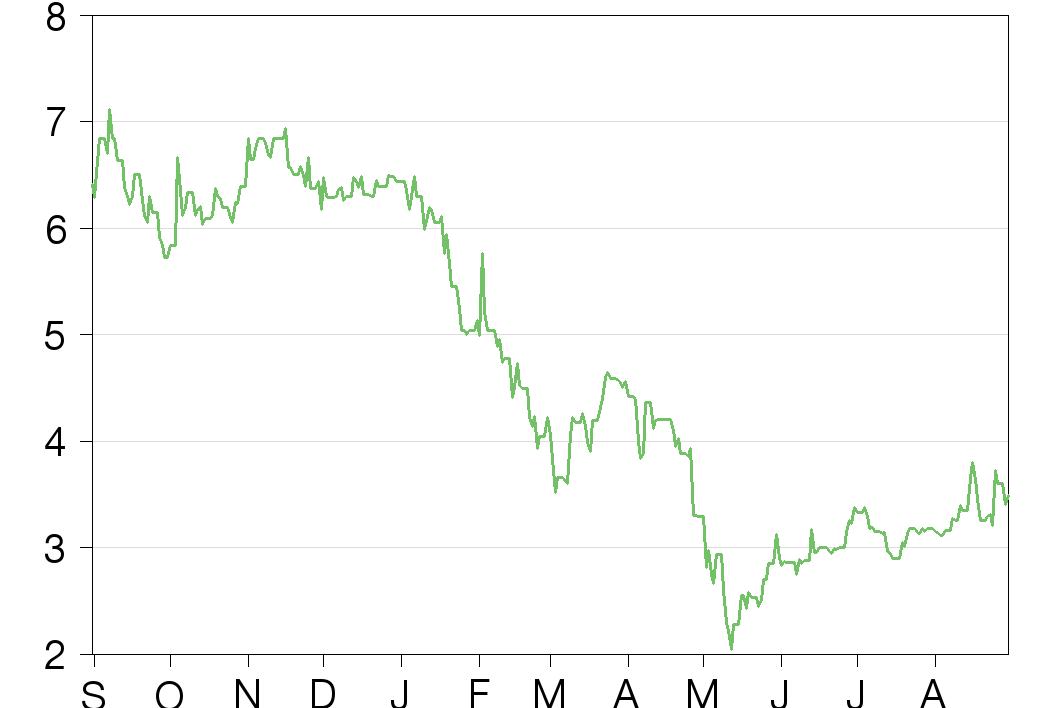
Share price graph
Share details
Business description
Bull
Bear
Analyst
Ensurge Micropower is a research client of Edison Investment Research Limited |
||||||||||||||||||||||||||
Ensurge Micropower’s CEO took the opportunity in the recent H122 results presentation to brief investors on its engagement with four strategic partners. These large multinationals could potentially license Ensurge’s microbattery technology, become JV partners or provide investment via equity or non-recurring engineering (NRE) fees. The move creates an additional route to market, which complements sales of complete microbatteries.
|
Historical financials
Source: Company accounts. Note: *PBT and EPS are normalised, excluding amortisation of acquired intangibles, exceptionals and share-based payments. **Discontinued business. |
Losses widen as company prepares for production
Ensurge did not generate any revenues during H122. Payroll costs were $1.0m higher year-on-year at $4.3m as management invested in engineering and manufacturing personnel, resulting in a widening of EBITDA losses, excluding share-based payments, by $1.1m to $8.1m. Investment in capital expenditure was only $0.3m as most of the work adapting the roll-to-roll (R2R) facility for volume manufacture of microbatteries was completed in FY21. All R&D activity was expensed. Free cash outflow totalled $11.9m.
Cash runway extended into Q422
In February 2022, Ensurge completed a private placement and share allocation at NOK5.4/share (after adjusting for a share consolidation), which raised $10.9m net and left it with $4.3m cash (gross excluding restricted cash) at end June 2022. In July, the company announced funding of NOK57m gross (US$5.7m), of which NOK46.7m was from convertible loans bearing 5% interest with a conversion price of NOK3.00/share and NOK10.3m from a private placement at NOK3.00/share. Management notes that Ensurge has sufficient funds to support operations into Q422 and is seeking alternative sources of financing to continue operations beyond that.
Valuation: Potential market of over 1bn units a year
Ensurge is initially targeting the medical wearables and hearables markets, followed by the connected sensor and sport & fitness wearables markets. Our scenario analysis calculates that a 5–10% share of these markets represents annual revenues of $330–550m and EBITDA of $211–365m. Management has stated that when the R2R factory in San Jose is fully utilised it could potentially generate EBITDA of more than $100m, depending on product mix.
Engagement with strategic partners
Complementary route for commercialising technology
Ensurge is in active discussions with four large multinational corporations with which it is exploring a range of possible options including licensing Ensurge’s technology, the formation of joint ventures and investment in the form of equity and/or non-recurring engineering fees. The companies interested in these strategic partnerships are involved in consumer devices, electronic components and batteries. They are currently more interested in Ensurge’s core microbattery building block, referred to as the ‘unit cell’, than stacks of cells packaged to create complete microbatteries (see our June update for more detail on the individual steps in battery manufacture). This is because each of the potential strategic partners has technology that could be combined with Ensurge’s core cell technology to create solutions enabling applications yet to exist which expand the market beyond the one-billion-unit market discussed below. Ensurge will provide these four partners with the unit cells in a conventional coin cell format to ease testing and evaluation. It is completing the manufacturing of these unit cell samples now and expects to ship them in early September.
Ensurge has recently signed its first agreement with a strategic partner who is a large multinational consumer devices leader. Management expects the partnership discussions to proceed further once the partners have completed their evaluation of the unit cells. We note that there is a pipeline of several other potential strategic investors.
Growing pipeline of microbattery customers
Five customers already signed up
Ensurge has already signed agreements with five customers. These include a Fortune 500 industrial company active in manufacturing capital equipment, a customer in the digital health market, two agreements in the medical hearables market and one in the broader wearables market. These customers are interested in complete microbatteries in the 1-100 mAh range which can provide faster charging or higher energy density than conventional rechargeable microbatteries, can be mounted on customers’ circuit boards using conventional reflow assembly techniques (unlike typical lithium-ion coin cell batteries) or can be customised to create novel form factors such as rings. These form factors are only achievable with batteries formed on a flexible substrate such as the ultra-thin steel substrate used by Ensurge. In addition to the five announced customers that have signed evaluation agreements, Ensurge has gained 12 new qualified leads during the last three months. As a result, Ensurge is now in commercial discussions with two dozen other companies in the hearables, wearables and Internet of Things (IoT) sectors.
While management has not provided an update on exactly when the company will ship evaluation samples to these customers, it still intends to do this during H222 and is preparing the manufacturing facility to start commercial production in late Q422. Its stated goal of starting to generate revenues from microbattery sales in Q422 may therefore, in our view, still be achievable.
We note that management expects that the initial revenues will be attributable to smaller companies with faster development cycles where the flexibility of form factor offered by Ensurge’s microbattery technology is essential. The larger companies with longer development cycles are likely to introduce products incorporating Ensurge’s microbatteries in H223. In our view, this means that the strategic partner activity is likely to provide a faster option for permanently addressing the funding gap than volume ramp-up of microbatteries.
Improving unit cell performance
In our June update we observed that there are three key steps in producing customer samples: 1) successfully building individual battery cells that consistently meet targets for capacity and number of charge/discharge cycles, as well as charging more quickly than conventional lithium-ion battery cells; 2) confirming that the packaging technology provides an effective hermetic seal, preventing air and moisture from penetrating the battery and degrading the lithium cycling performance; and 3) successfully stacking and packaging individual cells into microbatteries that meet the initial target requirements. As of June, Ensurge had completed the first two steps. Since then it has achieved a key requirement to completing the third step and is now in the final stages of working on an engineered solution which will enable it to ship samples to customers with signed agreements.
|
Exhibit 1: Structure of Ensurge’s solid-state lithium battery (in use) |
|
|
Source: Ensurge Micropower |
Over the past quarter, Ensurge has improved the repeatability and consistency of its manufacturing process as part of a strong focus on manufacturing throughput and efficiency ahead of potentially commencing commercial production in late Q422. These improvements have enabled Ensurge to optimise the process conditions which determine the interactions at each of the key interfaces within a cell (see Exhibit 1) so that the individual reactions work efficiently and effectively together. As a result, the engineering team has lowered the impedance of a unit cell by orders of magnitude. The manufacturing improvements have also enabled the company to increase the quantity of unit cells manufactured, giving more data that helps fine-tune the manufacturing process. Importantly, this performance can be achieved using a roll-to-roll manufacturing process that does not require stringent environmental controls such as dry room conditions.
Valuation: Addressing a market of over 1bn units/year
Since Ensurge is still at the pre-revenue stage with regards to its solid-state battery technology, we continue to present a scenario analysis rather than a formal valuation based on peer multiples. Referencing research from IDTechEx and others, management notes that the medical wearables, hearables, connected sensor and sport & fitness wearables markets are predicted to grow to more than one billion units per year by 2025. This calculation was prior to the US Food and Drug Administration (FDA) approving over-the-counter sales of hearing aids, thus addressing an underserved market which the agency estimates to be 30 million people with hearing impairments.
As discussed in our March note, these markets require batteries in the 1 mAh to 70 mAh capacity range. This capacity range is already covered by conventional lithium-ion batteries, although the relative size of lithium-ion batteries compared to solid-state batteries makes it likely that a material percentage of device manufactures will elect to pay a premium for the solid-state option. Ensurge has had detailed conversations with potential customers with which it has shared design details and in H121 stated that it believed a price of $3–10/unit was achievable.
Exhibit 2: Potential annual revenues from milliwatt hour market ($m)
Market share (%) |
||||||
1% |
3% |
5% |
7% |
10% |
||
Price/unit |
1 |
11 |
33 |
55 |
77 |
110 |
2 |
22 |
66 |
110 |
154 |
220 |
|
3 |
33 |
99 |
165 |
231 |
330 |
|
5 |
55 |
165 |
275 |
385 |
550 |
|
7 |
77 |
231 |
385 |
539 |
770 |
|
10 |
110 |
330 |
550 |
770 |
1,100 |
|
Source: Edison Investment Research
Our scenario analysis presents the annual revenues realisable from these markets for a range of unit prices and levels of market penetration. The analysis shows that a 5–10% share of these markets at a $3–10 price range represents annual revenues of $330–550m. Based on previous management guidance of c $20m fixed costs (current levels are $14.6m) and 30% variable costs, this gives an EBITDA range of $211–365m. Management notes that when the R2R factory in San Jose is fully utilised it should be able to output several hundred million mAh of batteries each year, potentially generating EBITDA of more than $100m depending on product mix.
Exhibit 3: Financial summary
$m |
2018* |
2019* |
2020 |
2021 |
||
Year-end December |
IFRS |
IFRS |
IFRS |
IFRS |
||
PROFIT & LOSS |
||||||
Revenue |
|
|
3.4 |
1.2 |
0.5* |
0.0 |
EBITDA |
|
|
(49.3) |
(30.6) |
(11.3) |
(14.6) |
Operating Profit (before amort. and except.) |
|
|
(53.3) |
(34.5) |
(11.4) |
(14.6) |
Intangible Amortisation |
0.0 |
0.0 |
0.0 |
0.0 |
||
Exceptionals |
(15.6) |
(42.4) |
0.0 |
0.0 |
||
Share-based payments |
(1.8) |
(0.2) |
(0.7) |
(4.9) |
||
Operating Profit |
(70.6) |
(77.1) |
(12.0) |
(19.6) |
||
Net interest |
(1.1) |
(1.4) |
(3.6) |
(2.6) |
||
Exceptional charges relating to issue of warrants |
0.0 |
0.0 |
(23.2) |
(8.8) |
||
Profit Before Tax (norm) |
|
|
(54.3) |
(35.9) |
(14.9) |
(17.2) |
Profit Before Tax (FRS 3) |
|
|
(71.7) |
(78.5) |
(38.8) |
(31.0) |
Tax |
(0.0) |
0.0 |
0.0 |
0.0 |
||
Profit After Tax (norm) |
(54.4) |
(35.9) |
(14.9) |
(17.2) |
||
Profit After Tax (FRS 3) |
(71.7) |
(78.4) |
(38.8) |
(31.0) |
||
Average Number of Shares Outstanding (m) |
58.6 |
58.6 |
393.2 |
1,368.3 |
||
EPS - normalised ($) |
|
|
(0.93) |
(0.61) |
(0.04) |
(0.01) |
EPS - (IFRS) ($) |
|
|
(1.22) |
(1.34) |
(0.10) |
(0.02) |
Dividend per share ($) |
0.00 |
0.00 |
0.00 |
0.00 |
||
EBITDA Margin (%) |
N/A |
N/A |
N/A |
N/A |
||
Operating Margin (before GW and except.) (%) |
N/A |
N/A |
N/A |
N/A |
||
BALANCE SHEET |
||||||
Fixed Assets |
|
|
35.3 |
0.6 |
0.8 |
2.6 |
Intangible Assets |
2.4 |
0.0 |
0.0 |
0.0 |
||
Tangible Assets |
22.5 |
0.0 |
0.2 |
2.0 |
||
Other |
10.4 |
0.6 |
0.6 |
0.6 |
||
Current Assets |
|
|
44.1 |
11.7 |
6.9 |
8.7 |
Stocks |
2.6 |
0.0 |
0.0 |
0.0 |
||
Debtors |
8.9 |
2.8 |
1.1 |
1.8 |
||
Cash excluding restricted cash |
31.0 |
7.3 |
4.2 |
5.3 |
||
Restricted cash |
1.6 |
1.6 |
1.6 |
1.6 |
||
Current Liabilities |
|
|
(8.1) |
(6.8) |
(32.7) |
(8.0) |
Creditors |
(8.1) |
(5.5) |
(29.5) |
(4.1) |
||
Short term borrowings |
0.0 |
(1.4) |
(3.2) |
(3.9) |
||
Long Term Liabilities |
|
|
(11.5) |
(25.1) |
(21.9) |
(16.8) |
Long term borrowings excluding finance leases |
0.0 |
(11.8) |
(9.7) |
(5.9) |
||
Other long-term liabilities |
(11.5) |
(13.2) |
(12.2) |
(10.9) |
||
Net Assets |
|
|
59.7 |
(19.7) |
(46.9) |
(13.4) |
CASH FLOW |
||||||
Operating Cash Flow |
|
|
(52.3) |
(29.1) |
(11.9) |
(14.6) |
Net Interest |
0.3 |
(1.4) |
(3.2) |
(3.2) |
||
Tax |
(0.1) |
0.0 |
0.0 |
0.0 |
||
Capex |
(11.2) |
(5.1) |
(0.3) |
(1.8) |
||
Acquisitions/disposals |
0.0 |
0.0 |
0.0 |
0.0 |
||
Financing |
(0.0) |
0.0 |
13.3 |
25.2 |
||
Dividend payments and Other items |
(1.6) |
0.0 |
0.0 |
0.0 |
||
Net Cash Flow |
(64.9) |
(35.5) |
(2.1) |
5.6 |
||
Opening net debt/(cash) excluding finance leases and restricted cash |
|
(96.5) |
(31.0) |
5.9 |
8.8 |
|
Finance leases initiated |
0.0 |
0.0 |
0.0 |
0.0 |
||
Other |
(0.6) |
(1.4) |
(0.7) |
(1.3) |
||
Closing net debt/(cash) excluding finance leases and restricted cash |
|
(31.0) |
5.9 |
8.8 |
4.5 |
|
Source: Company reports. Note: *Discontinued business.
|
|
Research: Healthcare
Diurnal has announced that it has agreed to an acquisition by Neurocrine Biosciences (US-based biopharmaceutical player) for a cash consideration of £48.3m or 27.5p per share. The proposed acquisition consideration is a c 144% premium to the closing price of 11.25p on 26 August. Although the acquisition is subject to shareholder approval by both companies, the transaction is likely to close by late October or early November. Neurocrine is also focused on the endocrine space (in addition to neurology) and anticipates synergies from the combination of the two businesses. It intends to continue pursuing Diurnal’s current R&D programmes in the UK and maintaining existing business operations. At the time of publication, Diurnal’s shares are trading c 130% higher than at close on the day before the announcement.