As the leading provider of data erasure software for the enterprise market, Blancco is well positioned to exploit the growing requirement for secure data erasure. With major investment in sales and support complete and regulatory changes in its favour, Blancco is in a good position to drive adoption of its software via its direct sales and partner channels. The company’s patented technology and numerous certifications create a strong barrier to entry.
Blancco Technology Group |
Growth from (data) destruction |
Initiation of coverage |
Software & comp services |
15 March 2017 |
Share price performance
Business description
Next events
Analysts
Blancco Technology Group is a research client of Edison Investment Research Limited |
|||||||||||||||||||||||||||||||||||||||||||||||
As the leading provider of data erasure software for the enterprise market, Blancco is well positioned to exploit the growing requirement for secure data erasure. With major investment in sales and support complete and regulatory changes in its favour, Blancco is in a good position to drive adoption of its software via its direct sales and partner channels. The company’s patented technology and numerous certifications create a strong barrier to entry.
Year end |
Revenue (£m) |
Adj. operating profit* (£m) |
EPS* |
DPS |
P/E |
Yield |
06/15 |
15.0 |
4.0 |
2.84 |
5.00 |
87.9 |
2.0 |
06/16 |
22.4 |
6.1 |
5.63 |
2.00 |
44.4 |
0.8 |
06/17e |
31.4 |
7.9 |
8.42 |
2.10 |
29.7 |
0.8 |
06/18e |
37.9 |
9.9 |
11.10 |
2.21 |
22.5 |
0.9 |
Note: *Adjusted operating profit and EPS are normalised, excluding amortisation of acquired intangibles, exceptional items and share-based payments.
Exploiting the market opportunity
Blancco, a pure-play data erasure and diagnostics software company, is working to extend its dominant position in the end-of-life PC/server data erasure market to the mobile and active erasure markets. We estimate that Blancco has only penetrated a small proportion of its addressable market. To accelerate adoption of its software, the company is educating the market on the need for secure data erasure, helped by regulatory requirements moving in Blancco’s favour and high-profile data breaches highlighting the risks of holding data. Blancco is expanding indirect sales channels to complement existing direct sales efforts and developing solutions for emerging technologies that will require secure data erasure.
A scalable business model
Helped by high levels of repeat business, we forecast revenue growth of 40% in FY17 (with some benefit from currency and the acquisition of Xcaliber midway through FY16) and 21% in FY18, moderating to 16% in FY19. With a very high gross margin, the key cost lines are product development, and sales and marketing. After a period of investment in its salesforce (both direct and indirect), we do not expect the company to grow headcount materially. Blancco should be able to maintain its operating margin percentages in the high twenties and, if indirect sales efforts bear fruit, this could accelerate margin expansion. Signing another large contract in Diagnostics could provide further upside to our forecasts.
Valuation: Growth prospects not fully factored in
Blancco is a rare growth company that already generates high operating margins. Post the reaction to interim results, the stock trades in the middle of its UK-based peer group but below the median for its global cybersecurity software peer group, despite earnings growth forecasts at the top end of the range. Evidence that the wider market accepts the need for secure data erasure should provide support to our growth forecasts and position the company for a multi-year growth phase.
Investment summary
Exploiting the opportunity in data erasure
Blancco is the leading provider of data erasure software for the enterprise market. Blancco has developed patented technology to erase data on devices such as PCs, servers, mobiles and tablets and has received certification of its technology from more than 20 regulatory organisations. Drivers of demand for data erasure include the risk of data loss (and the associated costs and reputational issues) and regulation. The company is building on its strong position in the IT asset disposal market to sell directly to enterprises for both end-of-life and active data erasure. It is also in the process of expanding its indirect sales channels to enhance its global direct salesforce. The recently acquired mobile diagnostics software business has scope to grow in the mobile market, and ultimately a combined diagnostics/erasure solution should be attractive to mobile operators and mobile IT asset disposition companies (ITADs).
Financials: Strong organic growth driving earnings growth
The company has grown rapidly through a combination of strong organic growth and acquisitions, and it is a rare growth company that is already generating double-digit operating margins. With high levels of repeat business, we forecast continued strong organic revenue growth over the next three years, assuming the company benefits from its recent investment in sales and marketing. We forecast adjusted operating margins to remain above 20% and forecast adjusted EPS growth of 50% in FY17, 32% in FY18 and 23% in FY19. FY17 and FY18 cash flow will be affected by payments to buy out minority interests and contingent/deferred consideration on recent acquisitions. We forecast a return to a net cash position by the end of FY19.
Valuation: Growth prospects not fully factored in
Post the reaction to interim results, Blancco’s valuation sits in the middle of the range of UK high-growth software peers, but at the lower end of the range compared to global cybersecurity software companies. Lower than expected constant currency growth rates appear to be one of the reasons for the share price decline; however, management confirmed that it expects to meet consensus revenue forecast for FY17 (c £32m). Our forecasts assume that the company is successful in educating the market on the need for secure data erasure, resulting in a multi-year growth phase. With Blancco having assembled a management team with experience in growing software businesses, we believe the company is taking a sensible approach to encouraging adoption of its software through its combined focus on direct sales, channel partners and ‘influencing the influencers’. We believe that successful execution of the company’s growth strategy could see the share valuation trending to the upper end of its peer group. Key share price triggers would include material contract wins in the Diagnostics business, significant contracts won via indirect channels and evidence of Blancco software being used in new technology such as IoT devices.
Sensitivities: Regulation, IP, competition
Blancco will need to keep pace with storage device technology and increasing use of the cloud to maintain its leadership position. It is at risk of hardware and software vendors developing built-in certified erasure tools. It will also need to invest to protect its IP and may incur costs in defending it. From a regulatory perspective, Blancco needs to keep certifications live and add new ones as appropriate. Changes to data protection laws are likely to drive demand for its software; the pace of introduction of legislation will influence uptake of Blancco’s solutions. Blancco operates globally and sells in several currencies; to a large extent, this is offset by costs incurred in the regions.
Leader in data erasure and mobile diagnostics software
Blancco is a software company specialising in data erasure and mobile diagnostics solutions. It has recently grown through a combination of acquisitions and strong organic growth. Blancco is focused on growing the mobile and active erasure product lines and building out the diagnostics business.
Blancco background: Transformation complete
Blancco was founded in Finland in 1997. It was acquired by AIM-listed Regenersis in 2014 for £50m. In April 2016, Regenersis was renamed Blancco Technology Group, and the largest part of Regenersis’s business (Repairs) was sold for £80m. This was followed by a share buyback totalling £51m. Blancco is now a pure-play data erasure and mobile diagnostics software company.
Blancco itself acquired several businesses over the last five years, including Safe IT in 2014, Tabernus in 2015 and Xcaliber in 2016. The company now offers data erasure software for PCs, laptops, servers, mobile phones and tablets as well as diagnostics software for mobile devices. The company reports through two business lines: Erasure and Diagnostics. Within Erasure, it defines three product types: Mobile, Active and End of Life.
|
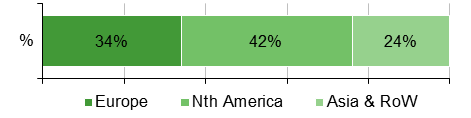
Exhibit 1: Invoiced sales by product, H117 |
Exhibit 2: Invoiced sales by location, H117 |
|
|
|
Source: Blancco Technology Group. Note: Invoiced sales include full value of subscription sales, rather than rateable value. |
|
|
Exhibit 1: Invoiced sales by product, H117 |
|
|
|
|
Exhibit 2: Invoiced sales by location, H117 |
|
|
|
|
Source: Blancco Technology Group. Note: Invoiced sales include full value of subscription sales, rather than rateable value. |
The company recently moved its headquarters to the US. R&D staff are based in Finland (Erasure) and India (Diagnostics), with sales and support staff in 23 offices in 15 countries and administrative and marketing staff predominantly based in the US and the UK.
Strategy: Become the de facto data erasure standard
Until relatively recently, Blancco was a founder-run company. Since being bought by Regenersis and becoming a pure-play software company, management has focused on building up the direct sales and marketing capability to access the large addressable market. The company has put in place short-term and longer-term strategic goals to achieve its aim of becoming the de facto data erasure standard.
FY17 strategic priorities
■
Open up the $3bn enterprise erasure and diagnostics market. This includes accessing enterprises through their service provider partners and increasing data erasure awareness among IT professionals.
■
Entrench its position as the data erasure and diagnostic category leader. Targets include embedding Blancco software in larger workflows, expanding the software’s role in data lifecycle management and validation, maintaining leading coverage of erasure and diagnostics occasions (ie expanding to other devices) and continuing geographic expansion (eg China, India, Latin America).
Goals by 2020
■
Add global OEMs.
■
Touch 100m assets pa.
■
Strengthen existing offering.
■
Continued recognition by Gartner and IDC as the leader in data sanitisation.
■
New legislation and standards enacted.
■
Native embedded application on mobile devices.
■
Deploy big data platform.
Management team recently strengthened
Patrick Clawson, CEO, joined the company in January 2015 and was appointed CEO of the Digital Security Software business. He was appointed to the Regenersis board as an executive director in October 2015. On the sale of the Repairs business, Pat became the CEO of the newly rebranded Blancco Technology Group. Simon Herrick joined as interim CFO in March 2017 and will support the search for a permanent CFO. As planned, Matthew Peacock stepped down from the non-executive chairman role in March 2017. Rob Woodward, who has been a non-executive director since 2013, has been promoted to this role. The company strengthened the management team with the appointments of Richard Stiennon (ex-Gartner and a best-selling cybersecurity author) as chief strategy officer and Steve Holton (ex-Good Technologies and RightNow) as president and chief revenue officer in July 2016. The team has extensive experience across AIM and Nasdaq-listed companies, as well as software and cyber security businesses.
Data erasure market
Blancco is the leading provider of software for the data erasure market. The ability to securely erase data is needed across the full lifecycle of data (see Exhibit 3). Blancco’s erasure software falls into two categories: end-of-life and active (or live environment).
|
Exhibit 3: Data erasure across the lifecycle of data |
|
|
Source: Blancco Technology Group, Edison Investment Research |
Drivers of data erasure
There are two main drivers of demand for secure data erasure:
■
The threat of data loss. This can have multiple repercussions – devices that have not been wiped could include data such as valuable trade secrets or IP, and the loss of personally identifiable information could put consumers, customers or staff at risk of identity theft. Data breaches can be costly in terms of the expense to remedy, as well as the damage to an organisation’s reputation.
■
Regulation. Several industries (eg healthcare, financial services, government organisations) have strict regulation of the data they can hold on customers/patients/citizens. The EU is introducing new legislation regarding the data that can be held on EU citizens (see page 7).
To a lesser extent, regularly deleting old data can reduce storage requirements. With storage costing roughly £100/TB/year, a robust and well-enforced process for deleting data can result in cost savings. PC resale values are relatively low, so this tends not to drive demand. However, in the mobile market, resale values can be much higher, particularly for iPhones, so the move to upgrade a device therefore creates demand for data erasure.
Data erasure methods vary in effectiveness
The most common devices that require data erasure include PCs, laptops, mobile phones, tablets, servers, portable hard drives, USBs and flash cards. A variety of methods are used to erase data, some more successfully than others. Blancco carried out a survey of 2,500 CTOs to find out how enterprises approach data erasure. We tabulate below the main methods and assess their effectiveness. Paid erasure software is the only method to both securely erase the data and provide verification that the erasure has been effective.
Exhibit 4: Current approach to data erasure
Method |
Used by survey respondents |
Explanation |
Data gone? |
Certified? |
Reformat/reinstall |
39% |
Write over the top. Not foolproof as underlying data might not be overwritten. |
Perhaps |
No |
Delete |
11% |
Data appears to have been deleted – in fact only references to data have been removed. |
No |
No |
Physical destruction |
10% |
For example, hit drive with a hammer/drill through/use a degausser (destroys magnetic field on HDD). More difficult with SSDs. Device cannot be reused. |
Yes |
No |
Encrypt |
8% |
Need encryption key to read data. With enough compute power can use a brute force attack to figure out the encryption key. |
No |
No |
Paid erasure software |
8% |
Uses algorithms to wipe data from device (mainly through overwriting); provides certification. |
Yes |
Yes |
Third-party removal |
8% |
Use an ITAD company. |
Depends what third party does with it. |
Crypto-erase |
7% |
Destroy encryption key. As above, brute force can be used to figure out the encryption key. Also assumes key has not been backed up elsewhere. |
No |
No |
Free erase software |
6% |
Similar method as paid erasure. |
Probably |
No |
Nothing/don’t know |
3% |
No |
No |
Source: Blancco Technology Group, Edison Investment Research
In the consumer market, the most common methods used are built-in software tools (such as the erase function provided by Apple for iOS devices or Macs and the SDelete or Cipher tools for Microsoft PCs), physical destruction, free software tools, or doing nothing. The consumer market is not a focus for Blancco, although we note that it owns the largest free software tool, DBAN.
Why pay for erasure software?
Paid-for erasure software offers several features not provided by free software:
■
Certification. The tamper-proof report confirms that all data have been deleted and provides an audit trail
■
Integration. The software is designed to work with other commonly used applications such as IT asset management tools.
■
Management console. This enables the IT professional to erase multiple devices simultaneously and track progress with each device.
Limited competition
We believe Blancco is the largest independent erasure software provider. The company estimates it has c 90% share of the paid erasure software market. On the enterprise side, some ITADs have developed proprietary software (eg ITRenew’s Teraware software), although this is not necessarily certified. Other software providers include FutureDial (mobile-focused), Cellebrite, and White Canyon, as well as some free tools for active erasure. On the consumer side, competitors include Disk Doctors (a US-based private company) and Piceasoft (a Finnish private company focused on mobile devices).
How erasure software works
A hard disk drive (HDD) consists of spinning platters coated in magnetic material, on which data (a series of ones and zeros) are represented by areas of differing magnetic orientation. Solid state drives (SSDs) are made up of flash memory, which uses transistors to represent data. To erase data in both types of drive, software is designed to overwrite existing data with ones or zeros or a combination of both such that the original data are unreadable. There are a number of different methods, the variables being the number of overwrites,1 the type of overwrites (ones, or zeros, or random) and the number of verifications. For example, the HMG IS5 Method specifies the following process: pass 1 = write a zero, pass 2 = write a random character and verify. The Enhanced version specifies: pass 1 = write a zero, pass 2 = write a one, pass 3 = write a random character and verify. Blancco offers all of the main erasure methods and leaves it to the customer to choose which to use. Various government organisations certify software providers; Blancco currently has certifications from the organisations in Exhibit 5.
One pass may miss a few cells or may overwrite with the same data.
Exhibit 5: Blancco software certifications
Country |
Organisation/Certification |
Country |
Organisation/Certification |
Global |
TüV-SüD |
Netherlands |
Communications Security Agency |
Global |
NATO |
Norway |
Norwegian National Security Authority |
Global |
Common Criteria (CC - ISO15408) |
Poland |
The Polish Internal Security Agency |
Global |
National Association for Information Destruction (NAID) |
Sweden |
Swedish Armed Forces |
Czech Republic |
Czech NSA |
UK |
Communications Electronic Security Group (CESG) |
Finland |
Viestintävirasto (Finnish Communications Regulatory Authority) |
UK |
UK Defence INFOSEC |
France |
Certification Sécurité de Premier Niveau |
UK |
Asset Disposal & Information Security Alliance |
Germany |
German BSI |
US |
US Department of Defense |
Japan |
Refurb IT Equipment Association |
Source: Blancco Technology Group
End-of-life data erasure
Data erasure is required when a device is being sold into the second-hand market, given away, scrapped or when a device is going to be reused by another member of staff. Many corporates use ITADs to dispose of end-of-life devices. This is typically a full service operation – the ITAD takes the assets, runs tests to diagnose faults, fixes devices where possible, wipes data, and then scraps or resells devices. In other cases, corporates undertake this work themselves before disposing of assets and often need to do onsite erasure before sending drives off for maintenance or repair. Therefore Blancco focuses on both types of customer.
ITADs need certified erasure
Disposing of devices via an ITAD does not absolve a company of responsibility for the security of any data on the devices. ITADs therefore often use a certified procedure to delete data so that there is an audit trail for their customers to prove data have been disposed of correctly. The ITAD typically works with each customer to ascertain their data erasure requirements and apply the data erasure method of choice. Blancco has designed its software to work with ITADs’ asset management applications. In the ITAD market, some companies only dispose of PCs, others only mobile devices, and some dispose of both. Arrow is one of Blancco’s largest customers and is able to dispose of both PCs and mobile devices.
Mobile devices need a different approach
Mobile devices tend to be based on SSD storage, as opposed to the HDD storage used in PCs, laptops and servers (although this is shifting to SSD too). While the basic premise for data erasure is the same for HDDs and SSDs, ie overwrite existing data with zeros or ones, SSDs require a different erasure technique. The way that data are written to the flash chips in the SSD differs from HDDs, so it is often difficult to access all parts of the drive and to completely erase the data. Blancco has developed and patented2 technology to do this. As this erasure technique has been developed more recently, fewer organisations have certified software providers. So far, the Netherlands CSA and Finnish Communications Regulatory Authority recommend Blancco’s SSD erasure software.
US patent no. 9286231 granted March 2016, also patents granted in Finland and the EU.
Apple and many Android devices automatically encrypt data and provide a secure data erasure function, which erases the encryption key. As explained above, this would not prevent the data being accessed if the key were retrieved. If the phone does not automatically encrypt data, even if the user switches the encryption function on, it is possible that the device will still contain some unencrypted data. Consequently, Blancco encourages the use of its software to wipe mobile devices.
The customer focus for this market is slightly different to the PC/server market, which is enterprise-focused. While Blancco still targets ITADs that manage mobile phones and tablets from enterprises, the company also targets mobile network operators (MNOs) and phone trade-in companies, such as Flip4New and Redeem, which service MNOs and consumers directly. Blancco has designed its software to rapidly recognise devices once plugged in, reducing the erasure time – this is a valuable benefit to ITADs and phone trade-in companies that manage high volumes of phones.
Active erasure – regulation a key demand driver
As well as deleting data from devices that have reached the end of life within an organisation, enterprises need to be able to delete data securely in a live environment (also known as active erasure). This typically involves permanently and securely erasing sections of data from devices that are in current use. As well as being good practice to manage storage efficiently, companies need to ensure they meet all relevant data protection regulations. While many companies are concerned with gathering as much data as possible, they often pay less attention to the data once collected. In addition to figuring out if they have all the data they need, companies need to assess whether they need all the data they have – it is a good habit to remove out-of-date data from company IT systems.
Regulation is a strong driver in several industries. Any company taking customer payments that is PCI DSS-certified must follow the industry body’s guidelines on storing and deleting customer data, eg not retaining credit card data after a transaction has been made. In the US healthcare industry, organisations must comply with HIPAA regulations to protect sensitive patient data. Government organisations dealing with sensitive data need robust data storage, and data erasure policies and procedures in place.
Companies must comply with data protection regulations in the countries in which they operate. From May 2018, the EU’s General Data Protection Regulation will take effect. This applies to data relating to any EU citizen, wherever they exist, so will apply to non-EU companies holding data on EU citizens. One element of the regulation requires data holders to be able to remove data at the request of the data subject (‘right to be forgotten’). As the possible fines for breaches of the regulation are the higher of €20m or 4% of revenues, it is vital that companies have processes in place to handle data and to be able to prove that data have been erased as necessary. The UK has confirmed that it will adopt this regulation, despite Brexit.
Large addressable market to target
Blancco calculates the end-of-life erasure market to be worth c $2.1bn. The assumptions underlying this include a cost per erasure of $1 per device and an average life of three years for PCs and 18-24 months for smartphones, resulting in c 1.4bn smartphones, c 500m PCs and c 200m tablets requiring secure data erasure in FY17. We have used rather more conservative assumptions for the average life of devices (see bold figures in Exhibit 6), arriving at an addressable market of c $1.2bn. This assumes that roughly half of the PCs in the installed base are for enterprise use (Blancco is not targeting the consumer PC market), whereas we believe that the company will be able to target the consumer mobile and tablet markets via the phone trade-in companies. For example, according to the Envirofone website, it will buy an undamaged, network-locked iPhone 6 16GB for £120. It is selling the same phone for £260, showing there is sufficient margin to pay for erasure software.
Exhibit 6: Edison addressable market assumptions – end-of-life erasure
Installed base (m) |
Addressable by Blancco |
Replacement cycle – years |
Value ($m) |
||||
2 |
3 |
4 |
5 |
||||
Devices potentially requiring secure data erasure pa |
|||||||
PCs – desktop and laptop |
2,284 |
50% |
571 |
381 |
286 |
228 |
228 |
Smartphones |
2,600 |
100% |
1,300 |
867 |
650 |
520 |
867 |
Tablets |
380 |
100% |
190 |
127 |
95 |
76 |
127 |
2,061 |
1,374 |
1,031 |
824 |
1,222 |
|||
Source: Edison Investment Research
We are forecasting erasure revenues (excluding active erasure) of c £24m/$30m for FY17, which implies that Blancco has only accessed a small percentage of the market opportunity (2.5% based on our forecasts, 1.4% based on Blancco’s assessment of the market).
Blancco calculates a further $1.3bn addressable market for active erasure. This is based on assumptions of the amount of data that is available for deletion on an annual basis: an estimated 30,000 exabytes of data will exist in 2017 (growing rapidly every year), of which 6,000 exabytes are under corporate responsibility and c 1,300 exabytes are available for erasure. We calculate that this is equivalent to a cost of $1 to erase 1TB (terabyte). We estimate active erasure revenues of c £4m/$5m in FY17, which implies there is still a large proportion of the market to access.
Blancco’s growth strategy
With such an underpenetrated addressable market, Blancco’s challenge is to convince enterprises of the need for secure data erasure. Through a combination of direct sales, channel partners and ongoing market education, management is aiming to accelerate the adoption of its software.
Maintain erasure market leadership position
Blancco’s product range (Exhibit 7) encompasses software for both end-of-life, as well as active erasure, and, as noted previously, is capable of securely erasing SSD-based devices.
Exhibit 7: Blancco’s erasure product range
Product |
Functionality |
Blancco Drive Eraser |
Secure data erasure for HDDs/SSDs in desktop computers, laptops and servers |
Blancco Mobile Device Eraser |
Securely wipe iPhones, Android, Windows and Blackberry mobile devices |
Blancco File Eraser |
Advanced file deletion to delete files permanently on PCs, laptops and servers |
Blancco Removable Media Eraser |
Advanced data erasure for USB drives, SD cards, flash drives and more |
Blancco LUN Eraser |
Data sanitisation for logical unit networks (LUNs) through data erasure |
Blancco Virtual Machine Eraser |
Secure data erasure for virtual machines and hypervisors |
Blancco Data Eraser Management Console |
Centralised data erasure reporting across an entire IT asset portfolio |
Product |
Blancco Drive Eraser |
Blancco Mobile Device Eraser |
Blancco File Eraser |
Blancco Removable Media Eraser |
Blancco LUN Eraser |
Blancco Virtual Machine Eraser |
Blancco Data Eraser Management Console |
Functionality |
Secure data erasure for HDDs/SSDs in desktop computers, laptops and servers |
Securely wipe iPhones, Android, Windows and Blackberry mobile devices |
Advanced file deletion to delete files permanently on PCs, laptops and servers |
Advanced data erasure for USB drives, SD cards, flash drives and more |
Data sanitisation for logical unit networks (LUNs) through data erasure |
Secure data erasure for virtual machines and hypervisors |
Centralised data erasure reporting across an entire IT asset portfolio |
Source: Blancco Technology Group
The software has been translated into more than 12 languages, with local sales and support. The software is currently being upgraded from version 5.0 to version 6.0 – each version of software needs to be certified and the company is in the process of obtaining updated certification from CESG and CC.
The company is increasing its investment in product development. In FY17 we estimate that the company will spend £3.5m on R&D, of which c £2.0m will be capitalised (up from £1.7m in FY16). In H117, Blancco released two new features: i) an integrated solution that combines Xcaliber’s diagnostics software with the Blancco Mobile Device Eraser; and ii) a new command and control interface through the Blancco Management Console to the Blancco Drive Eraser – this integrates directly with the customer’s asset management software to launch the erasure process and monitor progress.
Two more general areas of focus include vertical-specific solutions and looking at further devices that may require secure data erasure. For example, social media companies have customer data saved across multiple data centres. With right-to-be-forgotten regulations, these companies need to be able to delete accounts that have data stored in multiple locations – the company is currently working on a ‘records eraser’ solution for this market. Other areas that may require secure data erasure include automotive (for car rental or second-hand car dealers), IoT devices, printers, copiers, networking equipment and wearables. Ultimately, the company would like its software to be designed into new hardware products – it would then have the opportunity to earn fees from all devices, rather than the small percentage that currently opt for paid-for data erasure services.
Blancco has patents granted in the US and Europe for SSD erasure, and a patent filed in Japan. It has patents pending for mobile device erasure, a data erasure agent and crypto-erase verification.
Sales and marketing key to exploiting market opportunity
The company was originally focused on the ITAD market, more recently expanded into direct sales to enterprises and is now looking to grow its indirect sales channels (which currently make up less than 10% of revenues).
Focused on larger enterprise customers
Blancco targets global 2,000 companies, with more than 5,000 employees and annual revenues of at least $500m. Customers span a wide range of industries, with a bias towards government organisations and companies in regulated industries. SaaS companies are also a target market as they have data saved and backed up over multiple locations. As software is delivered to customers from the software company’s servers, when a customer stops using the software, the SaaS provider will need to ensure it is able to remove all customer data from its facilities.
Exhibit 8: Selected enterprise customers
Healthcare |
Government |
Financial |
Other |
Amgen |
Airbus |
American Express |
BMW |
Bayer |
Ministry of Defence |
Citi |
eBay |
McKesson |
The Scottish Government |
EY |
Salesforce |
Novartis |
US Navy |
UBS |
Samsung |
SAP |
|||
Walt Disney |
Source: Blancco Technology Group
Growing the indirect channel
The company already has three indirect routes to market, although to date, this has only generated minimal revenues. This is now very much a focus for the company, with 23 new channel and OEM partners signed up in H117, and the company expects to see revenues from these channels start to scale up from H217.
■
Channel: this consists of pure software resellers, and includes Avnet, Carahsoft, CDW, Computacenter, KeyOptions, Kroll Ontrack, Insight and Softcat.
■
Managed service providers: these companies tend to use Blancco software as part of their service offering. For example, Wipro offers ‘erasure-as-a-service’, with Blancco as the exclusive software provider. Providers include Accenture, CompuCom, CSC, HPE, IBM, KPMG, PwC, Tata, Unisys and Wipro. Some large enterprises have indicated that they would be open to engaging with Blancco via their service providers rather than directly.
■
Strategic partnerships: this includes partnerships where Blancco software is designed into partners’ devices upfront. For example, on Dell’s ‘TechDirect’ support portal, customers can securely wipe PCs prior to repurposing or decommissioning (described as ‘Certified Data Wipe Powered by Blancco’). Partners include Dell, EMC, HP, Oracle, Recipero and Western Digital.
Influencing the influencers
Blancco actively markets its technology and the need for secure data erasure through a programme of press articles, white papers, webinars and education of industry analysts such as Gartner and Forrester. This is vital to increasing consumer and corporate awareness of the risks surrounding data storage and deletion and to increasing awareness of Blancco as a key provider of the software to do this. The company also produces templates and guidelines for regulators to consider for use in future standards.
Build the diagnostics business
Blancco gained access to this market via its acquisition of Xcaliber (taking its stake from 49% to 76% in January 2016, then 100% in March 2016). Xcaliber has developed software (SmartChk) to diagnose faults in mobile phones. This can be used by MNOs to ascertain whether a phone with performance issues has a true fault, or whether there are actions that users could undertake themselves to improve performance. Of so-called ‘faulty’ phones returned to MNOs, only c 40% have a fault. The cost to ship the device to a test centre to diagnose a fault costs the MNO c $50-60 per device. Using Blancco’s software in-store costs less than $1 per device, representing a significant cost saving for MNOs. It also improves customer service, as more users will be able to take their working phones away the same day.
As with the mobile data erasure business, Blancco is targeting mobile trade-in companies as well as MNOs. The company signed up a large US MNO in April 2016 and has rolled out the software to 6,000 stores, with more than 100,000 diagnostics being run in store each week. In H117, Blancco signed up Swisscom and Amazon India.
Sensitivities
Our forecasts and the share price are sensitive to the following factors:
■
Technology: the company needs to keep pace with storage device technology and increasing use of the cloud in order to maintain its leadership position. The company is at risk of hardware and software vendors developing built-in certified erasure tools.
■
IP: the company has built a strong position with patents granted and pending. It will need to continue to invest to protect its IP and may incur costs in defending it.
■
Regulation: the company needs to keep certifications live and add new ones as appropriate. Changes to data protection laws are likely to drive demand for erasure services – the pace at which they are introduced will influence uptake of Blancco’s solutions.
■
Currency: Blancco operates globally and sells in several currencies, with sterling-based revenues making up only 10% of total revenues. To a large extent, this is offset by costs incurred in the regions. The company also enters into forward contracts on certain contracts.
■
Acquisitions: the company has made a series of acquisitions and is buying out minority interests. Contingent consideration is still payable on several deals and could vary from the amounts we have forecast.
Financials
Business model – high recurring revenues
The company licenses its software in several ways:
■
Volume based – either per erasure or per terabyte. Customers pay for a set number of erasures or a data volume limit upfront, and renew once this limit is reached. ITADs tend to buy per erasure licence, whereas customers erasing large quantities of data in data centres tend to prefer licensing by the terabyte.
■
Subscription licensing. Customers are licensed for a set period of time. This is used by some enterprise customers, and currently only makes up a small proportion of revenues.
The company also generates revenues from professional services, although this is minimal. The chart below shows revenue growth since 2008 on a reported and organic basis.
|
Exhibit 9: Blancco revenues and growth rates, FY08-16 |
|
|
Source: Blancco Technology Group, Edison Investment Research |
Contractually recurring revenues make up a relatively small percentage of revenues (subscription licensing), although a larger proportion of revenues are recurring in nature, ie customers use up their volume licences and return to renew. Blancco tracks customer retention by number and value over a trailing 12-month period. In H117, Blancco retained 92% of customers (H116 88%, FY16 91%) and 101% of revenues (H116 126%, FY16 113%).
The company reports revenues from two divisions: Erasure and Diagnostics. The company also reports invoiced sales on a more detailed level, splitting Erasure into Mobile, Active and End of Life.
Exhibit 10: Erasure invoiced sales (£m)
H115 |
H215 |
H116 |
y-o-y |
H216 |
y-o-y |
H117 |
y-o-y |
y-o-y constant currency |
|
Active |
0.2 |
0.6 |
0.9 |
350.0% |
1.4 |
133.3% |
1.1 |
22.2% |
11% |
Mobile |
1.2 |
1.4 |
1.8 |
50.0% |
1.9 |
35.7% |
3.0 |
66.7% |
44% |
End of life |
6.4 |
5.7 |
7.9 |
23.4% |
9.5 |
66.7% |
9.3 |
17.7% |
4% |
Total |
7.8 |
7.7 |
10.6 |
35.9% |
12.8 |
66.2% |
13.4 |
26.4% |
11% |
Reported revenues |
6.8 |
8.2 |
9.9 |
45.8% |
11.7 |
43.0% |
12.5 |
25.5% |
Source: Blancco Technology Group
The table above shows the split of Erasure invoiced sales on a half-yearly basis. This includes all invoiced revenues, as opposed to only six months of subscription licences, so is generally higher than reported revenues, with the difference allocated to deferred revenues. This gives a better idea of growth rates by device/erasure type. While constant currency growth of 4% in H117 for end of life erasure appears low, the company noted that underlying product sales grew 22% in constant currency, whereas overall revenues show the effect of fewer professional services contracts in H117 (which the company is not actively seeking).
Cost base – headcount increases to moderate
Costs of sale are minimal, consisting of hardware costs and professional services staff costs. Gross margins in H117 reached 97% (FY16 93.1%). Operating costs are split roughly 50/50 between staff costs and other costs. The company hired sales and marketing staff in FY16 and H117 to grow the direct sales effort and to create a team to manage indirect sales, but does not expect to continue to hire at the same rate, particularly with its focus on growing the indirect sales channel. R&D and technical support staff make up a large proportion of headcount and should not need to increase materially from the current level.
H117 results confirm strong organic growth
The company grew revenues 43% y-o-y to £14.2m in H117 (constant currency growth 28%), with Erasure revenue growth of 26% (10% constant currency). The business did not consolidate the Diagnostics business a year ago – this made up 12% of revenues in H117. Adjusted operating profit of £3.6m equates to a margin of 25.3% (H116: 27.6%, FY16 27.2%). Management confirmed that it expects to meet consensus forecasts for FY17 (revenues c £32m).
On a divisional basis (ie before central costs of £0.8m), the Erasure division reported an adjusted operating margin of 32.7% (H116 35.4%, FY16 35.1%), and the Diagnostics division reported a margin of 19.0% (up from 1.8% in H216). The company incurred exceptional costs of £0.3m for restructuring, £0.2m in defending a patent, and £1.3m for acquisitions. Blancco reported an adjusted EPS of 3.90p (continuing operations only) and reported EPS of -7.95p (including the loss from discontinued operations of £2.4m). The disposal of Digital Care in September 2016 was reported within discontinued operations; we do not expect any further impact on financials.
Forecasts – strong profitable growth
Exhibit 11: Divisional forecasts (£m)
FY16 |
FY17e |
FY18e |
FY19e |
Year-on-year growth |
|||
FY17e |
FY18e |
FY19e |
|||||
Erasure revenues |
21.66 |
27.60 |
33.12 |
38.09 |
27.4% |
20.0% |
15.0% |
Diagnostics revenues |
0.73 |
3.82 |
4.78 |
5.73 |
425.0% |
25.0% |
20.0% |
Total revenues |
22.39 |
31.42 |
37.89 |
43.82 |
40.3% |
20.6% |
15.6% |
Erasure adjusted operating profit |
7.59 |
8.92 |
10.87 |
12.82 |
17.4% |
21.9% |
17.9% |
Diagnostics adjusted operating profit |
0.01 |
0.65 |
0.86 |
1.15 |
N/A |
32.4% |
33.3% |
Central costs |
(1.52) |
(1.67) |
(1.83) |
(2.02) |
|||
Total adjusted operating profit |
6.09 |
7.90 |
9.89 |
11.95 |
29.7% |
25.3% |
20.8% |
Erasure adjusted operating margin |
35.1% |
32.3% |
32.8% |
33.7% |
|||
Diagnostics adjusted operating margin |
1.8% |
17.0% |
18.0% |
20.0% |
|||
Total adjusted operating margin |
27.2% |
25.1% |
26.1% |
27.3% |
|||
Source: Blancco Technology Group, Edison Investment Research
In FY17, we assume continued strong organic growth in the Erasure division, boosted by positive currency effects and a small additional benefit from a full year of Tabernus revenues (acquired September 2015). In FY18 and FY19, we forecast double-digit organic growth, driven by growth of mobile and active erasure. The Diagnostics division was consolidated from January 2016. We factor in the fully ramped up US MNO contract in FY17 and assume additional smaller contract wins in H217, FY18 and FY19. Based on the H117 margin achieved by the Erasure division, we have assumed a small increase over FY18 and FY19, although margins remain below the levels achieved in FY15 and FY16 (>35%). The Diagnostics division reached a margin of 19% in H117. We have taken a cautious approach to margins for this division – if Blancco manages to win more contracts similar to the large US MNO contract, there could be material upside to our forecasts.
Capex – development costs and software
The majority of capex arises from capitalising development costs, with smaller amounts for tangible assets and software used internally. We forecast total capex of £2.85m in FY17 and £2.75m FY18, including capitalised development costs of £2.0m in FY17 and £2.1m in FY18. By the end of H117, the company had capitalised a total of £4.6m of development costs, with accumulated amortisation of £1.2m.
Acquisitions – earn-outs and minority interest buyouts
The company has deferred and contingent consideration outstanding for three acquisitions: Blanco Sweden – £1.1m payable in H217; Tabernus – $2m/£1.6m payable in FY19; and Xcaliber – £1m payable in FY17, £1m payable in FY18 and £0.9m payable in FY19.
The company has also been actively buying out minority interests (Exhibit 12). The two largest joint ventures are Mexico (now 70%) and Japan (51%). Combined, these make up c 30% of revenues. The company is unlikely to increase its stakes in these two investments any further, as its partners are crucial to the success of the ventures. The material contribution from these investments explains the large minority interest deduction.
Exhibit 12: Minority interest buy-outs
Date |
JV |
Increase in ownership |
Cost |
Paid when |
Aug-16 |
Blancco Australia |
From 51% to 100% |
A$0.1m/£0.1m |
H117 |
Sep-16 |
Blancco SEA |
From 51% to 70% |
$0.2m/£0.2m |
H117 |
Oct-16 |
Blancco France |
From 51% to 100% |
Up to €0.2m |
€0.1m H117, €0.1m H118 |
Feb-17 |
Software Blancco SA de CV Mx |
From 51% to 70% |
$1.2m/£1m |
£0.5m H118, £0.5m H218 |
Feb-17 |
Blancco Canada |
From 51% to 100% |
C$0.2m/£0.1m |
H217 |
Source: Blancco Technology Group
Working capital depends on licence terms
On smaller volume-based contracts or subscription contracts, Blancco tends to receive cash upfront. However, as Blancco is selling more to large enterprises, extended payment terms are becoming more common. This is particularly evident at the end of H117, where trade debtors were inflated by an amount of £2.2m owing from one customer (a contract with the Mexican government where Blancco is sub-contractor to IBM). The company expects to receive payment in Q417. We note that operating cash flow includes outflows of £10.9m in FY16 and £1.9m in FY17e for discontinued operations (reported within Exceptional & Other cash flows on p16).
Net debt
At the end of H117, the company had net debt of £5.9m, made up of gross cash of £3.3m and £9.2m used of its £11.5m debt facility. The facility expires on 31 October 2019. We forecast that the company reduces this to £4.6m by the end of FY17. We forecast that the company will generate positive cash flow in FY18, reducing net debt to £0.3m by the end of FY18 and returning to net cash of £5.3m by the end of FY19.
Dividend policy
The company has stated that it has a progressive dividend policy. The FY16 dividend totalled 2.0p. The company has announced a 0.70p half-yearly dividend and with a typical split of 1/3:2/3, we forecast a full year FY17 dividend of 2.10p (+5% y-o-y). We assume modest growth in the dividend in FY18 and FY19 (5% each year).
Valuation
Peer multiple analysis
We have compared Blancco to three main groups of peers: UK high-growth software (including two cybersecurity companies), global cybersecurity software and global data management software. Looking at its UK software peers, Blancco is forecast to grow revenues faster than the group and is at the top end of the range in terms of EBITDA margins. It trades in the middle of the range in terms of EV/sales, whereas on EV/EBITDA multiples it is at a discount. On a P/E basis, Blancco is in the middle of the range. We note that the minority interests (mainly the joint ventures in Mexico and Japan) are only evident at the earnings level, so are not reflected in sales and EBITDA multiples. Isolating the UK cybersecurity peers, Blancco trades at a slight discount to GB Group and a material discount to Sophos, despite better growth and profitability.
Looking at global cybersecurity peers, Blancco trades at a discount to the median P/E, despite higher revenue growth, EBITDA margins and earnings growth. Data management software peers are either lower growth or lower margin, and hence the P/E comparisons are less meaningful.
If Blancco can maintain its strong organic growth trajectory while maintaining margins, we see scope for the stock to trade more in line with its global cybersecurity peers. Key share price triggers include material contract wins in the Diagnostics business, significant contracts won via indirect channels and evidence of Blancco software being used in new technology such as IoT devices.
Exhibit 13: Peer group valuation multiples
Market cap (m) |
Sales (m) |
Sales growth (%) |
EBITDA margin (%) |
EV/sales (x) |
EV/EBITDA (x) |
P/E (x) |
EPS growth (%) |
|||||||
1FY |
1FY |
2FY |
1FY |
2FY |
1FY |
2FY |
1FY |
2FY |
1FY |
2FY |
1FY |
2FY |
||
Blancco Technology Group |
£146 |
31.4 |
40.3 |
20.6 |
30.5 |
31.0 |
4.6 |
3.8 |
15.1 |
12.3 |
29.7 |
22.5 |
49.5 |
31.8 |
UK cybersecurity |
||||||||||||||
GB Group |
£405 |
89.2 |
21.5 |
16.8 |
20.7 |
20.9 |
4.6 |
3.9 |
22.2 |
18.8 |
31.4 |
26.6 |
17.1 |
17.7 |
Sophos Group |
£1,248 |
540.8 |
13.1 |
15.0 |
12.5 |
13.2 |
3.2 |
2.8 |
25.7 |
21.1 |
46.2 |
36.9 |
N/A |
25.0 |
UK high-growth software |
||||||||||||||
Craneware |
£324 |
57.7 |
15.8 |
14.1 |
31.2 |
31.4 |
6.0 |
5.3 |
19.2 |
16.7 |
31.4 |
27.5 |
8.9 |
14.1 |
Dotdigital Group |
£200 |
32.3 |
19.8 |
22.5 |
30.7 |
30.6 |
5.6 |
4.6 |
18.3 |
15.0 |
30.8 |
25.1 |
20.2 |
22.7 |
Fidessa Group |
£982 |
345.3 |
16.8 |
9.0 |
23.3 |
22.5 |
2.6 |
2.4 |
11.0 |
10.5 |
27.3 |
25.0 |
0.9 |
9.3 |
Ideagen |
£144 |
26.0 |
18.5 |
15.0 |
30.0 |
32.2 |
5.4 |
4.7 |
17.9 |
14.5 |
24.7 |
20.3 |
20.3 |
21.9 |
Idox |
£290 |
94.6 |
23.3 |
8.0 |
27.5 |
28.5 |
3.3 |
3.1 |
12.1 |
10.8 |
15.9 |
14.4 |
9.5 |
11.1 |
Average |
18.4 |
14.4 |
25.1 |
25.6 |
4.4 |
3.8 |
18.1 |
15.3 |
29.7 |
25.1 |
12.8 |
17.4 |
||
Median |
18.5 |
15.0 |
27.5 |
28.5 |
4.6 |
3.9 |
18.3 |
15.0 |
30.8 |
25.1 |
13.3 |
17.7 |
||
Global cybersecurity |
||||||||||||||
Cyberark |
$1,682 |
268.9 |
67.2 |
20.6 |
24.2 |
25.3 |
5.2 |
4.3 |
21.3 |
16.9 |
40.4 |
32.3 |
-1.6 |
25.0 |
FireEye |
$1,890 |
723.6 |
1.3 |
10.2 |
3.3 |
12.1 |
2.3 |
2.1 |
71.2 |
17.6 |
N/A |
N/A |
N/A |
N/A |
Fortinet |
$6,480 |
1479.1 |
16.0 |
14.8 |
18.9 |
20.1 |
3.6 |
3.2 |
19.3 |
15.8 |
42.0 |
35.3 |
20.4 |
19.0 |
F-Secure |
€519 |
168.8 |
14.3 |
7.4 |
13.4 |
19.4 |
2.5 |
2.4 |
18.9 |
12.1 |
38.5 |
23.7 |
-15.0 |
62.4 |
Imperva |
$1,424 |
316.2 |
19.6 |
18.5 |
8.7 |
9.5 |
3.7 |
3.1 |
42.3 |
32.7 |
124.7 |
70.0 |
-588.6 |
78.1 |
Qualys |
$1,269 |
226.8 |
14.6 |
16.1 |
31.9 |
33.9 |
4.5 |
3.9 |
14.2 |
11.5 |
41.0 |
33.3 |
-0.9 |
23.1 |
Secureworks |
$875 |
428.0 |
26.1 |
14.6 |
N/A |
N/A |
1.8 |
1.6 |
N/A |
N/A |
N/A |
N/A |
N/A |
N/A |
Vasco Data Security |
$527 |
185.3 |
-23.2 |
6.8 |
8.5 |
11.5 |
2.1 |
1.9 |
24.3 |
16.8 |
48.5 |
39.7 |
-50.0 |
22.2 |
Average |
17.0 |
13.6 |
15.5 |
18.8 |
3.2 |
2.8 |
30.2 |
17.6 |
55.9 |
39.1 |
||||
Median |
15.3 |
14.7 |
13.4 |
19.4 |
3.1 |
2.7 |
21.3 |
16.8 |
41.5 |
34.3 |
||||
Data management software |
||||||||||||||
Barracuda Networks |
$1,201 |
351.8 |
9.9 |
7.5 |
21.8 |
22.3 |
2.9 |
2.7 |
13.2 |
12.0 |
29.1 |
28.9 |
86.0 |
0.9 |
Commvault Systems |
$2,218 |
643.8 |
8.2 |
7.1 |
13.1 |
14.1 |
2.8 |
2.6 |
21.0 |
18.3 |
49.2 |
44.0 |
9.9 |
11.7 |
Mimecast |
$1,050 |
183.0 |
29.0 |
23.6 |
6.4 |
9.1 |
5.2 |
4.2 |
81.3 |
46.3 |
232.3 |
459.0 |
-24.5 |
-49.4 |
Proofpoint |
$3,416 |
492.2 |
31.1 |
28.0 |
11.1 |
14.0 |
6.9 |
5.4 |
61.9 |
38.3 |
153.2 |
86.1 |
39.2 |
77.9 |
Average |
19.5 |
16.5 |
13.1 |
14.9 |
4.4 |
3.7 |
44.3 |
28.7 |
116.0 |
154.5 |
||||
Median |
19.4 |
15.5 |
12.1 |
14.1 |
4.0 |
3.4 |
41.5 |
28.3 |
101.2 |
65.1 |
||||
Source: Bloomberg (as at 14 March 2016), Edison Investment Research
DCF valuation
We have performed a DCF analysis based on our forecasts to FY19 and fading revenue growth down until 2026 (CAGR 8.8% 2019-26), EBITDA margins of 32.5%, capex/sales of 6%, a WACC of 8% and long-term growth of 3%. We calculate a value per share of 340p. A 1% increase in the WACC produces a value per share of 275p, while a 1% decrease produces a value of 438p. For the share to achieve this valuation, Blancco will need to demonstrate good execution of its growth strategy and maintain margins at slightly above the current level. Based on the business model and market opportunity, this should be achievable.
Exhibit 14: Financial summary
£'m |
2015 |
2016 |
2017e |
2018e |
2019e |
||
30-June |
IFRS |
IFRS |
IFRS |
IFRS |
IFRS |
||
INCOME STATEMENT |
|||||||
Revenue |
|
|
15.0 |
22.4 |
31.4 |
37.9 |
43.8 |
Cost of Sales |
(0.5) |
(1.5) |
(1.8) |
(2.7) |
(3.1) |
||
Gross Profit |
14.6 |
20.8 |
29.6 |
35.2 |
40.8 |
||
EBITDA |
|
|
4.2 |
6.9 |
9.6 |
11.7 |
14.2 |
Normalised operating profit |
|
|
4.0 |
6.1 |
7.9 |
9.9 |
11.9 |
Amortisation of acquired intangibles |
(2.0) |
(2.5) |
(2.8) |
(2.8) |
(2.8) |
||
Exceptionals |
(2.5) |
(2.7) |
(2.2) |
0.0 |
0.0 |
||
Share-based payments |
(0.4) |
(1.2) |
(1.7) |
(2.0) |
(2.2) |
||
Reported operating profit |
(0.9) |
(0.2) |
1.2 |
5.1 |
6.9 |
||
Net Interest |
(0.5) |
(0.3) |
(0.7) |
(0.6) |
(0.6) |
||
Joint ventures & associates (post tax) |
(0.7) |
(0.2) |
0.0 |
0.0 |
0.0 |
||
Exceptionals |
(0.3) |
(0.6) |
(0.3) |
(0.3) |
(0.3) |
||
Profit Before Tax (norm) |
|
|
2.8 |
5.6 |
7.2 |
9.3 |
11.4 |
Profit Before Tax (reported) |
|
|
(2.4) |
(1.3) |
0.2 |
4.2 |
6.1 |
Reported tax |
(0.9) |
(0.6) |
(1.0) |
(1.1) |
(1.5) |
||
Profit After Tax (norm) |
1.9 |
4.7 |
6.1 |
7.9 |
9.7 |
||
Profit After Tax (reported) |
(3.3) |
(2.0) |
(0.8) |
3.2 |
4.6 |
||
Minority interests |
0.3 |
(0.7) |
(1.0) |
(1.1) |
(1.2) |
||
Discontinued operations |
8.4 |
(22.2) |
(2.4) |
0.0 |
0.0 |
||
Net income (normalised) |
2.2 |
4.0 |
5.2 |
6.8 |
8.4 |
||
Net income (reported) |
5.4 |
(24.8) |
(4.1) |
2.1 |
3.3 |
||
Basic average number of shares outstanding (m)* |
78 |
72 |
56 |
56 |
56 |
||
EPS - basic normalised (p) |
|
|
2.84 |
5.63 |
9.26 |
12.21 |
15.04 |
EPS - diluted normalised (p) |
|
|
2.84 |
5.63 |
8.42 |
11.10 |
13.67 |
EPS - basic reported (p) |
|
|
6.97 |
(34.72) |
(7.35) |
3.71 |
5.91 |
Dividend (p) |
5.00 |
2.00 |
2.10 |
2.21 |
2.32 |
||
Revenue growth (%) |
49.1 |
40.3 |
20.6 |
15.6 |
|||
Gross Margin (%) |
96.9 |
93.1 |
94.4 |
93.0 |
93.0 |
||
EBITDA Margin (%) |
28.3 |
30.7 |
30.5 |
31.0 |
32.4 |
||
Normalised Operating Margin |
26.8 |
27.2 |
25.1 |
26.1 |
27.3 |
||
BALANCE SHEET |
|||||||
Fixed Assets |
|
|
119.1 |
67.3 |
65.7 |
63.8 |
61.5 |
Intangible Assets |
110.2 |
66.9 |
65.2 |
63.3 |
61.0 |
||
Tangible Assets |
6.4 |
0.4 |
0.5 |
0.5 |
0.5 |
||
Investments & other |
2.5 |
0.0 |
0.0 |
0.0 |
0.0 |
||
Current Assets |
|
|
56.2 |
18.6 |
18.1 |
22.2 |
27.2 |
Stocks |
9.5 |
0.1 |
0.2 |
0.2 |
0.2 |
||
Debtors |
34.6 |
8.9 |
12.9 |
15.6 |
18.0 |
||
Cash & cash equivalents |
12.1 |
4.8 |
5.1 |
6.5 |
9.0 |
||
Other |
0.0 |
4.8 |
0.0 |
0.0 |
0.0 |
||
Current Liabilities |
|
|
(43.2) |
(23.3) |
(21.5) |
(25.0) |
(24.9) |
Creditors |
(40.5) |
(14.2) |
(15.5) |
(18.6) |
(21.1) |
||
Tax and social security |
(0.6) |
(2.3) |
(2.3) |
(2.3) |
(2.3) |
||
Short term borrowings |
0.0 |
0.0 |
0.0 |
0.0 |
0.0 |
||
Other |
(2.1) |
(6.8) |
(3.7) |
(4.1) |
(1.6) |
||
Long Term Liabilities |
|
|
(9.4) |
(13.5) |
(18.8) |
(13.3) |
(10.3) |
Long term borrowings |
(4.4) |
(3.7) |
(9.7) |
(6.7) |
(3.7) |
||
Other long term liabilities |
(5.0) |
(9.8) |
(9.1) |
(6.6) |
(6.6) |
||
Net Assets |
|
|
122.7 |
49.1 |
43.5 |
47.7 |
53.5 |
Minority interests |
(0.2) |
(1.0) |
(0.1) |
(1.2) |
(2.4) |
||
Shareholders' equity |
|
|
122.4 |
48.1 |
43.4 |
46.5 |
51.0 |
CASH FLOW |
|||||||
Op Cash Flow before WC and tax |
4.2 |
6.9 |
9.6 |
11.7 |
14.2 |
||
Working capital |
0.8 |
(0.6) |
(2.8) |
0.4 |
0.0 |
||
Exceptional & other |
2.8 |
(12.2) |
(4.1) |
0.0 |
0.0 |
||
Tax |
(0.6) |
(0.6) |
(1.0) |
(1.1) |
(1.5) |
||
Net operating cash flow |
|
|
7.3 |
(6.6) |
1.8 |
11.1 |
12.7 |
Capex |
(1.8) |
(2.5) |
(2.9) |
(2.8) |
(2.8) |
||
Acquisitions/disposals |
(2.5) |
(7.5) |
(1.1) |
(1.0) |
(2.5) |
||
Net interest |
(0.4) |
(0.2) |
(0.7) |
(0.6) |
(0.6) |
||
Equity financing |
(3.6) |
(50.7) |
0.0 |
0.0 |
0.0 |
||
Dividends |
(3.4) |
(3.1) |
(1.5) |
(1.2) |
(1.3) |
||
Other |
(6.5) |
65.1 |
(1.4) |
(1.1) |
0.0 |
||
Net Cash Flow |
(10.8) |
(5.6) |
(5.71) |
4.4 |
5.6 |
||
Opening net debt/(cash) |
|
|
(20.6) |
(7.8) |
(1.0) |
4.7 |
0.3 |
FX |
(1.9) |
(1.2) |
0.0 |
0.0 |
0.0 |
||
Other non-cash movements |
(0.1) |
0.0 |
0.0 |
0.0 |
0.0 |
||
Closing net debt/(cash) |
|
|
(7.8) |
(1.0) |
4.7 |
0.3 |
(5.3) |
Source: Blancco Technology Group accounts, Edison Investment Research. Note: *Net of 2.3m EBT shares FY17-19.
|
|||||||||||||||||||||||||||||||||||||||||||||||
|
|
TxCell’s novel CAR-modified regulatory T-cell (CAR Treg) platform continues to develop well. TxCell has four indications in preclinical development with the first ever CAR Treg trial, in transplant rejection, anticipated by TxCell to start by late 2018. This could provide powerful clinical proof-of-concept data by 2020. In 2017, an €11.1m gross rights issue provided funding for 2017 with an operational cash use of €13m guided by management. In 2018, warrants could bring a further €10.8m in cash covering costs until the IND is filed for the first ever CAR Treg clinical trial. The indicative market cap remains at €74m.