Last close As at 05/08/2026
EUR2.92
▲ −0.01 (−0.41%)
Market capitalisation
EUR248m
Research: Healthcare
On 17 September Oryzon presented an update from its Phase IIa CLEPSIDRA trial with iadademstat, a selective LSD1 inhibitor, in combination with platinum/etoposide at the virtual ESMO congress. CLEPSIDRA was an open-label, single-arm Phase II study. It enrolled 14 patients, 10 of which were evaluable for efficacy as per protocol. The patients had relapsed, extensive disease small cell lung cancer (ED-SCLC). The safety profile did not allow for this combination to proceed in the second line (2L) ED-SCLC despite attempts to modify the dosing regimen. However, efficacy rates compare well with other therapies in this setting. Oryzon will explore iadademstat combinations with non-haematotoxic agents in SCLC. Our post private-placement valuation is €527m or €9.9 per/share versus €496m or €10.8 per/share previously.
Written by
Oryzon Genomics |
Final update from Phase IIa CLEPSIDRA trial |
R&D results |
Pharma & biotech |
28 September 2020 |
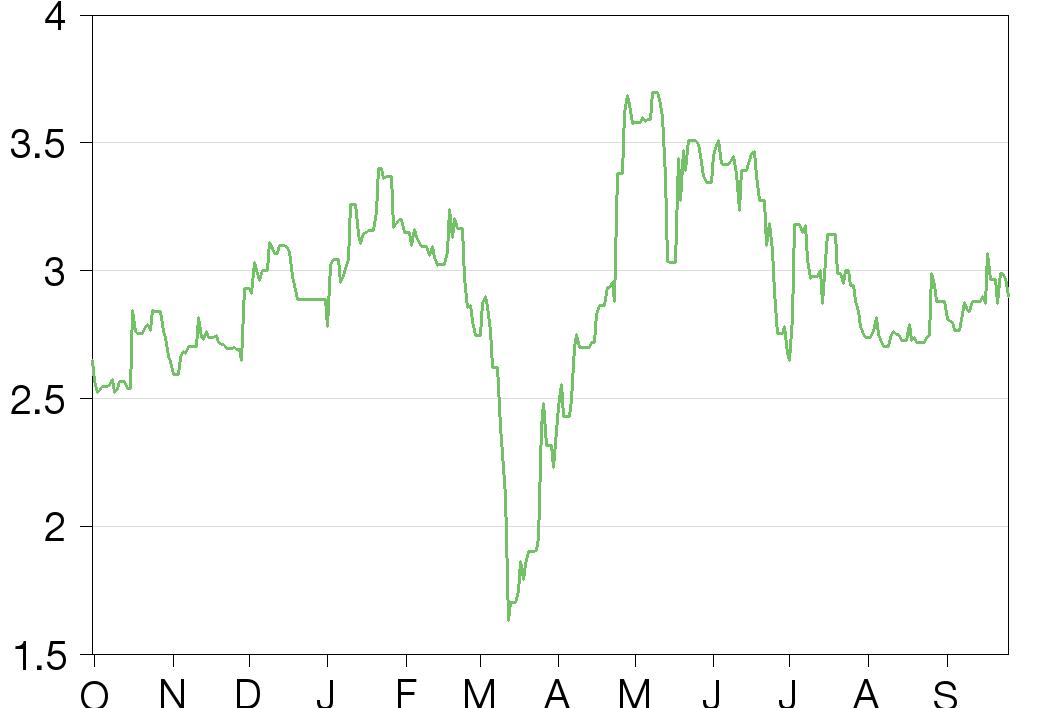
Share price performance
Business description
Next events
Analyst
|
||||||||||||||||||||||||||||||||||||||||||||||||||||||||
On 17 September Oryzon presented an update from its Phase IIa CLEPSIDRA trial with iadademstat, a selective LSD1 inhibitor, in combination with platinum/etoposide at the virtual ESMO congress. CLEPSIDRA was an open-label, single-arm Phase II study. It enrolled 14 patients, 10 of which were evaluable for efficacy as per protocol. The patients had relapsed, extensive disease small cell lung cancer (ED-SCLC). The safety profile did not allow for this combination to proceed in the second line (2L) ED-SCLC despite attempts to modify the dosing regimen. However, efficacy rates compare well with other therapies in this setting. Oryzon will explore iadademstat combinations with non-haematotoxic agents in SCLC. Our post private-placement valuation is €527m or €9.9 per/share versus €496m or €10.8 per/share previously.
Year end |
Revenue (€m) |
PBT* |
EPS* |
DPS |
P/E |
Yield |
12/18 |
6.8 |
(3.7) |
(0.03) |
0.0 |
N/A |
N/A |
12/19 |
10.3 |
(4.6) |
(0.09) |
0.0 |
N/A |
N/A |
12/20e |
9.9 |
(4.7) |
(0.07) |
0.0 |
N/A |
N/A |
12/21e |
9.9 |
(4.2) |
(0.06) |
0.0 |
N/A |
N/A |
Note: *Normalised, excluding amortisation of acquired intangibles and exceptional items.
Triple combination in 2L SCLC not viable, but…
The most common side effects of the combination were haematological changes seen in 11 out of 14 patients, which included decreased platelets, neutrophils and anaemia. Serious adverse events were also reported in seven patients (50%). The investigators tried different dosing regimens, however, the conclusion was made that such combination therapy is not suitable in this 2L ED-SCLC setting. Notably, iadademstat monotherapy did not show any haematological toxicity, while etoposide and platinum have known haematological side effects.
… the totality of data provides pathway in SCLC
The triple combination therapy achieved partial responses (PRs) in four patients and long-term stable disease in two patients (out of 10). So, the total relevant clinical benefit ratio was 60%. The objective response rate (ORR) of 40% (four PRs) compares well with the historical average of SCLC 2L chemotherapy drug topotecan (15–24%), lurbinectedin (35%), or 3L immune checkpoint inhibitor pembrolizumab (19%, Saleh, 2019). Furthermore, this efficacy rate was achieved at suboptimal doses of iadademstat and there were also signs that iadademstat has effect as monotherapy. Oryzon indicated it will aim to explore combinations with non-haematotoxic agents in future.
Valuation: €527m or €9.9 per share
In June 2020, Oryzon completed a private placement of €20m by issuing 7.3m new shares (15.9% of the previously outstanding number) at €2.75 per share, a 10.7% discount to the last closing price. Our updated valuation is €527m or €9.9 per share compared to €496m or €10.8 per share previously. At end-Q220, Oryzon reported €48.9m in cash (includes the new private placement) and €15.2m in total debt. For now, we leave our rNPV unchanged but we will reconsider our assumptions once Oryzon provides further details on its development strategy for iadademstat in SCLC.
Phase IIa CLEPSIDRA trial final update
On 17 September 2020, Oryzon presented an update from its Phase IIa CLEPSIDRA trial with iadademstat, a selective LSD1 inhibitor, at the virtual ESMO congress. This followed a similar poster presentation at the last year’s ESMO congress, which we have described in our previous reports. Some monitoring and data-cleaning activities were delayed due to the COVID-19 pandemic, therefore the study database is not locked yet. However, from a practical perspective Oryzon considers this to be the final follow-up.
CLEPSIDRA was an open-label, single-arm, multicentre Phase II study and the poster presentation detailed the results from 14 enrolled patients, of which 10 were evaluable for efficacy as per protocol. The patients had relapsed ED-SCLC. The goals of this exploratory trial were to:
•
assess the safety and tolerability of iadademstat in combination with a chemotherapy of platinum plus etoposide (PE); the patients had to be relapsed, but still sensitive to platinum (2L rechallenge chemotherapy);
•
assess if iadademstat is adding a therapeutic benefit to PE chemotherapy in this setting; and
•
explore the potential of the use of two proprietary biomarkers to select patients more responsive to iadademstat.
The patients received four to six cycles of iadademstat plus carboplatin-etoposide chemotherapy (triple combination). Subsequently, they may have been given iadademstat monotherapy.
Safety/tolerability
The most common side effects of the combination were haematological changes seen in 11 out of 14 patients, which included decreased platelets, neutrophils and anaemia. Serious adverse events were reported in seven patients (50%). No other organ-specific side effects, such as neurological, hepatic or renal toxicity, were observed. The investigators tried different dosing regimens, including skipping iadademstat, combined with treatment dose reductions to achieve normal platelet values at the beginning of each cycle, or the use of filgrastim to manage the reduction in neutrophils. However, the haematological toxicity of the triple combination was still not satisfactory. In the end the conclusion was made that such combination therapy is not suitable in this 2L ED-SCLC setting. Notably, iadademstat monotherapy did not produce any significant haematological or other side effects (Exhibit 1A).
Efficacy
As mentioned, 10 out of 14 patients were evaluable for efficacy as per protocol. Due to the attempts to find a more tolerable dose, the patients received iadademstat at doses on average 30–60% lower per cycle than intended. Within this backdrop, the triple combination therapy achieved PRs in four patients and long-term stable disease in two patients (out of 10). So, the total relevant clinical benefit ratio was 60% (Exhibit 1B). The mean duration of response was 4.5 months.
Of note is the patient 102. After six cycles of treatment with iadademstat plus carboplatin-etoposide combination for six cycles, this patient showed an initial 79% tumour reduction (RECIST criteria). Thereafter, the patient received 15 cycles of iadademstat monotherapy, which was well tolerated. The tumour reduction continued under iadademstat monotherapy and reached 90%. This patient achieved the longest progression free survival of 15.1 months, of which 10 months were iadademstat monotherapy.
The ORR of 40% compares well with the historical average of SCLC 2L chemotherapy drug topotecan (15–24%) or lurbinectedin (35%). SCLC is generally considered a non-immunogenic cancer, so reported ORRs to immune checkpoint inhibitors are also relatively low: 22% nivolumab plus ipilimumab and 19% pembrolizumab as monotherapy (Saleh, 2019).
A higher efficacy rate than other novel therapies but lower than intended doses of iadademstat could indicate the selected biomarkers may be valuable in enriching the patient population with those more sensitive to LSD1 inhibitor iadademstat.
|
Exhibit 1: Cyclic haematotoxicity of the combination in a representative patient (A) and efficacy results (B) |
|
|
Source: Oryzon. Note: ANC: absolute neutrophil count. |
Our view
In our previous reports we highlighted that haematopoiesis (blood production) is a known target of LSD1 inhibition, so the haematological side effects at higher doses are predictable. Oryzon’s iadademstat, however, demonstrated a good safety profile in the preclinical and Phase I studies. The company has therefore decided to target this highly difficult-to-treat group of patients. Etoposide and platinum have known haematological side effects and Oryzon hoped that with dose adjustments a viable combination could be found, which, if effective, would have opened a very lucrative opportunity. The safety/benefit profile was still not acceptable despite various attempts to modify the dosing regimens, so Oryzon will not pursue this triple combination further.
CLEPSIDRA was an exploratory study and served its purpose – to provide information how to progress iadademstat further. Somewhat remarkably, iadademstat monotherapy did not produce any significant haematological or other side effects (Exhibit 1A). The efficacy, even at lower-than-optimal doses, seems to compare well with several other therapies in this setting. There were also signs that iadademstat has effect as monotherapy. Furthermore, the combination of comparable efficacy rate at suboptimal dosing could indicated that patient selection using the proprietary biomarkers was working. This would allow the enrichment of subsequent trials with patients who are likely more responsive to iadademstat.
We note that epigenetic anticancer therapies represent a novel and very different class of drugs compared to conventional chemotherapy or targeted therapies, such as monoclonal antibodies. The rationale to test iadademstat for SCLC comes from the fact that the inhibition of LSD1 activates the NOTCH pathway resulting in the suppression of ASCL1 (a known SCLC tumour driver). Complete and durable tumour regression was seen with iadademstat in in vivo PDX models (discussed in our previous report).
Next steps
Oryzon indicated that it will use all this information to design the next trials in SCLC. SCLC, in general, is the most challenging form of lung cancer with few effective treatment options, so the unmet need here is huge. Iadademstat’s good safety profile as a monotherapy suggests the combinations with non-haematotoxic agents is a rational strategy. Oryzon indicated that potential combinations with checkpoint inhibitors could be explored. More concrete plans should be announced soon.
Exhibit 2: Financial summary
€000s |
|
2018 |
2019 |
2020e |
2021e |
||
Year end 31 December |
Local GAAP |
Local GAAP |
Local GAAP |
Local GAAP |
|||
PROFIT & LOSS |
|||||||
Revenue |
|
|
6,781 |
10,278 |
9,857 |
9,857 |
|
Cost of Sales |
0 |
0 |
0 |
0 |
|||
Gross Profit |
6,781 |
10,278 |
9,857 |
9,857 |
|||
Research and development |
(7,412) |
(11,322) |
(11,060) |
(11,060) |
|||
EBITDA |
|
|
(2,766) |
(3,679) |
(4,091) |
(4,095) |
|
Operating Profit (before amort. and except.) |
(3,660) |
(2,905) |
(2,905) |
(3,820) |
|||
Intangible Amortisation |
(7) |
(9) |
0 |
0 |
|||
Exceptionals |
(4) |
(11) |
0 |
0 |
|||
Other |
0 |
0 |
0 |
0 |
|||
Operating Profit |
(2,916) |
(3,839) |
(4,225) |
(4,225) |
|||
Exceptionals |
0 |
0 |
0 |
0 |
|||
Net Interest |
(796) |
(737) |
(471) |
0 |
|||
Profit Before Tax (norm) |
|
|
(3,701) |
(4,557) |
(4,696) |
(4,225) |
|
Profit Before Tax (reported) |
|
|
(3,712) |
(4,576) |
(4,696) |
(4,225) |
|
Tax |
2,535 |
892 |
1,713 |
1,302 |
|||
Profit After Tax (norm) |
(1,166) |
(3,666) |
(2,983) |
(2,922) |
|||
Profit After Tax (reported) |
(1,177) |
(3,685) |
(2,983) |
(2,922) |
|||
Average Number of Shares Outstanding (m) |
31.7 |
34.6 |
41.6 |
45.8 |
|||
EPS - normalised (€) |
|
|
(0.03) |
(0.09) |
(0.07) |
(0.06) |
|
EPS - reported (€) |
|
|
(0.03) |
(0.09) |
(0.07) |
(0.06) |
|
Dividend per share (€) |
0.0 |
0.0 |
0.0 |
0.0 |
|||
Gross Margin (%) |
100.0 |
100.0 |
100.0 |
100.0 |
|||
EBITDA Margin (%) |
N/A |
N/A |
N/A |
N/A |
|||
Operating Margin (before GW and except.) (%) |
N/A |
N/A |
N/A |
N/A |
|||
BALANCE SHEET |
|||||||
Fixed Assets |
|
|
31,786 |
42,357 |
52,196 |
62,039 |
|
Intangible Assets |
29,330 |
39,938 |
49,795 |
59,653 |
|||
Tangible Assets |
665 |
631 |
613 |
598 |
|||
Investments |
1,791 |
1,788 |
1,788 |
1,788 |
|||
Current Assets |
|
|
35,664 |
37,738 |
43,012 |
29,445 |
|
Stocks |
135 |
289 |
289 |
289 |
|||
Debtors |
971 |
2,071 |
1,521 |
1,796 |
|||
Cash |
34,320 |
35,111 |
40,935 |
27,093 |
|||
Other |
239 |
267 |
267 |
267 |
|||
Current Liabilities |
|
|
(10,441) |
(10,546) |
(9,642) |
(8,840) |
|
Creditors |
(2,192) |
(4,000) |
(3,096) |
(2,293) |
|||
Short term borrowings |
(8,249) |
(6,547) |
(6,547) |
(6,547) |
|||
Long Term Liabilities |
|
|
(11,884) |
(8,420) |
(8,420) |
(8,420) |
|
Long term borrowings |
(9,977) |
(6,699) |
(6,699) |
(6,699) |
|||
Other long term liabilities |
(1,907) |
(1,721) |
(1,721) |
(1,721) |
|||
Net Assets |
|
|
45,125 |
61,129 |
77,146 |
74,223 |
|
CASH FLOW |
|||||||
Operating Cash Flow |
|
|
(2,799) |
(3,610) |
(4,916) |
(5,172) |
|
Net Interest |
2,133 |
(324) |
0 |
0 |
|||
Tax |
0 |
0 |
1,713 |
1,302 |
|||
Capex |
(170) |
(115) |
(115) |
(115) |
|||
Acquisitions/disposals |
0 |
0 |
0 |
0 |
|||
Financing |
11,949 |
18,374 |
19,000 |
0 |
|||
Other* |
(6,576) |
(9,916) |
(9,858) |
(9,590) |
|||
Dividends |
0 |
0 |
0 |
0 |
|||
Net Cash Flow |
4,538 |
4,409 |
5,824 |
(13,575) |
|||
Opening net debt/(cash) |
|
|
(11,555) |
(16,093) |
(21,866) |
(27,689) |
|
HP finance leases initiated |
0 |
0 |
0 |
0 |
|||
Other |
0 |
1,364 |
0 |
0 |
|||
Closing net debt/(cash) |
|
|
(16,093) |
(21,866) |
(27,689) |
(14,114) |
|
Source: Edison Investment Research, Oryzon Genomics accounts. Note: Oryzon reports in Spanish GAAP. *Includes cash outflows related to development costs that were capitalised.
|
|
Research: Financials
Nürnberger Beteiligungs (NBG) has weathered the COVID-19 crisis quite well so far, with improving gross premiums booked (despite somewhat lower new business), higher investment income in its traditional insurance business and limited growth in claims expenses in H120. After NBG almost doubled its net income in H120, management expects a y-o-y increase in FY20 earnings, assisted by higher premiums booked and visible growth in new business at a group level. At its AGM in April NBG approved the €3.30 dividend per share, which is 10% higher than last year.