Immutep presented encouraging data from TACTI-mel Part B and from preclinical studies of its novel LAG-3 agonist at recent scientific conferences. The AIPAC Phase II study of its APC activator eftilagimod alpha (efti) plus chemo in breast cancer is expected to report top-line data in Q419 or Q120. The TACTI-002 study of efti plus Keytruda in lung and head and neck cancers in collaboration with US Merck has enrolled over 10 subjects and is expected to report first data mid-year. Other in-house and partnered programs are also likely to produce significant news this year. We lift our valuation to $409m (from $387m).
Written by
Immutep |
Encouraging results for efti and IMP761 |
Clinical update |
Pharma & biotech |
8 April 2019 |
ADR research
ADR share price performance
Business description
Next events
Analysts
|
||||||||||||||||||||||||||||||||||||||||||
Immutep presented encouraging data from TACTI-mel Part B and from preclinical studies of its novel LAG-3 agonist at recent scientific conferences. The AIPAC Phase II study of its APC activator eftilagimod alpha (efti) plus chemo in breast cancer is expected to report top-line data in Q419 or Q120. The TACTI-002 study of efti plus Keytruda in lung and head and neck cancers in collaboration with US Merck has enrolled over 10 subjects and is expected to report first data mid-year. Other in-house and partnered programs are also likely to produce significant news this year. We lift our valuation to $409m (from $387m).
Year end |
Revenue (US$m) |
PTP |
EPADR |
DPADR |
P/E |
Gross yield |
06/17 |
3.1 |
(6.4) |
(0.28) |
0.0 |
N/A |
N/A |
06/18 |
5.2 |
(8.3) |
(0.40) |
0.0 |
N/A |
N/A |
06/19e |
8.3 |
(5.2) |
(0.16) |
0.0 |
N/A |
N/A |
06/20e |
2.1 |
(11.1) |
(0.33) |
0.0 |
N/A |
N/A |
Note: Converted at A$1/US$0.76 for the table above and throughout the note.
TACTI-mel Part B cohort 50% response rate
Immutep reported a 50% response rate (three out of six subjects) in melanoma patients treated with efti/Keytruda combo therapy in the TACTI-mel Part B cohort. Although the number of subjects is small, the response rate compares favorably to the 33% reported for Keytruda monotherapy studies in melanoma. The combination was well tolerated and subjects from both Cohort A and B experienced deep and long-lasting responses.
Positive proof-of-concept primate study for IMP761
Immutep’s novel LAG3 agonist IMP761 inhibited immune responses, including infiltration by inflammatory lymphocytes, in a non-human primate study. This proof-of-concept (PoC) study confirmed that IMP761 has potential as a treatment for inflammatory autoimmune disorders. IMP761 could enter clinical studies in H220.
AIPAC to report top-line data in Q419/Q120
The 226-patient AIPAC study of efti plus paclitaxel in first-line metastatic breast cancer has recruited over 200 of the target of 226 subjects and is expected to fully recruit in May or June. Top-line data from the event-driven progression free survival (PFS) analysis are expected to report Q419 or Q120. Importantly, this will be the first efficacy read-out for efti from a randomized study. The trial could potentially support filing in Europe if it achieves certain (undisclosed) clinical endpoints.
Valuation: Increased to $409m, $12.10 per ADR
We lift our valuation to $409m (vs $387m), or $12.10 per ADR (vs $12.57 per ADR) on an undiluted basis or $8.79 per ADR after diluting for options, warrants and convertible notes. We have rolled our model forward in time and included the $5.2m capital raised through the issue of 260m shares in December. Gross cash at 31 December 2018 was $19.8m. Our forecasts assume that Immutep receives a risk-adjusted $6m IMP731 milestone payment from GlaxoSmithKline (GSK) in FY19, which would extend its cash reach to H220.
TACTI-mel Part B 50% response rate
Professor Frederic Triebel, Immutep’s chief scientific officer and chief medical officer, presented an update on the TACTI-mel study at the World Immunotherapy Congress 2019 (WIC) in San Diego in March. The presentation included initial efficacy data from the six-patient cohort, which comprises Part B of TACTI-mel. In this cohort, metastatic melanoma patients were treated with the efti (IMP321) soluble LAG-3 fusion protein in combination with Merck & Co’s Keytruda (pembrolizumab), with efti dosing starting at the same time as Keytruda, as shown in Exhibit 1.
|
Exhibit 1: TACTI-mel Part B study scheme |
|
|
Source: Immutep. Note: *Eligibility determined according to Response Evaluation Criteria in Solid Tumors (RECIST) 1.1 but treatment decisions based on immune-related Response Criteria (irRC). |
Exhibits 2 and 3 show that three out of six (50%) patients achieved confirmed deep partial responses, including one patient with complete disappearance of all target lesions. A fourth subject achieved stable disease.
Efti/Keytruda combination treatment is ongoing for all four subjects who achieved either partial response or stable disease. These subjects have all received at least six months of treatment and the responses have been maintained throughout the treatment period.
No dose-limiting toxicities were observed, confirming that treatment with efti can safely commence at the same time as Keytruda.
|
Exhibit 2: Spider plot from TACTI-mel Part B |
Exhibit 3: Waterfall plot from TACTI-mel Part B |
|
|
|
Source: Immutep. Note *According to irRC. |
|
|
Exhibit 2: Spider plot from TACTI-mel Part B |
|
|
|
|
Exhibit 3: Waterfall plot from TACTI-mel Part B |
|
|
|
|
Source: Immutep. Note *According to irRC. |
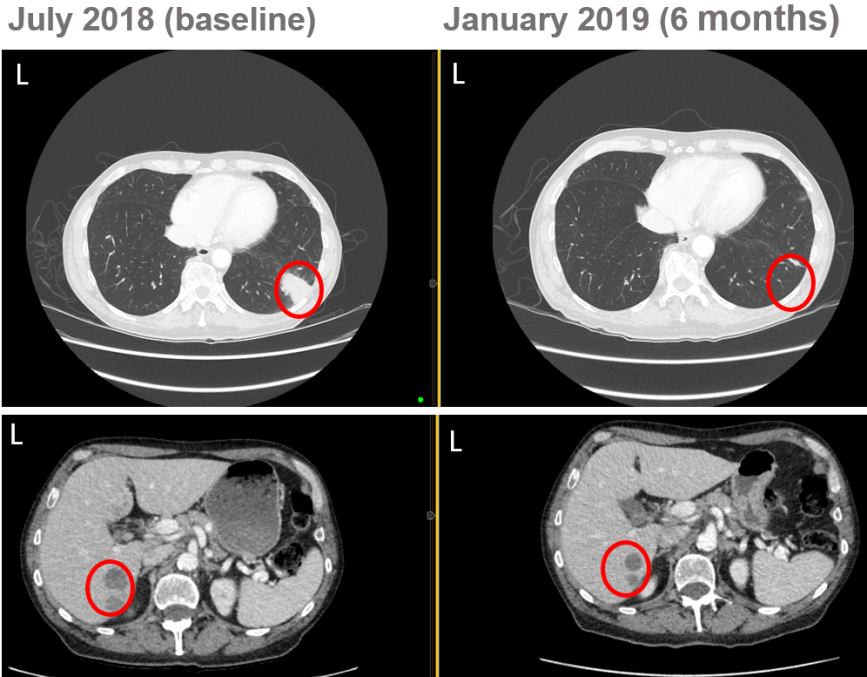
Exhibit 4 shows the clear regression of lung and liver metastases six months after commencing efti/Keytruda combo therapy in one subject who had multiple lung, bone, liver and lymph node metastases.
|
Exhibit 4: Regression of lung and liver metastases in a TACTI-mel part B subject |
|
|
Source: Immutep. Note: Upper row shows CT scan of lung metastasis (circled), lower row shows liver metastases; metastases circled in red. |
Part B of the TACTI-mel study is the first cohort in which efti treatment began at the same time as Keytruda treatment. This means Part B provides the first data that are directly comparable to Keytruda monotherapy studies. Although the number of subjects is small, the response rate of three in six (50%) compares favorably to the response rate of 33% reported for the pivotal Phase III studies of Keytruda monotherapy in melanoma.
The response rate in Part B is particularly impressive given that all six subjects had very late-stage M1c disease (visceral metastases) and five out of six had elevated lactate dehydrogenase, which is an indicator of poor prognosis.
Ongoing durable responses in TACTI-mel Part A
The presentation by professor Triebel at WIC also included an update on the 18 subjects in TACTI-mel Part A. In contrast to Part B, Part A efti/ Keytruda combination therapy was preceded by 12 weeks of Keytruda monotherapy. Subjects were assessed during the final cycle of Keytruda monotherapy and only subjects who had a suboptimal response to initial treatment with Keytruda were enrolled into the combination therapy study (Exhibit 5).
|
Exhibit 5: TACTI-mel Part A study scheme |
|
|
Source: Immutep. Note: *Eligibility determined according to RECIST 1.1 but treatment decisions based on irRC. |
The response rate reported for TACTI-mel Part A was unchanged from previous reports, namely a 33% (six of 18) overall response rate (ORR) from the start of efti/Keytruda combination therapy, including one complete response. In an exploratory post hoc analysis, the ORR was 61% (11/18) when measured from the start of the 12-week Keytruda monotherapy screening period.
The updated data in Exhibit 6 show that the tumor responses following efti/Keytruda combination therapy were long lasting. To highlight the new data, we have added green circles to the response plots for selected patients to show the last data point included in the previous data set reported the Society for Immunotherapy of Cancer (SITC) in November 2018. None of the patients who achieved a tumor response (50% shrinkage) has experienced significant tumor growth during the period of follow up. Four subjects (three partial responders, one with stable disease) remain on the study.
|
Exhibit 6: Spider plots of tumor responses from cohorts 1–3 of TACTI-mel Part A |
|
|
Source: Immutep. Note: Pembro: pembrolizumab (Keytruda). We have added green circles to indicate the last data point for selected patients as shown at the SITC last November. |
Eight TACTI-mel subjects progression free and on treatment
Exhibit 7 summarizes the progress of the 24 individual subjects from both Parts A and B of the TACTI-mel study. A key feature to note is that eight subjects (four from Part A and four from Part B) are still progression free and under treatment. Five subjects so far have been treated for over 12 months, having achieved durable responses or an extended period of stable disease. No subjects terminated treatment due to safety issues with efti/Keytruda combination therapy, highlighting the good tolerability of the combination.
|
Exhibit 7: Swimmer plot TACTI-mel Parts A and B combined |
|
|
Source: Immutep. Note: BOR (C1D1): best overall response from the start of Keytruda treatment (cycle 1, day 1) as baseline; FU: follow-up; irPD: immune-related progressive disease. |
First patient dosed in TACTI-002
The company dosed the first patient in its TACTI-002 Phase II study in March and as of early April over 10 subjects had been enrolled. First data are expected in mid-2019.
TACTI-002 is evaluating efti plus Keytruda in up to 109 patients with non-small cell lung cancer (NSCLC) or squamous cell carcinoma of the head and neck (SCCHN) at up to 13 sites in Europe, the US and Australia. Treatment with efti (30mg by subcutaneous injection) commences on the same day as Keytruda treatment in this study, just like in TACTI-mel Part B. As of early March, recruitment had commenced at two sites in Australia, one site in the US and four sites in Europe. Immutep is conducting the study in collaboration with Merck & Co.
Patients will receive 12 months of efti/Keytruda combination therapy, followed by a further 12 months of Keytruda monotherapy (Exhibit 8).
|
Exhibit 8: TACTI-002 trial design |
|
|
Source: SITC poster. Note: One cycle: three weeks; q2w: every two weeks; q3w: every three weeks. |
The open-label TACTI-002 study will utilize Simon’s two-stage design. For each of the three treatment indications, an initial cohort of 17–23 patients will be treated. For each indication, if the number of patients with tumor responses exceeds a pre-specified threshold, additional patients will be recruited to take the total up to ~37 for that indication. The three target indications are:
■
Part A: first-line advanced/metastatic NSCLC patients, who are PD-1/L-1 naive and have not undergone systemic therapy for advanced/metastatic disease.
■
Part B: second-line advanced/metastatic NSCLC patients who have experienced treatment failure (disease progression) following treatment with any PD-1/PD-L1 regimen.
■
Part C: second-line SCCHN patients who are PD-1/L1 naive.
The primary endpoint will be ORR (as per irRECIST). The TACTI-002 study data are intended to demonstrate that efti combo therapy can improve response rates to PD-1/L-1 therapy in a range of disease settings.
AIPAC data expected Q419/Q120
The AIPAC Phase IIb breast cancer study has recruited over 200 of the target of 226 subjects; the last subject is expected to be recruited in May or June 2019. The top-line event-driven PFS data are expected to report in Q419 or Q120 (after 152 PFS events).
The trial is testing efti combined with paclitaxel chemotherapy in women with hormone receptor positive metastatic breast cancer who have not previously received chemotherapy for metastatic disease. The European Medicines Agency has indicated that this trial could be sufficient to support a marketing authorization if it achieves certain (undisclosed) clinical endpoints. A confirmatory Phase III study would likely be required before filing for approval in the US.
Positive preclinical data for IMP761 LAG-3 agonist
Immutep recently presented encouraging results from preclinical studies that demonstrated the immunosuppressive activity of IMP761 in a non-human primate (cynomolgus monkey) animal model. The results were presented at the European Crohn’s and Colitis Organization congress held at Copenhagen, Denmark from 6–9 March 2019.
In the study, the monkeys were immunized with the BCG tuberculosis (TB) vaccine before being given a TB test. The TB test involves an intradermal injection of purified tuberculin protein to test for an immune response to the tuberculin protein. Following the first TB test, the monkeys were injected with IMP761 or a saline control then given a second TB test one to three days later, as shown in Exhibit 9, and the immune responses to the two TB tests were compared.
Exhibits 10 and 11 show that IMP761 reduced the infiltration of inflammatory cells, including cytotoxic T cells, into the tuberculin protein injection site.
|
Exhibit 9: Cynomolgus monkey study design and pharmacokinetic data |
Exhibit 10: IMP761 reduced inflammatory cell infiltration in monkey study |
|
|
|
Source: Immutep. Note: PBS: control saline solution. |
|
|
Exhibit 9: Cynomolgus monkey study design and pharmacokinetic data |
|
|
|
|
Exhibit 10: IMP761 reduced inflammatory cell infiltration in monkey study |
|
|
|
|
Source: Immutep. Note: PBS: control saline solution. |
|
Exhibit 11: IMP761 inhibited inflammatory T cell infiltration at the vaccine injection site in monkey study |
|
|
Source: Immutep. Note: PBS: control saline solution; CD3 labels all T cells (pan-T cell marker); CD8 is a marker for cytotoxic T cells. |
In addition to demonstrating that IMP761 suppresses immune responses to tuberculin antigen in monkeys, Immutep has also shown it is active on human T cells. Exhibit 12 shows that IMP761 inhibits the proliferation and activation of human T cells in in vitro (cell culture) studies.
|
Exhibit 12: IMP761 inhibits proliferation and activation of human T cells in vitro |
|
|
Source: Immutep. Note: Mean inhibition of (CFSElow) CD8+ T cell proliferation 51%; mean inhibition of (CD25+) CD8+ T cell activation 38%. |
IMP761 could be a novel treatment for autoimmune diseases
IMP761 is the first known therapeutic antibody with agonist properties that enable it to stimulate the LAG-3 receptor on the surface of activated T cells and thereby downregulate T cell activation and proliferation.
The key targets of IMP761 are memory T cells that have become ‘exhausted’ following prolonged activation and express high levels of LAG-3. Memory T cells are long lived and can quickly expand to large numbers of effector T cells when re-exposed to their target antigen (cognate antigen); they are believed to play a significant role in autoimmune disorders. IMP761 acts to reinforce the down-regulation of memory T cells by LAG-3.
The mechanism of action of IMP761 is different to the company’s IMP731/GSK2831781 (GSK’781) cytotoxic antibody, which aims to treat autoimmune disease by killing LAG-3 positive T cells (IMP731 is partnered with GSK). IMP761 offers the opportunity to fine-tune immune responses, which could benefit sufferers of autoimmune diseases by temporarily switching off activated LAG-3 positive T cells that are damaging tissue or causing inflammation.
Immutep has started cell line development for GMP manufacture of IMP761 to progress to clinical development. GMP manufacture and preclinical studies would be likely to take a further 18 months to complete, so initial clinical studies could potentially start in late 2020. One option would be to conduct initial PoC studies in psoriasis patients, because the impact of the treatment on psoriasis skin lesions can be readily assessed. This is the strategy that GSK followed for the initial clinical studies of GSK’781.
Immutep has not yet identified the preferred lead indication for IMP761, but potential candidate indications would likely include rheumatoid arthritis, ulcerative colitis, Crohn’s disease and psoriasis. These indications represent very large potential markets – AbbVie’s Humira, the leading treatment for autoimmune and inflammatory disorders, generated global sales of $19.9bn in 2018.1
GSK to commence IMP731 Phase II shortly
According to the clinicaltrials.gov registry entry (NCT03893565), GSK expects to initiate its Phase II study of GSK’781 (IMP731) in ulcerative colitis this month. The study will investigate four dose levels of GSK’781 in 280 participants with ulcerative colitis. The clinicaltrials.gov entry lists a primary completion date of August 2021, although company announcements suggest that initial data could be reported in 2020.
Ulcerative colitis is a type of inflammatory bowel disease. Ulcerative colitis and Crohn’s disease are the most common types of inflammatory bowel diseases. The US Centers for Disease Control and Prevention estimates that the prevalence of ulcerative colitis is 0.24% of the population, which is equivalent to 780,000 patients in the US.
We model Immutep receiving a $6m milestone payment from GSK on the commencement of the Phase II study.
INSIGHT-004 and the Merck KGaA/Pfizer extension
In September 2018 Immutep entered into a clinical trial collaboration and supply agreement with Merck KGaA/Pfizer to investigate the combination of efti with its anti-PD-L1 immune checkpoint inhibitor avelumab (Bavencio) in patients with advanced solid tumors. The study of avelumab plus subcutaneous (SC) efti in 12 patients with a range of advanced solid tumors will be included as arm 004 of the investigator-sponsored INSIGHT study (NCT03252938), which is underway at a single site in Germany. The avelumab combination therapy arm (INSIGHT-004) is expected to commence dosing patients in Q219 and to report first data before the end of 2019.
Valuation
Our valuation of Immutep has increased to $409m (from $387m). We have rolled our model forward in time and included the FY19e net cash balance in our valuation (we previously used historic FY18 cash). The total number of shares in issue has increased to 3,384m due to the issue of 260m shares in the December 2018 placement. Due to the increase in the number of shares, value per share has declined to $12.10 per ADR (undiluted, vs $12.57 per ADR). On a fully diluted basis, our valuation is $8.79 per ADR (vs $9.05 per ADR), after taking into account the options, warrants and convertible notes in issue. Exhibit 13 summarizes the constituent parts of our valuation, which is based on a discount rate of 12.5%. Our other valuation assumptions remain unchanged. Our financial forecasts are broadly unchanged as we have incorporated the recent placement.
Exhibit 13: DCF valuation of Immutep
Value driver |
Launch date |
Likelihood of success |
Peak sales ($m) |
Royalty |
Value |
Value per ADR ($) |
efti-mBC* |
2021 (EU), |
35% |
971 |
17.5% |
170.1 |
5.03 |
efti+anti-PD1 ICI melanoma |
2025 |
15% |
480 |
17.5% |
26.3 |
0.78 |
efti+Keytruda NSCLC |
2025 |
15% |
2,300 |
17.5% |
159.6 |
4.72 |
efti+Keytruda ovarian |
2027 |
15% |
500 |
17.5% |
18.9 |
0.56 |
efti+Keytruda head and neck |
2025 |
15% |
470 |
17.5% |
25.8 |
0.76 |
efti milestones - assume partnered post PII in MBC |
$225m estimated risk-adjusted milestones from out-licensing North American and European rights. |
44.0 |
1.30 |
|||
IMP731-autoimmune disease |
2023 |
20% |
1,079 |
8% |
51.3 |
1.51 |
Potential IMP731 milestones from GSK |
$81m of total $100m in risk-adjusted milestones from GSK |
12.5 |
0.37 |
|||
IMP701-solid tumors (lung cancer) |
2025 |
20% |
2,440 |
5% |
53.1 |
1.57 |
Potential IMP701 milestones from Novartis |
$20m in risk-adjusted milestones from Novartis |
2.7 |
0.08 |
|||
Grants |
1.1 |
0.03 |
||||
R&D expenses |
(9.6) |
(0.28) |
||||
Admin expenses |
(8.1) |
(0.24) |
||||
Capex |
(0.0) |
(0.00) |
||||
Tax |
(146.8) |
(4.34) |
||||
Net cash |
End FY19e net cash (including $10.5m convertible note at face value) |
8.6 |
0.25 |
|||
Total |
409.4 |
12.10 |
||||
Source: Edison Investment Research. *mBC = metastatic breast cancer
Exhibit 14 shows that in addition to the 3,384m Immutep shares in issue, there are a further 1,509m potential shares that could be issued on the exercise of options, warrants, performance rights and convertible notes, all of which would be in the money at our $12.10 per ADR undiluted valuation. Exhibit 14 shows that after taking into account these potential shares, our diluted valuation is $8.79 per ADR. Depending on trial progress and the timing of milestone payments from partners, Immutep may require additional funding to complete the efti clinical trials; our diluted valuation of $8.79 per ADR does not take into account the potential dilution from any future capital raising.
Exhibit 14: Potential further dilution and value per share
Average exercise price per ADR equivalent ($) |
m |
|
Current number of shares |
33.8 |
|
Ridgeback convertible note potential shares |
1.52 |
6.9 |
Ridgeback warrants |
1.80 |
3.8 |
Unlisted warrants |
2.51 |
3.6 |
Unlisted options |
2.51 |
0.0 |
Performance rights* |
0.00 |
0.8 |
Total in-the-money potential shares |
15.1 |
|
Total potential diluted number of shares |
48.9 |
|
Net cash raised from options and CN exercise |
26 |
|
Valuation (above plus additional cash) |
430 |
|
Diluted value per share |
8.79 |
Source: Edison Investment Research. Note: *Both vested and unvested performance rights have been included.
We include risk-adjusted milestones payable by current partners GSK for IMP731 and Novartis for IMP701, plus milestones from prospective deals for efti. The breadth of the LAG-3 pipeline means there could be further upside if Immutep or its partners launch additional products into the clinic or broaden the indications being studied.
Exhibit 15: Financial summary
|
US$000s |
2017 |
2018 |
2019e |
2020e |
||
Year end 30 June |
IFRS |
IFRS |
IFRS |
IFRS |
|||
PROFIT & LOSS |
|||||||
Revenue |
|
|
3,129 |
5,209 |
8,283 |
2,111 |
|
Cost of Sales |
(5,720) |
(7,592) |
(8,352) |
(7,935) |
|||
Gross Profit |
(3,304) |
(5,504) |
(5,669) |
(5,839) |
|||
EBITDA |
|
|
(5,895) |
(8,691) |
(5,739) |
(11,662) |
|
Operating Profit (before GW and except.) |
|
(5,905) |
(8,699) |
(5,741) |
|||
Intangible Amortization |
(1,283) |
(1,367) |
(1,254) |
(1,141) |
|||
Exceptionals |
0 |
0 |
0 |
0 |
|||
Operating Profit |
(7,188) |
(10,065) |
(6,995) |
(12,807) |
|||
Other |
(571) |
245 |
0 |
0 |
|||
Net Interest |
79 |
135 |
535 |
571 |
|||
Profit Before Tax (norm) |
|
|
(6,397) |
(8,319) |
(5,206) |
(11,095) |
|
Profit Before Tax (IFRS) |
|
|
(7,680) |
(9,686) |
(6,460) |
(12,236) |
|
Tax |
560 |
(1) |
0 |
0 |
|||
Profit After Tax (norm) |
(5,837) |
(8,320) |
(5,206) |
(11,095) |
|||
Profit After Tax (IFRS) |
(7,119) |
(9,687) |
(6,460) |
(12,236) |
|||
0.0 |
0.0 |
0.0 |
0.0 |
||||
Average Number of Shares Outstanding (m) |
2,072.5 |
2,079.7 |
3,204.8 |
||||
Average Number of ADRs Outstanding (m) |
20.7 |
20.8 |
32.0 |
||||
EPS - normalized (c) |
|
|
(0.3) |
(0.4) |
(0.2) |
(0.3) |
|
EPS - IFRS (c) |
|
|
(0.3) |
(0.5) |
(0.2) |
(0.4) |
|
Dividend per share (c) |
0.0 |
0.0 |
0.0 |
0.0 |
|||
Earnings per ADR - normalized ($) |
(28.2) |
(40.0) |
(16.2) |
(32.8) |
|||
Earnings per ADR - IFRS (c) |
(34.4) |
(46.6) |
(20.2) |
(36.2) |
|||
Dividend per ADR (c) |
0.0 |
0.0 |
0.0 |
0.0 |
|||
Gross Margin (%) |
N/A |
N/A |
N/A |
N/A |
|||
EBITDA Margin (%) |
N/A |
N/A |
N/A |
N/A |
|||
Operating Margin (before GW and except.) (%) |
N/A |
N/A |
N/A |
||||
BALANCE SHEET |
|||||||
Fixed Assets |
|
|
14,474 |
13,950 |
12,704 |
11,569 |
|
Intangible Assets |
14,455 |
13,930 |
12,676 |
11,536 |
|||
Tangible Assets |
18 |
20 |
27 |
34 |
|||
Other |
0 |
0 |
0 |
0 |
|||
Current Assets |
|
|
12,099 |
21,769 |
22,954 |
11,852 |
|
Stocks |
0 |
0 |
0 |
0 |
|||
Debtors |
1,667 |
2,608 |
2,608 |
2,608 |
|||
Cash |
9,300 |
17,841 |
19,027 |
7,925 |
|||
Other |
1,131 |
1,319 |
1,319 |
1,319 |
|||
Current Liabilities |
|
|
(2,001) |
(2,929) |
(2,929) |
(2,929) |
|
Creditors |
(1,967) |
(2,785) |
(2,785) |
(2,785) |
|||
Short term borrowings |
(0) |
0 |
0 |
0 |
|||
Short term leases |
0 |
0 |
0 |
0 |
|||
Other |
(33) |
(144) |
(144) |
(144) |
|||
Long Term Liabilities |
|
|
(4,408) |
(7,314) |
(7,314) |
(7,314) |
|
Long term borrowings incl. conv. note |
(4,392) |
(5,051) |
(5,051) |
||||
Long term leases |
0 |
0 |
0 |
0 |
|||
Other long term liabilities |
(16) |
(2,263) |
(2,263) |
(2,263) |
|||
Net Assets |
|
|
20,164 |
25,477 |
25,415 |
13,180 |
|
CASH FLOW |
|||||||
Operating Cash Flow |
|
|
(6,544) |
(6,045) |
(5,739) |
(11,662) |
|
Net Interest |
79 |
135 |
535 |
571 |
|||
Tax |
0 |
0 |
0 |
0 |
|||
Capex |
(5) |
(9) |
(9) |
(10) |
|||
Acquisitions/disposals |
0 |
0 |
0 |
0 |
|||
Financing |
(6) |
14,363 |
6,398 |
0 |
|||
Dividends |
0 |
0 |
0 |
0 |
|||
Other |
0 |
(375) |
0 |
0 |
|||
Net Cash Flow |
(6,477) |
8,068 |
1,185 |
(11,102) |
|||
Opening net debt/(cash) |
|
|
(12,047) |
(4,908) |
(12,791) |
(13,976) |
|
HP finance leases initiated |
0 |
0 |
0 |
0 |
|||
Other |
(663) |
(185) |
(0) |
0 |
|||
Closing net debt/(cash) |
|
|
(4,908) |
(12,791) |
(13,976) |
(2,874) |
|
Source: Immutep accounts, Edison Investment Research. Note: Solely for the convenience of the reader the financial summary table has been converted to US$ at a rate of US$0.76 to A$1. Immutep reports statutory accounts in Australian dollars. These translations should not be considered representations that any such amounts have been or could be converted into US dollars at the assumed conversion rate.
|
|
Immutep presented encouraging data from TACTI-mel Part B and from preclinical studies of its novel LAG-3 agonist at recent scientific conferences. The AIPAC Phase II study of its APC activator eftilagimod alpha (efti) plus chemo in breast cancer is expected to report top-line data in Q419 or Q120. The TACTI-002 study of efti plus Keytruda in lung and head and neck cancers in collaboration with US Merck has enrolled over 10 subjects and is expected to report first data mid-year. Other in-house and partnered programmes are also likely to produce significant news this year. We lift our valuation to A$539m (from A$510m).