Last close As at 05/08/2026
—
— 0.00 (0.00%)
Market capitalisation
—
Research: Healthcare
2017 saw RedHill transformed from a pure drug developer into a commercial-stage, revenue-generating, specialty pharma company focused on gastrointestinal (GI) indications. During 2017, it began marketing three GI products in the US and we expect a rapid sales build-up. Two other important share price catalysts in 2018 will be the data readouts from two Phase III trials – RHB-104 for Crohn’s disease (CD) and TALICIA for H. pylori infection. Following several modifications to our NPV aligning with RedHill’s latest R&D update, we value the company at $410m or $19.2/ADS (vs $21.1/ADS).
Written by
RedHill Biopharma |
Commercial stage, GI-focused R&D pharma |
Company outlook |
Pharma & biotech |
29 March 2018 |
Share price performance
Business description
Next events
Analyst
|
||||||||||||||||||||||||||||||||||||||||||||||||||||
2017 saw RedHill transformed from a pure drug developer into a commercial-stage, revenue-generating, specialty pharma company focused on gastrointestinal (GI) indications. During 2017, it began marketing three GI products in the US and we expect a rapid sales build-up. Two other important share price catalysts in 2018 will be the data readouts from two Phase III trials – RHB-104 for Crohn’s disease (CD) and TALICIA for H. pylori infection. Following several modifications to our NPV aligning with RedHill’s latest R&D update, we value the company at $410m or $19.2/ADS (vs $21.1/ADS).
Year |
Revenue ($m) |
PBT* |
EPS* |
DPS |
P/E |
Yield |
12/16 |
0.1 |
(29.4) |
(0.23) |
0.0 |
N/A |
N/A |
12/17 |
4.0 |
(45.5) |
(0.26) |
0.0 |
N/A |
N/A |
12/18e |
16.6 |
(39.3) |
(0.18) |
0.0 |
N/A |
N/A |
12/19e |
30.2 |
(35.8) |
(0.17) |
0.0 |
N/A |
N/A |
Note: *PBT and EPS are normalised, excluding amortisation of acquired intangibles, exceptional items and share-based payments.
Three GI products in the market
RedHill has built a US sales organisation that currently employs c 40 sales representatives and is promoting three GI products: Donnatal, EnteraGam and Esomeprazole Strontium Delayed-Release (DR) Capsules 49.3mg (Esomeprazole). Total reported 2017 net revenues from the GI products were $4.0m, but product mix details have not yet been disclosed, given the recent launches. Gross profit margin was 47% in Q417. While reported FY17 sales were below our expected $7.5m, the high q-o-q growth (31% Q417 vs Q317) does support our thesis of rapid sales build-up momentum in the short term. We lower our 2018 sales estimate to $17m from $30m, but keep our $30m estimate for 2019, virtually maintaining our short-term sales target, albeit delaying the ramp-up phase by one year.
Two data readouts from Phase III trials in 2018
Besides the top-line development, in 2018 all eyes will be on two Phase III data readouts. Top-line results from the first Phase III trial of RHB-104 for CD are expected in mid-2018. If proven effective, RHB-104 could be a paradigm-shifting treatment option in CD, in our view. A second set of top-line data from confirmatory Phase III with TALICIA (RHB-105) for H. pylori infection is due in H218. In the first Phase III trial, TALICIA achieved an 89.4% eradication rate (p<0.001) meeting the primary end point of superiority over a 70% historical efficacy rate.
Valuation: Revised to $410m or $19.2/ADS
Our valuation has slightly reduced to $410m or $19.2/ADS from $449m or $21.1/ADS previously. Negative effects came mainly from a lower net cash position, removal of Rizaport from our model (as RedHill is focusing its resources on core areas) and the fact that we have changed one indication for RHB-104 from multiple sclerosis (MS) to NTM infections in line with the latest company update. RedHill does not provide guidance, but according to our model the cash reach is to end-2018, past two key R&D catalysts and more sales data points.
US commercial organisation up and running
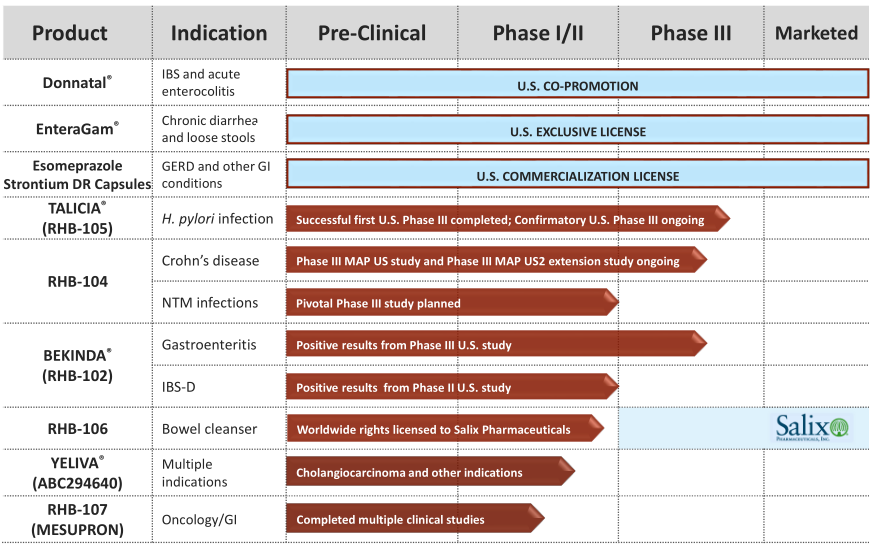
During 2017, RedHill turned from a pure drug developer into a commercial-stage specialty pharma company focused on GI indications. RedHill has built a US sales organisation with around 40 sales representatives and is promoting three GI products (Exhibit 1): Donnatal, EnteraGam and Esomeprazole. Part of the rationale for this move was RedHill’s intention to acquire commercial know-how in the GI field and eventually use the US business to market its own GI speciality products currently in R&D, if approved: BEKINDA for gastroenteritis and IBS-D, RHB-105 for H. pylori infection and RHB-104 for CD.
Exhibit 1: US commercial product portfolio
Product |
Conditions |
Active components |
Comments |
Donnatal |
IBS |
Phenobarbital, hyoscyamine sulfate, atropine sulfate, scopolamine hydrobromide |
■ Has anticholinergic and barbiturate effects ■ Has been classified by the FDA as possibly effective in IBS and acute enterocolitis ■ Co-promotion deal with Concordia Healthcare ■ 2016 sales by Concordia of $65m; 2015 sales of $91m |
EnteraGam |
Dietary management of chronic diarrhoea (eg IBS-D)** |
Serum-derived bovine immunoglobulin/protein isolate |
■ FDA-regulated medical food ■ Exclusive rights from Entera Health to market in the US ■ RedHill will pay tiered royalties, but notably no upfront or milestone payments ■ Sales of $5.6m in 2014, $16.6m in 2015, $6.2m in 2016 and $2.0m in 2017 (source: Bloomberg) |
Esomeprazole* |
Lowering gastric acid production |
Proton pump inhibitor esomeprazole strontium |
■ US commercialisation agreement with ParaPRO ■ No upfront or milestone payments; the parties will share the revenues based on an agreed upon split |
Source: Edison Investment Research. Note: *Full trademark name Esomeprazole Strontium Delayed-Release (DR) Capsules 49.3mg. **IBS-D – diarrhoea-predominant irritable bowel syndrome.
Estimating near-term performance of the US business
RedHill began the promotion of Donnatal and EnteraGam in the US in June 2017,and later entered into a commercialisation agreement to promote Esomeprazole, which was initiated in September 2017. Total reported 2017 revenues from the GI products were $4.0m, but product mix details were not provided, given the relatively short period of marketing. The gross profit margin was 47% in Q417, but it is too early to tell whether this is a representative level for the future.
|
Exhibit 2: RedHill’s sales and gross profit |
|
|
Source: RedHill, Edison Investment Research |
Donnatal and EnteraGam sales potential
Given the lack of financial details between RedHill and the partner for each of the products, evaluation of the potential is limited. We have provided our initial views on Donnatal and EnteraGam in our August 2017 report. We estimated the potential to reach sales of c $30m from the two products per year and this could be achieved over a relatively short period of time, given that both products had existing markets. Our last sales expectations were $7.5m in FY17 and $30m in FY18. While reported FY17 sales of $4m were below our expectations, the high q-o-q growth does support our thesis of rapid sales build-up momentum in the short term. The promotion of both Donnatal and EnteraGam started in June 2017, therefore Q217 results are not informative. Growth from Q317 to Q417 was 31%, which we use to calculate our expected 2018 sales of $17m. We maintain our 2019 estimate of $30m as before. This means that we maintain our initial expectations on the potential of the GI product sales in the near term, but delay the ramp-up phase by one year. Subsequently, we use a single-digit annual growth rate as before (more background details are provided in the aforementioned report issued in August 2017).
As a reminder:
■
Donnatal: RedHill announced a co-promotion deal in January 2017 with Concordia Healthcare, according to which the company gained certain rights to promote a gastrointestinal speciality drug (Donnatal) in selected regions in the US. Concordia will continue to be responsible for the manufacturing and supply. Both companies will share the revenues generated from the promotion of Donnatal by RedHill based on an agreed split between them, which was not disclosed. No upfront or milestone payments were involved. The initial term of the co-promotion agreement with Concordia is for three years. Donnatal is a proprietary combination of established compounds, which has anticholinergic (slows down the motility of intestinal muscles) and barbiturate (mild sedation) effects and has been classified by the FDA as possibly effective in IBS and acute enterocolitis. Donnatal was acquired by Concordia in 2014 and had sales of $65m in 2016 (7.9% of Concordia’s sales).
■
EnteraGam: in April 2017, RedHill announced an agreement with US-based medical food developer and manufacturer Entera Health for exclusive rights to market EnteraGam in the US. In exchange, RedHill will pay tiered royalties, but notably no upfront or milestone payments. EnteraGam is an FDA-regulated medical food, a serum-derived bovine immunoglobulin/protein isolate (SBI), with a proposed mechanism of action of restoring gut balance. Originally developed by Entera Health and launched in 2013, EnteraGam’s intended use is for the dietary management of chronic diarrhoea and loose stools. RedHill already has one product, BEKINDA (a once-daily oral formulation of ondansetron), for IBS-D in Phase II, although it is a drug with a different mechanism of action and therefore not a direct competitor. Instead, we see operational synergy as RedHill gains experience and know-how in targeting IBS-D patients ahead of the launch of BEKINDA, presuming supportive data.
Esomeprazole strontium in PPI landscape
Esomeprazole is the latest addition to RedHill’s GI commercial portfolio, announced in August 2017 with ParaPRO. Given that ParaPRO is a private company, little information about its branded Esomeprazole was released. As explained below, we view the current PPI market to be in a very dynamic stage and do not forecast the sales for this new addition to RedHill’s portfolio, but we will revisit it once more data points emerge.
RedHill promotes esomeprazole strontium branded as Esomeprazole Strontium Delayed-Release (DR) Capsules 49.3mg. No upfront or milestone payments were involved in the agreement, while the parties will share the revenues generated from the promotion of the product by RedHill based on an agreed split. The initial term of the commercialisation agreement is three years. Esomeprazole Strontium belongs to the proton pump inhibitor (PPI) class and is indicated in several disorders where lowering gastric acid production is beneficial, eg prevention or treatment of gastric/duodenal ulcers, gastroesophageal reflux disease (heartburn) or esophagitis. PPIs encompass several compounds and are considered the most potent inhibitors of acid secretion available with a good safety profile. PPIs interfere in the last step of the gastric acid secretion and largely surpassed in popularity another class of heartburn drugs H2-receptor antagonists, eg ranitidine or cimetidine.
Esomeprazole was first introduced as Nexium (esomeprazole magnesium) by AstraZeneca in 2001 and generated $5.2bn in peak sales in 2007 (EvaluatePharma). With patents expiring and generic versions appearing, Nexium sales have been decreasing; however, globally Nexium still brought in $2.8bn in 2017. As esomeprazole strontium is a different salt (approved via 505(b)(2) new drug application pathway), it is differentiated from Nexium and its generic versions. In 2014, the FDA approved esomeprazole strontium for use in adults for the same indications as esomeprazole magnesium (Nexium); however, the market dynamics for newer PPIs are still not clear, due to existing strong off-patent brands and other PPIs. EvaluatePharma calculates that the total PPI market was worth $7.2bn in 2017 (Nexium was the largest, with $2.8bn).
|
Exhibit 3: RedHill’s product portfolio |
|
|
Source: RedHill |
Data from confirmatory Phase III with TALICIA in H218
TALICIA (RHB-105) is among the most advanced assets in the R&D pipeline. It is a patented combination of rifabutin, amoxicillin and omeprazole and is being developed as a first-line treatment for patients diagnosed with H. pylori infection regardless of ulcer status, an indication potentially broader than competitors. The first Phase III study delivered positive final results in March 2016, which showed that TALICIA eradicated H. pylori in 89.4% patients (p < 0.001) compared to the historical 70% after standard-of-care and 63% in subsequent open-label treatment of the placebo arm patients in the same trial. Following a meeting with the FDA, a confirmatory Phase III trial was initiated in June 2017. The study is expected to enrol 444 subjects and compare TALICIA versus a regimen of amoxicillin and omeprazole alone. Top-line results are expected in H218 and, subject to positive full data, the study is expected to allow for the NDA application.
We have reviewed the rationale for TALICIA, existing clinical data and competitive advantages against other antibiotic regimens in our initiation report. TALICIA has Qualified Infectious Disease Product (QIDP) designation from the FDA, which endows both fast-track development status and priority review status, and, if approved, eight years’ US market exclusivity.
The planned indication is the first-line treatment for eradication of H. pylori regardless of ulcer status, which would be broader than its competitors: Prevpac (first-line regimen; lansoprazole, amoxicillin, clarithromycin; Takeda) and Pylera (second-line regimen; bismuth, metronidazole and tetracycline; Actavis/Allergan; PPI has to be administered separately) are indicated for patients with H. pylori and duodenal ulcer disease (active or historical). Prevpac sales peaked at $150m in 2009 in the US (Bloomberg) before the patent expiry, while Pylera peak sales reached $38m in the US in 2013.
The US market potential alone is significant with over 100 million Americans thought to be H. pylori-positive and 500,000-850,000 new cases of peptic ulcer disease annually (CDC). Given the observations that around 10-15% (excluding gastroesophageal reflux disease) of the US population has dyspepsia and around 10% of those receive eradication treatment, this translates into c 2.9 million patients representing a target population for RHB-105.1, 2
Y. Shaib at al. The prevalence and risk factors of functional dyspepsia in a multiethnic population in the United States. Am J Gastroenterol. 2004 Nov;99(11):2210-6.
C. Howden et al. Practice Patterns for Managing Helicobacter pylori Infection and Upper Gastrointestinal Symptoms. Am J Manag Care. 2007;13:37-44.
RHB-104 for CD treatment and NTM infections
RHB-104 offers potential new approach in CD
RHB-104 is a patented combination of three antibiotics (clarithromycin, rifabutin and clofazimine) in an oral capsule for the treatment of CD. The product is in Phase III development for CD, an area where current therapies have limited efficacy and pronounced side-effects, and are often very costly. CD is characterised by inflammation of the GI tract and symptoms include persistent diarrhoea, abdominal pain, rectal bleeding, weight loss and fatigue. An increasing amount of data supports the link between MAP infection in CD patients and RedHill believes it could induce and prolong remission time by treating the infection. This idea has an interesting background and has previously been explored in several clinical trials by other parties, such as a large Phase III trial funded by Pharmacia/Pfizer. In our initiation report, we reviewed the MAP hypothesis in CD, existing clinical data and RHB-104’s fit in the current landscape.
The new ongoing Phase III trial was initiated in moderate to severe CD and is now fully enrolled (since November 2017) with 331 patients. Two previous DSMB reviews (safety in December 2016; safety and efficacy in July 2017) recommended the continuation of the study without modifications. Top-line results are expected in mid-2018. To gather as many insights as possible, the company has also initiated open-label extension study to assess the safety and efficacy in those patients who remained with active CD after the treatment in the original trial. In addition, two other small studies (n = 20 each) are planned to evaluate RHB-104’s efficacy in newly diagnosed and treatment-naïve patients. RedHill also expects that a second randomised Phase III study in CD will be needed before the regulatory application.
According to the Crohn's & Colitis Foundation of America (CCFA), CD affects up to 700,000 Americans (Ulcerative Colitis is a similar number) with c 30k new cases every year, most of whom are diagnosed by the age of 35. In Europe, there are an estimated 1.6 million CD sufferers with 78k new cases every year.3 There is no cure for CD, although a variety of immunomodulating and immunosuppressive agents are commonly used to control symptoms. Many of these are associated with significant failure rates, side effects and safety issues (J&J's Remicade has a black box warning on serious opportunistic infections like tuberculosis). The cost per patient ranges from $300-400 per year for the cheaper generic aminosalicylates, to in excess of $20k per year for biologics (anti-TNFs such as AbbVie's Humira, UCB's Cimzia and J&J's Remicade and Simponi; or integrin-receptor antagonists such as Biogen's Tysabri and Takeda's Entyvio; source: GoodRX.com). The value of the global CD drug market is projected to be $7.9bn by 2020 (EvaluatePharma).
Burisch et al. The burden of inflammatory bowel disease in Europe. Journal of Crohn's and Colitis, Volume 7, Issue 4, 1 May 2013, Pages 322–337
RHB-104 for hard-to-treat NTM infections
While CD is the primary indication for RHB-104, RedHill has decided to explore it in the treatment of NTM infections, which we now add to our NPV model. The Phase III trial is due to start in mid-2018 (Exhibit 4) and RedHill plans to position RHB-104 as a first-line treatment for pulmonary NTM infections, specifically for those caused by Mycobacterium avium complex (MAC). RedHill believes that a single pivotal trial could be sufficient, but this depends on the feedback from the FDA. The rationale for RedHill to test RHB-104 in NTM infections arises from existing evidence that MAC is susceptible to all of the antibiotics in RHB-104 (clarithromycin, clofazimine and rifabutin). In addition, clarithromycin is a macrolide class antibiotic and macrolides are considered a cornerstone in the anti-NTM regimen. Pulmonary NTM caused by MAC remains an unmet medical need with no standard of care. The FDA has granted RHB-104 QIDP for the treatment of NTM infections earlier in 2017. NTM infections are also an orphan disease.
Exhibit 4: RHB-104 clinical trial design
Trial |
Stage |
Trial design and upcoming events |
RHB-104 (clarithromycin, clofazimine and rifabutin) |
Phase III |
■ Study to start in mid-2018 ■ Study design (pending FDA feedback) – n=100; double-blind, placebo-controlled Phase III study in newly diagnosed or recent repeat culture positive non-cavitary MAC disease; 1:1 randomisation RHB-104 vs placebo; six-month treatment for primary efficacy end point with continued follow-up treatment for an additional 12 months ■ Primary end point – sputum culture conversion at six months with demonstration of clinical significance ■ Study sites in US ■ Top-line data: TBD |
Source: Edison Investment Research, RedHill Biopharma Corporate Presentation March 2018. Notes: MAC = Mycobacterium avium complex.
NTM are mycobacteria prevalent in soil and water and are defined as any mycobacterial pathogen other than Mycobacterium tuberculosis (the cause of tuberculosis) or Mycobacterium leprae (the cause of leprosy). This group encompasses more than 140 species of mycobacteria, which can infect various organs. The infections are difficult to diagnose, difficult to treat and it has been suggested that the prevalence rate is more common than tuberculosis in the industrialised world.4
Pulmonary NTM infection is a chronic disease, characterised by nodules in the lungs, fibrosis and progressive lung destruction. If left untreated, it could lead to respiratory failure within just a few years. As with tuberculosis, the treatment is complicated, with some patients receiving antibiotics for over two years until they are culture-negative. NTMs share many characteristics with M. tuberculosis that make the bacteria difficult to differentiate. Molecular techniques are needed to distinguish tuberculosis from NTMs, which is difficult to access in less developed countries. Although NTMs cause a spectrum of diseases that can mimic tuberculosis, typically tuberculosis drug regimens are not effective, which results in poor treatment outcomes.
Gathering epidemiology data is challenging, but it is now thought that NTM-associated disease is much more common than previously thought: more common than TB in the industrialised world and likely increasing in prevalence globally (emedicine.com). In the US, there were approximately 86k NTM patients in 2010, a number that is estimated to be growing at a rate of 8% annually. Incidence rates are much lower. The reports on incidence of pulmonary NTM vary substantially from 5.6/100,000 in the US to 0.2-6.1/100,000 in Europe. Pulmonary manifestations account for 80-90% of NTM associated disease and around 80% of pulmonary NTM infections in the US are associated with MAC.5, 6 A recent study found the incidence of pulmonary NTM in Japan to be 14.7/100,000 where MAC is the cause of around 89% of cases.
Difficult diagnostics and treatment are further confounded by lack of research in the area. Currently, NTM infections are treated with generic antibiotics (clarithromycin, azithromycin, rifampin, rafabutin, rifapentine, ethambutol) and only a few clinical trials are ongoing. Insmed is developing a new formulation of amikacin (Phase III trial ongoing) for the treatment-refractory NTM infections, while RedHill's program is targeting first-line treatment, which is a larger patient group (Exhibit 5). Savara is developing an inhaled formulation of recombinant human granulocyte-macrophage colony stimulating factor (GM-CSF) for NTM infections including MAC, currently recruiting patients to Phase II trial. Novoteris is also testing a non-antibiotic treatment, nitric oxide, which is currently being tested in Phase II for NTM infections including MAC.
Exhibit 5: Competitive landscape
Company |
Product |
Phase of development |
Notes |
Insmed |
Liposomal amikacin for inhalation |
Phase III [NCT02344004] |
■ 350 patients ■ A randomised, open-label, multi-centre study of liposomal amikacin for inhalation (lai) in adult patients with nontuberculous mycobacterial (ntm) lung infection caused by MAC that are refractory to treatment ■ Positive interim data reported |
Savara |
Inhaled molgramostim (recombinant human Granulocyte-Macrophage Colony Stimulating Factor; rhGM-CSF) |
Phase II [NCT03421743] |
■ 30 patients ■ NTM infections ■ Not yet recruiting (enrolment expected to complete Q318) |
Novoteris |
Nitric oxide 0.5 % / nitrogen 99.5 % gas for inhalation |
Phase II [NCT03331445] |
■ 10 patients ■ NTM infections ■ Recruiting |
Source: clinicaltrials.gov, Insmed, Savara corporate presentation 2018
RHB-104 in MS
In addition to CD, RedHill has also generated interesting positive data with RHB-104 in MS questioning the conventional view that MS is purely an autoimmune disease. CNS indications are not within RedHill’s focus; therefore, the company has not allocated capital to initiate further trials. CD and NTM are the two priority indications for RHB-104, while the progress in MS will depend on insights from the ongoing Phase III for CD and potential interest from partners.
In the past, MAP has been associated with diseases like type 1 diabetes, Hashimoto’s thyroiditis, sarcoidosis and MS.7 MS is an inflammatory, neurodegenerative disease where a person’s own immune system attacks the neurons in the central nervous system, leading to a variety of disabling symptoms that usually worsen over time. It has been proposed that a molecular mimicry between MAP proteins and human proteins could induce autoimmune pathologies and, in the case of MS, there could be similarities between MAP proteins and human anti-myelin basic protein (MBP), interferon regulatory factor 5 (IRF5) or gamma T cells. RedHill's proof-of-concept Phase IIa study (CEASE-MS) of RHB-104 in relapsing-remitting multiple sclerosis (RRMS) delivered final results in December 2016 and echoed the positive interim findings earlier in 2016. RHB-104 was evaluated as an add-on therapy to IFN-beta1a in an open-label, single-arm trial of 18 RRMS patients (17-patient data used for modified intent-to-treat analysis; 10-patient data used for per protocol analysis) who were treated for 24 weeks in combination with interferon beta-1a and then with interferon beta-1a only. The data in December 2016 showed that the annualised relapse rate (ARR, one of the most common end points in late-stage trials in the industry)8 at 24 weeks was 0.29 in the modified intent-to-treat9 (mITT) population and 0.0 in the per-protocol10 (PP) population, comparing favourably with data published for standalone IFN-beta therapies Avonex (Biogen) 0.67 and Rebif (Merck Serono and Pfizer) 0.87-0.91. Another end point was the relapse rate during the study. A total of 93% of the mITT patient population and 100% of the PP patient population were relapse-free at 48 weeks, which also compares well with Rebif alone (75%) and Avonex alone (63%).
L. Sechi and C. Dow. Mycobacterium avium ss. paratuberculosis Zoonosis – The Hundred Year War – Beyond Crohn’s Disease. Front Immunol. 2015; 6: 96.
A. Lavery et al. Outcome Measures in Relapsing-Remitting Multiple Sclerosis: Capturing Disability and Disease Progression in Clinical Trials. Multiple Sclerosis International. Volume 2014, Article ID 262350.
ITT: the intention-to-treat principle requires that all participants who are randomised must be included in the final analysis regardless of the treatment received, withdrawals, lost to follow-up or cross-overs. This is the preferred analysis method to avoid bias. Modified ITT allows some post-randomisation exclusions.
Per-protocol analysis is a comparison of treatment groups, which includes only those patients who completed the originally allocated treatment. If used alone, this method may lead to bias.
BEKINDA – bi-modal, extended release ondansetron
BEKINDA is a once-daily, extended bi-modal release, oral formulation of ondansetron. Ondansetron was originally developed and marketed by GlaxoSmithKline and Novartis as Zofran; the patents expired in 2006 and generics are now available. It is a 5-HT3 (serotonin) receptor antagonist approved for the prevention of chemotherapy- and radiotherapy-induced nausea and vomiting (CINV and RINV, respectively) and prevention of postoperative nausea and/or vomiting (on an as-needed basis, not routinely). RedHill licensed the patent-protected extended-release technology, which, if approved, could be the first once-daily oral formulation of ondansetron to reach the US and European markets. BEKINDA is being studied at different doses in gastroenteritis and IBS-D, indications for which ondansetron is not approved for. BEKINDA successfully completed a Phase III study for acute gastroenteritis and a Phase II study for IBS-D.
BEKINDA 24mg in gastroenteritis
RedHill began a randomised, double-blind, placebo-controlled Phase III GUARD study in September 2014 to test BEKINDA-24mg in 321 patients (aged 12-85 years), with vomiting due to acute gastroenteritis or gastritis. The primary outcome was the proportion of patients without further vomiting, who do not require rescue medication or intravenous hydration in the 24 hours after receiving BEKINDA or placebo. In June 2017, RedHill announced positive top-line results from its GUARD Phase III trial with gastroenteritis patients receiving BEKINDA 24mg, which is a once-daily, bi-modal release, oral formulation of antiemetic drug ondansetron.
■
The primary end point was met with statistical significance, demonstrating a higher proportion of patients without further vomiting, without rescue medication and who were not given intravenous hydration from 30 minutes post-first-dose of the study drug until 24 hours post-dose compared to placebo.
•
In the intent-to-treat population11 65.6% of BEKINDA treated patients (n = 192) met the primary outcome compared to 54.3% of placebo patients (n = 129) (21% improvement in efficacy, p = 0.04). Correcting for randomisation error, the difference was larger with 65.8% (BEKINDA) compared to 53.9% (placebo) (p = 0.03).
Intent-to-treat population (ITT) analysis includes every subject, who is randomized according to randomized treatment assignment. It ignores noncompliance, protocol deviations, withdrawal, and anything that happens after randomization. The logic is that such method would likely mimic the real world and the estimate of treatment effect is generally conservative.
•
In PP analysis12 69.5% of BEKINDA treated patients (n = 177) met the primary outcome compared to 54.9% of placebo patients (n = 122) (27% improvement in efficacy, p = 0.01).
Per-protocol population is defined as a subset of the ITT population who completed the study without any major protocol violations.
■
BEKINDA 24mg was also shown to be safe and well-tolerated.
Next steps
RedHill is currently designing a confirmatory Phase III study. Although the start date has not been announced yet, if the study is positive it could lead directly to registration. The expected start of the study has not been announced. If initiated in 2018, NDA filing could happen in 2021/2022 presuming positive data. Acute gastroenteritis is a significant problem, with approximately 179 million cases annually leading to c 600,000 hospitalisations and 5,000 deaths in the US alone (CDC). A safe and effective method of controlling vomiting would reduce the need for intravenous rehydration and potentially reduce hospitalisations. Given that generic ondansetron is already routinely used in this setting, BEKINDA’s ability to gain market share will depend on its competitive advantage, which is an extended release formulation and will be used on-label compared to standard ondansetron.
BEKINDA 12mg in IBS-D
IBS is a functional disorder of the bowel that affects around 10-15% of the global population and is characterised by abdominal pain and altered bowel habit (chronic or recurrent diarrhoea, constipation, or both). In June 2016, RedHill began dosing in a Phase II trial with BEKINDA-12mg for the treatment of IBS-D. The randomised, two-arm parallel group study enrolled 126 patients randomised 60:40 to receive either BEKINDA-12 mg or a placebo, once daily, for eight weeks. The primary end point for the study was the proportion of patients in each group with response in stool consistency as compared to the base line, per FDA guidance definition.
In October 2017, the announced results showed that 54.7% of patients in the active arm responded to treatment compared to 35.3% in the placebo group. This is a significant difference of 19.4%, which further improved to 20.7% when final results were announced in January 2018. This difference compares well (although not tested head-to head in the trial) with other recent drugs approved for IBS-D – Viberzi (eluxadoline, Allergan) and Xifaxan (rifaximin, Valeant), for which the respective percentage rates were 13.5% and 10.5% (noting the limitations of making comparisons across different trials). Both Viberzi and Xifaxan were approved for IBS-D in 2015 and in 2016 had solid sales of $157m and $360m, respectively, in IBS-D in 2017 (EvaluatePharma). RedHill plans to meet with the FDA in H118 to discuss further development, which could include one or two pivotal trials.
Although studies are at an earlier stage, the opportunity for BEKINDA in IBS-D is potentially greater than in gastroenteritis, given the chronic nature of the disorder and the currently underpenetrated market due to a lack of effective drugs. In the US, 25-45 million people are thought to be affected, two-thirds of whom are female and around half of whom have IBS-D (aboutIBS.org). Some 5-HT-3 receptor antagonists have proved to be effective in IBS by slowing gut transit time. Alosetron (GlaxoSmithKline’s Lotronex) is approved for the treatment of women with severe chronic IBS-D but under a restricted prescribing programme due to serious side effects. Ondansetron has a much better safety record and has demonstrated activity in IBS-D in preliminary studies by significantly improving stool consistency, frequency and urgency.13 RedHill believes BEKINDA has the potential to be a superior once-daily treatment for patients suffering from IBS-D.
K. Garsed. A randomised trial of ondansetron for the treatment of irritable bowel syndrome with diarrhoea. Gut 2013;0:1–9.
YELIVA – expanding into cholangiocarcinoma
While GI indications are the primary focus for RedHill, the company remains opportunistic and conducts R&D in other areas if substantial value creation can be achieved deploying an attractive level of capital. One such strategic direction is collaboration with key opinion leaders and research organisations that support studies with RedHill. Other direction is orphan indications. With YELIVA, there are currently two studies ongoing that target multiple myeloma and HCC. In our initiation report, we also discussed a trial in DLBCL; however, this has been discontinued due to recruitment issues. Most recently, RedHill decided to initiate its own study with YELIVA in cholangiocarcinoma (Exhibit 6). As a result, we have removed the DLBCL indication and added cholangiocarcinoma indication to our NPV model, while keeping multiple myeloma and HCC (reviewed in our initiation report).
YELIVA is a first-in-class, orally administered sphingosine kinase-2 (SK2) selective inhibitor. Sphingosine kinases (there are two isoforms SK1 and SK2) promote rapid production of sphingosine 1-phosphate (S1P). S1P in turn promotes cancer growth, proliferation and inflammation processes. YELIVA is a specific SK2 inhibitor that decreases S1P synthesis, which has been demonstrated to have an effect on a broad range of fundamental biological processes such as cell proliferation, immune cell trafficking and neoangiogenesis. RedHill is the sole sponsor of the new Phase IIa study in cholangiocarcinoma (CCA) that was initiated in December 2017 and includes leading centres such as the Mayo Clinic and MD Anderson Cancer Centre. The rationale for the indication comes from the Phase I clinical study with YELIVA in patients with advanced solid tumours. The study included three cholangiocarcinoma patients who failed prior therapies, of which one had a sustained partial response and the other two had prolonged stable disease. In addition, cholangiocarcinoma is an orphan indication meaning likely less capital-intensive development.
The trial explores YELIVA as a single agent in patients with advanced, unresectable CCA. RedHill was awarded orphan drug designation in this indication in April 2017. The company has also established an expanded access programme for CCA patients who do not qualify for the main trial.
Exhibit 6: YELIVA CCA clinical trial design
Trial |
Stage |
Trial design and upcoming events |
YELIVA CCA |
Phase IIa |
■ Study initiated in December 2017, currently recruiting ■ Study design – n=39 (maximum); open label study; adult subjects who have been diagnosed with unresectable CCA either intra-hepatic, perhilar or extra-hepatic; patients will receive YELIVA 500mg twice a day for 28-day cycles until disease progression, unacceptable toxicity or voluntary withdrawal; initially 12 patients will be treated and the study will be stopped if there is no response in these patients ■ Primary end point – response rate defined as OR, CR, PR and SD of at least four months ■ Secondary end points – safety measurements (physical exam, neurological exam, HADS score for depression and anxiety, ECOG performance score, MMSE score, daily diary entries, AEs) and pharmacokinetic parameters, PFS, disease control rate, OS ■ Up to five study sites in US (including Mayo Clinic, MD Anderson) ■ Estimated primary completion date as per clinicaltrials.gov is January 2020; however, management indicated that recruitment could be faster depending on recruitment rates. |
Source: clinicaltrials.gov, RedHill Biopharma Corporate Presentation March 2018. Notes: OR = objective response; CR = complete response; PR = partial response; SD = stable disease; HADS = Hospital Anxiety and Depression Scale; ECOG = Eastern Cooperative Oncology Group; MMSE = Mini-Mental State Examination; AEs = adverse events, PFS = progression free survival; OS = overall survival.
CAA is cancer of the bile duct that can be categorised by its location: either intra-hepatic, perhilar or extra-hepatic/distal. CCA patients can present with jaundice, clay-coloured stools, dark urine, pruritus, weight loss and abdominal pain. Most patients do not notice they have CCA until it is already at the advanced stage. Some causes or risk factors of CAA are thought to be cirrhosis, hepatitis, Helicobacter infections, inflammatory bowel disease and certain chemical exposure. Being an orphan indication, it is a much smaller indication than hepatocellular carcinoma and multiple myeloma: incidence of CAA in the USA is around 1.6/100,000, and the incidence in European countries14 ranges from 0.45-3.36/100,000. Most patients have advanced CAA. Advanced disease is treated first line with chemotherapy in combination, gemcitabine monotherapy or radiotherapy, and for second-line treatment further chemotherapy or a targeted therapy is recommended.15 There are only chemotherapeutic agents on the market for CAA, and there are only a few novel non-chemotherapeutic agents currently in development for CAA/biliary cancer. The most advanced are varlitinib (ASLAN Pharmaceuticals) and ivosidenib (Agios Pharmaceuticals), which are both in Phase III.16
EU5 + Netherlands, Belgium, Luxembourg, Denmark, Finland, Norway, Sweden, Austria, Switzerland
Evaluate Pharma. Accessed 19 03 2018
Sensitivities
RedHill is subject to the usual risks associated with drug development, including clinical development failures, regulatory risks, competition, partnering setbacks and financing and commercial risks. Some of the company’s lead products (eg TALICIA, RHB-104 and BEKINDA) include active pharmaceutical ingredients that are generic, therefore theoretically could face generic substitution; however, RedHill employs various ways to increase the barriers, such as one-pill combination, different dosages, gathering clinical data for its products. The biggest near-term sensitivities are related to TALICIA, RHB-104 and BEKINDA, which all are in late-stage development. Typically for a biotech company, RedHill will need a substantial amount of new funds to bring its lead product to the market. RedHill’s US business carries risks associated with commercial activities and funding. The company has been investing substantial capital to build the organisation and the product portfolio with the aim of breaking even in the near future. Currently, the portfolio includes three GI products and our forecasts assume this could generate sufficient sales for the US business to break even; however, there have been only one full quarter since the start of the promotion activities for all three GI products, therefore the visibility is still low. There are certain risks associated with each of the products in the GI portfolio. Donnatal is an established product with an existing market, but in its 2016/2017 annual reports Concordia cited competitive pressures from non-FDA approved generic copies of the drug and was involved in litigation cases. Owners of both EnteraGam and Esomeprazole are private companies; therefore, there is little public information about the financial details of these drugs.
Valuation
Our RedHill valuation has decreased slightly to $410m (NIS1.41bn) or $19.3/ADS (NIS6.6/share), from $449m (NIS1.63bn) or $21.1/ADS (NIS7.7/share). We have made several changes to our model:
■
As explained above, we have removed the MS indication for RHB-104 and added NTM infections.
■
In our initiation report, we assumed that it would be sufficient for RedHill to conduct one Phase III trial, for BEKINDA, but following the feedback from the FDA, RedHill will conduct a second confirmatory Phase III trial, which we have now added to our model. We maintain our peak sales potential in this indication, but additional investment and extended timeline have reduced the rNPV somewhat.
■
Similarly, we have removed the DLBCL and added cholangiocarcinoma.
■
We have removed Rizaport, as RedHill terminated the co-development and commercialisation agreement with IntelGenx.
The reasons for the changes were described previously, while our detailed assumptions, expected launch dates and calculated peak sales are summarised in the Exhibits 7 and 8, similar as for other assets. For the clinical projects we have used standard industry assumptions. RedHill’s strategy is to develop the products standalone or to out-license in later stages. The company is increasingly focusing on GI conditions and likely orphan cancer indications (like YELIVA in cholangiocarcinoma), areas where RedHill might be able to bring the drugs to the market and commercialise itself. Non-core indications could be up for out-licensing. As a result, we assumed some of the products developed by RedHill are standalone, while others are with a partner (Exhibit 8). An exception is BEKINDA for IBS-D, which although is in the core portfolio, we still assumed a licensing deal in our initiation report. We maintain this approach for the time being, as the asset is in Phase II and RedHill is currently deciding on late-stage development strategy for this indication.
Exhibit 7: Sum-of-the parts RedHill valuation
Product |
Launch |
Peak sales ($m) |
NPV ($m) |
NPV/share ($) |
Probability |
rNPV ($m) |
rNPV/share ($) |
TALICIA, - H. pylori infection |
2021* |
86 |
102.3 |
4.8 |
70% |
69.4 |
3.2 |
RHB-104, - Crohn’s disease |
2023 |
145 |
66.7 |
3.1 |
40% |
20.4 |
1.0 |
- NTM infections |
2022 |
50 |
54.8 |
2.6 |
30% |
13.8 |
0.6 |
BEKINDA, - Gastroenteritis |
2022 |
21 |
27.8 |
1.3 |
85% |
23.2 |
1.1 |
- IBS-D |
2023 |
201 |
135.3 |
6.4 |
60% |
98.9 |
4.6 |
YELIVA, - Cholangiocarcinoma |
2024 |
115 |
156.1 |
7.3 |
10% |
10.3 |
0.5 |
- r/r MM |
2025 |
565 |
239.8 |
11.3 |
10% |
59.7 |
2.8 |
- Advanced HCC |
2025 |
649 |
143.6 |
6.8 |
10% |
43.9 |
2.1 |
GI specialty products: Donnatal, EnteraGam & Esomeprazole |
Market |
48 |
24.0 |
1.1 |
100% |
24.0 |
1.1 |
Net cash (end-2017) |
46.2 |
100% |
46.2 |
2.2 |
|||
Valuation |
996.7 |
44.7 |
409.7 |
19.2 |
|||
Source: Edison Investment Research. Note: WACC = 12.5% for product valuations. IBS-D: irritable bowel syndrome; r/r MM: refractory/relapse multiple myeloma; Advanced HCC: hepatocellular carcinoma; * TALICIA could potentially reach the market before 2021 given its fast-track status and depending on the timelines for the upcoming confirmatory Phase III trial.
Financials
Total reported revenues for 2017 from the GI products were $4.0m, with half of that booked in Q417. As described above, while that was below our estimates, the sales visibility has been very limited so far and initial pick-up can vary substantially. Growth from Q317 to Q417 was 31%, which we use to calculate our expected 2018 sales of $17m. Subsequently, we maintain our estimates as before, ie 2019 sales of $30m.
R&D costs were up to $33.0m in 2017 from $25.2m in 2016, while G&A and S&M combined expenses were $20.0m, up from $5.4m in 2016 mainly due to the new US commercial organisation. The FY17 operating loss was $52.0m versus $30.5m a year ago. As noted, the main reason for the increase in cash burn was the establishment of the US commercial business and somewhat more active R&D. RedHill has indicated that it is implementing a cost reduction plan and expects cash burn to gradually decrease to $8.5m per quarter in 2018. After adjusting our sales expectations and fine-tuning our opex estimates we see our forecast in line with this guidance. Our total R&D, S&M and G&A forecasts for 2018 are $26.6m, $14.0m and $7.0m, respectively.
RedHill had cash and cash equivalents (including bank deposits and financial assets at fair value) of $46.2m at the end of Q417 and was debt-free. RedHill does not provide guidance, but according to our model the cash reach is to end-2018, past two key R&D catalysts and more sales data points. For 2019, we calculate an additional cash need of $33.8m. Notably, this assumes sales of $17m in 2018 and $30m in 2019. Should there be any deviations, cash reach/need could be shorter.
Exhibit 8: Assumptions for R&D and commercial projects
Product/stage/ indication |
Out-licensing assumptions |
Comments |
TALICIA rifabutin+ |
Develop standalone |
■ Target population c 640k: rescue therapy for patients with dyspepsia who are treated for H. pylori but failed two or three times. Conservative assumption, as RedHill is positioning TALICIA as first-line therapy, therefore there is potential for increase in target population. Assumed 30% penetration. ■ Pricing*: $400 per treatment course, with a discount to branded a/b combos; peak sales in seven years. ■ R&D cost: $17.5m for second Phase III. ■ Rights: purchase agreement with Giaconda for RHB-104, RHB-105 and RHB-106 in August 2010 at a price of $500,000, 7% royalties from net sales or 20% of the royalties from sublicensees. Last patent expires in 2034. |
RHB-104 clarithromycin+ clofazimine+ rifabutin |
Develop standalone |
■ Target population of c 308k: 50% of new cases plus 35% of existing patients who are expected to relapse within one year, 50% due to sig. variability in MAP infection in CD. Assumed 20% penetration, conservative as the treatment can be highly complementary. ■ Pricing*: $2,000 on average per treatment. Pricing per two-week course same as in H. Pylori infection. Assumed 12-week treatment on average and a discount to avoid generic substitution. Peak sales reached in seven years. ■ R&D cost: $12m for the remaining first Phase III with data in H218/H119; $15m for second Phase III afterwards ■ Rights: see RHB-105. Last patent expiry date 2029. |
- Ph III |
Develop standalone |
■ Target population of c 20k: calculated using incidence rate. Only 55% assumed to receive treatment upon diagnosis according to data. Assumed 20% penetration. ■ Pricing*: $17,500 on average per patient. Premium to a reported median of $14,730 per patient treatment with generic antibiotics. Peak sales reached in seven years. ■ R&D cost estimate: $6m for pivotal Phase III. ■ Rights: see RHB-105. Last patent expiry date 2034. |
BEKINDA ext. release tab. ondansetron |
Develop standalone |
■ Target population of c 663k: around half of the gastroenteritis patients admitted to emergency departments already are treated with 5-HT3 receptor antagonists. Assumed 20% penetration due to highly fragmented market with branded and generic drugs. ■ Pricing*: $135 on average per three-day treatment, implies 50% premium to generic orally disintegrating ondansetron. Peak sales reached in seven years. ■ R&D cost: $5.0m for the confirmatory Phase III. ■ Rights: in-licensed from Temple University in March 2014. Details undisclosed. Last patent expiry date 2035. |
- Ph II |
Licensing deal in 2018 after the ongoing Ph II; $53m upfront, $249m in milestones (average of two deals in IBS area over past five years) |
■ Target population of c 1.2 million: population prevalence of around 11%; around 30% of all patients will consult a doctor, around half will have IBS-D. Assumed that severe patients (10%) will be most accessible to BEKINDA. Assumed 10% penetration due to highly fragmented market with branded and generic drugs. ■ Pricing*: $1,260 on average per eight-week treatment, implies 50% premium to generic orally disintegrating ondansetron (only half dose as in gastritis case). Peak sales reached in seven years. ■ R&D cost estimate: $4.4m for remainder Phase II (full top-line results in mid-2017), then out-licensed ■ Rights: see above for licensing information. Last patent expiry date 2035 |
YELIVA - Ph IIa |
Develop standalone |
■ Target population of c 17k: 30-40% of new cases. Assumed 20%. ■ Pricing*: assumption is that YELIVA will have to be priced similarly for all three indications. Bottom-up analysis shows that $30k is reasonable cost that would suit all three indications. Notably, RedHill now focuses on cholangiocarcinoma and could prioritise this indication to bring first to the market. Since there are no novel drugs for this indication, pricing will depend on clinical benefit and could be substantially higher if the benefit will be greater that conventional chemotherapy. Peak sales reached in six years ■ R&D cost estimate: $4m for Phase IIa, $8m for Phase III. ■ Rights: see above for licensing information. |
sphingosine kinase-2 inhibitor |
Licensing deal in 2020 after the ongoing Ph I/II; $57m upfront, $621m in milestones (average of seven deals in MM area over past five years) |
■ Target population of c 67k: new cases of MM. As MM is not curable the disease will ultimately relapse. Assumed 20% market penetration due to unproven mechanism and availability of several novel drugs, but MM is still an unmet need. ■ Pricing*: see above. ■ R&D cost estimate: $10.1m for upcoming Phase I/II, of which $2m grant from the NCI; then out-licensed ■ Rights: in-license agreement with Apogee for an upfront of $1.5m, $4m in milestones ($2m recognised as liability), tiered royalties starting in low double-digits. Last patent expiry date 2031. |
- Ph II |
Licensing deal in 2020 after the ongoing Ph II; $54m upfront, $376m in milestones (average of four deals in HCC area over past five years) |
■ Target population of c 51k: new cases that are not eligible for curative therapy (around 30%) such as surgery. Assumed 30% penetration as still highly unmet need with few options. ■ Pricing*: see above. ■ R&D cost: $8.1m for upcoming Phase II, of which a portion of $1.8m grant from the NCI to the investigator; then out-licensed ■ Rights: see above for licensing information. Last patent expiry date 2031 |
Source: Edison Investment Research, RedHill. Note: IBS-D: irritable bowel disease with diarrhoea; DLBCL: diffuse large B-cell lymphoma; HCC: hepatocellular carcinoma; *pricing in US; 20% discount applied in Europe; licensing deal source EvaluatePharma. For the calculation of target patient groups, we use the US population plus the top five European countries, Benelux, the Nordics and Austria with Switzerland.
Exhibit 9: Financial summary
$000s |
2015 |
2016 |
2017 |
2018e |
2019e |
||
December |
IFRS |
IFRS |
IFRS |
IFRS |
IFRS |
||
PROFIT & LOSS |
|||||||
Revenue |
|
|
3 |
101 |
4,007 |
16,584 |
30,157 |
Cost of Sales |
0 |
0 |
(2,126) |
(8,292) |
(15,079) |
||
Gross Profit |
3 |
101 |
1,881 |
8,292 |
15,079 |
||
Research and development |
(17,771) |
(25,241) |
(32,969) |
(26,584) |
(29,084) |
||
EBITDA |
|
|
(21,866) |
(30,499) |
(51,891) |
(39,210) |
(35,670) |
Operating Profit (before amort. and except.) |
(22,002) |
(30,543) |
(51,972) |
(39,316) |
(35,801) |
||
Intangible Amortisation |
0 |
0 |
0 |
0 |
0 |
||
Exceptionals |
0 |
0 |
0 |
0 |
0 |
||
Other |
0 |
0 |
0 |
0 |
0 |
||
Operating Profit |
(22,002) |
(30,543) |
(51,972) |
(39,316) |
(35,801) |
||
Net Interest |
912 |
1,173 |
6,428 |
0 |
0 |
||
Profit Before Tax (norm) |
|
|
(21,090) |
(29,370) |
(45,544) |
(39,316) |
(35,801) |
Profit Before Tax (reported) |
|
|
(21,090) |
(29,370) |
(45,544) |
(39,316) |
(35,801) |
Tax |
0 |
0 |
0 |
0 |
0 |
||
Profit After Tax (norm) |
(21,090) |
(29,370) |
(45,544) |
(39,316) |
(35,801) |
||
Profit After Tax (reported) |
(21,090) |
(29,370) |
(45,544) |
(39,316) |
(35,801) |
||
Average Number of Shares Outstanding (m) |
110.8 |
128.5 |
175.3 |
212.8 |
213.1 |
||
EPS - normalised ($) |
|
|
(0.19) |
(0.23) |
(0.26) |
(0.18) |
(0.17) |
EPS - normalised & fully diluted ($) |
|
|
(0.19) |
(0.24) |
(0.26) |
(0.18) |
(0.17) |
EPS - (reported) ($) |
|
|
(0.19) |
(0.23) |
(0.26) |
(0.18) |
(0.17) |
Dividend per share ($) |
0.0 |
0.0 |
0.0 |
0.0 |
0.0 |
||
Gross Margin (%) |
100.0 |
100.0 |
46.9 |
50.0 |
50.0 |
||
EBITDA Margin (%) |
N/A |
N/A |
N/A |
N/A |
N/A |
||
Operating Margin (before GW and except.) (%) |
N/A |
N/A |
N/A |
N/A |
N/A |
||
BALANCE SHEET |
|||||||
Fixed Assets |
|
|
6,318 |
6,397 |
5,667 |
6,211 |
6,995 |
Intangible Assets |
6,060 |
6,095 |
5,285 |
5,820 |
6,605 |
||
Tangible Assets |
124 |
165 |
230 |
239 |
238 |
||
Investments |
134 |
137 |
152 |
152 |
152 |
||
Current Assets |
|
|
60,510 |
67,815 |
51,676 |
6,497 |
5,471 |
Stocks |
0 |
0 |
653 |
653 |
653 |
||
Debtors |
2,372 |
1,661 |
4,818 |
4,818 |
4,818 |
||
Cash |
21,516 |
53,786 |
16,455 |
1,026 |
0 |
||
Other* |
36,622 |
12,368 |
29,750 |
0 |
0 |
||
Current Liabilities |
|
|
(5,514) |
(5,356) |
(11,830) |
(4,276) |
(3,849) |
Creditors |
(5,514) |
(5,356) |
(11,830) |
(4,276) |
(3,849) |
||
Short term borrowings |
0 |
0 |
0 |
0 |
0 |
||
Long Term Liabilities |
|
|
(1,237) |
(6,155) |
(448) |
(448) |
(34,200) |
Long term borrowings |
0 |
0 |
0 |
0 |
(33,752) |
||
Other long term liabilities |
(1,237) |
(6,155) |
(448) |
(448) |
(448) |
||
Net Assets |
|
|
60,077 |
62,701 |
45,065 |
7,984 |
(25,583) |
CASH FLOW |
|||||||
Operating Cash Flow |
|
|
(17,826) |
(28,258) |
(44,769) |
(44,528) |
(33,862) |
Net Interest |
0 |
0 |
0 |
0 |
0 |
||
Tax |
0 |
0 |
0 |
0 |
0 |
||
Capex |
(14) |
(85) |
(146) |
(116) |
(131) |
||
Acquisitions/disposals |
0 |
0 |
0 |
0 |
0 |
||
Financing |
54,792 |
36,017 |
25,653 |
0 |
0 |
||
Other** |
(21,328) |
24,596 |
(18,069) |
29,215 |
(785) |
||
Dividends |
0 |
0 |
0 |
0 |
0 |
||
Net Cash Flow |
15,624 |
32,270 |
(37,331) |
(15,429) |
(34,778) |
||
Opening net debt/(cash) |
|
|
(5,892) |
(21,516) |
(53,786) |
(16,455) |
(1,026) |
HP finance leases initiated |
0 |
0 |
0 |
0 |
0 |
||
Other |
0 |
0 |
0 |
0 |
0 |
||
Closing net debt/(cash) |
|
|
(21,516) |
(53,786) |
(16,455) |
(1,026) |
33,752 |
Source: Edison Investment Research, RedHill accounts. Note: *Bank deposits and financial assets at fair value. **Includes bank deposits converted to cash and cash equivalents.
|
|||||||||||||||||||||||||||||||||||||||||||||||
|
|
ERM Power is a leading electricity supplier and trader operating in Australia and the US. In addition to supply and gas-fired power generation in Australia, the company is focusing on two new sources of growth: US supply and energy solutions. These new areas of focus are the key drivers of our forecast 12% EBITDA CAGR in FY17-23. Energy solutions aims to reduce customers’ costs and carbon footprint and improve their energy efficiency. We believe ERM Power’s current share price implies not only zero value for the US and energy solutions but a significant decline in supply and generation margins. In our view the strong balance sheet leaves room for acquisitions and/or additional share buybacks beyond the one announced for FY18.