Last close As at 05/08/2026
CHF12.26
▲ 0.44 (3.72%)
Market capitalisation
CHF256m
Research: Healthcare
Xadago for Parkinson’s disease (PD) is now available in 14 European countries through partner, Zambon. Additionally, the drug is available in the US market (launched in H217 by sublicensee US WorldMeds). Newron reported revenues of €13.4m in FY17 (+100%) driven by royalty and milestone payments for Xadago and an operating loss of €4.3m (-71%). We expect pipeline progression in FY18: sarizotan (Rett’s syndrome, RS) and Evenamide (schizophrenia) highlight a diverse and innovative CNS-based R&D portfolio. We value the company at CHF758m.
Written by
Newron Pharmaceuticals |
2018 focus on the CNS pipeline |
FY17 results |
Pharma & biotech |
4 April 2018 |
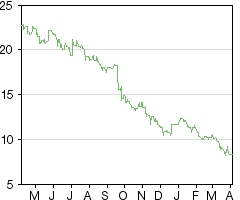
Share price performance
Business description
Next events
Analysts
|
|||||||||||||||||||||||||||||||||||||||||||||||||||||||
Xadago for Parkinson’s disease (PD) is now available in 14 European countries through partner, Zambon. Additionally, the drug is available in the US market (launched in H217 by sublicensee US WorldMeds). Newron reported revenues of €13.4m in FY17 (+100%) driven by royalty and milestone payments for Xadago and an operating loss of €4.3m (-71%). We expect pipeline progression in FY18: sarizotan (Rett’s syndrome, RS) and Evenamide (schizophrenia) highlight a diverse and innovative CNS-based R&D portfolio. We value the company at CHF758m.
Year end |
Revenue (€m) |
PBT* |
EPS* |
DPS |
P/E |
Yield |
12/16 |
6.7 |
(15.2) |
(1.04) |
0.0 |
N/A |
N/A |
12/17 |
13.4 |
(5.3) |
(0.32) |
0.0 |
N/A |
N/A |
12/18e |
5.6 |
(24.6) |
(1.38) |
0.0 |
N/A |
N/A |
12/19e |
10.7 |
(28.2) |
(1.58) |
0.0 |
N/A |
N/A |
Note: *PBT and EPS are normalised, excluding amortisation of acquired intangibles, exceptional items and share-based payments.
Xadago ramping up slowly but steadily
Newron reported €2.9m in Xadago royalties from commercial partner Zambon in FY17 (FY16: €1.7m); the product is now available in 14 European countries. US FDA approval on 21 March triggered a €11.3m milestone payment to Newron from Zambon. FY18 sales should benefit from the ongoing European market rollout by Zambon and a full year on the US market. Newron and Zambon plan to initiate a Phase III Xadago in PD-related dyskinesia trial later this year.
FY18 focus is the CNS pipeline
Newron has set out its plans in FY18 to start two confirmatory Phase IIb studies evaluating the novel mechanism of action drug Evenamide in schizophrenia. Phase IIa evenamide data demonstrate good tolerability and safety profile plus preliminary evidence of efficacy as an add-on therapy in schizophrenia. The pivotal Phase III sarizotan STARS trial in RS should report top-line data by end 2018, supporting a 2019 NDA filing. The ‘burden of disease’ study (read-out end 2018) should optimise market uptake, access and reimbursement for this orphan product.
Financials: Lower R&D in FY17 affects operating loss
Newron reported FY17 revenues of €13.4m (FY16: €6.7m), largely driven by a milestone payment relating to Xadago’s approval in the US and by a modest ramp up of Xadago-related royalty income. The operating loss reduced significantly to €4.3m, although we anticipate that a necessary uptick in R&D to support the start of the evenamide Phase IIb programme will widen the losses in FY18.
Valuation: CHF758m or CHF42.6 per share
Our revised valuation of Newron is CHF758m (from CHF754m). It includes Xadago in PD and risk-adjusted contributions for the dyskinesia indication, sarizotan in RS and evenamide in schizophrenia, and reflects December 2017 net cash and short-term investments of €60.1m. The CHF27m private placement of 2m new shares in FY17 should fund Newron well into FY20 key inflection points.
Xadago commercial progress slow and steady
Newron reported €2.8m in Xadago (salfinamide) royalties in FY17 (FY16: €1.7m) from commercial partner, Zambon. Xadago is now available in 14 European countries as an add-on therapy to levodopa in mid-to-late PD. The drug was launched in H217 into the US market for all PD patients (as add-on therapy) and is the first NCE to be approved for more than a decade for this debilitating disease. Given we assume a 12% royalty rate, this implies net sales of c €20m for the full year across the available territories in Europe. However, as royalties are paid on the out of factory prices to wholesalers, sales ex pharmacy will be at about 40% higher levels; implying ex pharmacy sales would have been above €32m. We would assume that the bulk of FY17 relates to the European market given the relative nascence of the US launch. Xadago royalties are ramping up despite the Italian Medicines Agency’s (AIFA’s) imposed ceiling on 2016 and 2017 sales. Exhibit 1 highlights the evolution in Xadago-related royalties reported by Newron. FY18 sales will benefit from the ongoing European market rollout by Zambon and a full year of availability in the US. Xadago is making slow and steady progress but a ramp up in sales is required if it is to reach our global peak sales of €653m (in PD alone).
|
Exhibit 1: Xadago royalty ramp up |
|
|
Source: Edison Investment Research, Newron |
Regional partnerships in place to maximise value
Xadago’s global development plan should benefit sales in the longer term. In 2012, Newron partnered Xadago with Zambon under a strategic collaboration and licence agreement covering all territories worldwide excluding Japan/Asia, which had already been licensed to Meiji Seika. Zambon is a private Italian company reported group turnover of €713m in 2016 – the pharmaceutical division contributed 85% and the chemicals division 15%. Zambon holds a 4.4% equity stake in Newron. Zambon does not have a significant pharmaceutical sales presence outside of Europe and Latin America. Regional partnerships have therefore been actively sought to maximise Xadago’s value. Hence, the drug was sublicensed to US WorldMeds in the US; Xadago is now available in this key market after a protracted regulatory period with a somewhat cautious FDA. Seqirus obtained the licence for Australia and New Zealand in 2017 and will be responsible for regulatory approval submission in those territories (marketing authorisation applications, MAA, in Australia has been submitted) and Zambon will supply the product. Valeo Pharma has more recently sublicensed the commercialisation and marketing rights for Xadago in Canada and Medison Pharma has entered into a partnership for Israel.
Newron is eligible for regulatory related milestone payments from Zambon and for double-digit royalties on sales. As part of any sublicensing, Newron is eligible for around 25–30% of milestone payments and 50% of royalties. Financial terms with Meiji Seika have not been disclosed; a Phase II/III confirmatory study met primary endpoints and a long-term Phase III study has been completed in Japan by Meiji and Eisai. In 2017 Newron and Meiji Seika announced a commercialisation agreement with Eisai; Eisai will hold the exclusive rights to market safinamide in Japan and to develop and market the product in seven countries in Asia (South Korea, Taiwan, Brunei, Cambodia, Laos, Malaysia and the Philippines). Meiji plans to submit a marketing authorisation application with the Japanese Pharmaceutical and Medical Device agency for safinamide in Japan during 2018. Zambon has filed the MAA for Xadago in Brazil and Columbia.
We forecast global peak sales of €653m for Xadago in PD, which comprises Europe/ROW (ex-Japan) peak sales of €187m based on use only in mid- to late-stage PD patients, and US peak sales of €446m where we include both early and mid- to late-stage patients as per the US prescribing detail which includes all PD patients (not limited to moderate to severe as per the EU). Our royalty rate forecasts are around 12-13%. We also include the risk-adjusted contribution for safinamide in dyskinesia associated with PD, assuming peak sales of €400m.
Dyskinesia label extension in the US a possibility
Newron and partner Zambon, together with academic and regulatory experts, are in the process of designing a potentially pivotal efficacy study to support Xadago’s use in levodopa-induced dyskinesia (PD LID). A single Phase III trial to demonstrate the reduction in dyskinesia could support a label expansion in this indication and would differentiate Xadago from all other classes of PD drug treatments. The study is expected to start in H2 18.
A subset analysis of a previous clinical trial (study 018) found that Xadago (safinamide) could improve dyskinesia in patients with moderate dyskinesia at baseline. Although L-DOPA is an effective treatment for PD, its use is associated with the development of dyskinesia. The ability of Xadago to maintain the effect of L-Dopa without troublesome dyskinesia could therefore allow for potentially earlier use of Xadago when L-Dopa is indicated resulting in expanded market usage. The subset analysis revealed that the third of patients who scored four or higher on the dyskinesia rating scale at the beginning of the study reported an improvement of 24% on 100mg of Xadago (added to L-DOPA) versus placebo. However, there were no significant differences for patients on 50mg of safinamide.
Newron has indicated that the study design (based on previously reported clinical and preclinical data) will be discussed with EU and US regulatory bodies and a trial is expected to start in 2018. We include a risk-adjusted contribution for Xadago in dyskinesia, assuming peak sales of €400m (in 2027) until there is more clarity on the potential magnitude of benefit. It is estimated that dyskinesia affects around 40% of PD patients treated with L-DOPA for four to six years, with limited treatment options aside from L-DOPA dosing adjustment. With around one million PD patients in each of the US and Europe, this represents a large opportunity. We assume the safinamide label could be expanded to include dyskinesia following a single clinical trial and could lead to potential launch in 2021 (from 2020).
Focus on the CNS R&D pipeline
Evenamide Phase IIb/III to start late 2018
Evenamide (NW-3509) is an internally developed asset that originates from Newron’s ion channel discovery platform. It is a novel, new generation, oral, antipsychotic drug in development for schizophrenia that acts through pathways (sodium channel modulator, which regulates the hyperexcitability of neurons) that are not targeted by available antipsychotic drugs. Newron has reported encouraging preliminary Phase IIa proof-of-concept (POC) Evenamide data (good tolerability, safety and preliminary evidence of efficacy) as an add-on to antipsychotics in the treatment of schizophrenia. This Phase IIa study addressed the drug’s ability to reduce positive symptoms and psychotic worsening in patients with schizophrenia experiencing breakthrough symptoms while on adequate doses of risperidone or aripiprazole (atypical antipsychotic drugs). This double-blind, placebo-controlled, four-week in/outpatient study evaluated 15-25mg of Evenamide (twice daily) in 89 patients across study centres in the US and India. Interestingly, patients in the study who were showing signs of worsening symptoms of psychosis (while on doses of antipsychotics to which they had responded in the recent past) benefited on all efficacy measures evaluated and the onset of improvement occurred early in treatment. Newron has discussed these results together with preclinical results on Evenamide’s effect on glutamate release (studies suggest treatment-resistance may be differentiated by abnormalities in brain glutamate concentrations not seen in treatment-responsive patients) with a number of health authorities and Newron has meetings with EMA’s CHMP and FDA scheduled for H1 2018. These discussions will form the basis of two (potentially pivotal) studies to provide compelling evidence of the efficacy and safety of Evenamide in patients with schizophrenia experiencing worsening of psychosis on atypical antipsychotics and in treatment resistant schizophrenic patients not responding to Clozapine; both studies are likely to initiate at the end of 2018. Importantly, the potential clozapine treatment failure indication could prove to be an ‘orphan’ indication. Newron believes this currently to be a 21,000-patient opportunity in the US (with similar prevalence estimated for the EU, Japan and Canada) and designation decisions are expected in Q218. See our outlook note Xadago launched; eyes now on pipeline assets for a detailed review of Evenamide.
According to a recent Grand View Research report, the global antipsychotic drug market was $11.7bn in 2015 and is forecast to grow at a 2.1% CAGR from 2017-25. Most of the branded drugs used widely to treat the anti-psychotic symptoms of schizophrenia (eg AstraZeneca’s Seroquel, BMS’s Abilify, Lilly’s Zyprexa) are out of market exclusivity, with generics widely available. The opportunities for novel MOA drugs including Evenamide are wide and could extend beyond schizophrenia: much of this will depend on conducting a wide range of clinical trial programmes and this highlights the eventual need to seek a partner for this asset.
Peak sales of €0.9bn as add-on therapy in schizophrenia alone
According to the US National Institutes of Health, the prevalence of schizophrenia in the US adult population is 1.1%. We apply the same prevalence rate to the European population to derive US/EU schizophrenia patient numbers of 5.6 million. According to the National Institute of Mental Health’s Clinical Antipsychotic Trials of Intervention Effectiveness (the ‘CATIE’ program), 75% of patients are incomplete responders (including drug discontinuation due to side effects) and 33% of incomplete responders are on combination therapy. This derives our Evenamide eligible patient population as defined as incomplete responders on combination treatment. We apply a peak penetration rate of 8% (six years from our assumed 2022 launch year) to these patients who would be eligible for Evenamide as an add-on to an atypical anti-psychotic drug. The novel evenamide mechanism of action of adding synergistic efficacy effect while keeping the antipsychotic dose low could lead to a paradigm shift in treatment if it addresses both efficacy and improved patient compliance, if this pans out our 8% penetration rate would appear low as we would anticipate higher adoption rates from psychiatrists. We price in line with Abilify in the US at $12,000 per annum and assume an average $6,000 per annum price in Europe. We forecast peak sales for Evenamide of €0.9bn as add-on therapy.
Furthermore, its potential would be dependent on the breadth of clinical trials conducted including as monotherapy, in clozapine-resistant patients as well as mania and depression patients suffering psychosis symptoms. While we assume a 20% royalty rate on sales, we do not book any partnering milestones at this point, so the announcement of a partnering deal and or compelling Phase IIb efficacy data could represent upside to our numbers.
Sarizotan the first orphan drug for RS
Sarizotan is a highly selective serotonin (5-HT1a) and dopamine (D2) antagonist that in preclinical studies demonstrated activity in normalising the abnormal breathing patterns in animal models of Rett syndrome, a rare, genetic neurodevelopmental disorder that generally affects girls. This severe brain disorder arises from a non-inherited genetic mutation (X-linked methyl CpG-binding protein 2). The mutation causes severe disability and a reduction in life expectancy. There is no curative treatment for RS and current treatment is therefore more symptomatic. Sarizotan is not being developed to address the underlying cause of RS but as a potential treatment for these life-threatening breathing disorders.
STARS (Sarizotan Treatment of Apneas in Rett Syndrome), a potentially pivotal Phase II/III clinical study to evaluate breathing disorders associated with RS, is underway. STARS is a global study that will recruit around 129 RS patients across centres of excellence in the US, Italy, UK, Australia and India. The FDA recently lowered the age criteria to six years and over; the primary endpoint of the study is the reduction in the number of clinically significant apnoea (>10 seconds) episodes at 24 weeks. The lowering of the age eligibility criteria is important given that afflicted children start to show signs and symptoms of the disorder at around two years of age. Newron has sought advice from both regulators and key opinion leaders in the design of this study. Data from STARS are expected in late-2018, could support an NDA filing in 2019, with sarizotan potentially eligible for accelerated review given the unmet medical need. Newron is planning to apply for a global filing and approval strategy once the STARS data are available.
Importantly, a c 750-patient, c 250-caregiver burden of disease study (Health Economics and Outcome Research study) is ongoing. This study will be the largest International study completed in Rett syndrome and its objectives are to better understand the relative burden of each symptom in this multi-symptom disease within the context of resource utilization and costs which would enable payers to assess a drug in the context of burden of illness. This study enables Newron to foster partnerships and collaborations with Rett advocacy groups, thought-leading physicians and governing payers. By identifying the unmet need for improving RS disease management and aligning economic and clinical outcomes, the company believes this study will aid in the pricing reimbursement discussions, access and market take-up of the drug once the approval process has been initiated.
Given the small size of the indication (US 16,000 patients, EU 20,000 patients), Newron will commercialise sarizotan alone in key markets, including the US and major European countries. We forecast peak sales of €566m, based on a pricing assumption of €75,000 a year ($88,000 per annum) which is based on the median orphan drug price in the US in 2016 (+5% price rise for launch in 2019) as described above. Newron believes 70-90% of patients with RS suffer from breathing abnormalities; as described above we model 70% as the target patient population versus our prior estimate of 25%. We assume 25% peak penetration of this target patient population. We note that both our penetration and pricing assumptions are on the conservative side and highlight that pricing and penetration will ultimately depend on sarizotan’s magnitude of benefit demonstrated in the ongoing STARS trial. Newron could achieve higher pricing than our per annum assumption.
Valuation
Following the FY17 results we have not made any major changes to our underlying product assumptions, which include €653m of Xadago peak sales in PD, in addition to risk-adjusted contributions for Xadago in dyskinesia (we have delayed launch by one year to 2021) and the R&D pipeline of opportunities: sarizotan in Rett syndrome and Evenamide in schizophrenia. We have, however, increased our R&D expense forecasts in 2018 and 2019 to reflect phasing of R&D costs for sarizotan and Evenamide. Our valuation has been rolled forward in time and updated for spot FX rates and for net cash (which comprises last reported cash and cash equivalents of €56.3m and current available for sale financial assets of €3.8m), equating to €60.1m. Newron had zero debt at end 2017. Our revised valuation is CHF758m (previously CHF754m), or CHF42.6 per share.
Exhibit 2: Newron sum-of-the-parts valuation
Product |
Indication |
Launch |
Peak sales (€m) |
Value (€m) |
Value (CHFm) |
Probability |
rNPV (€m) |
rNPV (CHFm) |
NPV/share (CHF/share) |
Xadago |
Parkinson's disease |
2015 |
653 |
300.6 |
351.7 |
100% |
300.6 |
351.7 |
19.8 |
Dyskinesia |
2020 |
400 |
76.7 |
89.8 |
50% |
38.5 |
45.0 |
2.5 |
|
Sarizotan |
Rett syndrome |
2019 |
566 |
696.4 |
814.8 |
30% |
204.8 |
239.7 |
13.5 |
Evenamide |
Schizophrenia |
2023 |
898 |
222.3 |
260.1 |
25% |
43.7 |
51.1 |
2.9 |
Net cash at December 2017 |
60.1 |
70.3 |
100% |
60.1 |
70.3 |
3.9 |
|||
Valuation |
|
|
|
1,356.2 |
1,586.7 |
|
647.7 |
757.8 |
42.6 |
Source: Edison Investment Research
Financials
At the FY17 results, Newron reported the receipt of Xadago-related royalties of €2.9m. Based on our assumed 12% royalty rate (we assume a tiered royalty starting at 12% with a step-up to 18%), this suggests sales of c €20m in the year; we highlight a staggered launch in Europe and launch halfway through the year in the US such that the product has not been available across all territories for the full year. Newron reported total revenues of €13.4m in 2017 (€6.7m in 2016), which aside from the Xadago royalties received includes a €11.3m milestone payment from Zambon related to the US FDA approval of Xadago.
Our FY18 revenue forecast of €5.6m is based on royalty income related to Xadago sales in Europe and the US; we do not include any milestone payments from partners in 2018.
Reported R&D expenses (gross) in FY17 were €13.4m, compared to €19.2m FY16. As such, our R&D expenses in the P&L reflect net expenses, which in FY17 were €8.6m (compared to €12.4m in FY16). Net R&D expenses include reimbursement from Zambon of €0.3m FY 17 (€1.9m FY16) relating to Xadago development, MAA to the regulatory bodies, as well as the effect of a €4.5m R&D tax credit in FY17 (€4.9m in FY16). Our net R&D forecasts for FY18 have decreased to €20.8m, mainly related to phasing of the two evenamide Phase IIb studies which we expect to start towards the end of 2018 and the ongoing pivotal sarizotan PII/III trial, which could conclude in Q418. Any delays to the pipeline development in 2018 could result in further phasing of R&D costs from 2018 to 2019.
Newron reported cash and equivalents of €60.1m at end December 2017 (following one private placement of 2m new shares in FY17 raising net proceeds of €25.4m). We continue to expect that current cash resources should be sufficient to fund operations for the foreseeable future.
Exhibit 3: Financial summary
€000s |
2015 |
2016 |
2017 |
2018e |
2019e |
||
Year end December |
IFRS |
IFRS |
IFRS |
IFRS |
IFRS |
||
PROFIT & LOSS |
|||||||
Revenue |
|
|
2,380 |
6,726 |
13,428 |
5,625 |
10,671 |
Cost of Sales |
0 |
0 |
0 |
0 |
0 |
||
Gross Profit |
2,380 |
6,726 |
13,428 |
5,625 |
10,671 |
||
Research and development (net) |
(11,724) |
(12,398) |
(8,596) |
(20,800) |
(29,160) |
||
EBITDA |
|
|
(17,604) |
(15,290) |
(4,298) |
(24,731) |
(28,281) |
Operating Profit (before amort. and except.) |
|
|
(17,668) |
(15,318) |
(4,332) |
(24,753) |
(28,303) |
Intangible Amortisation |
(7) |
(7) |
(14) |
(24) |
(24) |
||
Exceptionals |
(6,725) |
0 |
0 |
0 |
0 |
||
Other |
0 |
0 |
0 |
0 |
0 |
||
Operating Profit |
(24,400) |
(15,325) |
(4,346) |
(24,777) |
(28,327) |
||
Net Interest |
(583) |
121 |
(955) |
206 |
131 |
||
Profit Before Tax (norm) |
|
|
(18,251) |
(15,197) |
(5,287) |
(24,547) |
(28,172) |
Profit Before Tax (reported) |
|
|
(24,983) |
(15,204) |
(5,301) |
(24,571) |
(28,196) |
Tax |
2,167 |
(33) |
19 |
0 |
0 |
||
Profit After Tax (norm) |
(16,084) |
(15,230) |
(5,268) |
(24,547) |
(28,172) |
||
Profit After Tax (reported) |
(22,816) |
(15,237) |
(5,282) |
(24,571) |
(28,196) |
||
Average Number of Shares Outstanding (m) |
13.7 |
14.7 |
16.3 |
17.8 |
17.8 |
||
EPS - normalised (c) |
|
|
(117.21) |
(103.69) |
(32.32) |
(137.90) |
(158.27) |
EPS - (reported) (€) |
|
|
(1.66) |
(1.04) |
(0.32) |
(1.38) |
(1.58) |
Dividend per share |
0.0 |
0.0 |
0.0 |
0.0 |
0.0 |
||
Gross Margin (%) |
100.0 |
100.0 |
100.0 |
100.0 |
100.0 |
||
EBITDA Margin (%) |
N/A |
N/A |
N/A |
N/A |
N/A |
||
Operating Margin (before GW and except.) (%) |
N/A |
N/A |
N/A |
N/A |
N/A |
||
BALANCE SHEET |
|||||||
Fixed Assets |
|
|
406 |
451 |
224 |
240 |
256 |
Intangible Assets |
265 |
261 |
35 |
49 |
63 |
||
Tangible Assets |
79 |
120 |
107 |
109 |
111 |
||
Investments |
62 |
70 |
82 |
82 |
82 |
||
Current Assets |
|
|
43,974 |
56,140 |
72,800 |
51,900 |
27,311 |
Stocks |
38 |
5 |
5 |
98 |
98 |
||
Debtors |
3,005 |
9,667 |
12,714 |
3,883 |
3,883 |
||
Cash |
40,931 |
46,468 |
60,081 |
47,919 |
23,330 |
||
Other |
0 |
0 |
0 |
0 |
0 |
||
Current Liabilities |
|
|
(6,513) |
(6,645) |
(4,727) |
(6,653) |
(8,537) |
Creditors |
(6,151) |
(6,281) |
(4,727) |
(6,653) |
(8,537) |
||
Short term borrowings |
(362) |
(364) |
0 |
0 |
0 |
||
Long Term Liabilities |
|
|
(755) |
(199) |
(576) |
(576) |
(576) |
Long term borrowings |
(364) |
0 |
0 |
0 |
0 |
||
Other long term liabilities |
(391) |
(199) |
(576) |
(576) |
(576) |
||
Net Assets |
|
|
37,112 |
49,747 |
67,721 |
44,911 |
18,454 |
CASH FLOW |
|||||||
Operating Cash Flow |
|
|
(10,695) |
(19,616) |
(8,404) |
(12,328) |
(24,658) |
Net Interest |
121 |
102 |
388 |
241 |
131 |
||
Tax |
(2,167) |
33 |
0 |
0 |
0 |
||
Capex |
(60) |
(69) |
(24) |
(24) |
(24) |
||
Acquisitions/disposals |
0 |
0 |
0 |
0 |
0 |
||
Financing |
28,392 |
25,448 |
22,324 |
0 |
0 |
||
Other |
(4) |
(3) |
(300) |
(51) |
(38) |
||
Dividends |
0 |
0 |
0 |
0 |
0 |
||
Net Cash Flow |
15,587 |
5,895 |
13,984 |
(12,162) |
(24,589) |
||
Opening net debt/(cash) |
|
|
(24,615) |
(40,205) |
(46,104) |
(60,081) |
(47,919) |
HP finance leases initiated |
0 |
0 |
0 |
0 |
0 |
||
Other |
3 |
4 |
(7) |
0 |
0 |
||
Closing net debt/(cash) |
|
|
(40,205) |
(46,104) |
(60,081) |
(47,919) |
(23,330) |
Source: Company accounts, Edison Investment Research
|
|
Research: Industrials
Another record year of performance was achieved by the continuing activities of the group despite challenging market conditions that are persisting into 2018. As management pursues its strategy of focusing on the right brands in the right locations supported by appropriate levels of investment, it is continuing to outperform its markets. We expect this to continue with a remaining proactive focus on costs. Comparatives should ease as FY18 progresses but will start tougher due to the strength of markets in Q117. We now expect a modest decline in PBT for the full year.