Last close As at 05/08/2026
SEK6.71
▲ −0.16 (−2.33%)
Market capitalisation
SEK435m
Research: Healthcare
Immunicum’s investment case has transformed over the course of 2018. The funding of SEK351m gross (in a direct and subsequent rights issue) raised in Q418 allows the company to be more ambitious and finance R&D for the lead product, immune primer ilixadencel, through to 2021. The strategy stays unchanged, which is to accumulate as much clinical proof-of-concept data in combinations with checkpoint inhibitors and other anti-cancer therapies before seeking an out-licensing (2020). The fund-raise ensures cash reach to late 2021, including publication of the results from the Phase II MERECA and the Phase Ib/II ILIAD trials and potential updates on partnering activities. Our valuation has increased to SEK2.0bn or SEK21.7 (vs SEK15.1/share previously).
Written by
Immunicum |
Successful large share issue transforms outlook |
Company outlook |
Pharma & biotech |
27 June 2019 |
Share price performance
Business description
Next events
Analysts
|
|||||||||||||||||||||||||||||||||||||||||||||||||||
Immunicum’s investment case has transformed over the course of 2018. The funding of SEK351m gross (in a direct and subsequent rights issue) raised in Q418 allows the company to be more ambitious and finance R&D for the lead product, immune primer ilixadencel, through to 2021. The strategy stays unchanged, which is to accumulate as much clinical proof-of-concept data in combinations with checkpoint inhibitors and other anti-cancer therapies before seeking an out-licensing (2020). The fund-raise ensures cash reach to late 2021, including publication of the results from the Phase II MERECA and the Phase Ib/II ILIAD trials and potential updates on partnering activities. Our valuation has increased to SEK2.0bn or SEK21.7 (vs SEK15.1/share previously).
Year end |
Revenue (SEKm) |
PBT* |
EPS* |
DPS |
P/E |
Yield |
12/17 |
0.0 |
(80.3) |
(3.1) |
0.0 |
N/A |
N/A |
12/18 |
0.0 |
(97.9) |
(1.9) |
0.0 |
N/A |
N/A |
12/19e |
0.0 |
(119.9) |
(1.3) |
0.0 |
N/A |
N/A |
12/20e |
0.0 |
(121.6) |
(1.3) |
0.0 |
N/A |
N/A |
Note: *PBT and EPS are normalised, excluding amortisation of acquired intangibles, exceptional items and share-based payments.
Positioning ilixadencel for CPI combos
The fund-raise extended the cash runway until the end of 2021 and several milestones are achievable within this period: Phase II MERECA trial top-line results in Q319, initial safety data from the Phase Ib of ILIAD trial around end-2019 and then full safety data from the Phase Ib of ILIAD trial in 2020. Although final results (including efficacy endpoints) from the ILIAD trial are not likely until 2022, safety data from the Phase Ib part are key, as this will be the first time ilixadencel is combined with a checkpoint inhibitor (CPI) and will allow the company to engage in negotiations with potential partners before the full ILIAD results are available.
Focus on accumulating attractive data package
CPIs have well established safety issues, which limit combination potential, ie two CPIs can be more effective, but also increase toxicity. Therefore, when it comes to combinations, emphasis on safety is just as important as on efficacy. Immune primers tend to have benign safety profiles, so should combine with CPIs well presuming efficacy is proven. By the time safety data from the Phase Ib part of the ILIAD trial are obtained (expected in 2020), Immunicum will have gathered an attractive data package supporting ilixadencel’s mechanism of action (especially immune activation data from the MERECA trial), safety and initial clinical efficacy.
Valuation: SEK2.0bn or SEK21.7/share
Our risk-adjusted NPV valuation of Immunicum is increased to SEK2.0bn or SEK21.7 /share compared to SEK1.4bn or SEK15.1/share previously. The changes to our model essentially reflect the fact that Immunicum is investing more in R&D after the share issue in Q418 and creating more value (presuming the successful trial outcome; we use risk-adjusted NPV model). The next 12–18 months will be eventful for the company with multiple R&D events and potential updates on partnering.
Immunicum is a research client of Edison Investment Research Limited
Investment summary
Developing immune primer for combination cancer therapies
Immunicum is an immunooncology company listed on NASDAQ Stockholm and based in Stockholm, Sweden, which develops allogeneic DC technologies. It was formed in 2002 based on research originally carried out at Sahlgrenska University Hospital in Gothenburg, Sweden. Immunicum is developing an ‘off-the-shelf’, clinical-stage immune primer, ilixadencel, based on activated allogeneic DCs. The company also has two other preclinical-stage, off-the-shelf vaccine technology platforms: IMM-2, which focuses on adenovirus-transfected allogeneic DCs, and IMM-3, an optimized CAR-T expansion protocol for improved anti-cancer activity. The lead product, ilixadencel, is based on Immunicum’s patented pro-inflammatory allogeneic DC technology, which is now being explored in the Phase II MERECA trial in RCC and the Phase Ib/II ILIAD trial in multiple solid tumours. The underlying rationale is to develop ilixadencel as an immune primer, which will be used in conjunction with other cancer therapies that either directly target the tumour or amplify the immune response against it. The synergy of these mechanisms is expected to boost the anti-cancer immune response.
Valuation: SEK2.0bn or SEK21.7/share
Following the share issue completed in Q418, we have revised our model to reflect the fact that Immunicum will be able to create more value before the assumed out-licensing. In addition, we rolled our model forward and incorporated the increased net cash position. We have postponed the deal in our model from 2019 to 2020, which is when full safety data from the ILIAD trial are expected. We reflect the improved deal terms by increasing the royalty rate from 5.0% to 7.5% and total milestone payments from $160m to $400m (supported by benchmarking as described in the valuation section below). Overall, we maintain the valuation approach described in our initiation report, where we value five of the six indications in Immunicum’s R&D pipeline.
Financials: Cash runway to 2021 after successful share issue
Immunicum’s Q119 operating loss of SEK29.1m was in line with SEK28.8m in Q118. As expected, R&D costs comprised most of Immunicum’s expense, accounting for SEK23.2m (SEK22.2m in Q118), while administrative costs were SEK6.1m vs SEK6.0m a year ago. In Q418, Immunicum completed an underwritten fund-raising split between a direct share issue (c SEK178m) and a rights issue (c SEK173m), which management guides will extend its cash runway to the end of 2021. To reflect a higher level of R&D investment, we have amended our valuation model as described above (postponed the deal by two years and improved the terms). This means our operating loss estimates now are SEK119.9m and SEK121.6m in 2019 and 2020 respectively. This brings our model in line with management guidance on cash reach.
Sensitivities: Biotech risks apply
Ilixadencel has yet to reach a definitive proof-of-concept clinical stage so has significant R&D risk, as is typical for a company at this stage. The clinical programmes are all testing the same therapy, therefore the investment case relies on the success of ilixadencel. CT or ultrasound is required to guide the injection to the viable part of the tumour. It is unlikely that the administration procedure is too difficult for physicians to perform since intratumourally injected products are already marketed. By the time ilixadencel is launched, the treatment landscape and ‘standard treatments’ are likely to have developed. Ilixadencel is already being positioned as an addition to combination therapy, so potential changes in clinical practice are not prohibitive to the development of ilixadencel as a part of a combination treatment.
Efficacy data from Ph II MERECA trial in RCC in Q319
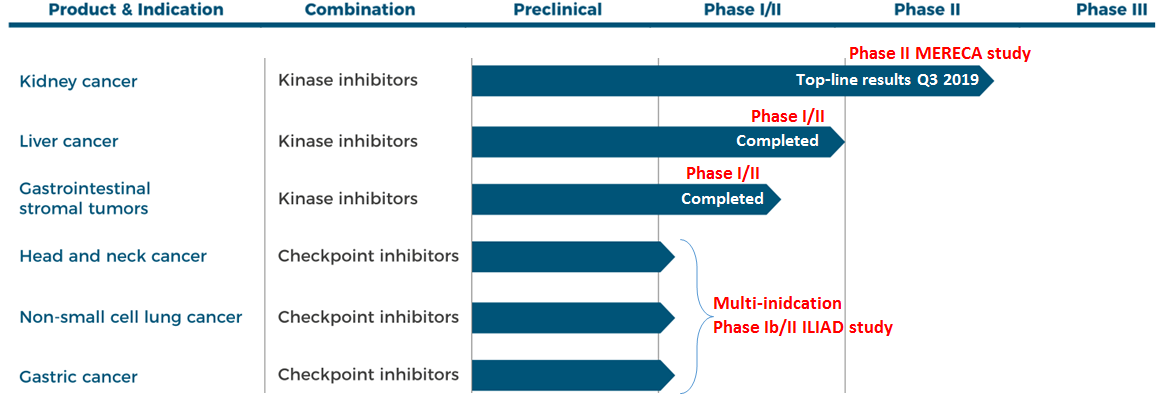
Immunicum’s long-term strategy is to accumulate proof-of-concept clinical data in multiple solid cancer indications where ilixadencel is used in combination with other anti-cancer treatments. The company expects that this type of data package will be interesting to a number of potential partners and improve the prospects for a potential out-licensing deal. The current R&D programme focuses on six cancers (Exhibit 1).
■
The most advanced trial is in renal cell carcinoma (RCC), where ilixadencel is being tested in the Phase II MERECA study (n=88) in combination with Pfizer’s tyrosine kinase inhibitor sunitinib versus sunitinib alone. Recruitment in this trial is completed and top-line results are expected in Q319.
■
The other key study is the Phase Ib/II ILIAD trial (estimated n=150) in multiple solid tumour indications: non-small cell lung cancer (NSCLC), head and neck squamous cell carcinoma (HNSCC) or gastric adenocarcinoma in combination with CPIs. In the Phase Ib part of the trial, ilixadencel will be combined with Keytruda (pembrolizumab, Merck & Co/MSD) and in the larger Phase II part with Bavencio (avelumab, Merck KGaA and Pfizer), for which Immunicum will acquire Bavencio at no cost. The trial started enrolling patients in January 2019. Interim safety/toxicity results are expected around end-2019, full safety and efficacy data from the Phase Ib of ILIAD should be released in 2020 and controlled efficacy data from the Phase II of ILIAD should be obtained in 2022.
■
Immunicum has completed a Phase I/II trial in liver cancer (HCC), with results demonstrating that ilixadencel was safe, well tolerated and showed initial signs of clinical efficacy.
■
Most recently, Immunicum also completed a smaller Phase I study (n=6) in patients with relatively rare gastrointestinal stromal tumours (GIST), where ilixadencel was combined with tyrosine kinase inhibitors in second or later lines of therapy. In line with previous findings, Ilixadencel was safe and well-tolerated and showed clinical benefit in two out of six patients, who had all previously progressed while on TKI therapy.
|
Exhibit 1: Ilixadencel R&D plan |
|
|
Source: Immunicum, Edison Investment Research |
Ilixadencel, an ‘off-the-shelf’ immune primer
How it is different
Ilixadencel is an immune primer made up of pro-inflammatory activated allogeneic DCs and intended for intratumoural administration. The DCs are activated ex vivo using a potent cocktail (denoted as COMBIG) of poly I:C (TLR3 ligand), R848 (TLR7/8 ligand) and IFN-γ (Karlsson-Parra et al, 2018). This induces DCs to produce large amounts of chemokines and cytokines. The activated DCs can then be frozen and stored on the shelf for at least three years (expected shelf life could increase), and used in any patient. The key differences between ilixadencel and most other cell therapies or cancer vaccines are as follows:
■
Ilixadencel DCs are allogeneic, ie isolated from healthy donors. This allows an off-the-shelf product manufacturing, which is one of the most desired characteristics when considering cell therapies and allows for stockpiling. An additional benefit is the fact that around 100 ilixadencel doses can be produced from a single donor, which is expected to be sufficient for c 50 patients.
■
Ilixadencel DCs are not loaded with antigens, which means there is no need to obtain a patient’s tumour tissue. The treatment can be simply used and administered off the shelf, which avoids the more complex logistics typical in the manufacture and administration of autologous immune primers (involving retrieval of a patient’s cells and/or tumour tissue, ex vivo manipulation and the administration of the product to the same patient (Exhibit 2).
■
Ilixadencel potentially makes the full set of cancer neoantigens accessible. Cancer vaccines in a traditional sense typically introduce one or several so-called tumour associated antigens, which often can be tolerated by the immune system, so the drawback of such an approach is that it is difficult to select the right antigens. Personalized cancer vaccines can expose the whole neoantigen set, but, as discussed above, are autologous. Immunicum’s approach is to introduce allogeneic, activated allogeneic DCs directly into the tumour with the aim that the patient’s own tumour will become the source of neoantigens. This ensures that there is no need to predict, which neoantigens would be effective, and that the full set of immunogenic antigens will be used for immune system activation.
These features correspond to what could be called a ‘holy grail’ immune primer: allogeneic, exposes the full set of patient-specific neoantigens, simple and cost effective. The critical question as to whether it will be effective will obviously need to be addressed in clinical trials. However, the combination of these features alone is what makes ilixadencel a stand-out immune primer cell therapy in R&D, in our view.
|
Exhibit 2: Ilixadencel production vs other immune primers production ex vivo |
|
|
Source: Immunicum |
How it works
Classical cancer treatment options include surgery, radiation and chemotherapy. However, improving knowledge about the immune system has led to the development of innovative therapies such as cytokines (interferon alfa, interleukin 2) and antibodies (rituximab, trastuzumab, bevacizumab). The more recent drugs in this area are checkpoint inhibitors, with Yervoy (ipilimumab, Bristol-Myers Squibb) being the first launched in 2011, followed by Keytruda (pembrolizumab, Merck) and Opdivo (nivolumab, Bristol-Myers Squibb); and the first virus-based cancer vaccine Imlygic (talimogene laherparepvec, Amgen). Adoptive T-cell therapies represent the latest breakthrough in cancer treatment, with the first chimeric antigen receptor T-cell therapy, Kymriah (tisagenlecleucel, Novartis), approved by the FDA in August 2017 for paediatric acute lymphoblastic leukaemia.
There are two immune system types: innate and acquired. Innate immunity is inborn, non-specific ability to defend against infections; acquired (adaptive) immunity is specific to a pathogen and responsible for a long-lasting effect, eg vaccination. The latter is subdivided into an antibody-based immune response (humoral) and a cellular response, which involves T-cells. T-cells sense and can kill infections or a patient’s own tissue cells if those become abnormal and cause the risk of a tumour developing. There are several subsets of T-cells, but the two major ones are CD4+ (also called ‘helper’) and CD8+ (‘killer’), indicating which CD glycoprotein they express. CD4+ cells are involved in the coordination of other immune cells that participate in the immune response. CD8+ cells can directly attack and kill other cells which, for example, are infected with viruses or become malignant. Another important class of immune cells is dendritic cells (DCs).
In a malignant process, when cancer cells die and release abnormal proteins/antigens, the DCs pick them up, process and present to the CD8+ cells, which then initiate an attack against the cancer. Ilixadencel is made up of activated allogeneic DCs. When injected into the tumour, the ilixadencel DCs survive for 48–72 hours and release immunostimulating factors, including chemokines and cytokines, during that time period. Production of the immunostimulating factors causes local recruitment and activation of the patient’s immature DCs, natural killer (NK) cells and T-cells. The recognition of the injected DCs by the immune system as foreign (to the patient or host) also helps this process, which leads to cancer cell death and neoantigen release. This then leads to the initiation of the cancer immunity cycle (Exhibit 3), which is expected to mount a sustained anti-cancer response. The patient’s activated DCs migrate to the tumour site, pick up neoantigens and express them on the cell surface. They then travel to the lymph node, where the patient’s DCs ‘present’ these neoantigens to patient CD8+ cells, which become cytotoxic CD8+ cells that are able to kill tumour cells which display the same antigens as those previously presented. Importantly, in ilixadencel’s case, although it is injected intratumourally, if the cancer immunity cycle is efficiently initiated, then both the primary tumour and metastases should be targeted (abscopal effect).
Combinations exploiting several steps in cancer IO cycle are needed
In a malignant process, the tumour evolves in such a way that it can escape being cleared by the immune system. This can happen because either the cancer antigens are not effectively exposed to the immune system and/or the cancer develops a so-called immunosuppressant environment. Checkpoint inhibitors are effective in certain cancers; however, a very significant part of the patient population is non-responsive to the treatment. One suggestion for this effect is that a non-responder’s immune system is not efficient at carrying out the full immunity cycle in so called ‘cold’ tumours (Chen and Mellman, 2013). This is why more traditional chemotherapeutic drugs are used in combination with CPIs to hit the tumours at different targets. For the same reason, novel immuno-oncology approaches are also tested in combination with CPIs with the goal of priming the immune cycle and inducing a sustained anti-cancer immune response, which will then be amplified by CPIs (turning ‘cold’ tumours to ‘hot’). This approach is supported by emerging evidence that CPIs are more effective in tumours that are already recognized by the immune system, ie tumour-specific CD8+ T-cells are already present before administering CPIs (Ock et al, 2016).
|
Exhibit 3: Cancer immunity cycle and ilixadencel |
|
|
Source: Immunicum |
Ilixadencel’s mechanism of action is ‘inspired by nature’
Natural viral infection and vaccination with live attenuated viruses (eg the smallpox vaccination) mounts an immune response, which includes the development of specific cytotoxic CD8+ T cells that attack and kill the cells infected with the virus. Current understanding (Karlsson-Parra et al, 2018) is that those DCs that are first infected with a virus lose their ability to present viral antigens to T-cells, but instead start to act as an immune primer by secreting inflammatory compounds. This leads to the recruitment and maturation of non-infected DCs or ‘bystander’ DCs. The newly recruited DCs absorb the dying virus-infected cells and thereby take up the viral antigens. The immune cycle follows, where the DCs migrate to lymph nodes and present the antigens to CD8+ T-cells that attack the virus-infected cells.
The goal with ilixadencel is to recreate this initial stage of the immunity cycle, leading to local inflammation, maturation of own DCs, cancer neoantigen release and uptake by the patient’s own mature DCs. Theoretically, this should also be facilitated by the fact that allogeneic DCs will still be recognized as ‘foreign’, which should facilitate an inflammatory reaction. Since ilixadencel is injected intratumourally, the expectation is that the matured own DCs will have access to full set of cancer neoantigens (intracellular and surface).
Existing data are promising
Preclinical data
Immunicum has preclinical data supporting ilixadencel’s proposed mechanism of action, which has been published in several peer-reviewed articles and different conference presentations (Fotaki et al, 2018; Fotaki et al, 2017; and ESMO presentation 2018).
■
Most recent set of preclinical in-vivo data was presented at the ESMO conference in October 2018. In this study the researchers used anti-PD-1 resistant colon carcinoma mouse model (CT26). The co-administration of ilixadencel and PD-1 inhibitor was found to overcome tumour anti-PD-1 resistance (Exhibit 4A), which is exactly the proposition of ilixadencel’s combination with CPIs. In survival studies researchers treated colon carcinoma mice with ilixadencel in combinations with anti-PD-1 or a known immune enhancer 4-1BB (anti-CD137). The results showed that combinations with ilixadencel were synergistic when compared to these drugs standalone (Exhibit 4B).
|
Exhibit 4: Ilixadencel in combinations with checkpoint inhibitor and immune enhancer |
|
|
Source: Immunicum |
■
In preclinical in vitro studies ilixadencel was shown to produce pro-inflammatory cytokines and chemokines in a sustained fashion, such as IL-12p70, TNF-α, IL-1β and MIP-1α. Ilixadencel also activated co-cultured allogeneic T-cells. The secretion of these pro-inflammatory factors during the co-culture promoted the maturation of bystander DCs, which efficiently presented a model antigen to activate antigen-specific CD8+ T-cells.
■
In preclinical in vivo studies (mouse models), intratumoural administration of allogeneic mouse DCs activated with an identical stimulation cocktail was shown to induce recruitment of T-cells (and NK cells) into the tumour. In another study, mice were vaccinated with allogeneic DCs transfected with a virus vector, which induced the expression of a tumour antigen gp-100. This resulted in the generation of gp-100 specific CD8 + T-cells, ie the animal’s own immune system discovered the tumour antigen.
Phase I/II in RCC
The Phase I/II study in RCC was completed before the MERECA trial. The study was conducted at Uppsala University Hospital, Sweden, in 12 newly diagnosed metastatic RCC patients. Patients were only enrolled if they were candidates for nephrectomy, had a tumour larger than 4cm and at least one metastasis. Following treatment with ilixadencel, patients underwent nephrectomy and only received subsequent standard-of-care (TKI) upon disease progression. The primary safety endpoints were adverse events (AEs). Immunicum also measured the tumour-specific response as a secondary endpoint using various immunological techniques. The main findings were (Laurell et al, 2017):
■
Ilixadencel was found to be safe and well tolerated. All AEs were mild to moderate and were fever (five patients), chills (two patients), rash (one patient) and hypotension (one patient). No dose-limiting toxicity was found, SAEs were reported but were unrelated to ilixadencel and there were no signs of an autoimmune response. We believe the side effect profile is encouraging and suggests that a transformation of the immune response to the tumour was in progress.
■
Immunological examination showed strong-to-massive tumour-specific immune activation with CD8+ T-cell infiltration in the primary tumour (in 7 out of 12 removed kidney tumours). Massive CD8+ T-cell infiltration was also observed in one (and the only evaluable) obtained distant metastasis (abscopal effect).
■
Long-term follow-up data. six out of 11 evaluable patients received subsequent treatment with TKIs. Three of these six patients surpassed five-year survival, while the median overall survival of all 11 patients was 48 months. This compared to historical median overall survival of 14–16 months in similar patients who were treated with TKIs (Exhibit 5).
■
An interesting case involved one of those three patients. He had multiple liver and brain metastases that all completely regressed after the treatment with ilixadencel and Sutent. Brain metastases are not expected to respond when treated with Sutent.
|
Exhibit 5: Phase I/II RCC overall survival data in mRCC patients more than tripled vs historical controls |

|
Source: Immunicum |
Phase I/II in liver cancer
Ilixadencel has completed a second clinical Phase I/II study in 18 patients (17 had HCC and one had cholangiocarcinoma). The patients had an advanced or unresectable disease and received three intratumoural injections of ilixadencel in first-line as monotherapy, first-line in combination with sorafenib, or second-line after progression on sorafenib. The primary endpoint was safety and tolerability, while secondary endpoints included immunological response and initial signs of clinical activity. Overall, ilixadencel was shown to be safe and well tolerated when given as a single treatment or in combination with Nexavar, and some evidence of tumour-specific immune activation was observed in the majority of evaluable patients (Rizell et al, 2019):
■
Safety and tolerability. The most common toxicity was grade 1 and 2 fever and chills, with one single treatment-related grade 3 event. Notably, this patient was also treated with sorafenib. The patient was suspected of having sepsis, although this was not confirmed, and later recovered.
■
Immunological examination showed that in the majority of evaluable patients (11/15), there was an increased frequency of tumour-specific CD8+ T-cells in circulating blood.
■
Initial clinical efficacy. A subgroup of 6 patients received ilixadencel in combination with sorafenib and had a median overall survival of 8.6 months that was shorter than expected when compared with historical controls receiving first-line sorafenib. While this was a surprising finding, it could be explained by observations from in vitro studies, where sorafenib, but not sunitinib or anti-PD-1 antibodies, inhibited so-called mixed leukocyte reaction that leads to a by-stander effect. In contrast, patients who received ilixadencel monotherapy as a second line treatment (n = 7) had a longer median survival of 10.9 months.
The safety profile from these clinical studies appears to be very good. It appears that sorafenib may not be the best combination drug with ilixadencel due to impaired DC maturation effect, but ilixadencel monotherapy data and in vitro studies allow exploring other TKIs and anti-PD-1 combinations, in our view.
Phase I/II study in GIST
In June 2019, Immunicum released top line results from the Phase I/II trial, which tested ilixadencel in patients with GIST. The Phase I/II open-label, single-arm trial evaluated the safety and efficacy of ilixadencel in unresectable or metastatic GIST patients with tumour progression during ongoing second or later lines of treatment with TKI therapy. Patients were treated with two intratumoural doses of ilixadencel in combination with the ongoing TKI treatment. Ilixadencel was administered in combination with sunitinib, regorafenib or similar TKI. Initial plans were to conduct a larger study, but due to the rarity of the disease, enrolment was stopped at six patients. The released top-line results include:
■
The primary safety endpoint was met with no life-threatening, treatment-related adverse events; and
■
The secondary endpoint exploring initial efficacy was based on tumour growth. In two out of six patients the tumour growth was stopped and partially regressed for three and six months, respectively.
GIST is a relatively rare cancer and accounts for less than 1% of all gastrointestinal (GI) tumours, and is therefore a small indication compared to others in Immunicum’s R&D pipeline. When diagnosed with GIST, most patients appear to have a localised disease and so surgery is the mainstay of curative treatment, but 40% of the resected tumours recur and spread (Schvartsman et al, 2017). TKIs became standard-of-care chemotherapy, but GIST remains one of the most chemo-resistant solid malignancies. Imatinib is the TKI of choice for first-line treatment, but 50% of patients develop resistance within two years. Other TKIs, sunitinib or regorafenib, were shown to have a benefit in subsequent lines of therapy, but the medial survival at this stage typically is several months (Feng and Morris, 2014).
The findings in this study showed that two out of six patients had partial regression (in patients who received ilixadencel in conjunction with second- or third-line of standard TKIs). This could be an indication that ilixadencel helped to overcome the resistance to TKIs in these patients, but since the patient sample was small, efficacy claims would need to be investigated in a larger population. As with other trials Immunicum has done, the benefit of this study is the fact that ilixadencel will gather data in multiple tumours and more proof of mechanism of action can be accumulated (specific tumour immune response, tumour infiltration). Further details from the study will be published in a peer-reviewed journal.
Ongoing R&D programme
Phase Ib/II ILIAD study
The ILIAD study is an open-label, multi-centre, Phase Ib/II study in 21 and up to 150 patients, respectively, to evaluate ilixadencel when injected intratumourally in combination with CPIs. The study started enrolling patients in January 2019 and will be carried out in two parts:
■
The Phase Ib part will enrol a total of 21 patients in a staggered format (Exhibit 6). It will assess safety and define optimal dosing in combination with Keytruda.
|
Exhibit 6: Phase Ib/II multi-indication CPI combination ILIAD study design |
|
|
Source: Immunicum |
■
The Phase II part will enrol up to 150 patients who will be grouped by indication (NSCLC, H&N cancer and gastric adenocarcinoma) into three arms advancing in parallel. Each of the arms is expected to be sufficiently powered to detect clinical efficacy. Futility analyses are also included in the design.
In November 2018, Immunicum announced a collaboration and supply agreement with Merck KGaA and Pfizer, which will supply their jointly developed checkpoint inhibitor avelumab (Bavencio, anti-PD-L1) to Immunicum for the Phase II part of the study at no cost (costs can be substantial in the market). Immunicum will sponsor the study and retain all commercial rights to ilixadencel. Avelumab will be used to treat patients with H&N cancer and gastric cancer. NSCLC patients will receive Keytruda. Although the involvement of Merck KGaA and Pfizer appears to be limited to supply only at the moment, we believe it provides a degree of external validation of the technology and rationale behind ilixadencel, as we assume that the partners conducted due diligence before committing to supply avelumab for free.
The importance of the ILIAD trial is that it will be the first study to test ilixadencel in combination with CPIs. As well as safety and efficacy data, it is also designed to gather data to demonstrate the proof of mechanism of action by showing that ilixadencel generates a systemic tumour-specific immune response.
Phase II MERECA study
Patient enrolment for the Phase II MERECA study (n=88) with newly diagnosed, metastatic RCC patients completed in early 2018. The patients in the active arm were treated with ilixadencel, subsequently underwent nephrectomy (removal of the kidney) and received the tyrosine kinase inhibitor (TKI) Sutent (sunitinib, Pfizer). Patients in the comparator arm received only Sutent after nephrectomy. This is the most advanced trial in the R&D pipeline and should deliver pertinent efficacy data. The primary endpoints of the study are the hard clinical endpoints of median overall survival and median survival after 18 months, in addition to other safety and efficacy endpoints. Like the ILIAD trial, intratumoural infiltration of CD8+ T-cells will also be measured. Top-line results are expected in Q319.
Exhibit 7: Ilixadencel clinical trials
Trial |
Stage |
Trial design and upcoming events |
RCC + Sunitinib |
■ Study ongoing (started H115, all patients enrolled) ■ n=88; open-label, randomized, controlled, multi-centre Phase II exploratory trial evaluating safety and efficacy of intratumourally administered ilixadencel (1L) pre-nephrectomy followed by sunitinib post-nephrectomy, compared to surgery and sunitinib post-nephrectomy in newly diagnosed mRCC patients; 2:1 randomization (ilixadencel + sunitinib: sunitinib); patients stratified into intermediate and high risk group according to the Heng criteria. ■ Primary endpoint – OS from randomisation overall and by subgroup (high-risk and intermediate-risk groups), and OS at 18 months overall and by subgroup. ■ Secondary endpoints – safety (frequency and proportion of AEs), PFS, objective response rate from start of sunitinib treatment and duration of response (RECIST v1.1), TTP from start of sunitinib treatment, CD8+ tumour infiltration. ■ Study sites in EU (EudraCT No. 2014-004510-28) (Sweden, Poland, Hungary, Czech Republic, Latvia, Spain, France and UK) and US (IND17081). ■ Top- line data expected Q319 (note that the study sample size is not sufficient to show statistically significant difference in OS between the two groups, but aims to identify clinical meaningful differences in primary and secondary endpoints). |
|
Multi-indication (NSCLC, HNSCC and gastrointestinal adenocarcinoma) + CPI |
■ Study ongoing (started in Q119) ■ n=up to 150; open-label, randomised, multi-centre Phase I/II trial evaluating the efficacy and safety of intratumourally administered ilixadencel in combination with a CPI in advanced cancer subjects that are candidates for CPI therapy. ■ Phase I primary endpoints – safety (frequency and severity of AEs), recommended Phase II dose and schedule; secondary endpoints – response rate, response duration and immunological anti-tumour response. ■ Phase II primary endpoint – objective response rate; secondary endpoints – safety, objective tumour response rate and duration of response (iRECIST), TTP, PFS, OS and immunological anti-tumour response. ■ Interim safety results from the Phase I part of the study are expected around end-2019 and full safety data in 2020. ■ Full results, including efficacy, expected in 2022. |
Source: Edison Investment Research, Immunicum. Notes: TKI = tyrosine kinase inhibitor; CPI = checkpoint inhibitor; 1L = first-line treatment; 2L = second-line treatment; mRCC = metastatic renal cell carcinoma; OS = overall survival; AEs = adverse events; PFS = progression-free survival; TTP = time to disease progression.
Path forward: Combination with CPIs is likely key focus
The current cash position should finance operations until the end of 2021. Several milestones are achievable within this period: Phase II MERECA trial top-line results in Q319, initial safety data from the Phase Ib of ILIAD trial around end-2019 and then full safety and efficacy data from the Phase Ib of ILIAD trial in 2020. Although controlled efficacy data from the Phase II of ILIAD trial are not likely until 2022, safety data from the Phase Ib part of the trial are key, as this will be the first time ilixadencel is combined with a CPI. CPIs have well established safety issues, which limit combination potential, ie two CPIs can be more effective, but also increase toxicity. Therefore, when it comes to CPI and other anti-cancer therapy combinations, safety is as important as efficacy. From this perspective, immune primers tend to have benign safety profiles, so should combine with CPIs well. Specifically, ilixadencel’s safety data have so far been very good.
By the time the safety results from the Phase I part of the ILIAD trial are known (expected in 2020), Immunicum will have data from the MERECA, liver cancer and GIST trials. This will also include the all-important tumour infiltration and tumour-specific systemic immune response results. If positive, these findings would demonstrate proof-of-concept of ilixadencel’s mechanism of action of and we believe Immunicum would be in a strong position to reach a partnership deal without waiting for efficacy data from the ILIAD trial.
We believe that details of the pivotal trials and specific indications will be clarified in conjunction with potential partners, according to their priorities. Immunicum’s current strategy is to gather as much proof-of-concept data in as many indications as possible with the aim of attracting the attention of potential partners.
We also believe that CPIs will be the most likely combination partner drug. In addition, given good safety profile of ilixadencel, there is potential to use it in combination with more than one other anti-cancer drug (novel or established), in our view, as long as the cumulative toxicity is manageable. This is not unlike the classic chemotherapy regimens, which routinely combine anywhere from two to four and more drugs.
Historically, ilixadencel was tested in combination with targeted therapies, which made sense at that time, as it was the best standard of care. The advent of CPIs meant that, despite the side effect profile and non-responder issue, the standard of care is changing. For example, in February 2019, Merck reported data from its pivotal KEYNOTE-426 trial (n=862), which showed that Keytruda in combination with Inlyta (VEGF-targeted TKI axitinib; Pfizer) was more effective than standalone Sutent in extending both overall and progression-free survival in first-line metastatic RCC, primarily in patients that did not have metastases at diagnosis of the primary tumour. This combination is now expected to become the standard of care in this broader setting, which have a more favourable prognosis than the patients included in the MERECA study, which only included patients with metastatic disease at diagnosis of the primary tumour (intermediate or poor prognosis). In primary liver cancer, Nexavar (sorafenib) has been the standard of care for a decade. In 2017, the FDA approved Opdivo (nivolumab) for second-line treatment of patients with HCC, based only on a Phase I/II clinical trial. Bristol-Myers Squibb has conducted a large Phase III trial CheckMate 459, which tested Opdivo as first-line treatment in advanced HCC, but the results reported on 24 June 2019 showed that the overall survival endpoint did not reach statistical significance in this setting.
These developments demonstrate the importance of the ILIAD trial in Immunicum’s R&D programme, as ILIAD will be the first study to combine ilixadencel with CPIs. Even though the upcoming pivotal trials will have to accommodate the changing standard of care, accumulated data from the MERECA and liver cancer trials will be valuable in partnering discussions for the reasons discussed above.
Competitive landscape
So far, Dendreon’s Provenge (dendritic cell vaccine, approved in 2010) and Amgen’s Imlygic (oncolytic virus, approved in 2015) are the only approved cancer vaccines although there is no lack of research being conducted in this area. However, the relative lack of more successful examples could be explained by variability in the design of the vaccine, the selection of antigens and understanding of the inhibitory tumour microenvironment. In addition, an increasing number of third-party studies are supporting the idea that the backbone strategy of immuno-oncology should be in combination treatments exploiting different steps in the immunity cycle (Schlom and Gulley, 2018).
|
Exhibit 8: Types of immuno-oncology therapy |
|
|
Source: Immunicum |
Immunotherapy approaches that have been tried so far can be grouped into several categories based on which antigens are exposed to immune system and how the vaccines are manufactured (Exhibit 8).
■
‘Off-the-shelf’ vaccines based on tumour associated antigens. These vaccines contain tumour-associated self-antigens, typically in the form of synthetic long peptides, and are not based on the patient’s own tumour. Compared to personalised vaccines they can be easier to manufacture, store and ship. However, the identification of suitable neoantigens that are conserved and expressed in the majority of patients is a significant challenge, especially due to patient-to-patient, and even intratumoural, variation.
■
Personalised cancer neoantigen vaccines. These are developed from the patient’s own tissues and contain patient-specific neoantigens. DCs can be isolated from the patient and modified ex vivo to express neoantigens from the patient’s own tumour and administered back to the patient. Although apparently solving the problem of neoantigen variation between patients, the procedures can be complicated, expensive, time consuming and can expose the patient to infection.
■
‘Off-the-shelf’ personalised cancer neoantigen vaccines. These are immune primers that become personalised vaccines when injected into the patient’s tumour. These vaccines offer a potential compromise between the first two approaches. They are personalised in that they exploit the patient’s own tumour neoantigen release by inducing tumour cell death, and are also off the shelf. Ilixadencel falls into this category, as do oncolytic virus vaccines (eg Amgen’s Imlygic).
Provenge (Dendreon/Sanpower) contains a prostate-specific antigen, which is a tumour-associated self-antigen, rather than a neoantigen, and has not been commercially successful. Because autologous DCs are used as the primer/adjuvant, this concept does not easily fit into any of the three groups here, and, furthermore, is unrelated to Immunicum’s DC technology.
Looking at the R&D landscape, there are ongoing attempts to develop various approaches that would fall into all the above categories. Products that would fall into ilixadencel’s category include oncolytic viruses, STING pathway activator and Toll-like receptor (TRL) agonists. Imlygic, the oncolytic virus from Amgen, is the only marketed for several solid tumours (melanoma and prostate, respectively). Transgene’s oncolytic virus Pexa-Vec is in Phase III for HCC in combination with sorafenib. Viralytics’ oncolytic virus Cavatak is in Phase I for NSCLC in combination with the CPI pembrolizumab.
Exhibit 9: Immune primer/cancer vaccine competitive landscape |
|||
Approach |
Technology |
Products, companies (current development status) |
Combinations being tested |
‘Off-the-shelf’ vaccines |
Synthetic long peptide vaccine |
Tedopi, OSE Immunotherapeutics (Phase III NSCLC, NCT02654587) |
- |
SL-701, Stemline Therapeutics (Phase I/II glioblastoma NCT02078648) |
Bevacizumab |
||
Synthetic DNA vaccine |
INO-5401, Inovio (Phase II, glioblastoma and bladder cancer company website) |
Cemiplimab (glioblastoma) Atezolizumab (bladder cancer) |
|
Allogeneic DCs |
DCP-001, DCPrime, Phase II acute myeloid leukaemia |
- |
|
Personalised vaccines |
Personalised synthetic long peptide vaccine |
NeoVax, Dana-Farber Cancer Institute (Phase I melanoma NCT01970358, Phase I glioblastoma NCT03422094 NCT02287428, Phase I RCC NCT02950766, Phase I lymphocytic leukaemia NCT03219450, Phase I lymphoma NCT03361852) |
Ipilimumab (NCT02950766) Nivolumab, ipilimumab (NCT03422094) Cyclophosphamide [NCT03219450) Radiotherapy (NCT02287428) |
Personalised RNA vaccine |
IVAC vaccines, BioNTech (Phase I, melanoma NCT02035956, breast cancer NCT02316457) |
- |
|
Autologous DC + autologous tumour neoantigen vaccine |
Provenge, Dendreon/Sanpower (marketed US, prostate cancer; withdrawn EU) |
Prostate cancer Phase I/II Atezolizumab NCT03024216, Ipilimumab NCT01804465, DNA vaccine NCT01706458, Enzalutamide NCT01981122 |
|
Rocapuldencel-T, Argos Therapeutics (Phase III RCC NCT01582672) |
Sunitinib |
||
DCVax, Northwest Biotherapeutics (Phase III glioblastoma multiforme NCT02146066, NCT03014804) |
Nivolumab (NCT03014804) |
||
Autologous DC + autologous tumour neoantigen vaccine |
DC/AML Fusion Vaccine, Celgene (Phase II acute myelogenous leukaemia NCT03059485) |
Durvalumab |
|
‘Off-the-shelf’ personalised vaccines |
Allogeneic DC vaccine |
Ilixadencel, Immunicum, Phase II RCC NCT02432846, Phase I HCC NCT01974661, Phase I/II GIST NCT02686944, Phase I/II ILIAD NCT03735290 |
Sunitinib (NCT02432846), Sorafenib (NCT01974661) TKI (NCT02686944), checkpoint inhibitors NCT03735290 |
Synthetic small molecule or oligonucleotides |
TLR4 agonist, Immune Design; acquired by Merck (Phase I/II non-Hodgkin’s lymphoma NCT02501473) |
Pembrolizumab |
|
TLR9 agonist, Idera Pharmaceuticals, multiple trials |
|||
STING pathway activator ADU-S100, Aduro Biotech (NCT02675439) |
Ipilimumab |
||
Oncolytic virus vaccines |
Imlygic, Amgen (marketed, melanoma; Phase II sarcoma NCT03069378, breast cancer NCT02658812 NCT02779855) |
Pembrolizumab (Phase III melanoma NCT02263508) Ipilimumab (Phase I/II melanoma NCT01740297) Radiotherapy (Phase II melanoma NCT02819843) |
|
Pexa-Vec, Transgene + SillaJen (Phase III HCC NCT02562755, Phase I/II HCC NCT03071094, Phase I solid tumours NCT02977156) |
Sorafenib (NCT02562755) Nivolumab (NCT03071094) Ipilimumab (NCT02977156) |
||
ONCOS-102, Targovax (Phase I melanoma NCT03003676, Phase I mesothelioma NCT02879669, Phase I/II colorectal cancer, platinum resistant cancer NCT02963831) |
Pembrolizumab (NCT03003676) Chemotherapy (NCT02879669) Durvalumab (NCT02963831) |
||
Cavatak, Viralytics, acquired by Merck & Co (Phase I melanoma NCT02565992 NCT02307149, with liver metastases NCT03408587, Phase I NSCLC NCT02824965) |
Pembrolizumab (NCT02565992, NCT02824965) Ipilimumab (NCT02307149, NCT03408587) |
||
Source: Edison Investment Research, EvaluatePharma. Note: - denotes not currently tested.
There has been a recent pick-up in deal activity in the field of oncolytic viruses involving large pharmaceutical players Merck & Co and Janssen (a subsidiary of Johnson & Johnson). In May 2018, Janssen agreed to pay $140m upfront to acquire private company, BeneVir BioPharm, which is developing oncolytic viruses to treat solid tumours based on its T-Stealth platform, currently at the preclinical stage. In February 2018, Merck & Co announced its acquisition of Viralytics with the lead product Cavatak and agreed to pay A$502m. This represented a 178% premium to Viralytics’ closing share price on the previous day.
Exhibit 10: Recent oncolytic virus deals
Date |
Licensor/target |
Licensee/acquirer |
Deal type |
Product |
Stage |
Upfront, |
Deal value (excl. upfront), $m |
02/05/2018 |
Janssen |
BeneVir BioPharm |
Company acquisition |
T-Stealthoncolytic virus platform |
Preclinical |
140 |
|
21/02/2018 |
Viralytics |
Merck & Co |
Company acquisition |
Cavatak |
Phase Ib |
- |
394 |
28/09/2016 |
ViraTherapeutics |
Boehringer Ingelheim |
Licensing deal |
VSV-GP |
Preclinical |
235 |
|
20/12/2016 |
PsiOxus |
Bristol-Myers Squibb |
Licensing deal |
NG-348 |
Preclinical |
50 |
886 |
07/09/2010 |
Jennerex Biotherapeutics |
Transgene |
Licensing deal |
Pexa-Vec |
Phase II |
116 |
Source: EvaluatePharma, company press releases, Edison Investment Research
Sensitivities
Ilixadencel has yet to reach a definitive proof-of-concept clinical stage, so is subject to significant R&D risk, as is typical for a company at this stage. The clinical programmes are all testing the same therapy, therefore the investment case relies on the success of ilixadencel. CT or ultrasound is required to guide the injection to the viable part of the tumour. The administration procedure is unlikely to be too difficult for physicians to perform since intratumourally injected products are already marketed. However, some tumours will be more difficult to access than others, and some may be inaccessible. This may affect market uptake, but given ilixadencel can be used in many solid tumours, the overall potential is still high. In addition, ilixadencel can be injected in distant metastases, which could be easier to reach than the primary tumour. By the time ilixadencel is launched, the treatment landscape and ‘standard treatments’ are likely to have developed. Ilixadencel is already being positioned as an addition to combination therapies, so potential changes in clinical practice are not necessarily prohibitive for ilixadencel combination development. The new trial, ILIAD, is exploring ilixadencel combinations with CPIs.
Valuation
We have increased our risk-adjusted NPV valuation of Immunicum to SEK2.0bn or SEK21.7 per share compared to SEK1.4bn or SEK15.1 per share previously. This is due to rolling the model forward and incorporating the improved net cash position. Following the share issue, we have revised our model to reflect the fact that that Immunicum could create more value due to being able to progress further with R&D than we had previously assumed. To reflect this, we have extended R&D in all indications by two years before the assumed out-licensing, ie in our model we have moved the licensing deal from 2019, which was the base case in our initiation report, to 2020. We have also improved the deal terms due to additional investment in R&D, as discussed below.
We maintain the approach where we value five of the six indications in Immunicum’s R&D pipeline. We have only excluded GIST because it is substantially smaller than the other indications. The company’s long-term strategy is to out-license ilixadencel in several solid tumour indications in combination with different standard treatments. As discussed above, once the data from the MERECA trial and Phase Ib part of the ILIAD trial are obtained (expected in 2020), Immunicum will be able to intensify discussions with potential partners. For the purposes of our model, we have assumed Immunicum will carry out a licensing transaction in 2020, which previously we assumed would happen in 2019. In reality, there could a variety of different collaboration arrangements, but to reflect the broad potential of ilixadencel’s technology our model assumes the following:
■
One licensing transaction in 2020 that includes all indications. The partner takes over full late-stage development, ie Immunicum will not incur additional costs in running pivotal trials.
■
Deal terms include an upfront of $100m, total R&D and commercial milestones of $400m and 7.50% royalty rates on total sales in each of the indications. We previously estimated $160m in total milestone payments and 5.0% in royalty rates, but since Immunicum has successfully raised sufficient funds and will invest more in R&D than we assumed in our initiation report, we have also improved the deal terms. The deal terms were benchmarked using transactions in the immunooncology area (Exhibit 13). The median upfront was $98m, while the median value of milestones for the 10 transactions was $606m. The milestone payments are risk-adjusted and triggered by typical R&D events and the commercial success of the product in each indication.
■
Immunicum will continue the ILIAD trial and also plans to scale up production capabilities, which the existing funding allows. After the ILIAD trial ends, we assume Immunicum will only focus on the preclinical development of its other platforms. Any general corporate costs outside the clinical costs not included in the rNPV for each product are grouped as unallocated costs, which are also discounted.
■
We have estimated the launch dates shown in Exhibit 11, which allows time for partners to conduct pivotal trials. The existing patent portfolio provides protection until 2031 and the fact that ilixadencel is a cell therapy means the entry barrier for any generic versions will be high. Our NPV models run well into 2030s.
■
We have assumed a 15% peak market share for all indications except NSCLC, which is 10% due to this area being very competitive.
■
We have used a probability of success of 17.4%, which is a historical cumulative success probability for biologicals in Phase II to reach the market.
■
Assumptions for the revenue part of the model are summarised in Exhibit 12.
Exhibit 11: Sum-of-the-parts Immunicum valuation
Product |
Launch |
Peak sales |
Probability (%) |
rNPV |
rNPV/share (SEK) |
Ilixadencel – RCC |
2026 |
1730 |
17.4% |
418.8 |
4.5 |
Ilixadencel – HCC |
2029 |
880 |
17.4% |
236.2 |
2.6 |
Ilixadencel – NSCLC |
2027 |
1370 |
17.4% |
558.7 |
6.1 |
Ilixadencel – HNSCC |
2028 |
1900 |
17.4% |
338.6 |
3.7 |
Ilixadencel – gastric adenocarcinoma |
2028 |
1480 |
17.4% |
266.1 |
2.9 |
Unallocated costs |
100% |
(206.9) |
(2.2) |
||
Net cash at end-Q119 |
100% |
393.4 |
4.3 |
||
Valuation |
2,004.8 |
21.7 |
Source: Edison Investment Research. Note: WACC = 12.5% for product valuations.
Exhibit 12: Assumptions for R&D and commercial projects
Product/stage/indication |
Comments |
Ilixadencel Multiple indications |
■ Target population (the numbers are combined incidence in the US and Europe): • RCC: 170k. • HCC: 94k • NSCLC: 547k • HNSCC: 194k • Gastric adenocarcinoma: 162k ■ Pricing*: $75k per patient per year in the US, comparable with Imlygic pricing of $65k reported at launch in 2015; we assume 30% discount in Europe. Peak sales in six years. Market penetration at peak 15% in all but NSCLC, where we use 10% due to the area being competitive. ■ Licensing deal terms: $100m in upfront in 2021. $400m in R&D and commercial milestone payments. 7.50% royalties on net sales in each of the indications. |
Source: Edison Investment Research.
Exhibit 13: Phase I and II IO transaction values
Licensee |
Licensor |
Product |
Up-front value |
Milestone value |
Date |
Nektar |
Bristol-Myers Squibb |
NKTR-214 |
$1.85bn |
$1.8bn |
February 2018 |
MacroGenics |
Incyte |
MGA012 |
$150m |
$900m |
October 2017 |
Arcus |
Otsuka |
AB928 |
$35m |
$310m |
September 2017 |
MEI Pharma |
Pressage Biosciences |
Voruciclib |
$3m |
$184m |
September 2017 |
Calithera |
Incyte |
INCB01158 |
$45m |
$483m |
January 2017 |
TetraLogic Pharma |
Medivir |
Birinapant |
$6m |
$136m |
November 2015 |
Five Prime |
Bristol-Myers Squibb |
Cabiralizumab |
$350 |
$1.74bn |
October 2015 |
Inovio |
AstraZeneca |
INO-3112 |
$28m |
$728m |
August 2015 |
Celgene |
AstraZeneca |
Imfinzi |
$450m |
$450m |
August 2015 |
Regeneron |
Sanofi |
REGN2810 |
$650m |
$1.03bn |
November 2009 |
Source: Evaluate Pharma
Financials
Immunicum’s Q119 operating loss of SEK29.1m was in line with SEK28.8m in Q118. As expected, R&D costs comprised most of Immunicum’s expense accounting for SEK23.2m (SEK22.2m in Q118), while administrative costs were SEK6.1m vs SEK6.0m a year ago. In Q419, Immunicum completed an underwritten fund-raising split between a direct share issue (c SEK178m) and a rights issue (c SEK173m), which management guides will extend its cash runway to the end of 2021. To reflect a higher level of R&D investment, we have amended our valuation model as described above (postponed the deal by two years and improved the terms). This means our operating loss estimates are now SEK119.9m and SEK121.6m in 2019 and 2020 respectively. This brings our model in line with management guidance on cash reach.
Exhibit 14: Financial summary
|
|
|
SEK'000s |
2017 |
2018 |
2019e |
2020e |
2021e |
Year end 31 December |
|
|
IFRS |
IFRS |
IFRS |
IFRS |
IFRS |
|
INCOME STATEMENT |
|
|
|
|
|
|
|
|
Revenue |
|
|
|
0 |
0 |
0 |
0 |
0 |
EBITDA |
|
|
|
(80,629) |
(97,845) |
(119,898) |
(121,625) |
(123,383) |
Operating expenses |
|
|
(80,847) |
(98,029) |
(120,101) |
(121,848) |
(123,627) |
|
Depreciation |
|
|
|
(71) |
0 |
(5) |
(2) |
(1) |
Operating income |
|
|
218 |
184 |
202 |
223 |
245 |
|
Reported operating profit |
|
|
(80,700) |
(97,845) |
(119,904) |
(121,627) |
(123,383) |
|
Net Interest |
|
|
|
362 |
(15) |
12 |
(1) |
13 |
Profit before tax (reported) |
|
|
(80,338) |
(97,860) |
(119,891) |
(121,628) |
(123,370) |
|
Reported tax |
|
|
|
0 |
0 |
0 |
0 |
0 |
Profit after tax (reported) |
|
|
(80,338) |
(97,860) |
(119,891) |
(121,628) |
(123,370) |
|
Minority interests |
|
|
0 |
0 |
0 |
0 |
0 |
|
Net income (reported) |
|
|
(80,338) |
(97,860) |
(119,891) |
(121,628) |
(123,370) |
|
Basic average number of shares outstanding |
|
25,959 |
51,387 |
89,710 |
92,258 |
92,258 |
||
EPS - basic reported (SEK) |
|
|
(3.09) |
(1.90) |
(1.34) |
(1.32) |
(1.34) |
|
BALANCE SHEET |
|
|
|
|
|
|
|
|
Non Current Assets |
|
|
105,309 |
10 |
5 |
2 |
2 |
|
Property Plant and equipment, net |
|
69 |
9 |
4 |
1 |
1 |
||
Other financial assets |
|
|
1 |
1 |
1 |
1 |
1 |
|
Other Non Current Assets |
|
|
105,239 |
0 |
0 |
0 |
0 |
|
Current Assets |
|
|
140,837 |
450,362 |
307,793 |
176,709 |
53,368 |
|
Cash and cash equivalents |
|
|
128,883 |
443,798 |
301,064 |
169,807 |
46,283 |
|
Accounts receivable |
|
|
0 |
3,307 |
3,472 |
3,646 |
3,828 |
|
Marketable securities and short-term investments |
0 |
0 |
0 |
0 |
0 |
|||
Prepaid expenses |
|
|
8,454 |
3,257 |
3,257 |
3,257 |
3,257 |
|
Current Liabilities |
|
|
55,740 |
43,482 |
20,799 |
11,342 |
11,369 |
|
Accounts payable |
|
|
11,714 |
31,266 |
10,369 |
912 |
939 |
|
Accrued other liabilities |
|
|
43,694 |
11,378 |
6,836 |
6,836 |
6,836 |
|
Other current liabilities |
|
|
331 |
838 |
3,594 |
3,594 |
3,594 |
|
Non Current Liabilities |
|
|
850 |
850 |
850 |
850 |
850 |
|
Long term debt |
|
|
850 |
850 |
850 |
850 |
850 |
|
Equity |
|
|
|
189,556 |
406,041 |
286,150 |
164,521 |
(80,477) |
Retained earnings start of period |
|
(151,447) |
(231,785) |
(329,645) |
(449,536) |
(692,793) |
||
Total Shareholder's Equity |
|
|
189,556 |
406,041 |
286,150 |
164,521 |
(80,477) |
|
CASH FLOW |
|
|
|
|
|
|
|
|
Cash Flow from Operations |
|
|
|
|
|
|
|
|
EBIT (Operating profit) |
|
|
(80,700) |
(97,845) |
(119,904) |
(121,627) |
(123,383) |
|
Depreciation |
|
|
|
71 |
58 |
5 |
2 |
1 |
Income Tax paid |
|
|
0 |
0 |
0 |
0 |
0 |
|
Other Working Capital changes |
|
34,455 |
(6,867) |
(22,848) |
(9,631) |
(155) |
||
Cash interest paid |
|
|
(274) |
(14) |
(26) |
(26) |
0 |
|
Cash interest received |
|
|
0 |
0 |
38 |
25 |
13 |
|
Net cash used in Operating activities |
|
(46,447) |
(104,668) |
(142,734) |
(131,257) |
(123,524) |
||
Cash Flow from Investing |
|
|
|
|
|
|
|
|
Purchase of fixed assets |
|
|
0 |
0 |
0 |
0 |
0 |
|
Sale of Investments |
|
|
10,162 |
0 |
0 |
0 |
0 |
|
Net cash used in investing activities |
|
10,162 |
0 |
0 |
0 |
0 |
||
Cash Flow from Financing |
|
|
|
|
|
|
|
|
Change in Capital Stock |
|
|
62,269 |
419,584 |
0 |
0 |
0 |
|
Net cash from Financing activities |
|
62,269 |
419,584 |
0 |
0 |
0 |
||
Net Changes in Cash and Cash Equivalent |
|
25,984 |
314,916 |
(142,734) |
(131,257) |
(123,524) |
||
Cash and Cash Equivalents - Beginning |
|
102,899 |
128,883 |
443,799 |
301,065 |
169,808 |
||
Cash and Cash Equivalents - End |
|
128,883 |
443,799 |
301,065 |
169,808 |
46,284 |
||
Net cash/(debt) |
128,033 |
442,948 |
300,214 |
168,957 |
45,433 |
|||
Source: Company accounts, Edison Investment Research
|
|||||||||||||||||||||||||||||||||||||||||||||||||
|
||||||||||||
|
||||||||||||
Research: Industrials
FY19 represented Rubicon/ArborGen’s first full year as a unified company under single parent ownership. Some restructuring activity and extreme weather events held back in-year sales performance and the latter also have implications for mix in the next couple of years. Nevertheless, ArborGen’s market positions remain strong and we believe that this will translate to good earnings growth in each of our estimate years, albeit at a slower rate than we previously anticipated. Our core DCF is now NZ$0.71 per share at the gross equity valuation level.