Last close As at 05/08/2026
—
— 0.00 (0.00%)
Market capitalisation
—
Research: Industrials
Cohort has progressed once again in FY21 despite significant constraints placed on parts of the business due to the pandemic. The five-month initial consolidation of ELAC enabled a small advance in adjusted PBT and a full FY22 contribution should help to offset an anticipated sharp decline at EID in Portugal. As all of the other ongoing divisions are expected to improve in FY22 supported by the record group order backlog, a small increase in adjusted PBT is still forecast. We expect a resumption of growth in FY23 as EID improves. The FY23 P/E of 13.7x looks undemanding especially given valuations being established elsewhere in the UK defence sector.
Written by
Cohort |
FY21 delivers growth despite pandemic |
FY21 results |
Aerospace & defence |
28 July 2021 |
Share price performance
Business description
Next events
Analyst
Cohort is a research client of Edison Investment Research Limited |
|||||||||||||||||||||||||||||||||||||||||||||||
Cohort has progressed once again in FY21 despite significant constraints placed on parts of the business due to the pandemic. The five-month initial consolidation of ELAC enabled a small advance in adjusted PBT and a full FY22 contribution should help to offset an anticipated sharp decline at EID in Portugal. As all of the other ongoing divisions are expected to improve in FY22 supported by the record group order backlog, a small increase in adjusted PBT is still forecast. We expect a resumption of growth in FY23 as EID improves. The FY23 P/E of 13.7x looks undemanding especially given valuations being established elsewhere in the UK defence sector.
Year end |
Revenue (£m) |
PBT* |
EPS* |
DPS |
P/E |
Yield |
04/20 |
131.1 |
17.5 |
37.1 |
10.1 |
13.8 |
2.0 |
04/21 |
143.3 |
17.9 |
33.6 |
11.1 |
15.2 |
2.2 |
04/22e |
156.1 |
18.0 |
34.3 |
12.2 |
14.9 |
2.4 |
04/23e |
168.0 |
19.5 |
37.4 |
13.4 |
13.7 |
2.6 |
Note: *PBT and EPS are normalised, excluding amortisation of acquired intangibles, exceptional items and share-based payments.
A challenging year successfully negotiated
The challenges the pandemic presented in Q420 persisted throughout FY21. Some order processes were delayed or deferred as government priorities shifted to cope with the health crisis and the ability to deliver some services and execute training contracts was compromised, particularly for export customers. Despite the constraints, Cohort managed to deliver record sales, adjusted operating profit and adjusted PBT, and ended FY21 with a record order backlog. Net cash flow was again better than expected, leaving an adjusted net cash balance of £2.5m (excluding lease liabilities of £7.6m) at the year end. The dividend was increased by 10%.
Record order backlog should offset EID weakness
Although EID is expected to face a very challenging year, Cohort has a record £242m order backlog underpinning current year expectations elsewhere. The UK defence outlook appears to have moved favourably for Cohort as the recent Strategic Defence and Security Review not only focused on some of the group’s key areas of expertise such as submarines, special forces, cyber and secure communications, but was followed by increased spending commitments of 10% over the next four-year period. MCL appears to be an early beneficiary. In addition, ELAC, Chess and MASS all look set to grow supported by long-term contracts and a recovery in export activity. SEA also appears to be in better shape than for some time, with positive order wins, a reduced cost base and potential to grow in areas such as submarines, antisubmarine warfare and transport.
Valuation: Recent de-rating unwarranted
Given the expected resumption of growth in FY23, strong cash flows and a progressive dividend policy, the current rating does not seem to fully reflect Cohort’s medium-term prospects. Our capped DCF value stands at 656p, having been rolled forward for the new year, down only slightly from 674p previously.
Another record year
Cohort achieved another year of growth in FY21, despite the continued impact of the pandemic, which restricted its ability to deliver on certain contracts and services as well as causing the deferral of some anticipated contract activity. COVID-19 related factors including lockdowns delayed some customer acceptances and deferred new order processes. Aided by the initial consolidation of ELAC SONAR for five months, the group again achieved record sales, adjusted operating profit and order backlog in FY21, although adjusted EPS fell 9% due to a higher tax charge. The key highlights are summarised in Exhibit 1 below.
Exhibit 1: Cohort FY21 results summary
Year to April (£m) |
FY20 |
FY21 |
% change |
Revenue |
|||
MASS |
41.1 |
39.5 |
-4.0% |
SEA |
31.7 |
28.0 |
-11.8% |
MCL |
15.1 |
18.0 |
19.4% |
EID |
18.0 |
21.0 |
16.3% |
Chess |
25.2 |
28.6 |
13.9% |
ELAC |
8.3 |
||
Total revenue |
131.1 |
143.3 |
9.3% |
Adjusted operating profit |
|||
MASS |
8.9 |
8.7 |
-1.9% |
SEA |
3.5 |
2.4 |
-33.4% |
MCL |
1.7 |
2.1 |
24.8% |
EID |
3.1 |
4.8 |
55.5% |
Chess |
3.9 |
3.0 |
-23.1% |
ELAC |
1.2 |
||
HQ & Other |
(2.9) |
(3.6) |
22.9% |
Total adjusted operating profit |
18.2 |
18.6 |
2.1% |
Finance costs |
(0.8) |
(0.8) |
-0.1% |
Adjusted PBT |
17.5 |
17.9 |
2.2% |
Tax expense |
(2.2) |
(4.1) |
82.5% |
Minorities |
(0.1) |
(0.0) |
-68.0% |
Adjusted net income |
15.1 |
13.7 |
-9.1% |
Adjusted EPS (p) |
37.1 |
33.6 |
-9.4% |
DPS (p) |
10.1 |
11.1 |
9.9% |
Adjusted net cash/(debt) excluding lease liabilities |
(4.7) |
2.5 |
n.m. |
Source: Cohort reports
The key features of the FY21 results are summarised below:
■
The company reported a record closing order book of £242.4m (FY20: £183.3m; including an initial contribution from newly acquired ELAC) that reflected strong order intake of £180.3m (FY20: £124.2m, ELAC: £7.2m), representing an FY21 book to bill of 1.26x (FY20: 0.95x). The new financial year has again started strongly with over £50m of new orders booked so far and taking order cover of anticipated FY22 sales to 70%.
■
Revenues were £143.3m (FY20: £131.1m), slightly ahead of our expectations and including a first contribution of £8.3m from ELAC, acquired in November 2020 for a net cash consideration of just £1.3m. The 3% growth for the ongoing activities was delivered despite continued constraints caused by the pandemic, especially on international trade.
■
Adjusted operating profit was £18.6m (FY20: £18.2m), a 2.1% increase and broadly in line with our estimate of £18.8m.
■
Adjusted EPS fell 9.4% to 33.6p (FY20: 37.1p), excluding research and development tax credits (RDEC), which we treat as exceptional.
■
The DPS was 11.1p (FY20: 10.1p), a 9.9% increase in line with the group’s progressive dividend policy and continuing the positive track record since flotation in 2006.
■
Year-end adjusted net cash (excluding £7.6m lease liabilities) was again better than expected at £2.5m (FY20: £4.7m net debt), partially reflecting the favourable timing of receipts, which should unwind in FY22.
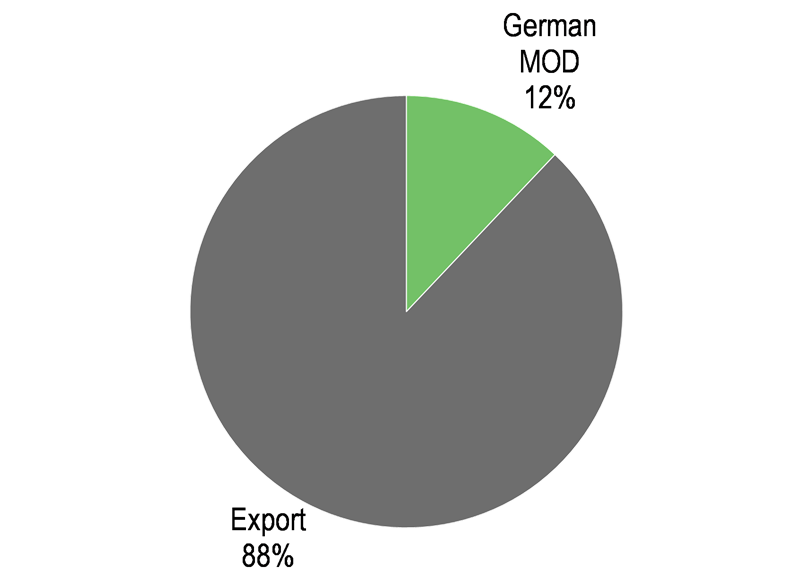
Defence and security revenues accounted for 94% (FY20: 90%) of the group total in FY21, boosted by the addition of ELAC for five months and a 30% (£3.7m) contraction of non-defence sales. The defence and security sales can be split further by customer and market segment as shown in Exhibits 2 and Exhibit 3 respectively. Overall, group revenues were split 63:37 between products and the provision of services.
|
|
||
|
|
||
|
Source: Cohort reports |
|
|
|
|
|
Source: Cohort reports |
|
|
|
|
|
|
Source: Cohort reports |
Divisional summaries
MASS
|
Exhibit 4: MASS FY21 revenue split by activity, £39.5m |
Exhibit 5: MASS order book run off, FY21 backlog £77.2m |
|
|
|
Source: Cohort |
Source: Cohort |
|
Exhibit 4: MASS FY21 revenue split by activity, £39.5m |
|
|
Source: Cohort |
|
Exhibit 5: MASS order book run off, FY21 backlog £77.2m |
|
|
Source: Cohort |
MASS’s sales fell 4% in FY21 from the record level of £41.1m achieved in FY20 and adjusted operating profit dropped by 2% to £8.7m (FY20: £8.9m), a margin of 22.1% (FY20: 21.7%). The margin improvement reflected a more favourable mix of business and flat overheads. Various segments of the business were affected by lockdowns and activity constraints as well as travel restrictions. Notably the export-oriented electronic warfare operational support (EWOS) business saw some revenue deferred into the current year and beyond as delivery to overseas customers proved difficult if not impossible due to the pandemic. The order backlog declined for the second year running as the operations continued to deliver against its long-term contracts and order intake declined 24% to £25.6m (FY20: £33.5m). With sales cover of £28m at the start of the year, management expects MASS to return to growth in FY22.
Chess
|
Exhibit 6: Chess FY21 revenue split by activity, £28.6m |
Exhibit 7: Chess order book run off, FY21 backlog £42.3m |
|
|
|
Source: Cohort |
Source: Cohort |
|
Exhibit 6: Chess FY21 revenue split by activity, £28.6m |
|
|
Source: Cohort |
|
Exhibit 7: Chess order book run off, FY21 backlog £42.3m |
|
|
Source: Cohort |
Chess delivered a mixed performance in FY21 with solid top-line growth but a drop in profitability. Revenues of £28.6m compared to £25.2m in FY20. The performance was driven by its export dominated customers including target identification for an important European army and optical fire control systems for the Belgian and Dutch navies for their new minesweepers. The proportion of counter-unmanned air vehicle revenues also increased significantly in FY21. Adjusted operating profit fell 29% to £3.0m, a margin of 10.5% compared to 15.6% in FY20, as a combination of poor project execution and competitive pricing took their toll. Management is acting to tighten project and financial controls to improve contract execution. On a more positive note, order intake more than trebled to £57.7m and included significant European land and sea orders. The order backlog also more than trebled to £42.3m and provides a much greater level of visibility for the coming years. Management expects Chess’s performance in the current year to strengthen.
SEA
|
Exhibit 8: SEA FY21 revenue split by activity, £28.0m |
Exhibit 9: SEA order book run off, FY21 backlog £69.3m |
|
|
|
Source: Cohort |
Source: Cohort |
|
Exhibit 8: SEA FY21 revenue split by activity, £28.0m |
|
|
Source: Cohort |
|
Exhibit 9: SEA order book run off, FY21 backlog £69.3m |
|
|
Source: Cohort |
SEA’s revenues fell by a further 12% in FY21 to £28.0m (FY20: £31.7m) as a result of weaker transport and research sales, with the subsea business contributing just £1m (FY20: £2.9m) up to its divestment in August 2020. While some significant naval export orders that had slipped from FY20 were ultimately received, these came too late to influence the performance deferrals, which slipped into FY21. Despite the completion of a restructuring programme to save £1.3m annually at a cost of £0.7m, which should be realised as activity levels improve from FY22, adjusted operating profit was 33% lower at £2.4m (FY20: £3.5m). Order intake was excellent for SEA at over £63m as several major and long-term contracts were secured, leaving the year-end backlog at almost £70m. With £20m due for delivery in FY22, it provides a significant increase in cover for the anticipated increased sales compared to a year ago.
Submarine system revenues started to recover in FY21 due to work for an export customer in advance of an expected increase in activity for the UK Dreadnought programme in the next couple of years. The unwinding of COVID-19 constraints should also benefit the group, especially in transport as well as export activity. Management expects SEA to grow in FY22 and return to double-digit margins aided by the cost reduction measures.
EID
|
Exhibit 10: EID FY21 revenue split by activity, £21.0m |
Exhibit 11: EID order book run off, FY21 backlog £20.0m |
|
|
|
Source: Cohort |
Source: Cohort |
|
Exhibit 10: EID FY21 revenue split by activity, £21.0m |
|
|
Source: Cohort |
|
Exhibit 11: EID order book run off, FY21 backlog £20.0m |
|
|
Source: Cohort |
Following an improved performance in FY20, EID delivered further strong growth in FY21. Sales rose 16% to £21.0m (FY20: £18.0m). There was decline in revenues for the Portuguese Ministry of National Defence, which had doubled in the prior year, but an improved level of exports of intercom systems to export customers. Adjusted operating profit was £4.8m (FY20: £3.1m), a margin of 23.1% (FY20: 17.2%), at the upper end of the historical range. However, order intake faltered with delays to anticipated programmes. Order intake was just £4.2m and the order book fell 45% to £20.0m (FY20: £36.5m). It provides order cover for just 44% of FY22 sales expectations. While there are some signs of order activity picking up, management expects revenues to drop by a third in FY22 with the operational gearing leading to even greater falls in operating profit.
MCL
|
Exhibit 12: MCL FY21 revenue split by activity, £18.0m |
Exhibit 13: MCL order book run off, FY21 backlog £12.4m |
|
|
|
Source: Cohort |
Source: Cohort |
|
Exhibit 12: MCL FY21 revenue split by activity, £18.0m |
|
|
Source: Cohort |
|
Exhibit 13: MCL order book run off, FY21 backlog £12.4m |
|
|
Source: Cohort |
Following a challenging FY20, MCL returned to growth in FY21 with revenues rising 19% to £18.0m (FY20: £15.1m). MCL faced a number of adverse effects from the pandemic, but responded to these well. Adjusted operating profit rose to £2.1m (FY20: £1.7m) with margins continuing to improve slightly to 11.5% (FY20: 11.0%). The recent UK defence review and spending plans have already provided some opportunities for the small and flexible MCL team to pursue, especially in support of the new Ranger regiment and it continues to pursue larger and longer-term support opportunities for the Royal Navy. The order book provides limited cover although it did improve to £12.4m (FY20: £8.6m) following strong order intake. We expect further progress in the coming year.
ELAC
|
Exhibit 14: ELAC FY21 revenue split by customer, £8.3m |
Exhibit 15: ELAC order book* run off, FY21 backlog £21.2m* |
|
|
|
Source: Cohort |
Source: Edison Investment Research. Note: *Estimated to adjust for recent £43m Italian sonar contract. |
|
Exhibit 14: ELAC FY21 revenue split by customer, £8.3m |
|
|
Source: Cohort |
|
Exhibit 15: ELAC order book* run off, FY21 backlog £21.2m* |
|
|
Source: Edison Investment Research. Note: *Estimated to adjust for recent £43m Italian sonar contract. |
ELAC made a stronger than expected initial contribution in FY21 following its acquisition in November 2021 for a net consideration of £1.3m. It does however bring with it some £8m of pension liabilities. It generated revenues of £8.3m and contributed £1.2m to adjusted operating profit at a margin of 14.1% before acquisition costs of £0.6m. Order intake of £7.2m left a year end order backlog of £21.1m. The wining of the Italian naval contract from Leonardo provides long-term underpinning of its sonar activity, with potential further extension through the take up of options for more boats. It leaves current year sales cover at over 90%.
Exhibit 16: Cohort divisional analysis and updated Edison estimates
Year to April (£m) |
2019 |
2020 |
2021 |
2022e |
2023e |
MASS |
38.9 |
41.1 |
39.5 |
41.9 |
43.5 |
Chess |
10.7 |
25.2 |
28.6 |
31.2 |
32.8 |
SEA |
38.3 |
31.7 |
28.0 |
30.8 |
33.8 |
MCL |
21.7 |
15.1 |
18.0 |
19.4 |
20.4 |
EID |
11.5 |
18.0 |
21.0 |
13.0 |
13.6 |
ELAC |
8.3 |
19.9 |
23.9 |
||
Group revenues |
121.2 |
131.1 |
143.3 |
156.1 |
168.0 |
MASS |
8.2 |
8.9 |
8.7 |
9.6 |
10.0 |
Chess |
1.7 |
3.9 |
3.0 |
3.7 |
3.9 |
SEA |
5.5 |
3.5 |
2.4 |
3.9 |
4.3 |
MCL |
2.3 |
1.7 |
2.1 |
2.2 |
2.3 |
EID |
1.4 |
3.1 |
4.8 |
1.2 |
1.2 |
ELAC |
1.2 |
2.2 |
2.6 |
||
HQ Other and intersegment |
(2.8) |
(2.9) |
(3.6) |
(4.0) |
(4.0) |
Adjusted operating profit |
16.2 |
18.2 |
18.6 |
18.8 |
20.4 |
MASS |
21.0% |
21.7% |
22.1% |
23.0% |
23.0% |
Chess |
15.8% |
15.6% |
10.5% |
12.0% |
12.0% |
SEA |
14.3% |
11.1% |
8.4% |
12.6% |
12.6% |
MCL |
10.5% |
11.0% |
11.5% |
11.5% |
11.5% |
EID |
11.8% |
17.2% |
23.1% |
9.0% |
9.0% |
ELAC |
14.1% |
11.0% |
11.0% |
||
Adjusted operating profit margin |
13.3% |
13.9% |
13.0% |
12.1% |
12.1% |
Source: Company reports, Edison Investment Research estimates
Outlook for FY22
Exhibit 17: Cohort divisional order intake and backlog
Year to April (£m) |
FY18 |
FY19 |
FY20 |
FY21 |
FY21/FY20 |
Order intake |
|||||
MASS |
29.1 |
97.0 |
33.5 |
25.6 |
-23.6% |
ELAC |
7.2 |
||||
SEA |
27.0 |
36.7 |
34.7 |
63.7 |
83.6% |
MCL |
12.1 |
26.0 |
9.1 |
21.8 |
139.6% |
EID |
8.4 |
18.9 |
29.3 |
4.3 |
-85.3% |
Chess |
11.3 |
17.8 |
57.7 |
224.2% |
|
Total order intake |
76.6 |
189.9 |
124.4 |
180.3 |
44.9% |
Order book |
|||||
MASS |
40.9 |
98.8 |
91.2 |
77.2 |
-15.4% |
ELAC |
21.2 |
||||
SEA |
33.6 |
31.1 |
33.6 |
69.3 |
106.3% |
MCL |
10.3 |
14.6 |
8.6 |
12.4 |
44.2% |
EID |
19.0 |
25.6 |
36.5 |
20.0 |
-45.2% |
Chess |
20.8 |
13.4 |
42.3 |
215.7% |
|
Total order book |
103.8 |
190.9 |
183.3 |
242.4 |
32.2% |
Source: Cohort reports, Edison Investment Research estimates
The year-end order book of £242.4m (FY20: £183.3m) was at a new record level, although enhanced by the first-time inclusion of ELAC’s backlog of £21.2m. FY21 order intake of £180.3m was up 45%, or 39% adjusting for the initial £7.2m contributed by ELAC. There were notably substantial export orders won by Chess and SEA, the latter including torpedo launcher systems and external communications systems (ECS) worth around £17m. The book to bill ratio for the group was 1.26x (FY20: 0.95x).
Of the FY21 year-end backlog, £99.7m (FY20: £84.5m) is expected to be delivered in FY22, providing 64% cover for consensus sales expectation of c £156m, modestly up on the prior year level of 62%.
Exhibit 18: Cohort year end order backlog run off by division
MASS |
EID |
SEA |
Chess |
MCL |
ELAC |
Total |
|
At 30 April 2021 |
77.2 |
20.0 |
69.3 |
42.3 |
12.4 |
21.2 |
242.4 |
H122 |
16.1 |
3.4 |
10.9 |
11.5 |
7.9 |
7.8 |
57.6 |
H222 |
11.1 |
4.8 |
9.7 |
8.3 |
3.6 |
4.6 |
42.1 |
FY22 |
27.2 |
8.2 |
20.6 |
19.8 |
11.5 |
12.4 |
99.7 |
FY23 |
18.8 |
4.1 |
11.8 |
11.9 |
0.8 |
4.6 |
52.0 |
FY24 |
10.7 |
6.9 |
6.3 |
1.6 |
0.0 |
1.3 |
26.8 |
Later years |
20.5 |
0.8 |
30.6 |
9.0 |
0.1 |
2.9 |
63.9 |
Source: Cohort
In addition, order intake in Q122 has been strong, with over £50m of orders booked since the start of the financial year. This includes a major contract win for ELAC worth over €49m (£43m) from Italian defence company Leonardo for sonar systems for two U212 Near Future Submarines being built by Fincantieri for the Italian Navy. It includes the provision of special test and training tools as well as technical services and will run for several years with the submarines due for delivery by 2030, with options on a further two vessels. The order significantly increases the ELAC order backlog underpinning FY22 results together with longer-term prospects and provides a strong reference for its ability to deliver complete submarine sonar suites. The group intake since the year end has significantly extended the group order backlog, with order cover now standing at over 70%, still slightly behind 75% at the same point last year.
In line with its agile growth strategy management continues to invest in organic growth and targets value enhancing acquisition opportunities both in the UK and overseas. In FY21 £3.6m (FY20: £2.9m) was spent on self-funded R&D. The current divisional focus on projects is
■
SEA – Krait V2, KDS (Krait Defence System) software, transport
■
EID – handheld radio, soldier system, new features for ICCS and ICC
■
MASS – digital forensics evidence management, machine learning for missile defence
■
Chess – artificial intelligence for target identification
■
ELAC – smart digital transducers for Sphere
■
MCL – looking at long-term business expansion by new application of existing skills for Royal Navy
Debt and liquidity
Adjusted net cash of £2.5m (excluding leases liabilities) was again better than expected, largely due to the timing of receipts, which is expected to unwind in FY22. As a result, management expects net cash balances to be close to zero, after the expected £2.8m buy out of the Chess minority later this year (we have yet to adjust for that event in our estimates). Lease liabilities rose marginally to £7.6m (FY20: £7.5m). The robust balance sheet leaves some £42m of available liquidity, with £32m of gross cash and around £10m of the £40m four-year revolving credit facility (RCF) remaining undrawn. The RCF expires in November 2022, with an option to extend to November 2023.
Cohort’s strong financial position and the cash generative nature of the operations allows management to maintain a robust capital allocation policy. Organic investment and self-funded R&D spending remain key, while supporting the progressive dividend policy. The robust balance sheet also provides resources to pursue strategic value adding acquisitions.
Revisions to estimates and updated valuation
Overall, our estimates for FY22 change only slightly, although there are some divisional mix changes with EID where we had already reflected the anticipated weaker trading in FY22 as overhead under-recovery and the adverse sales mix have an impact on margins. Encouragingly, domestic order opportunities appear to be picking up and with an export focus we think FY22 should mark its low point. We expect all other divisions to progress in FY22, enhanced by a full year contribution from ELAC. We now expect overall group revenues of £156m in FY22. Our FY22 adjusted PBT estimate is increased 1.4% to £18.0m and our adjusted EPS estimate is 34.3p. We now forecast end April 2022 adjusted net cash of £0.7m, broadly in line with management indications.
Exhibit 19: Cohort earnings revisions
Year to April (£m) |
FY21e |
FY21 |
|
FY22e |
FY22e |
|
FY23e |
|
Prior |
Actual |
% change |
Prior |
New |
% change |
New |
Revenue |
|||||||
MASS |
41.5 |
39.5 |
-4.9% |
44.0 |
41.9 |
-4.9% |
43.5 |
SEA |
34.6 |
28.0 |
(19.1)% |
36.6 |
30.8 |
(16.0)% |
33.8 |
MCL |
15.5 |
18.0 |
15.9% |
16.8 |
19.4 |
15.9% |
20.4 |
EID |
18.6 |
21.0 |
12.9% |
13.0 |
13.0 |
(0.0)% |
13.6 |
Chess |
26.9 |
28.6 |
6.4% |
29.3 |
31.2 |
6.4% |
32.8 |
ELAC SONAR |
5.0 |
8.3 |
65.8% |
19.0 |
19.9 |
4.7% |
23.9 |
Intra group sales |
0.0 |
0.0 |
|
0.0 |
0.0 |
|
0.0 |
Total Group |
142.1 |
143.3 |
0.9% |
158.7 |
156.1 |
(1.6)% |
168.0 |
|
|
|
|
|
|
|
|
EBITDA |
21.4 |
22.1 |
3.3% |
21.6 |
22.0 |
1.6% |
23.7 |
Adjusted operating profit |
|
|
|
|
|
|
|
MASS |
8.5 |
8.7 |
2.7% |
9.0 |
9.6 |
6.7% |
10.0 |
SEA |
4.3 |
2.4 |
(45.8)% |
4.6 |
3.9 |
(16.0)% |
4.3 |
MCL |
1.7 |
2.1 |
21.1% |
1.8 |
2.2 |
21.1% |
2.3 |
EID |
3.2 |
4.8 |
51.0% |
1.2 |
1.2 |
(0.0)% |
1.2 |
Chess |
3.8 |
3.0 |
(19.9)% |
4.1 |
3.7 |
(8.8)% |
3.9 |
ELAC SONAR |
0.3 |
1.2 |
369.2% |
2.1 |
2.2 |
4.7% |
2.6 |
HQ Other and intersegment |
(3.0) |
(3.6) |
19.4% |
(4.0) |
(4.0) |
0.0% |
(4.0) |
Adjusted operating profit |
18.8 |
18.6 |
(0.9)% |
18.9 |
18.8 |
(0.1)% |
20.4 |
|
|
|
|
|
|
|
|
Adjusted PBT |
17.7 |
17.9 |
1.0% |
17.7 |
18.0 |
1.4% |
19.5 |
|
|
|
|
|
|
|
|
EPS - adjusted continuing (p) |
33.6 |
33.6 |
(0.1)% |
33.7 |
34.3 |
1.9% |
37.4 |
DPS (p) |
11.1 |
11.1 |
0.0% |
12.2 |
12.2 |
0.0% |
13.4 |
Adjusted net cash |
2.0 |
2.5 |
+25.0% |
0.2 |
0.7 |
265.2% |
9.7 |
Source: Edison Investment Research estimates
Our rolled forward capped discounted cash flow (DCF) valuation now stands at a value of 656p compared to 674p per share previously. The drop is largely due to the inclusion of the £8m ELAC pension liability as well as a slower near-term recovery at EID.
Exhibit 20: Cohort capped DCF sensitivity to WACC and terminal growth (p per share)
WACC |
6.0% |
6.5% |
7.0% |
7.3% |
7.5% |
8.0% |
8.5% |
9.0% |
Terminal growth rate |
||||||||
0% |
825 |
751 |
687 |
656 |
632 |
585 |
543 |
505 |
1% |
832 |
757 |
693 |
661 |
638 |
589 |
547 |
509 |
2% |
839 |
763 |
699 |
667 |
643 |
594 |
551 |
513 |
3% |
846 |
769 |
704 |
672 |
648 |
599 |
555 |
517 |
Source: Edison Investment Research estimates
Exhibit 21: Financial summary
Year end 31 April |
£m |
2020 |
2021 |
2022e |
2023e |
|
Revenue |
|
|
131.1 |
143.3 |
156.1 |
168.0 |
Cost of Sales |
(80.0) |
(90.0) |
(98.0) |
(105.5) |
||
Gross Profit |
51.0 |
53.4 |
58.1 |
62.6 |
||
EBITDA |
|
|
20.9 |
22.1 |
22.0 |
23.7 |
Operating Profit (before amort. and except.) |
18.2 |
18.6 |
18.8 |
20.4 |
||
Intangible Amortisation |
(7.4) |
(10.1) |
(6.8) |
(3.1) |
||
Exceptionals |
(0.1) |
(0.7) |
0.0 |
0.0 |
||
Other |
0.0 |
0.0 |
0.0 |
0.0 |
||
Operating Profit |
10.7 |
7.8 |
12.0 |
17.3 |
||
Net Interest |
(0.8) |
(0.8) |
(0.9) |
(0.9) |
||
Profit Before Tax (norm) |
|
|
17.5 |
17.9 |
18.0 |
19.5 |
Profit Before Tax (FRS 3) |
|
|
10.0 |
7.1 |
11.2 |
16.4 |
Tax |
(0.3) |
(1.6) |
(2.4) |
(2.7) |
||
Profit After Tax (norm) |
15.2 |
13.8 |
14.7 |
16.0 |
||
Profit After Tax (FRS 3) |
9.7 |
5.5 |
8.7 |
13.7 |
||
Average Number of Shares Outstanding (m) |
40.7 |
40.8 |
40.8 |
40.8 |
||
EPS - fully diluted (p) |
|
|
36.7 |
33.3 |
34.0 |
37.0 |
EPS - normalised (p) |
|
|
37.1 |
33.6 |
34.3 |
37.4 |
EPS - (IFRS) (p) |
|
|
23.5 |
13.4 |
19.6 |
31.7 |
Dividend per share (p) |
10.1 |
11.1 |
12.2 |
13.4 |
||
Gross Margin (%) |
38.9 |
37.2 |
37.2 |
37.2 |
||
EBITDA Margin (%) |
15.9 |
15.4 |
14.1 |
14.1 |
||
Operating Margin (before GW and except.) (%) |
13.9 |
13.0 |
12.1 |
12.1 |
||
BALANCE SHEET |
||||||
Fixed Assets |
|
|
74.3 |
78.4 |
72.3 |
69.9 |
Intangible Assets |
55.3 |
58.8 |
52.0 |
48.9 |
||
Tangible Assets |
12.1 |
12.5 |
13.2 |
14.0 |
||
Right of Use assets |
6.9 |
7.1 |
7.1 |
7.1 |
||
Investments |
0.0 |
0.0 |
0.0 |
0.0 |
||
Current Assets |
|
|
80.1 |
112.5 |
117.4 |
128.6 |
Stocks |
11.5 |
12.9 |
15.6 |
16.5 |
||
Debtors |
47.3 |
66.6 |
68.7 |
70.6 |
||
Cash |
20.6 |
32.3 |
32.3 |
40.8 |
||
Other |
0.7 |
0.8 |
0.8 |
0.8 |
||
Current Liabilities |
|
|
(32.8) |
(56.6) |
(49.9) |
(51.0) |
Creditors |
(32.8) |
(56.6) |
(49.9) |
(51.0) |
||
Short term borrowings |
(0.1) |
(0.1) |
0.0 |
0.0 |
||
Long Term Liabilities |
|
|
(39.8) |
(49.2) |
(51.0) |
(50.5) |
Long term borrowings |
(25.2) |
(29.8) |
(31.5) |
(31.1) |
||
Lease liabilities |
(7.5) |
(7.6) |
(7.6) |
(7.6) |
||
Other long term liabilities |
(7.1) |
(11.9) |
(11.9) |
(11.9) |
||
Net Assets |
|
|
81.8 |
85.1 |
88.8 |
97.1 |
CASH FLOW |
||||||
Operating Cash Flow |
|
|
13.0 |
21.1 |
9.9 |
21.5 |
Net Interest |
(0.8) |
(0.8) |
(0.9) |
(0.9) |
||
Tax |
(0.6) |
(4.1) |
(3.2) |
(3.5) |
||
Capex |
(2.7) |
(1.2) |
(2.8) |
(3.0) |
||
Acquisitions/disposals |
(1.2) |
(3.3) |
0.0 |
0.0 |
||
Financing |
(2.2) |
(0.3) |
0.0 |
0.0 |
||
Dividends |
(3.9) |
(4.2) |
(4.7) |
(5.1) |
||
Other |
0.0 |
0.0 |
0.0 |
0.0 |
||
Net Cash Flow |
1.7 |
7.2 |
(1.7) |
9.0 |
||
Opening net debt/(cash) |
|
|
6.4 |
4.7 |
(2.5) |
(0.7) |
HP finance leases initiated |
0.0 |
0.0 |
0.0 |
0.0 |
||
Other |
(0.0) |
(0.0) |
0.0 |
0.0 |
||
Closing net debt/(cash) (excluding leases) |
4.7 |
(2.5) |
(0.7) |
(9.7) |
||
Total financial liabilities |
|
|
12.2 |
5.1 |
6.8 |
(2.2) |
Source: Company reports, Edison Investment Research
|
|
Research: TMT
BluGlass’s Q421 activities were dominated by an oversubscribed entitlement offer and placements, which collectively raised A$8.4m (gross). These funds are intended to provide a cash runway through to initial sales of high-performance laser diodes, which the company plans to start shipping at scale over the coming year.