Last close As at 06/08/2026
—
— 0.00 (0.00%)
Market capitalisation
—
Research: Investment Companies
Riverstone Credit Opportunities Income (RCOI) is a closed-end fund that invests in mid-market energy company credit mostly via direct loans. This is a niche sector of low loan to value (LTV), delayed draw loans of relatively short duration, often employed as bridge loans by the borrowers. RCOI can invest broadly across the sector but has been repositioning towards entities building infrastructure and providing infrastructure services as well as those focused on the energy transition to zero carbon. Asset quality has been holding up well and the last three loan realisations had gross IRRs of 14–21%, while management sees a good pipeline. We note the fully funded 8.5% dividend yield and the 16% NAV discount. RCOI started a share buyback programme in July, because the board believes the shares do not reflect the portfolio value and high-performing strategy.
Written by
Riverstone Credit Opportunities Income |
Resilient and premium margins niche |
2022 update |
Investment companies |
3 October 2022 |
*As at 30 June 2022
Bull points
Bear points
Analyst
Riverstone Credit Opportunities Income is a research client of Edison Investment Research Limited. |
||||||||||||||||||||||||||||||||||||||||||||||||||||||||
Riverstone Credit Opportunities Income (RCOI) is a closed-end fund that invests in mid-market energy company credit mostly via direct loans. This is a niche sector of low loan to value (LTV), delayed draw loans of relatively short duration, often employed as bridge loans by the borrowers. RCOI can invest broadly across the sector but has been repositioning towards entities building infrastructure and providing infrastructure services as well as those focused on the energy transition to zero carbon. Asset quality has been holding up well and the last three loan realisations had gross IRRs of 14–21%, while management sees a good pipeline. We note the fully funded 8.5% dividend yield and the 16% NAV discount. RCOI started a share buyback programme in July, because the board believes the shares do not reflect the portfolio value and high-performing strategy.
|
RCOI NAV total return versus S&P Leveraged Loan Index over 12 months |
|
|
Source: Refinitiv |
Why invest in direct energy loans now?
The direct energy loan niche continues to provide interesting risk-adjusted returns with average 11.0–13.5% loan yields that benefit from being first lien, heavily collateralised and short duration. RCOI’s portfolio repositioning has further mitigated its oil and other energy commodity price exposure. The loans are floating rate, which is an advantage in an environment of rising and elevated US inflation and interest rates.
The analyst’s view
This lending niche has been created by middle market energy companies being typically too small to issue liquid bonds and banks retreating, while most non-bank direct lenders lack the resources and sector knowledge required for extremely technical credit analysis. Despite the macroeconomic tailwinds, significant US energy infrastructure spending is expected in the next few years, especially in renewables, helped by government stimulus plans. The Riverstone connection allows RCOI access to expertise, business relationships and a deal pipeline. We also see the lack of a base management fee as positive, as it helps align interests with shareholders.
Valuation: Dividend yield 8.5%, NAV discount 16%
The shares are trading at a 16% discount to NAV with a trailing dividend yield of 8.5%. RCOI has a policy of distributing all income after expenses and taxes.
Recent portfolio movements
RCOI has completed three successful investment realisations since our outlook note in April 2022. Two of them occurred during Q222 and the third in Q322. RCOI also upsized three of its loans.
The loans exited are:
1.
Signet Maritime (April 2022, gross internal rate of return (IRR) 14.5%),
2.
Roaring Fork Midstream (June 2022, 21.3%) and
3.
FS Crude LLC (September 2022, 14.8%).
These three loans amounted to $25m (about 27% of NAV); this value excludes the portion of the FS Crude loan that had already been repaid. These loans combined are responsible for a 26% margin (gain) on the invested capital.
In addition, there was the repayment of the Imperium3NY loan earlier in April 2022, which we noted in our outlook report. The exit was done with a 32.5% IRR and 1.25x margin on investment and RCOI retaining its Imperium3NY equity warrants for additional upside.
The three loan upsizes are:
1.
Streamline Innovation, commitment increased from $12.3m to $13.8m in May 2022,
2.
Blackbuck Resources, commitment of $9.9m raised to $11.7m in July 2022, and
3.
Hoover Circular Solutions, which saw another $8m added to the original $7.4m commitment (of which $3.8m was outstanding as of 30 June 2022) in September 2022.
RCOI had a net cash position of 17% of NAV on 30 June 2022, and we estimate it should still be in the mid-teens. Management expects to deploy some of this cash in the coming months into its investment pipeline.
Streamline green loan
RCOI has made several sustainability linked loans and green loans to date, but the Streamline Innovations investment is worth highlighting. The move towards non-fossil fuels is a secular one and RCOI wants to be an investor and participant in this trend. However, since we will have to still rely on fossil fuels for part of our energy needs in the coming decades, making these fossil fuels cleaner is also an important and worthwhile initiative. RCOI’s interest in companies and technologies that make fossil fuels cleaner and more environmentally friendly contributed to the Streamline Innovations loan investment.
Streamline Innovations makes equipment that reduces toxic hydrogen sulphide (H2S) and sulphur dioxide (SO2) emissions in energy, renewable fuels, wastewater, landfill gas, biogas and industrial processes. It does so by eliminating routine flaring, which is the burning off of unwanted petroleum gas during crude oil extraction. According to the World Bank, about 85% of associated petroleum gas is used or saved while the remaining 15% of associated petroleum gas is flared or vented. This flaring is better than just venting (releasing) the same gasses, but it is still environmentally damaging.
Sustainable Fitch provided a second-party opinion (SPO) on the Streamline loan during the upsize, confirming that the loan followed the Loan Syndications and Trading Association (LSTA) Green Loan Principles and rules.
Market outlook
Oil and gas prices have remained at levels that are quite favourable for RCOI’s target market. The energy price outlook is likely to be affected by the evolution of the war in Ukraine and associated sanctions, boycotts, etc.
Inflation and interest rates have continued to rise ahead of expectations, and this has been affecting the US credit markets. The overnight index swaps (OIS) are currently pointing to a US policy rate of about 4.6% by mid-2023. These higher interest rates are intended to bring down consumption and inflation. It is inevitable that they are having an adverse impact on the economic growth outlook, and this in turn may result in weaker energy prices. Furthermore, higher financing costs can be an issue for some of the more highly geared borrowers.
However, we do not see why energy prices will not stay at levels that will keep the energy sector relatively resilient. At the same time, we still believe the trend towards non-fossil fuels and cleaner sourcing of fossil fuels will require significant finance and continue to provide investment opportunities. The first-lien and asset-backed nature of RCOI’s lending is a comforting factor, as is the Riverstone group’s well-established expertise in the energy sector.
|
Exhibit 1: Crude oil (West Texas Intermediate), price per barrel |
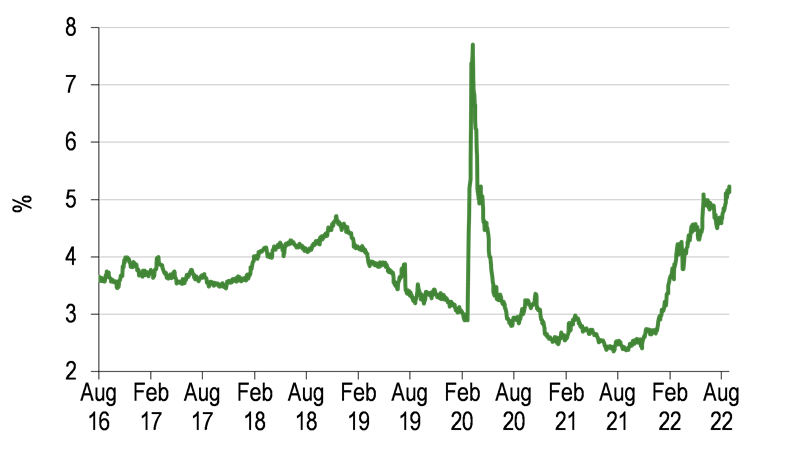
Exhibit 2: S&P US High Yield Energy Bond Index yield to redemption |
|
|
|
Source: Refinitiv |
Source: Refinitiv |
|
Exhibit 1: Crude oil (West Texas Intermediate), price per barrel |
|
|
Source: Refinitiv |
|
Exhibit 2: S&P US High Yield Energy Bond Index yield to redemption |
|
|
Source: Refinitiv |
26%
The fund manager: Riverstone Investment Group
The manager’s view
The trading conditions in the broader energy sector have remained favourable and supportive and ‘encouraging for RCOI’s strategy. RCOI’s ‘focus on energy infrastructure, infrastructure services and energy transition assets’ leave it well placed to benefit from the trends of ‘consistent growing demand for sources of energy and the concurrent need to meet global ‘net-zero’ targets.’ As such it will continue to seek opportunities through its green loans and sustainability linked loans with sustainability performance targets. To validate the green loans and sustainability linked loans designation, RCP has teamed up with a division of Fitch called “Sustainable Fitch,” to issue a third-party opinion, confirming that its loans do in fact align with the relevant green and sustainability-linked loan principles. This has been done for the last four deals completed by RCOI and will be done for all deals going forward.
In its Q222 quarterly portfolio comment on valuation, management noted there is a growing pipeline of attractive investment opportunities across the infrastructure, infrastructure services and energy transition sectors. Following the recent upsize in the Hoover loan, management expects to soon make further investment loans.
Based on the growing track record of attractive realisation multiples, RCOI believes ‘that going forward, our portfolio income will be sufficient to grow RCOI while preserving principal and in addition to delivering on our dividend target’.
RCOI started its share buyback at the end of Q222 since it felt that the current share price did not ‘reflect the value of the portfolio and strategy’ and the buyback ‘underlines’ the board’s confidence in RCOI’s ‘high performing and differentiated approach’.
Asset allocation
Current portfolio positioning
Exhibits 3 and 4 illustrate RCOI’s portfolio repositioning between Q222 and FY21. Infrastructure services accounted for 41% (excluding cash) of committed capital in the portfolio in Q222, similar to at the end of FY21 (43%). Infrastructure was 59% in Q222 of the portfolio, while there are no energy transition loans (although there are Imperium3NY equity warrants).
RCOI uses the term infrastructure to include both midstream as well as power generation. Examples of midstream would include pipelines, terminals and storage. Power generation examples are natural gas fired, solar, wind, hydro, geothermal and nuclear. Infrastructure loans can therefore also be green loans.
Infrastructure services are also asset heavy, but are businesses that serve the infrastructure such as transportation, logistics, distribution, construction, maintenance and equipment rental. Unlike infrastructure, infrastructure services will often have assets that move. As with infrastructure, these assets can also contribute to the transition to net zero energy solutions.
RCOI classifies as energy transition businesses that aid the transition of a carbon-based energy world to one of net zero, but do not fit neatly as either infrastructure or infrastructure services. This includes businesses in areas such as conversion of existing infrastructure, electrification of transport, waste-to-value, agriculture and next-generation fuels.
The structure of the loans remains the same. They are US dollar denominated to US companies, floating rate and have first lien on the operating company (the exception is Caliber Midstream, which is first lien on the holding company).
|
Exhibit 3: Portfolio breakdown by segment FY21* |
Exhibit 4: Portfolio breakdown by segment Q222* |
|
|
|
Source: Riverstone Credit Opportunities Income. Note: *Committed capital, excluding cash. |
Source: Riverstone Credit Opportunities Income. Note: *Committed capital, excluding cash |
|
Exhibit 3: Portfolio breakdown by segment FY21* |
|
|
Source: Riverstone Credit Opportunities Income. Note: *Committed capital, excluding cash. |
|
Exhibit 4: Portfolio breakdown by segment Q222* |
|
|
Source: Riverstone Credit Opportunities Income. Note: *Committed capital, excluding cash |
At entry to investment, the average drawn coupon is 9.5% (9.3% a year ago) and the average tenor is 2.9 years (3.0 years in Q221); the longest is four years. The spread on the undrawn portion is 4.3% at entry, compared to 4.4% a year ago. The LTV ratio is quite low at 43% (48%), which we would expect with asset-based finance.
Exhibit 5 shows some details of RCOI’s eight loans and one equity warrant as of Q222 as well as the loan exits, all 12 of them profitable. The average yield to maturity is 12.7%, assuming the loans are fully drawn and with upfront fees. Loans are typically structured to be more expensive over time to encourage borrowers to repay RCOI early. Loan interest rates usually step up 1–2 percentage points each year until maturity.
The loan book in Q222 had a gross unrealised value of ($64.2m), as shown in Exhibit 5, and had already paid out $31.2m (gross realised value). The total realised and unrealised value was $95.4m in Q122, 14% above the cumulative invested capital. Loans are usually valued on a discounted cash flow basis unless very recently invested in. At the end of Q221, RCOI disclosed that the discount rate was 6–13% for the infrastructure loans and 8–13% for infrastructure services.
Exhibit 5: RCOI loan portfolio (Q222)
US$m |
Subsector |
Commit-ment date |
Cumulative Committed |
Cummul. |
Gross |
Gross unrealised value* |
Realised & unrealised value |
YTM (%) at entry & fully drawn |
% par |
Gross |
Company/project name |
||||||||||
Caliber Midstream |
Infrastructure |
Aug-19 |
4.0 |
4.0 |
0.5 |
0.6 |
1.1 |
12.3 |
56.4% |
0.27 |
Epic Propane Pipeline |
Infrastructure |
Dec-19 |
14.8 |
14.8 |
3.4 |
15.4 |
18.8 |
11.6 |
101.5% |
1.27 |
FS Crude **** |
Infrastructure |
Mar-20 |
13.7 |
13.7 |
9.7 |
6.8 |
16.5 |
11.7 |
100.1% |
1.20 |
Hoover Circul. Solut.**** |
Infrastructure Services |
Oct-20 |
7.4 |
7.4 |
4.4 |
3.9 |
8.3 |
10.4 |
99.9% |
1.14 |
Imperium3NY*** |
Energy Transition |
Apr-21 |
6.8 |
5.4 |
6.7 |
1.2 |
8.0 |
22.0 |
1.24*** |
1.48 |
Blackbuck Resource**** |
Infrastructure |
Jun-21 |
11.5 |
10.2 |
1.7 |
9.8 |
11.5 |
11.9 |
99.6% |
1.12 |
Circulus Holdings |
Infrastructure |
Aug-21 |
12.3 |
12.3 |
4.0 |
9.3 |
13.4 |
13.5 |
99.6% |
1.09 |
Streamline Innovations |
Infrastructure Services |
Nov-21 |
13.8 |
6.8 |
0.4 |
6.9 |
7.3 |
11.1 |
98.7% |
1.07 |
Harland & Wolff |
Infrastructure Services |
Mar-22 |
11.8 |
10.1 |
0.4 |
10.1 |
10.6 |
13.2 |
98.2% |
1.05 |
Total / average |
96.2 |
84.6 |
31.2 |
64.2 |
95.4 |
12.7 |
86.5% |
1.14 |
Source: Riverstone Credit Opportunities Income. Note: *This is similar to fair value of the loans. **Margin over invested capital (MOIC) is the total gross realised and unrealised value as a percentage of invested capital. ***Loan was repaid in April 2022, value shown is of equity stake from warrants (MOIC). **** FS Crude loan repaid while Hoover and Blackbuck loans upsized in Q322.
Exhibit 6: RCOI portfolio exits (as September 2022)
US$m |
Subsector |
Commitment |
Maturity |
Committed capital |
Gross invested capital |
Realised value |
Gross |
Company/project name |
|||||||
Rocky Creek Resources |
Exploration & production |
Jun-19 |
Dec-19 |
6.0 |
4.3 |
4.9 |
1.15 |
CIG Logistics |
Infrastructure services |
Jan-20 |
Jan-20 |
8.7 |
8.7 |
8.9 |
1.02 |
Mallard Exploration |
Exploration & production |
Nov-19 |
Apr-20 |
13.8 |
6.8 |
7.7 |
1.13 |
Market Based |
Multiple |
Jul-20 |
Nov-20 |
13.4 |
13.4 |
13.6 |
1.01 |
Project Yellowstone |
Infrastructure services |
Jun-19 |
Mar-21 |
5.8 |
5.8 |
7.2 |
1.23 |
Ascent Energy |
Exploration & production |
Jun-19 |
Jun-21 |
13.3 |
13.3 |
16.1 |
1.21 |
Pursuit Oil & Gas |
Exploration & production |
Jul-19 |
Jun-21 |
12.3 |
12.3 |
15.0 |
1.22 |
US Shipping** |
Infrastructure services |
Feb-21 |
Aug-21 |
6.5 |
6.5 |
7.3 |
1.13 |
Aspen Power Partners |
Energy transition |
Dec-20 |
Oct-21 |
6.9 |
3.4 |
4.3 |
1.27 |
Project Mariners |
Infrastructure Services |
Jul-19 |
Apr-22 |
13.2 |
13.2 |
17.6 |
1.33 |
Roaring Fork Midstream |
Infrastructure |
Mar-21 |
Jun-22 |
5.9 |
5.9 |
6.9 |
1.16 |
FS Crude |
Infrastructure |
Mar-20 |
Sep-22 |
13.7 |
13.7 |
16.9 |
1.23 |
Total |
105.9 |
107.3 |
126.4 |
1.18 |
Source: Riverstone Credit Opportunities Income. Note: *Margin over invested capital (MOIC) is the total gross realised and unrealised value as % of invested capital.
Exhibit 7 gives brief descriptions of the various loans as of end Q222 and we include Imperium, which was only sold in April. Most of these loans are co-invested with other Riverstone-managed or associated funds, which reflects the leverage of the Riverstone group’s expertise and support.
Exhibit 7: Borrower profile (at end Q222)
Caliber Midstream – a sponsor-backed midstream company focused on the Bakken Formation (Montana, Dakotas and Canada) that provides crude oil and natural gas gathering and processing, produced water transportation and disposal, and freshwater sourcing and transportation. Use of proceeds, combined with a revolving credit facility draw, was to fund an acquisition. Part of a $65m loan. |
Epic Propane Pipeline – a sponsor-backed infrastructure company that will provide propane purity offtake transportation to the Houston (Texas) export market. Use of proceeds from the credit facility is for the construction of a new propane pipeline from Robstown and Corpus Christi to Sweeny (Texas). Part of a $75m loan. |
FS Crude – a sponsor-backed infrastructure company that provides crude gathering, storage and blending services to a diversified footprint of producers in the core of the Delaware Basin (New Mexico). Part of a $75m loan. Previously Salt Creek Midstream. This was amended as FS Crude repaid $40m of the loan, remaining $35m remains, RCOI’s commitment was $6.4m at end of Q222. The loan was fully and successfully exited in September 2022. |
Hoover Circular Solutions – a sponsor-backed company that is the leading speciality rental provider of containers and mobile asset management solutions across the energy, industrial, refining and petrochemical industries. Proceeds to completely refinance the existing capital structure. Part of a $225m loan. Previously referred to as Project Boulder. RCOI increased its commitment by $8m on similar terms. |
Imperium3 New York – a lithium-ion battery company that will commercialise high-performing lithium-ion batteries. It will be the first US battery cell supplier not captive to an original equipment manufacturer and will supply various underserved industrial end-markets. The loan has two parent guarantors: Charge CCCV, a research company with patented discoveries in battery composition, and Magnis Energy Technologies. Use of the proceeds was primarily to construct the manufacturing facility. Part of a $63m loan. This was Riverstone’s second investment in the energy transition and decarbonisation segment. The loan was repaid in Q222, but RCOI has retained an equity investment through warrants. |
Blackbuck – a sponsor-backed water infrastructure company focused on providing E&P operators with a one-stop shop for all things related to water management, including treatment, gathering, recycling, storage and disposal. The term loan is Riverstone Credit Partners’ (RCP’s) first sustainability-linked loan, whereby the loan pricing steps up if certain sustainability targets are not achieved. RCP intends to use similar lending structures for conventional energy infrastructure and infrastructure services companies. Part of a $50m loan. |
Circulus Holdings (originally referred to as Project Sphere) – a sponsor-backed recycler of low-density polyethylene (LDPE, a plastic) for use in food-grade packaging, injection moulding applications, bags, films and other high-end products. Part of a $100m loan. |
Streamline Innovations – sponsor-backed leader in environmentally advanced treatment solutions and equipment for hydrogen sulphide (H2S) in energy, renewable fuels, wastewater, landfill gas, biogas and industrial processes. Part of a $20.0m first lien delayed-draw term loan. The loan is structured as sustainability linked; the loan pricing steps up unless a sustainability target is met that is tied to new construction of H2S treating plants, which eliminate poisonous H2S gas and reduce toxic sulphur dioxide emissions by eliminating routine flaring. |
Harland & Wolff – certified green term loan to a publicly listed infrastructure operator engaged in the development and operation of strategic maritime assets in the UK. Proceeds from the term loan will be utilised to fund working capital and capital expenditures associated with the fabrication of wind turbine generator jackets for the energy offshore wind project, to repay existing indebtedness, to fund an interest reserve account, and to pay transaction fees and expenses. There are two tranches: committed ($35m) and uncommitted tranches (also $35m in size). The deal includes detachable share warrants. |
Source: Riverstone Credit Opportunities Income
Performance
RCOI’s inception date was May 2019, and its trading history has been affected first by the COVID-19 pandemic crisis and now by the war in Ukraine.
During the peak of the market turbulence in the first half of 2020, RCOI’s share price fell to almost 60% below the issue price. RCOI’s NAV total return has remained resilient and in fact has outperformed since inception the S&P/LSTA US Leveraged Loan Index by a significant 10.8%. The RCOI shares have recovered since their 2020 doldrums. However, they still have a wide discount to NAV of 16% and have been trading in line with the index since inception but outperforming by 9% over the last 12 months.
RCOI’s NAV total return has outperformed S&P High Yield Energy Loan Index since inception (by 15.4%) while the shares have outperformed by 4%.
RCOI has also significantly outperformed the S&P Energy Bond Index despite it tracking significantly larger companies. The floating rate nature of RCOI’s loans helps the comparison.
|
Exhibit 8: Investment company performance |
|
Price, NAV and benchmark total return performance, one-year rebased |
Price, NAV and benchmark total return performance (%) |
|
|
|
Source: Refinitiv, Edison Investment Research. Note: SI=since inception. Inception date is 24 May 2019. |
|
Exhibit 9: Share price and NAV total return performance, relative to indices (%)
|
One month |
Three months |
Six months |
One year |
Since inception |
Price relative to S&P Lev Loan |
0.1 |
1.0 |
4.2 |
9.0 |
(0.1) |
NAV relative to S&P Lev Loan |
0.3 |
(2.1) |
3.5 |
5.7 |
10.8 |
Price relative to S&P High Yield Energy Loan Index |
(0.8) |
(0.2) |
6.5 |
13.6 |
4.0 |
NAV relative to S&P High Yield Energy Loan Index |
(0.6) |
(3.3) |
5.8 |
10.1 |
15.4 |
Price relative to S&P Energy Bond Index |
1.0 |
4.6 |
11.3 |
24.5 |
8.4 |
NAV relative to S&P Energy Bond Index |
1.2 |
1.3 |
10.6 |
20.7 |
20.3 |
Source: Refinitiv, Edison Investment Research. Note: Data to end-June 2022. Inception date is 24 May 2019. Geometric calculation. All indices are US-based and in US dollars.
|
Exhibit 10: NAV total return performance relative to S&P Leveraged Loan Index over one year |
|
|
Source: Refinitiv, Edison Investment Research. |
Peer group comparison
Exhibit 11 shows a comparison of RCOI with a selected peer group of funds from the AIC Sector Specialist: Debt and AIC Sector Specialist: Financials sectors that have significant holdings in direct lending or similar investments. We note there is no pure energy direct lending peer; RCOI is fairly unique.
We compare peer performance over one year. We have also added longer time periods to give greater context to the short-term performance data.
Compared to its peers, RCOI’s NAV performance over the last 12 months ranks second out of eight and fourth out of eight since inception in May 2019.
RCOI is trading with an above-average discount to NAV (16% vs 10%) and a higher-than-average dividend yield (8.5% vs 7.8%). Its ongoing cost is above average due to it being a smaller fund.
Exhibit 11: Selected investment peer group at 21 September 2022* in sterling terms
% unless stated |
Market cap £m |
NAV TR |
NAV TR |
NAV TR |
NAV TR |
Premium/ |
Ongoing charge |
Perf. |
Net gearing*** |
Dividend |
Riverstone Credit Opportunities Inc. |
68.2 |
25.2 |
34.1 |
31.5 |
|
(15.7) |
2.0 |
Yes |
79 |
8.5 |
BioPharma Credit Ord |
1,146.9 |
28.1 |
33.9 |
32.4 |
70.8 |
(5.7) |
1.2 |
Yes |
92 |
7.3 |
GCP Asset Backed Income |
406.0 |
2.1 |
18.7 |
16.6 |
33.0 |
(6.1) |
1.2 |
No |
98 |
6.9 |
Honeycomb Investment Trust |
282.8 |
8.2 |
34.3 |
29.1 |
50.6 |
(20.0) |
2.4 |
Yes |
169 |
9.8 |
RM Secured Direct Lending |
101.0 |
3.8 |
18.5 |
16.2 |
31.3 |
(8.2) |
1.9 |
No |
106 |
7.6 |
Secured Income Fund Ord |
6.7 |
(4.6) |
(40.7) |
(40.8) |
(34.8) |
(36.8) |
5.8 |
Yes |
(12) |
0.0 |
SME Credit Realisation Fund |
27.7 |
22.4 |
36.5 |
35.3 |
43.8 |
(7.2) |
1.4 |
No |
39 |
5.2 |
VPC Specialty Lending Invest. Ord |
225.4 |
4.5 |
63.1 |
47.3 |
76.2 |
(23.7) |
2.4 |
Yes |
99 |
9.9 |
Average |
17.3 |
33.3 |
29.7 |
59.3 |
(9.9) |
1.5 |
103 |
7.8 |
||
Rank in peer group |
6 |
2 |
4 |
4 |
N/A |
5 |
4 |
6 |
3 |
Source: Morningstar, Edison Investment Research. Note: *Performance to end-June 2022. **Since RCOI inception (SI) date is 24 May 2019. ***Edison estimate. TR = total return in sterling terms. Net gearing is total assets less cash and equivalents as a percentage of net assets (100 = ungeared).
Dividends
RCOI pays dividends quarterly in April, July, October and January. It has an 8–10% target annualised yield based on its $1.00 per share initial public offering (IPO) price. It aims to pay 100% of its quarterly income (after payment of expenses) as dividends. However, it can retain up to 15% of its income if the board believes it is in the best long-term interests of the company.
RCOI paid a dividend of 7c in FY20 and FY22. Quarterly dividend payments in FY21 were evenly spread at 1.7–1.8c per quarter. Riverstone paid a dividend of 1.7c in Q122 and raised it to 2.0c in Q222, reflecting the good cash generation of the portfolio and the company. The trailing annual dividend yield is 8.5%.
Discount: 16% below NAV
RCOI’s shares have been trading with a discount in the teens for about a year. This is despite the improving outlook of the oil and gas industry, the continued solid performance of the portfolio and the good dividend stream. Although there has been a problem with one of the investments (Caliber Midstream, the only loan where the first lien was on the holding company and not on the operating entity), the overall performance has been good and we again stress the loans are all asset backed and with LTVs in the mid-40s; therefore they are likely to have good recovery values or be able to be successfully restructured with no investment losses to RCOI.
The company can buy up to 14.99% of its shares and did so in 2020 when the discount was even wider. The authorisation has to be renewed annually, usually at the AGM (the next AGM will be in May 2023). RCOI launched a share buyback programme at the end of June 2022. To 21 September 2022, it has repurchased 740,146 shares (0.7% of outstanding shares) at an average price of 87.4c for a total spend of $0.65m. Its policy is to typically cancel shares that it purchases.
|
Exhibit 12: Discount since inception (24 May 2019) |
Exhibit 13: Buybacks and issuance |
|
|
|
Source: Refinitiv, Edison Investment Research |
Source: Morningstar, Edison Investment Research. Note: The 0.65m shown for 2022 YTD consists of share repurchases |
|
Exhibit 12: Discount since inception (24 May 2019) |
|
|
Source: Refinitiv, Edison Investment Research |
|
Exhibit 13: Buybacks and issuance |
|
|
Source: Morningstar, Edison Investment Research. Note: The 0.65m shown for 2022 YTD consists of share repurchases |
Fund profile: Energy credit specialist
RCOI launched in May 2019 and is an England-domiciled, London-listed, closed-end investment company with a focus on credit opportunities in small and mid-sized energy companies. RCOI lends to companies that build and operate the infrastructure used to generate, transport, store and distribute both renewable and conventional sources of energy, and companies that provide services to that infrastructure.
RCOI is strategically repositioning towards companies seeking to facilitate the energy transition by decarbonising the energy, industrial and agricultural sectors, building sustainable infrastructure and reducing or sequestering carbon emissions. The company seeks to ensure that its investments are having a positive impact on climate change by structuring each deal as either a green loan or a sustainability-linked loan, documented using industry best practices.
To diversify risk and provide synergies, the company aims to invest across different geographies (both in terms of production and end-markets) and in different commodities. Investment maturities tend to be short to medium term (the usual tenor is one to four years) and RCOI often welcomes early redemption as a sign that the borrowers are growing. Therefore, many if not most of the loans are expected to have full or partial realisation before maturity.
The portfolio consists of first-lien loans led by Riverstone Credit Partners with floating rates and is expected to remain heavily skewed towards this type of lending. Typically, issuers will be domiciled in the US (or with most of the operations in the US), but the remit allows for lending to companies in other regions. The loans are also typically delayed draw term loans, with the borrowers paying some interest on the undrawn portion.
The Riverstone advantage
RCOI is able to leverage the Riverstone Credit Platform and the wider Riverstone group (Riverstone Holdings), which is a key differentiating advantage. Riverstone was founded in 2000 and is a private investment firm focused on energy and power. It has raised $43bn in more than 200 investments across its three platforms: Global Energy and Power, Renewable Energy and Riverstone Credit Platform.
Riverstone is the key source for RCOI’s origination and provides support for due diligence, risk underwriting capabilities and credit analyses. It offers access to market specialists and operational expertise, which helps manage risk and provides downside protection.
Christopher Abbate and Jamie Brodsky head Riverstone Credit Partners (RCP) and the Riverstone Credit team that manages the platform funds, including RCOI. Both joined Riverstone in 2014 after a decade of leading energy leveraged finance at Citibank and Nomura, respectively. The Riverstone Credit team is made up of 10 people with industry knowledge, financial expertise (including origination, syndication and underwriting) and operating capabilities.
Since 2014, RCP has committed more than $2.1bn in capital in RCP I and RCP II energy credit funds, both of them private (unlisted). As is the case with RCOI, these funds consist of floating rate, first-lien loans, secured and with similar average tenors and LTV ratios (in the mid-40s). The average loan yields to redemption have been around 13% and the cash yield of the funds has been 11–12%. These seem to be quite attractive returns. As a comparison, the S&P High Yield Energy Loan Index averaged just under 6% in the five years to the end of April 2022.
Investment process
We described the investment process in detail in our initiation note, Niche energy infrastructure lending, published on 11 March 2021.
Gearing
RCOI had no borrowings as of the end of Q221. As set out in its memorandum of association, RCOI is permitted to borrow up to 30% of its gross assets, at the time of borrowing. This limit excludes non-recourse financing in any special investment vehicles such as the non-recourse loans in its two Delaware-based limited partnerships (Riverstone International Credit and Riverstone International Credit-Direct).
Fees and charges
There is no base management fee paid by RCOI to the investment managers or to any Riverstone group entity. We believe this is an attraction that helps aligns the interests of shareholders with management. The remuneration for management will be solely through a profit share. RCOI does pay for reasonable reimbursable expenses as well as directors’ fees.
The incentive system is three tiered. It is paid quarterly but reconciled on an annual basis. There is no catch-up/adjustment on profit share beyond the fiscal year. Payment is 0% if the annual distributable income is less than 4%, 20% is paid out if the income is between 4% and 8%, and 30% if the distributable income is greater than 8%.
Capital structure
RCOI has a single share class, with 90.8m ordinary shares in issue. There are no rules restricting the directors’ ability to issue additional shares on a non-pre-emptive basis at any time. The directors may issue additional shares, pursuant to a placing programme or otherwise, if they determine this to be in the best interests of shareholders and Riverstone as a whole. No shares have been allotted since RCOI’s IPO in May 2019, when it raised c $100m in proceeds through issuing 100m ordinary shares at $1.00 per share, and all of its 100m ordinary shares were admitted to trading on the Specialist Fund Segment of the London Stock Exchange.
|
Exhibit 14: Major shareholders (22 September 2022) |
Exhibit 15: Average daily volume ($000s) |
|
|
|
Source: Refinitiv |
Source: Refinitiv |
|
Exhibit 14: Major shareholders (22 September 2022) |
|
|
Source: Refinitiv |
|
Exhibit 15: Average daily volume ($000s) |
|
|
Source: Refinitiv |
|
|
Investment Companies
Research: Healthcare
SIGA Technologies has announced a second procurement contract worth up to $10.7m from the US Department of Defense (DoD) for the procurement of oral TPOXX, of which $5.1m is targeted for delivery in 2022. This win follows a $7.4m procurement contract from the DoD in May 2022. Amid the spate of new contract wins globally (including $76m in international orders) for TPOXX, we expect the strong order momentum to continue as countries stockpile treatments due to the ongoing monkeypox outbreak. We maintain our valuation of $19.80 per SIGA share.