Last close As at 05/08/2026
SEK6.71
▲ −0.16 (−2.33%)
Market capitalisation
SEK435m
Research: Healthcare
Mendus has presented positive survival data for the ADVANCE II trial with its lead asset, vididencel, at the American Society of Hematology (ASH) 2023 meeting. The presentation and follow-on KOL (investor) event showcased vididencel’s competitive profile to date over the standard of care, Onureg (oral azacitidine), as a potential maintenance therapy for acute myeloid leukaemia (AML) patients. The encouraging data are a step toward addressing an ongoing medical need, as we understand that roughly half of AML patients achieving complete remission (CR) experience disease relapse. We look forward to the upcoming Phase II trial investigating the potential synergistic benefit of combining vididencel with Onureg, which is expected to start patient enrolment in early-2024.
Written by
Mendus |
Pursuit of a durable response in AML |
Clinical update |
Pharma and biotech |
18 December 2023 |
Share price performance
Business description
Next events
Analysts
Mendus is a research client of Edison Investment Research Limited |
|||||||||||||||||||||||||||||||||||||||||||||||||||||||||||
Mendus has presented positive survival data for the ADVANCE II trial with its lead asset, vididencel, at the American Society of Hematology (ASH) 2023 meeting. The presentation and follow-on KOL (investor) event showcased vididencel’s competitive profile to date over the standard of care, Onureg (oral azacitidine), as a potential maintenance therapy for acute myeloid leukaemia (AML) patients. The encouraging data are a step toward addressing an ongoing medical need, as we understand that roughly half of AML patients achieving complete remission (CR) experience disease relapse. We look forward to the upcoming Phase II trial investigating the potential synergistic benefit of combining vididencel with Onureg, which is expected to start patient enrolment in early-2024.
Year |
Revenue (SEKm) |
PBT* |
EPS* |
DPS |
P/E |
Yield |
12/21 |
0.0 |
(133.4) |
(0.73) |
0.0 |
N/A |
N/A |
12/22 |
3.4 |
(138.8) |
(0.70) |
0.0 |
N/A |
N/A |
12/23e |
0.8 |
(97.2) |
(0.18) |
0.0 |
N/A |
N/A |
12/24e |
0.0 |
(124.5) |
(0.14) |
0.0 |
N/A |
N/A |
Note: *PBT and EPS are normalised, excluding amortisation of acquired intangibles, exceptional items and share-based payments.
Potential improvement over the standard of care
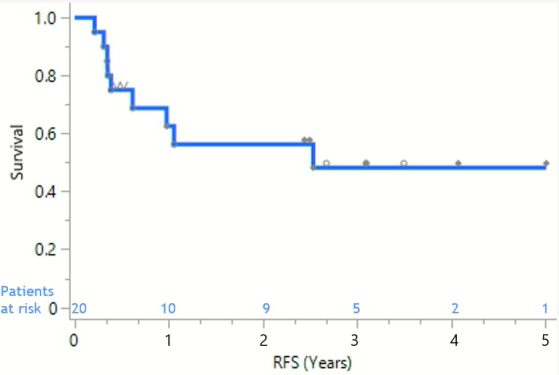
The ADVANCE II trial (n=20) is in the long-term follow-up stage, and as of 24 November 2023, median follow-up was 31.6 months. Median relapse-free survival (RFS) was reported as 30.4 months, and median overall survival (OS) had not yet been reached, with 14/20 patients still alive and 11/14 still in CR. While we caution against direct read across between clinical trials, we note that Onureg demonstrated a median RFS of 7.1 months and a median OS of 14.6 months in its registrational trial. The latest update also confirms that vididencel has a desirable safety profile, with no drug-related serious adverse events reported. Given the results to date, we believe the upcoming combination trial with Onureg marks a logical strategic decision, offering the opportunity to maximise the potential of Mendus’s lead asset.
Vididencel combination trial anticipated in H124
Next in the pipeline for Mendus is the Phase II trial assessing vididencel in combination with Onureg. The company recently announced that this will be a collaboration with the Australasian Leukaemia & Lymphoma Group (ALLG) that will allow Mendus to leverage ALLG’s expertise and extensive clinical trial network. The ALLG AMLM22 CADENCE trial (expected n=140) will be an adaptive, randomised, multi-centre Phase II study consisting of two stages, the first of which will assess safety in c 40 patients, and the second will assess efficacy in c 100 patients. Mendus is on track to start enrolment once approval is received from the central ethical committee of participating hospitals, most likely in early-2024.
Valuation: SEK2.18bn or SEK2.52 per share
We value Mendus at SEK2.18bn or SEK2.52 per share, based on a risk-adjusted net present value (rNPV) calculation for vididencel in AML and ovarian cancer (OC), and ilixadencel in soft tissue sarcomas (STS). With a net cash position of SEK142.5m at end-Q323, we estimate that Mendus has a cash runway into H224.
ADVANCE II data demonstrate durable responses
Updated survival data
The Phase II ADVANCE II monotherapy trial is evaluating vididencel as a maintenance therapy for AML patients, and the data presented at ASH 2023 demonstrate the durable efficacy of the cancer vaccine. The study recruited 20 AML patients, all of whom initially achieved CR following induction chemotherapy, but still possessed measurable residual disease (MRD). The latest update states that, as of the cut-off point of 24 November 2023, the median follow-up for the trial population was 31.6 months (with a range of 6.6–60 months). Median RFS stood at 30.4 months, and median OS had not been reached (Exhibits 1 and 2). 14 out of 20 patients were still alive, and 11 of these were still in CR at the cut-off date. The RFS rate at two years was reported as 56%, and the estimated two-year and three-year OS rates were 74.9% and 64.7%, respectively.
|
Exhibit 1: RFS data from ADVANCE II |
Exhibit 2: OS data from ADVANCE II |
|
|
|
Source: Mendus KOL event (14 December 2023) |
|
Exhibit 1: RFS data from ADVANCE II |
|
|
Source: Mendus KOL event (14 December 2023) |
|
Exhibit 2: OS data from ADVANCE II |
|
|
Source: Mendus KOL event (14 December 2023) |
The current standard of care for AML maintenance is Onureg, and in its registrational trial, the drug showed a median RFS of 7.1 months versus 2.7 months in the placebo arm, and a median OS of 14.6 months versus 10.4 months for placebo. We therefore believe that the ADVANCE II data compare favourably, potentially offering an improvement over the standard of care. However, we caution against direct read across between two separate studies and acknowledge differences in trial designs; the QUAZAR AML-001 trial was a placebo-controlled and double-blind Phase III study involving 463 patients randomised to receive either Onureg or placebo. While the ADVANCE II trial involves a smaller number of patients (n=20), we believe the results to date for vididencel are encouraging, and the forthcoming combination study involving a larger population may strengthen the evidence of vididencel’s clinical utility and maximise its potential if the combination is found to be synergistic.
Immunomonitoring data
Mendus also presented immunomonitoring data at ASH 2023, providing additional evidence to support the mechanism of action of vididencel. Patients were evaluated for vaccine-induced T-cell responses (VIRs) based on blood samples taken before, during and after vididencel treatment. 17 out of the 20 patients (85%) showed at least one VIR, despite being heavily pre-treated. Furthermore, patients that remained in CR showed notably more VIRs than those who had relapsed (Exhibit 3). Importantly, the number of VIRs also showed a clear correlation to MRD response and OS; all patients that had three or more VIRs were still alive as of the data cut-off (Exhibit 4).
|
Exhibit 3: Correlation between number of VIRs with CR results from ADVANCE II |
Exhibit 4: Correlation between number of VIRs with OS and MRD results from ADVANCE II |
|
|
|
Source: Mendus KOL event (14 December 2023) |
|
Exhibit 3: Correlation between number of VIRs with CR results from ADVANCE II |
|
|
Source: Mendus KOL event (14 December 2023) |
|
Exhibit 4: Correlation between number of VIRs with OS and MRD results from ADVANCE II |
|
|
Source: Mendus KOL event (14 December 2023) |
Blood samples were also analysed to assess changes in immune cells induced by Mendus’s lead cancer vaccine. Raised levels of B-cells and dendritic cells were observed post vididencel administration, and higher levels of dendritic cells were found to correlate with improved RFS and OS at the end of treatment. Skin biopsies were also taken from the area where vididencel was administered, and these showed a strong influx of immune cells, also suggesting that vididencel was responsible for inducing an immune response. It was noted that patients with an MRD response (ie, patients that were converted from MRD positive to MRD negative across the duration of the study) demonstrated better RFS and OS; all patients with an MRD response were still alive at the data cut-off.
Outlook
We believe that, collectively, the survival, immunomonitoring and MRD data support both vididencel’s efficacy and mode of action. In addition, this growing data package for vididencel has the potential to support partnership discussions for late-stage clinical development efforts, provided the data continue to be supportive in the planned combination trial with Onureg, which we anticipate will start enrolling patients from early-2024. In the associated KOL event reviewing the Phase II data presented at ASH 2023, management noted that the ALLG AMLM22 CADENCE trial will include both MRD positive and MRD negative patients. We understand that the reason for this is to closely follow the label for Onureg, as both MRD positive and MRD negative patients were included in the registrational QUAZAR AML-001 trial.
We also note that Mendus may aim to expand the CADENCE trial into a pivotal trial, and throughout the duration of the study, management may also consider exploring additional haematological malignancies; we expect management to share an update once decisions have been made on this front. We look forward to following the progression of the combination trial across 2024–25, as we continue to believe that combination treatment regimens will play a key role in future clinical breakthroughs that disrupt standard-of-care treatment protocols in oncology. On the regulatory front, we highlight that the clinical development of vididencel in AML was recently supported by Fast Track designation from the FDA. Vididencel also benefits from Orphan Drug designation in the US and EU.
Recap: Vididencel; manufacturing; AML maintenance
How does vididencel work?
Vididencel is Mendus’s lead cell-based cancer vaccine. It is made from healthy donor cells (allogenic) that are modified to mimic immune cells (such as dendritic cells) by carrying certain cancer markers (tumour-associated antigens), such as: WT1, PRAME, RHAMM and MUC1. These markers are often found to be upregulated in leukaemia, as well as other solid tumours, and can act as flags that the immune system can recognise as belonging to cancer cells and hence may then target for attack. When vididencel is administered to a patient, it works by directly activating the immune cells, indirectly priming the immune system to initiate downstream immune reactions (Exhibit 5). Mendus is exploring vididencel as a potential maintenance therapy in AML, as well as OC in the ongoing Phase I ALISON trial.
|
Exhibit 5: Overview of vididencel's mechanism of action |
|
|
Source: Mendus annual report 2022 |
How is vididencel manufactured?
Vididencel is an off-the-shelf, non-patient-specific cancer vaccine. The cell line-based approach allows for scalable manufacturing, and the product can be frozen, allowing for a simple administration by intradermal injection. This therefore enables efficient patient access compared to patient-specific treatments. In June 2023, Mendus announced a manufacturing agreement with NorthX Biologics to support the production of vididencel for late stages of clinical development, as well as future plans for commercialisation. While Mendus has sufficient inventory for the CADENCE trial, the alliance with NorthX Biologics provides an opportunity to establish a dedicated facility to produce vididencel. We highlight that the manufacturing process for vididencel has been validated by an Advanced Therapy Medicinal Product certificate from the EMA.
What is the current landscape for AML maintenance?
AML is a highly aggressive form of blood cancer. Patients diagnosed with AML first go through induction chemotherapy, which aims to kill as many leukaemia cells in the blood and bone marrow as possible. A 3+7 regimen is typically employed, which involves three days of an anthracycline antibiotic and seven days of cytarabine chemotherapy. Patients that are deemed unfit for chemotherapy are treated with venetoclax and azacitidine. While many patients see initial signs of success with such treatments, relapse rates remain very high for AML patients even after achieving CR. As all AML patients carry the risk of this relapse, maintenance therapies aim to eradicate residual cancerous cells to reduce the probability of this happening.
An important concept in AML maintenance is that of MRD. MRD refers to the presence of cancer cells at levels that conventional testing methods cannot detect, and only more modern sensitive methods can (eg, flow cytometry or PCR-based methods). Therefore, a patient could be classified as in CR while still being MRD positive. As a result, MRD serves a prognostic biomarker, and is hence a key relapse risk factor for AML patients. As exemplified in the registrational QUAZAR AML-001 trial for Onureg, MRD positivity was associated with inferior RFS and OS; this was the case in both the treatment arm and the placebo arm.
There are currently limited treatment options for AML maintenance:
■
Allogenic hematopoietic stem cell transplantation (allo-HSCT) is the only potentially curative treatment option for AML patients who have already undergone induction chemotherapy. However, relapse remains a risk even after HSCT. Further, a significant portion of AML patients are ineligible for allo-HSCT, due to either age, state of health or a lack of a matched transplant donor. Patients that are ineligible for allo-HSCT often have a poor prognosis.
■
Onureg (oral azacitidine) is the current standard of care for AML maintenance. While it is considered a chemotherapeutic agent, it has a more favourable safety profile compared to traditional chemotherapy, making it more suitable for longer-term use.
■
In July 2023, the FDA approved the use of Vanflyta (quizartinib) as a maintenance monotherapy following consolidation chemotherapy in AML patients with the FLT3 mutation. However, we note that as part the registrational clinical trial, while patients took Vanflyta for up to three years, the median time that participants stayed on the drug was just 16 months; most discontinued due to side effects.
With these treatment options, safety remains a key concern, and many patients continue to experience disease progression. Mendus is developing vididencel to address this clinical dilemma, aiming to provide a safe and effective treatment option to prolong RFS (Exhibit 6).
|
Exhibit 6: Vididencel targets the AML maintenance setting |
|
|
Source: Mendus Q323 report |
Financials and valuation
As discussed in our Q323 update note, Mendus reported total operating expenses of SEK26.1m in Q323, down 32.2% y-o-y from SEK38.5m in Q322, which was primarily due to advance payments made for the vididencel clinical programme and lower R&D activity related to the ilixadencel programme. As a result, R&D expenses, accounting for c 64% of total operating expenses, reduced to SEK16.6m in the quarter (vs SEK21.6m in the prior period). General and administrative expenses also took a downturn to SEK9.2m from SEK16.9m in Q322. While no revenue was recorded during the quarter, other operating income (primarily consisting of patent transfer revenue and grants for the previously charged innovation loan) were reported at SEK0.3m in Q323, compared to SEK1.1m in Q223. As a result, the operating loss for the period stood at SEK25.9m (vs SEK37.4m in Q322), which was largely equal to operating expenses. Cash outflow from operating activities increased to SEK101.9m, from SEK27.8m in Q322, due to an SEK88.6m prepaid expense incurred by Mendus for the vididencel programme.
At end-Q323, Mendus reported a net cash position of SEK142.5m, which was supported by the SEK317m (gross) fundraise in August 2023 through a combination of a rights issue (SEK227m) and a directed issue to Flerie Invest (SEK90m). Additionally, the company paid off the SEK50m shareholder loan to Van Herk Investments via a debt-to-equity conversion as part of the financing transaction. We expect the current cash position to provide a cash runway into H224. By end-FY24, we have assumed a licensing deal for vididencel. However, in the case of a delay in securing the outlicensing deal and incorporating the possibility of Mendus conducting further trials on its own, we anticipate the need to raise a further SEK250m through FY24–26 (SEK50m in FY24, SEK100m in FY25 and SEK100m in FY26).
We value Mendus at SEK2.18bn or SEK2.52 per share. The valuation is based on a sum-of-the-parts calculation and includes an rNPV calculation for vididencel in AML and OC, and ilixadencel in STS (our model assumes gastrointestinal stromal tumours (GIST) as a specific indication based on Mendus’s initial data). Our long-term assumptions remained unchanged.
Exhibit 7: Mendus rNPV valuation
Product |
Indication |
Launch |
Peak sales |
NPV |
Probability of success |
rNPV |
NPV/share |
Vididencel (DCP-001) |
AML |
2027 |
680 |
3,528 |
20.0% |
1,009 |
1.17 |
Vididencel (DCP-001) |
OC |
2031 |
760 |
2,244 |
15.0% |
774 |
0.90 |
Ilixadencel |
GIST |
2029 |
230 |
1,669 |
15.0% |
250 |
0.29 |
Net cash at 30 September 2023 |
142.5 |
100.0% |
142.5 |
0.17 |
|||
Valuation |
|
|
|
7,583 |
|
2,176 |
2.52 |
Source: Edison Investment Research
Exhibit 8: Financial summary
Accounts: IFRS; year end 31 December; SEK’000s |
2021 |
2022 |
2023e |
2024e |
INCOME STATEMENT |
|
|
|
|
Total revenue |
31 |
3,375 |
817 |
0 |
Cost of sales |
0 |
0 |
0 |
0 |
Gross profit |
31 |
3,375 |
817 |
0 |
SG&A (expenses) |
(41,639) |
(44,028) |
(33,021) |
(34,012) |
R&D costs |
(85,796) |
(87,049) |
(82,674) |
(84,788) |
Other expenses |
(845) |
(1,134) |
(830) |
0 |
Exceptionals and adjustments |
0 |
0 |
0 |
0 |
Reported EBITDA |
(128,249) |
(128,836) |
(115,708) |
(118,800) |
Depreciation and amortisation |
(1,851) |
(4,848) |
(3,989) |
(4,721) |
Reported Operating Profit/(loss) |
(130,100) |
(133,684) |
(119,696) |
(123,521) |
Finance income/(expense) |
(3,310) |
(5,101) |
22,546 |
(934) |
Exceptionals and adjustments |
0 |
0 |
0 |
0 |
Reported PBT |
(133,410) |
(138,785) |
(97,150) |
(124,455) |
Adjusted PBT |
(133,410) |
(138,785) |
(97,150) |
(124,455) |
Income tax expense |
0 |
0 |
0 |
0 |
Reported net income |
(133,410) |
(138,785) |
(97,150) |
(124,455) |
Basic average number of shares, m |
184.0 |
199.4 |
531.3 |
863.1 |
Basic EPS (SEK) |
(0.73) |
(0.70) |
(0.18) |
(0.14) |
Diluted EPS (SEK) |
(0.73) |
(0.70) |
(0.18) |
(0.14) |
BALANCE SHEET |
|
|
|
|
Property, plant and equipment |
2,109 |
13,899 |
13,910 |
13,269 |
Intangible assets |
532,441 |
532,441 |
532,441 |
532,441 |
Right of use assets |
361 |
26,216 |
26,216 |
26,216 |
Other non-current assets |
843 |
618 |
618 |
618 |
Total non-current assets |
535,754 |
573,174 |
573,185 |
572,544 |
Cash and equivalents |
155,313 |
41,851 |
103,339 |
29,524 |
Prepaid expenses and accrued income |
10,214 |
1,919 |
90,529 |
90,529 |
Other current assets |
19,702 |
3,442 |
3,442 |
3,442 |
Total current assets |
185,229 |
47,212 |
197,310 |
123,495 |
Non-current loans and borrowings |
36,666 |
22,845 |
850 |
50,850 |
Non-current lease liabilities |
0 |
23,706 |
23,706 |
23,706 |
Total non-current liabilities |
36,666 |
46,551 |
24,556 |
74,556 |
Trade and other payables |
11,610 |
7,411 |
7,411 |
7,411 |
Current loans and borrowings |
0 |
29,198 |
0 |
0 |
Short-term lease liabilities |
309 |
2,413 |
2,413 |
2,413 |
Other current liabilities |
15,657 |
20,375 |
20,375 |
20,375 |
Total current liabilities |
27,576 |
59,397 |
30,199 |
30,199 |
Equity attributable to company |
656,741 |
514,438 |
715,740 |
591,284 |
CASHFLOW STATEMENT |
|
|
|
|
Operating Profit/(loss) |
(130,100) |
(133,684) |
(119,696) |
(123,521) |
Depreciation and amortisation |
1,851 |
4,848 |
3,989 |
4,721 |
Other adjustments |
447 |
(6,390) |
0 |
0 |
Movements in working capital |
(10,089) |
27,030 |
(88,610) |
0 |
Interest paid / received |
(140) |
(1,135) |
22,546 |
(934) |
Income taxes paid |
0 |
0 |
0 |
0 |
Cash from operations (CFO) |
(138,031) |
(109,331) |
(181,771) |
(119,734) |
Capex |
(1,361) |
(12,324) |
(4,000) |
(4,080) |
Acquisitions & disposals net |
0 |
0 |
0 |
0 |
Other investing activities |
0 |
0 |
0 |
0 |
Cash used in investing activities (CFIA) |
(1,361) |
(12,324) |
(4,000) |
(4,080) |
Net proceeds from issue of shares |
128,951 |
0 |
294,115 |
0 |
Movements in debt |
(1,922) |
8,194 |
(46,856) |
50,000 |
Other financing activities |
0 |
0 |
0 |
0 |
Cash flow from financing activities |
127,029 |
8,194 |
247,259 |
50,000 |
Increase/(decrease) in cash and equivalents |
(12,363) |
(113,461) |
61,488 |
(73,814) |
Cash and equivalents at beginning of period |
167,644 |
155,316 |
41,853 |
103,341 |
Cash and equivalents at end of period |
155,316 |
41,853 |
103,341 |
29,526 |
Net (debt) cash |
118,647 |
(10,192) |
102,489 |
(21,326) |
Source: Company reports, Edison Investment Research
|
|
Research: Consumer
musicMagpie’s (MMAG’s) FY23 trading statement to 30 November 2023 demonstrates good progress made in the second half, which was helped by record Black Friday sales, following a challenging H1. Management’s focus on cost control and higher-quality rental customers resulted in an improvement in profitability, with a 150bp expansion in gross margin and 15.4% EBITDA growth. This enabled a reduction in net debt and a lower net debt/EBITDA leverage at 1.7x (H123: 2.0x). MMAG remains in the offer period until 18 December.