PharmaMar
Written by
PharmaMar |
Japan licence deal highlights PM1183 potential |
First PM1183 licence deal |
Pharma & biotech |
25 January 2017 |
Share price performance
Business description
Next events
Analysts
|
||||||||||||||||||||||||||||||||||||||||||||||||||||||||||
PharmaMar has capped off a strong performance in 2016 by signing a licence deal with Chugai for lurbinectedin (PM1183) in Japan, including €30m upfront and over €70m in potential milestones. The outlook for 2017 is similarly promising, including a potential EMA approval decision for Aplidin in multiple myeloma, Phase III data for lurbinectedin in ovarian cancer, and potential initiation of a pivotal trial of lurbinectedin in a third indication (BRCA-associated breast cancer). We have substantially revised our valuation assumptions, but the end result is that our valuation is little changed at €1.01bn (€4.55/share).
Year end |
Revenue |
PBT* |
EPS* |
DPS |
P/E |
Yield |
12/14 |
149.7 |
16.3 |
6.8 |
0.0 |
42.6 |
N/A |
12/15 |
162.0 |
6.5 |
3.2 |
0.0 |
90.6 |
N/A |
12/16e |
169.5 |
(13.4) |
(6.7) |
0.0 |
N/A |
N/A |
12/17e |
180.1 |
45.1 |
19.5 |
0.0 |
14.9 |
N/A |
Note: *PBT and EPS are normalised, excluding amortisation of acquired intangibles.
Licence deal for lurbinectedin in Japan
The Chugai deal for Japanese rights to lurbinectedin is a positive development for PharmaMar in a territory where we had not previously assigned any value for lurbinectedin in our forecasts. It suggests PharmaMar could negotiate substantial upfront and milestone payments for a licence deal in the larger US market.
Aplidin on track for approval in Europe in H217
PharmaMar has filed for approval for Aplidin in myeloma in Europe, which could lead to approval in H217. In Phase III Aplidin reduced the risk of myeloma progression or death by 35%. A pivotal trial in the rare angioimmunoblastic T-cell lymphoma, which was initiated in June 2016, could support an application for US approval, potentially around 2020.
Lurbinectedin ovarian Phase III data likely end-2017
The lurbinectedin CORAIL Phase III resistant ovarian cancer trial completed recruitment in October 2016, with results likely in H217. The ATLANTIS Phase III in small cell lung cancer (SCLC) was initiated in August 2016. Following positive results in a Phase II in metastatic breast cancer (including a 61% response rate in BRCA2-associated breast cancer, presented at ESMO 2016), we expect a pivotal trial to be initiated in this indication in 2017. These trials are supported by high response rates in previous studies, so we are optimistic about the trial outcomes.
Valuation: Fine-tuned to €1,012m (€4.55/share)
Our valuation falls slightly to €1.01bn (vs €1.02bn), or €4.55/share (vs €4.58/share). Uplift from the Chugai licence deal and a more than threefold increase in our peak SCLC sales forecast for lurbinectedin has been offset by lower peak sales forecasts for Yondelis and for lurbinectedin in ovarian cancer. We highlight that our valuation assumes US rights to lurbinectedin will be partnered. Self-commercialisation of lurbinectedin in the US could lift our valuation by 14% to €1,147m (€5.16/share).
Investment summary
Company description: A marine biotech core focused on cancer
PharmaMar is a Madrid-based company with two business divisions: biopharmaceuticals (based in the Madrid region) and consumer chemicals (based in Galicia). The head company, PharmaMar, is primarily focused on the development and commercialisation of marine-derived oncology drugs, including the marketed anti-cancer drug Yondelis. In addition, it has four wholly owned independent operating subsidiaries (Exhibit 1), with non-core operations in consumer chemicals, molecular diagnostics and RNAi technology. In 2015 the company restructured via a reverse merger, whereby PharmaMar, which was previously a subsidiary, absorbed the holding company Zeltia.
Exhibit 1: PharmaMar SA subsidiaries and main business lines
Division |
Company |
Primary focus (founded) |
Key product(s) |
Biopharma |
PharmaMar (head company) |
Discovery and development of novel marine-derived oncology drugs (1986). |
Yondelis: approved for soft tissue sarcoma (EU, US, Japan + 42 additional countries) and relapsed ovarian cancer (EU, 31 additional countries + Brazil); ovarian cancer Phase III underway in US. Three other priority compounds in clinical development. |
Genomica |
Molecular diagnostics (1990). |
Development of in vitro molecular diagnostics for infectious diseases, oncology and personalised medicine for partners. DNA profiling/genetic fingerprinting. |
|
Sylentis |
Discovery and development of RNA interference drugs (2006). |
Ophthalmology: two ongoing Phase II programmes for glaucoma (US Phase IIb to start in June) and ocular discomfort associated with dry eye syndrome. |
|
Consumer chemicals |
Zelnova |
Marketing/manufacture of domestic and industrial chemicals (1991 in present form). |
Insecticides, air fresheners, cleaners and disinfectants. Brands include Casa & Jardín, Kill-Paff, ZZ Paff, Coopermatic, Baldosinin and Hechicera. |
Xylazel |
Marketing/manufacture of wood/metal paint and varnish (1975). |
Xylazel (wood protectors) and Oxirite (metal protectors). |
Source: Edison Investment Research, PharmaMar data
Valuation: €1.01bnor €4.55/share
Our valuation of €1.01bn, or €4.55/share, is based on a sum-of-the-parts DCF to 2028. We use an rNPV method to discount future cash flows for the biopharma business (12.5% WACC) and have applied a standard DCF model for the chemicals division (7.5% WACC). Cash flows are taxed at a 25% corporate tax rate from 2020, tapering up from a lower rate to reflect accumulated tax losses.
Sensitivities: Yondelis insulates downside and drives upside
PharmaMar’s biopharma division is subject to typical sensitivities including potential clinical/regulatory failure/delay, manufacturing and commercialisation risks and reliance on partners. The chemical business is predominantly exposed to economic factors. Specific sensitivities for the core oncology business relate to Yondelis (sales trajectory and ovarian cancer trial outcome), clinical data and deal progress (for Aplidin and lurbinectedin). PharmaMar’s sample library, technology platforms and discovery capabilities could represent unappreciated upside.
Financials: Well-funded to support pipeline development
Group net sales for the nine months to September 2016 increased 4.7% on the previous corresponding period to €131m. Total Yondelis sales rose 2.8% to €67m with Yondelis commercial sales in territories where PharmaMar leads commercialisation rising by 9.7%. The company had €33.6m cash and financial assets at the end of September 2016, which, when combined with the €30m Chugai upfront receivable in January 2017 and anticipated revenue growth flowing from recent Yondelis launches in the US and Japan, puts it in a robust financial position to fund its clinical trial programme. In our forecasts we assume that the Chugai upfront will be booked as revenue in 2017, but a proportion of it may be treated as deferred revenue and brought to account in future years.
Outlook: Aplidin approval decision and lurbinectedin ovarian Phase III results key milestones for 2017
We expect PharmaMar’s profitability to accelerate from 2017 onwards, driven by its leading, marine-derived oncology therapeutics business. Since the first EMA approval of its marketed drug Yondelis, in 2007, PharmaMar has been a fully integrated speciality pharmaceutical company. It uses the sea as a source of first-in-class cancer drugs and has a diverse library of 200k marine samples. It has active discovery and preclinical programmes (with the aim of regularly advancing a new product to the clinic), a prioritised clinical development programme of three marine-derived synthetic compounds targeting multiple cancer indications, and a European sales infrastructure for Yondelis.
The recent launches for Yondelis for soft tissue sarcoma (STS) in Japan (partnered with Taiho Pharmaceuticals) and in the US (partnered with Janssen) will significantly boost PharmaMar’s revenue through royalty receipts and sales of raw material to partners. Edison forecasts Yondelis royalty revenue to grow from €5m in 2016 to €23m in 2020.
Newsflow from the two most advanced pipeline programmes, including Aplidin and lurbinectedin, a second-generation product related to Yondelis, represents further important inflection points over the next years. Exhibit 2 summarises these upcoming catalysts.
Exhibit 2: Pipeline newsflow
Product |
Indication |
Next news |
Timing |
Yondelis |
Ovarian cancer |
Read-out of 670-patient US Phase III trial; preceded by event-driven interim OS analysis (308 deaths). |
H218 |
Lurbinectedin |
Ovarian cancer |
Results of Phase III in platinum-resistant ovarian cancer vs investigator choice. |
H217 |
Breast cancer BRCA+ |
Initiation of pivotal trial |
Undisclosed |
|
SCLC |
Complete recruitment of 600-patient ATLANTIS Phase III trial in second-line SCLC |
Undisclosed |
|
All |
Ex-Europe and Japan partnering deal |
Undisclosed |
|
Aplidin |
Multiple myeloma |
EMA approval decision (potential Chugai milestone) |
H217 |
Complete recruitment in Phase II in myeloma refractory to both bortezomib and lenalidomide |
Undisclosed |
||
Lymphoma |
Complete recruitment US pivotal Phase II trial in angioimmunoblastic T-cell lymphoma |
Undisclosed |
|
US partnering deal |
Undisclosed |
Source: Edison Investment Research, PharmaMar data. Note: OS = overall survival, SCLC = small cell lung cancer, NSCLC = non-small cell lung cancer.
The Aplidin EMA approval decision and the readout of the Phase III relapsed/refractory ovarian cancer trial of lurbinectedin are major near-term value drivers that could catalyse lucrative licensing deals or development/commercialisation partnerships for non-European territories. Assuming both drugs reach the market, PharmaMar intends to sell these through its existing European sales infrastructure, in the regions where it retains rights (Aplidin is licensed to Chugai for eight EU territories), with only modest future expansion.
Chugai licence deal brings first lurbinectedin payday
PharmaMar signed a licence and commercialisation agreement with Chugai Pharmaceutical in December 2016 for lurbinectedin in Japan. This is a positive development for PharmaMar in a territory where we had not previously assigned any value for lurbinectedin in our forecasts.
Terms include an upfront payment of €30m (expected to be paid in January) plus double-digit tiered royalties. PharmaMar will also be eligible to receive development and sales milestones that could potentially total over €70m, taking total potential receipts (excluding royalties) to over €100m.
PharmaMar will be responsible for the clinical development for the first two indications of lurbinectedin (platinum-resistant ovarian cancer and SCLC) in Japan, while Chugai will be responsible for regulatory filings and will have the right to conduct clinical development in Japan for additional indications and may contribute to global development.
In order to gain approval in Japan, PharmaMar will need to perform bridging studies in Japanese patients to determine whether the recommended dose is the same in Japanese patients as it is in the largely Caucasian patient population enrolled in PharmaMar’s pivotal trials. PharmaMar is already conducting a Phase I study of lurbinectedin as a single-agent in solid tumours in Japan. This study aims to identify the recommended dose of lurbinectedin in Japanese patients, to evaluate the safety profile and pharmacokinetic characteristics of lurbinectedin in Japanese patients compared to Caucasians. A separate Phase I study of the combination of lurbinectedin plus doxorubicin in Japanese patients will be required, as this drug combination is being tested in PharmaMar’s Phase III SCLC trial.
Following the completion of the Phase I studies PharmaMar will meet with the PMDA (Japanese regulator) to determine what Phase II/III ethno-bridging studies will be required before applying for approval in Japan. PharmaMar has commented that if the recommended dose is the same in Japanese and Caucasian patients then the approval in Japan could be based on the current US/EU pivotal studies.
The likely timing of filing in Japan will not be known until after the Phase I studies have been completed and the result discussed with the PMDA. In our forecasts we conservatively assume that approvals are gained in Japan two years later than the approvals for the equivalent indication in the US and Europe.
PharmaMar will be eligible to receive development milestones for events including study initiation, achievement of results and regulatory filings. No details have been provided on the structure of the potential milestone payments – for modelling purposes we assume half of the potential milestone payments (ie €35m) would be payable based on development progress, with the other half being sales-based milestones.
Chugai Pharmaceutical is a member of the Roche group of companies. Previously, in July 2014 its subsidiary Chugai Pharma Europe entered an agreement with PharmaMar for the promotion of Aplidin for the treatment of multiple myeloma in eight European countries.
Lurbinectedin: Pivotal studies in multiple indications
Lurbinectedin is structurally related to PharmaMar’s drug Yondelis, which is marketed for soft tissue sarcoma (STS) and platinum-sensitive ovarian cancer. However, lurbinectedin is being developed in different indications to Yondelis, including platinum-resistant ovarian cancer, SCLC and breast cancer. The compound has been optimised to improve the pharmacokinetic profile, such that lurbinectedin can be given at four times the tolerated dose level of Yondelis and offers administration advantages. lurbinectedin can be administered in a one-hour infusion using a peripheral intravenous catheter, compared to a 24-hour infusion with Yondelis via a central catheter.
Data are expected in H217 from a Phase III trial of lurbinectedin in resistant ovarian cancer (CORAIL), which completed recruitment in October 2016. The primary endpoint of the 443-patient trial is progression-free survival (PFS). A Phase III trial in SCLC (ATLANTIS) was initiated in August 2016, and we expect a pivotal trial in BRCA1/2 mutated breast cancer to commence in 2017.
Exhibit 3: PM1183 (lurbinectedin) development status
Programme |
Indication |
Stage |
Notes |
PM1183 (lurbinectedin) |
Platinum-resistant/ refractory ovarian cancer (PRROC) |
Phase III |
420-patient monotherapy CORAIL trial in platinum-resistant ovarian cancer commenced recruitment in June 2015. The trial is comparing PM1183 vs investigators’ choice of topotecan or pegylated liposomal doxorubicin (PLD). Recruitment completed in October 2016. In a Phase IIb trial PFS was 5.7 months for PM1183 vs 1.7 months for topotecan (p=0.0005). Orphan drug status. |
Small cell lung cancer (SCLC) |
Phase III |
600-patient ATLANTIS trial as second-line therapy in combination with doxorubicin in platinum-resistant SCLC. Recruitment commenced August 2016, with final results due in 2019. The trial will compare PM1183 plus doxorubicin against either topotecan or a combination of cyclophosphamide, doxorubicin and vincristine. In a Phase I trial in 21 SCLC patients, confirmed ORR was 67%, including 10% CR. |
|
BRCA1/2-associated breast cancer (BC) |
Pivotal trial pending |
117-patient two-part Phase IIb trial in BRCA1/2-associated or unselected metastatic BC ongoing. Results in 54 patients with BRCA1/2-associated BC were reported in October 2016: ORR 41% (22/54)); ORR was 61% in the BRCA2 subgroup and 26% in patients with mutations in BRCA1; PFS 4.1 months. |
|
Non-small cell lung cancer (NSCLC) |
Phase II |
69 pts recruited a three-arm Phase II of PM1183 ± gemcitabine vs docetaxel in second-line unresectable NSCLC. Primary endpoint: PFS at four months. Secondary endpoints: ORR, PFS/OS, histology. Phase I study + gemcitabine resulted in 1 CR, 4 PR and 7 SD in 19 evaluable NSCLC patients. We do not expect the company to pursue further development in NSCLC in the near term due to the number of drugs in development for this indication. |
|
“Basket” trial in advanced solid tumours |
Phase II |
225-patient Phase II of PM1183 in patients with advanced solid tumours, including SCLC, head and neck cancer, neuroendocrine tumours, biliary tract tumours, endometrial cancer, breast cancer, germ cell tumours and Ewing’s family of tumours. Primary endpoint: ORR. |
|
PM1183 drug combination trials |
Phase I |
Enrolment has been completed in Phase I trials of PM1183 in combination with doxorubicin, cisplatin, capecitabine and paclitaxel with or without bevacizumab. PM1183 in combination with both paclitaxel and paclitaxel plus bevacizumab produced promising preliminary results in a range of breast cancer types, and options for further development in this indication are being assessed. |
Source: Edison Investment Research, clinicaltrials.gov. Note: PFS = progression-free survival; IDMC = independent data monitoring committee; PTCL = peripheral T-cell lymphoma; ORR = overall response rate; CR = complete response; PR = partial response; SD = stable disease.
Positive Phase II in BRCA mutated breast cancer expected to lead to pivotal trial
In October 2016 PharmaMar announced positive results from its Phase II study of lurbinectedin in 54 patients with BRCA1/2-associated metastatic breast cancer who had undergone no more than three prior chemotherapy regimens.
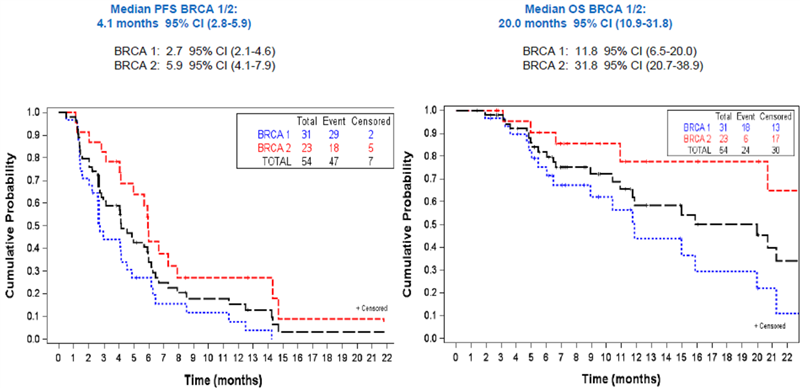
A significant reduction in tumour size was reported in 22 of the 54 patients (ORR 41%); the primary endpoint of at least 17 responses was comfortably met. The ORR was 61% in the BRCA2 subgroup and 26% in patients with mutations in BRCA1. PFS was 4.1 months, median duration of response was 6.7 months and clinical benefit (tumour response or stable disease for at least three months) was observed in 61% of patients. Over the course of the trial, the initial dose of 7mg IV every three weeks was adjusted to 3.5mg/m2 every three weeks, which improved tolerability while maintaining efficacy.
The investigators concluded that lurbinectedin is active in BRCA-associated breast cancer independently of the prior treatment with platinum drugs. Exhibit 4 shows that response rates were highest in patients who had not undergone prior platinum therapy, who carried BRCA2 mutations, were hormone receptor positive or who had undergone fewer prior lines of chemotherapy. However, a meaningful proportion of patients in each of the less favourable subgroups also responded to treatment with lurbinectedin, including those with triple-negative breast cancer (TNBC).
Exhibit 5 shows that overall survival (OS) in the Phase II trial was substantially higher in patients carrying BRCA2 mutations than those with BRCA1 mutations (median OS 31.8 vs 11.8 months).
PharmaMar has stated that it intends to continue with the clinical development of lurbinectedin in BRCA-associated breast cancer, and in an investor conference call on 4 January 2017 indicated that this is most likely to be in BRCA2 subgroup, which experienced the highest response rates in the Phase II study. We anticipate that a pivotal study in this patient population could be initiated in 2017. We have increased our estimate of the likelihood of success in this indication from 15% to 45% in light of the positive Phase II results. We anticipate that we would further increase the likelihood when the pivotal trial is initiated.
|
Exhibit 4: Response rates in BRCA1/2-associated breast cancer sub-populations |
|
|
|
|
Source: PharmaMar corporate presentation October 2016 |
|
|
Exhibit 5: Progression free survival and overall survival in BRCA1/2-associated breast cancer |
|
|
|
|
Source: PharmaMar corporate presentation October 2016 |
There are varying estimates of the proportion of breast cancer patients who carry inherited mutations in the BRCA1 or BRCA2 genes. Some articles suggest that mutations in the BRCA1/2 genes account for 5-10% of cases of breast cancer overall.1,2 However, a number of those studies were in populations enriched for patients with a family history of breast cancer or who had breast cancer diagnosed at an early age, both of which would increase the likelihood of BRCA mutation.
Source: Balmaña J, Díez O, Castiglione M. BRCA in breast cancer: ESMO Clinical Recommendations. Annals of Oncology 2009;20 (Supplement 4): iv19–iv20
A meta-analysis by Nelson et al (2013)3 reported a prevalence of 1.8% for BRCA1 and 1.3% for BRCA2 in breast cancer patients (ie 3.1% for BRCA1/2 combined). That analysis was conducted as part of a systematic review of BRCA testing prepared for the US Agency for Healthcare Research and Quality.
Source: www.ncbi.nlm.nih.gov/books/NBK179201/pdf/Bookshelf_NBK179201.pdf (page 23)
A study by Neuhausen et al (2009) reported BRCA1/2 mutation frequencies from several large breast cancer family registries. In over 3,600 families from three population-based family registries the frequency of mutations was 4.0% for BRCA1 and 3.7% for BRCA2 (total 7.7%). However, in two of these registries there was over-sampling based on younger age at diagnosis and cancer family history, both of which would be expected to increase the frequency of BRCA mutations. In ~1,600 families where there was no family history of breast cancer the frequency of mutations was 2.4% for BRCA1 and 2.2% for BRCA2 (total 4.6%) – we believe that this figure is a better indicator of the frequency of BRCA1/2 mutations in the overall population.
In our forecasts we assume that 2% of breast cancer patients carry BRCA2 mutations, a figure that is between the estimates of Nelson et al and the Neuhausen families where there was no family history of breast cancer. With 650,000 new cases of breast cancer each year in the US, EU and Japan, we estimate that there would be 13,000 cases of BRCA2-associated breast cancer each year in these markets. Although this is a relative small patient population, we would expect a high market penetration for a drug that is specifically targeted to the treatment of this patient group.
Phase III underway in small cell lung cancer
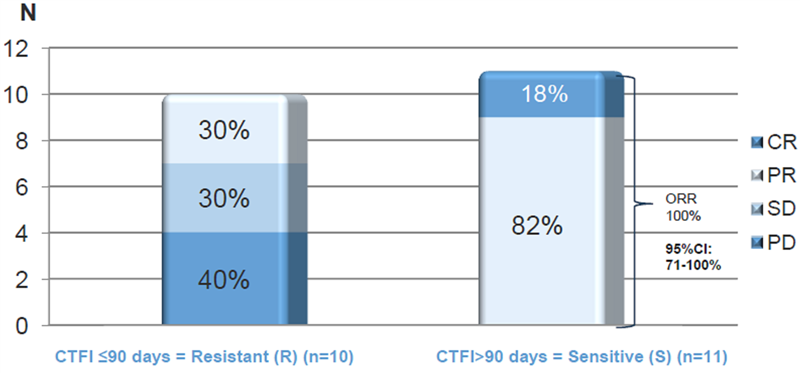
PharmaMar initiated a second pivotal study of lurbinectedin in August, which is recruiting patients with small cell lung cancer (SCLC). The ATLANTIS Phase III study builds on the impressive efficacy seen in a SCLC expansion cohort in a Phase Ib study. Preliminary results from the Phase Ib study showed that 67% of SCLC patients responded to lurbinectedin plus doxorubicin (including 10% complete responses), compared to response rates of 20-25% typically seen with standard-of-care drug topotecan. In patients who initially responded to first-line chemotherapy before relapse, the response rate was 100% (Exhibits 6 and 7).
ATLANTIS is a multicentre, open-label, randomised Phase III trial in 600 patients with relapsed (second-line) SCLC following platinum-containing therapy. The primary endpoint is progression free survival (PFS) comparing patients treated with the combination of lurbinectedin and doxorubicin to the control arm where patients are treated with either topotecan or the CAV regimen, a combination of cyclophosphamide, adriamycin (the brand name for doxorubicin) and vincristine.
|
Exhibit 6: SCLC – maximum tumour size variation according to response to first-line chemotherapy |
Exhibit 7: SCLC – best confirmed response according to response to first-line chemotherapy |
|
|
|
Source: PharmaMar corporate presentation. Note: Sensitive = chemotherapy-free interval (CTFI) > 90 days after first line therapy; Resistant = CTFI ≤ 90 days; PD = progressive disease; PR = partial response. |
Source: PharmaMar. Note: CR = complete response; CTFI = chemotherapy-free interval; PD = progressive disease; PR = partial response; SD = stable disease. |
|
Exhibit 6: SCLC – maximum tumour size variation according to response to first-line chemotherapy |
|
|
Source: PharmaMar corporate presentation. Note: Sensitive = chemotherapy-free interval (CTFI) > 90 days after first line therapy; Resistant = CTFI ≤ 90 days; PD = progressive disease; PR = partial response. |
|
Exhibit 7: SCLC – best confirmed response according to response to first-line chemotherapy |
|
|
Source: PharmaMar. Note: CR = complete response; CTFI = chemotherapy-free interval; PD = progressive disease; PR = partial response; SD = stable disease. |
SCLC patients constitute 10-15% of total lung cancer patients, representing ~80,000 cases in the US, EU and Japan in 2016 (assuming SCLC comprises 12.5% of all lung cancers). They respond well to first-line treatment, but almost always relapse, with treatment options then largely palliative. About 10% of the total population of SCLC patients remains disease free two years after the start of therapy. The overall survival at five years is 5-10%, reflecting a clear medical need for improved treatment.
Lurbinectedin ovarian cancer Phase III data expected H217
The CORAIL Phase III trial of lurbinectedin in platinum resistant ovarian cancer completed recruitment in October, three months ahead of schedule. Four hundred and forty-three patients were recruited from over 100 hospitals in Europe and the US. The study had previously passed an interim futility analysis on the first 210 patients in August 2016. The fact that the study completed recruitment ahead of schedule suggests that there was considerable interest among investigators in the use of lurbinectedin in this patient population.
The CORAIL study is comparing lurbinectedin as a monotherapy in platinum-resistant ovarian cancer to a control arm with topotecan or liposomal doxorubicin. The primary endpoint is progression-free survival (PFS). This pivotal study follows encouraging PFS rates in a Phase IIb trial (Exhibit 3, above).
European approval decision for Aplidin likely in H217
In September 2016 PharmaMar filed for approval to market Aplidin to treat relapsed/refractory multiple myeloma in Europe. The filing could potentially lead to approval in H217 and market launch in late 2017 or early 2018. Aplidin has orphan drug designation in Europe and the US.
In March 2016 the company announced positive top-line results from the 255-patient ADMYRE Phase III trial of Aplidin (plitidepsin) in relapsed/refractory multiple myeloma. The trial met its primary endpoint, showing a statistically significant 35% reduction in the risk of disease progression or death.
A Phase I trial of Aplidin in combination with bortezomib and dexamethasone in relapsed/refractory multiple myeloma continues to recruit patients in the expansion phase, while a Phase II trial of the same drug combination in myeloma patients refractory to both bortezomib and lenalidomide is also underway.
Multiple myeloma accounts for 10% of all haematological malignancies. It is caused by malignant plasma cells that multiply very rapidly. In 2015, 26,850 new cases were diagnosed in the US, and about 11,200 people died of this disease. In Europe, the incidence is 4.5-6.0 out of every 100,000 people each year.
Separately, in June 2016 the company initiated a pivotal Phase II trial of Aplidin for angioimmunoblastic T-cell lymphoma. We expect the initial approval for Aplidin in the US to be for this ultra-orphan indication, which accounts for 2% of non-Hodgkin’s lymphomas. The single-arm, open-label trial will recruit 60 patients from ~25 sites in Europe and the US. Given the ultra-orphan nature of the disease, we conservatively allow three years for the trial to complete and assume a US launch for Aplidin in H121. We expect Aplidin to reach global peak sales of US$300m, including US$115m in Europe.
PharmaMar has an Aplidin co-promotion agreement with Chugai Pharma Europe covering certain European countries (France, Germany, the UK, Benelux, Ireland and Austria). PharmaMar earned a €4m milestone from Chugai for filing the Marketing Authorisation Application to the European Medicines Agency.
PharmaMar has also licensed marketing rights to Specialised Therapeutics Australia covering Australia, New Zealand and certain Asian countries, and to TTY Biopharm in Taiwan. It retains commercialisation rights in several key European territories, including Spain, Italy and Northern Europe, where we assume it will market Aplidin using its existing salesforce. PharmaMar also retains production rights and will supply Aplidin to its partners for sale in the licensed regions. There is potential for further licensing news flow with Aplidin as the regulatory dossier for European approval will also be valid for more than 40 additional ex-EU countries.
Significant growth in Yondelis royalties expected
Yondelis (trabectedin) is a synthetic, marine-derived, intravenous anti-tumour drug originally isolated from the colonial tunicate Ecteinascidia turbinate. It has a novel mechanism of action, binding to the minor groove of DNA and interfering with cell division, gene transcription and DNA repair mechanisms causing apoptosis. It is approved in more than 80 countries for advanced soft tissue sarcoma (STS) after failure of first-line treatment or in patients who are unsuitable for the indicated first-line regimen (doxorubicin or ifosfamide), and for relapsed platinum-sensitive ovarian cancer (OC) in combination with pegylated liposomal doxorubicin4 (PLD, Doxil [US]/Caelyx [Europe], Janssen). Its first approval in the EU was for STS in 2007, with EMA approval in OC following in 2009, and the US and Japan for STS in 2015.
This was developed to prevent doxorubicin accumulation in the skin as the original formulation causes hand-foot syndrome (palmar plantar erythrodysesthesia).
In the 577-patient trial Phase III trial, which supported the FDA approval of Yondelis in STS, treatment with Yondelis reduced the risk of disease progression or death (PFS) by 45% compared to dacarbazine (hazard ratio [HR] 0.55, p<0.0001). Median progression-free survival (PFS) was 4.2 months for Yondelis-treated patients vs 1.5 months for dacarbazine.
Yondelis is sold by PharmaMar in Europe and is subject to partnerships with Janssen and Taiho Pharmaceuticals in the US/ROW and Japan, respectively. We expect the recent launches of Yondelis in the US and Japan will be key drivers of earnings growth over the next few years. We forecast peak sales in Japan of €34 in STS (reduced from €130m after correcting a modelling error) and assume a 15% royalty rate. In the US we forecast peak sales of US$130m in STS and assume an 11% royalty on initial sales, rising to 15% in 2020. PharmaMar will also earn a margin on sales of Yondelis raw material to Janssen. Royalty income on sales of Yondelis was €4.2m for the first nine months of 2016, which we expect to grow to €23m by 2020.
Janssen is conducting an ongoing pivotal Phase III clinical trial of Yondelis in relapsed platinum-sensitive ovarian cancer. The 670-patient study is not expected to render final results until late 2018. This trial will form the basis of potential marketing applications in the US and other countries where Yondelis is not yet approved for ovarian cancer.
PM184
Recruitment is progressing on schedule in the ongoing Phase II trial of PM184 in hormone-receptor positive advanced breast cancer, which is being conducted in Spain and the US. Recruitment is also ongoing in a Phase I trial of PM184 in combination with gemcitabine in solid tumours.
Discovery platform and IP
Exploring the biodiversity of the sea as a source of potential new anti-tumour compounds with differentiated mechanisms means PharmaMar’s drug discovery process is unique. Through annual diving expeditions around the globe, the company has built an extensive library of c 200,000 marine samples that form the basis of its cancer research activities. Exhibit 8 outlines the key activities in the discovery process; once a lead candidate is selected, it enters standard preclinical and clinical development. PharmaMar’s synthetic chemistry capabilities have three major benefits: ensuring drug supply does not rely on natural sources; potential for discovery and synthesis of more potent derivatives; and a strong IP position and barriers to entry, particularly as the underlying molecules are complex (eg Yondelis has an 18-step manufacturing process).
Exhibit 8: Key steps in the PharmaMar discovery process
Stage |
Aim |
Process |
Expeditions |
Discovery of new marine-derived compounds with anti-tumour properties and new mechanisms of action |
Diving expeditions into different regions to collect samples of marine invertebrates (sponges, molluscs, crustaceans) and algae, which form the basis of its extensive library of 150,000 marine samples (both macro-organisms and micro-organisms). |
Sample preparation and storage |
To ensure traceability of origin and preservation |
Biological samples are freeze-dried and bagged immediately after collection and labelled with necessary information regarding their collection (location, time etc) and identification (species). This information is logged in the proprietary PharmaMar database and samples are moved into long-term storage at -40°C. |
Screening |
Identification of samples with anti-tumour activity |
Extracts prepared from small quantities of samples are screened against a panel of tumour cells to determine activity. Chromatographic fractionation of those demonstrating promising anti-tumour activity enables isolation of active compounds/molecules of interest and elucidation of their chemical structure. |
Medicinal chemistry |
To achieve security of supply through chemical synthesis, more potent derivatives and formulation development |
Compounds of interest are purified and characterised to enable chemical synthesis to produce sufficient quantities to pursue further development. Analogues with potentially improved pharmacological properties are also synthesised and screened to identify lead candidates. Potential formulations are also considered for in vivo evaluation to study anti-tumour activity and toxicity profile. |
Source: Edison Investment Research, PharmaMar data
The sample library and IP estate (more than 1,200 granted patents and 600 pending patents in 100 families) represents a significant barrier to entry. Patents cover composition of matter (including of analogues), use, formulation and manufacturing, with the company also benefiting from significant know-how and marketing exclusivities. We also note the significant potential value in the sample library outside oncology as it is likely to contain novel compounds with utility in other disease areas (eg anti-infectives) that could be exploited through potential future IP licensing deals.
Non-core operations
PharmaMar’s wholly owned operating subsidiaries are independently managed, allowing each management team to concentrate on its line of activity. Zelnova and Xylazel (consumer chemicals) are leaders in their market segments and are, like molecular diagnostics company Genomica, self-sustaining profitable businesses requiring little external investment. However, consumer chemicals could now be considered non-core legacy businesses, and there may be future potential for the sale or spin-off of this division to create a pure-play biopharma company.
The remaining biopharmaceuticals subsidiaries have both complementary (Genomica) and distinct (Sylentis) activities to marine oncology. Genomica develops and commercialises in vitro diagnostic kits with its CLART platform (launched in 2006) and performs DNA identification analysis. The company is diversifying strategically into cancer molecular diagnostics with the launch of a new line of products (CLART CMA) based on the detection of genetic DNA mutations in cancer genes.
Sylentis is developing drugs based on RNA interference (RNAi) technology, including SYL1001 for ocular pain. PharmaMar reported positive results from a Phase II study of SYL1001 for treating dry eye discomfort in March 2016; the dose of 1.125% significantly reduced pain scores (P<0.016) and redness (also known as hyperaemia, P<0.0134). Following a meeting with the FDA in June, the protocol for Phase III has been defined and centres for the next trial with SYL1001 have been selected. Dry eye represents a significant market opportunity, with an estimated 25 million people in the US affected by chronic dry eye. For example, in 2015 Allergan in-licensed the Phase III dry eye drug Tavilermide in a deal that included a US$50m upfront payment, and undisclosed milestone payments and royalties on sales. Exhibit 9 summarises the Sylentis pipeline.
Exhibit 9: Sylentis R&D pipeline
Programme |
Indication |
Stage |
Notes |
SYL040012 (bamosiran) |
Glaucoma |
Phase IIb (development suspended) |
180-patient, Phase IIb, five-arm parallel randomised, blinded trial (SYLAG) to determine dose and efficacy of bamosiran vs active control (timolol) failed to achieve primary endpoint of demonstrating non-inferiority to timolol. The 1.125% dose proved effective in patients with baseline intraocular pressure ≥ 25mm Hg. |
SYL1001 |
Ocular pain in dry eye syndrome |
Phase IIa, Phase III pending |
Two Phase II studies tested four doses of SYL1001 vs placebo in 127 patients with ocular pain related to dry eye syndrome. The dose of 1.125% significantly reduced ocular pain (P<0.016) and hyperaemia (P<0.0134). Plans are well advanced for Phase IIl development. |
Source: Edison Investment Research, PharmaMar data
Valuation
Our valuation of PharmaMar has decreased slightly to €1.01bn (vs €1.02bn), or €4.55/share (vs €4.58/share). Following the Chugai licence agreement we have for the first time included sales of lurbinectedin in Japan in our forecasts, which, combined with risked development milestones, adds €75m to our valuation. We have also increased our peak sales forecast for lurbinectedin in SCLC to €680m (vs US$200m) based on new bottom-up forecasts, which has added €160m to our valuation of this indication. However, these positive changes have been offset by lower peak sales forecasts for Yondelis (partly due to correcting a modelling error in our forecasts for Yondelis in Japan) and lower peak sales forecasts for lurbinectedin in resistant ovarian cancer (based on a more appropriate target population). The main changes to our forecasts are described below. We have:
1.
Included upfront and development milestones from the Chugai licence deal for lurbinectedin in Japan announced in December 2016. We include the upfront payment of €30m, plus development milestones assumed to total €35m (ie half of the ~€70m of potential Chugai milestone payments). We assume development milestones will average €7m per year over the five-year period 2017-21, risked at 50-90%. We do not include any sales-based milestones in our forecasts (we assume that the other half of the ~€70m of potential Chugai milestone payments would be sales-based).
2.
Developed detailed bottom-up forecasts of the market opportunity for lurbinectedin in SCLC now that the Phase III trial has commenced. We estimate that there were ~80,000 new SCLC cases in the US, EU and Japan in 2016 (assuming SCLC comprises 12.5% of all lung cancers). We assume 80% of patients receive second-line therapy, with market penetration of 20% and pricing of €45,000 per patient in the EU, US$74,000 in the US and US$59,000 in Japan. This has increased our peak sales estimate for PM1183 in SCLC from US$200m to €680m (US$750m). We have also pushed back forecast launch dates in EU and US by 12 months to 2020, with a 2022 launch in Japan.
3.
Introduced detailed bottom-up forecasts of the BRCA-associated breast cancer opportunity following the company’s statement that it intends to pursue further development of this indication. We assume that 2% of breast cancer patients have BRCA2 germline mutations; with ~650,000 new breast cancer cases in the EU, US and Japan each year we estimate that there are ~13,000 new cases in these markets with hereditary BRCA2 mutations. We assume market penetration of 40% for this targeted therapy and pricing in line with SCLC and forecast peak sales of €250m. Following positive Phase II results, we assign a 45% success probability and assume a market launch in 2021 (2023 in Japan). This forecast replaces our previous combined peak sales estimate of US$500m for lurbinectedin in breast and/or NSCLC for which we had assigned a 15% success probability and assumed a 2020 launch date (PharmaMar has no plans to pursue further development in NSCLC at this stage).
4.
Revised forecast ovarian cancer patient target population for lurbinectedin in the US. Whereas we previously used the number of women living with ovarian cancer in the US (prevalence; 189,000 women) we have now changed to annual incidence of new cases of ovarian cancer in line with our approach in other markets (incidence; 22,000 new cases per year). At the same time we have changed the proportion of patients assumed to progress to third-line therapy in all markets to 65%, in line with the OC mortality rate (previously assumed 65% are stage III/IV at diagnosis and 45% of these are suitable for third-line therapy). Forecast peak sales for lurbinectedin in ovarian cancer in the US reduced from €350m to €87m.
5.
Reduced the forecast growth rate for Yondelis sales in Europe for 2017-20 from 10% to 8% due to anticipated competition in STS from recent launches of olaratumab (Lartruvo, Eli Lilly) and eribulin (Halaven, Eisai). Peak sales reduced from €145m to €130m.
6.
Reduced forecast penetration for Yondelis in third-line ovarian cancer in the US from 60% to 20% in order to keep sales for ovarian cancer to 25-30% of total sales, in line with the current experience in Europe (peak US ovarian cancer sales reduced from US$150m to US$50m, US STS peak sales unchanged at US$130m).
7.
Corrected an error in our modelling of STS sales of Yondelis in Japan, correcting the number of new cases each year from 34,000 to 3,400, while at the same time increasing assumed penetration from 25% to 55% in line with forecast peak uptake in the US. Peak sales reduced from €130m to €34m.
Our valuation is based on a sum-of-the-parts DCF model (project-based rNPV for the biopharma business; free cash flow [FCF] for the chemicals division to 2025), as shown in Exhibit 10.
Exhibit 10: PharmaMar sum-of-the-parts DCF
Product |
rNPV (€m) |
rNPV/ share (€) |
Assumptions |
Chemicals business FCF |
93.0 |
0.42 |
7.5% WACC, 2% growth rate from 2019 onwards, accounts for 45% of group capex and 30% of D&A. |
Yondelis (Europe) |
566.7 |
2.55 |
Second-line STS peak sales of €93m with 40% penetration; third-line ovarian cancer peak sales of €37m with 8% penetration into addressable platinum sensitive market. First potential generics in 2022. 10% WACC. |
Yondelis (US) |
115.7 |
0.52 |
STS (second-line) peak sales of $130m, launched 2016; peak sales in platinum-sensitive ovarian cancer of $50m, 65% risk adjustment, 2020 launch; both assume 15% royalty from J&J and 47% gross margin on sales of raw materials. |
Yondelis (Japan) |
19.5 |
0.09 |
STS only: peak sales of €34m; 15% royalty from Taiho. 10% WACC. |
Aplidin (multiple myeloma) |
175.2 |
0.79 |
Global peak sales of $300m assuming 40% of MM patients ultimately receive fourth-line therapy and 25% penetration; pricing of $25k in EU with 25% US premium; 90% success probability in Europe, 65% in the US; launch 2018 in Europe, 2021 in the US; sold by Chugai in eight European territories (assume effective royalty of 25%) and direct in other EU regions, assume 25% royalty in US; includes €20m of near-term regulatory milestones out of €30m total Chugai milestones. No milestones included for other territories at this stage. |
Lurbinectedin (resistant ovarian cancer) |
197.5 |
0.89 |
Third-line, platinum-resistant ovarian cancer: peak sales of €193m; US and EU: 65% success probability, 2019 launch sold direct in Europe with 25% royalty in US (post Phase III); Japan: 50% success probability, 2021 launch, 20% royalty. |
Lurbinectedin (SCLC) |
228.2 |
1.03 |
Peak sales of €680m; US and EU: 65% success probability, 2020 launch sold direct in Europe with 25% royalty in US; Japan: 50% success probability, 2022 launch, 20% royalty. |
Lurbinectedin (breast – BRCA2 mutated) |
46.1 |
0.21 |
Peak sales of €250m; 45% success probability; US and EU: 2021 launch, sold direct in Europe with 25% royalty in US; Japan: 50% success probability, 2023 launch, 20% royalty. |
Lurbinectedin upfront & milestones |
35.4 |
0.16 |
Chugai upfront €30m, plus Chugai Japan development milestones assumed to be €35m of ~€70m total potential Chugai milestone payments (assumed to average €7m/year over 2017-21), risked at 50-90%; no Chugai sales-based milestones or milestones for other territories included in our forecasts at this stage. |
Sylentis |
4.1 |
0.02 |
Cumulative peak sales of $200m, with 20% probability of success, potential launch 2021, 10% royalty. |
Genomica |
39.8 |
0.18 |
Conservative 2% growth rate. |
R&D |
(260.0) |
(1.17) |
12.5% WACC. |
SG&A |
(194.0) |
(0.87) |
10% WACC. |
Capex |
(8.2) |
(0.04) |
55% of group capex for biopharma business. |
Net cash/(debt) |
(46.9) |
(0.21) |
At end-FY15. |
Total |
1,012.1 |
4.55 |
Source: Edison Investment Research. Note: WACC of 12.5% used except where indicated otherwise.
With regard to lurbinectedin and Aplidin, we note that we have maintained our previous assumptions that these products will be out-licensed at some stage. However, we acknowledge that lurbinectedin could be retained by PharmaMar for self-commercialisation or co-promotion. This would typically provide greater economic returns on these products, so confirmation of a co-promotion strategy in the US (and across Europe) would add upside.
For example, if PharmaMar negotiated a 35% profit share arrangement for lurbinectedin in the US post approval, our valuation would increase to €1,080m (€4.86 per share). Alternatively, if it self-commercialised lurbinectedin in the US at an operating margin of 45% (subject to obtaining funding to set up a salesforce) our valuation would increase to €1,147m (€5.16 per share).
Strong financial position to fund pipeline development
Group net sales for the nine months to September 2016 (9M16) increased 4.7% on the previous corresponding period to €131m. Total Yondelis sales rose 2.8% to €67m with Yondelis commercial sales in territories where PharmaMar leads commercialisation rising by 9.7%. Royalties on sales of Yondelis by licensees Janssen and Taiho rose to €4.2m vs €1.0m in the first nine months of 2015 (9M15), boosted by approvals in the US and Japan in H215. Consumer chemicals sales rose by 6.7% to €59.2m. EBITDA fell from €16.5m in 9M15 to a loss of €5.6m in 9M16 due to a significant increase in oncology R&D expense (+33% to €53.2m) and the previously disclosed completion of the milestone payment schedule under the Coordination Agreement signed with Janssen in 2011. We expect R&D spend to remain elevated in subsequent periods and leave forecast R&D spend unchanged at €72m for FY16 and FY17. The company had €33.6m cash and financial assets at the end of September 2016, which, when combined with the €30 Chugai upfront receivable in January 2017 and anticipated revenue growth flowing from recent Yondelis launches in the US and Japan, puts it in a robust financial position to fund its clinical trial programme. In our forecasts we assume that the Chugai upfront will be booked as revenue in 2017, but a proportion of it may be treated as deferred revenue and brought to account in future years.
Sensitivities
PharmaMar is subject to various sensitivities common to speciality pharmaceutical companies, including potential clinical or regulatory failure or delay, manufacturing and commercialisation risks (launch, uptake, pricing, reimbursement and competition), and reliance on partners for ex-Europe markets. The chemical business is predominantly exposed to economic factors, although raw material costs, environmental/regulatory requirements and external weather conditions may also affect sales or margins. As mentioned above, successful self-commercialisation of lurbinectedin in the US could see a 14% valuation uplift compared to our base case out-licensing assumption.
Key stock-specific sensitivities for the core oncology business include, but are not limited to:
■
Yondelis: European sales growth was 10% for 9M16, with little flow-on benefit from recent FDA approval. If sales growth in the US and Japan does not maintain its current strong momentum we may need to revise peak sales forecasts in those markets; on the other hand, Janssen's salesforce may deliver outperformance. The outcome of the ongoing US ovarian cancer clinical trial is another key risk.
■
Aplidin: Aplidin has been filed for regulatory approval in Europe and the EMA decision is pending. In the US the recruitment rate in the angioimmunoblastic T-cell lymphoma pivotal trial is a sensitivity for the development timeline. Additionally, the economics of any further licensing deal(s) are unknown.
■
Lurbinectedin: The outcome of the ovarian cancer trial, due H217 is a key near-term risk. Longer-term risks include development progress in various indications including the recruitment rate in the SCLC Phase III and timely initiation of a pivotal trial in BRCA-related breast cancer, as well as deal timing and economics.
Exhibit 11: Financial summary
€000s |
2014 |
2015 |
2016e |
2017e |
||
Year end 31 December |
IFRS |
IFRS |
IFRS |
IFRS |
||
PROFIT & LOSS |
||||||
Revenue |
|
|
149,652 |
161,992 |
169,500 |
180,082 |
Cost of Sales |
(40,765) |
(45,705) |
(46,198) |
(48,417) |
||
Gross Profit |
108,887 |
116,287 |
123,303 |
131,665 |
||
R&D Expenses (gross) |
(52,456) |
(63,549) |
(71,761) |
(71,611) |
||
Capitalised in-house R&D |
5,979 |
3,258 |
0 |
0 |
||
Sales, General and Administrative Expenses |
(61,177) |
(70,435) |
(62,510) |
(65,350) |
||
Other (milestones and royalties) |
28,408 |
31,825 |
9,993 |
62,444 |
||
EBITDA |
|
|
25,704 |
19,329 |
(1,589) |
56,528 |
Operating Profit (before GW and except.) |
22,096 |
11,852 |
(8,938) |
50,129 |
||
Depreciation |
(3,608) |
(7,477) |
(7,350) |
(6,399) |
||
Intangible Amortisation |
(1,859) |
(523) |
(2,146) |
(1,975) |
||
Exceptionals |
0 |
0 |
0 |
0 |
||
Operating Profit |
20,237 |
11,329 |
(11,085) |
48,154 |
||
Net Interest |
(5,762) |
(5,327) |
(4,416) |
(5,076) |
||
Other |
0 |
0 |
0 |
0 |
||
Profit Before Tax (norm) |
|
|
16,334 |
6,525 |
(13,354) |
45,053 |
Profit Before Tax (FRS 3) |
|
|
14,475 |
6,002 |
(15,500) |
43,078 |
Tax |
(1,304) |
654 |
(1,526) |
(1,621) |
||
Deferred tax |
0 |
0 |
0 |
0 |
||
Profit After Tax (norm) |
15,030 |
7,179 |
(14,880) |
43,432 |
||
Profit After Tax (FRS 3) |
13,171 |
6,656 |
(17,026) |
41,457 |
||
Minority interests |
20 |
25 |
0 |
0 |
||
Discontinued operations |
(76) |
(93) |
0 |
(48) |
||
Net income (normalised) |
|
|
15,050 |
7,204 |
(14,880) |
43,432 |
Net income (FRS3) |
|
|
13,115 |
6,588 |
(17,026) |
41,409 |
Average Number of Shares Outstanding (m) |
222.2 |
222.2 |
222.2 |
222.2 |
||
EPS - normalised (c) |
|
|
6.8 |
3.2 |
(6.7) |
19.5 |
EPS - FRS 3 (c) |
|
|
0.06 |
0.03 |
(0.08) |
0.19 |
Dividend per share (c) |
0.00 |
0.00 |
0.00 |
0.00 |
||
Gross Margin (%) |
72.8% |
71.8% |
72.7% |
73.1% |
||
EBITDA Margin (%) |
17.2% |
11.9% |
-0.9% |
31.4% |
||
Operating Margin (before GW and except.) (%) |
14.8% |
7.3% |
-5.3% |
27.8% |
||
BALANCE SHEET |
||||||
Fixed Assets |
|
|
99,473 |
99,804 |
93,698 |
88,926 |
Intangible Assets |
28,836 |
29,377 |
27,231 |
25,256 |
||
Tangible Assets |
29,218 |
30,624 |
26,664 |
23,866 |
||
Other |
41,419 |
39,803 |
39,803 |
39,803 |
||
Current Assets |
|
|
101,916 |
112,135 |
114,027 |
161,957 |
Stocks |
24,404 |
22,990 |
25,314 |
26,530 |
||
Debtors |
36,989 |
40,200 |
41,795 |
44,404 |
||
Cash and current financial assets |
35,511 |
45,625 |
43,598 |
87,703 |
||
Other |
5,012 |
3,320 |
3,320 |
3,320 |
||
Current Liabilities |
|
|
(82,626) |
(70,623) |
(70,309) |
(71,833) |
Creditors |
(38,160) |
(41,994) |
(41,680) |
(43,204) |
||
Short term borrowings |
(44,466) |
(28,629) |
(28,629) |
(28,629) |
||
Long Term Liabilities |
|
|
(58,694) |
(68,280) |
(81,406) |
(81,583) |
Long term borrowings |
(47,003) |
(64,973) |
(77,973) |
(77,973) |
||
Other long term liabilities |
(11,691) |
(3,307) |
(3,433) |
(3,610) |
||
Net Assets |
|
|
60,069 |
73,036 |
56,010 |
97,468 |
CASH FLOW |
||||||
Operating Cash Flow |
|
|
23,475 |
10,195 |
(5,696) |
54,403 |
Net Interest |
(1,000) |
252 |
(4,416) |
(5,076) |
||
Tax |
(366) |
654 |
(1,526) |
(1,621) |
||
Capex |
(10,179) |
(9,221) |
(3,390) |
(3,602) |
||
Acquisitions/disposals |
4 |
0 |
0 |
0 |
||
Financing |
(2,905) |
6,169 |
0 |
0 |
||
Other |
0 |
0 |
0 |
0 |
||
Net Cash Flow |
9,029 |
8,049 |
(15,027) |
44,105 |
||
Opening net debt/(cash) |
|
|
64,585 |
54,886 |
46,910 |
61,937 |
Exchange rate movements |
1 |
0 |
0 |
0 |
||
Other |
669 |
(73) |
0 |
0 |
||
Closing net debt/(cash) |
|
|
54,886 |
46,910 |
61,937 |
17,832 |
Source: Edison Investment Research, PharmaMar accounts. Note: Discontinued operations/minority interest relate to CNS subsidiary Noscira, which was wound up in 2014. In the past Edison presented the net R&D expenses as a single-line item – we now present gross R&D expenditure and R&D capitalisation separately, as presented in the PharmaMar accounts.
|
|||||||||||||||||||||||||||||||||||||||||||
|
|