Orexigen Therapeutics
Written by
Orexigen Therapeutics |
Contrave – leading branded weight loss medicine |
Initiation of coverage |
Pharma & biotech |
14 December 2015 |
Share price performance
Business description
Next events
Analysts
Orexigen Therapeutics is a research client of Edison Investment Research Limited |
|||||||||||||||||||||||||||||||||||||||||||||||||||
There is reason to be optimistic about Contrave after its progress vs competitors following launch just over one year ago and the backing of a dedicated salesforce of 900, through partner Takeda, selling into a massive potential market. Contrave was approved in the EU in March and recently signed a commercialization agreement with Kwang Dong in South Korea, communicating its ex-US strategy in its Q3 conference call whereby it plans a territory-by-territory approach. On our analysis, the strong pull back in the stock in recent months, due in part to disappointing interim results of the subsequently withdrawn LIGHT study, provides investors with an attractive entry. We value Orexigen at $1.09bn or $7.49 per share.
Year end |
Revenue ($m) |
PBT* |
EPS* |
DPS |
P/E |
Yield |
12/13 |
3.4 |
(77.7) |
(0.80) |
0.0 |
N/A |
N/A |
12/14 |
55.5 |
(37.5) |
(0.32) |
0.0 |
N/A |
N/A |
12/15e |
32.4 |
(78.7) |
(0.59) |
0.0 |
N/A |
N/A |
12/16e |
85.6 |
(33.8) |
(0.23) |
0.0 |
N/A |
N/A |
Note: *PBT and EPS are normalized, excluding intangible amortization, exceptional items and share-based payments.
Contrave showing strong uptake
Orexigen’s obesity drug, Contrave, is an extended-release oral combination of long-marketed bupropion (Wellbutrin for depression) and Naltrexone (Revia for addiction). It has potential to make inroads into the notoriously elusive but enormously attractive obesity market. Impressive traction since launch (October 2014), as evidenced by weekly scrip data and the backing of ~900 dedicated sales reps by partner Takeda in the US, support our optimism that Contrave could achieve global sales of ~$600m before patent expiries in 2024-25. We suggest this is realistic given market share trends and growth of prescription obesity treatments.
Market-by-market approach ex-US
In its Q3 earnings call, Orexigen provided more color as to its structured approach for marketing Contrave in Europe and RoW, which will largely follow a country-by-country plan in terms of partnering, pricing and marketing. Takeda has returned its rights to Orexigen for Contrave in Canada and Mexico (following the renegotiated terms of its marketing agreement on the back of interim results in May from the CVOT LIGHT study). We expect rights in these key territories will provide leverage in its discussions with potential partners in international markets.
Valuation: $1.09bn or $7.49 per share
Our fair value for Orexigen of $1.09bn, or $7.49 per share, is based on an NPV analysis applying a 10% discount rate, assuming Contrave sales trend up solidly in the US and a successful launch in key European countries and South Korea in H216. We currently model Orexigen to become profitable in the latter part of 2017. Cash holdings of $233m at end-September should fund the group through to profitability. Cash includes intakes in September of $22m in received milestones from partners and a $60m private placement to the Baupost Group (20m shares of common stock at $3.00 and 5m warrants priced at $6.00 per share).
Investment summary
Company description: Pure obesity play
Headquartered in La Jolla, California, Orexigen is a biopharmaceutical company focusing on the treatment of obesity. In October 2014 it launched Contrave in the US as an addition to a reduced-calorie diet and increased exercise in overweight (with comorbidity factors) and obese adults. Commercialization rights to Contrave in the US have been licensed to Takeda and to Kwang Dong in South Korea. The company continues to weigh up its partnering options in the rest of the world following the drug’s recent EMEA approval in March under the trade name Mysimba. NASDAQ-listed, Orexigen was founded in 2002 and raised $84m at the time of its IPO in April 2007. An additional $510m in capital has been raised since then. The company currently employs 52 people.
Valuation: Pull back in share price provides significant upside
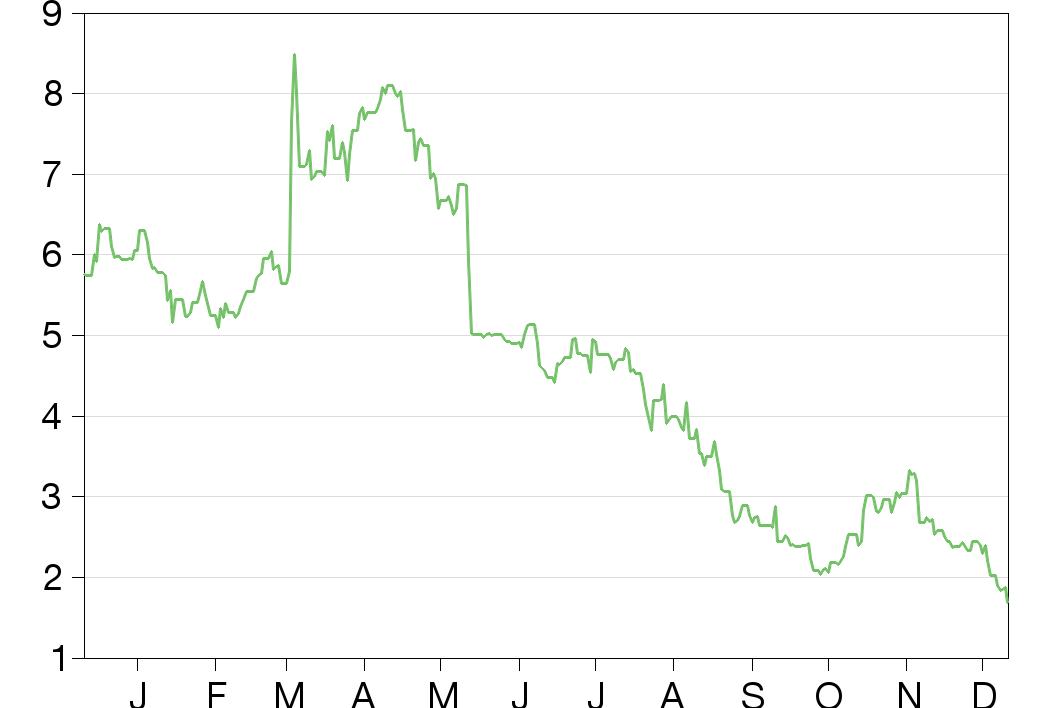
We value Orexigen at $1.09bn or $7.49 per share. Our fair value is based on an NPV analysis of the FCF from Contrave/Mysimba and the company’s ongoing costs for R&D and SG&A, to which we apply a 10% discount rate, appropriate for a biotechnology company with an approved and marketed product. Our analysis is highly sensitive to Takeda/Orexigen’s ability to penetrate the vast obesity market, with a large swing factor in fair value on small changes in penetration. Our sensitivity analysis indicates share price potential ranging from $6.59 to $7.82 assuming Contrave/Mysimba obtains a 0.37-0.77% market share in the US and 0.19-0.39% share in Europe ahead of expected patent expiry in 2025. Orexigen’s share price declined sharply mid-year following the release of second interim data on the terminated LIGHT study by the Cleveland Clinic and the now resolved arbitration proceedings by Takeda related to the deal terms of the planned $210m CVOT study, which Orexigen will now assume. We anticipate the steady renewal of shareholder confidence on the back of an expected continuation of positive scrip trends for Contrave vs its peers. Additionally, the announcement of partnerships for the launch of Mysimba in Europe and ongoing communication regarding a strategy for RoW should support the shares.
Sensitivities: Commercialisation risk following effective launch
Orexigen is subject to the risks associated with a pharmaceutical company in the early phases of a major product launch, including exposure to the commercial decisions of its partner (Takeda) and the potential for side effect issues to emerge post launch. One year into launch, Takeda has achieved a strong sales trajectory for Contrave. Contrave is an extended-release version of two long-marketed drugs that have withstood time in terms of overall safety. Other company-specific risks include IP concerns given Actavis’s recently filed abbreviated new drug application (ANDA) on Contrave’s formulation, although the current expectation is that the key patent will hold until 2024-25. We believe the recent resolution of the dispute with Takeda and renewed commitment by both parties to marketing Contrave in the US removes considerable uncertainty about the shares and our valuation factors in all renegotiated terms with Takeda on future trial costs.
Financials: Profitable by end 2017e
Sales of Contrave were $12.8m in Q315, down from $16.0m in Q215, dipping from the previous quarter despite the increase of 10% in prescriptions sold. With little information from management on these trends (due to confidentiality agreements with Takeda), we believe that a combination of inventory fluctuations and price discounting led to the discrepancy. Orexigen reported revenue of $10.0m on royalties/milestone payments in Q315. We anticipate successful top-line development for the company on Contrave’s successful product launch and expect Orexigen will be profitable in the latter half of 2017 factoring in costs for funding the upcoming $210m CVOT trial (vs the previously negotiated 50/50 split between Orexigen and Takeda). On our forecasts, Orexigen’s current cash holdings of $233m (as at 30 September) should carry the company through to profitability.
Orexigen: A streamlined investment
Orexigen offers a pure-play investment into the relatively new and rapidly growing market of safe and viable oral weight loss treatments. Contrave is arguably the best placed among a group of three relatively recently launched oral obesity drugs in terms of overall efficacy, safety and sheer market power. Orexigen, through its partner Takeda, has ~900 reps detailing Contrave, more than triple that of competitors Vivus and Arena/Eisai. Following a successful initial launch in October 2014, a targeted marketing program has begun for Contrave, with focus on increasing patient awareness and ultimately including advertising in the form of digital, print and TV. Contrave is also the first anti-obesity treatment approved in Europe in over a decade.
Contrave
Contrave aims to target the behavioral mechanisms of craving and reward that can lead to overeating. The extended-release (ER) tablets combine bupropion HCI ER and naltrexone HCI ER, regulating appetite and energy expenditure through central nervous system (CNS) activity. The individual compounds works on two separate, complementary areas of the brain: the hypothalamus and the dopamine reward system. The hypothalamus plays an important role in the regulation of the body’s appetite, satiety and metabolism (energy expenditure) receiving various chemical and hormonal stimuli including glucose, insulin, leptin and peptides secreted by the gut processing food. The dopamine reward system regulates control eating behavior and cravings.
First approved in 1985, bupropion has been widely used for treating depression under the brand Wellbutrin (typically at 400mg/day), particularly in overweight people. Although efficacy in depression looks to be comparable to the commonly prescribed SSRIs, the drug has not been associated with their weight gain (or lack of sex drive) and in fact one of the side effects of bupropion reported in clinical trials in depression was modest weight loss. Bupropion was also FDA approved for smoking cessation in 1997 under the brand Zyban. A norepinephrine dopamine reuptake inhibitor (NDRI), the compound has been shown in studies to activate the pro-opiomelanocortin (POMC) area in the hypothalamus, which looks to cause a reduction in appetite and increase in energy expenditure. The firing of POMC neurons (brought on by bupropion) appears to lead to the production of a natural opioid, beta-endorphin that can slow the POMC system equally, moderating potential weight loss. Naltrexone counters this impact by blocking opioid receptors in the brain and limiting the impact of beta-endorphin on the POMC system. Thus, when administered together in a single pill, the increase in activity of the POMC neurons is sustained over an extended period. In a separate mechanism, both bupropion and naltrexone are approved for addiction disorders through the regulation of dopamine and naturally occurring opioids and therefore, when taken together, it is expected they may also impair food craving. Naltrexone is marketed in generic fast-release form as its hydrochloride salt, naltrexone hydrochloride, under the brands ReVia and Depade and Vivitrol (1x monthly ER injectable). In the US, naltrexone was approved for opioid addiction in 1984 and in 1994 for alcoholism. Orexigen’s proprietary ER oral formulation of naltrexone alleviates the common side effect of nausea in its original immediate release form.
COR – clinical trial program
Contrave was approved in September 2014 in the US and in March 2015 in the EU on the back of a large Phase III pivotal trial program, COR, evaluating the drug in 4,536 patients in four studies across three doses of naltrexone ER (16mg, 32mg and 48mg) with bupropion ER (360mg). All studies were 56-week, randomized double-blind and placebo controlled, with one focusing on the evaluation of patients with type 2 diabetes (COR-Diabetes) and another on intensive behavior modification (COR-BMOD). Co-primary endpoints for all trials were those typically used in anti-obesity studies: the proportion of patients achieving at least 5% weight loss and percentage change in body weight vs placebo. Endpoints were analyzed using a modified intent-to-treat (ITT), last observation carried forward (LOCF) on treatment. All trials met their endpoints with efficacy broadly in line with the other currently marketed anti-obesity treatments, although data suggest that Vivus’s Qsymia (phentermine/topiramate) has an edge on efficacy.
Overall, the program discontinuation rates of 42-51% for those on Contrave were similar to placebo (41-50%) with 19-29% due to adverse events (mainly moderate and transient nausea, headache, dizziness and vomiting) vs 10-15% on placebo.
Exhibit 1: Results of the COR-program
Modified intent to treat |
Completers |
|||
Contrave |
Placebo |
Contrave |
Placebo |
|
COR-I* |
||||
56 weeks |
||||
*diff from placebo, p<0.001 |
n=471 |
n=511 |
n=296 |
n=290 |
Mean weight loss (%) |
6.1% |
1.3% |
8.1% |
1.8% |
Mean weight loss (lbs) |
13.3 |
3.0 |
17.5 |
4.1 |
≥ to 5% weight loss (%) |
48% |
16.4% |
61.8% |
23.1% |
≥ to 10% weight loss (%) |
24.60% |
7.40% |
34.5% |
10.70% |
COR-II** |
||||
56 weeks |
||||
**diff from placebo, p<0.001 |
n=702 |
n=456 |
n=434 |
n=267 |
Mean weight loss (%) |
6.4% |
1.2% |
8.2% |
1.4% |
Mean weight loss (lbs) |
13.8 |
2.9 |
17.5 |
3.4 |
≥ to 5% weight loss (%) |
50.5% |
17.1% |
64.9% |
21.7% |
≥ to 10% weight loss (%) |
28.3% |
5.7% |
39.4% |
7.9% |
COR-BEMOD*** |
||||
56 weeks |
||||
***diff from placebo, p<0.001 |
n=482 |
n=193 |
n=301 |
n=106 |
Mean weight loss (%) |
9.3% |
5.1% |
11.5% |
7.3% |
Mean weight loss (lbs) |
20.3 |
11.0 |
25 |
16.0 |
≥ to 5% weight loss (%) |
66.4% |
42.5% |
80.4% |
60.4% |
≥ to 10% weight loss (%) |
41.5% |
20.2% |
55.2% |
30.2% |
COR-diabetes**** |
||||
56 weeks |
||||
****diff from placebo, p<0.001 |
n=265 |
n=159 |
n=175 |
n=100 |
Mean weight loss (%) |
5.0% |
1.8% |
5.9% |
2.2% |
Mean weight loss (lbs) |
11.6 |
4.2 |
13.5 |
5.1 |
≥ to 5% weight loss (%) |
45% |
18.9% |
53.1% |
24.0% |
≥ to 10% weight loss (%) |
18.5% |
5.7% |
26.3% |
8.0% |
Source: Orexigen
|
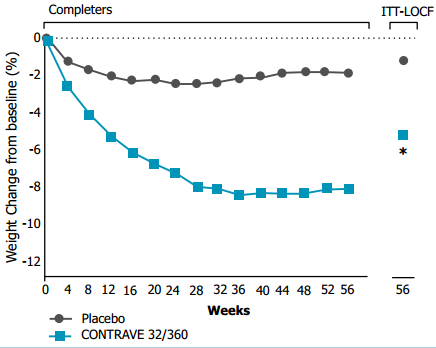
Exhibit 2: Weight loss over time in the completer population – COR-I Trial |
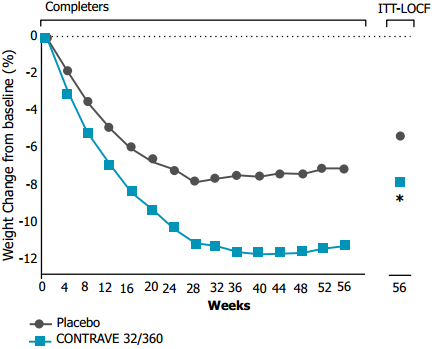
Exhibit 3: Contrave with intensive BMOD (behaviour modification – COR-BMOD completer analysis |
|
|
|
Source: Orexigen |
Source: Orexigen |
|
Exhibit 2: Weight loss over time in the completer population – COR-I Trial |
|
|
Source: Orexigen |
|
Exhibit 3: Contrave with intensive BMOD (behaviour modification – COR-BMOD completer analysis |
|
|
Source: Orexigen |
Outcome studies and the LIGHT controversy
The LIGHT study was initiated following Orexigen’s receipt of a complete response letter in January 2011 on its initial NDA requiring a large-scale outcome safety study evaluating Contrave’s cardiovascular safety in high-risk patients over the longer term. Led by the Cleveland Clinic, approximately 8,900 obese and overweight individuals were enrolled in the trial. In November 2013 Orexigen announced a successful interim analysis, meeting the FDA’s pre-specified criteria, with the trial demonstrating an absence of a doubling in CV risk for patients taking the drug, deemed sufficient for approval. The results of the initial interim data, analyzed after ~25% of major adverse cardiovascular events (MACE) occurrences, showed an encouraging hazard ratio (HR) of 0.59 (95% confidence) or 35 MACE events vs 59 for those on placebo, and these data were published by the company in conjunction with the issue of a patent in March 2015. Shortly before approval of Contrave in November 2014, the FDA asked for a new long-term, 9,000-patient outcome study pointing to potential bias in the LIGHT study related to issues of disclosure. This new CVOT trial is due to start in the coming months with targeted completion in 2022 and an estimated cost of $210m. The interim trial result was made public without Takeda’s recommendation. In early May 2015 further data were reported by the study’s leaders at Cleveland Clinic, which were somewhat less promising. A statistically significant benefit of Contrave on CV risk was no longer seen. After ~50% MACE occurrences, the HR increased to 0.88 (102 CV occurrences in placebo vs 90 Contrave) and for the second 25%, 43 events occurred on placebo and 55 in the Contrave group. However, importantly, the data confirmed the original study intent as to Contrave’s safety. The Cleveland Clinic’s steering committee concluded that “these results show neither benefit nor harm for patients taking the drug”. As previously agreed in March, LIGHT was halted on the basis of issues on disclosure. Final, fully analyzed data are to be presented at a scientific forum in due course.
Orexigen’s shares have been hit hard in recent months on arbitration talks with Takeda and additional costs taken on by Orexigen to fund a new study. Investor hopes for a higher market penetration of Contrave due to a CV benefit have proved likely unrealistic, based on the interim LIGHT study findings. However, the study results confirmed safety and efficacy and the data point to no increased risk of MACE events for Contrave, which was the original intent of the LIGHT study.
Revised collaboration with Takeda resolves previous disputes
Orexigen’s renegotiation of its contract with Takeda also created market uncertainty as to the commitment of its US partner. However, a revised agreement ensures continuity of Orexigen’s relationship with Takeda and a solid backing by its US partner in the ongoing commercialization of Contrave in the US. Under the original agreement with Takeda, Orexigen was to pay the first $60m in post-approval development expenses and costs thereafter were to be split 50/50 for safety studies and 75/25 for other trials. Our model incorporates the revised deal with Takeda, for which Orexigen will assume all costs related to the newly required CVOT trial, with a cap on spending of $210m through 2022 (offset by $40m in savings on the early termination of the LIGHT study). Not insignificant is the negotiation of the cost split for any additional trials beyond LIGHT from the previous 50/50, where Takeda will now take on 75% of spending. We also note that other post-marketing requirements by the FDA include several short-term studies such as the QT trial (drug’s effect on the QT interval and ECG morphology) and pharmacokinetic studies in renal and hepatic impairment and drug-drug interaction. Exploratory studies are also being conducted in smoking cessation and depression in overweight patients. Most trials are expected to satisfy regulatory requirements in both the US and EU. An added $105m in milestones payable to Orexigen is also written into the new agreement contingent on any eventual superiority claims on the labelling for Contrave. Moreover, Takeda has given back its marketing rights in Mexico and Canada, providing Orexigen with added flexibility in negotiations with potential international partners (anti-obesity sales were $262m in Mexico in 2014 and $14m in Canada).
Highly attractive market, but marked by epic failures
Obesity is currently recognized by the larger medical community worldwide as a serious health condition, growing in prevalence globally with decreased life expectancy and related comorbidities including type 2 diabetes, heart disease, obstructive sleep apnoea (OSA), liver and pulmonary disease and certain types of cancer. Additional comorbidities include anxiety, depression, chronic pain and substance abuse. A worldwide epidemic, ~150m people in the US alone (more than one-third of adults and 17% of young people in 2012) are classified as medically obese (body mass index or BMI ≥30)1 and life expectancy in this population is thought to be lowered by up to eight years. Notably, there remain considerable regional differences in the US, with obesity rates forecast to surpass 50% in 39 states by 2030.2 The World Health Organization estimates that there are more than 500 million obese people worldwide. This comes as an enormous cost to healthcare systems, with obesity and related comorbidity expenses in the US estimated at $210bn.3
Prevalence of Childhood and Adult Obesity in the United States, 2001-2012, JAMA. 2014;311(8) 806-814.
Prevalence of Obesity and Trends in the Distribution of Body Mass Index Among US Adults, JAMA 2012;307(5), 491-497.
Journal of Health Economics, January 2012.
Exhibit 4: Governing bodies increasingly recognize obesity as disease that is treatable
Organization |
Details |
American Assoc of Clinical Endocronologists (AACE) |
AACE guidelines stress importance of weight loss (including the use of pharmacotherapy) for patients with prediabetes and diabetes. |
American Medical Association (AMA) |
Recognizes obesity as a disease. |
Affordable Care Act (ACA) |
ACA allows corporate wellness programs to address obesity with economic incentives. |
European Association for the study of obesity (EASO) |
Guidelines call for use of pharmacotherapy as part of a comprehensive strategy for disease management. |
European Court |
Ruling that obesity may be considered a disability. |
US Congress |
Treat and Reduce Obesity Act had strong support – reintroduction planned in new Congress. |
Organization |
American Assoc of Clinical Endocronologists (AACE) |
American Medical Association (AMA) |
Affordable Care Act (ACA) |
European Association for the study of obesity (EASO) |
European Court |
US Congress |
Details |
AACE guidelines stress importance of weight loss (including the use of pharmacotherapy) for patients with prediabetes and diabetes. |
Recognizes obesity as a disease. |
ACA allows corporate wellness programs to address obesity with economic incentives. |
Guidelines call for use of pharmacotherapy as part of a comprehensive strategy for disease management. |
Ruling that obesity may be considered a disability. |
Treat and Reduce Obesity Act had strong support – reintroduction planned in new Congress. |
Source: Orexigen, various health organizations
Due to the sheer size of the potential multi-billion dollar market for obesity, there is capacity for multiple market contenders. Although a large and growing market, the development of anti-obesity agents has been fraught with safety issues historically and even very large pivotal programs have resulted in high-profile failures (Sanofi-Aventis’s withdrawal of rimonabant along with three other CB1 antagonists). Also, even large-scale trials have failed to highlight safety issues that have become evident in a real-world setting (sibutramine withdrawal in 2010 due to safety concerns and Fen-Phen and dexfenfluramine withdrawn in 1996). Additionally, the size of the obesity market has been called into question given high patient dropout rates in pivotal trials and a lack of proven high-volume scrip drivers. Correspondingly, the jaded past of obesity treatments has led to a reluctance on the part of big pharma to enter into large-scale commercialization agreements. Currently, Orexigen’s agreement with Takeda is the biggest of two commercial licensing agreements in the segment, the second being the agreement between Eisai and Arena for Belviq.
Despite numerous disappointments in the segment, the landscape for obesity compounds looks to be changing with the advent of four relatively recently approved obesity treatments by the FDA, one oral and one administered through subcutaneous injection. This newer generation of drugs looks to be relatively safe based on data from their respective large Phase III clinical programs. However, numerous large outcome trials, mainly in cardiovascular areas, are ongoing, often on the back of FDA requirements on approval.
Competitors – three orals and an injectable
The cause of obesity is considered to be a combination of genetic, behavioral and environmental influences and it is therefore not surprising that multi-faceted weight management programs, which consist of medication, together with diet, exercise and behavior modification, have been shown to work best – not only in weight loss but, importantly, in the ability to keep weight off. The human body uses many chemicals and hormones to protect its stores of fat – a defense mechanism likely useful to our ancestors when food was scarce – and a complete circumvention of this natural protection of stored fat must therefore be multi-faceted and complex. Hence, new solutions in the treatment of obesity rely more and more on combination drugs targeting multiple pathways. As such, current obesity drugs on the market take differing approaches to enhance behavior modification through various mechanisms, some with combination-complementary approaches, and are showing reasonably good success.
The brain acts as a regulator to functions controlling weight including decisions about how much, when and what we eat. In the obese, the brain becomes desensitized to signals to stop eating. However, the brain is sensitive to any losses in weight, at which time metabolism slows and hunger signals are communicated. Weight loss treatments therefore need to target the propensity for the body to crave food and gain weight once pounds are shed. Current and potential anti-obesity drugs may operate through various mechanisms, including appetite suppression (such as phentermine and other amphetamine-based drugs and anti-depressants), the increase of metabolism or the interference in the body’s ability to absorb certain components of food (such as orlistat or OTC fibre supplements like glucomannan and guar gum). It is generally thought that the non-CNS approach, which can initially induce weight loss, is susceptible to a weight loss plateau after several months or a year of therapy, in the absence of treating the underlying behavioral mechanisms in the body.
In 2014 the total US market for obesity products was ~$220m and ~9.5 million prescriptions were written as reported by Oregixen. We take the view that there is significant potential for the newer obesity drugs to dramatically grow the market, particularly those that include a targeted approach to CNS pathways. From a safety standpoint, none of the pivotal Phase III programs for the three prominent obesity drugs or their outcome studies to date has raised serious adverse events signals (although all had a relatively high all-cause dropout rate, which was unsurprisingly highest in placebo groups owing to lack of efficacy). Main obesity treatments currently marketed in order of launch are as follows:
■
Orlistat (Xenical/Alli, Roche): FDA-approved in 1999, Orlistat acts as a lipase inhibitor, preventing the absorption of fats from the diet. Approved for long-term use, Xenical (as prescription) and Alli (as OTC) have failed to make major inroads, with negligible prescription share more than likely due to infamous side effects including oily stools, fecal incontinence, stomach pain and flatulence. Orlistat has been found to modestly reduce blood pressure and in a large randomized trial reduce the incidence of diabetes by nearly 40% in the obese. Sales of Xenical and Alli were $17m and $107m respectively in 2014.
■
Phentermine/Topiramate ER (Qsymia, Vivus): phentermine alone, approved for short-term use in 1959, was the mostly widely prescribed anti-obesity medication up to a few years ago. Phentermine is a sympathomimetic amine that acts as an appetite suppressant and stimulant. Topiramate is an anticonvulsant with weight loss properties (although the exact mechanism is unknown). Launched in September 2012, Qsymia is the only recently approved obesity treatment to show significant blood pressure benefits in Phase III trials but, conversely, was denied approval in Europe in 2013 on cardiovascular and psychiatric side effects. Qsymia sales were $79m in 2014.
■
Lorcaserin (Belviq, Arena/Eisai): lorcaserin, an oral pill, is the only new chemical entity (NCE) of the newer oral obesity drugs. It works by promoting satiety through selective activation of 5-HT2C receptors on anorexigenic pro-opiomelanocortin neurons located in the hypothalamus. The compound was approved in June 2012 and launched in June 2013 following the completion of additional studies after an FDA advisory panel recommended against approval in 2010 on cancer-causing concerns (in rats) and marginal efficacy. Lorcaserin has shown a numeric but statistically insignificant benefit on blood pressure. The drug is DEA schedule IV classified due to its hallucinogenic properties at higher than approved doses. Sales of Belviq were ~$56m in 2014.
■
Bupropion/Naltrexone (Contrave, Orexigen/Takeda): launched in the US in October 2014 and approved in Europe in March 2015, Contrave is a new formulation of two active ingredients. Bupropion, approved as Wellbutrin since 1985, increases dopamine activity thereby reducing appetite. Naltrexone, first approved in its injectable form in 1984 for addiction, inhibits addictive behavior by blocking opioid receptors. In Q215 market sales of Contrave were $16.0m.
■
Liraglutide (Saxenda, Novo Nordisk): a double-dose version of Novo’s blockbuster type 2 diabetes treatment Victoza, Saxenda was launched in April (approval in December 2014) for chronic weight management. The GLP-1 receptor agonist was evaluated in more than 4,800 patients with and without weight-related conditions. We expect Saxenda to be positioned as a niche product (there is considerable overlap between type 2 diabetes and obesity populations) given the drug’s high pricing ($1,068 per month), as well subcutaneous injections.
Exhibit 5: Competitor comparisons
|
Bupropion/natrexone (Contrave) |
Phentermine/topiramate (Qsymia) |
Lorcaserin (Belviq) |
Orlistat ( Xenical/Ali) |
Liraglutide (Saxenda) |
Company |
Orexigen |
Vivus |
Arena/Eisai |
Roche |
Novo Nordisk |
FDA approval date |
Oct-14 |
Jul-12 |
Jun-12 |
1999 |
Dec-14 |
Non-US approvals |
EU approved March 15. |
N/A |
Approved S. Korea 2015 |
EU approved 1999 |
EU March 15 |
Indication |
Obese adults (BMI 30 or greater) and overweight adults (BMI 27 or greater) min 1 comorbidity. |
Obese adults (BMI 30 or greater) and overweight adults (BMI 27 or greater) min one comorbidity. |
Mechanism |
Bupropion increases dopamine activity in the brain reducing appetite, increasing energy expenditure. Naltrexone blocks opioid receptors, inhibits reinforcing aspects of addictive substances. |
Phentermine, a sympathomimetic amine, is an appetite suppressor/stimulant. Mechanism of anticonvulsant topiramate not fully understood but has weight loss properties. |
Believed to decrease food consumption/promote satiety by selectively activating 5_HT2C receptors on anorexigenic pro-opiomelanocortin neurons in the hypothalamus. |
Pancreatic lipase inhibitor, reduces intestinal fat. |
Long-acting analogue of the GLP-1 hormone. Delays gastric emptying promoting a feeling of fullness. |
Administration |
Oral 2x daily. |
Oral 1x daily in the morning. |
Oral 2x daily. |
Oral 3x daily. |
Subcutaneous injection 1x daily. |
# sales reps |
900 |
150 |
320 |
N/A |
500 |
Outcome studies |
9k-patient CVOT to commence end 2015. |
Planned large-scale CVOT AQCLAIM. |
12k patient 5-yr CVOT CAMELLIA to 2019. |
N/A |
Five-year 9k-patient LEADER CVOT to 2015. |
Summary of clinical data |
982-patient PIII COR I study (ITT-LOCF) 48% (16.4% PLA) achieved at least 5% body weight loss at 56 weeks; 1,158 patient COR II study showed 50.5% (PLA 17.1%) 5% or more weight loss over 56 weeks. |
1,230-patient PIII (I) study (ITT-LOCF) 67% high dose 45% low dose (17% PLA) achieved at least 5% body weight loss at 1 year; 2,448 patient PIII (II) study 62% high dose, 70% low dose (PLA 21%) 5% or greater wt loss at one year. |
3,182-patient PIII BLOOM study (ITT-LOCF) 48% (20.3% PLA) patients achieved at least 5% body weight loss; 4k patient BLOSSOM study showed 3.6% placebo adjusted weight loss over one year at high dose. |
Pooled data from five clinical trials (ITT-LOCF) 57% (31% PLA) patients achieved at least 5% body weight loss over one year. |
SCALE program. Pivotal PIII (1) showed 62% lost at least 5% of body weight vs 34% on placebo at 56 weeks, PIII (2) 49% of patients lost at least 5% vs 16% placebo. |
Side effect profiles |
Nausea, headache, constipation vomiting. |
Dry mouth, tingling, altered taste, constipation. |
Infrequent depression, anxiety and suicidal ideation. |
Frequent, oily bowel movements, stomach pain, flatulence rare cases of severe liver damage. |
Nausea, diarrhea, constipation, vomiting, low blood sugar. |
Label restrictions |
Black box warning suicidal thoughts/behaviors, neuropsychiatric reactions. |
N/A |
DEA scheduled as may be abused/lead to drug dependence. |
N/A |
Black box warning of thyroid c-cell tumors or some high-risk patients. |
Source: Edison Investment Research
Drugs in development
We see little immediate threat to the recent triumvirate of oral obesity drugs currently marketed in the US. There are number of candidates in the pipeline for the treatment of obesity, most of which have yet to start Phase III. The most advanced compound is beloranib (Zafgen), which has shown impressive efficacy vs currently marketed anti-obesity drugs to date. However, the compound is subcutaneous and its lead indication is to treat patients with Prader-Willi Syndrome, a rare disease that causes binge eating due to a non-stop intense craving for food.
Exhibit 6: Select obesity treatments in later stages of development
Company |
Product |
Therapy class |
Status |
Targeted |
Administration |
Notes |
Zafgen |
Beloranib (ZGN-440) |
Subcutaneous methionine aminopeptidase 2 inhibitor |
Phase III recruiting |
102 |
2x weekly subcutaneous injection |
Prader-Willi syndrome results 2015 primary outcome - change in total body weight and hyperphagia-related behavior as measured by questionnaire at week 29. |
Angio Lab Hanmi Pharma |
ALS-L1023 |
Melissa leaf (Lemon Balm) ethyl acetate dried extract |
Phase III recruiting |
400 |
Oral 2x daily |
Results 2015 primary outcome - % change from baseline to 12 wk in visceral fat area measured by CT. |
Gelesis |
Gelesis100 |
Device: super absorbable hydrogel that expands in the stomach |
Phase III |
168 |
Device: Gelesis 2x daily |
Results July 16 primary outcome - decrease in body weight from baseline and 5% weight loss, to day 171. |
Astra Zeneca |
Dapagliflozin & Exenatide (Forxiga & Byetta) |
Glucagon-like peptide 1 receptor agonist |
Phase II recruiting |
48 |
Oral 1x daily and subcutaneous injection 1x weekly |
Results Oct 16 primary outcome - effect on weight loss, energy expenditure and safety in non-diabetic obese people over 24 weeks. |
Janssen |
Canagliflozin/ |
Sodium-glucose co-transporter |
Phase II recruiting |
344 |
Oral 1x daily |
Results 2015 primary outcome - % chg from baseline in body weight at week 26. |
Hanmi Pharma |
LAPS CA- Exendin-4 (HM1126OC) |
Glucagon-like peptide 1 receptor agonist |
Phase II (not yet recruiting) |
300 |
1x weekly subcutaneous injection |
Results 2015 primary outcome - % chg from baseline in body weight at week 20. |
Rhythm Metabolic |
RM-493 |
Small peptide melanocortin 4 receptor agonist |
Phase II (not yet recruiting) |
36 |
1x daily subcutaneous injection |
Prader-Willi syndrome results 2015 primary outcome - change in total body weight and hyperphagia-related behavior as measured by questionnaire at week 10. |
Source: clinicaltrials.gov
Contrave marketing and forecasts
Contrave was approved in the US on 9 September and launched in October 2014 as an adjunct to a reduced-calorie diet and increased physical activity in adults with a BMI of 30kg/m2 or greater (obese) or 27kg/m2 or greater (overweight), with one weight-related comorbid condition. As of June 2015, Contrave became the most widely prescribed weight loss treatment in the US. Unlike lorcaserin, Contrave is not DEA scheduled, although packaging does include a black box warning owing to the class-wide risk of anti-depressants increasing risk of suicidal thoughts and behaviors in adolescents, as well as bupropion’s association with serious neuropsychiatric events when used for smoking cessation. In the US the company is partnered with Takeda, retaining the rights to the marketing in subsegments to select specialist physician groups. Takeda provides Orexigen with a large and experienced salesforce, as well as commercial and managed care experience. Orexigen, together with Takeda, is aiming to create a large-scale prescription market for weight loss by detailing high-prescribing primary care physicians and endocrinologists. Takeda is targeting ~75,000 physicians in the US with the first large-scale salesforce detailing obesity comprising 900 sales reps, thereby aiming to increase the appreciation of obesity as a chronic disease. Market coverage is well beyond that of competitors, with Novo Nordisk’s 500-strong salesforce for Victoza the next largest of the currently marketed obesity treatments. Detail has focused on educating targeted physicians on Contrave in the first six months or so after launch, including sampling, with a focus on high prescribers of metabolic and diabetes drugs. We anticipate the pilot testing of a broader marketing program to increase patient awareness in the coming months, including DTC advertising (digital, print and TV).
Orexigen/Takeda remain discreet as to the details of their pricing policy for reasons of confidentiality. However, we believe the pricing strategy for Contrave remains largely competitive with Belviq’s and Qsymia’s. Under one program, patients with insurance coverage pay $55 for the first two months of treatment and $45 each month thereafter and those with no cover pay $70 per month for the first two months and $60 per month thereafter. Sales in Q315 reflect seasonality of the obesity market, but also suggest strong out-of-pocket sales and discounting. Transparency is limited as Orexigen is contractually prohibited in its agreement with Takeda to provide more transparency on sales including inventory build and other one-time events. The cost of the program for all patients includes support with an app called Scale Down, which encourages a daily weigh-in on a wireless scale (provided), giving personalized feedback from the app on the weigh-in, and weekly emails giving advice on healthy lifestyle.
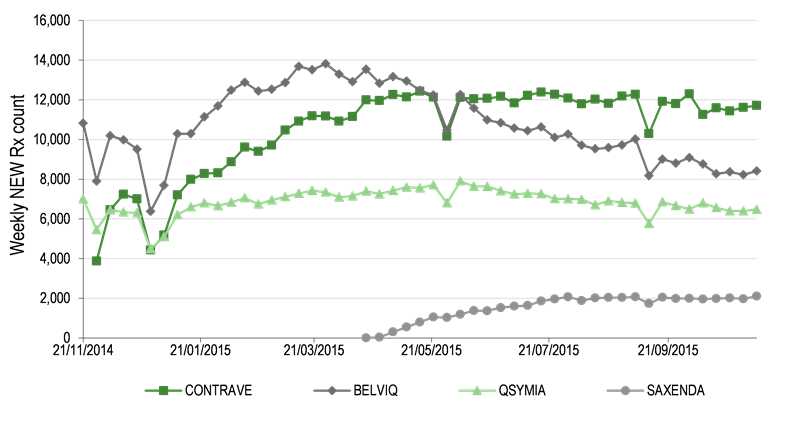
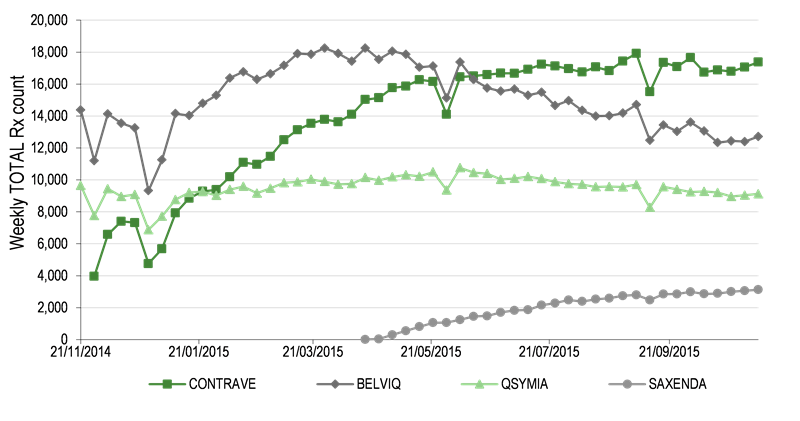
Progress on Contrave since launch is encouraging and the drug is showing the most positive momentum in its category, a trend that could continue given its high level of sales and marketing support. Eight months following commercial launch Contrave was the leading branded weight loss treatment. Chief focus has been on those obese and overweight patients with comorbid conditions, particularly those being treated for diabetes. Takeda reports good success so far, both with doctors who have prescribed obesity medicines in the past (~50% of sales calls) and non-prescribers (~50%). This is borne out by current scrip data showing new and total weekly prescriptions surpassing Belviq and Qsymia despite a relatively latent launch. We note that while sales of anti-obesity treatments tend to flatten in second and third quarters, scrip growth traditionally resumes following Labor Day in early September.
|
Exhibit 7: Weekly total NEW Rx count (52 weeks) |
Exhibit 8: Weekly TOTAL Rx count (52 weeks) |
|
|
|
Source: Bloomberg |
Source: Bloomberg |
|
Exhibit 7: Weekly total NEW Rx count (52 weeks) |
|
|
Source: Bloomberg |
|
Exhibit 8: Weekly TOTAL Rx count (52 weeks) |
|
|
Source: Bloomberg |
In Europe, the compound was approved in March 2015 under the name Mysimba following a strong majority vote of 31 to two by the CHMP in December. Mysimba is currently positioned for launch as the first significant new obesity treatment in nearly a decade in markets with historically low levels of penetration, but where prescribing and doctor acceptance is starting to take hold.
We currently forecast sales of Contrave to reach $590m worldwide by 2024 (of which $430m is in the US), after which time the key method of use patent expires. While we do not risk-weight our revenue in Europe and South Korea, we have been deliberately conservative in rendering potential upside after signing of partners. We do not include potential RoW sales or potential sales to the overweight (vs obese). Our forecasts do not explicitly include potential sales for additional indications being explored, including depression and smoking cessation in obese patients. We model a 0.57% penetration rate of the obese population in the US and significantly less in Europe at 0.29% penetration where reimbursement lags and uptake of weight loss treatments is traditionally lower. Milestones from Takeda to Orexigen comprise two more $15m anniversary payments in 2016, and 2017 and eligibility for another $880m in sales and regulatory-based milestones. We assume these will be received in full with no risk adjustment. Royalties on sales in the US range from 20-35% on a sliding scale based on increasing levels of revenue. We note incremental changes in penetration rates create huge swings in our forecast sales, as explored in our sensitivity analysis on page 13.
Exhibit 9: Contrave forecasts – US and Europe*
US$m |
2015e |
2016e |
2017e |
2018e |
2019e |
2021e |
2024e |
2025e |
2027e |
US market |
|||||||||
Market sales |
56 |
108 |
136 |
192 |
249 |
335 |
427 |
252 |
134 |
Royalty revenue |
12 |
29 |
41 |
60 |
80 |
117 |
149 |
88 |
47 |
Milestones (not risk adjusted) |
22 |
49 |
107 |
167 |
167 |
127 |
67 |
7 |
0 |
Total US revenue |
35 |
77 |
148 |
227 |
247 |
244 |
217 |
95 |
47 |
European market |
|||||||||
Market sales |
- |
32 |
37 |
41 |
77 |
118 |
145 |
74 |
62 |
Royalty revenue |
- |
8 |
9 |
10 |
34 |
45 |
36 |
18 |
16 |
Milestones |
- |
- |
- |
15 |
15 |
15 |
- |
- |
- |
Total European revenue |
- |
8 |
9 |
25 |
34 |
45 |
36 |
18 |
16 |
Contrave market sales (US and EU) |
56 |
140 |
173 |
233 |
326 |
453 |
572 |
326 |
196 |
Source: Edison Investment Research. Note: *Does not include forecasts for South Korea, for which we forecast $18m at peak.
Canvassing the global market
In August Orexigen announced the completion of a distribution agreement with South Korean pharmaceutical company Kwang Dong for the commercialization and related expenses of Contrave in South Korea. Terms of the deal include a recently paid $7m upfront by Kwang Dong, payment of 35-40% royalties on pills supplied, sales-based milestones and other fees. Sales of Contrave are targeted to commence in the second half of 2016 contingent on marketing approval (Contrave was filed on 1 October 2015 with the Ministry of Food and Drug Safety). Kwang Dong has a 500-strong salesforce with which to market Contrave, which is currently detailing pharmaceutical products and health foods. We forecast peak sales of $18m for Contrave in this market, which we believe is conservative given that sales of anti-obesity treatments in Korea reached $61m in 2014 on high obesity rates in the country: 38% in men and 26% in women.
During its Q3 conference call management provided detail as to its plans for marketing Contrave in RoW. Following a comprehensive assessment of ex-US territories, the company intends to take a market-by-market approach with the goal of launching in much of Europe and other major countries in H216. The recent $60m raised via private placement to Baupost is intended to enable leverage in the way of a funding cushion for the retention of increased ownership and more value in certain markets outside the US as it continues discussions with potential partners, where deals will be made with more local players. The company has veered away from market expectations of regional deals, where Orexigen points to the diversity of individual markets, as well as the concentration of decision makers, which gives the company a more hands-on and therefore lucrative part in the sales process. Orexigen established a wholly owned Irish subsidiary to be used as a platform for the sale and marketing of Contrave outside the US. A more comprehensive plan will be forthcoming with additional detail on the ex-US strategy, expected in the early part of 2016 as deals in individual territories begin to unfold.
Orexigen continues to explore opportunities for marketing the approved Mysimba in European countries, which it targets for the second half of 2016. It plans to seek pricing approval in select European countries while developing relationships with prominent specialists, as well as supporting clinical research. The company also plans to file for regulatory approval in other countries. We expect reacquired rights from Takeda for the commercialization of Contrave in Mexico and Canada to provide added leverage in conversations with potential international partners. Other markets earmarked as tier one are Australia, Brazil, China, MENA and Russia.
Patent coverage and Paragraph IV filing
In late April Actavis filed an ANDA challenging select Contrave patents (as well as those for Vivus’s Qsymia), resulting in Orexigen’s receipt of a Paragraph IV certification. Under the Hatch-Waxman Act the company will receive the procedural 30-month stay following the intended lawsuit filing against Actavis by Orexigen and Takeda. We believe Actavis is positioning itself ahead of the queue for an eventual generic listing and take the stance that Orexigen’s current patent estate is sound, which corresponds with market expectations. We highlight that the efficacy of Contrave is derived from the unique combination of bupropion and naltrexone, whereby naltrexone taken alone does not result in weight loss and bupropion alone results in only around half of the weight loss of the combination. Therefore, the company’s proprietary formulation looks to be a novel discovery. Orexigen holds numerous patents for its proprietary controlled-release combination of bupropion and naltrexone. Key patents are the Weber/Cowley4 composition patent (7,375111) expiring in March 2025 and Weber/Cowley methods patent (7,462,626) expiring in July 2024. The company also holds multiple additional patents covering composition of matter and use for Contrave in obesity in the US (seven Orange Book listings). In Europe the company has exclusive rights to many patent applications including those related to compositions, methods of use and formulations.
Eckard Weber and Michael Alexander Cowley were founding partners of Orexigen and Eckard Weber has been chairman of the board of directors of Orexigen since 2004.
Sensitivities
Orexigen is subject to the risks typical of a pharmaceutical company in the early stages of a major product launch. This includes the commercial decisions by its partners or potential partners and the level of success of its competitors. The company is also vulnerable to any undesirable effects arising post launch not made evident in its large Phase III clinical program. With a European approval and intended global launch, future sales of Contrave (ex-US) also expose the company to currency fluctuations. We also highlight stock-specific issues.
■
Orexigen is a one-product pure obesity play. While the potential for Contrave remains significant, the company is highly dependent on its success as the sole source of income. This risk is mitigated by the successful launch of Contrave into the market in October of 2014, as demonstrated by its good progress to date by Takeda’s salesforce in garnering growing sales both from existing and new prescribing doctors. Additionally, Orexigen is poised for launch in Europe following regulatory approval earlier this year and South Korea, where approval is pending.
■
The FDA has requested an additional large-scale and long-term outcome study focusing specifically on potential CV risk. Negative results from this trial could require modifications to Contrave’s label or, in a worst case, its withdrawal from the market. While trial results remain an uncertainty, the interim analysis of the LIGHT trial at the 50% study timeframe, as reported by the Cleveland Clinic, revealed that Contrave did not show any increased risk of MACE events. However, data were top-line only and we await detailed results on the full data set, although the uncertainty could potentially lead to complications in the negotiation process with possible European partners.
■
Orexigen is also subject to IP risk, as highlighted by the recent Paragraph IV application by Actavis. Current market expectations are that the patents will withstand impending litigation, although the ultimate judgment is not guaranteed.
Valuation
We value Orexigen at $1.09bn, or $7.49 per share, based on a risk-adjusted net present value (rNPV) analysis. The breakdown of our DCF model, which uses a 10% discount rate, is shown in Exhibit 10. Our valuation includes the company’s estimated net cash holdings of $133m at 30 September. We model cash flow for Contrave through to loss of market exclusivity in 2025 in the US when key patents expire, forecasting a loss of 60% of sales in the first year and tailing off until 2030. We currently model sales in the US, South Korea and European markets only, therefore launches in additional territories including Brazil, Mexico and Canada offer upside to our fair value. We note that our base case rNPV represents considerable upside to Orexigen’s current market capitalization of $329m ($2.62/share), which saw a drop from a market cap of ~$860m (~$6.85 per share) at the time of the termination of the LIGHT study and the announced private placement of Baupost. As stated, we believe the extent of the share price drop was an overreaction and anticipate the renewal of shareholder confidence on the back of an expected continuation of positive scrip trends for Contrave vs its peers. Additionally, the announcement of a partner for the launch of Mysimba (in Europe) and ongoing communication regarding partnerships for Europe and RoW should provide support to the shares.
Exhibit 10: Orexigen valuation and key assumptions
Product |
Launch |
Peak sales ($m) |
Royalty rate |
NPV ($m) |
rNPV/share ($) |
Contrave US |
Oct-14 |
427 |
20-35% |
1,217 |
8.37 |
Contrave Europe |
2016 |
144 |
25% |
209 |
1.44 |
Contrave S. Korea |
2016 |
5 |
37.5% |
27 |
0.19 |
PV costs inc taxes |
(511) |
(3.51) |
|||
Net cash (end Q315e) |
146 |
1.01 |
|||
Overall valuation (per share based on 145.4m shares outstanding) |
1,089 |
7.49 |
|||
Source: Edison Investment Research
Sensitivity analysis
Given the size of the obesity market and corresponding possible sales volumes (based on relatively marginal penetration rates), we also include an analysis of share price potential based on various market penetration rates in the US and Europe, also indicating the peak sales that correspond to these assumptions (Exhibit 11). We note the relatively wide band of calculated fair value for Orexigen, ranging from $6.59 per share to $7.82 per share, on small changes in penetration rates.
Exhibit 11: Per share valuation up/downside on US and Europe penetration
US penetration |
|||
0.37% |
0.57% |
0.77% |
|
European penetration |
|||
0.19% |
6.59 |
7.35 |
7.58 |
0.29% |
6.74 |
7.49 |
7.72 |
0.39% |
6.83 |
7.60 |
7.82 |
Source: Edison Investment Research
Exhibit 12: Per share valuation up/downside on US and Europe peak sales ($m)
US peak sales |
||||
277 |
427 |
577 |
||
European sales |
||||
98 |
6.59 |
7.35 |
7.58 |
|
144 |
6.74 |
7.49 |
7.72 |
|
191 |
6.83 |
7.60 |
7.82 |
|
Source: Edison Investment Research
Financials
We forecast solid top-line development for Orexigen in the coming quarters and years on the ramp-up of Contrave following the successful debut in its first 12 months on the market to September 2015. We model a steadily growing top line derived from tiered royalties received from Takeda (20-35% on an upward sliding scale), deferred revenue on previous milestone payments (~$100m), potential anniversary milestones ($30m more in two instalments) and sales-based milestones (up to $880m to be received in 2016-24). In Q3 Contrave sales by Takeda of $12.8m ($16.0m in Q215) led to $2.6m in royalties for Orexigen. Sales dipped from the prior quarter despite the increase of 10% in prescriptions sold and, with little information from management on these trends (due to confidentiality agreements with Takeda), we believe a combination of inventory fluctuations and price discounting led to the discrepancy. A net loss in Q315 of $11.1m (Q314 $11.3 profit) was reported. For the full year 2015 we forecast revenue of $32.4for Orexigen growing to $85.6m in 2016 as Contrave continues to make inroads in the US and is launched in Europe and South Korea next year. We model R&D costs at $60.2m and $66.2m in 2015 and 2016 respectively, factoring in the $210m in costs, as incurred, for the new CVOT trial in the coming years. On 10 September, Orexigen announced the private placement of 20m shares and the raising of $60m of common stock and warrants (common shares at $3 and $0.25 per warrant exercisable at $6) to funds owned by the Baupost Group. The additional cash is intended to help support the commercial launch of Mysimba in Europe and regulatory requirements in other targeted markets. As at 30 September 2015, Orexigen carried $87.0 in convertible debt on its balance sheet. In December 2013, it issued $115.0m in aggregate principal amount of 2.75% convertible senior notes due in 2020 in an offering. Orexigen holds the option to settle the 2020 notes with cash, shares or a combination, at the company’s election. The estimated implied interest rate of 8.69% resulted in a fair value calculated as the PV of implied future payments based on the $115m principal. While we do not assume conversion of this debt into shares, if converted the dilution would amount to an additional 14.0m shares. Cash holdings of $233m at 30 September should be sufficient to carry Orexigen into mid-2017, at which time, on our forecasts, the company will become profitable.
Exhibit 13: Financial summary
$000s |
2013 |
2014 |
2015e |
2016e |
2017e |
||
Year-end 31 December |
US GAAP |
US GAAP |
US GAAP |
US GAAP |
US GAAP |
||
PROFIT & LOSS |
|||||||
Revenue |
|
|
3,428 |
55,521 |
32,365 |
85,641 |
157,267 |
Cost of Sales |
0 |
0 |
0 |
0 |
0 |
||
Gross Profit |
3,428 |
55,521 |
32,365 |
85,641 |
157,267 |
||
Research and development |
(56,748) |
(57,412) |
(60,166) |
(66,183) |
(69,492) |
||
General & administrative |
(23,878) |
(28,639) |
(43,502) |
(45,677) |
(47,047) |
||
EBITDA |
|
|
(77,292) |
(30,669) |
(71,524) |
(26,500) |
40,437 |
Operating Profit (before GW and except.) |
|
|
(77,198) |
(30,530) |
(71,303) |
(26,219) |
40,727 |
Intangible Amortisation |
0 |
0 |
0 |
0 |
0 |
||
Exceptionals/Other |
0 |
0 |
0 |
0 |
0 |
||
Operating Profit |
(77,198) |
(30,530) |
(71,303) |
(26,219) |
40,727 |
||
Net Interest |
(473) |
(6,995) |
(7,423) |
(7,611) |
(7,832) |
||
Other (includes change in fair value of warrants) |
0 |
0 |
1,612 |
0 |
0 |
||
Profit Before Tax (norm) |
|
|
(77,671) |
(37,525) |
(78,726) |
(33,830) |
32,895 |
Profit Before Tax (FRS 3) |
|
|
(77,671) |
(37,525) |
(77,114) |
(33,830) |
32,895 |
Tax |
0 |
0 |
0 |
0 |
1,776 |
||
Deferred tax |
0 |
0 |
0 |
0 |
0 |
||
Profit After Tax (norm) |
(77,671) |
(37,525) |
(78,726) |
(33,830) |
34,672 |
||
Profit After Tax (FRS 3) |
(77,671) |
(37,525) |
(77,114) |
(33,830) |
34,672 |
||
Average Number of Shares Outstanding (m) |
96.5 |
118.2 |
131.8 |
148.3 |
151.3 |
||
EPS - normalised fully diluted ($) |
|
|
(0.80) |
(0.32) |
(0.59) |
(0.23) |
0.23 |
EPS - FRS 3 ($) |
|
|
(0.80) |
(0.32) |
(0.59) |
(0.23) |
0.23 |
Dividend per share ($) |
0.0 |
0.0 |
0.0 |
0.0 |
0.0 |
||
BALANCE SHEET |
|||||||
Fixed Assets |
|
|
1,839 |
1,655 |
2,493 |
2,522 |
2,550 |
Intangible Assets |
0 |
0 |
0 |
0 |
0 |
||
Tangible Assets |
630 |
857 |
940 |
969 |
997 |
||
Other |
1,209 |
798 |
1,553 |
1,553 |
1,553 |
||
Current Assets |
|
|
178,282 |
211,326 |
227,812 |
204,038 |
249,988 |
Stocks |
0 |
1,198 |
11,068 |
11,068 |
11,068 |
||
Debtors |
0 |
2,571 |
4,560 |
4,560 |
4,560 |
||
Cash |
176,996 |
205,537 |
209,406 |
185,632 |
229,806 |
||
Other |
1,286 |
2,020 |
2,778 |
2,778 |
4,554 |
||
Current Liabilities |
|
|
(22,853) |
(29,714) |
(35,447) |
(35,447) |
(35,447) |
Creditors |
(22,853) |
(29,714) |
(35,447) |
(35,447) |
(35,447) |
||
Short term borrowings |
0 |
0 |
0 |
0 |
0 |
||
Long Term Liabilities |
|
|
(115,406) |
(160,923) |
(171,637) |
(165,838) |
(160,942) |
Long term borrowings |
(80,031) |
(83,908) |
(87,732) |
(90,248) |
(92,836) |
||
Other long term liabilities |
(35,375) |
(77,015) |
(83,905) |
(75,590) |
(68,106) |
||
Net Assets |
|
|
41,862 |
22,344 |
23,220 |
5,275 |
56,149 |
CASH FLOW |
|||||||
Operating Cash Flow |
|
|
(70,817) |
26,828 |
(59,887) |
(23,463) |
44,493 |
Net Interest |
0 |
(3,119) |
0 |
0 |
0 |
||
Tax |
0 |
0 |
0 |
0 |
0 |
||
Capex |
(640) |
(246) |
(304) |
(311) |
(319) |
||
Acquisitions/disposals |
0 |
0 |
0 |
0 |
0 |
||
Financing |
1,337 |
2,734 |
64,030 |
0 |
0 |
||
Dividends |
0 |
0 |
0 |
0 |
0 |
||
Other |
29,682 |
(1,533) |
(3,843) |
(2,502) |
(2,575) |
||
Net Cash Flow |
(40,438) |
24,664 |
(4) |
(26,276) |
41,598 |
||
Opening net debt/(cash) |
|
|
(137,403) |
(96,965) |
(121,629) |
(121,674) |
(95,384) |
HP finance leases initiated |
0 |
0 |
0 |
0 |
0 |
||
Exchange rate movements |
0 |
0 |
(655) |
0 |
0 |
||
Other |
0 |
0 |
704 |
(14) |
(13) |
||
Closing net debt/(cash) |
|
|
(96,965) |
(121,629) |
(121,674) |
(95,384) |
(136,969) |
Source: Company reports, Edison Investment Research
|
|||||||||||||||||||||||||||||||||||||||||||||||||
|