Last close As at 05/08/2026
USD5.84
— 0.00 (0.00%)
Market capitalisation
—
Research: Metals & Mining
Alongside Albemarle and SQM, Arcadium Lithium is the third largest producer of downstream lithium chemicals outside China, capturing the full value chain from lithium resource to battery-grade lithium chemicals. The company has strong exposure to high value-add lithium products and boasts a pipeline of advanced development projects that could potentially more than triple its lithium capacity by 2030. Thanks to its established low-cost asset base and cash flow-generative business, Arcadium should be one of the main beneficiaries of the current cyclical lithium market downturn. Coupled with its strong growth profile, the company is well-positioned to capitalise on the inevitable recovery in lithium demand, driven by the secular decarbonisation trends.
Arcadium Lithium |
When one plus one equals three
Chemicals |
Spotlight - Update
17 April 2024 |
Share price graph
Share details
Business description
Bull
Bear
Analysts
Arcadium Lithium is a research client of Edison Investment Research Limited |
||||||||||||||||||||||||||||
Alongside Albemarle and SQM, Arcadium Lithium is the third largest producer of downstream lithium chemicals outside China, capturing the full value chain from lithium resource to battery-grade lithium chemicals. The company has strong exposure to high value-add lithium products and boasts a pipeline of advanced development projects that could potentially more than triple its lithium capacity by 2030. Thanks to its established low-cost asset base and cash flow-generative business, Arcadium should be one of the main beneficiaries of the current cyclical lithium market downturn. Coupled with its strong growth profile, the company is well-positioned to capitalise on the inevitable recovery in lithium demand, driven by the secular decarbonisation trends.
|
Consensus estimates
Source: LSEG |
Arcadium Lithium: A merger of equals
On January 4 Arcadium announced the completion of an all-share merger of equals between Livent and Allkem. The transaction has firmly established the newly created company within the top three lithium producers outside China and had a clear rationale. It has significantly increased the scale of the combined company; improved the near- to medium-term project pipeline with added optionality due to the assets’ convenient location; and resulted in better product and geographical diversification. With Livent’s strong downstream exposure, the combination with Allkem allows it to capture the full lithium value chain. Arcadium now has the potential to more than triple its lithium capacity to c 250ktpa LCE by 2030 through both brownfield and greenfield expansion.
The 2024 outlook for two pricing scenarios ($15/kg and $25/kg LCE) points to revenues and EBITDA of $1.3bn/$1.9bn and $0.42bn/$1.0bn, respectively, with carbonate/hydroxide sales expected to grow c 40% y-o-y. Consensus expects FY24 revenues and EBITDA of $1.3bn and $0.53bn. Arcadium had a strong pro forma balance sheet with gross cash of $892m and net cash of $297m at the end of FY23. The company expects to realise synergies to the tune of $60–80m in 2024.
Valuation: At a large discount to the peer average
Arcadium’s two main competitors are the lithium market leaders Albemarle and SQM. Based on forward-looking EV/EBITDA and P/E multiples, it trades at a significant discount to Albemarle and a premium to SQM, although both are larger and more diversified peers. While the sector has recently been hit by the slowdown in electric vehicle (EV) demand and collapse in lithium prices, we believe that the top players, Arcadium in particular, are likely to be the main winners as they benefit from an established asset base and generate sufficient cash flows to weather the downturn. Despite the current setback, lithium demand recovery is inevitable as the secular trends towards decarbonisation remain intact.
Arcadium Lithium: Major global lithium player
On 4 January, Arcadium announced the completion of the merger of equals between Livent and Allkem, strengthening its position as one of the top producers of both upstream and downstream lithium products globally and the third largest outside China. The rationale behind the transaction appears to be threefold as it: 1) significantly increases the scale of the combined company, with the pro forma 2023 revenues of c $2bn; 2) boosts the company’s near- to medium-term project pipeline, along with some growth flexibility and synergies due to the co-located assets; and 3) results in better product and geographical diversification.
With Livent’s historically strong exposure to the higher end of the lithium value chain, Arcadium now captures the full spectrum of lithium products and end markets, from the upstream spodumene concentrate to the niche downstream lithium chemicals, such as butyllithium and high-purity lithium metal. Coupled with a robust pipeline of advanced development projects, which could more than triple the company’s current carbonate and hydroxide capacity to c 250kt lithium carbonate equivalent (LCE) by 2030 (on a 100% basis), Arcadium is well-positioned to benefit from the continuing electrification of transport and electricity grid decarbonisation, while still enjoying healthy demand growth from more traditional industries like aerospace and pharma.
The real impact of the merger on both companies is evident from their revenue breakdowns. Almost 100% of Livent’s 2023 revenues were generated from downstream products, while c 55% of Allkem’s revenues were derived from upstream products. Around 57% of Livent’s revenue was from energy storage and the remainder from various industrial applications, such as aerospace, pharmaceuticals and polymers. Geographically, 74% of Livent’s revenues came from Asia vs 95% for Allkem (Asia-Pacific), with North America and Europe, the Middle East and Africa (EMEA) contributing 16% (1% Allkem) and 10% (4% Allkem), respectively.
|
Exhibit 1: Livent 2023 revenue breakdown by product |
Exhibit 2: Allkem 2023 revenue breakdown by product |
|
|
|
Source: Arcadium Lithium |
|
Exhibit 1: Livent 2023 revenue breakdown by product |
|
|
Source: Arcadium Lithium |
|
Exhibit 2: Allkem 2023 revenue breakdown by product |
|
|
Source: Arcadium Lithium |
Exhibit 3: Product capacity by company (kt), in order of increasing value-add
Spodumene concentrate |
Carbonate/Chloride |
Hydroxide |
Butyllithium |
High purity lithium |
|
Livent |
- |
27,000 |
30,000 |
3,265 |
250 |
Allkem |
330,000 |
42,500 |
10,000 |
- |
- |
End use |
Mainly used as a feedstock to produce hydroxide or carbonate |
Electric vehicles for battery grade; high-performance greases for non-battery |
High-density energy applications for li-ion batteries |
Polymers, pharmaceuticals |
Primary battery and aerospace |
Source: Arcadium Lithium
Arcadium has not yet provided detailed pro forma financials following the merger. On a standalone basis, Livent reported 2023 revenues of $883m and EBITDA of $419m at a 47% margin. At the same time, total revenues for Allkem’s Olaroz and Mt Cattlin operations were $1,082m in 12 months to December 2023, which implies a pro forma revenue of c $2bn based on combined sales of c 40kt LCE (excluding concentrate), made up of c 17.5kt hydroxide, 19.5kt carbonate and 2.5kt other specialties. While still visibly smaller than its main competitors Albemarle and SQM, the merger has firmly established Arcadium within the top three producers of lithium chemicals outside China. Of note is Arcadium’s more narrow focus on lithium in general and specialty products in particular, as both SQM and Albemarle have more diversified business models, generating smaller shares of EBITDA from lithium products.
Arcadium provided the 2024 outlook for two lithium carbonate price scenarios: $15/kg and $25/kg LCE. Under the first scenario, the company guides revenues and EBITDA of c $1.25bn and $420m. The second scenario envisages revenues and EBITDA of $1.9bn and $1.0bn. As the company expects to increase carbonate and hydroxide sales by c 40% y-o-y to 50–54kt LCE in 2024, the guidance reflects a significant deterioration in lithium prices seen in H223, with the spot lithium carbonate/hydroxide prices close to $15/kg levels. Current consensus expectations are for FY24 revenues of $1.3bn (FY25e $1.8bn) and EBITDA of $529m (FY25e $853m).
On a pro forma basis, Arcadium had a gross cash position of $892m and net cash of $297m at end 2023. The company expects to realise $60–80m in synergies and cost savings in 2024.
Exhibit 4: Selected 2023 financial metrics for Livent and its main peers
$m |
SQM |
Albemarle |
Livent |
|||
Total |
Lithium |
Total |
Energy storage |
Specialties |
Total |
|
Revenues |
7,468 |
5,180 |
9,617 |
7,079 |
1,482 |
883 |
EBITDA |
3,180 |
2,348 |
2,766 |
2,407 |
299 |
419 |
Margin (%) |
42.6 |
45.3 |
28.8 |
34.0 |
20.1 |
47.4 |
Source: company data
Lithium equities have been under significant pressure recently against the backdrop of the slowdown in EV demand, the supply-side response and, as a result, the falling lithium prices. Having reached their peak levels last year, lithium carbonate and hydroxide prices have collapsed to levels last seen in 2020/21 and are now trading at c $15/kg (Exhibit 6). While the secular trend towards decarbonisation and green energy remains intact, the current market deterioration has once again resulted in curtailment of investments and project delays. While negative in the short term, this situation is likely to benefit large-scale players, Arcadium in particular, that have an established asset base and generate sufficient cash flows to withstand the downturn. In the longer term, these companies are likely to gain market share and benefit the most from the inevitable recovery in lithium demand.
Looking at the relative valuation of the top lithium producers, there is a stark difference between the multiples attached to Albemarle and SQM (Exhibit 5). Arcadium is valued at a reasonable premium to SQM but a visible discount to industry leader Albemarle. While SQM has the lowest share of lithium in its revenues/earnings and may carry a Chile risk premium (Albemarle is arguably more geographically diversified), Arcadium appears to have the highest downstream lithium exposure and its predecessor Livent was the most profitable of the three peers in 2023, although the consolidation of Allkem is likely to affect margins. Including Ganfeng, the three main peers trade on an average consensus FY24e EV/EBITDA of 12.1x, which implies a 34% premium to Arcadium’s multiple of 9.0x.
Exhibit 5: Arcadium Lithium’s peers’ valuation multiples
Market cap ($m) |
EV |
EV/EBITDA (x) |
P/E (x) |
|||
2024e |
2025e |
2024e |
2025e |
|||
Albemarle |
13,411 |
17,599 |
14.0 |
8.6 |
27.8 |
11.9 |
SQM |
12,912 |
15,080 |
6.7 |
5.0 |
10.0 |
6.7 |
Ganfeng |
9,584 |
12,942 |
15.5 |
11.4 |
15.0 |
11.3 |
Arcadium Lithium |
4,029 |
4,600 |
9.0 |
6.0 |
14.9 |
9.4 |
Source: LSEG, priced at 16 April 2024
|
Exhibit 6: Lithium spot prices ($/tonne) |
Exhibit 7: Lithium share price performances (%) |
|
|
|
Source: LSEG |
Source: LSEG |
|
Exhibit 6: Lithium spot prices ($/tonne) |
|
|
Source: LSEG |
|
Exhibit 7: Lithium share price performances (%) |
|
|
Source: LSEG |
Arcadium owns three producing operations, two advanced development-stage projects, an early stage hard-rock mine and a brine project, as well as several higher value-added processing assets. Below we provide a brief description of the main assets.
Livent’s assets
■
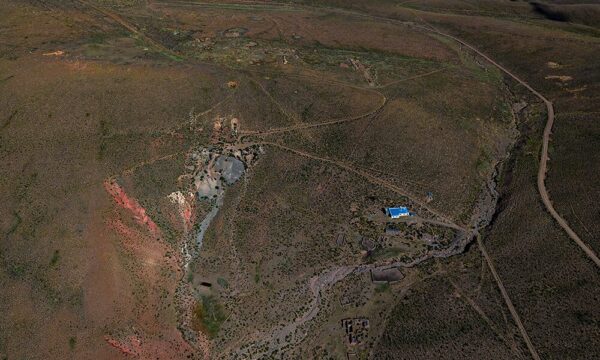
Project Fenix is an active lithium brine operation, which began production in 1997. It is the first commercial-scale lithium brine operation in Argentina (Salar del Hombre Muerto, Catamarca province) and one of a few producing brine projects globally (along with Salar de Atacama in Chile operated by SQM and Albemarle). With initial production of 20ktpa LCE, Fenix has recently undergone an expansion that will increase its capacity to 40ktpa LCE and Livent plans a further two-stage capacity upgrade to c 100ktpa by 2030. The project has combined lithium resources of 11.8mt LCE, capable of supporting c 40 years of operational life post-expansion. Fenix produces battery and technical grade carbonate and high-purity lithium chloride.
■
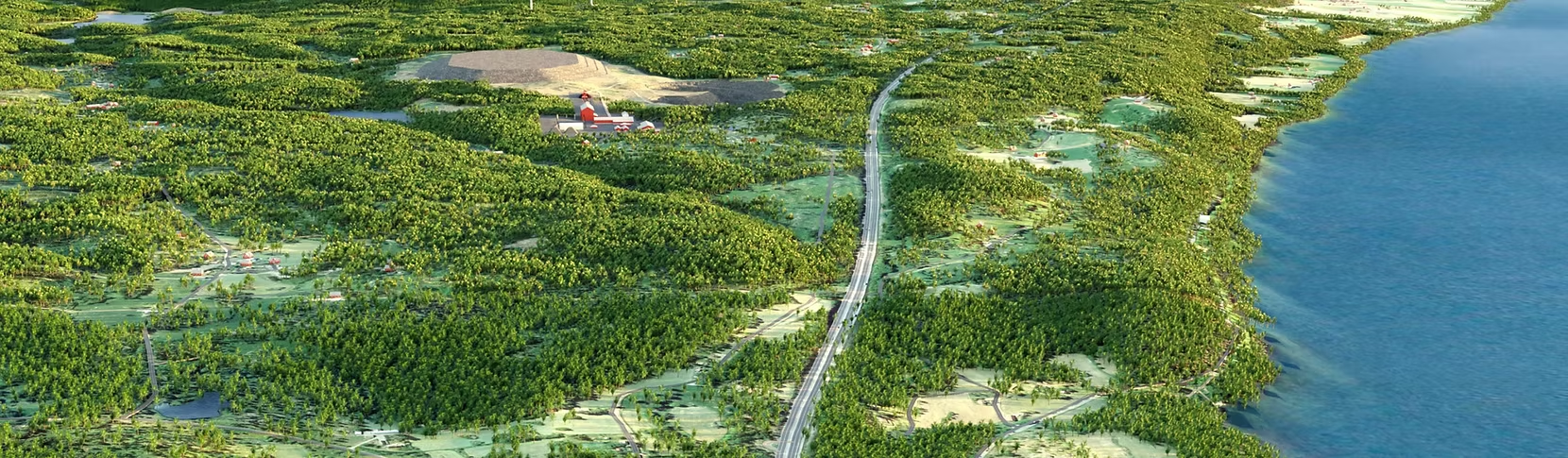
Nemaska Lithium (50%) is a development-stage lithium-bearing spodumene deposit and a hydroxide plant complex in Quebec, Canada. The open-pit portion of the mine is estimated to have a 24-year mine life, supplying c 235ktpa of spodumene concentrate to the conversion plant in Becancour that will produce 34ktpa of hydroxide. The plant is expected to be commissioned in 2026. In 2023, Nemaska signed a long-term agreement with Ford for the initial supply of concentrate and later hydroxide of up to 13ktpa (c 100ktpa of concentrate).
■
Bessemer City is a hydroxide processing and research facility located in North Carolina, US. Lithium hydroxide expansion was completed in 2022, increasing capacity by 50% to 15ktpa.
■
Zhejiang, located in China, is a 15ktpa hydroxide processing facility commissioned at the end of 2023. The company’s total hydroxide capacity in China is 30ktpa.
Allkem’s assets
■
Olaroz (66.5%) is a lithium brine project in Argentina (Salar de Olaroz, Jujuy province) commissioned in 2015. In 2018, the project embarked on a 25ktpa expansion, which was completed in 2023 at an overall capex of c $425m, bringing capacity to 42.5ktpa of LCE. Stage 2 of the project is designed to produce technical grade carbonate. On a 100% basis, the project has total brine resource of 16.8mt LCE at a lithium concentration of 630mg/l, capable of supporting a 32-year mine life. In 2023, Olaroz produced 17.8kt of carbonate (100% basis) and generated revenues of $511m.
■
Mt Cattlin is a hard-rock lithium project in Western Australia, producing spodumene concentrate since 2010 (except for 2013–16 when the project was put on care and maintenance due to unfavourable market conditions). Mt Cattlin has total mineral resources, including stockpiles, of 12.1mt at 1.3% Li2O, and its reserves of 7.1mt at 1.2% Li2O should sustain operations for at least another four to five years, with the potential to extend the mine life. The spodumene concentrate is predominantly sold to China. In 2023, the project produced 239kt of concentrate at 5.3% Li2O, generating revenues of $571m.
■
Sal de Vida is an advanced development-stage lithium brine project in Argentina (Salar del Hombre Muerto, Catamarca province), adjacent to the Fenix operation. Stage 1 of the project is now expected to be commissioned in 2026, producing 15ktpa of lithium carbonate over a 40-year operational life. Sal de Vida has total brine resource of 7.2mt LCE at a lithium grade of c 730mg/l. The Stage 1 development capex was estimated at $374m and the project is expected to operate at a competitive life of mine opex of $4,529/t. The second phase expansion could see the project’s production capacity increasing to 45ktpa of carbonate.
■
James Bay is a pre-development hard rock lithium project in Quebec, Canada. It is envisaged to produce spodumene concentrate based on a conventional open-pit mine and concentrator operation. The project has a large total mineral resource of 110mt at 1.3% Li2O, inclusive of 37mt in reserves at 1.27% Li2O, which should support a mine life of at least 19 years. To improve recoveries, the project is expected to produce 5.6% Li2O concentrate. There is an optionality to further upgrade the saleable concentrate to hydroxide, similar to Nemaska, or use a combined processing facility, given the proximity of the two projects. James Bay’s initial capex was estimated at c C$510m.
■
Cauchari is a pre-development lithium brine asset in Argentina (Jujuy province, adjacent to Olaroz) with a proposed carbonate capacity of 25ktpa. The chemistry of the resource is similar to the nearby Olaroz deposit, allowing for compatible processing.
■
Naraha (75%) is a recently commissioned 10ktpa battery grade hydroxide processing facility in Japan that uses carbonate from Olaroz as a feedstock.
|
|
Research: Industrials
ABO Energy reported strong financial results for FY23, as revenue grew by 29% y-o-y to €300m and net profit increased by 11% to €27.3m. Revenue growth was partially driven by a substantial increase in billed construction services, which totalled €154.6m, up from €96.2m the previous year. Additionally, management has proposed a 11% increase in the dividend to €0.60 per share.