Last close As at 05/08/2026
SEK1.39
▲ −0.01 (−0.43%)
Market capitalisation
SEK197m
Research: Healthcare
IRLAB has reported FY23 results and provided operational and regulatory updates, including an end-of-Phase II (EoP2) meeting with the FDA for mesdopetam and extended patent protection for pirepemat to at least 2038. Management continues to progress its preclinical assets, including IRL757 (Phase I ready, with clinical entry expected in Q224 with support from the Michael J Fox Foundation, MJFF), as well as IRL942 and IRL1117 (both expected to be Phase I ready by end 2024). The SEK111.3m cash position at end FY23, with the drawdown of the remaining SEK25m of the SEK55m financing facility, should provide headroom through Q324. The backing of the MJFF and the recent financing align with our updated clinical progression and launch timelines and are reflected in our adjusted valuation of SEK4.04bn or SEK77.9/share (from SEK4.51bn or SEK87.0/share previously).
Written by
IRLAB Therapeutics |
Timeline refresh with numerous inflection points |
FY23 results |
Pharma and biotech |
12 February 2024 |
Share price performance
Business description
Next events
Analysts
IRLAB Therapeutics is a research client of Edison Investment Research Limited |
||||||||||||||||||||||||||||||||||||||||||||||||||||||||
IRLAB has reported FY23 results and provided operational and regulatory updates, including an end-of-Phase II (EoP2) meeting with the FDA for mesdopetam and extended patent protection for pirepemat to at least 2038. Management continues to progress its preclinical assets, including IRL757 (Phase I ready, with clinical entry expected in Q224 with support from the Michael J Fox Foundation, MJFF), as well as IRL942 and IRL1117 (both expected to be Phase I ready by end 2024). The SEK111.3m cash position at end FY23, with the drawdown of the remaining SEK25m of the SEK55m financing facility, should provide headroom through Q324. The backing of the MJFF and the recent financing align with our updated clinical progression and launch timelines and are reflected in our adjusted valuation of SEK4.04bn or SEK77.9/share (from SEK4.51bn or SEK87.0/share previously).
Year end |
Revenue (SEKm) |
PBT* |
EPS* |
DPS |
P/E |
Yield |
12/22 |
61.3 |
(113.1) |
(2.18) |
0.0 |
N/A |
N/A |
12/23 |
5.7 |
(177.8) |
(3.43) |
0.0 |
N/A |
N/A |
12/24e |
0.0 |
(191.3) |
(3.69) |
0.0 |
N/A |
N/A |
12/25e |
0.0 |
(189.7) |
(3.66) |
0.0 |
N/A |
N/A |
Note: *PBT and EPS are normalised, excluding amortisation of acquired intangibles, exceptional items and share-based payments.
A crucial year for two clinical-stage assets
In IRLAB’s year-end report, management reaffirmed its plans to advance the development of mesdopetam for levodopa-induced dyskinesias (PD-LIDs), where clinical headway rests on the outcome of the EoP2 meeting (scheduled for 20 February). Pirepemat is in a Phase IIb trial to improve balance and reduce falls in PD patients (PD-Falls). The latest update reported higher than anticipated baseline fall rates, increasing the probability of seeing treatment-dependent effects. This means it is possible to reduce the number of participants, while retaining statistical power, although we note that slower recruitment rates have pushed backed expected enrolment completion to Q324 (Q124 earlier). We now expect top-line results in Q424 or Q125.
New loan facility extends runway through Q324
IRLAB ended FY23 with a gross cash balance of SEK111.3m, which included a SEK30m drawdown (SEK27.25m net) from the recently announced SEK55m facility. If the loan is fully utilised, we estimate that IRLAB will be capitalised to fund operations through Q324, by which time we anticipate clarity on mesdopetam’s prospects, which will determine further funding requirements. Assuming self-commercialisation, we estimate that IRLAB will need a further SEK600m, before breaking even in 2028.
Valuation: Resets to SEK4.04bn or SEK77.9/share
After extending the launch timelines for mesdopetam in PD-Psychosis by three years and pirepemat by one year, and rolling our model forward with the latest net cash figure, our valuation resets to SEK4.04bn or SEK77.9/share. We maintain our timeline for mesdopetam launch in PD-LIDs.
A comprehensive pipeline for Parkinson’s disease
IRLAB Therapeutics has an active clinical pipeline covering all major aspects of Parkinson’s disease (PD) (see Exhibit 1). Its lead asset, mesdopetam, is a D3 antagonist in development for the treatment of PD-LIDs, with the potential to be a first-in-class drug with a novel mechanism of action. Management is currently preparing for an EoP2 meeting with the FDA and we expect the outcome to be shared in March 2024. The company’s second clinical-stage asset is pirepemat, a prefrontal cortex enhancer that also has the potential to be a first-in-class drug with a novel mechanism. It has been designed to improve balance and reduce PD-Falls. Pirepemat is being assessed in a Phase IIb trial and, according to the latest update, patient recruitment is now expected to be complete in Q324 (previously Q124).
IRLAB is also focusing on replenishing its pipeline and has three preclinical candidates in development. The most advanced of these is IRL757 for the treatment of apathy in PD and other neurological conditions (such as Alzheimer’s disease). In line with guided timelines for this programme, the company reported that IRL757 completed all preclinical studies in December 2023. In parallel with this news, management announced that it has entered into a grant agreement with the MJFF, and will receive funding of c $2m (c SEK20.2m) to support a Phase I programme. A trial application is now compiled to be sent to regulatory authority and Phase I studies are expected to commence from Q224.
IRL942 is being developed as a potential treatment to improve cognitive impairment for neurological conditions and IRL1117 as a once-daily PD treatment, either as a monotherapy with the potential to replace levodopa or as an adjuvant. Management is aiming for these two candidates to be Phase I ready by end H124 and by end 2024, respectively. We note that IRLAB and the McQuade Center for Strategic Research and Development are currently evaluating the possibility of a collaboration for the early-stage development of IRL757 and IRL942, and we expect an update on this once more material decisions have been made. We also expect preclinical data for IRL1117 to be shared at the 18th International Conference on Alzheimer’s and Parkinson’s Diseases in Lisbon (5–9 March 2024).
|
Exhibit 1: IRLAB pipeline |
|
|
Source: IRLAB, Q423 results presentation |
Ample opportunity in a challenging indication
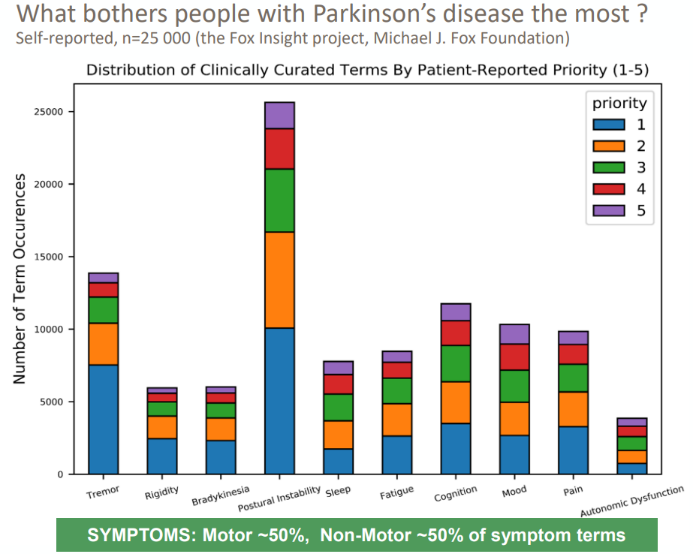
PD is a complex and progressive neurodegenerative condition estimated to afflict approximately one million people in the US alone and more than 10 million people worldwide, with the global figure expected to double by 2040. The condition is characterised by a triad of cardinal motor symptoms (rigidity, bradykinesia and tremor), although non-motor symptoms (psychosis, dementia and cognitive impairment) can be as debilitating and remain undertreated. We highlight that postural instability and tremor are considered two of the most troublesome symptoms according to patients (Exhibit 2). Levodopa, a dopamine replacement agent, has been the standard of care in PD since its approval by the FDA in 1970. However, the drug is associated with a myriad of side effects and long-term use can lead to dyskinesia. Furthermore, IQVIA estimates the global value of the PD market in 2029 at $5.2bn (a 4% CAGR from 2019). We therefore believe there is ample opportunity for IRLAB to develop novel treatment options that aim to provide more desirable outcomes for patients for multiple symptoms across all stages of PD (Exhibit 3).
|
Exhibit 2: Priority of bothersome symptoms in PD |
Exhibit 3: IRLAB’s presence across PD progression |
|
|
|
Source: IRLAB, Q423 results presentation |
|
Exhibit 2: Priority of bothersome symptoms in PD |
|
|
Source: IRLAB, Q423 results presentation |
|
Exhibit 3: IRLAB’s presence across PD progression |
|
|
Source: IRLAB, Q423 results presentation |
Recent deal puts PD in the spotlight
To further corroborate the opportunity in PD, we highlight that in October 2023, AbbVie exercised its exclusive right to acquire Mitokinin, with the focus of the deal on its potentially first-in-class disease-modifying PD treatment. Under the terms of the agreement, AbbVie will pay Mitokinin shareholders $110m upfront, excluding potential additional payments of up to $545m on achieving development and commercial milestones.
Mesdopetam: Next steps dependent on EoP2 outcome
The latest from the clinic
The most recent clinical programme for mesdopetam was the randomised, double-blind, placebo-controlled Phase IIb trial (n=154), which concluded in January 2023. In this study, patients taking anti-PD medication and experiencing troublesome dyskinesia (uncontrolled involuntary movements) were randomised to receive either placebo or mesdopetam (2.5mg, 5.0mg or 7.5mg) twice daily for 12 weeks. As part of the trial protocol, patients were permitted to change their dose at one point during the study. The primary endpoint was changes in daily hours of ON time (the length of time a patient does not have symptoms) without troublesome dyskinesia based on Hauser standardised 24-hour patient-reported diary entries, with the Unified Dyskinesia Rating Scale (UDysRS) and subscales as secondary efficacy measures. While the results confirmed the safety and tolerability of the drug, the study did not meet its primary endpoint. However, the secondary endpoint of UDysRS was met, and while we advise against direct read-across, we note that UDysRS measurements formed the basis for the approval of Adamas’s Gocovri (amantadine extended release), the only FDA-approved treatment for PD-LIDs. We also highlight that Gocovri is associated with a multitude of side effects, such as hallucinations, peripheral edema, falls, suicidality and depression, which may prompt regulators to view mesdopetam’s safety profile favourably.
In August 2023, IRLAB published a detailed analysis of the Phase IIb trial data. The assessment was conducted on both the actual doses that participants received incorporating dose adjustments (protocol-compliant adjusted dose set, PS) and the randomised dose assigned (full analysis set, FAS), providing a comprehensive understanding of dose dependency and corresponding treatment effects. The analysis showed that in the FAS, the effect of mesdopetam on good ON time was not statistically significant, but in the PS, patients taking the highest tested dose of mesdopetam experienced a significant and clinically meaningful increase in good ON time (1.75 hours vs placebo, p=0.05). Furthermore, in the FAS, the effect of mesdopetam based on UDysRS (sum of parts 1, 3 and 4) measured a notable reduction in dyskinesia (6.2 points vs placebo, p=0.026) at 7.5mg, but this was numerically larger in the PS (9.2 points vs placebo, p=0.011). The data also showed a clear dose-dependent and sustained reduction in OFF time for both the FAS and PS groups (Exhibits 4 and 5).
|
Exhibit 4: Statistical improvement in FAS population |
Exhibit 5: Statistical improvement in PS population |
|
|
|
Source: IRLAB capital markets day presentation, October 2023 |
|
Exhibit 4: Statistical improvement in FAS population |
|
|
Source: IRLAB capital markets day presentation, October 2023 |
|
Exhibit 5: Statistical improvement in PS population |
|
|
Source: IRLAB capital markets day presentation, October 2023 |
Plans to progress mesdopetam to Phase III
In August 2023, IRLAB announced that it had secured full ownership rights to the mesdopetam project, which was previously out-licenced to Ipsen. All preclinical studies and Phase I, Ib, IIa and IIb trials were completed as part of this collaboration. Full ownership, including associated intangibles and materials, has been returned to IRLAB in exchange for future (low single-digit) royalties on future product sales. We note that Ipsen is supporting IRLAB’s plans to progress the clinical development of mesdopetam, including production of the drug for Phase III, as well as drug metabolism pharmacokinetics and safety studies, which have already been completed.
With a body of clinical evidence to support mesdopetam’s potential, management has scheduled an EoP2 meeting with the FDA. The meeting will take place on 20 February 2024, and we expect the outcome to be shared up to 30 days afterwards, potentially representing a major catalyst for the company. IRLAB has worked in collaboration with two US-based advisory groups, Clintrex (a clinical and regulatory strategy advisor) and ProPharma Group (a regulatory consulting organisation), to prepare the briefing book for the FDA and to develop the strategy for the planned Phase III programme.
The EoP2 meeting will enable IRLAB to discuss the data obtained to date on mesdopetam, as well as to obtain feedback on the planned Phase III study, including details on entry criteria, outcome measures, study duration and analytic approaches. After this, IRLAB plans to request a Special Protocol Assessment (SPA) with the FDA, to reduce the possibility of future conflicts or challenges on regulatory clearance. If management is successful in negotiating an SPA, it should result in an agreement with the regulatory authorities regarding specific requirements for the study protocol design and plan for analysis, while also clearly identifying the results that must be achieved to complete Phase III successfully. Ultimately, this could streamline a route to market, provided that subsequent clinical data generated continue to be supportive.
As discussed in our previous update note, we understand that IRLAB is likely to plan a pivotal trial seeking to demonstrate the clinical benefits of mesdopetam over a short treatment duration of 12–13 weeks, alongside long-term safety data at the maximum dosage for at least one year. The focus of this trial would be on demonstrating an improvement in dyskinesia, while also aiming to provide a decrease in OFF time (with indefinite treatment duration). Management has indicated that this should require enrolment of c 150–200 patients. Here, UDysRS scale data have the potential to be submitted for confirmatory evidence, as the FDA has already validated the clinical relevance of this scale with the approval of Gocovri. While it is typical for Phase III programmes seeking regulatory approval to consist of at least two trials, regulatory and clinical advisors to the company believes there is reasonable scope to conduct just one Phase III trial for PD-LIDs. However, precise details depend on the outcome of the EoP2 meeting, which we expect management to share shortly afterwards. We also note that ongoing discussions on potential partnerships for a Phase III programme are also dependent on the outcome of the EoP2 meeting.
Pirepemat: Next opportunity in the pipeline
Pirepemat is being investigated for the treatment of PD-Falls in the ongoing Phase IIb trial (React-PD). This is a randomised, double-blind, placebo-controlled study that was originally designed to recruit 165 patients across five European countries. Patients are randomised to receive either 300mg pirepemat (100mg thrice daily, n=55), 600mg pirepemat (200mg thrice daily, n=55) or placebo (n=55) (Exhibit 6). The primary efficacy measure is change in the frequency of falls with pirepemat compared to placebo, assessed with the fall diary from baseline period to the end of the planned 12-week treatment period.
|
Exhibit 6: Pirepemat Phase IIb trial design |
|
|
Source: IRLAB company documents |
In May 2023, IRLAB announced that it had activated all 38 trial sites and in July 2023, the independent data and safety monitoring board recommended that the trial continue according to the approved protocol without any modifications. The review was based on interim data from the first 25 participants completing the study. We note that levodopa has a limited beneficial effect on the risk of falls in PD patients, highlighting the significant unmet need in this space. The top-line data for this Phase IIb study were previously expected by end-H124, but IRLAB published an update in February 2024.
A slight delay, but with greater chance of success
According to the update, the ongoing Phase IIb trial for pirepemat has been running smoothly since all 38 sites were activated, with a clearer understanding of the recruitment pace. A recent assessment of the baseline data for this study has shown that subjects are two to three times more likely to experience falls than expected. Furthermore, the individual fall rates were notably consistent throughout the one-month study run-in prior to starting treatment with pirepemat. Collectively, this creates a greater likelihood of demonstrating treatment-dependent effects on the rate of falls. This has prompted IRLAB to request an amendment to the study protocol, seeking to reduce the number of patients required to complete the study. Importantly, with the observations so far, the company believes the statistical power of the study can be retained, using fewer participants (although we note that management has not specified a precise number at this stage, and we note that there is a possibility the amendment will not be accepted). However, despite the potential requirement for fewer participants, management has communicated that enrolment for the React-PD trial will be complete in Q324 versus Q124 previously, most likely due to a slower than expected recruitment pace. With this delay, we anticipate readouts for this study in Q424 or Q125, later than previous guided timelines for top-line results in H124. We continue to believe that the results could represent a major inflection point for the company. According to management, if the data are positive, IRLAB will seek partners to support a Phase III programme for pirepemat.
Financials
IRLAB reported an operating loss of SEK35.6m in Q423, an increase of 7.8% over the Q422 figure of SEK33.1m. The underlying reason for this difference was SEK12.2m in revenue recognised in Q422 under the company’s licensing agreement with Ipsen, which did not recur in Q423 (following the termination of the deal earlier in the year). Looking at overall opex levels, Q423 operating expenses of SEK34.5m were significantly lower than the prior period figure of SEK45.4m. This decline can be attributed to lower external expenses (primarily R&D related) of SEK22.5m versus SEK30.4m in Q422 following conclusion of the mesdopetam Phase IIb study in early 2023 and completion of preclinical activities for the pipeline asset IRL757 later in the year. With headcount remaining largely stable during the period, personnel costs have stayed within the typical run rate range of SEK10–12m per quarter (SEK10.9m in Q423 versus SEK12.7m in Q422). In terms of sequential performance, the company continued to deliver an improved operating performance quarter-on-quarter (operating losses of SEK59.5m in Q123, SEK44.9m in Q223 and SEK40.7m in Q323), which is largely the product of decreasing R&D activity through the year. IRLAB received an upfront payment of SEK239.6m from Ipsen (as part of their signed agreement for mesdopetam) in 2021 (part of which was deferred), of which SEK42.5m was recognised as a licence fee in FY22 (zero in FY23). Another SEK18.6m was booked as a service fee in the same period, with the corresponding figure of SEK5.7m in FY23. We note that the settlement was finalised with Ipsen in Q423, whereas IRLAB’s invoicing did not quite reach the previously accrued amount, leading to a negative turnover amounting to SEK1.2m during Q423. (SEK2.5m booked as revenue in Q223).
For FY23, the company reported an operating loss of SEK180.8m, which was lower than our estimate of SEK186.3m. Based on these results and visibility of the clinical plan for the next 12–18 months, we have made some adjustments to our FY24 estimates and have introduced FY25 projections. For FY24, we have reduced our R&D estimate to SEK151.2m (SEK162.1m previously) as we now anticipate only one preclinical asset to enter the clinic in 2024 (IRL757 for the treatment of apathy in H124). Previously we had assumed IRL942 (treatment to improve cognitive function) would enter the clinic within the year. This revision to our estimates has been driven by the updated plans management presented as part of its FY23 results discussion. However, we note that this decline has been partially offset by the increased R&D we now assume for pirepemat in FY24, given that patient enrolment is now expected to continue up to Q324 (vs Q124 previously estimated). For FY25, we estimate R&D expenses of SEK140m. We note that these estimates do not factor in any further internal R&D on mesdopetam or pirepemat (following conclusion of the Phase IIb study), as we expect the company to seek a partnership to undertake further development in pivotal trials and beyond. For FY25, while we expect IRLAB to be able to enter a partnership agreement for mesdopetam, we have not reflected any potential inflows from upfront payments, given the lack of visibility at this stage. We expect payroll expenses to remain stable within the SEK40–45m range across FY24 and FY25. Overall, we estimate the company to report operating losses of SEK189.0m in FY24 (previously SEK202.5m) and SEK176.2m in FY25.
The company ended FY23 with a gross cash balance of SEK111.3m, supported by the SEK27.25m in net proceeds from the first tranche of the loan agreement signed with Formue Nord. IRLAB announced a new SEK55m loan facility in December 2023, under which the first tranche of SEK30m (gross) was paid out and the company holds the right to exercise the remaining SEK25m between May and August 2024, subject to certain conditions (refer to our note for more details). The loan has a 5% set-up fee, translating to SEK2.75m in value. In December 2023, IRLAB received net proceeds of SEK27.25m from the first tranche (after transaction costs), of which SEK2.771m has been capitalised as a convertible bond loan in the balance sheet (as part of shareholders’ equity) in lieu of the set-up fee (which will be amortised over the period of the loan). The remaining SEK24.5m has been booked as long-term debt (maturing in May 2025).
Based on our operating cash flow projections for FY24 (SEK187.8m), we estimate that the current gross cash balance plus the remaining SEK25m tranche from the loan (pro forma cash of SEK136.3m) should support the company to fund operations through Q324, before requiring additional funds. While we model that IRLAB will have finalised a partnering agreement for mesdopetam by then (provided there is a positive outcome from the EoP2 meeting with the FDA), in the absence of any such deal, we estimate that it would need to raise a further SEK600m through FY26 (previously SEK750m) before becoming self-sustainable in FY28 (with the projected launch of mesdopetam). We continue to account for this capital requirement as illustrative debt in our model, assuming a SEK200m raise each year from FY24 to FY26. Alternatively, if the company raised these funds through an equity issue instead, it would have to issue 41.2m shares (assuming the current trading price of SEK14.55), resulting in our per-share valuation decreasing to SEK39.9 from SEK77.9 currently (shares outstanding would increase from 51.9m to 93.1m).
Valuation
FY23 was an eventful year for IRLAB’s clinical programmes. Following improved visibility on mesdopetam’s and pirepemat’s expected clinical paths, we have made certain revisions to our valuation assumptions. For mesdopetam, we have now pushed out the launch timeline estimates for the second indication being evaluated, PD-Psychosis. We assume launch under this indication will now take place in 2032 versus our previous estimate of 2029. We also reduce the probability of success from 30% to 20%, to reflect the higher risk associated with this delay. This is based on our understanding that the immediate priority for IRLAB would be its most clinically advanced programmes, particularly mesdopetam in PD-LIDs and pirepemat in PD-Falls, with development work on PD-Psychosis deprioritised until there is further clarity on the clinical pathway for the primary indication(s). We now ascribe a risk-adjusted net present value (rNPV) of SEK4.2/share for mesdopetam in PD-Psychosis (SEK11.4/share previously).
For the lead indication, PD-LIDs, we keep our assumptions and estimates broadly unchanged for now (rNPV of SEK36.6/share versus SEK35.4/share previously) in anticipation of the forthcoming EoP2 meeting with the FDA (outcome expected by 20 March). We will revisit our estimates (probability of success and launch timelines) following the outcome and takeaways from this meeting.
For the second asset, pirepemat, we have extended our launch timeline, following the revised enrolment and readout timelines shared by management (Q324 for completion of patient enrolment versus Q124 previously). Based on management’s recent announcement, we expect at least a six- to nine-month delay from the previously communicated timelines and now estimate that the launch will occur in 2029 (2028 previously). Our revised rNPV for pirepemat stands at SEK35.4m/share (SEK37.9/share previously).
Following these revisions, we adjust our overall valuation for IRLAB to SEK4.04bn or SEK77.9/share (versus SEK4.51bn or SEK87.0/share previously). In addition to the aforementioned changes to our estimates, the valuation also reflects the benefits of rolling forward our model, offset by a lower net cash position (SEK86.8m at end December 2023 versus SEK118.8m at end of the previous quarter). A breakdown of our rNPV valuation is shown in Exhibit 7 below.
Exhibit 7: IRLAB sum-of-the parts valuation
Product |
Indication |
Launch |
Peak |
Peak sales ($m) |
Value |
Probability |
rNPV |
rNPV/share (SEK) |
Mesdopetam |
PD-LIDs |
2028 |
2034 |
1,268.5 |
4,733.5 |
40% |
1,899.3 |
36.6 |
Mesdopetam |
PD-Psychosis |
2032 |
2038 |
726.5 |
1,157.0 |
20% |
218.7 |
4.2 |
Pirepemat |
PD-Falls (postural hypotension) |
2029 |
2035 |
1,057.2 |
6,139.0 |
30% |
1,835.1 |
35.4 |
Net cash at 31 December 2023 |
|
|
|
86.8 |
100% |
86.8 |
1.7 |
|
Valuation |
|
|
|
12,116.3 |
4,039.8 |
77.9 |
Source: Edison Investment Research
Exhibit 8: Financial summary
Accounts: IFRS, year-end: 31 December, SEK’000s |
|
|
2021 |
2022 |
2023 |
2024e |
2025e |
PROFIT & LOSS |
|
|
|
|
|
|
|
Total revenues |
|
|
207,906 |
61,277 |
5,720 |
0 |
0 |
Cost of sales |
|
|
0 |
0 |
0 |
0 |
0 |
Gross profit |
|
|
207,906 |
61,277 |
5,720 |
0 |
0 |
Total operating expenses |
|
|
(155,330) |
(174,386) |
(186,486) |
(188,965) |
(176,204) |
Research and development expenses |
|
|
(129,748) |
(146,178) |
(151,312) |
(151,172) |
(140,000) |
EBITDA (reported) |
|
|
56,050 |
(108,330) |
(176,450) |
(185,527) |
(173,615) |
Operating income (reported) |
|
|
52,576 |
(113,109) |
(180,766) |
(188,965) |
(176,204) |
Operating margin % |
|
|
N/A |
N/A |
N/A |
N/A |
N/A |
Finance income/(expense) |
|
|
(795) |
(297) |
2,926 |
(2,318) |
(13,520) |
Exceptionals and adjustments |
|
|
0 |
0 |
0 |
0 |
0 |
Profit before tax (reported) |
|
|
51,781 |
(113,406) |
(177,840) |
(191,284) |
(189,724) |
Profit before tax (normalised) |
|
|
91,131 |
(113,147) |
(177,840) |
(191,284) |
(189,724) |
Income tax expense (includes exceptionals) |
|
|
0 |
0 |
0 |
0 |
0 |
Net income (reported) |
|
|
51,781 |
(113,406) |
(177,840) |
(191,284) |
(189,724) |
Net income (normalised) |
|
|
91,131 |
(113,147) |
(177,840) |
(191,284) |
(189,724) |
Basic average number of shares, m |
|
|
51.7 |
51.8 |
51.9 |
51.9 |
51.9 |
Basic EPS (SEK) |
|
|
1.00 |
(2.19) |
(3.43) |
(3.69) |
(3.66) |
Adjusted EPS (SEK) |
|
|
1.76 |
(2.18) |
(3.43) |
(3.69) |
(3.66) |
Dividend per share (SEK) |
|
|
0.00 |
0.00 |
0.00 |
0.00 |
0.00 |
BALANCE SHEET |
|
|
|
|
|
|
|
Tangible assets |
|
|
8,348 |
8,009 |
6,672 |
3,533 |
1,244 |
Intangible assets |
|
|
42,661 |
46,862 |
46,862 |
46,862 |
46,862 |
Other non-current assets |
|
|
0 |
0 |
0 |
0 |
0 |
Total non-current assets |
|
|
51,009 |
54,871 |
53,534 |
50,395 |
48,106 |
Cash and equivalents |
|
|
401,897 |
252,776 |
111,309 |
145,109 |
102,674 |
Inventories |
|
|
0 |
0 |
0 |
0 |
0 |
Trade and other receivables |
|
|
19,543 |
15,908 |
12,278 |
12,278 |
12,278 |
Other current assets |
|
|
0 |
0 |
0 |
0 |
0 |
Total current assets |
|
|
421,440 |
268,684 |
123,587 |
157,387 |
114,952 |
Non-current loans and borrowings |
|
|
0 |
0 |
24,511 |
249,511 |
394,511 |
Non-current lease liabilities |
|
|
3,566 |
381 |
115 |
0 |
0 |
Other non-current liabilities |
|
|
0 |
0 |
0 |
0 |
0 |
Total non-current liabilities |
|
|
3,566 |
381 |
24,626 |
249,511 |
394,511 |
Accounts payable |
|
|
4,634 |
0 |
0 |
0 |
0 |
Non-current loans and borrowings |
|
|
0 |
0 |
0 |
0 |
0 |
Current lease liabilities |
|
|
3,034 |
3,595 |
2,940 |
0 |
0 |
Deferred Income |
|
|
42,576 |
0 |
0 |
0 |
0 |
Other current liabilities |
|
|
19,158 |
28,748 |
33,792 |
33,792 |
33,792 |
Total current liabilities |
|
|
69,402 |
32,343 |
36,732 |
33,792 |
33,792 |
Equity attributable to company |
|
|
399,481 |
290,830 |
115,764 |
(75,520) |
(265,244) |
CASH FLOW STATEMENT |
|
|
|
|
|
|
|
Operating income |
|
|
52,576 |
(113,109) |
(180,766) |
(188,965) |
(176,204) |
Depreciation and amortisation |
|
|
3,474 |
4,779 |
4,316 |
3,439 |
2,589 |
Share based payments |
|
|
0 |
0 |
0 |
0 |
0 |
Other adjustments |
|
|
38,295 |
(297) |
2,963 |
(2,318) |
(13,520) |
Movements in working capital |
|
|
34,296 |
(33,985) |
8,627 |
0 |
0 |
Cash from operations (CFO) |
|
|
128,641 |
(142,612) |
(164,860) |
(187,845) |
(187,135) |
Capex |
|
|
(708) |
(2,876) |
(293) |
(300) |
(300) |
Acquisitions & disposals net |
|
|
0 |
(500) |
0 |
0 |
0 |
Other investing activities |
|
|
0 |
0 |
0 |
0 |
0 |
Cash used in investing activities (CFIA) |
|
|
(708) |
(3,376) |
(293) |
(300) |
(300) |
Net proceeds from issue of shares |
|
|
(180) |
0 |
0 |
0 |
0 |
Movements in debt |
|
|
(2,865) |
(3,134) |
20,915 |
221,945 |
145,000 |
Other financing activities |
|
|
0 |
0 |
2,771 |
0 |
0 |
Cash from financing activities (CFF) |
|
|
(3,045) |
(3,134) |
23,686 |
221,945 |
145,000 |
Cash and equivalents at beginning of period |
|
|
277,009 |
401,897 |
252,775 |
111,309 |
145,109 |
Increase/(decrease) in cash and equivalents |
|
|
124,888 |
(149,122) |
(141,467) |
33,800 |
(42,435) |
Effect of FX on cash and equivalents |
|
|
0 |
0 |
1 |
0 |
0 |
Cash and equivalents at end of period |
|
|
401,897 |
252,775 |
111,309 |
145,109 |
102,674 |
Net (debt)/cash |
|
|
401,897 |
252,776 |
86,798 |
(104,402) |
(291,837) |
Source: Edison Investment Research; IRLAB company account
|
|
Research: Healthcare
Immix Biopharma has released back-to-back updates, including EU orphan drug designation (ODD) for its lead CAR-T asset NXC-201, addressing amyloid light chain amyloidosis (ALA), and pricing of its $15m equity raise. This follows on the heels of the ODD grant for its lead asset by the FDA for two indications, ALA and multiple myeloma (MM), in H223. The EU ODD includes up to 10 years of EU market exclusivity (post-approval), reduced regulatory fees and access to the EU centralized authorization procedure. Achieving ODD in ALA in the EU is a key step forward for the clinical development of NXC-201. We believe the next readout from the ongoing NEXICART-1 trial and dosing of patients at US trial sites (NEXICART-2) across H124 will be the key upcoming catalysts for the company.