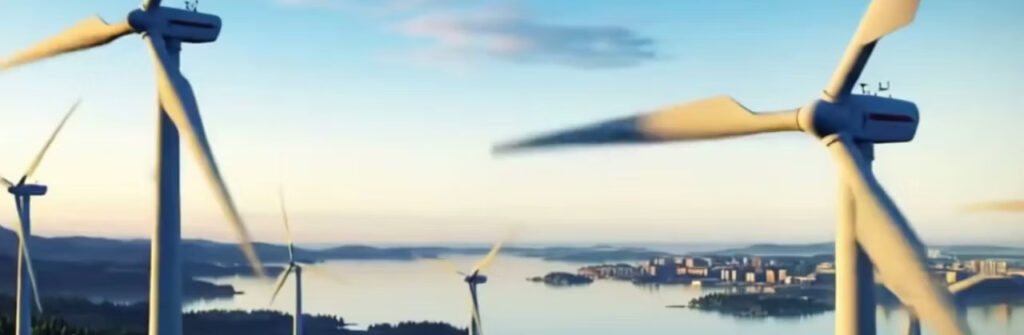
Europe’s rare earth problem
There are 17 REEs (see Appendix), but only a handful are critical for high-performance
permanent magnets. For NdFeB magnets, the volume drivers are the light rare earths
neodymium and praseodymium (NdPr), while the HREEs dysprosium (Dy) and terbium (Tb)
are added in smaller amounts to improve coercivity and maintain performance at higher
operating temperatures, which is especially important for EV traction motors. Power
generation is based on electromagnetic induction: when a conductor moves through a
magnetic field, a voltage is induced, and while generators and motors can be built
without rare earth permanent magnets, high-strength permanent magnets can improve
efficiency and reduce size and weight. This is why they feature in key parts of the
energy transition, including wind turbines, electric mobility and robotics. Rare earths
have niche defence applications (eg NdFeB magnets are used in systems such as radar,
guidance and aircraft actuation and small powerful magnets enable lightweight military
drones) and magnet materials are strategically important for robotics. As part of
an integrated value chain strategy, Europe will need supply chains that remain resilient
under geopolitical stress.
Geopolitics and industrial policy are now needed
The rare earths supply chain is heavily concentrated in China. It is estimated China
accounts for c 60–70% of global rare earth mining, c 90–91% of separation and refining,
and more than 90% of permanent magnet manufacturing. This dominance is driven less
by geology and more by historical and economic factors. Through the 1980s and 1990s,
rare earth demand was dominated by relatively low-growth applications, with magnet
demand becoming the strategic driver later. In this earlier period, China displaced
much of the Western industry on cost. Cheap capital and labour, along with looser
environmental enforcement, made it uneconomic for Western producers to sustain capacity
or build new mines. The main REE producer, Molycorp, which operated the Mountain Pass
Rare Earth Mine in California, filed for Chapter 11 bankruptcy in June 2015. It relisted
as MP Materials (NYSE: MP) in 2020, has a market capitalisation of c
US$11bn and includes the US Department of War (formerly the Department of Defense), General
Motors and Apple among its strategic partners. In July 2025, MP Materials announced
a public-private partnership with the United States Department of War, including $400m
of equity and a $150m loan, to accelerate a domestic rare earth magnet supply chain.
MP Materials is not alone – in January 2026, USA Rare Earth (Nasdaq: USAR) announced
it had signed a non-binding letter of intent with the US Department of Commerce’s
CHIPS Program, covering $277m of proposed federal incentives and a $1.3bn proposed
senior secured loan.
Supply is no longer governed by economics alone; policy is becoming as important,
with governments and end-users actively trying to build value chains that exclude
China. The geopolitical supply risk is not theoretical as rare earths have clear precedents
as a policy tool, most notably the widely reported 2010 export interruption to Japan
following a marine incident. This was followed by a World Trade Organization (WTO)
dispute, in which China’s export restrictions on REEs were ruled inconsistent with
WTO rules in 2014 after complaints by the US, EU and Japan. In April 2025, China announced
new export controls covering categories that included Dy and Tb, and prices for Dy2O3 and Tb4O7 spiked in the immediate aftermath. More recently, China has expanded export controls
on rare earth-related products, equipment and technologies, including measures announced
on 9 October 2025, which reinforces the strategic risk around licensing and access.
REEs are a small industry by revenue compared with bulk commodities such as copper
or iron ore (a few billion dollars per year versus hundreds of billions of dollars
for iron ore and copper), but they sit at critical choke points in modern industrial
systems.
Sizing the heavy problem: How much Dy and Tb does Europe need?
Dy and Tb are generally classified as HREEs. As described above, they raise coercivity,
with the trade-off being cost and scarcity (NdPr oxide prices are
US$90/kg at present, against Dy2O3 prices of
US$210/kg and Tb2O3 prices of
US$890/kg). NdPr typically accounts for 30–35% of the rare earth basket in global deposits, whereas
Dy and Tb make up 1–2% and are therefore more expensive. This is why magnet makers
have spent years reducing HREE loading through design, grain boundary diffusion and
tighter thermal management.
Data limitations make rare earth market estimation, particularly for individual elements,
challenging. On our estimates, global Dy demand is c 1,800–2,000t Dy2O3 per year. We estimate Europe accounts for 8–10% of global demand (c 180–200tpa Dy2O3), broadly consistent with Europe’s share of end-use manufacturing. This also broadly
reconciles with a bottom-up sense-check using Dy intensity assumptions for European
EV traction motors and permanent magnet wind turbines.