Last close As at 05/08/2026
—
— 0.00 (0.00%)
Market capitalisation
—
Research: Metals & Mining
After a sharp correction in H222 and H123, lithium prices have recently enjoyed a healthy bounce back, providing support to lithium equities. However, Lithium Power International’s (LPI’s) shares continue to be held back by the political uncertainty in Chile. Acknowledging the initial market scepticism, we believe that the recent introduction of a Chilean national lithium policy establishes a clearer path to production for new projects. Based on our model, LPI’s share price implies a net present value (NPV) discount rate of more than 40%, which we believe is an overly conservative risking for the Maricunga project, which is at a final investment decision stage, even allowing for the Chilean regulatory uncertainty.
Lithium Power International |
Lower risk, higher reward |
Valuation update |
Metals and mining |
14 June 2023 |
Share price performance
Business description
Next events
Analysts
Lithium Power International is a research client of Edison Investment Research Limited |
|||||||||||||||||||||||||||||||||||||||||||||||
After a sharp correction in H222 and H123, lithium prices have recently enjoyed a healthy bounce back, providing support to lithium equities. However, Lithium Power International’s (LPI’s) shares continue to be held back by the political uncertainty in Chile. Acknowledging the initial market scepticism, we believe that the recent introduction of a Chilean national lithium policy establishes a clearer path to production for new projects. Based on our model, LPI’s share price implies a net present value (NPV) discount rate of more than 40%, which we believe is an overly conservative risking for the Maricunga project, which is at a final investment decision stage, even allowing for the Chilean regulatory uncertainty.
Year |
Revenue |
PBT* |
EPS* |
DPS |
P/E |
Yield |
06/20 |
0.0 |
(12.7) |
(4.9) |
0.0 |
N/A |
N/A |
06/21 |
0.0 |
(6.0) |
(2.2) |
0.0 |
N/A |
N/A |
06/22 |
0.0 |
(12.6) |
(3.8) |
0.0 |
N/A |
N/A |
06/23e |
0.0 |
(2.7) |
(0.6) |
0.0 |
N/A |
N/A |
Note: *PBT and EPS are normalised, excluding amortisation of acquired intangibles, exceptional items and share-based payments.
Chilean lithium policy: Breaking the stalemate
In April 2023, the Chilean government unveiled its national lithium strategy (NLS): a set of general guidelines and principles that define state efforts and activities aimed at developing the domestic lithium industry. The key elements of the strategy include public-private partnerships, participation of local communities and creation of a national lithium company. The strategy is a de facto confirmation of the dominating role played by the state in the sector. Acknowledging market concerns regarding the private ownership risks, we nevertheless believe that the new policy could be an important step towards breaking the current industry stalemate and establishing a clearer path to production for new projects. This bodes well for LPI as Maricunga is one of the most advanced pre-production lithium assets in Chile.
Lithium M&A continues apace
While the recent weakness in lithium prices brought a new wave of industry consolidation, in contrast to earlier M&A, the improved sector outlook saw a higher number of unsuccessful bids despite a visible increase in valuation premiums. Lithium remains a solid long-term structural growth story, reflecting its use in electric vehicle batteries and other energy storage applications. We see global lithium demand growing at a 20% CAGR from 2022 to 2030, which is exceptionally high in commodity and chemical markets. As such we believe that the sector is likely to continue experiencing high levels of M&A activity and expect large-scale, low-cost, advanced assets to attract visible takeout valuation premiums.
Valuation: An improving risk profile
We have updated our undiluted valuation of LPI for the lower US$/A$ exchange rate and the latest cash position. Our project driven valuation has increased from A$1,813m to A$1,845m using a standard 10% discount rate. Assuming 40% of the project capital is raised via equity at the current price, our revised equity valuation translates into a per share value of A$1.16 (from A$1.42). We believe that the NLS lowers the political risk and should be viewed as a positive driver for LPI’s shares.
National lithium strategy implications
In April 2023, the Chilean government unveiled its NLS, which is the most significant industry announcement since the 1980s. It is a public policy defining the government’s efforts and activities aimed at developing the lithium industry, which is key for the country’s economic growth in light of the global transition to a green economy. The strategy contemplates general guidelines and principles, some of which will require legislative changes in the future. However, the majority of the proposed changes assume the application of the current legal framework.
The key elements of the NLS are:
■
the creation of a national lithium company,
■
public-private collaboration,
■
the promotion of the use of new lithium extraction technologies,
■
the participation of local communities, and
■
the generation of value-added lithium products.
At the initial stage, the Chilean government intends to participate in the development of the lithium industry through Codelco (the national copper corporation) and Enami (the national mining company). In the meantime, a new state-owned company, the National lithium corporation, will be created to coordinate the public-private initiatives to attract new industry participants and investments. This company will oversee the salt flats exploitation under public-private operation. The creation of the National lithium corporation will require congressional approval.
Unsurprisingly, the NLS gives special attention to Salar de Atacama, where Chile’s two currently producing operations, run by SQM and Albemarle, are based. These projects operate on the basis of leasing contracts signed with the state of Chile. These contracts will be respected by the government until their expiration, which is 2030 for SQM and 2043 for Albemarle (both are after the current government’s term).
As for the other salt flats, exploration contracts are expected to be awarded to private parties through a public and transparent bidding process. If exploration is successful, a private company will have the preferential right to request an exploitation contract in association with the state-owned company.
We note that a broadly similar mechanism of state involvement is already in operation in the country’s copper sector, in which both Codelco and Enami currently participate on a minority basis. Thus, Codelco controls 49% in El Abra (51% Freeport) and 29.5% in Los Bronces (50.1% Anglo American), while Enami owns 10% in Quebrada Blanca (60% Teck Resources). This shows that the state is potentially comfortable maintaining minority stakes in the mining projects. Further, according to press reports, the majority ownership is likely to only apply to projects that have strategic significance (such as the large-scale operations in Salar de Atacama). No additional information or details regarding potential state involvement in the lithium industry have been provided so far.
Implications for LPI
At present there are two different mining regulations applicable to lithium in Chile. Under the legislation that was in force until 1979 (‘old code’), lithium was considered a common mineral substance exploitable under the regular mining concessions, similar to copper, gold and other minerals. In 1979, the new regulation established the reservation of lithium in favour of the state. It was later incorporated into the legal framework as part of the 1980 constitution (still in force today). In reality, lithium deposits were no longer exploitable and in 1982 a new lithium statute (‘new code’) was created that stipulated lithium exploitation by the state through special lithium authorisation contracts. Importantly, despite the restrictions on lithium extraction introduced in 1979, mining concessions granted under the ‘old code’ maintained the right to exploit lithium. Since the introduction of the ‘new code’, the state has held two tenders to award special lithium operation contracts (CEOL), with only one of these agreements being awarded to Codelco. The only two currently producing lithium operations in Chile (run by Albemarle and SQM) exploit lithium using concessions granted under the ‘old code’. Both concessions are owned by the state (the Chilean Economic Development Agency or CORFO) and leased to SQM and Albemarle. To date, there have been no lithium projects approved under the ‘new code’.
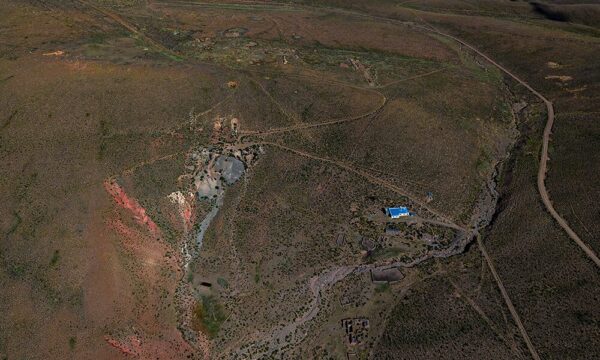
LPI’s 100% owned Maricunga project is comprised of 10 mining concessions in the northern part of Salar de Maricunga in the Atacama region of Chile. Maricunga is a mid-sized salar forming part of the well-known ‘lithium triangle’. The project’s mining tenements consist of the four ‘old code’ concessions, which were constituted under the 1932 Chilean Mining Law and, therefore, according to the company, do not require the CEOL to produce lithium. The first stage of the project (15.2ktpa of battery grade carbonate) is underpinned by the ‘old code’ concessions. It is fully permitted for construction, with the Environmental Impact Assessment permit (EIA) approved in 2020 and an updated definitive feasibility study published in early 2022. It also holds a Chilean Nuclear Energy Commission (CCHEN) permit that allows LPI to export lithium products. Importantly, the EIA incorporates all required social and community agreements, including a comprehensive ILO C169 consultation process with indigenous communities executed by the government. This makes the project compliant with the newly introduced lithium strategy.
LPI recently acknowledged the possibility of future public-private alliances as declared by the NLS, in particular for the development of Stage 2 of the project, which is based on the ‘new code’ concessions. We note that Codelco owns adjacent properties in the salar and holds a CEOL, which creates opportunities for cooperation between the two companies. Finally, we believe that, given the size of the Maricunga salar and the scale of the project, it is unlikely to be considered of strategic importance and is, therefore, unlikely to require majority state participation.
LPI valuation update
We have slightly updated our pre-diluted valuation of LPI to incorporate the lower US$/A$ exchange rate (A$1.50/US$ vs A$1.44/US$) and the latest cash balance of A$15.1m at Q323. As a result, our project-driven NPV has increased from A$1,813m to A$1,845m (US$1.23bn) using a standard 10% discount rate. We maintain our long-term (post 2031) lithium carbonate price assumption of US$22,500/t. Previously, our valuation approach was to dilute the project value for the amount of capital that we assume to be raised via equity at the prevailing share price. At A$0.35/share (vs A$0.50 at the time of our previous note) and an unchanged 40%/60% equity/debt capex split, our revised equity value of the project would translate into a per share value of A$1.16 (from A$1.42). Earlier, the company reported that it had received letters of intent for debt financing, some of which cover up to 70% of the project capital. As before, our valuation excludes LPI’s early-stage hard rock lithium assets in Western Australia. To unlock the value of these assets, LPI is considering either a spin off or a potential sale.
Exhibit 1: LPI valuation summary
Units |
Value |
|
Maricunga sum of discounted FCF |
US$m |
1,233 |
US$/A$ exchange rate |
x |
1.50 |
Maricunga sum of DFCF |
A$m |
1,849 |
Less FV of corporate overheads |
A$m |
19.8 |
Add net cash (March 2023) |
A$m |
15.1 |
Estimated equity value |
A$m |
1,845 |
Current number of shares |
m |
629.1 |
Current share price |
A$ |
0.35 |
Project equity to be raised |
A$m |
338.1 |
New shares to be issued |
m |
966.0 |
Total number of shares including project equity funding |
m |
1,595 |
Diluted value per share |
A$ |
1.16 |
Source: Edison Investment Research
Based on our model, the current share price implies a discount rate of more than 40% (c 27% on a diluted basis), which we believe is excessive for an advanced mining project at a final investment decision stage. We attribute this steep discount to the political uncertainty in Chile and the country’s arguably overly cautious (if not prohibitive) approach to new lithium developments. In our view, the newly introduced NLS appears to be a de facto confirmation of the dominating role played by the state in the domestic lithium sector. In contrast to the market concerns regarding the potential nationalisation of the sector, we believe that it could be an important step towards breaking the industry gridlock and creating a clearer path that would allow development of new lithium projects. Failing that, Chile risks losing its regional status of a top lithium producer to countries such as Argentina and missing out on the lithium bull cycle. Despite some potential dilution risks due to the proposed state sector participation, we believe that the introduction of the NLS bodes well for LPI as Maricunga is the most advanced development stage lithium project in Chile.
M&A activity warms up again
|
Exhibit 2: Spot lithium carbonate and hydroxide prices |
|
|
Source: Refinitiv |
As is often the case in the mining sector, falling or weak commodity prices represent an attractive opportunity for industry consolidation. The lithium sector is not an exception as it has seen a significant increase in M&A activity in 2021 as lithium prices showed the first signs of recovery from their multi-year lows. At the time, the most high-profile transactions included a merger between Orocobre and Galaxy Resources, Ganfeng’s acquisition of Bacanora and Zijin’s acquisition of Neo Lithium. The most recent weakness in the lithium prices has resulted in a new wave of industry transactions. However, in contrast with earlier M&A, improved lithium industry fundamentals and the long-term outlook resulted in a higher number of failed bids despite an increase in price premiums offered for the assets. In particular, we note the recent unsuccessful all-cash offer by Albemarle to acquire Liontown, which was rejected by the company despite a 69% premium offered for the stock (30-day volume weighted average price, VWAP). Similarly, an earlier bid from Tianqi and IGO to acquire 100% of Essential Metals was rejected by the company’s shareholders. Tianqi offered a 36% premium to the 30-day VWAP.
Arguably, while lithium is a relatively abundant mineral from a geological point of view, historically the sector experienced significant underinvestment due to weak lithium prices and slow demand growth in the pre-electric era. This created a shortage of high-quality advanced projects that could be brought into production in a timely fashion to alleviate the anticipated shortage of lithium driven by decarbonisation. As such we believe that the emerging lithium sector is likely to continue to experience high levels of M&A activity and expect high-quality advanced assets to continue to attract visible takeout valuation premiums.
Exhibit 3: Selected lithium M&A transactions
Acquiror |
Target asset |
Date |
Ownership (%) |
Value (US$m) |
Comment |
Allkem |
Livent |
May 2023 |
100 |
10,600 |
Proposed merger of two industry leading producers of lithium, with Allkem shareholders gaining control over 56% of the combined company. Proforma FY22 revenue of US$1.9bn and EBITDA of US$1.2bn. The rationale includes Livent’s exposure to downstream processing and Allkem’s strong presence in upstream. |
Albemarle |
Liontown |
March 2023 |
100 |
3,400* |
A proposed acquisition that was rejected by the board of Liontown on valuation grounds. Liontown’s most advanced lithium project is Kathleen Valley in Australia. The project is at an advanced development stage, with first production of spodumene concentrate expected in late 2024. |
Tianqi Lithium/IGO |
Essential Metals |
January 2023 |
100 |
91 |
A proposed bid that was rejected by Essential shareholders on valuation grounds. Essential advances the Pioneer Dome lithium project in Western Australia. |
Ganfeng |
Lithea Inc |
July 2022 |
100 |
962 |
Privately owned Lithea (Pluspetrol Resources) owns rights to two lithium salt lakes in Argentina’s mineral-rich Salta province. |
Rio Tinto |
Rincon Mining |
December 2021 |
100 |
825 |
Rincon’s main asset is the lithium brine project in Argentina. It has M&I resources of c 3.5Mt lithium carbonate equivalent (LCE). The project was originally expected to use the proprietary direct lithium extraction technology to produce lithium carbonate. |
Zhejiang Huayou Cobalt |
Arcadia lithium project (Prospect Resources) |
December 2021 |
87 |
378 |
Arcadia is an advanced stage lithium hard rock project in Zimbabwe. An optimised feasibility study (FS) was released in December 2021 and assumed staged development, with Phase I producing c 150ktpa of spodumene concentrate. |
Lithium Americas |
Millennial Lithium |
November 2021 |
100 |
400 |
Millennial’s key asset is the Pastos Grandes lithium brine project in Argentina. A FS was completed in 2019, envisaging production of 20ktpa of carbonate. |
Zijin Mining |
Neo Lithium |
October 2021 |
100 |
737 |
Neo’s main asset is the 3Q lithium brine project in Argentina. An FS was published in November 2021. The project has 4Mt LCE in measured and indicated resource. |
CATH |
Manono (AVZ Minerals) |
September 2021 |
24 |
240 |
Manono is a large-scale, high-grade hard rock lithium project in the Democratic Republic of the Congo. |
Ganfeng |
Bacanora |
May 2021 |
100 |
391 |
Bacanora’s main asset is the Sonora lithium project in Mexico. Based on the FS completed in 2018, the project is expected to produce c 30ktpa of lithium carbonate. |
Orocobre |
Galaxy |
April 21 |
100 |
1,380 |
The merger created one of the largest producers of lithium (Allkem) with operating hard rock Mt Cattlin and brine Sal de Vida operations, as well as the advanced hard rock James Bay project in Canada and a hydroxide conversion plant in Japan. |
Source: Company data, Edison Investment Research. Note: *Enterprise value.
Exhibit 4: Financial summary
A$'000s |
2020 |
2021 |
2022 |
2023e |
||
Year end June |
IFRS |
IFRS |
IFRS |
IFRS |
||
INCOME STATEMENT |
||||||
Revenue |
|
|
0.0 |
0.0 |
0.0 |
0.0 |
Operating costs |
(2,942.3) |
(2,448.0) |
(3,014.9) |
(2,700.0) |
||
EBIT from continuing operations |
|
|
(2,942.3) |
(2,448.0) |
(3,014.9) |
(2,700.0) |
Share of JV losses/profits |
(3,786.9) |
(1,967.3) |
(2,731.9) |
0.0 |
||
Net financing costs |
183.6 |
8.2 |
(3.2) |
0.0 |
||
Forex |
(6,203.2) |
(1,573.2) |
(6,894.9) |
0.0 |
||
Profit Before Tax (norm) |
|
|
(12,748.8) |
(5,980.3) |
(12,644.9) |
(2,700.0) |
Tax |
0.0 |
0.0 |
0.0 |
0.0 |
||
Profit After Tax |
|
|
(12,748.8) |
(5,980.3) |
(12,644.9) |
(2,700.0) |
Minority interests |
(95.7) |
(57.3) |
350.9 |
0.0 |
||
Discontinued operations |
(319.2) |
(191.1) |
108.6 |
0.0 |
||
Net income |
|
|
(12,972.2) |
(6,114.1) |
(12,887.1) |
(2,700.0) |
Average Number of Shares Outstanding (m) |
263 |
283 |
342 |
489 |
||
EPS - normalised (c) |
|
|
(4.94) |
(2.16) |
(3.77) |
(0.55) |
Dividend (c) |
0.00 |
0.00 |
0.00 |
0.00 |
||
Revenue growth (%) |
N/A |
N/A |
N/A |
N/A |
||
Gross Margin (%) |
N/A |
N/A |
N/A |
N/A |
||
EBITDA Margin (%) |
N/A |
N/A |
N/A |
N/A |
||
Normalised Operating Margin (%) |
N/A |
N/A |
N/A |
N/A |
||
BALANCE SHEET |
||||||
Fixed assets |
|
|
29,300.8 |
32,696.3 |
30,385.2 |
214,770.0 |
Equity investments |
25,074.9 |
28,594.9 |
30,379.0 |
0.0 |
||
PP&E |
26.4 |
24.2 |
6.2 |
212,270.0 |
||
Exploration assets |
4,199.4 |
4,077.2 |
0.0 |
2,500.0 |
||
Current assets |
|
|
7,391.8 |
6,802.0 |
12,279.0 |
18,041.2 |
Cash |
7,141.6 |
6,280.7 |
6,428.9 |
12,191.0 |
||
Receivables |
74.7 |
16.3 |
138.7 |
138.7 |
||
Other |
175.5 |
188.4 |
1,125.7 |
1,125.7 |
||
Assets held for sale |
0.0 |
316.7 |
4,585.7 |
4,585.7 |
||
Current liabilities |
|
|
(336.0) |
(359.1) |
(724.7) |
(724.7) |
Creditors |
(293.8) |
(322.2) |
(666.4) |
(666.4) |
||
Short term borrowings and leases |
(42.2) |
(36.9) |
(58.3) |
(58.3) |
||
Long-term liabilities |
|
|
0.0 |
0.0 |
0.0 |
0.0 |
Debt |
0.0 |
0.0 |
0.0 |
0.0 |
||
Net Assets |
|
|
36,356.5 |
39,139.3 |
41,939.5 |
232,086.4 |
Minority interests |
(187.1) |
(183.0) |
0.0 |
0.0 |
||
Shareholders’ equity |
|
|
36,543.6 |
39,322.3 |
41,939.5 |
232,086.4 |
CASH FLOW |
||||||
Operating cash flow |
(13,067.9) |
(6,171.4) |
(12,536.3) |
(2,700.0) |
||
JV contribution |
3,786.9 |
1,967.3 |
2,731.9 |
0.0 |
||
Forex |
6,503.3 |
1,479.6 |
7,606.2 |
0.0 |
||
Other |
853.5 |
382.2 |
(1,388.3) |
0.0 |
||
Net operating cash flow |
|
|
(1,924.3) |
(2,342.4) |
(3,586.5) |
(2,700.0) |
Project capex |
(5,173.5) |
(6,524.7) |
(8,361.0) |
(12,500.0) |
||
Exploration |
(1,202.2) |
(205.8) |
(738.1) |
(2,500.0) |
||
Equity financing |
100.0 |
7,789.6 |
11,989.5 |
23,462.0 |
||
Other |
0.0 |
452.6 |
882.9 |
0.0 |
||
Net Cash Flow |
(8,199.9) |
(830.7) |
186.7 |
5,762.0 |
||
Opening net debt/(cash) |
|
|
(15,341.5) |
(7,141.6) |
(6,280.7) |
(6,428.9) |
FX and other |
0.0 |
(30.2) |
(38.5) |
0.0 |
||
Closing net debt/(cash) |
|
|
(7,141.6) |
(6,280.7) |
(6,428.9) |
(12,190.9) |
Source: Lithium Power International, Edison Investment Research
|
|
Research: Real Estate
Impact Healthcare REIT has successfully negotiated the transfer of the operation of the homes leased to one of its 13 care home tenants, which, as previously disclosed, in H123 has not paid its contractual rent (3.4% of the group total). The transfer is structured to maintain continuity of staffing and care while generating operational improvements. Under the terms of the transfer, our forecasts for FY23 and FY24 are reduced but we expect full dividend cover to be maintained. Meanwhile, the broader portfolio continues to perform well, with 100% of rents received from each of the company’s other tenants, which has been the case since launch.