Last close As at 05/08/2026
—
— 0.00 (0.00%)
Market capitalisation
—
Research: TMT
BluGlass has raised A$3.4m through a placement at A$0.03/share to purchase a laser diode fabrication facility (fab) in California’s Silicon Valley. It intends to raise up to A$7.5m through an entitlement offer to existing shareholders, also at A$0.03/share, which closes on 12 April 2022 using the proceeds to convert the fab to GaN laser diode production. The transaction is in line with management’s stated aim of bringing third-party processes in-house, but BluGlass is proceeding with this much sooner than originally planned because of the opportunity to purchase a fab for a fraction of the price of building a new one.
Written by
BluGlass |
Fund-raising and acquisition
Tech hardware & equipment |
Spotlight - Update
28 March 2022 |
Share price graph
Share details
Business description
Bull
Bear
Analysts
BluGlass is a research client of Edison Investment Research Limited |
||||||||||||||||||||||||||||
BluGlass has raised A$3.4m through a placement at A$0.03/share to purchase a laser diode fabrication facility (fab) in California’s Silicon Valley. It intends to raise up to A$7.5m through an entitlement offer to existing shareholders, also at A$0.03/share, which closes on 12 April 2022 using the proceeds to convert the fab to GaN laser diode production. The transaction is in line with management’s stated aim of bringing third-party processes in-house, but BluGlass is proceeding with this much sooner than originally planned because of the opportunity to purchase a fab for a fraction of the price of building a new one.
|
Historical data
Source: Company data. *PBT and EPS are normalised, excluding amortisation of acquired intangibles, exceptional items and share-based payments. |
Purchase of laser diode fabrication facility
BluGlass is to acquire the facility lease and manufacturing equipment of a full-suite InP (indium phosphide) laser diode front- and back-end fab in California. It intends to use the fab for volume manufacture of blue GaN (gallium nitride) laser diodes, potentially including proprietary tunnel junction diodes made using its patented remote plasma chemical vapour deposition (RPCVD) process, which will potentially be higher power and higher brightness than any currently available.
Accelerating volume ramp-up of laser diodes
Longer term, the proposed transaction will quadruple the volume of laser diodes that BluGlass can sell. BluGlass is one of only four end-to-end GaN laser diode manufacturers globally, so the capacity expansion will potentially enable it to take a larger share of a market that Strategies Unlimited forecasts will reach US$735m by 2025. Management expects that bringing third-party processes in-house will improve gross margins longer term. Importantly, it will enable BluGlass to complete design iterations more quickly, thus potentially reducing the time it will take to bring the next generation of higher power laser diodes to market and maximising the market opportunity.
Valuation: Acquiring fab for a fraction of the cost of building a new one
Of the A$10.9m that BluGlass intends to raise, A$9.3m will be allocated to purchasing the facility and adapting it to GaN laser diode production, with the remainder earmarked for operational expenditure and recruitment. Management estimates that it would cost c US$40m (A$54m) to build an equivalent facility.
Opportunity to acquire working laser diode fab
|
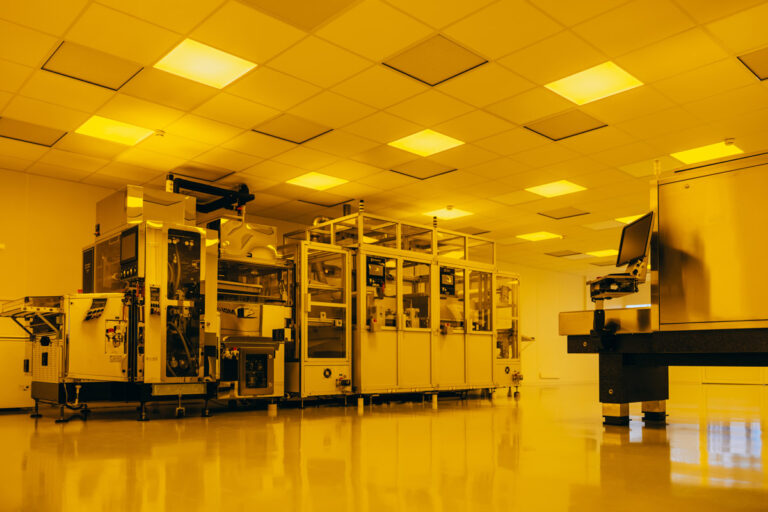
Exhibit 1: Compound semiconductor fab in California |
Exhibit 2: Floorplan of compound semiconductor fab |
|
|
|
Source: BluGlass |
Source: BluGlass |
|
Exhibit 1: Compound semiconductor fab in California |
|
|
Source: BluGlass |
|
Exhibit 2: Floorplan of compound semiconductor fab |
|
|
Source: BluGlass |
BluGlass has agreed terms to acquire the facility lease and manufacturing equipment of a laser diode fab in Fremont, California. The fab is currently manufacturing indium phosphide (InP) laser diodes for high-speed telecoms/datacoms applications on 2” and 4” diameter wafers (BluGlass’s Silverwater facility processes 2” wafers) but the work is being moved to a different location. The fab takes in epitaxial wafers that already have deposited on them the multiple layers of compound semiconductor material forming the active part of laser diodes. The fab then adds the conductive metal layers that are required to complete the laser diode structure to the top of the epitaxial wafer, cuts the wafers into individual die, coats the sides of the die where the laser light is emitted, mounts the die into packages and tests them. The fab therefore has the ability to carry out the processing steps on laser diodes that BluGlass currently has to outsource, and can potentially provide additional capacity for steps such as testing, which BluGlass currently carries out in-house (see Exhibit 3). The Fremont fab already has the infrastructure in place to add additional deposition equipment for future growth.
|
Exhibit 3: Demonstration of RPCVD-grown RGB LEDs fabricated into devices |
|
|
Source: BluGlass |
BluGlass intends to adapt the Fremont process so it is suitable for making GaN laser diodes rather than InP diodes. It has already made contingent offers to key personnel, including laser fabrication engineers, wafer processing technicians and facility and maintenance people familiar with the equipment.
The facility lease and manufacturing equipment are being acquired for US$2.5m (c A$3.3m) made up of US$2.0m cash and US$0.5m in new BluGlass shares. BluGlass expects to spend A$3.5m, which includes working capital, adapting the facility for GaN laser diode production, which management estimates will take up to six months with an additional US$1.8m (A$2.5m) needed for coating equipment and reliability burn-in racks for volume production. Management estimates that it would cost c US$40m (A$54m) to build an equivalent facility.
Accelerating strategy
In-house capability speeds up the design of new laser diodes
BluGlass is currently addressing the reliability issues that have delayed the launch of its first blue laser diode products, which were expected to be available in 2021, by around a year. Problems with the third-party processing steps (see Exhibit 3) meant that the performance of the initial laser diodes degraded over time. Since identifying the issue, the company has strengthened its laser diode capability, for example appointing industry expert Jim Haden as President in September 2021, and progressed multiple design and development iterations of devices through the supply chain. As a result of this intensive activity, it has been able to demonstrate significant performance improvements across four prototypes: the 405nm and 420nm laser diodes in both single-mode and multi-mode devices, keeping the company on track to meet its revised goal of launching its first direct-to-market laser diodes in mid-calendar 2022.
The issue has highlighted that the length of time taken for a complete design iteration when relying on third parties means that only four or five full iterations can be carried out in a year (see Exhibit 4). Bringing the third-party processing steps in-house (see Exhibit 3) through the acquisition of the Fremont fab would enable BluGlass to complete up to 48 full iterations in a year. Acquiring the Fremont fab would not change the length of time required to solve the reliability issues with BluGlass’s first-generation laser diodes as the company intends to continue to work with its existing contract manufacturers for up to 12 months while the Fremont fab is transitioned to GaN manufacture. However, it would substantially reduce the time it will take to bring the next generation of RPCVD tunnel junction laser diodes to market. BluGlass’s next generation laser diodes will potentially be higher power and higher brightness than any currently available from competitors, so management is keen to bring them to market quickly to maximise the market opportunity. Having the in-house capability will also speed-up the development of green and ultra-violet laser diodes and enable BluGlass to progress multiple development programmes in parallel.
Improving revenues and profits from laser diodes
Exhibit 4: Financial benefits of proposed transaction
Metric |
Contract manufacturer model |
Owned-fab model |
Annual epitaxial wafer capacity (Silverwater, Australia) |
c 10,000 wafers |
c 10,000 wafers |
Annual wafer capacity |
c 2,500 wafers |
c 10,000 wafers |
Annual development iteration capacity |
c 4–5 full iterations |
<48 full iterations |
Annual revenue |
c US$40m |
c US$160m |
Estimated gross margin |
c 30% |
c 45% |
Cash flow positive |
Year ending June 2025 (FY25) |
Source: Company data.
Longer-term, bringing the third-party steps in-house would potentially have a highly beneficial impact on revenues and profits, quadrupling revenues and halving wafer production costs as BluGlass would not be sharing profits with contract manufacturers. The potential impact is summarised in Exhibit 4. Initially the additional cost associated with operating the Fremont facility would increase the cost per complete wafer, but the cost/wafer ratio will reduce as production scales. Management estimates that the production cost crossover would be reached in calendar 2024 (see Exhibit 5). As discussed in our initiation report, management has previously stated its intention of bringing processes in-house to improve margins, so the proposed acquisition is accelerating this aspect of its strategy.
|
Exhibit 5: Wafer fabrication costs |
|
|
Source: BluGlass |
Location in Silicon Valley
The acquisition potentially gives BluGlass an operating site in Silicon Valley, complementing its expitaxial wafer manufacturing facility in Australia and its testing facility in the Boston area of the US. Having a GaN manufacturing facility in the United States puts BluGlass in a much better position for winning US defence and government contracts and takes it closer to potential customers in key target markets such as miniaturised medical diagnostic devices, LiDAR and augmented reality/virtual reality. These applications and others are reviewed in our thematic report, Laser diodes – may the force be with you. Being in Silicon Valley will give BluGlass access to an exceptional talent pool including highly specialist engineers with laser diode expertise as well as better access to potential investors with in-depth understanding of the semiconductor sector.
Financing the proposed acquisition
Exhibit 6: Timeline
Event |
Date |
Offer announced |
24 March 2022 |
Record date |
29 March 2022 |
Entitlement offer opens |
1 April 2022 |
Entitlement offer closes |
5pm AEST, 12 April 2022 |
Allotment of new shares |
29 April 2022 |
Event |
Offer announced |
Record date |
Entitlement offer opens |
Entitlement offer closes |
Allotment of new shares |
Date |
24 March 2022 |
29 March 2022 |
1 April 2022 |
5pm AEST, 12 April 2022 |
29 April 2022 |
Source: Company data. Note: AEST = Australian Eastern Standard Time.
BluGlass intends to raise up to A$10.9m (gross) to finance the transaction. As noted above, A$9.3m of this will be allocated to purchasing the facility and adapting it to GaN laser diode production. It has also identified US$2.5m (A$3.3m) required for operational expenditure and recruitment. BluGlass has raised A$3.4m at A$0.03/share through a placing of 114.2m new shares to existing and new sophisticated and institutional investors, including institutional investors in both Australia and the US. In addition, it intends to raise up to A$7.5m (gross) through a non-renounceable 1:4 entitlement offer to eligible BluGlass shareholders, which will close on 12 April 2022 (see Exhibit 6), also at A$0.03/share. This will potentially result in the issue of 251.3m new shares. BluGlass also intends to carry out a pro-rata bonus options issue once the entitlement offer has completed. All eligible shareholders will receive one free listed bonus option for every eight shares they hold on the bonus options record date, with a strike price of $0.03.
Exhibit 7: Financial summary
A$'000s |
2018 |
2019 |
2020 |
2021 |
||
30-June |
AASB |
AASB |
AASB |
AASB |
||
INCOME STATEMENT |
||||||
Revenue |
|
|
714 |
425 |
656 |
364 |
Cost of Sales (excluding direct labour) |
(1,158) |
(1,745) |
(1,898) |
(3,070) |
||
Gross Profit |
(444) |
(1,320) |
(1,242) |
(2,707) |
||
EBITDA |
|
|
(3,750) |
(5,109) |
(3,616) |
(4,624) |
Operating profit (before amort. and excepts.) |
|
(3,941) |
(5,287) |
(4,687) |
(6,757) |
|
Amortisation of acquired intangibles |
0 |
0 |
0 |
0 |
||
Exceptionals |
0 |
(8,695) |
0 |
0 |
||
Share-based payments |
(56) |
(674) |
(1,237) |
536 |
||
Reported operating profit |
(3,997) |
(14,656) |
(5,925) |
(6,221) |
||
Net Interest |
157 |
236 |
(69) |
(78) |
||
Profit Before Tax (norm) |
|
|
(3,784) |
(5,052) |
(4,757) |
(6,835) |
Profit Before Tax (reported) |
|
|
(3,840) |
(14,421) |
(5,994) |
(6,298) |
Reported tax |
0 |
0 |
0 |
0 |
||
Profit After Tax (norm) |
(3,784) |
(5,052) |
(4,757) |
(6,835) |
||
Profit After Tax (reported) |
(3,840) |
(14,421) |
(5,994) |
(6,298) |
||
Average Number of Shares Outstanding (m) |
389.4 |
418.3 |
473.1 |
724.6 |
||
EPS - normalised (c) |
|
|
(0.97) |
(1.21) |
(1.01) |
(0.94) |
EPS - normalised fully diluted (c) |
|
|
(0.97) |
(1.21) |
(1.01) |
(0.94) |
EPS - basic reported (c) |
|
|
(0.99) |
(3.45) |
(1.27) |
(0.87) |
Dividend (c) |
0.00 |
0.00 |
0.00 |
0.00 |
||
Revenue growth (%) |
29.8% |
-40.5% |
54.5% |
-44.6% |
||
EBITDA Margin (%) |
N/A |
N/A |
N/A |
N/A |
||
Normalised Operating Margin |
N/A |
N/A |
N/A |
N/A |
||
BALANCE SHEET |
||||||
Fixed Assets |
|
|
8,954 |
5,395 |
7,883 |
5,840 |
Intangible Assets |
8,695 |
0 |
0 |
0 |
||
Tangible Assets |
259 |
5,395 |
7,883 |
5,840 |
||
Investments & other |
0 |
0 |
0 |
0 |
||
Current Assets |
|
|
17,716 |
8,558 |
8,547 |
7,718 |
Stocks |
54 |
137 |
140 |
131 |
||
Debtors |
2,253 |
2,262 |
2,919 |
3,351 |
||
Cash & cash equivalents |
15,354 |
6,116 |
5,430 |
4,176 |
||
Other |
55 |
43 |
58 |
59 |
||
Current Liabilities |
|
|
(963) |
(1,003) |
(1,154) |
(3,378) |
Creditors |
(530) |
(473) |
(408) |
(566) |
||
Lease liabilities |
0 |
0 |
(168) |
(184) |
||
Short term borrowings (excluding lease liabilities) |
0 |
0 |
0 |
(1,954) |
||
Provisions |
(433) |
(530) |
(578) |
(674) |
||
Long Term Liabilities |
|
|
(318) |
(1,306) |
(2,882) |
(2,670) |
Long term borrowings (excluding lease liabilities) |
0 |
0 |
0 |
0 |
||
Provisions and lease liabilities |
(318) |
(1,306) |
(2,882) |
(2,670) |
||
Net Assets |
|
|
25,389 |
11,644 |
12,393 |
7,509 |
Minority interests |
0 |
0 |
0 |
0 |
||
Shareholders' equity |
|
|
25,389 |
11,644 |
12,393 |
7,509 |
CASH FLOW |
||||||
Operating Cash Flow |
|
|
(3,514) |
(4,931) |
(4,348) |
(4,809) |
Capex |
(114) |
(4,308) |
(1,681) |
(90) |
||
Acquisitions/disposals |
0 |
0 |
0 |
0 |
||
Net interest |
0 |
0 |
(9) |
0 |
||
Equity financing |
10,471 |
1 |
5,507 |
1,859 |
||
Dividends |
0 |
0 |
0 |
0 |
||
Other |
0 |
0 |
0 |
0 |
||
Net Cash Flow |
6,843 |
(9,237) |
(532) |
(3,040) |
||
Opening net debt/(cash) |
|
|
(8,511) |
(15,354) |
(6,116) |
(5,430) |
FX |
0 |
0 |
0 |
0 |
||
Other non-cash movements |
0 |
0 |
(154) |
(168) |
||
Closing net debt/(cash) |
|
|
(15,354) |
(6,116) |
(5,430) |
(2,222) |
Source: Company accounts
|
|
Research: Metals & Mining
Endeavour Mining’s Q421/FY21 results on 17 March were reported in the context of known cost and production, which had been reported to the market on 24 January. Despite a 6.9% upgrade to our forecasts at the time, Endeavour’s actual underlying adjusted net earnings, when they were released, were nevertheless still US$10.8m (or 10.0% or US$0.041/share) better than our prior (upgraded) expectations for the quarter.