Last close As at 15/08/2026
GBP3.69
▲ −1.00 (−0.27%)
Market capitalisation
GBP2,199m
Research: Investment Companies
Murray International Trust’s (MYI’s) managers are transitioning smoothly from a team of three to two, ahead of Bruce Stout’s retirement at the end of June 2024. The two remaining managers, Martin Connaghan and Samantha Fitzpatrick, have worked closely with Stout since 2001, so MYI’s shareholders can have confidence that it will be ‘business as usual’ in H224 and beyond. Regardless of the market environment, the managers strive to fulfil their objectives of generating income and capital growth higher than the rate of UK inflation and to have a covered dividend. However, in years of lower income, the board can draw on the trust’s revenue reserves, which are equivalent to more than the annual dividend payment, to enable MYI’s progressive dividend policy to continue.
Murray International Trust |
Business as usual ahead of manager’s retirement |
Investment trusts |
21 March 2024 |
Analyst
|
||||||||||||||||||||||||||||||||||||||||||||||||||||||||||||||||||||||||||||||||||||||||||||||||||||||
Murray International Trust’s (MYI’s) managers are transitioning smoothly from a team of three to two, ahead of Bruce Stout’s retirement at the end of June 2024. The two remaining managers, Martin Connaghan and Samantha Fitzpatrick, have worked closely with Stout since 2001, so MYI’s shareholders can have confidence that it will be ‘business as usual’ in H224 and beyond. Regardless of the market environment, the managers strive to fulfil their objectives of generating income and capital growth higher than the rate of UK inflation and to have a covered dividend. However, in years of lower income, the board can draw on the trust’s revenue reserves, which are equivalent to more than the annual dividend payment, to enable MYI’s progressive dividend policy to continue.
|
Higher growth prospects in emerging versus advanced economies |
|
|
Source: International Monetary Fund, World Economic Outlook, January 2024 update. Note: e is estimate and p is projection. |
Why consider MYI?
While real dividend growth has been difficult in the last three years because of elevated inflation, MYI has consistently offered an attractive 4–5% dividend yield due to investment in high-quality companies with strong cash flow generation, and the ability to use revenue reserves when required. Having notched up 19 years of consecutive dividend growth, MYI is just one step away from joining the list of the AIC’s dividend heroes – a distinguished group of 20 funds with at least 20 years of year-on-year dividend growth.
MYI is a very well-established trust, with an experienced collaborative management team, offering investors the prospects of both income and capital growth. Its low-risk approach, seeking ‘good businesses at good prices’, should help to protect investors’ capital during periods of market volatility. The managers employ a long-term perspective with low portfolio turnover; some of the positions have been in the fund for more than 20 years. Versus its peers, MYI has a higher allocation to emerging markets due to their higher growth potential and attractive valuations.
As a result of heightened investor risk aversion in an uncertain macroeconomic environment, the trust’s discount is meaningfully wider than its historical averages, which may provide a very favourable entry point for investors.
MYI: Benefits from both income and capital growth
MYI’s managers select stocks on a bottom-up basis, without consideration of the make-up of its reference index. The resulting portfolio is broadly diversified by geography and sector. An important differentiating feature versus the trust’s peers is its c 30% exposure to emerging markets, which reflects the managers’ views that these regions have higher growth potential and are more attractively valued than developed markets.
The managers have analysed the historical regional annual total returns of its reference index (in sterling terms) over the last 36 years. It is interesting to note that the region with the best annual performance over the greatest number of years is Latin America (11), followed by North America (9), Japan and Pacific ex-Japan (both 5), Europe ex-UK (4) and the UK (2). Looking at the last decade North America and Latin America lead (both 4) followed by Japan and Pacific ex-Japan (both 1).
Focusing on the trust’s objectives
Whatever the dominant stock market narrative, MYI’s managers diligently focus on delivering the trust’s objectives:
■
Dividend growth higher than the rate of UK inflation – this was not possible in the last three years due to elevated inflation (7.5% in 2021, 13.4% in 2022 and 5.2% in 2023).
■
Long-term capital growth higher than the rate of inflation – this was achieved in 2023.
■
A covered divided – this was achieved in 2022 and 2023 following two years when the board had to draw on the trust’s revenue reserves due to lower income during COVID.
MYI’s upside/downside analysis
Exhibit 1 shows MYI’s cumulative upside and downside capture over the last decade. The fund’s defensive nature is highlighted by its less than 100% capture rates, with an upside of 88% and a downside of 94%.
This suggests that MYI is likely to underperform by around 12% in rising markets but outperform by around 6% in periods of market weakness. This data validates the trust’s aim of preserving capital in weak markets, and also demonstrates the managers’ focus on delivering a broader return for shareholders based on both income and capital, rather than just capital appreciation.
|
Exhibit 1: MYI’s upside/downside capture over the last decade |
|
|
Source: LSEG, Edison Investment Research. Note: Cumulative upside/downside capture calculated as the geometric average NAV total return (TR) of the fund during months with positive/negative reference index TRs, divided by the geometric average reference index TR during these months. A 100% upside/downside indicates that the fund’s TR was in line with the reference index’s during months with positive/negative returns. Data points for the initial 12 months have been omitted in the exhibit due to the limited number of observations used to calculate the cumulative upside/downside capture ratios. |
Current portfolio positioning
Exhibit 2 shows MYI’s portfolio breakdown. Over the 12 months to the end of January 2024, the number of holdings was reduced by five to 64 (two less equities to 50 and three less fixed income investments to 14). The current number of holdings is at the lower end of the required 45 to 150. Over the period under review, in keeping with the traditional low portfolio turnover, there were modest changes to the trust’s fund structure. The largest were higher weightings in Europe ex-UK equities (+3.3pp) and North America equities (+2.0pp), which were partially offset by lower exposures to Asia Pacific ex-Japan equities (-1.7pp) and Latin America equities (-1.6pp).
Exhibit 2: Portfolio breakdown by security type and geography (% unless stated)
Portfolio end-January 2024 |
Portfolio end-January 2023 |
Change (pp) |
|
Equities |
|||
Europe ex-UK |
27.7 |
24.4 |
3.3 |
North America |
26.9 |
24.9 |
2.0 |
Asia Pacific ex-Japan |
23.2 |
24.9 |
(1.7) |
Latin America |
11.4 |
13.0 |
(1.6) |
UK |
3.8 |
3.6 |
0.2 |
Africa & Middle East |
0.0 |
0.7 |
(0.7) |
|
93.0 |
91.5 |
1.5 |
Bonds/cash |
|
|
|
Asia Pacific ex-Japan |
2.5 |
2.6 |
(0.1) |
Latin America |
2.5 |
2.6 |
(0.1) |
Africa & Middle East |
0.8 |
0.8 |
0.0 |
UK |
0.4 |
0.3 |
0.1 |
Europe ex-UK |
0.2 |
0.4 |
(0.2) |
Cash |
0.6 |
1.8 |
(1.2) |
|
7.0 |
8.5 |
(1.5) |
Total |
|
|
|
Europe ex-UK |
27.9 |
24.8 |
3.1 |
Asia Pacific ex-Japan |
25.7 |
27.5 |
(1.8) |
North America |
26.9 |
24.9 |
2.0 |
Latin America |
13.9 |
15.6 |
(1.7) |
UK |
4.2 |
3.9 |
0.3 |
Africa & Middle East |
0.8 |
1.5 |
(0.7) |
Cash |
0.6 |
1.8 |
(1.2) |
100.0 |
100.0 |
|
Source: MYI, Edison Investment Research. Note: Numbers subject to rounding.
MYI’s top 10 holdings
At the end of January 2024, MYI’s top 10 positions made up 34.1% of the portfolio (Exhibit 3), which was a somewhat higher concentration compared with 30.1% 12 months earlier. Eight positions were common to both periods.
Exhibit 3: Top 10 holdings (at 31 January 2024)
Company |
Country |
Sector |
Portfolio weight, % |
|
31 Jan 2024 |
31 Jan 2023* |
|||
Broadcom |
US |
Technology |
4.7 |
3.1 |
Grupo Aeroportuario del Sureste (ASUR) |
Mexico |
Industrials |
4.3 |
4.8 |
BE Semiconductor Industries |
Netherlands |
Technology |
4.2 |
N/A |
Taiwan Semiconductor Manufacturing Co (TSMC) |
Taiwan |
Technology |
4.0 |
3.4 |
AbbVie |
US |
Healthcare |
3.3 |
2.9 |
TotalEnergies |
France |
Energy |
2.9 |
2.7 |
Philip Morris International |
US |
Consumer staples |
2.8 |
3.2 |
CME Group |
US |
Financials |
2.8 |
N/A |
Oversea-Chinese Banking |
Singapore |
Financials |
2.6 |
2.6 |
Unilever |
UK |
Consumer staples |
2.5 |
2.5 |
Top 10 (% of portfolio) |
34.1 |
30.1 |
||
Source: MYI, Edison Investment Research. Note: *N/A where not in end-January 2023 top 10.
The trust’s top 10 contains companies with higher dividend yields such as Oversea-Chinese Banking (6.3%), Philip Morris International (5.6%) and TotalEnergies (4.6%), and those with lower yields but dividend growth potential including semiconductor businesses BE Semiconductor Industries (1.5%), Broadcom (1.7%) and TSMC (1.9%). MYI has a low portfolio turnover (7% of gross assets in FY23); for example, top 10 holdings TSMC and ASUR have been in the portfolio for around 20 years.
Portfolio activity
Connaghan explains that in H123, cash was built up to fund the repayment of a £60m debt facility in May 2023. The holdings in Indocement, Lotus Retail Growth Property Fund, Nordea Bank and Ecuador government bonds were sold.
In H223, the position in Kimberly-Clark de México was switched into Walmart de México y Centroamérica (Walmex). The holdings in MTN Group and Vodafone were sold. Also, having been in the portfolio for 19 years, Taiwan Mobile exited the portfolio. It was held for its attractive yield, but dividend growth had stagnated due to a more competitive operating environment and a higher level of debt. The fund already has a significant Taiwanese exposure, and the managers are aware of single-country risk because of geopolitical tensions.
There were three other new holdings in H223. We discussed Hong Kong Exchanges, which the managers have been monitoring for a long time, in our January 2024 review. Diageo and Pernod Ricard bring extra diversification to the fund as the managers had not previously invested in alcoholic beverage companies. Although Diageo’s Latin American growth is slowing, the managers believe in the international growth potential of the company’s whiskey and tequila brands, while there is the potential for margin expansion in Asia. Diageo is unusual in that it has a high level of female representation in senior management positions, including its new CEO.
In 2024, the managers have been taking profits in MYI’s largest positions, which tend to be trimmed when they reach 5% of the fund, such as Broadcom and ASUR. There is also a new holding in Mercedes-Benz, which the managers describe as a high-quality company with an attractive dividend yield.
Perspectives from Stout
Stout says that there is a high level of expectation within the stock market around inflation being under control, a soft economic landing and lower interest rates. He explains that prior to quantitative easing (QE) starting in March 2008, bonds were priced by the market and included a risk premium, so the real yield was 200–300bp on average. Post March 2008, governments and central banks priced the bonds, buying at any price (with no differentiation between good and bad credits), which led to negative nominal and real yields.
The manager says that once governments and central banks can no longer expand their balance sheets, we need to see how the market will price bonds. He opines that the market will look at the quality of the credits and demand a risk premium, like prior to QE. Stout suggests that a return to a 2% inflation rate is unlikely as this would require higher interest rates, which would crush economic growth. He believes that gilt yields should be 5–6% rather than the current 3–4% range, so the bond market is a dangerous place to be. The manager adds that if investment managers think that central banks have lost control of inflation, bond yields can rise even if short-term interest rates are coming down.
Stout comments that high bond yields put pressure on equity valuations. Over the last 15 years the majority of equity returns have come from multiple expansion rather than earnings growth. In 2022, inflation rose, and equity multiples contracted; the manager says that you cannot get multiple expansion when there is inflation and tighter money supply. Hence, Stout believes that going forward, a larger percentage of equity total returns is likely to come from income.
The manager adds that inflation is dependent on the labour market, so a 2% inflation rate is unlikely given low mobility of labour and a low participation rate. Also, supply chain disruptions and climate change initiatives are inflationary, so there will likely be more tightening cycles than there have been in recent decades. Stout also points to government debt that was taken on when gilt yields were very low; when this debt needs to be refinanced, it will be at higher yields so there will be fiscal contraction as more government money is spent on debt servicing.
Performance: Hurt by below-average US weighting
In Exhibit 4, we show the meaningfully sized members of the AIC Global Equity Income sector, of which MYI is the second largest. The six funds have different investment mandates. MYI’s NAV total returns are below average over the periods shown, ranking fourth, third, fourth and fifth over the last one, three, five and 10 years respectively. The trust currently has one of the largest discounts, a competitive ongoing charge and the second highest level of gearing. MYI offers the highest dividend yield in the selected peer group; approaching 5%, it is 120bp above the average of the selected peer group. The trust’s dividends are paid solely out of income, unlike the majority of its peers that can make distributions out of capital.
Exhibit 4: Selected peer group at 20 March 2024*
% unless stated |
Market cap £m |
NAV TR |
NAV TR |
NAV TR |
NAV TR |
Discount (cum-fair) |
Ongoing charge |
Perf. |
Net gearing |
Dividend yield (%) |
Murray International |
1,524.2 |
10.2 |
32.4 |
49.1 |
121.7 |
(10.3) |
0.5 |
No |
108 |
4.7 |
Henderson International Income |
314.1 |
7.4 |
22.2 |
42.8 |
132.9 |
(14.4) |
0.7 |
No |
102 |
4.6 |
Invesco Select Global Equity Income |
68.5 |
20.3 |
49.4 |
77.5 |
184.4 |
(12.5) |
0.8 |
No |
100 |
2.7 |
JPMorgan Global Growth & Income |
2,479.8 |
28.0 |
50.6 |
115.8 |
277.8 |
0.8 |
0.2 |
No |
101 |
3.3 |
Scottish American |
888.0 |
12.4 |
31.2 |
67.0 |
196.2 |
(10.2) |
0.6 |
No |
109 |
2.8 |
STS Global Income & Growth Trust |
192.6 |
7.9 |
23.4 |
43.3 |
120.8 |
(0.9) |
0.9 |
No |
107 |
2.8 |
Average |
911.2 |
14.4 |
34.9 |
65.9 |
172.3 |
(7.9) |
0.6 |
104 |
3.5 |
|
MYI rank in sector (6 funds) |
2 |
4 |
3 |
4 |
5 |
4 |
2 |
2 |
1 |
Source: Morningstar, Edison Investment Research. Note: *Performance at 19 March 2024 based on ex-par NAV. TR, total return. Net gearing is total assets less cash and equivalents as a percentage of net assets.
An analysis of Morningstar data shows that MYI is the only company classified as a large-cap value fund; two of its peers are classified as large-cap growth (JPMorgan Global Growth & Income, JGGI, and Scottish American, SAIN) and three as large-cap blended funds (Henderson International Income, HINT, Invesco Select Global Equity Income, IVPG, and STS Global Income & Growth Trust, STS). Morningstar breaks down funds by their exposure to cyclical sectors (those that are highly sensitive to a business cycle’s peaks and troughs), defensive sectors (anticyclical) and sensitive sectors (those that have moderate correlation to the business cycle). At around 50%, MYI has the highest sensitive exposure versus an average 40%, a below-average cyclical exposure and an average defensive weighting.
|
Exhibit 5: Geographic breakdowns of the selected peer group |
|
|
Source: Morningstar, Edison Investment Research |
Looking at Exhibit 5, MYI has a notably smaller exposure to North America than its peers, which is likely to have been detrimental for the trust’s performance given the relative strength of the US market, particularly large-cap technology stocks over the last year. MYI has the largest Asian exposure and is the only fund with a meaningful Latin America weighting.
|
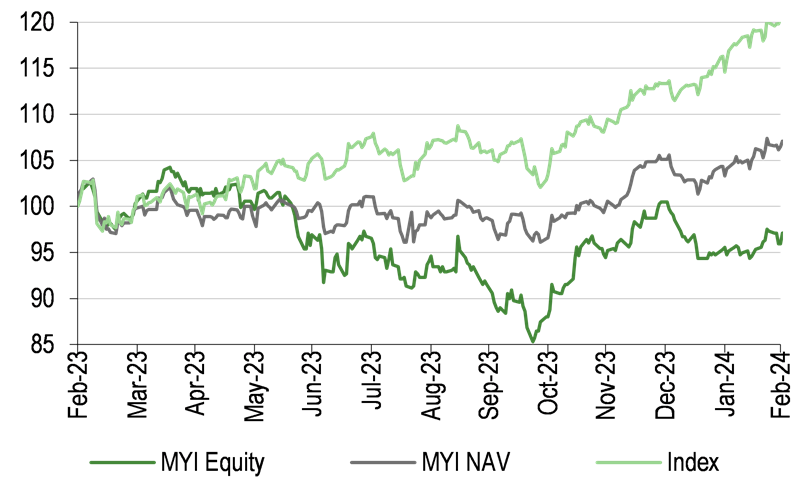
Exhibit 6: Investment trust performance to 29 February 2024 |
|
Price, NAV and index total return performance, one-year rebased |
Price, NAV and index total return performance (%) |
|
|
|
Source: LSEG, Edison Investment Research. Note: Three-, five- and 10-year performance figures annualised. |
|
Exhibit 7: Share price and NAV total return performance, relative to indices (%)
|
One month |
Three months |
Six months |
One year |
Three years |
Five years |
10 years |
Price relative to index |
(4.4) |
(8.2) |
(10.2) |
(20.3) |
(9.5) |
(23.5) |
(28.6) |
NAV relative to index |
(1.9) |
(3.7) |
(4.6) |
(11.5) |
(2.7) |
(10.9) |
(15.8) |
Price relative to CBOE UK All Companies |
0.2 |
(1.7) |
(2.4) |
(4.6) |
2.6 |
3.3 |
19.8 |
NAV relative to CBOE UK All Companies |
2.9 |
3.1 |
3.7 |
5.9 |
10.4 |
20.2 |
41.2 |
Price relative to MSCI World ex-UK |
(4.4) |
(8.2) |
(10.2) |
(20.3) |
(9.5) |
(29.5) |
(42.3) |
NAV relative to MSCI World ex-UK |
(1.9) |
(3.7) |
(4.6) |
(11.5) |
(2.7) |
(17.9) |
(32.0) |
Price relative to MSCI AC World |
(4.4) |
(7.8) |
(9.5) |
(19.0) |
(6.0) |
(25.9) |
(37.6) |
NAV relative to MSCI AC World |
(1.9) |
(3.2) |
(3.8) |
(10.1) |
1.1 |
(13.7) |
(26.4) |
Source: LSEG, Edison Investment Research. Note: Data to end-February 2024. Geometric calculation.
Fitzpatrick highlights that in FY23, MYI’s NAV and share price total returns of +8.6% and +1.1% respectively compared with the reference index’s +15.7% total return and UK inflation of +5.2%. By geography, the best performing regions in absolute terms were: European equities (+22.1%) – led by BE Semiconductor, while industrial stocks including Atlas Copco and Siemens also did well; Latin American equities (+15.6%) – strong performers included ASUR and Kimberly-Clark de México (sold), and Latin America was MYI’s best performing region in 2022; North American equities (+6.4%) – technology companies Broadcom and CME did well, but healthcare stocks detracted from performance; Asian equities (+3.1%) positive contributors included TSMC and GlobalWafers, while Chinese real estate stocks performed very poorly; Emerging market bonds (+2.8%) experienced a currency hit, but is now just a modest part of the portfolio; Africa/Middle East equities (-11.5%) – MTN Group (sold); and UK equities (-12.8%) – the main detractor was British American Tobacco, which was a strong positive contributor in 2022.
The manager comments that the performance of BE Semiconductor’s shares in 2022 was disappointing, falling by c 25% followed by a very strong move (c +140%) in 2023, which illustrates the need to be patient. BE Semiconductor entered the portfolio during a broad European market sell-off following the Russian invasion of Ukraine. Fitzpatrick believes that the company has much further to go, helped by its new hybrid bonding technology, which is being adopted by the major semiconductor chip manufacturers. The manager suggests that it is not good to have all positions performing well at the same time, as there is a risk of going ‘from feast to famine’.
By sector, the best performing areas in FY23 were technology (+55.6%) and utilities (+39.8%, but a modest exposure in the fund), both of which were big detractors in 2022. The worst performing sectors were real estate (-35.4%, another modest exposure) and healthcare (-10.9%).
At the stock level, the five largest positive contributors to the trust’s performance were: BE Semiconductor and Broadcom (both +2.1pp); ASUR (+0.4pp); and Kimberly-Clark de México and Enel (both +0.3pp). On the other side of the ledger, the largest detractors were: Bristol-Myers Squibb (-0.9pp); Sociedad Química y Minera de Chile (-0.8pp); and British American Tobacco, China Vanke and Philip Morris (all -0.7pp).
Exhibit 8: Five-year discrete performance data
12 months ending |
Share price |
NAV |
Index* |
CBOE UK All Companies (%) |
MSCI World ex-UK (%) |
MSCI AC World (%) |
29/02/20 |
(5.8) |
1.6 |
5.2 |
(1.5) |
9.7 |
8.8 |
28/02/21 |
8.9 |
9.2 |
15.3 |
3.5 |
20.0 |
19.6 |
28/02/22 |
14.2 |
16.5 |
14.8 |
16.0 |
14.8 |
12.8 |
28/02/23 |
17.1 |
11.3 |
2.7 |
7.3 |
2.7 |
2.2 |
29/02/24 |
(4.1) |
6.5 |
20.4 |
0.5 |
20.4 |
18.4 |
Source: LSEG. Note: All % on a total return basis in pounds sterling. *Index is 40% UK and 60% World ex-UK until 27 April 2020 and a broad global index thereafter.
Dividends: Now 19 years of consecutive growth
MYI has increased its annual dividend for 19 consecutive years, so is just one year away from joining the prestigious AIC list of dividend heroes. Currently, there are 20 funds that have delivered 20 or more years of consecutive dividend growth.
In FY23, MYI’s revenue per share was 12.1p, which was a 0.8% increase versus 12.0p per share in FY22. The proposed annual dividend of 11.5p per share (1.05x covered) is 2.7% higher than 11.2p (1.07x covered) paid in respect of FY22. Revenue reserves increased by c £5.9m to c £75.1m, which is around 1.1x the annual dividend.
|
Exhibit 9: MYI’s dividend and revenue history since FY14 |
|
|
Source: MYI, Edison Investment Research. Note: Adjusted for 5:1 share split on 24 April 2023. |
Valuation: Discount remains wider than history
In late October 2023, in general, investment trust discounts widened to levels not seen since the 2008 global financial crisis. Over the last three years, MYI has traded in a range of a 4.0% premium to a 12.3% discount. The latest 10.0% discount is towards the low end of this valuation range and is wider than the 4.9%, 3.6%, 2.5% and 0.5% average discounts over the last one, three, five and 10 years respectively.
Renewed annually, the board has the authority to issue up to 10% and repurchase up to 14.99% of MYI’s issued share capital. Aiming to reduce volatility in the trust’s valuation and make a small positive contribution to the NAV, the board repurchases shares if they trade at a persistent discount to ex-income NAV, while issuing shares if they trade at a persistent premium to cum-income NAV. During FY23, 1.05m shares (c 0.2% of the share base) were sold from treasury at a weighted average premium of 2.5%; the proceeds were c £2.8m. Around 5.25m shares (c 0.8% of the share base) were repurchased at a weighted average discount of 5.7% and a cost of c £12.4m.
|
Exhibit 10: Discount over three years (%) |
Exhibit 11: Buybacks and issuance |
|
|
|
Source: LSEG, Edison Investment Research |
Source: Morningstar, Edison Investment Research |
|
Exhibit 10: Discount over three years (%) |
|
|
Source: LSEG, Edison Investment Research |
|
Exhibit 11: Buybacks and issuance |
|
|
Source: Morningstar, Edison Investment Research |
Fund profile: Differentiated geographic exposure
Launched in December 1907, MYI is one of the oldest UK investment trusts; it is listed on the Main Market of the London Stock Exchange. Bruce Stout, a senior investment director in abrdn’s developed markets equity team, has been the trust’s lead manager since June 2004, although he has been directly involved with MYI since 1992. In 2023, Stout announced his intention to retire at the end of June 2024 so his colleagues Martin Connaghan and Samantha Fitzpatrick, who have worked with him since 2001, were made MYI’s co-managers with immediate effect.
The team aims to generate long-term capital growth (while preserving capital during periods of stock market weakness) and an above-average dividend yield from a globally diversified portfolio of equities and fixed-income securities. Around 30% of the fund is invested in emerging markets as the managers believe these regions offer the prospect of higher economic growth than developed markets, along with relatively attractive company valuations.
MYI’s performance is measured against an all-world reference index; before 27 April 2020 it was benchmarked against a composite measure (40% UK and 60% world ex-UK). The trust’s investment objective was also changed on this date, aiming to achieve an above-average dividend yield, with long-term growth in dividends and capital ahead of inflation, by investing principally in global equities (MYI’s prior aim was to achieve a total return greater than its benchmark by investing predominantly in equities worldwide). The board believes the different wording gives shareholders a clearer picture of what the trust is trying to deliver.
There are no geographic or sector limits on portfolio construction, but at the time of investment, a maximum 5% of the fund is permitted in a single security, although in practice this percentage is much lower. From time to time, the trust may invest in equity-related securities such as depositary receipts, preference shares or unlisted companies, and derivatives are permitted for efficient portfolio management. Its currency exposure is unhedged. Gearing of up to 30% of NAV is permitted (in normal market conditions).
Investment process: Bottom-up stock selection
Stocks are selected on a bottom-up basis, so sector, regional and country allocations are a result of these decisions. abrdn employs a long-term approach, focusing on companies that its research analysts identify as high quality. Firms are considered on five key factors: the durability of its business model and its economic moat; the attractiveness of the industry in which it operates; the strength of its financials; the capability of its management team; and an assessment of its ESG credentials. Company valuations are assessed across a variety of relevant measures including earnings yields, free cash flow yields and dividend yields. The managers select companies that have the most attractive quality and valuation characteristics, while offering the best expected risk-adjusted returns. abrdn uses a global coverage list that is constructed by each of the specialist regional analyst teams (developed markets, Asia Pacific ex-Japan, Japan and emerging markets) containing all companies with buy-and-hold recommendations, which provides the trust’s investment universe.
For MYI’s fixed-income holdings, the process for selecting and monitoring both sovereign and corporate bonds follows the same methodology used for equity investment. Portfolio geographic and sector exposures are a function of each security’s relative valuation and prospects. Within the portfolio there are typically 60–80 companies across the market-cap spectrum with position sizes of between c 1% and c 5%. Equity holdings are generally initiated at around 1.0% to 1.5% of the fund, while initial fixed income positions tend to be smaller. If a holding reaches 5% of the portfolio, it is trimmed within 30 days and the manager will sell a holding within 30 days if it is no longer on abrdn’s global coverage list, subject to the timing of dividend payments.
MYI’s approach to ESG
Although ESG and climate-related factors are not the overriding criteria in relation to the managers’ portfolio decisions, they do form a very important part of the investment process and have done so for more than 30 years for three key reasons:
■
Financial returns – ESG factors can be financially material; companies that take their responsibilities seriously tend to outperform those that do not.
■
Fuller insight – systematically assessing a company’s ESG risks and opportunities alongside other financial metrics leads to better investment decisions.
■
Corporate advancement – informed and constructive engagement helps foster higher-quality companies, thereby protecting and enhancing the value of MYI’s investments.
The managers can draw on the resources of abrdn’s ESG equity analysts and central ESG investment team (more than 20 experienced specialists) who collaborate to generate a deep understanding of the ESG risks and opportunities associated with each company analysed.
Climate change risks are vast and becoming increasingly financially material for many of abrdn’s investments, not only in the high-emitting sectors, such as energy, utilities and transportation, but also along the supply chain, for providers of finance and those reliant on agricultural outputs and water. Companies that successfully manage climate change risks are expected to perform better over the long term.
A systematic and globally applied approach to evaluating stocks allows abrdn to compare companies consistently on their ESG credentials, both regionally and against their peer group. Findings from research and company meetings are captured in formal research notes. All firms analysed are allocated an ESG rating between 1 and 5, where 1 is best in class; 2, leader; 3, average; 4, below average; and 5, laggard. Once abrdn invests in a company, it is committed to helping that firm maintain or raise its ESG standards further. Regular engagement is seen as a necessary fulfilment of its duty as a responsible steward of clients’ assets and provides an opportunity to share examples of best practice seen in other companies.
Gearing
On 1 June 2023, the company announced that it had repaid its £60m 2.328% unsecured fixed-rate term loan that expired on 31 May 2023. The board considered options to replace this loan, however acceptable commercial terms were not available. MYI now has £140m in borrowings with The Royal Bank of Scotland International (RBSI): a £30m 2.25% fixed-rate term loan expiring on 16 May 2024 and two unsecured loan notes (£50m at 2.24% expiring on 13 May 2031 and £60m at 2.83% expiring on 31 May 2037). The board is considering options to replace the £30m loan that expires in May 2024; however, it is mindful that the cost of debt has tripled in the last five years. On 15 March 2024, MYI’s net gearing was 6.6%.
Fees and charges
Since 1 January 2022, MYI has a reduced tiered fee structure of 0.5% of NAV up to £500m and 0.4% of NAV above this level (previously 0.5% of NAV up to £1.2bn and 0.425% of NAV above £1.2bn). It is split 30:70 between the revenue and capital accounts respectively. In FY23, the trust’s ongoing charge was 0.53%, which was 1bp higher than 0.52% in FY22.
Capital structure
MYI is a conventional investment trust with one class of share; there are 617.1m ordinary shares in issue, with a further 30.0m shares held in treasury, and its average daily trading volume over the last 12 months is c 780k shares.
|
Exhibit 12: Major shareholders |
Exhibit 13: Average daily volume |
|
|
|
Source: Bloomberg. Note: At 29 February 2024. |
Source: LSEG. Note: 12 months to 20 March 2024. |
|
Exhibit 12: Major shareholders |
|
|
Source: Bloomberg. Note: At 29 February 2024. |
|
Exhibit 13: Average daily volume |
|
|
Source: LSEG. Note: 12 months to 20 March 2024. |
The board
Exhibit 14: MYI’s board of directors
Board member |
Date of appointment |
Remuneration in FY23 |
Shareholding at 31 Dec 2023 |
Virginia Holmes (chair since 31 Dec 2023) |
22 June 2022 |
£30,000 |
10,000 |
Alexandra Mackesy |
1 May 2016 |
£32,000 |
16,575 |
Claire Binyon |
1 May 2018 |
£36,000 |
6,541 |
Nicholas Melhuish |
1 May 2021 |
£30,000 |
17,510 |
Gregory Eckersley |
1 May 2023 |
£20,000 |
10,000 |
Wendy Colquhoun |
1 September 2023 |
£10,000 |
6,039 |
Source: MYI
Virginia Holmes replaced David Hardie as chair on 31 December 2023.
|
|
Research: Industrials
Braemar’s FY24 trading update was in line with expectations, with revenues of c £150m and underlying operating profit of c £18m. Underlying operations continue to expand and diversify and the company remains well-positioned to drive its future growth strategy. The trading outlook is promising and Braemar should be able to leverage its strong balance sheet in pursuit of strategic growth. We have maintained our underlying estimates for FY24 and FY25, but edge down the valuation based on the lower FY24 dividend expectations. The revised valuation offers nearly 100% upside.