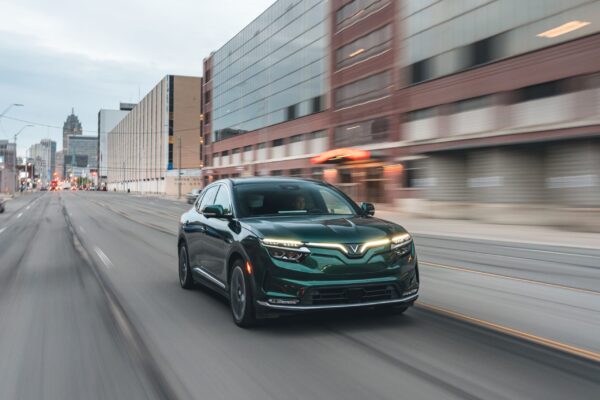
VinFast Auto — Scaling up for regional EV adoption

VinFast Auto (NASDAQ: VFS)

Last close As at 12/12/2025

USD3.30

0.01 (0.30%)

Market capitalisation

USD7,721m

More on this equity

Research: Industrials

VinFast Auto — Scaling up for regional EV adoption

VinFast Auto (VFS) is a Vietnamese pure-play electric vehicle (EV) manufacturer that has transitioned from internal combustion engines to a fully electric line up of EV passenger cars, e-scooters and e-buses. The company is leveraging its core competencies in Vietnam (one of the fastest-growing EV markets globally) and its integrated EV ecosystem to expand in India, Indonesia and the Philippines. In our view, VinFast combines a strong strategic position in Vietnam with a sizeable opportunity to extend that model into high-growth regional markets, balanced against the execution and capital risks typical of a fast-growing EV manufacturer.

Written by

Andrew Keen

Managing director, head of content, energy and resources, industrials

Industrials

Initiation of coverage

15 December 2025

Price $3.27
Market cap $8,001m

Net cash/(debt) at 9M25 (including related party)

$(6,485.3)m

Shares in issue

2,338.4m
Free float 2.1%
Code VFS
Primary exchange NASDAQ
Secondary exchange N/A
Price Performance
% 1m 3m 12m
Abs (3.1) 6.2 (31.2)
52-week high/low $5.4 $2.6

Business description

VinFast Auto is a Vietnamese pure-play electric vehicle manufacturer with a mission to accelerate global EV adoption through affordable technology-enabled vehicles. Incorporated in Singapore, listed on NASDAQ, and headquartered in Hai Phong, Vietnam, VinFast is a subsidiary of Vingroup JSC, Vietnam's largest private conglomerate.

Next events

FY25 results

TBC

Analysts

Andrew Keen
+44 (0)20 3077 5700
Harry Kilby
+44 (0)20 3077 5700
Finlay Mathers
+44 (0)20 3077 5700

VinFast Auto is a research client of Edison Investment Research Limited

Note: PBT and EPS are reported.

Year end Revenue ($m) EBITDA ($m) PBT ($m) EPS ($) EV/sales (x)
12/23 1,198.2 (1,422.0) (2,392.6) (1.04) 12.1
12/24 1,808.9 (1,870.7) (3,180.0) (1.36) 8.0
12/25e 3,416.0 (2,112.0) (3,174.0) (1.36) 4.2
12/26e 6,636.0 (639.0) (1,852.0) (0.79) 2.2

Growth potential in key Asian markets

VinFast has established itself as Vietnam’s largest car brand by volume, with around 39% domestic market share and c 124,000 EV deliveries in the first 10 months of 2025. A broad product range, together with ecosystem businesses in mobility, charging infrastructure and used vehicles and rentals, underpins that position. The company is now extending this base through a manufacturing footprint that combines vertically integrated plants in Vietnam with completely knocked down (CKD) facilities in India and Indonesia, and through a shift from capital-heavy direct sales to franchise dealer networks in the US, Europe and key Asian markets.

Expanding production base

Financially, VinFast remains in an investment phase. In the first nine months of 2025 (9M25), the group generated revenue of $2.0bn on deliveries of 110,362 EVs and 234,536 e-scooters and e-bikes, but recorded a gross loss of $0.9bn and an adjusted EBITDA loss of $1.4bn. Q325 results confirm that margins are still negative and volatile, with a reported gross margin of -56.2% and an adjusted EBITDA loss of $0.6bn. Management’s adjusted metrics, however, suggest a gradual improvement in unit economics as volumes grow and localisation increases. At 30 September 2025 cash was $349m against total debt of $3.2bn. Management indicated access to liquidity of $3.7bn at 30 September, so the path to positive free cash flow depends on sustained volume growth, higher localisation and disciplined cost control, alongside continued support from sponsors and banks.

Valuation: $8.0/share (c 143% upside)

We value VinFast primarily using a 10-year discounted cash flow (DCF) model, cross-checked against EV/sales multiples for global and regional EV peers, which indicates an equity value of $8.0 per share. Our base case assumes a delivery ramp led by the VF 3, VF 6 and VF 7, gradual gross margin improvement as scale and localisation increase, and continued but tapering sponsor support for capex and working capital. Key sensitivities include the speed of regional execution, competition from other OEMs, and the availability and cost of external funding.

Investment summary

Vietnam’s electric vehicle champion

VinFast is Vietnam’s leading automotive brand by unit sales, with around 40% of the domestic car market and a dominant share in EVs, after pivoting from internal combustion engines (ICE) to a pure EV strategy in 2022. The company is using this position, plus a vertically integrated ecosystem in Vietnam, to support a broader regional expansion into India, Indonesia and the Philippines, focusing on competitively priced entry and mid-segment EVs. Its model is centred on cost-efficient manufacturing in Vietnam, supplemented by CKD assembly in key markets and an increasingly capital-light dealer network, with pricing and product positioning tailored for emerging middle-income consumers.

Financials

VinFast remains at an early stage in terms of scale, with revenue still modest relative to its installed capacity and capital base, and the group continues to report substantial operating and net losses as it ramps deliveries. Negative gross margins reflect low utilisation, high fixed costs and the cost of building out product, distribution and service infrastructure ahead of volume, while management’s adjusted metrics suggest that underlying margins are starting to improve as volumes increase and the mix shifts toward newer models. In 9M25, VinFast generated revenue of $2.0bn on deliveries of 110,362 EVs and 234,536 e-scooters and e-bikes, but recorded a gross loss of $0.9bn and an adjusted EBITDA loss of $1.4bn, which underscores its ongoing investment phase. However, management stated that excluding the delay in revenue recognition and adjusting for net realisable value (NRV), gross margin would have been negative 17.1%, an improvement from negative 20.8% in Q225 and negative 27.3% in Q324, while adjusted EBITDA margin would have resulted in negative 33.1% compared to negative 44.9% the year prior.

On our estimates, revenue rises from $3.4bn in FY25 to $6.6bn in FY26, with gross margin improving from negative 15% to positive 17% as utilisation and localisation increase. We still expect EBITDA to be negative over this period, with losses narrowing from $2.1bn in FY25e (margin -62%) to a loss of $0.64bn in FY26e (margin -10%) as volumes grow and the mix shifts towards newer models. We assume capex of $1.0bn in FY25e and $0.6bn in FY26e, so free cash flow remains significantly negative, and the business will continue to rely on sponsor and bank funding until margins improve further.

As VinFast’s delivery volumes increase over the medium term, and the company’s manufacturing utilisation rates increase (alongside an increasing manufacturing capacity expandable up to c 1m vehicles), we anticipate that both VinFast’s cost per vehicle and distribution costs will reduce (partially due to localisation and the company’s new production platform), bolstered by economies of scale effects. In our model we forecast VinFast to reach an inflection point in FY27e, when the company will see positive EBITDA as well as positive free cash flow for the first time. We forecast VinFast to deliver c 180,000 EVs (cars) in FY25 and c 330,000 EVs in FY26. VinFast invested c $1.7bn between FY23 and FY24, primarily in increasing its total EV capacity from 300,000 in 2024 to 600,000 by the end of FY25. We forecast further capex of $1.0bn in FY25, which will cover the completion of the increase in its total production capacity. For FY26e and FY27e we forecast capex of $0.6bn and $0.3m, respectively, with this normalising to around $0.15bn in the long run.

Valuation

VinFast sits between early-stage EV original equipment manufacturers (OEMs), which are typically referenced against forward EV/sales multiples, and more mature automotive peers, which are valued on cash-flow-based metrics. Our valuation will be based on a DCF framework that reflects the long asset life of the manufacturing base and the extended period required to reach scale, cross-checked against revenue-based multiples for relevant EV peer groups. At this stage, the current share price implies a cautious view on the pace of delivery growth, the timing and level of gross margin improvement and the visibility of funding beyond the next phase of plant and market expansion. Our DCF model indicates an equity value of $7.95 (rounded to $8.0) per share, representing a c 143% upside to the current share price.

Risk and sensitivities

VinFast’s investment case is highly sensitive to a set of execution, market and funding factors:

  • Delivery ramp up and margins: the path to positive gross and EBITDA margins depends on scaling volumes, improving mix and achieving cost reductions from localisation and learning effects. Slower-than-expected delivery growth would delay break-even and extend the loss period.
  • International expansion: the strategy relies on successful execution of CKD plants and dealer networks in India and Indonesia. Delays in plant ramp-up, local content compliance or charging infrastructure would leave the business more reliant on Vietnam and constrain scale.
  • Policy and competitive environment: supportive EV policies in Vietnam and other core markets, and the competitive response from both global and Chinese OEMs, will influence VinFast’s pricing power and addressable market. Changes in tariffs or local incentive schemes could affect both demand and the cost structure.
  • Funding and related-party dependence: the company’s capital-intensive expansion and operating losses require continued access to external finance. While sponsor backing has been strong, ongoing reliance on related-party funding and the concentration of ownership create governance and refinancing risks if support were to be scaled back or repriced.
  • Free float: VinFast’s 2.1% free float represents a risk for investors. The limited share availability constrains daily trading volumes, making it challenging for institutional participants to establish or unwind positions without moving the market. This illiquidity translates into wider bid-ask spreads and elevated transaction costs. Moreover, the concentrated ownership structure leaves the share price vulnerable to disproportionate volatility from relatively modest order flow, potentially disconnecting price action from underlying fundamentals.

Summary of key points

1. Leading pure-play EV OEM in South-East Asia. VinFast is South-East Asia’s only fully integrated, pure-play EV manufacturer and is the market leader in Vietnam. The company has contributed to accelerating EV adoption domestically, with national EV penetration rising from low single digits to over 30% in under two years.

2. Differentiated customer ownership and service model. VinFast’s ownership proposition is designed to reduce barriers to adoption and support retention. This includes extended warranties, after-sales support and flexible ownership solutions.

3. Technology-led platform and cost efficiency plans. The company’s Platform 2.0 and E/E Architecture 2.0 roadmap is a credible route to improved cost efficiency, centred on modular design, software control and production.

4. Manufacturing footprint and battery strategy. VinFast operates a multi-country manufacturing footprint across Vietnam, India and Indonesia, with aggregate capacity of 600,000 units per year. It operates a three-part battery strategy combining in-house capabilities with strategic partnerships and external procurement.

5. Distribution and mobility ecosystem. VinFast uses its diversified distribution dealer networks and mobility ecosystem, GSM, V-GREEN and Green Future to enable consumer access to EVs through a flexible usage model rather than sole ownership in key Asian markets.

6. EV growth exposure and strong majority shareholder backing. VinFast is positioned in high-growth South-East Asian markets where EV penetration is still relatively low and policy is supportive. It has also benefited from strong support from its majority shareholder Vingroup.

Company description

VinFast: An overview

VinFast is a Vietnamese EV manufacturer founded in 2017 as a subsidiary of Vingroup Joint Stock Company, Vietnam’s largest private conglomerate. The company initially produced ICE vehicles, then pivoted to a pure EV strategy, with ICE production ceasing in November 2022. By end-2024 and through the first 10 months of 2025, VinFast was Vietnam’s leading car brand by volume with around 39% domestic market share.

In August 2023, VinFast completed a business combination with Black Spade Acquisition Co, a special purpose acquisition company, and listed on the NASDAQ Global Select Market. The transaction implied an initial enterprise value of about $27bn and an equity value of $23bn. Trading in the first weeks was highly volatile, with the market capitalisation briefly exceeding that of established global OEMs before retracing to levels more consistent with an early-stage EV manufacturer.

VinFast is incorporated in Singapore and operates under the leadership of founder Pham Nhat Vuong, who serves as managing director and CEO, with Le Thi Thu Thuy as chair and Nguyen Thi Lan Anh as CFO. Vingroup and Mr Vuong retain substantial ownership stakes and have provided significant ongoing financial support. In November 2024, Vingroup pledged loans of up to $1.38bn to help VinFast progress toward break-even, while Mr Vuong personally committed VND50tn (about $2bn) to build financial reserves and support growth. This sponsor backing provides VinFast with a funding cushion that is unusual among EV start-ups, but it also highlights the scale of operation and ongoing cash consumption.

Business model: Dealership distribution and integrated green mobility ecosystem

VinFast generates the majority of its revenue from EVs and e-scooters, targeting price points suited to emerging and middle-income markets. The commercial model is predominantly based on a dealership model with only five of the company’s 381 showrooms being direct-to-consumer as of 30 September 2025. This allows VinFast to increasingly operate a capital-light dealer network, particularly outside Vietnam. This approach is intended to support rapid geographic expansion while limiting the capital tied up in owned retail and service infrastructure.

A prominent feature of the early business model was a battery leasing programme that separated vehicle and battery ownership in order to lower upfront purchase costs. This model, however, is no longer available in Vietnam due to the strong market adoption, but it is available in Indonesia and the Philippines.

In its home market, VinFast has built an integrated EV ecosystem. This links vehicle sales with charging infrastructure provided through V-GREEN and transportation services operated by Green and Smart Mobility Joint Stock Company (GSM), an affiliated EV-only taxi and ride-hailing operator and South-East Asia’s first EV-only mobility platform. GSM accounted for around 28% of VinFast’s car sales in 2024, providing a stable demand base in the ramp-up phase. Management has indicated that it intends to reduce dependence on this single customer over time, as retail and international sales scale, with this reducing significantly since the agreement with GSM started in 2023 (to <25% of cumulative sales since inception as at 9M25).

Product portfolio: Multi-segment EV offering

VinFast operates across multiple vehicle segments, from compact urban EVs to large SUVs, complemented by e-scooters, e-bikes and e-buses. The core focus is on entry to mid-market buyers, with selected premium and ultra-luxury models that support brand positioning.

The VF-branded passenger range spans:

  • Entry range: The VF 3 mini SUV and VF 5 A-segment SUV anchor the portfolio at accessible price points, broadly in the $10–20k range depending on specification. These models are designed for urban and first-time EV buyers. The VF 3 has been the main volume driver so far, with more than 31,000 units delivered in 9M25 and ranking as Vietnam’s best-selling vehicle in the first nine months of the year.
  • Mid-size range: The VF 6 B-segment crossover and VF 7 C-segment SUV target the core global compact and mid-size segments, with prices typically in the high-$20k to mid-$30k range. The Nerio Green and Limo Green models extend coverage into C-segment SUVs and multi-purpose vehicles, aimed at ride-hailing and taxi operators.
  • Premium range and ultra-luxury: The VF 8 and VF 9 SUVs address the D and E segments and are targeted at higher price points in North America, Europe and selected Asian markets. The VF 9 is a large, three-row SUV that represents VinFast’s current flagship model. At the top of the range, the Lac Hong 900 LX marks an initial move into ultra-luxury E-segment vehicles for high-net-worth buyers, with detailed pricing and specifications yet to be disclosed.

Alongside passenger cars, the Green series commercial vehicles, including the Minio Green, Herio Green, Nerio Green, Limo Green and EC Van, are aimed at taxi, ride-hailing and commercial fleets and are an important part of VinFast’s relationship with GSM and other operators. VinFast also produces e-scooters and has launched the Drgnfly e-bike in the US, broadening its reach into micromobility.


Manufacturing capacity

VinFast’s manufacturing strategy combines a highly automated, vertically integrated base in Vietnam with capital-light CKD assembly in selected growth markets. Designed capacity reached around 600,000 cars per year in 2025, up from about 300,000 in 2024, with further expansion potential (up to 1m vehicles) at the newer sites.

VinFast’s manufacturing facilities are:


  • Hai Phong, Vietnam (flagship plant): VinFast’s primary facility is located in Hai Phong, Vietnam, on an 828-acre site with designed capacity of about 300,000 passenger vehicles and 500,000 e-scooters per year. The plant produces most current models and is highly automated, with over 1,400 robots and around 90–95% automation in press and paint shops. In addition to final assembly, the Hai Phong facility manufactures key components in-house, including battery packs, e-motors, power distribution units and selected body parts, supported by a localised supplier park and a broad network of global tier-one suppliers.
  • Ha Tinh, Vietnam (expansion plant): A second facility in Ha Tinh, Vietnam, began operations in 2025 with initial designed capacity of 200,000 vehicles a year, expandable to around 400,000 units. The plant is focused on high-volume models such as the VF 3 and EC Van and is co-located with a battery pack factory and a battery cell joint venture. This co-location is intended to support higher localisation of battery systems and lower logistics costs as volumes grow.
  • India (Tamil Nadu, CKD assembly): In India, VinFast has developed a CKD assembly facility in Thoothukudi, Tamil Nadu, with initial designed capacity of 50,000 vehicles a year and scope to expand to around 150,000 units as demand develops. The plant assembles VF 6 and VF 7 models for the Indian market and draws on an emerging local supplier base. The CKD model allows VinFast to benefit from local incentives, reduce import duties on finished vehicles and tailor content to local regulatory and customer requirements.
  • Indonesia (Subang, CKD assembly): The Subang facility in West Java, Indonesia, is designed for initial capacity of 50,000 vehicles a year. It will assemble VF 3, VF 5, VF 6, VF 7 and selected other models for the Indonesian and wider South-East Asian markets. As in India, the CKD approach is intended to meet local content rules, access fiscal incentives and position VinFast to scale capacity as the regional EV market develops.
  • North Carolina, US (planned): VinFast has secured a site in North Carolina, US, for a planned plant with Phase I capacity of up to 150,000 vehicles a year. Construction has been delayed, with production now expected to start in 2028. The facility is intended to support local manufacturing for the US market once scale, policy and funding conditions are more favourable.

Taken together, the current footprint provides a route to scale production from a vertically integrated base in Vietnam while using CKD facilities to localise assembly in key regional markets and preserve optionality on further capacity additions.

Global distribution: Rapid showroom expansion in Asian markets

As of 30 September, VinFast operated 381 showrooms globally, with around 99% of sites run by dealer partners rather than directly by the company. The group’s business model leans heavily on local dealership networks. The showroom footprint increased by about 160% between 31 December 2024 and 31 March 2025 as new markets were added and existing networks were built out.

VinFast’s regional presence includes:

  • Vietnam: 279 showrooms nationwide; Vietnam remains the core market and the largest part of the physical network.
  • India: 20 showrooms as of 31 October 2025, with management targeting around 35 by year-end. Founder and CEO Pham Nhat Vuong has indicated that India is expected to become VinFast’s largest market over time.
  • North America: 42 showrooms across multiple states (including Alabama, California, Florida, Illinois, Indiana, Kansas, New Mexico, New York, North Carolina and Texas) and Canadian provinces (British Columbia, Ontario and Quebec).
  • Europe, Middle East and Africa: 15 showrooms across France, Germany, the Netherlands and selected Middle Eastern markets, including Oman and the United Arab Emirates.
  • South-East Asia: a presence in Indonesia with 33 showrooms, and in the Philippines with 13 showrooms.

Charging network and partnerships

VinFast and its partners provide access to more than 1m charging points globally. In Vietnam, the group operates its own network of charging stations, integrated with V-GREEN, and V-Green is developing a charging network in Indonesia and the Philippines. In North America and Europe, coverage is provided mainly through third-party partnerships. In the US, VinFast customers have access to more than 100,000 charging points under existing agreements, and the company is in discussions regarding potential adoption of the North American Charging Standard.

Green mobility ecosystem

VinFast is affiliated with three related businesses (owned separately by VinFast’s founder) that support vehicle demand and are positioned as pillars of its green ecosystem.

Green and Smart Mobility (GSM)

GSM, South-East Asia’s first EV-only mobility platform, is a fully electric taxi and mobility operator that uses VinFast vehicles exclusively. It has become the largest fleet operator in Vietnam and is expanding into South-East Asia and selected other regions. As of 31 December 2024, VinFast had delivered around 46,500 EVs and 41,650 e-scooters to GSM.

GSM leases VinFast EVs and e-bikes to transport companies and also offers rentals to individual users. It operates a platform that allows private VinFast EV owners to drive on the network, and it partners with traditional taxi operators to support their transition to EVs. In effect, GSM provides an anchor demand base during the ramp-up phase and embeds VinFast vehicles in a wider mobility network, although management has indicated that reliance on this channel should diminish as retail and international sales grow.

V-Green

V-Green Global Charging Station Development Joint Stock Company develops and operates public charging infrastructure. The company’s stated ambition is to build one of the largest charging networks in the world, targeting around 600,000 fast charging points by the end of 2026 across Vietnam, Laos, the Philippines, Indonesia and India.

V-Green works with partners to expand charging coverage while limiting capital requirements for VinFast. In Vietnam, it has a franchise agreement with FAST+ to deploy around 5,000 charging stations and a separate partnership with ChargePoint for home and public chargers, including multi-utility charging hubs. Internationally, V-Green has signed a memorandum of understanding with Chargecore, ChargePoint, Amarta Group and CVS to install about 63,000 VinFast exclusive charging points in Indonesia under a joint investment structure.

Green Future

Green Future, previously branded For Green Future, focuses on making EV ownership more accessible and flexible. It buys and sells used VinFast electric cars and operates a self-drive EV rental business for both new and pre-owned vehicles. All cars sold through Green Future undergo a multipoint inspection at VinFast certified service centres. By providing lower-cost entry points through used vehicles and flexible access through rentals, Green Future supports vehicle residual values and broadens the potential customer base for VinFast products.

Key takeaways from VinFast’s mobility day

VinFast used its November 2025 mobility day to outline a technology roadmap focused on platform consolidation and in-house software development, with the twin aims of reducing material costs and supporting feature differentiation. The strategy combines standardised vehicle platforms, a zonal electrical architecture and a vision-based approach to autonomy (although VinFast is also exploring other technological roadmaps). In our view, this is a practical response to the capital intensity of EV manufacturing, although execution risk remains elevated given VinFast’s limited track record in software and the scale of the programme.

Platform and architecture: Cost and software

VinFast’s transition to Vehicle Platform 2.0 follows industry precedent in using cross-model architectures to improve unit economics. The company is consolidating component count and standardising supplier interfaces, with management highlighting improved engineering efficiency and shorter development cycles as key benefits. Platform 2.0 is built around cross-model component sharing, reduced part count and modular design intended to shorten time-to-market for new variants.

Material costs declined by around 10–12% year-on-year across various models in Q325. Management attributes this to platform efficiencies, battery technology advances and scale benefits in manufacturing. Further cost reduction is targeted through ongoing platform optimisation, although the contribution of Platform 2.0 versus other initiatives has not been quantified. The platform’s effectiveness will be tested as VinFast scales production at new facilities in Ha Tinh, India and Indonesia. Localisation rates and supplier coordination will be critical if these plants are to match or improve on the Hai Phong plant, which currently operates at about 75% localisation.

In parallel, VinFast is adopting a zonal electrical and electronic architecture (EE 2.0), which will reduce the number of electronic control units (ECUs) in its vehicles. These ECUs will be arranged by physical presence within the car, in comparison to the conventional distributed model where they are arranged by functionality. This is intended to reduce wiring complexity and component count while enabling more sophisticated over-the-air updates. Management cites simplified wiring harnesses, fewer ECUs and more standardised hardware as benefits, alongside greater control over the software layer. The Limo-Green is the first implementation of this EE 2.0 architecture. If successful, it should support cost efficiency and a more consistent feature set across the range, but it also increases VinFast’s dependence on building sustainable internal software capability.

ADAS and robotaxi roadmap

VinFast currently offers ADAS Level 2+ on selected models, with functionality broadly comparable to established competitors. Features include on- and off-ramp navigation, collision avoidance (with around 100m detection range), automated lane changes, traffic jam assist and detection of roadworks and adverse weather, alongside parking-related functions such as V-Parking Comfort and V-Parking Summon.

V-Parking Comfort is intended to provide fully autonomous self-parking with higher precision, while V-Parking Summon is envisaged as an auto-valet system using high-resolution cameras for 360º environmental mapping. These systems are being developed in-house, which indicates progress in software capability. The 2026 target looks ambitious given VinFast’s limited software track record, so some risk of delay should be assumed.

Beyond ADAS, VinFast is developing a robotaxi service. Management highlights lower computing requirements as a key advantage, which should help reduce hardware cost and power consumption. The strategy is conceptually similar to Tesla’s approach and faces familiar challenges, particularly in adverse weather and low-light conditions, and the claimed efficiency benefits will require validation in real-world operation.

Initial robotaxi operations are planned in selected urban development zones, implying a geofenced deployment to reduce technical and regulatory complexity. The geofenced approach looks prudent at this stage but will limit its near-term revenue contribution. Scaling beyond initial zones will depend on safety performance, regulatory approvals and available funding.

VinFast describes this as a three-stage autonomy roadmap: iterative enhancement of Level 2+ and 2++ systems, expansion of in-house AI software to reduce third-party licensing and support feature differentiation, and, ultimately, deployment of robotaxi services. The sequence is logical, but each stage carries execution risk, particularly the step from enhanced ADAS to commercial robotaxi operations.

Strategic implications

VinFast intends the combination of Platform 2.0 and EE 2.0 to deliver structural cost reduction through component consolidation, greater localisation and more efficient integration of hardware and software. Reported 10–12% year-on-year material cost reductions suggest early progress, although it is difficult to separate the impact of platform and architecture changes from battery cost trends and scale effects. The vision-only autonomy strategy avoids expensive lidar sensor suites and could provide a cost advantage at the vehicle level if technical hurdles are overcome.

From an investment perspective, these initiatives are key to delivering a sufficiently lower cost per vehicle to move gross margins towards break-even as volumes scale.

Regional market dynamics and policy environment

VinFast’s near-term growth strategy focuses on four main markets at relatively early stages of EV adoption. Vietnam, India, Indonesia and the Philippines all have EV penetration below 5%, but each has a different policy framework, income profile and infrastructure trajectory. VinFast’s decision to localise manufacturing across these markets is intended to position the group for volume growth as adoption accelerates, although execution risk remains high given the nascent nature of these markets and intensifying competition from both global and Chinese OEMs.

Vietnam: Economic foundation and market leadership

Vietnam is VinFast’s core market and provides the economic base for regional expansion. The country combines relatively high automotive under penetration with strong income growth, which should support rising car ownership and a gradual shift toward higher-value vehicles, including EVs.

Vietnam’s real GDP is forecast by the International Monetary Fund to grow by about 7.1% in 2025, well ahead of the averages for emerging market and developing economies, emerging and developing Asia and the global economy. Over the medium term to 2030, consensus projections suggest Vietnam can sustain average annual growth of roughly 5.3%, compared with about 4.5% for emerging and developing Asia and 3.1% globally. This growth premium underpins the long-run addressable market for VinFast in its domestic base.

Vietnam’s economic resilience is illustrated by its rapid recovery from COVID-19 disruption, with real GDP growth rebounding from 2.6% in 2021 to 8.5% in 2022 and then normalising to 5.1% in 2024. This compares favourably with more volatile regional patterns and provides a relatively stable backdrop for long-term automotive market development.

Vietnam’s vehicle market has grown over the long run, albeit with cyclical swings linked to economic conditions and policy changes. Total vehicle sales peaked at about 405,000 units in 2022 before moderating to around 302,000 units in 2023, which remains well above historical levels and suggests further headroom for growth as incomes rise.

Passenger vehicle growth and macroeconomic support

The passenger vehicle segment has shown stronger long-term growth than the overall market, with sales rising from about 116,000 units in 2015 to roughly 231,000 units in 2023, almost doubling despite the moderation in 2023. This trajectory, combined with Vietnam’s GDP outperformance, points to a supportive backdrop for continued growth in higher-value vehicles, including EVs, and underpins VinFast’s domestic volume opportunity.

Vietnam’s inflation environment remains relatively contained, at around 3.6% in 2024, which helps to support real income growth and automotive affordability. The combination of above-average GDP growth, controlled inflation and an already established automotive market positions Vietnam as VinFast’s most stable revenue base and the primary source of cash generation to fund regional expansion.

Regional market penetration and growth dynamics

Across VinFast’s other target markets, vehicle and EV penetration remain low, which creates significant long-term upside but also highlights execution and policy risks. India offers the largest absolute opportunity, with car penetration of about 2.6% and EV penetration of roughly 2%. Indonesia, with car penetration of around 8.2% and EV penetration close to 5%, and the Philippines, with car penetration of about 4.8% and EV penetration near 4%, sit in the middle of the group. These markets are at an early stage in the adoption curve and converting theoretical demand into realised volumes will depend on effective policy implementation, infrastructure build out and income growth.

Policy framework analysis

Government support varies across VinFast’s core markets. Vietnam provides the most comprehensive set of incentives, while other markets show more mixed and sometimes inconsistent implementation. In Vietnam, the policy toolkit includes road tax and registration fee waivers, purchase subsidies, reimbursement schemes and scrappage incentives, and most recently a restriction on ICE motorbikes (see below), and further targets for public EV taxis and buses, all framed around a target of about 30% EV penetration by 2030. This framework has delivered visible results so far and has helped VinFast establish a dominant domestic position.

India

India’s policy environment combines the FAME II scheme and the production-linked incentive programme, which together target EV penetration of about 30% for private cars, 70% for commercial vehicles and 80% for two- and three-wheelers by 2030. Current EV registrations of around 1.97m units in FY25, up 17% year-on-year, still represent only about 1.46% of the total vehicle fleet of roughly 390m units, implying a substantial step-up in adoption is required to meet stated targets. Implementation has at times been uneven, which creates uncertainty for manufacturers planning long-term investment.

Indonesia

Indonesia’s framework centres on fiscal incentives that favour EVs over ICE vehicles. Measures include value-added tax of about 1% for qualifying EVs versus 11% for ICE vehicles, elimination of luxury tax for models with high local content and reduced fees and lower interest loans for buyers. The government has set a target of around 2m electric cars by 2030, which looks ambitious given current adoption levels, although investment incentives and local content rules are supportive for manufacturers that commit to local production. Direct grants support commercial fleets and small businesses, and regulatory rules set minimum EV shares for auto-makers and fleet operators.

The Philippines

In the Philippines, the Electric Vehicle Industry Development Act, effective from May 2024, provides zero import duty on qualifying EVs and a 50% reduction in road tax, alongside mandatory charging infrastructure requirements for certain types of buildings and parking facilities. The government’s target of about 6.6m EVs by 2030 sits in sharp contrast to the current infrastructure base, with fewer than 1,000 public charging stations in operation, which could act as a constraint on the pace of adoption.

Infrastructure development and constraints

Charging infrastructure development differs markedly across these markets and represents both an opportunity and a constraint for VinFast’s expansion. Vietnam currently has the most developed network, with VinFast and V-Green reporting more than 100,000 charging points in operation, which provides operational experience for regional roll-out but also highlights the scale of investment needed to replicate this coverage in other countries.

Indonesia currently shows the strongest momentum in charging infrastructure, with the number of charging stations increasing by close to 300% in 2024, albeit from a low base. By contrast, the Philippines presents the greatest infrastructure challenge, with fewer than 1,000 public charging points in operation. This underlines the need for coordinated public and private investment and suggests that EV market development there may lag stated policy targets.

Market size and growth projections

Available market forecasts point to significant long-term growth potential across VinFast’s focus countries, but projections depend heavily on effective policy delivery and infrastructure build out. In India, estimates of EV market value rising from about $5.2bn in 2024 to around $23.5bn in 2030 imply rapid compound growth and require sustained policy support and large-scale investment in charging and grid capacity. Indonesia’s projection of an EV market above $20bn by 2030 looks ambitious given current penetration levels, while the Philippines lacks detailed, credible market sizing despite aggressive government adoption targets.

Hanoi’s 2026 restriction on petrol vehicles: A structural tailwind for e-bike volumes

In July 2025, a new regulation restricting petrol-powered motorbikes from entering central Hanoi from mid-2026 was issued, a policy shift that materially alters VinFast’s addressable market in two-wheeled EVs. The restriction targets approximately 450,000 petrol motorbikes currently operating in Hanoi’s inner districts, creating a near-term replacement cycle that plays directly into VinFast’s existing e-bike portfolio and distribution infrastructure.

The policy impact is already visible with VinFast delivering 234,536 e-scooters and e-bikes in 9M25, up 489% y-o-y, with Q3 deliveries reaching 120,052 units, a 535% increase year-on-year and 73% quarter-on-quarter. This acceleration followed the restriction announcement and demonstrates an immediate consumer response to the regulatory shift.

The regulatory push extends beyond Hanoi. Vietnam ranked third globally in electric motorbike sales in H125, trailing only China and India, according to industry database MotorCycles Data. Domestic manufacturers now hold approximately 70% of Vietnam’s overall electric two-wheeler market, a significant reversal from the traditional dominance of Japanese ICE incumbents such as Honda and Yamaha, both of which are now pivoting to electric offerings.

VinFast’s product portfolio spans multiple price points, from entry-level models to premium offerings, allowing the company to address different consumer segments within the replacement market. Price adjustments during 2025 suggest VinFast is prioritising market share gains ahead of margin optimisation, a rational approach given the regulatory tailwind and the company’s established manufacturing scale.

The Hanoi ICE restriction also benefits VinFast’s broader ecosystem. Xanh SM, the company’s ride-hailing affiliate, is deploying VinFast e-bikes to drivers under a deposit-based model, effectively embedding VinFast’s two-wheelers into the gig economy infrastructure. This creates a dual revenue stream – direct consumer sales and fleet partnerships – while building brand visibility in urban centres where the ban will be most acutely felt.

Risks remain. Execution on battery supply, charging infrastructure roll-out and after-sales service will determine whether VinFast can sustain its growth trajectory as Honda, Yamaha and other incumbents scale their own electric offerings. The restriction also applies only to central Hanoi initially, limiting the immediate addressable market, though further geographic expansion of the policy appears likely given Vietnam’s broader air quality and emissions reduction targets.

On balance, the Hanoi restriction represents a structural demand driver that materially de-risks VinFast’s e-bike growth trajectory through 2026 and beyond. With 489% y-o-y growth in 9M25, and policy momentum behind electrification, VinFast is well-positioned to capture a disproportionate share of the replacement cycle, providing a near-term volume and revenue offset to the company’s higher-profile but capital-intensive passenger EV operations.

Strategic positioning and market capture

VinFast’s multi-market manufacturing strategy provides several potential advantages but also requires significant execution capability and capital. Vietnam’s economic outperformance and established position in the domestic automotive market offer a base for cash generation, while local production in Vietnam, India, Indonesia and the Philippines positions the company to benefit from domestic content rules and to optimise cost and logistics.

Vietnam’s superior GDP growth outlook, with forecast average growth of about 5.8% from 2025 to 2030 compared with around 4.9% for emerging and developing Asia, and its existing automotive penetration support the role of the domestic market as VinFast’s most stable revenue base. Management highlights that VinFast has grown domestic volumes faster than the overall market in recent years, which provides some evidence of competitive strength and brand traction.

The regional manufacturing footprint can deliver cost, tariff and currency benefits by producing close to end-markets and meeting local sourcing requirements. At the same time, VinFast is targeting a combination of affordability and perceived premium features, supported by warranty terms and access to charging networks, to differentiate itself from established competitors.

Risk assessment and implementation challenges

Several factors could limit VinFast’s ability to capture the full theoretical opportunity across its target markets. Infrastructure timelines remain a key uncertainty, especially in the Philippines and parts of India, where charging networks and grid capacity may not expand fast enough to support rapid EV adoption. Policy implementation is another risk, as changes in government priorities or fiscal pressures could alter incentive schemes or delay supporting regulation.

Competitive intensity is increasing in all core markets. Global OEMs are accelerating their EV plans and local players in India and Indonesia benefit from entrenched dealer networks, brand recognition and, in some cases, explicit policy support. VinFast will need to build and sustain manufacturing, distribution and service capabilities in this environment, while also managing diverse regulatory regimes.

Manufacturing localisation offers policy and cost benefits but requires high upfront investment and significant working capital to support supply chain development. Returns on this investment will depend on the speed and scale of demand realisation in each market. Currency volatility and operational complexity across multiple jurisdictions add further execution risk.

Overall, VinFast’s regional expansion strategy positions the company to participate in potential EV growth across Asia, anchored by Vietnam’s relatively strong economic performance and established market presence. However, the outcome will depend heavily on execution, infrastructure build out and the evolution of competitive dynamics and policy support in each market.

International franchise dealership network

VinFast’s international distribution strategy is centred on third-party partnerships with established automotive retailers. This capital-light approach is intended to accelerate market entry and limit upfront investment after experience with a slower and more capital-intensive direct sales model. Progress has been selective rather than broad based, and the current network remains modest relative to the ambitions set out when the franchise shift was announced in late 2023.

United States

In the US, VinFast announced its transition to a dealer franchise model in November 2023 and reported that it had received more than 70 dealer applications, with a medium-term target of around 125 points of sale nationwide. The first five independent dealers were signed in January 2024 and initially focused on the VF 8 all-electric SUV, with plans to add the VF 6, VF 7 and VF 9 as these models launch.

By August 2025, the network had expanded to nearly 30 authorised dealers across 14 states, including California, Texas, Florida, Illinois and New York. VinFast positions the VF 8 at a manufacturer’s suggested retail price (MSRP) of around $39,900 to $44,900, with lease programmes from $279 a month, while the VF 9 starts at about $62,900 or $449 a month. Both models carry a 10-year or 125,000 mile vehicle warranty and a 10-year unlimited mileage battery warranty, which are more generous than typical industry terms and are intended to support brand building in a market dominated by established OEMs. In parallel with dealer partnerships, VinFast continues to operate a few legacy retail stores and service centres in Canada under its earlier direct sales approach.

Europe

In Europe, VinFast has focused its initial dealer roll-out on Germany, France and the Netherlands. In Germany, the company has signed a small number of dealer partners that together operate several showrooms, including new locations opened in 2025. In France, the first official dealer partner began operations in 2025 and a separate partnership covers certain French overseas territories under a multi-year agreement, initially focused on the VF 6 and VF 8. Absolute volumes have not been disclosed.

Aftersales services in Europe are largely outsourced. VinFast relies on ATU in Germany, Norauto in France and LKQ in the Netherlands for service support, and has partnered with Fixico for body and paint work in these markets. The company reports a network of dedicated technical centres across the three countries rather than investing in a fully proprietary service footprint.

Asia-Pacific

In South-East Asia and India, VinFast has pursued a more rapid dealer roll-out. In the Philippines, the company signed its first four dealers in 2024 and added further distributor partners in 2025 with the aim of establishing more than 60 showrooms over time. These partners plan a mix of standalone 3S sites and locations embedded in existing retail networks, focused initially on major urban areas including Metro Manila.

The Middle East

VinFast launched in the Middle East in late 2024, opening its first United Arab Emirates (UAE) dealership in partnership with Al Tayer Motors and showcasing the VF 6, VF 7, VF 8 and VF 9. Exclusive partnership agreements have been signed with Al Tayer Motors in the UAE, Al Mana Holdings in Qatar and Bahwan Automobiles & Trading in Oman, with additional dealerships planned in other Gulf markets. The VF 8 is positioned at price points starting in the high $40k range in this region. VinFast has also signed a memorandum of understanding with Charge&Go to support public charging infrastructure in the UAE.

Strategic implications

The shift to a franchise model reflects VinFast’s recognition that its initial direct sales strategy was capital intensive and difficult to scale quickly. Working with established dealers gives access to existing infrastructure, local market knowledge and service capabilities, but reduces direct control over customer experience and dealer economics. Competition is intense in all of VinFast’s target markets, from incumbent OEMs with entrenched brands and networks and from other EV-focused entrants, particularly Chinese manufacturers.

To date, VinFast has provided limited disclosure on volumes, profitability or dealer-level economics outside Vietnam. Aggressive roll-out targets in the US, India, the Philippines and Indonesia have yet to be matched by transparent reporting on the performance of these networks, which makes it difficult to assess the commercial traction of the international franchise strategy. The capital-light model should, in principle, help contain sales and distribution costs as volumes scale, but the effectiveness of the approach will depend on the company’s ability to sustain dealer engagement, support residual values and deliver a consistent service experience across markets.

Competitive landscape

VinFast’s expansion across key Asian markets brings it into direct competition with BYD (as well as other Chinese EV manufacturers). BYD overtook Tesla in 2024 to become the world’s largest EV manufacturer by sales volume. BYD sold about 4.3m new energy vehicles (NEVs) in 2024 and accounted for roughly 19% of global plug-in vehicle sales in 9M25. Its growing presence across South-East Asia has intensified competition in several of VinFast’s target markets.

Indonesia

In Indonesia, BYD has scaled rapidly from a low base. After selling around 15,400 units in 2024, year-to-date sales to October 2025 reached close to 37,600 units, including the Denza brand. October 2025 was a particularly strong month, with BYD ranking third in the overall market after an 873% y-o-y jump to about 10,600 units, driven by the launch of the Atto 1 small battery electric vehicle (BEV), which captured around 13% market share in its first month. BYD has completed a $1bn local manufacturing facility to support Indonesian operations. VinFast has not disclosed sales figures for Indonesia; it has commissioned an EV plant with annual capacity of around 50,000 units and has signed agreements with local financial institutions to support customer financing. According to the Association of Indonesia Automotive Industries, VinFast captured a c 5% market share for EVs in the first nine months of 2025 and ranked among the top five EV brands in regard to sales.

The Philippines

The Philippines provides a clear illustration of BYD’s dominance in an early-stage market. BYD sold about 4,800 units in 2024, an increase of almost 90 times year-on-year, and is estimated to have held more than 80% of the NEV market and around 70% of the battery electric segment. In the first half of 2025, BYD’s share of BEV imports was estimated at around 40%, led by models such as the Atto 3 and Seal. VinFast has begun building its dealer network in the Philippines but has not yet reported sales data.

India

In India, BYD had exceeded its full year 2024 sales total by early August 2025 and reached about 10,000 cumulative retail sales by September 2025, supported by a dealership network of roughly 40–45 outlets in major cities. Sales in H125 of around 2,400 to 2,500 units represented growth of more than 100% y-o-y. VinFast has announced a manufacturing facility in Tamil Nadu and is rolling out its dealer network, but is at a much earlier stage in terms of sales and brand recognition. According to the Ministry of Road Transport and Highways VAHAN vehicle information system, VinFast ranked in the top eight for EV registrations in October 2025.

Vietnam

Vietnam remains VinFast’s core market and the only country where the group currently holds a leading position by volume. VinFast delivered about 88,000 EVs in 2024 and around 124,000 units in the first 10 months of 2025, including a record of more than 20,000 units in October 2025, which translated into a monthly passenger car market share of 39%. BYD entered Vietnam in 2024 with a small line-up, but remains a marginal player so far and has not featured prominently in published sales rankings.

Financials

VinFast remains in an active investment phase, with scale continuing to improve, and profitability progressing towards being positive, despite losses currently being substantial. In 9M25 the group generated total revenue of about $2.0bn on deliveries of 110,362 EVs and 234,536 e-scooters and e-bikes, but reported a gross loss of $0.9bn and a net loss of roughly $2.5bn as low utilisation, high warranty accruals and promotional activity weighed on margins. On our base case we expect revenue to rise to around $3.4bn in FY25e and $6.6bn in FY26e as volume increases in core Asian markets and exports scale, with gross margin moving positive in 2026. EBITDA losses are modelled to remain significant but to narrow from roughly $2.1bn in FY25e to c $0.6bn in FY26e, with EBITDA turning positive in FY27e on our assumptions.

Cash flow is therefore expected to remain deeply negative for a few years, driven by operating losses and ongoing capex on product, plants and distribution. We assume that this gap is covered by a combination of third-party bank debt and sizeable sponsor support in the form of both new shareholder loans and non-repayable grants. On this basis, and including related-party borrowings in the definition, VinFast is projected to remain in a material net debt position over the forecast horizon, at around $9–11bn on our numbers, although this is contingent on continuing sponsor injections as well as access to external funding.

VinFast has been funded by a mix of non-repayable support from its sponsor and related-party loans from Vingroup and its founder. The form of this backing has evolved, combining grants, equity-like injections, shareholder loans and third-party bank debt. The important point is the scale of ongoing support required to fund operating losses and capex, and how much of this ultimately sits as leverage rather than as permanent capital.

Key recent funding steps include:

  • Vingroup has committed to provide additional borrowings of up to VND35,000bn ($1.4bn) between 12 November 2024 and 12 November 2026; as at 30 September 2025, VinFast had drawn VND11,580bn ($459.8m) under this facility.
  • Under a grant agreement dated 12 November 2024, Mr Vuong committed to provide up to VND50,000bn ($2.0bn) in free grants; by 30 September 2025, VND28,000bn ($1.1bn) had been disbursed.
  • In August 2025 VinFast spun off certain completed R&D assets into Novatech, which Mr Vuong agreed to acquire for VND39.8tn ( US$1.6bn) in cash; VND25,782bn ( US$1.0bn) had been received by 30 September 2025, with the balance due by year-end.
  • In Q325 VinFast also added $100m of term funding from MUFG Bank and a $150m three-year loan from Barclays, alongside its existing borrowings.

In our forecasts we assume that future sponsor support remains sizeable and continues to come through both grant and loan channels. We treat shareholder and related-party loans as interest-bearing liabilities and grants or equity-like injections as capital. Looking forward, we assume that roughly half of incremental sponsor support is provided as grants or equity and half as shareholder loans. This is a pragmatic simplifying assumption that reflects the pattern of disclosed commitments and avoids overstating leverage by assuming that all future backing is debt funded.

Q3 and 9M25 results update

VinFast reported Q325 revenue of $719m, up 47% y-o-y and 9% q-o-q, supported by strong volume growth in its home market. The company delivered 38,195 EVs in Q325 (+74% y-o-y) and 110,362 units in 9M25 (+149% y-o-y), positioning it to at least double FY24 deliveries. Its two-wheeler business accelerated sharply, with 120,052 units delivered in Q325 (+535% y-o-y) and 234,536 units delivered in 9M25 (+489% y-o-y).

Gross margin reflected temporary accounting adjustments alongside underlying improvement. The reported gross loss widened to $404m in Q325, from $271m in Q225 and $117m in Q324, with gross margin at negative 56.2% (Q225: negative 41.1%; Q324: negative 24.0%). Management attributed the sequential decline primarily to delayed revenue recognition and NRV adjustments; on an adjusted basis excluding these impacts, gross margin improved to negative 17.1% (Q225: negative 20.8%; Q324: negative 27.3%), demonstrating progress in underlying unit economics. For 9M25, the gross loss totalled $902m (9M24: $485m) on revenues of $2,025m (+85% y-o-y).

Operating expenses rose 40% y-o-y to $287m in Q325 (Q225: $250m), reflecting increased R&D investment of $106m (+27% y-o-y, +20% q-o-q) and SG&A of $172m (+26% y-o-y, +26% q-o-q) to support capacity expansion and product development. R&D represented 15% of revenue, marking the fifth consecutive quarter where it was under 20%. The reported adjusted EBITDA loss was $576m in Q325 (Q225: $417m; Q324: $212m). Excluding the revenue recognition and NRV impacts, adjusted EBITDA margin improved to negative 33.1% from negative 44.9% in Q324. For 9M25, adjusted EBITDA loss totalled $1,358m (9M24: $949m).

Net loss attributable to controlling interest was $951m in Q325 (Q225: $807m; Q324: $525m), equivalent to $0.41 per share (Q225: $0.34; Q324: $0.22). For 9M25, the net loss reached $2,459m ($1.05 per share) versus $1,854m ($0.79 per share) in 9M24, reflecting the company’s investment phase as it scales production and expands internationally.

The company’s cash and liquidity remained supported by committed funding. Cash stood at $349m at 30 September 2025 (30 June 2025: $547m; 30 September 2024: $75m). Operating cash outflow was $444m in Q325 (Q225: $461m; Q324: $444m), with capex of $262m resulting in free cash flow of negative $706m (Q225: negative $671m; Q324: negative $570m). For 9M25, operating cash outflow totalled $1,504m with capex of $617m. Management reported total liquidity of approximately $3.7bn (including $349m in cash), including cash proceeds from a completed R&D assets spin-off, remaining fund-raising commitments from Vingroup and the founder, an equity line of credit facility and cash of $349m.

Total debt increased to $3,183m at 30 September 2025 (30 June 2025: $2,965m; 30 September 2024: $2,789m), comprising short-term debt of $1,324m and long-term debt of $1,860m.

Operational highlights

VinFast strengthened its position as Vietnam’s market leader, placing four models in the top 10 best-selling cars in 9M25. The company delivered 103,884 vehicles in Vietnam during 9M25 (+159% y-o-y), significantly outpacing the overall market growth of approximately 25%. Entry and compact models (VF 3 and VF 5) accounted for 47% of Q325 deliveries, while the Green series for fleet operators contributed 25%, demonstrating portfolio diversification.

International expansion gained traction, with VinFast ranking eighth for EV registrations in India in October and fifth among BEV brands in Indonesia year to date (capturing approximately 5% market share). The company operates 381 showrooms globally and has commissioned plants in India and Indonesia (each with an annual designed capacity of 50,000 units), bringing total designed capacity to 600,000 vehicles across three countries.

Outlook and strategic direction

Management reiterated its target to at least double FY24 deliveries in FY25. The company outlined three growth pillars: (1) expanding its product portfolio across the mass-market and ultra-luxury segments through its VinFast, Green and Lac Hong brands; (2) scaling annual designed capacity to 600,000 cars via new plants in Ha Tinh (Vietnam), India and Indonesia; and (3) establishing regional leadership in South-East Asia while expanding its dealer networks globally.

VinFast plans to leverage its next-generation vehicle platform and centralised EE 2.0 architecture to reduce costs and accelerate model development. The company is pursuing a three-pronged autonomy roadmap: enhancing ADAS capabilities, expanding in-house AI software and developing robotaxi operations in selected urban areas. Management highlighted plans to expand its charging infrastructure (currently over 150,000 points in Vietnam) and mobility ecosystem, including the XanhSM EV fleet and Green Future used EV programme, across key international markets.

Q325 vehicle deliveries

VinFast delivered 38,195 EVs globally in Q325, up 7% q-o-q and 74% y-o-y. The VF 3 and VF 5 budget models drove 47% of deliveries in the quarter, underscoring VinFast’s positioning on entry-level offerings in its domestic market. The VF 6 contributed 16%, while the Green Series (Herio Green, Nerio Green, Limo Green) accounted for 25%.

Nine-month deliveries totalled 110,362 units, up 149% y-o-y, again flattered by the prior-year comparison. E-scooter and e-bike deliveries surged 73% q-o-q and 535% y-o-y to 120,052 units in Q325, with nine-month volumes of 234,536 units up 489% y-o-y. This strong momentum growth in e-scooters comes from an accelerated shift towards electric two-wheelers following the announcement of a new policy to restrict gasoline motorbikes from entering central districts in Hanoi and Ho Chi Minh City, starting mid-2026. VinFast’s e-scooter deliveries to related parties accounted for less than 1% of total volumes in Q325, demonstrating the significance of this increase in demand.

Forecasts

Our forecast for a rise in revenue in FY25 ($3.4bn) and FY26 ($6.6bn) from FY24 ($1.8bn) is primarily driven by a significant increase in the number of EVs (cars) sold. In FY24 VinFast sold c 97,000 EVs at an average selling price of $16k per car, and in the first 10 months of 2025, VinFast sold more than 120,000 EVs. Our revenue forecasts for FY25 and FY26 assume average selling prices per vehicle of $16k and $17,600, respectively, with delivery volumes increasing to around 180,000 and 330,000, respectively. Our FY25e numbers are in line with management guidance for FY25 (management states that it expects to double the number of cars sold in FY24). In Vietnam (VinFast’s primary market), the premium goods market (including cars) has historically been Q4-dominated, with consumers making large purchases towards the back end of the calendar year. We expect FY25 to follow the same pattern, hence our volume estimate. We apply a similar principle to revenue growth almost doubling from FY25e to FY26e, as the company continues to look to deliver on its rapid volume expansion across Asia to achieving profitability. Our current model assumptions see VinFast’s profitability reaching an inflection point in FY27e with the company having positive EBITDA for the first time, delivering around 500,000 EVs (at an average selling price of $17,600 per vehicle).

There is, however, a potential opportunity for a reduced number of EVs needed to be sold to reach break-even/turn EBITDA positive sooner, if there is a material change in the company’s product mix (ie increased sales of its higher-priced vehicles (VF 6, VF 8 and VF 9) in comparison to its more affordable models (VF 3 and VF 5), which made up 47% of deliveries in Q325 alone). However, we anticipate that volume increases will be the key driving factor in revenue growth for VinFast.

VinFast has an expandable manufacturing capacity of up c 1m vehicles a year, with c 600,000 expected to be completed at end-FY25 (covered in our capex forecasts). Our FY25 estimate of c 180,000 vehicles therefore places VinFast at c 33% operating capacity, with EBITDA of negative $2.1bn. However, as the company maximises its operating capacity, we expect costs to come down (due to localisation, its new production platform and reduced material costs) along with scale effects. In our long-run model, we expect VinFast to become EBITDA and free cash flow positive in FY27e, when we anticipate the company to have a significantly better utilisation rate.

Exhibit 10 below shows the historical revenue contributions of EV and e-scooter sales to total revenue. We use FY24 as a benchmark for our forecasts. FY24 sales from EVs contributed 90% towards total revenue, while e-scooters contributed only 5%. The remainder of revenue arose from sales of merchandise, spare parts and components, rendering services and leasing activity. We forecast that sales of EVs will contribute 84% and 88% of revenue in FY25e and FY26e, respectively, while sales of e-scooters will contribute less than 10%, at 9% and 6% respectively.

In our long-run assumptions we anticipate that EV sales will contribute between 84% and 89% of revenue, while e-scooters will contribute between 6% and 10% of revenue (with the 10% being in the back end of our model). The increase in contribution from e-scooters is partially due to structural tailwinds (as discussed above) in Vietnam (Hanoi initially). The Asian market has also historically been dominated by the two-wheeler segment, hence we expect continued significant increases in volumes in two-wheeler sales alongside a significant increase in car volumes across these markets.

Sensitivities

VinFast faces a range of operational, financial, market and macroeconomic risks that could affect its performance and equity value.

Market and competitive risks

  • VinFast competes with established global OEMs and fast-growing Chinese EV manufacturers. Outside Vietnam, rivals such as BYD, MG Motor and Wuling often have earlier market entry, stronger brands and deeper dealer networks.
  • The ability to differentiate products, protect pricing and sustain residual values will be critical to the growth path in Indonesia, India, the Philippines and other new markets.

Execution risk on international expansion

  • The strategy depends on timely ramp up at new plants in Ha Tinh, Thoothukudi and Subang, and on building effective dealer and service networks. Delays in commissioning, localisation or charging roll-out would slow volume growth and leave capacity underutilised.
  • If local content thresholds are not met, particularly in Indonesia and India, VinFast may lose access to important tax incentives and subsidies.

Macroeconomic, tariff and currency risks

  • Vietnam and other core markets are exposed to global macroeconomic shocks and trade policy changes. Weaker growth, higher rates or increased protectionism could reduce demand for big ticket items and slow the expansion of VinFast’s addressable market.
  • Currency volatility in the Vietnamese dong, Indonesian rupiah, Indian rupee and Philippine peso affects both the cost base and pricing. Large, unrealised FX gains and losses in recent periods highlight the sensitivity of reported results to exchange rate movements.

Funding, related-party and liquidity risks

  • The business remains loss-making and capital intensive, with sizeable debt and limited cash headroom ($3.7bn, a c 18 month runway). Continued support from banks, capital markets and the controlling shareholder will be required to fund expansion until the group can generate positive free cash flow.
  • VinFast is reliant on related parties for funding. Large related-party liabilities and a historical meaningful share of deliveries to GSM and other affiliates create concentration risk if sponsor support or related-party demand were to weaken, this however has significantly reduced in recent years.

Gross margin and the path to profitability

  • Gross margins remain negative and have been volatile quarter-on-quarter, and can be influenced by accounting timing differences between cost and revenue recognition on certain vehicles.
  • If volumes or mix fall short of expectations, or if cost savings prove slower or smaller than planned, the period of negative gross margin and operating losses will be longer and funding needs higher than we assume.

Policy, charging and ecosystem risks

  • VinFast benefits from supportive policy frameworks and local content rules in Vietnam and its key focus markets, but these measures could change. Cuts to subsidies, tighter eligibility criteria or shifts in policy priorities could slow EV adoption and erode VinFast’s competitive advantage.
  • The strategy depends in part on rapid expansion of charging infrastructure by V-Green and other partners. Shortfalls or delays in charging deployment, especially in key focus markets, would constrain EV adoption and reduce the appeal of VinFast vehicles relative to brands plugged into more mature or multi-brand networks.

Low free float

  • Liquidity risk: The minimal free float is a major constraint on daily trading volumes, making it difficult for institutional investors to establish or exit positions without materially affecting the share price. This illiquidity could result in wider bid-ask spreads and higher transaction costs, particularly problematic during periods of market stress when investors may need to reduce exposure quickly.
  • Price volatility: With such a small proportion of shares available for public trading, relatively modest buy or sell orders can trigger disproportionate price movements, disconnecting the share price from underlying fundamentals. This concentration also increases vulnerability to potential price manipulation and makes the stock susceptible to sharp, unpredictable swings that may not reflect the company’s operational performance or intrinsic value.

Valuation

Our primary valuation method is a 10-year DCF. On our base case this indicates an equity value for VinFast of $18.6bn, equivalent to $7.95 (rounded to $8.0) per share, approximately 143% higher than the current stock price. The DCF is based on volume and margin forecasts, with free cash flow remaining negative through FY26 and turning positive from FY27 as utilisation improves, costs fall as a result of scale effects and new production platforms are introduced, with capex normalising from current peak levels.

Our key DCF assumptions include a weighted average cost of capital (WAAC) of 11.0–12.0%, based on a risk-free rate of 3.9%, a beta of 1.3 and an equity risk premium of 8.2%, with after-tax cost of debt of c 12–13%. We assume a terminal growth rate of 3.0% in nominal US dollars and a terminal EBIT margin of c 12%, with maintenance capex broadly in line with depreciation. All related-party borrowings from Vingroup and the founder are treated as debt in net debt, while grants and equity-like injections are treated as permanent capital.

As a cross-check, the DCF-derived enterprise value of $28.1bn equates to EV/sales multiples of c 4.7x FY26e and c 2.7x FY27e on our forecasts. We regard these levels as a reasonable balance between VinFast’s rapid top-line growth prospects and the execution and funding risks embedded in the investment case.


 Contact details

Dinh Vu – Cat Hai Economic Zone

Cat Hai Island

Hai Phong City

Vietnam

  Revenue by geography

Enlarge

Management team

Managing director and CEO: Pham Nhat Vuong

Mr Pham Nhat Vuong assumed the role of CEO and managing director of VinFast in January 2024, transitioning from his previous position as chair of the board of directors, which he had held since March 2022. He continues to serve as a director of the company. Mr Vuong is also the founder and chair of Vingroup Joint Stock Company, VinFast's parent company and Vietnam’s largest conglomerate with market-leading businesses across industrials, technology, real estate and social services sectors.

Chair: Le Thi Thu Thuy

Ms Le Thi Thu Thuy has served as chair of VinFast’s board of directors since January 2024, having previously held the position of CEO from March 2022 to January 2024. She has been a member of the board since March 2022 and continues to engage with the company’s external stakeholders and fund-raising efforts. Ms Le concurrently serves as vice chair of Vingroup Joint Stock Company, VinFast’s parent company.

CFO: Nguyen Thi Lan Anh

Ms Nguyen Thi Lan Anh assumed the role of chief financial officer in January 2024, replacing David Mansfield. She joined Vingroup in 2020 and previously served as deputy CEO of finance and operations and CFO of VinES Energy Solution JSC, Vingroup's battery manufacturing arm.

Principal shareholders
%

Pham Nhat Vuong

Geode Capital Management

FMR

Cantor Fitzgerald

LMR Partners

Aristeia Capital


97.85

0.09

0.08

0.05

0.05

0.04


General disclaimer and copyright

This report has been commissioned by VinFast Auto and prepared and issued by Edison, in consideration of a fee payable by VinFast Auto. Edison Investment Research standard fees are £60,000 pa for the production and broad dissemination of a detailed note (Outlook) following by regular (typically quarterly) update notes. Fees are paid upfront in cash without recourse. Edison may seek additional fees for the provision of roadshows and related IR services for the client but does not get remunerated for any investment banking services. We never take payment in stock, options or warrants for any of our services.

Accuracy of content: All information used in the publication of this report has been compiled from publicly available sources that are believed to be reliable, however we do not guarantee the accuracy or completeness of this report and have not sought for this information to be independently verified. Opinions contained in this report represent those of the research department of Edison at the time of publication. Forward-looking information or statements in this report contain information that is based on assumptions, forecasts of future results, estimates of amounts not yet determinable, and therefore involve known and unknown risks, uncertainties and other factors which may cause the actual results, performance or achievements of their subject matter to be materially different from current expectations.

Exclusion of Liability: To the fullest extent allowed by law, Edison shall not be liable for any direct, indirect or consequential losses, loss of profits, damages, costs or expenses incurred or suffered by you arising out or in connection with the access to, use of or reliance on any information contained on this note.

No personalised advice: The information that we provide should not be construed in any manner whatsoever as, personalised advice. Also, the information provided by us should not be construed by any subscriber or prospective subscriber as Edison’s solicitation to effect, or attempt to effect, any transaction in a security. The securities described in the report may not be eligible for sale in all jurisdictions or to certain categories of investors.

Investment in securities mentioned: Edison has a restrictive policy relating to personal dealing and conflicts of interest. Edison Group does not conduct any investment business and, accordingly, does not itself hold any positions in the securities mentioned in this report. However, the respective directors, officers, employees and contractors of Edison may have a position in any or related securities mentioned in this report, subject to Edison's policies on personal dealing and conflicts of interest.

Copyright 2025 Edison Investment Research Limited (Edison).

Australia

Edison Investment Research Pty Ltd (Edison AU) is the Australian subsidiary of Edison. Edison AU is a Corporate Authorised Representative (1252501) of Crown Wealth Group Pty Ltd who holds an Australian Financial Services Licence (Number: 494274). This research is issued in Australia by Edison AU and any access to it, is intended only for "wholesale clients" within the meaning of the Corporations Act 2001 of Australia. Any advice given by Edison AU is general advice only and does not take into account your personal circumstances, needs or objectives. You should, before acting on this advice, consider the appropriateness of the advice, having regard to your objectives, financial situation and needs. If our advice relates to the acquisition, or possible acquisition, of a particular financial product you should read any relevant Product Disclosure Statement or like instrument.

New Zealand

The research in this document is intended for New Zealand resident professional financial advisers or brokers (for use in their roles as financial advisers or brokers) and habitual investors who are “wholesale clients” for the purpose of the Financial Advisers Act 2008 (FAA) (as described in sections 5(c) (1)(a), (b) and (c) of the FAA). This is not a solicitation or inducement to buy, sell, subscribe, or underwrite any securities mentioned or in the topic of this document. For the purpose of the FAA, the content of this report is of a general nature, is intended as a source of general information only and is not intended to constitute a recommendation or opinion in relation to acquiring or disposing (including refraining from acquiring or disposing) of securities. The distribution of this document is not a “personalised service” and, to the extent that it contains any financial advice, is intended only as a “class service” provided by Edison within the meaning of the FAA (i.e. without taking into account the particular financial situation or goals of any person). As such, it should not be relied upon in making an investment decision.

United Kingdom

This document is prepared and provided by Edison for information purposes only and should not be construed as an offer or sol icitation for investment in any securities mentioned or in the topic of this document. A marketing communication under FCA Rules, this document has not been prepared in accordance with the legal requirements designed to promote the independence of investment research and is not subject to any prohibition on dealing ahead of the dissemination of investment research.

This Communication is being distributed in the United Kingdom and is directed only at (i) persons having professional experience in matters relating to investments, i.e. investment professionals within the meaning of Article 19(5) of the Financial Services and Markets Act 2000 (Financial Promotion) Order 2005, as amended (the "FPO") (ii) high net-worth companies, unincorporated associations or other bodies within the meaning of Article 49 of the FPO and (iii) persons to whom it is otherwise lawful to distribute it. The investment or investment activity to which this document relates is available only to such persons. It is not intended that this document be distributed or passed on, directly or indirectly, to any other class of persons and in any event and under no circumstances should persons of any other description rely on or act upon the contents of this document.

This Communication is being supplied to you solely for your information and may not be reproduced by, further distributed to or published in whole or in part by, any other person.

United States

Edison relies upon the "publishers' exclusion" from the definition of investment adviser under Section 202(a)(11) of the Investment Advisers Act of 1940 and corresponding state securities laws. This report is a bona fide publication of general and regular circulation offering impersonal investment-related advice, not tailored to a specific investment portfolio or the needs of current and/or prospective subscribers. As such, Edison does not offer or provide personal advice and the research provided is for informational purposes only. No mention of a particular security in this report constitutes a recommendation to buy, sell or hold that or any security, or that any particular security, portfolio of securities, transaction or investment strategy is suitable for any specific person.

London │ New York │ Frankfurt

20 Red Lion Street

London, WC1R 4PS

United Kingdom

More on VinFast Auto

View All

Latest from the Industrials sector

View All Industrials content

Research: Consumer

OPAP — Q325 strength prompts forecast upgrade

OPAP delivered a strong set of results in Q325, with broad-based operational momentum across its portfolio and continued progress in its digital transformation. OPAP was also successful in retaining the concession for the State Lotteries with a consideration in line with our estimate, and a lower minimum annual payment of €20m. OPAP’s Q325 performance prompts us to upgrade our FY25 EBITDA estimate by c 2%, with conservatism baked in given the challenging comparative from Q424. News in the coming quarters will be dominated by the proposed business combination with Allwyn.

Continue Reading