Last close As at 05/08/2026
—
— 0.00 (0.00%)
Market capitalisation
—
Research: Consumer
Treatt has performed well during FY20 despite the pandemic. There was strong momentum across the tea, health & wellness, and fruit & vegetables categories, and citrus markets recovered as expected. The strong growth across the non-citrus segments is resulting in a slightly reduced dependence on citrus (now 50% of sales). The UK relocation was slowed down as a result of the first lockdown, but the building work is now complete and the move will begin in mid-2021. While management report a strong start to the new financial year, the outlook is understandably uncertain: demand is not expected to return to normal levels before the end of FY21 or into FY22, though management is confident the business is in the best possible shape to face the uncertainty. The FY20 results demonstrate this, with a good cash performance and a 9% increase in dividends implying management’s confidence in the year ahead.
Written by
Treatt |
A strong and resilient performance |
FY20 results |
Food & beverages |
24 November 2020 |
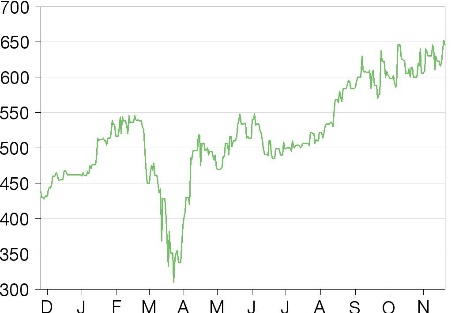
Share price performance
Business description
Next events
Analysts
Treatt is a research client of Edison Investment Research Limited |
|||||||||||||||||||||||||||||||||||||||||||||||||
Treatt has performed well during FY20 despite the pandemic. There was strong momentum across the tea, health & wellness, and fruit & vegetables categories, and citrus markets recovered as expected. The strong growth across the non-citrus segments is resulting in a slightly reduced dependence on citrus (now 50% of sales). The UK relocation was slowed down as a result of the first lockdown, but the building work is now complete and the move will begin in mid-2021. While management report a strong start to the new financial year, the outlook is understandably uncertain: demand is not expected to return to normal levels before the end of FY21 or into FY22, though management is confident the business is in the best possible shape to face the uncertainty. The FY20 results demonstrate this, with a good cash performance and a 9% increase in dividends implying management’s confidence in the year ahead.
Year end |
Revenue (£m) |
PBT* |
EPS* |
DPS |
P/E |
Yield |
09/19 |
112.7 |
14.0 |
19.0 |
5.5 |
30.5 |
0.9 |
09/20 |
109.0 |
15.8 |
21.3 |
6.0 |
27.5 |
1.0 |
09/21e |
114.5 |
16.2 |
22.0 |
6.2 |
26.6 |
1.1 |
09/22e |
119.0 |
17.2 |
23.3 |
6.5 |
25.1 |
1.1 |
Note: *PBT and EPS are normalised, excluding amortisation of acquired intangibles, exceptional items and share-based payments.
Natural extracts remain attractive
The flavours and fragrances market continues to be an attractive space, and in particular the natural extracts segment. Treatt has successfully repositioned its portfolio to capitalise on consumer trends for products that are better for both consumers and the planet. For example, the consumer shift away from categories such as beer and towards products such as craft beers, alcoholic seltzers and cocktails – which all contain natural flavourings – serves as a material driver of growth for the whole flavour industry, and for Treatt in particular.
Impressive margin improvement
The fall in citrus oil pricing resulted in a reduction in revenue, but at the profit level this was offset by an improvement in mix, with growth in the more value-added parts of the business (both within citrus and in other segments) outpacing the growth in more commoditised areas. This resulted in a material improvement in group gross margin (380bp) to 29.2%, and EBITDA margin (220bp). Overall, performance was ahead of management’s own expectations at the start of the year.
Valuation: Fair value of 670p
We value Treatt using a DCF model, which indicates a fair value of 670p (unchanged). Our profit forecasts increase slightly, and a lower tax rate results in our earnings estimates increasing. Cash flow was better than expected in FY20, but some capex has been delayed into FY21 and hence our overall DCF value remains unchanged. Treatt trades at 26.6x FY21e P/E and 17.9x FY21e EV/EBITDA. On P/E it trades at a c 15% discount to its peer group, while on EV/EBITDA it is broadly in line.
FY20 results
Treatt’s FY20 revenues of £109.0m were broadly in line with our expectations and with the recent trading update. Company-adjusted PBT was £14.8m, ahead of our £14.0m forecast. Adjusted EPS (as defined by Treatt) were up 10.7% to 19.7p, and well ahead of our 17.6p forecast. Cash flow was also strong and the year-end FY20 position is net cash of £0.4m (or £1.1m excluding IFRS 16 lease liabilities).
Treatt performed well across all its segments during FY20, and the company continues to focus on market opportunities in coffee, natural extracts and the relatively new hard seltzer market. As discussed above, the citrus segment witnessed a 9.8% fall in revenues, but gross profits were not lower in absolute terms, which is testament to the company’s transformation over the last few years towards value-added ingredients solutions rather than the more commoditised traded citrus products. Tea was up c 3% despite the on-trade segment being severely affected by the pandemic, and the hospitality segment making up a large part of the end market for Treatt’s tea business. A large supermarket customer witnessed positive growth in tea throughout the pandemic, and helped Treatt to offset some of the sales reduction from the hospitality business. The Health & Wellness segment was up 16% in revenue terms, while the Fruit & Vegetables and the Herbs, Spices & Florals segments were up 10% and 8% respectively. The legacy Aroma & HICs business was down 2.4% as Treatt continues to shift its focus away from traded commodities and towards value-added solutions.
Exhibit 1: Actual vs forecast key P&L metrics
2020 |
|||
Forecast |
Estimate |
Actual |
Diff |
Revenue (£000s) |
109,335 |
109,016 |
-0.3% |
Operating profit (£000s)* |
14,187 |
15,092 |
6.4% |
PBT (pre exceptional) Treatt (£000s)* |
13,987 |
14,801 |
5.8% |
PBT (pre exceptional) Edison (£000s) |
14,736 |
15,762 |
7.0% |
Basic EPS (pre exceptional) Treatt (p)* |
17.6 |
18.1 |
2.9% |
Basic EPS (pre exceptional) Edison (p) |
18.9 |
21.3 |
12.9% |
Source: Edison Investment Research. Note: *Stated on company normalised basis, which is pre-exceptional but after amortisation of acquired intangibles and share-based payments.
As previously flagged, the UK relocation has been delayed by the pandemic, though building work is now complete and the move will begin in mid-2021.
We have updated our forecasts in light of the FY20 results and illustrate the key changes in Exhibit 2 below. We also introduce FY23 forecasts (see Exhibit 4).
Exhibit 2: Old vs new key P&L forecasts
2021e |
2022e |
|||||
Forecast |
Old |
New |
Diff |
Old |
New |
Diff |
Revenue (£000s) |
114,802 |
114,467 |
-0.3% |
119,394 |
119,045 |
-0.3% |
Operating profit (£000s)* |
14,931 |
15,160 |
1.5% |
15,767 |
16,004 |
1.5% |
PBT (pre exceptional) Treatt (£000s)* |
15,020 |
15,166 |
1.0% |
15,912 |
16,053 |
0.9% |
PBT (pre exceptional) Edison (£000s) |
15,807 |
16,221 |
2.6% |
16,732 |
17,156 |
2.5% |
Basic EPS (pre exceptional) Treatt (p)* |
18.9 |
20.3 |
7.2% |
20.0 |
21.5 |
7.1% |
Basic EPS (pre exceptional) Edison (p) |
20.3 |
22.0 |
8.8% |
21.4 |
23.3 |
8.7% |
Source: Edison Investment Research. Note: *Stated on company normalised basis, which is pre-exceptional but after amortisation of acquired intangibles and share-based payments.
Valuation
We illustrate Treatt’s relative valuation versus its ingredients peer group in Exhibit 3 below. For 2021, Treatt trades at a c 15% discount to its peer group on P/E, and broadly in line on an EV/EBITDA basis. Although it is smaller than its peers, its portfolio of products is increasingly specialised and the company has demonstrated its resilience with a robust performance despite the COVID-19 pandemic.
Exhibit 3: Comparative valuation
Market cap (m) |
P/E (x) |
EV/EBITDA (x) |
Dividend yield (%) |
|||||
2020e |
2021e |
2020e |
2021e |
2020e |
2021e |
|||
Givaudan |
CHF33,666 |
39.3 |
36.6 |
26.9 |
25.5 |
1.8 |
1.8 |
|
IFF |
$11,971 |
20.0 |
18.2 |
15.4 |
14.0 |
2.7 |
2.8 |
|
Symrise |
CHF14,222 |
40.0 |
37.0 |
20.6 |
19.5 |
1.0 |
1.1 |
|
Chr Hansen |
DKK6,264 |
44.1 |
47.1 |
30.2 |
30.0 |
1.3 |
1.6 |
|
Kerry |
€85,252 |
34.8 |
30.3 |
23.4 |
21.1 |
0.7 |
0.8 |
|
Ingredion |
$2,969 |
12.8 |
12.0 |
8.0 |
7.6 |
3.4 |
3.5 |
|
Peer group average |
32.2 |
31.9 |
21.2 |
20.8 |
1.8 |
1.8 |
||
Treatt |
£350.7 |
27.5 |
26.6 |
20.1 |
17.9 |
1.0 |
1.1 |
|
Premium/(discount) to peer group (%) |
(5.3%) |
(14.5%) |
5.9% |
(3.4%) |
(48.9%) |
(43.2%) |
||
Source: Refinitiv, Edison Investment Research. Note: Prices as of 20 November 2020.
Our DCF-derived fair value remains unchanged at 670p. Cash flow was better than expected in FY20, but some capex has been delayed into FY21 and hence our overall DCF value remains unchanged. Our assumptions are also unchanged: longer-term sales growth of 5.0% pa, falling to 2% growth in perpetuity; a WACC of 6.0% (predicated on a beta of 0.8, a risk-free rate of 2.0%, an equity risk premium of 5.0% and a borrowing spread of 5.0%).
Exhibit 4: Financial summary
£000's |
2017 |
2018 |
2019 |
2020 |
2021e |
2022e |
2023e |
||
Year end 30 September |
IFRS |
IFRS |
IFRS |
IFRS |
IFRS |
IFRS |
IFRS |
||
PROFIT & LOSS |
|||||||||
Revenue |
|
|
101,250 |
112,163 |
112,717 |
109,016 |
114,467 |
119,045 |
123,807 |
Cost of Sales |
(75,985) |
(84,407) |
(84,060) |
(77,140) |
(81,226) |
(84,237) |
(87,359) |
||
Gross Profit |
25,265 |
27,756 |
28,657 |
31,876 |
33,241 |
34,809 |
36,449 |
||
EBITDA |
|
|
15,049 |
16,627 |
15,785 |
17,862 |
19,978 |
23,424 |
24,446 |
Operating Profit (before amort., except and sbp) |
|
|
13,650 |
15,108 |
14,226 |
16,053 |
16,215 |
17,108 |
18,050 |
Intangible Amortisation |
(137) |
(124) |
(90) |
(75) |
(64) |
(54) |
(46) |
||
Share based payments |
(966) |
(1,040) |
(637) |
(886) |
(991) |
(1,049) |
(1,111) |
||
Other |
0 |
0 |
0 |
0 |
0 |
0 |
0 |
||
Operating Profit |
12,547 |
13,944 |
13,499 |
15,092 |
15,160 |
16,004 |
16,892 |
||
Net Interest |
(851) |
(1,302) |
(199) |
(291) |
6 |
49 |
114 |
||
Exceptionals |
0 |
(1,105) |
(755) |
(1,060) |
0 |
0 |
0 |
||
Profit Before Tax (norm) |
|
|
12,799 |
13,806 |
14,027 |
15,762 |
16,221 |
17,156 |
18,163 |
Profit Before Tax (FRS 3) |
|
|
11,696 |
11,537 |
12,545 |
13,741 |
15,166 |
16,053 |
17,006 |
Profit Before Tax (company) |
|
|
11,696 |
12,642 |
13,300 |
14,801 |
15,166 |
16,053 |
17,006 |
Tax |
(3,129) |
(2,284) |
(2,673) |
(2,896) |
(3,033) |
(3,211) |
(3,401) |
||
Profit After Tax (norm) |
9,670 |
11,392 |
11,263 |
12,762 |
13,188 |
13,946 |
14,762 |
||
Profit After Tax (FRS 3) |
8,567 |
9,253 |
9,872 |
10,845 |
12,133 |
12,842 |
13,605 |
||
Discontinued operations |
978 |
2,976 |
(1,084) |
0 |
0 |
0 |
0 |
||
Average Number of Shares Outstanding (m) |
52.2 |
56.8 |
59.1 |
59.8 |
59.8 |
59.8 |
59.8 |
||
EPS - normalised (p) |
|
|
18.5 |
20.1 |
19.0 |
21.3 |
22.0 |
23.3 |
24.7 |
EPS - adjusted (p) |
|
|
18.3 |
18.0 |
17.8 |
19.7 |
20.3 |
21.5 |
22.7 |
EPS - (IFRS) (p) |
|
|
16.4 |
16.3 |
16.7 |
18.1 |
20.3 |
21.5 |
22.7 |
Dividend per share (p) |
4.8 |
5.1 |
5.5 |
6.0 |
6.2 |
6.5 |
6.9 |
||
Gross Margin (%) |
25.0 |
24.7 |
25.4 |
29.2 |
29.0 |
29.2 |
29.4 |
||
EBITDA Margin (%) |
14.9 |
14.8 |
14.0 |
16.4 |
17.5 |
19.7 |
19.7 |
||
Operating Margin (before GW and except.) (%) |
13.5 |
13.5 |
12.6 |
14.7 |
14.2 |
14.4 |
14.6 |
||
BALANCE SHEET |
|||||||||
Fixed Assets |
|
|
19,532 |
21,863 |
31,730 |
54,048 |
62,265 |
56,179 |
51,594 |
Intangible Assets |
3,331 |
752 |
845 |
1,358 |
1,294 |
1,240 |
1,194 |
||
Tangible Assets |
14,821 |
20,038 |
29,485 |
50,159 |
59,612 |
53,581 |
49,042 |
||
Investments |
1,380 |
1,073 |
1,400 |
2,531 |
1,358 |
1,358 |
1,358 |
||
Current Assets |
|
|
68,230 |
102,401 |
98,158 |
69,472 |
70,509 |
72,663 |
74,888 |
Stocks |
42,878 |
39,642 |
36,799 |
36,050 |
37,624 |
38,890 |
40,198 |
||
Debtors |
19,973 |
28,828 |
23,020 |
24,167 |
25,146 |
26,033 |
26,951 |
||
Cash |
4,748 |
32,304 |
37,187 |
7,739 |
7,739 |
7,739 |
7,739 |
||
Other |
631 |
1,627 |
1,152 |
1,516 |
0 |
0 |
0 |
||
Current Liabilities |
|
|
(27,003) |
(35,781) |
(28,905) |
(15,989) |
(18,929) |
(9,604) |
(911) |
Creditors |
(19,266) |
(16,479) |
(11,784) |
(12,640) |
(12,062) |
(11,949) |
(11,808) |
||
Short term borrowings |
(7,680) |
(19,244) |
(16,860) |
(3,203) |
(6,867) |
2,346 |
10,897 |
||
Provisions |
(57) |
(58) |
(261) |
(146) |
0 |
0 |
0 |
||
Long Term Liabilities |
|
|
(14,281) |
(6,858) |
(13,876) |
(16,411) |
(17,195) |
(12,388) |
(7,913) |
Long term borrowings |
(7,293) |
(3,001) |
(4,369) |
(3,450) |
(3,434) |
1,173 |
5,448 |
||
Other long term liabilities |
(6,988) |
(3,857) |
(9,507) |
(12,961) |
(13,761) |
(13,561) |
(13,361) |
||
Net Assets |
|
|
46,478 |
81,625 |
87,107 |
91,120 |
96,650 |
106,850 |
117,659 |
CASH FLOW |
|||||||||
Operating Cash Flow |
|
|
4,683 |
3,580 |
20,544 |
15,677 |
16,846 |
20,958 |
21,879 |
Net Interest |
(913) |
(609) |
(199) |
(191) |
6 |
49 |
114 |
||
Tax |
(2,822) |
(2,978) |
(2,208) |
(2,191) |
(3,033) |
(3,211) |
(3,401) |
||
Capex |
(5,111) |
(6,190) |
(10,392) |
(23,909) |
(13,217) |
(286) |
(1,857) |
||
Acquisitions/disposals |
(1,667) |
8,357 |
855 |
(1,041) |
0 |
0 |
0 |
||
Financing |
270 |
21,090 |
622 |
(69) |
0 |
0 |
0 |
||
Dividends |
(3,025) |
(2,876) |
(3,080) |
(3,378) |
(3,590) |
(3,691) |
(3,907) |
||
Net Cash Flow |
(8,585) |
20,374 |
6,142 |
(15,102) |
(2,988) |
13,819 |
12,827 |
||
Opening net debt/(cash) |
|
|
1,654 |
10,225 |
(10,059) |
(15,958) |
(427) |
2,562 |
(11,257) |
HP finance leases initiated |
0 |
0 |
0 |
0 |
0 |
0 |
0 |
||
Other |
14 |
(90) |
(243) |
(429) |
(0) |
0 |
(0) |
||
Closing net debt/(cash) |
|
|
10,225 |
(10,059) |
(15,958) |
(427) |
2,562 |
(11,257) |
(24,084) |
Source: Edison Investment Research, company data
|
|
Research: Financials
OTC Markets Group (OTCM) announced third quarter results with revenue and profit ahead of our expectation, as in Q220. This resulted from strong transaction volumes at OTC Link and higher user numbers and price increases for Market Data Licensing. The diversity of the group’s income was evident as Corporate Services was flat year-on-year, although here a step up in client additions is encouraging for the future. Pandemic-related and political uncertainties may be less acute now, but, in any event, OTCM maintains its long-term focus on developing its cost-effective, efficient markets.